


💬 Healthwatch: Your Local Voice in the NHS
Living with a long-term lung condition such as aspergillosis, asthma, or bronchiectasis often means regular contact with hospitals, GPs, and community clinics.
Sometimes things work well — and sometimes they don’t.
That’s where Healthwatch comes in.
Healthwatch is an independent organisation that represents patients and the public.
It exists to make sure your experiences help shape the way NHS and social-care services are delivered.
🏛️ What is Healthwatch?
Healthwatch was set up by law to be the official voice of patients and the public in health and social care.
There are two levels:
-
Healthwatch England – works nationally to influence NHS and government policy
-
Local Healthwatch – works in every local authority area across England, gathering feedback from people using local services
Healthwatch is not part of the NHS, and it’s not a complaints service, but it does have statutory powers to:
-
Listen to people’s experiences of care
-
Report issues and make recommendations to the NHS, local councils, and care providers
-
Request responses from organisations it investigates
-
Escalate serious concerns to the Care Quality Commission (CQC)
Learn more on the Healthwatch website.
🌿 Why Healthwatch matters to aspergillosis patients
People living with chronic lung disease often face delays, limited understanding, or difficulties accessing ongoing support.
Healthwatch helps make sure those experiences aren’t ignored.
1. Raising the patient voice
You can share your experience of healthcare — good or bad — with your local Healthwatch.
They collect stories from across the community and use them to:
-
Identify patterns (for example, problems with accessing respiratory clinics or antifungal monitoring)
-
Produce reports and recommendations for local NHS decision-makers
-
Push for improvements to long-term care pathways and community support
2. Helping to improve new neighbourhood health hubs
As NHS care moves into the community, Healthwatch plays a key role in making sure new Neighbourhood Health Hubs are:
-
Accessible for people with limited mobility or oxygen needs
-
Located where public transport and parking work for patients
-
Designed with chronic-illness patients in mind, not just short-term care
You can feed in your ideas through Healthwatch about what’s working and what isn’t in new NHS community models.
3. Providing information and signposting
If you’re unsure where to go for care — GP, hospital, or new health hub — or how to complain or appeal a service decision, Healthwatch can point you in the right direction.
They offer clear, local information about:
-
NHS patient transport
-
The Healthcare Travel Costs Scheme (HTCS)
-
Local support groups and community services
4. Supporting patient involvement
Healthwatch works with NHS organisations to include patients and carers in planning and reviewing services.
If you’d like to get involved as a patient representative or share your experience of aspergillosis services, Healthwatch can help you join local working groups or consultations.
5. Spotlighting inequalities
Healthwatch highlights where certain groups are left behind — for example:
-
People with rare or complex conditions
-
Patients in rural or deprived areas
-
Those unable to use digital appointment systems
This helps ensure people with chronic lung conditions are not overlooked when new community-care models are designed.
⚖️ What Healthwatch can — and can’t — do
| ✅ Healthwatch can | 🚫 Healthwatch can’t |
|---|---|
| Collect and report your experience to NHS leaders | Fix individual clinical problems directly |
| Influence NHS and council decisions | Guarantee faster treatment or appointments |
| Provide advice on local services and support | Replace legal or complaints services |
| Escalate major safety concerns to the CQC | Act as your personal advocate in disputes |
Even so, their influence can be powerful — many improvements in NHS access and transport have started with patient stories collected by Healthwatch.
📍 How to contact your local Healthwatch
Every local area has its own Healthwatch website and phone number.
You can find yours at:
👉 Find your local Healthwatch
When you contact them, you can:
-
Fill in a short online form to share your story
-
Ask to join a focus group or consultation
-
Request accessible information or help finding services
-
Subscribe to local updates and reports
If you’d like support from the aspergillosis community, NAC CARES can also help you write or submit your feedback.
💬 Why this matters
“Nothing about us without us.”
Healthwatch exists so that patients — including those with rare and chronic conditions like aspergillosis — can make their experiences count.
By telling your story and feeding back to Healthwatch, you help shape better care for yourself and for others who will face similar challenges in future.

🏥 NHS Neighbourhood Health Hubs: How Community Care Will Work for People with Aspergillosis and Asthma
The NHS is changing how healthcare is delivered — with more care moving closer to home and fewer hospital visits.
A new model called Neighbourhood Health Services (or Neighbourhood Health Hubs) is being rolled out across England from late 2025, and it could make a real difference for people living with aspergillosis, asthma, bronchiectasis, and other long-term respiratory conditions.
🌍 Why care is moving into the community
The goal is to:
-
Bring care to where people live, not just in large hospitals
-
Reduce waiting times by shifting routine tests and reviews out of hospital clinics
-
Join up GPs, nurses, pharmacists, and hospital specialists into one local team
-
Focus on prevention, self-management, and early support
These reforms come from the government’s Healthcare on Your Doorstep announcement (September 2025), supported initially by £10 million across 43 pilot areas in England.
🧑⚕️ What a “Neighbourhood Health Hub” looks like
A one-stop local health centre bringing together:
-
GPs and practice nurses
-
Respiratory nurses, physiotherapists, and pharmacists
-
Mental-health and wellbeing workers
-
Dietitians, occupational therapists, and social-prescribing link staff
-
Voluntary and community organisations (e.g. NAC CARES, Asthma + Lung UK)
Some hubs will connect directly to Community Diagnostic Centres (CDCs) – local sites providing CT, MRI, X-ray, lung-function and blood tests through the NHS England diagnostics programme.
The aim is for one joined-up team to share your records and plan your care locally.
🩺 How hubs work with your GP and A&E
The new hubs are designed to fill the gap between GP surgeries and hospitals – giving extra support when you’re too unwell to manage alone but don’t need emergency care.
🏠 Your GP surgery
You’ll stay registered with your usual GP. They remain in charge of your prescriptions, results, and overall care.
Your GP can now refer you to a Neighbourhood Health Hub for things that need a wider team – for example:
-
Antifungal monitoring or blood tests
-
Lung-function or CT scans
-
Flare-up review by respiratory nurses
-
Fatigue or wellbeing support
🧑⚕️ The Neighbourhood Health Hub
You might go here instead of hospital for:
-
Same-day assessment of an infection or flare-up
-
Bloods, ECGs, or scans ordered by your GP
-
Physiotherapy, airway-clearance or rehabilitation
-
Medication reviews with a pharmacist
-
Appointments with dietitians or mental-health staff
-
Practical help from link workers (see below)
🚨 A&E (Emergency Department)
Still essential for serious problems such as:
-
Sudden or severe breathlessness not relieved by treatment
-
Coughing up blood
-
Chest pain, fainting, or collapse
-
High fever with confusion
If unsure, call NHS 111 or 999 in an emergency.
🔁 When to use which service
| Situation | Who decides | Where you’ll be seen |
|---|---|---|
| Routine check-up or repeat prescription | You / GP | GP surgery |
| Specialist review or complex medication | GP / consultant | Neighbourhood Hub |
| Mild flare-up needing same-day care | NHS 111 / GP | Hub or GP |
| Emergency or life-threatening symptoms | NHS 111 / 999 | A&E / hospital |
| Diagnostic tests | GP / hospital referral | Community Diagnostic Centre |
All sites will share your digital care record so results and updates reach your GP and hospital team automatically.
🧑🤝🧑 Link workers and care coordinators – local help through your GP
Every GP practice and neighbourhood team now has link workers (also called care coordinators or social prescribers).
They’re there to help you navigate healthcare and community support. They can:
-
Arrange or advise on transport for appointments
-
Help complete travel cost reimbursement or benefit forms
-
Connect you with volunteer driver schemes or local charities
-
Find exercise, wellbeing, or peer-support groups
-
Support with fatigue, isolation, or anxiety
Ask your GP reception or Neighbourhood Hub to refer you to the link worker, or request a call-back via the NHS App.
🚗 Transport and accessibility
🚐 NHS Patient Transport Service (PTS)
If you can’t use public transport for medical reasons (for example, oxygen use, mobility difficulties, or severe fatigue), you may qualify for free NHS transport.
Your GP, link worker, or hospital can book this for you through the regional PTS (for example, NWAS in the North West).
💷 Healthcare Travel Costs Scheme (HTCS)
If you’re on a low income or certain benefits, you can reclaim travel expenses under the HTCS.
Bring your appointment letter and proof of eligibility, or ask your link worker to help with the form.
🚙 Community & volunteer transport
Each Integrated Care System (ICS) works with local councils and charities such as Age UK, Mind, or Good Neighbour schemes to run community minibuses and volunteer driver services.
Ask your link worker or hub team for local options.
🅿️ Accessibility
All new and refurbished hubs must include:
-
Blue Badge parking and drop-off zones
-
Wheelchair-friendly entrances and toilets
-
Seating and oxygen-safe waiting areas
-
Negotiated free or reduced parking in shared sites
🧭 At a glance
| Issue | What’s planned | What to do now |
|---|---|---|
| Public transport | Sites chosen to be local, but not always central | Check routes before your visit |
| NHS Patient Transport | Still available for medical need | Ask GP or link worker to book |
| Travel-cost reimbursement | Continue via HTCS | Keep proof of benefit |
| Community / volunteer drivers | Expanding under ICB–VCS partnerships | Request info via link worker |
| Disabled parking / drop-off | Required at new sites | Confirm when booking |
🪶 A message from the aspergillosis community
For many people with lung disease, “local care” only works if it’s accessible care.
Groups such as NAC CARES, Asthma + Lung UK, and Healthwatch are urging NHS leaders to:
-
Design transport and parking into every new site
-
Ask about mobility and oxygen needs when booking
-
Fund local volunteer schemes
-
Provide dedicated link workers at every hub and GP practice
If you struggle to reach appointments, tell your clinic or Healthwatch — your feedback shapes how services develop.
🧾 Questions to ask before your first visit
-
🚗 Is there Blue Badge or patient parking on site?
-
🚌 What public-transport links serve the hub?
-
🚐 Can the clinic arrange NHS Patient Transport?
-
💷 Can I claim travel costs under the HTCS scheme?
-
♿ Is the building accessible for wheelchairs or oxygen users?
-
💨 Are there rest areas for people who get breathless?
-
🧑🤝🧑 Can my carer or partner attend with me?
-
👩💼 Is there a link worker who can help with transport or forms?
-
🕓 Are there quiet waiting spaces to reduce infection risk?
Having these answers before your appointment makes your visit smoother and safer.
💬 Final thought
“Neighbourhood care” isn’t about replacing your GP or A&E — it’s about bridging the gap.
The new hubs aim to bring together your GP, hospital specialists, and community teams in one local setting, providing earlier help, fewer hospital journeys, and care designed around your life, not your postcode.
🔎 Behind the Headlines: Is this an NHS Expansion or a Shift?
Many people wonder whether this is new investment or a reshuffle of existing NHS services.
🧱 What’s really happening
-
The Neighbourhood Health Service is not a new tier of the NHS, but a redesign of how GP, hospital, and community teams work together.
-
The focus is on moving care out of hospitals and into local clinics, using the same staff and budgets more effectively.
-
Hospitals will still handle emergencies and complex cases, but routine tests, reviews, and education will move into the hubs.
⚖️ Expansion or movement?
| Area | Expansion | Reorganisation |
|---|---|---|
| Buildings | Some new or refurbished hubs and diagnostics centres | Many reusing existing GP or community facilities |
| Staffing | Some new link workers, pharmacists, and AHPs | Most existing NHS staff redeployed across neighbourhoods |
| Funding | £10m pilot investment + diagnostic capital | No major long-term new funding yet announced |
| Patient benefit | Easier access, joined-up records | May reduce hospital appointments rather than add capacity |
💬 What this means
For patients, it should feel like an expansion — more care, closer to home —
but in reality it’s a shift of where and how NHS services are delivered, not a large-scale increase in total NHS resources.
⚠️ Risks and opportunities
| Opportunities | Risks |
|---|---|
| Easier local access | Risk of hospital clinics closing before hubs fully staffed |
| Joined-up records | Depends on IT integration |
| Focus on prevention | May feel like hospital services are being reduced |
| Better continuity | Needs clear accountability (GP vs hub) |
🧩 Summary
The new neighbourhood model is a reorganisation within the NHS, not a separate expansion.
It aims to use existing staff, buildings, and budgets more efficiently — giving patients with chronic conditions like aspergillosis and asthma easier access to care and support in their own communities.

🎢 Life as a Patient

Living with chronic illness is often described as a journey, but that word can feel far too calm. In truth, it’s more like a modern roller coaster — fast, unpredictable, and full of twists that catch you off guard.
There are the high climbs, when medication works, energy returns, and hope builds quietly in your chest. Then there are the sudden drops, when symptoms flare, infections hit, or test results turn against you. But what really defines the experience are the loops and spirals — the disorienting moments that spin you upside down, when you’re not sure which way is forward, or how long it will take to steady yourself again.
Each turn tests your courage, your patience, and your ability to keep holding on. Sometimes you’re screaming inside while smiling on the outside. Other times, you find small moments of stillness even as the track twists beneath you — the deep breath between the storms.
And through it all, you learn:
-
To adapt rather than control.
-
To brace and breathe rather than fight every turn.
-
To appreciate those who stay beside you in the carriage, even when the ride is rough.
The roller coaster of illness is not one anyone chooses to board. But it teaches something profound — that strength isn’t about never being scared; it’s about showing up, again and again, when the world flips upside down.
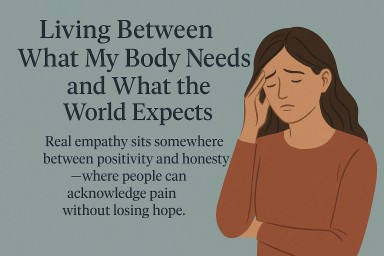
Living Between What My Body Needs and What the World Expects

Sometimes it feels as if people grow tired of hearing about illness or fatigue. They encourage us to “think positively,” as if mindset alone could repair the body or quiet exhaustion.
But chronic illness doesn’t work like that. It’s a daily negotiation between two inner voices — one saying, “You need to rest,” and the other whispering, “You still have responsibilities.” That constant tug-of-war leaves many of us feeling trapped between what our body needs and what life demands.
Even small things — such as changes in weather, sleep patterns, or stress — can tip the balance. We learn to pace ourselves, to weigh every decision, to ration energy. And still, the world around us often sees only the surface: “You look well.”
The Other Side of Positivity
For those who don’t live with chronic illness, this can be difficult to face. Often, people cling to optimism not because they’re unkind, but because they don’t want to confront the truth — that illness can be long-term, unpredictable, and out of anyone’s control.
Positivity can become a shield: a way of keeping the world steady and reassuring when faced with something that can’t be fixed. Saying “You’ll be fine” or “Stay strong” helps them feel hopeful, even if it leaves us feeling unseen.
Understanding that this comes from discomfort, fear, or helplessness rather than indifference can make those moments a little easier.
Where Real Connection Starts
Real empathy sits somewhere between positivity and honesty — where people can acknowledge pain without losing hope.
Most of the world won’t fully understand chronic fatigue or the mental gymnastics it takes to stay balanced until they experience it themselves. But by sharing what it’s really like, we give others the chance to learn — just as society learns to understand invisible struggles like dyslexia or digital exclusion.
Understanding begins when we listen without needing to fix. Sometimes the greatest kindness is simply to say, “That sounds hard — how are you managing today?”
Aspergillus Saga — July 2024 to June 2025: Searching for the Invisible
In this compelling personal account, a patient describes her year-long journey battling what ultimately was identified as subacute invasive aspergillosis. She walks us through months of worsening symptoms, repeated rounds of antifungals, diagnostic uncertainty, and the pivotal decision to undergo lung surgery. The turning point: removal of a single lesion led to a rapid resolution of systemic infection signs, with follow-up therapy and monitoring guided by her infectious disease team. Her story highlights how, with very little precedent in medical literature, patients and clinicians sometimes must walk together on uncharted ground.
👉 Read the full article here:
“Aspergillus Saga – July 2024 to June 2025: Searching for the Invisible” Beauty for Ashes
🧩 NAC Aspergillosis Research Digest — Focus: Chronic Aspergillosis (October 2025: week 42)
🧬 Focus Review — Chronic Aspergillosis (October 2025)
Here are peer-reviewed papers on chronic aspergillosis published in the last month:
1. Improving Diagnostic Sensitivity Using Species-Specific IgG (Sep 2025)
-
This study investigated better blood tests to diagnose CPA by measuring IgG antibodies not just to Aspergillus fumigatus but also to other common Aspergillus species.
-
They found adding antibodies against non-fumigatus species identified more CPA cases that would have been missed by the standard A. fumigatus test alone.
-
The treatment results were similar regardless of which Aspergillus species was involved.
-
This means broader antibody testing improves diagnosis without changing expected outcomes.
- Read full paper on PubMed
2. Prevalence and Impact of Bacterial Co-infections in CPA (April 2025)
-
This study looked at how often bacterial infections occur alongside CPA and their effect on patients.
-
About 21% of CPA patients had bacterial co-infections.
-
However, having a bacterial co-infection did not significantly change mortality rates compared to those without.
-
This highlights the need to assess for bacteria but suggests it may not worsen long-term outcomes.
- Read full paper on PMC
3. Non-invasive Monitoring Using Serology and HRCT Imaging (June 2025)
-
Researchers combined blood antibody tests and high-resolution chest CT scans to identify active Aspergillus infections in chronic lung disease patients.
-
This method distinguished active infections from colonization without invasive procedures.
-
It supports using combined non-invasive tests to decide who needs further invasive diagnostics or antifungal treatment.
-
This approach helps avoid unnecessary treatments and invasive tests.
- Read full paper on Frontiers
In short: these studies improve how doctors diagnose and monitor CPA — by expanding antibody testing beyond classic targets, recognizing the role but limited impact of bacterial co-infections, and using combined non-invasive testing strategies to guide management safely and effectively.
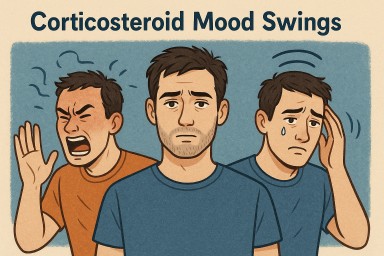
🌦️ Understanding Corticosteroid Mood Swings
Alison shared something that will resonate with many of us:
“Recognising that prednisone mood swings are very unpredictable is a good reminder as I feel like I am up and down so much of late. Yesterday’s swap to half hydrocortisone and half prednisone probably took a bit of adjusting too. Better day today though — I even got out to pick up my campervan that had been in for service. Felt really good to be driving it again and as the weather improves, I live in hope that I might get to use it this year!” 😊🤔
💭 Why mood can change on corticosteroids
Steroid medicines such as prednisone, prednisolone, and hydrocortisone affect many systems in the body — including brain chemistry.
When levels go up or down (for example when changing dose or type), it’s common to feel:
-
Irritable or anxious one day, low or tired the next
-
More emotional than usual — tears or frustration come quickly
-
Sleep disturbance, vivid dreams, or early waking
-
Short bursts of energy or restlessness, followed by a “crash”
These changes don’t mean you’re “losing control” — they reflect how sensitive the brain is to shifts in cortisol, the hormone steroids replace or supplement.
⚖️ Why switching between steroids can feel bumpy
Prednisone and hydrocortisone are both corticosteroids but have different potencies and timings:
| Steroid | Approx. equivalent dose (anti-inflammatory) | Typical duration of action |
|---|---|---|
| Hydrocortisone | 20 mg ≈ 5 mg prednisolone | Short-acting (6–8 hours) |
| Prednisone/Prednisolone | 5 mg | Longer-acting (12–36 hours) |
When switching or mixing them, the body’s rhythm of cortisol can temporarily feel off — like jet lag for your stress hormones. It often settles after a few days.
🌞 Tips that may help
-
Keep a simple mood or energy diary — it helps you and your clinician see patterns.
-
Take doses at consistent times, usually in the morning, unless advised otherwise.
-
Build in gentle activity or time outdoors — small wins, like Alison’s campervan trip, really lift mood.
-
Avoid caffeine or alcohol spikes if feeling restless or irritable.
-
Tell your clinician if mood swings are severe or prolonged — dose adjustment or slower tapering may help.
💬 In Alison’s words
“Better day today.”
Sometimes that’s the victory — one step, one better day, one bit of normality returning.
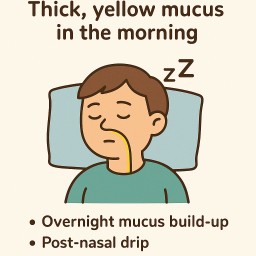
🌿 Why do I get thick, yellow mucus in the morning?
Many people with asthma, ABPA (allergic bronchopulmonary aspergillosis) or sinus problems notice that first thing in the morning they cough up or “hook out” very thick, sticky, yellow mucus from the back of the throat or nose.
It can feel like glue — stringy, rubbery, and slow to move.
The good news is:
👉 This doesn’t automatically mean that Aspergillus fungus is growing in your sinuses.
💧 Why it happens
At night, mucus naturally becomes thicker because:
-
You breathe more through your mouth while sleeping, which dries the nose and throat.
-
Mucus sits still instead of draining, so it concentrates and thickens.
-
If you already have sinus inflammation or allergies, your mucus glands make even more.
-
It often drains down the back of the throat (post-nasal drip), where it collects until morning.
This combination makes for a lumpy, sticky “plug” that only shifts once you’re up and moving around.
🧠 When might fungus be involved?
If the sinuses become colonised with Aspergillus or another fungus, there are usually extra clues, such as:
-
Blocked nose or pressure that doesn’t improve with sprays or rinses
-
One-sided pain or discharge
-
Dark, rubbery, or green-grey plugs rather than yellow mucus
-
Loss of smell
-
CT or endoscopy showing thick debris or “fungal balls”
If these are present, an ENT specialist can look directly into the sinuses and, if needed, take a small sample for fungal culture or order a CT scan.
🩺 What helps most people
You can often manage the morning mucus with simple measures:
-
Saline nasal rinses (like Sterimar, NeilMed, or salt-water sprays) — thin mucus and wash out allergens or fungal dust.
-
Warm fluids or gentle steam to moisten airways.
-
Topical nasal steroid sprays (if prescribed) — reduce swelling and mucus production.
-
Plenty of hydration through the day.
-
Avoid over-using decongestant sprays, which can make congestion worse in the long run.
If mucus stays thick, coloured, or difficult to clear for more than a few weeks — or you develop sinus pressure, pain, or smell loss — ask for a review by your ENT or respiratory team.
🟢 Key message
Thick yellow mucus in the morning is usually a sign of dryness and overnight build-up, not an active fungal infection.
Regular rinsing, good hydration, and controlling sinus inflammation usually keep things under control.
Fungal colonisation is much less common — and when it happens, there are usually other warning signs that your clinician can check.
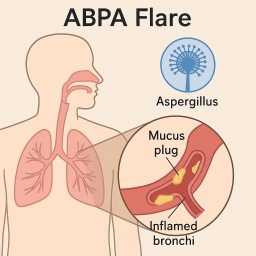
🌬️ When Breathlessness Gets Worse: Understanding What Might Be Happening
Many people with aspergillosis or ABPA (Allergic Bronchopulmonary Aspergillosis) find that their symptoms come and go — some days are better, some worse.
It can feel worrying when you suddenly become more breathless or wheezy, especially if you’ve been doing all the right things: airway clearance, antifungal treatment, and even starting a biologic injection.
This guide explains what might be happening and how you can begin to work out the cause.
💨 1. Why you might feel worse after airway clearance
Airway clearance helps move sticky mucus and plugs out of your lungs — but this can temporarily irritate or narrow the airways, especially if your chest is already inflamed.
You might feel tighter or more wheezy for a short time after a session.
Helpful tips
-
Use your bronchodilator (salbutamol or similar) before starting airway clearance.
-
Keep sessions short and gentle if you feel breathless afterward.
-
Talk to your respiratory physiotherapist about changing the timing or intensity of your airway clearance routine.
-
Nebulisers or inhalers after clearance can help calm things down again.
🧫 2. Could it mean the Aspergillus is becoming more active?
Sometimes it can — but not always.
Symptoms like breathlessness, cough, or fatigue can also be caused by inflammation, infection, or changes in medication.
Signs that might suggest Aspergillus activity is rising include:
-
More sputum, or thicker or darker plugs
-
More coughing or wheezing
-
Tiredness or mild fever
-
A drop in your usual lung function numbers (FEV₁)
These changes are only clues — to be sure, you need blood or sputum tests.
🧪 3. Tests that help you and your team understand what’s going on
| Test | What it shows |
|---|---|
| Total IgE | Rises when allergic inflammation is active (monitored every few months). |
| Aspergillus-specific IgE / IgG | Shows how strongly your immune system is reacting to the fungus. |
| Eosinophil count | Measures allergic immune activity (should fall if your biologic is working). |
| Aspergillus culture or PCR (sputum) | Shows whether fungal growth has increased or returned. |
| Antifungal drug level (itraconazole, voriconazole, etc.) | Confirms whether your medication is at a helpful level in your bloodstream. |
If you feel your symptoms are worsening, you can ask your GP or respiratory nurse if these blood tests can be arranged, even if your specialist clinic is hard to reach.
💉 4. When you’ve just started a biologic
Biologics such as Benralizumab, Mepolizumab, Omalizumab, or Dupilumab work by reducing inflammation in the lungs — but they take time.
What to expect
-
Most people don’t notice big changes after the first dose.
-
Benefits usually appear after 2–3 injections, sometimes longer.
-
You may start to notice less sputum, fewer wheezy days, and more energy over time.
If your breathing still feels difficult after a few doses, your team might review whether this biologic is the best one for you or whether something else is going on.
🧭 5. Keeping track between appointments
When clinic visits are months apart, self-monitoring helps fill the gap.
You can:
-
Keep a symptom diary — note breathlessness, cough, mucus colour, temperature, and how often you need rescue inhalers.
-
Record any oxygen readings if you use a pulse oximeter.
-
Note when you take antifungals and biologic injections.
-
Share this record at your next appointment — it helps your team see the bigger picture.
If you feel abandoned, remember you can still contact your hospital team or ask your GP for basic bloods. These can often be shared with your specialist for advice.
❤️ 6. When you feel alone
Many people with aspergillosis describe long stretches of “self-management.”
That’s why patient support networks (like NAC CARES) exist — to give you a space to talk, ask questions, and share what works.
No one should have to manage this alone.
🕊️ 7. Quick summary
| Possible reason for feeling worse | What you can do |
|---|---|
| Airway irritation after clearance | Use bronchodilator first; ask physio about technique |
| Inflammation or allergic flare | Ask for IgE and eosinophil tests |
| Antifungal not at right level | Ask for a blood level check |
| Early days of biologic treatment | Give it more time; track symptoms |
| Infection or fungal regrowth | Ask for sputum culture or PCR |
🌱 Remember:
Feeling worse doesn’t always mean you’re getting worse — but it’s always worth checking.
The right information (blood tests, drug levels, and a clear plan) can turn a worrying spell into a step forward.

Understanding and Controlling Your Immune System

How your immune system works
Your immune system is your body’s built-in defence and repair network.
It protects you from infection, clears away damaged cells, and helps you heal after illness or injury. But it’s also connected to almost every part of the body — your brain, gut, hormones, and even mood.
When finely balanced, it keeps you healthy. When it becomes over- or under-active, it can cause inflammation, allergies, or long-term conditions such as ABPA or asthma.
🧠 1. Brain and nerves
-
Normal role: Immune cells in the brain (called microglia) keep nerve circuits healthy and remove damaged cells.
-
When things go wrong: Too much inflammation can cause fatigue, “brain fog,” anxiety, or depression — feelings many people experience during infection or flare-ups. Long-term inflammation is linked to memory problems and slower recovery after illness.
❤️ 2. Heart and blood vessels
-
Normal role: Immune cells repair vessel walls and help wounds heal.
-
When things go wrong: Chronic inflammation can thicken arteries (atherosclerosis) or cause rare problems like vasculitis, which affects blood flow. Balancing inflammation helps protect heart and circulation health.
🫁 3. Lungs and airways
-
Normal role: The immune system protects your lungs from germs, clears dust, and repairs tissue after irritation.
-
When things go wrong:
-
In asthma or ABPA, the immune system overreacts to harmless triggers such as Aspergillus spores, pollen, or dust, causing airway swelling, mucus build-up, and breathlessness.
-
In CPA, parts of the immune system struggle to clear fungal infection effectively, leading to chronic inflammation and tissue damage.
Keeping the immune response balanced — not too weak, not too strong — is the key to long-term lung health.
-
🍽️ 4. Gut and digestion
-
Normal role: About 70% of your immune cells live in the gut, where they keep a healthy balance of bacteria and prevent harmful microbes leaking into the bloodstream.
-
When things go wrong: Stress, poor diet, or antibiotics can disrupt this balance, increasing inflammation.
A varied, fibre-rich diet and, in some cases, probiotics can help the gut “educate” the immune system.
💪 5. Muscles, joints, and repair
-
Normal role: Immune cells clear damaged tissue and stimulate repair after exercise or illness.
-
When things go wrong: If the immune system stays “switched on,” joints and muscles can ache or feel weak.
Fatigue in aspergillosis may be partly due to ongoing low-level inflammation.
🧬 6. Hormones and metabolism
-
Normal role: Hormones like cortisol and adrenaline help keep inflammation under control.
-
When things go wrong:
-
Overactive inflammation can worsen insulin resistance, weight changes, and tiredness.
-
Autoimmune problems can affect glands like the thyroid or adrenal glands (Addison’s disease).
Managing stress, sleep, and diet all help the immune-hormonal balance.
-
🩸 7. Blood and bone marrow
-
Normal role: The immune system is built in the bone marrow, producing white cells, red cells, and platelets.
-
When things go wrong: Excessive inflammation raises blood markers such as CRP or eosinophils, often seen during ABPA flare-ups or infection.
Monitoring these levels helps your specialist adjust treatment safely.
🦴 8. Skin and mucous membranes
-
Normal role: Acts as the body’s first barrier, with immune cells ready to seal wounds or fight germs.
-
When things go wrong: Eczema, psoriasis, and slow-healing wounds can occur when immune balance is disturbed — sometimes as side effects of steroids or other medications.
⚖️ 9. The balance between defence and tolerance
The most important job of your immune system is to tell friend from foe — to destroy invaders but leave your own body unharmed.
-
If it overreacts, you get allergies or autoimmune disease.
-
If it underreacts, infections can take hold more easily.
-
In aspergillosis, both problems can occur together: too little defence against fungus, but too much inflammation once the fungus is detected.
🧩 How Medicine Is Learning to Control the Immune System Better
In the past, we only had blunt tools — like steroids — to “calm” inflammation. These saved lives but also caused side effects.
Today, science is learning to control the immune system more precisely, using targeted treatments, cell therapies, and even lifestyle tools that work with your body’s own defences.
🎯 1. Targeted biologic drugs
These are antibodies made in the lab that block one specific immune signal instead of suppressing everything.
Examples used in asthma and ABPA:
-
Mepolizumab and benralizumab block interleukin-5 (IL-5), reducing eosinophil-driven inflammation.
-
Dupilumab blocks IL-4 and IL-13 pathways, calming allergic inflammation.
Other biologics (like infliximab, tocilizumab, and omalizumab) target immune messengers involved in arthritis, eczema, or autoimmune disease.
💉 2. Vaccines and immune training
Vaccines “teach” the immune system to respond safely and efficiently.
New approaches — such as mRNA vaccines — can be updated quickly and may in future be used to retrain the immune system in chronic diseases, allergies, and even cancer.
⚙️ 3. Immune cell therapies and genetic repair
Researchers can now rebuild parts of the immune system:
-
CAR-T cell therapy modifies a patient’s own T cells to find and destroy cancer.
-
T-reg therapy expands the body’s natural “peacekeeping” cells to prevent autoimmune attack.
-
Gene editing (CRISPR) aims to correct inherited immune problems or fine-tune overactive responses.
🧠 4. Neuro-immune and stress control
Because the brain and immune system constantly talk, therapies that reduce stress or stimulate specific nerves can influence inflammation.
-
Vagus nerve stimulation devices can reduce gut and joint inflammation.
-
Mindfulness, relaxation, and gentle exercise lower stress hormones and improve immune balance — especially in asthma or ABPA, where stress can trigger flares.
🌿 5. Microbiome and metabolic balance
Your gut bacteria, diet, and metabolism shape immune health.
-
A high-fibre, plant-based diet produces short-chain fatty acids that calm inflammation.
-
Probiotic and prebiotic therapies are being studied to restore immune tolerance.
-
Metabolic drugs such as metformin are showing anti-inflammatory effects beyond diabetes care.
🧩 6. Re-teaching immune tolerance
The ultimate goal is to re-educate the immune system so it stops attacking harmless things.
-
Allergen immunotherapy exposes the body to small, increasing doses of allergens to reduce sensitivity.
-
Nanoparticle and peptide therapies are being developed to signal to immune cells that “this is safe,” switching off allergic or autoimmune responses without weakening defences.
👤 7. Personalised immune medicine
Every person’s immune system behaves differently.
-
New blood and genetic tests (“immune phenotyping”) help doctors match patients to the best biologic or antifungal treatment.
-
Artificial intelligence is being used to model individual immune systems — predicting who will respond best to certain drugs.
-
In the future, “immune profiles” may be as common as cholesterol or blood pressure checks.
💬 Living with Aspergillosis: What This Means for You
-
You’re not powerless. Understanding your immune system helps you work with your doctors to find the best balance of antifungal, biologic, and anti-inflammatory treatments.
-
Lifestyle still matters. Stress control, exercise, nutrition, and infection avoidance (e.g. clean air, low mould exposure) all influence immune stability.
-
New hope. Research is rapidly advancing — turning immune control from a guessing game into a precise science.
The same breakthroughs that transformed cancer and autoimmune care are now informing treatments for allergic and fungal lung disease.
🩺 In summary
Your immune system touches every part of your body — lungs, gut, brain, hormones, and skin.
In aspergillosis, it can become both under-protective and over-reactive, creating the delicate balance specialists are trying to restore.
Modern medicine is learning to tune the immune system like an orchestra, not silence it — calming inflammation when it harms you, and strengthening defence when you need it most.
The future of aspergillosis care lies in immune precision — treating not just infection, but the whole system that responds to it.