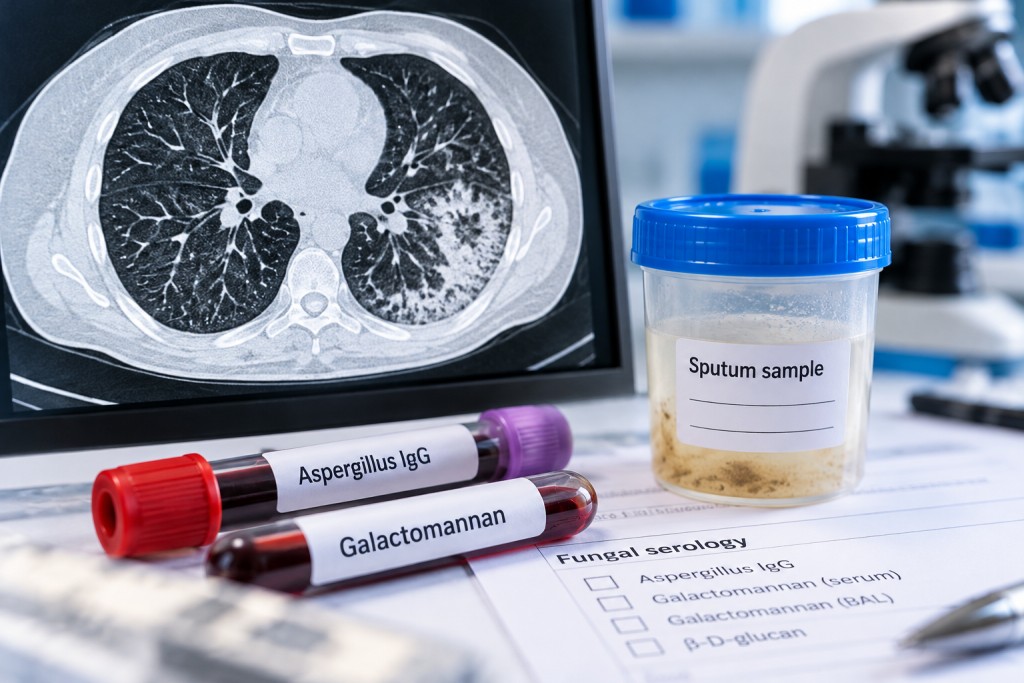
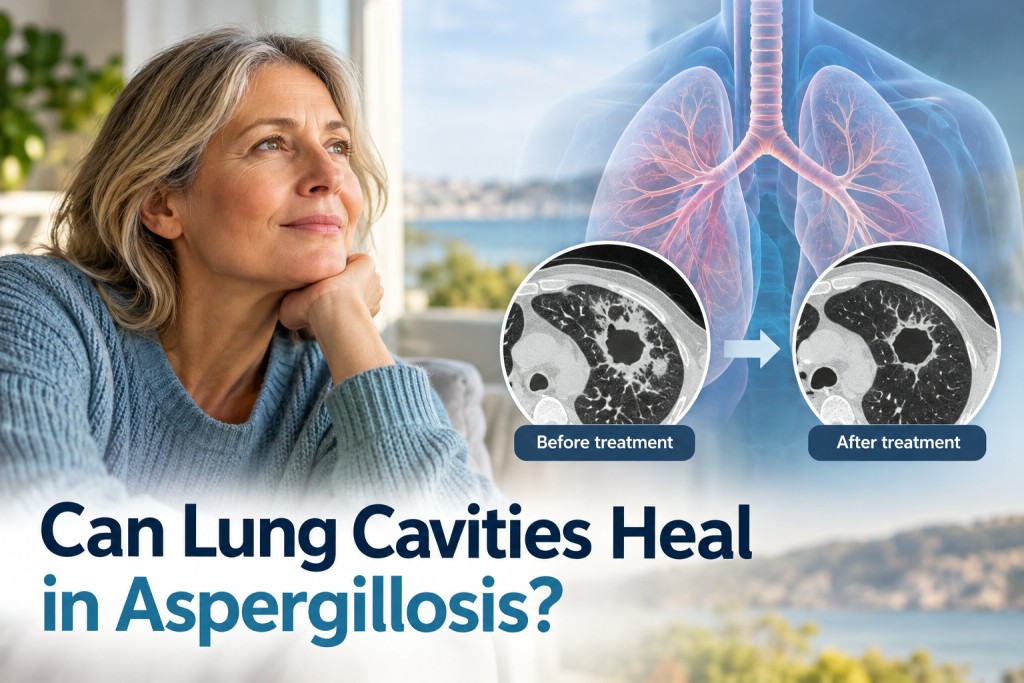
This week’s papers look at how ABPA and CPA can overlap, whether changes in an antibody test might help monitor CPA, and why airway damage can persist in ABPA. The findings are interesting, but the monitoring study is small and the proposed explanation for airway remodelling needs more research.
ABPA and CPA can overlap
In a study of 166 people with chronic pulmonary aspergillosis (CPA), 45 (27%) also met the study’s criteria for allergic bronchopulmonary aspergillosis (ABPA). The overlap group had a distinct clinical pattern, including more asthma and evidence of antifungal resistance.
The study was retrospective and from one specialist centre, so the findings need confirmation in other groups. They don’t change the criteria for diagnosing either condition. Read the study.
Why this matters to you: Some people with CPA may also have features of ABPA. If you have both diagnoses, your clinical team may consider how the two conditions interact when reviewing your symptoms and treatment.
Could changes in Aspergillus IgG help monitor CPA?
A small study explored whether changes in Aspergillus IgG over time might track CPA worsening. It included 22 people, with 57 pairs of follow-up visits. IgG changes tended to be greater when CPA was worsening, but the results were uncertain after accounting for repeated visits from the same people.
The authors suggest a marked rise might prompt earlier clinical reassessment, alongside symptoms and imaging. This is an exploratory finding: the proposed thresholds need external validation, and a smaller rise cannot rule out progression. Read the abstract.
Why this matters to you: In future, changes in IgG might help clinicians decide when to reassess CPA. This small study does not establish a test or threshold for patients to use now.
A review explores airway remodelling in ABPA
A new review proposes that fibroblasts—cells involved in maintaining and repairing tissue—may help link ongoing inflammation with structural airway changes in ABPA. The authors suggest this could help explain why some airway damage persists, but they also stress that direct evidence in people with ABPA is limited.
This is a research framework, not a proven mechanism or a new treatment. Read the review.
Why this matters to you: The review explores why airway changes may persist even when inflammation is better controlled. It may guide future research, but it does not yet offer a new treatment or change current care.
In summary
This week’s research adds to our understanding of overlapping disease features, possible ways to monitor CPA, and the processes that may contribute to airway damage in ABPA. None of these findings changes current diagnosis or treatment. The IgG results need testing in larger groups, and the proposed role of fibroblasts in ABPA needs direct study in patients.
These studies add to research understanding; they do not provide individual treatment advice. Discuss changes in symptoms or test results with your clinical team.

Did this page help you?
Tell us in one minute