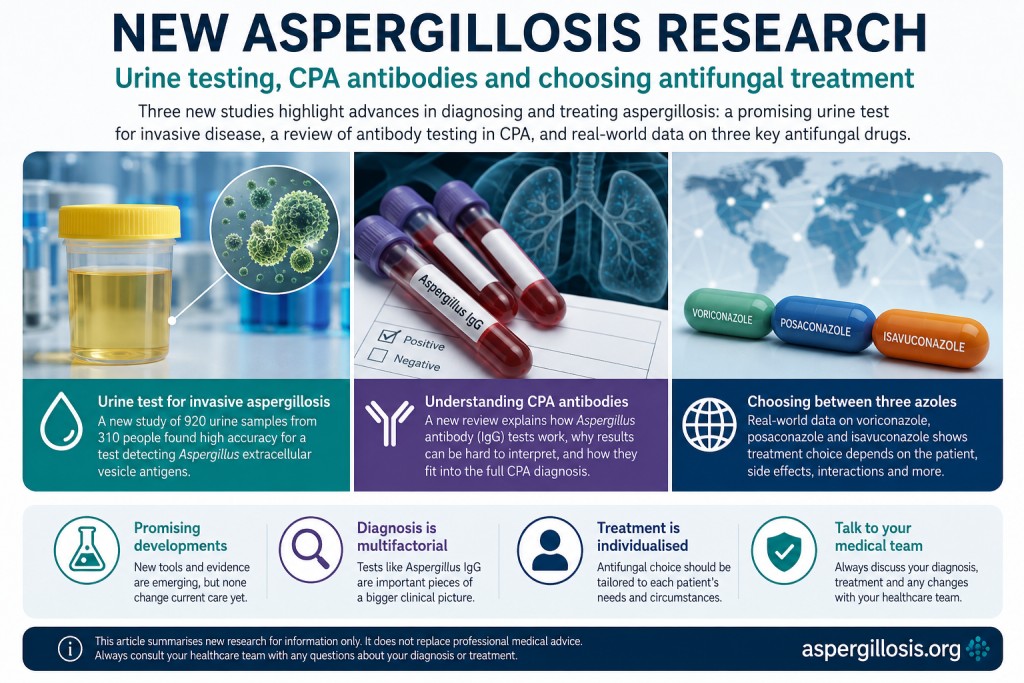
Aspergillosis research update infographic summarising July 2026 studies on invasive aspergillosis, isavuconazole, macrophages and tuberculosis.

Aspergillosis Research Update: ICU Infections, Immune Defences and Antifungal Treatment

Aspergillosis research update infographic summarising July 2026 studies on invasive aspergillosis, isavuconazole, macrophages and tuberculosis.
This month's research highlights a major international review of invasive aspergillosis in intensive care, encouraging real-world data on isavuconazole, and two studies exploring how macrophages may influence the body's defence against Aspergillus infection.

Published: July 2026

Medical research into aspergillosis continues to advance rapidly, with new studies appearing almost every week. Some confirm what doctors already suspected, while others introduce new ideas about how the body fights fungal infections or how treatment might improve in the future.

This week’s research includes a major international review of invasive aspergillosis in intensive care, encouraging real-world results for the antifungal drug isavuconazole, and two laboratory studies suggesting that specialised immune cells called macrophages may play an even greater role in protecting the lungs than previously appreciated.

None of these studies changes current treatment recommendations immediately. Together, however, they highlight an important direction in aspergillosis research: understanding not only how to kill the fungus, but also how to strengthen the body’s own immune defences.


A major international review confirms the burden of invasive aspergillosis in intensive care

A systematic review and meta-analysis combined results from 56 observational studies involving 15,385 intensive care patients. Among these patients, 2,381 cases of invasive pulmonary aspergillosis, or IPA, were identified.

The researchers estimated that IPA occurred in approximately 11.9% of the critically ill patients included in the studies. The estimated incidence increased to 15% among patients receiving mechanical ventilation.

Mortality among patients diagnosed with IPA was high:

  • 59.6% overall mortality
  • 61.9% mortality among mechanically ventilated patients

Factors associated with an increased risk of developing IPA included:

  • immunosuppression;
  • blood cancers and other malignancies;
  • corticosteroid use before admission to intensive care;
  • chronic lung, kidney, liver or heart disease;
  • mechanical ventilation;
  • vasopressor treatment;
  • and renal replacement therapy.

What does this mean?

This study reinforces that invasive aspergillosis remains a serious complication in selected critically ill patients.

However, the results should not be interpreted as meaning that approximately one in eight people admitted to intensive care will develop aspergillosis. The authors state that the evidence predominantly reflects COVID-19-associated pulmonary aspergillosis, commonly known as CAPA.

Many of the identified risk factors, such as mechanical ventilation, vasopressor treatment and renal replacement therapy, are also signs that a patient is already extremely unwell. The study therefore identifies associations but cannot prove that these treatments independently cause aspergillosis.

The authors conclude that targeted screening and tailored antifungal strategies in high-risk patients deserve prospective evaluation. They do not claim that universal screening or preventive antifungal treatment has already been shown to improve survival.

Read the paper record on PubMed


Real-world evidence continues to support isavuconazole

Another study examined how well isavuconazole performs in routine clinical practice among people with blood cancers who develop serious invasive mould infections.

The retrospective study included 84 adults treated at two hospitals in China between 2022 and 2025:

  • 62 had invasive aspergillosis;
  • 14 had mucormycosis;
  • 8 had mixed mould infections.

The main measure of success was assessed after six weeks. To count as successful treatment, the patient had to survive, show clinical or radiological improvement and avoid stopping treatment because of failure or toxicity.

The overall six-week treatment success rate was 59.5%. Among patients with aspergillosis, treatment success was higher, at 69.4%.

Only four patients experienced recorded drug-related adverse effects, and one stopped treatment because of vomiting.

What does this mean?

These findings are reassuring because they reflect routine clinical practice rather than the more controlled circumstances of a clinical trial.

The study found that patients receiving isavuconazole alone appeared to have better outcomes than those receiving combination antifungal treatment. However, this result must be interpreted cautiously.

Doctors commonly reserve combination therapy for patients who are more severely ill, have failed previous treatment, have mixed infections or are suspected of having resistant disease. The poorer outcomes in the combination-treatment group may therefore reflect the severity of the patients’ infections rather than harm caused by combining antifungal medicines.

This is known as confounding by indication. Because the patients were not randomly assigned to treatment, the study cannot establish that monotherapy is superior to combination treatment.

Overall, the study adds confidence that isavuconazole can be an effective and generally well-tolerated treatment for invasive aspergillosis in patients with haematological malignancies. It does not show that isavuconazole is better than other antifungal medicines, and it does not apply directly to chronic pulmonary aspergillosis, ABPA or Aspergillus bronchitis.

Read the paper record on PubMed


Could strengthening lung macrophages help prevent invasive aspergillosis?

Perhaps the most scientifically intriguing study this week did not test a new antifungal drug.

Instead, researchers investigated whether they could improve the ability of the lung’s own immune cells to eliminate Aspergillus fumigatus before infection became established.

The study focused on alveolar macrophages. These specialised immune cells live inside the air sacs of the lungs and are among the first cells to encounter inhaled Aspergillus spores.

Using a stem-cell transplant mouse model and an unusually low dose of Aspergillus spores intended to resemble everyday exposure, the researchers found that alveolar macrophages played a crucial role in protecting against invasive aspergillosis during the earliest stages of infection.

The researchers then tested whether macrophage function could be improved using macrophage colony-stimulating factor, or M-CSF.

M-CSF treatment:

  • improved macrophage migration;
  • enhanced phagolysosomal function;
  • increased fungal killing;
  • preserved lung tissue;
  • reduced inflammatory cytokines;
  • and protected mice against lethal invasive aspergillosis.

The researchers also tested primary human alveolar macrophages and found that M-CSF improved several of the same antifungal functions.

Importantly, the protective effect disappeared when alveolar macrophages were removed. This provides strong experimental evidence that the macrophages themselves were responsible for much of the benefit.

What does this mean?

This research suggests that tissue-resident macrophages may play an especially important role during the first hours after Aspergillus spores reach the lungs.

It also supports the wider idea of host-directed therapy: treatments designed to strengthen the patient’s immune response rather than attacking the fungus directly.

However, this study was carried out mainly in mice and has been published as a preprint. It has not yet completed formal peer review.

M-CSF is therefore not an established treatment for aspergillosis. Researchers would need to establish appropriate dosing, safety and effectiveness in people, particularly because stimulating immune activity after stem-cell transplantation could potentially affect inflammation, graft-versus-host disease and other immune processes.

Read the bioRxiv preprint


Tuberculosis may affect immune defences as well as damaging the lungs

People who have previously had pulmonary tuberculosis are at increased risk of developing chronic pulmonary aspergillosis, or CPA.

The usual explanation is structural lung damage. Tuberculosis may leave behind cavities, scarring, bronchiectasis and damaged airways, creating an environment in which Aspergillus can persist.

A new laboratory study suggests that there may also be an immunological component.

The researchers studied a mycobacterial cell-wall molecule called lipoarabinomannan, or LAM. This molecule is known to interfere with some of the cellular pathways used by macrophages to respond to infection.

Bone-marrow-derived macrophages were exposed to two forms of LAM and then challenged with swollen Aspergillus fumigatus conidia.

Exposure to LAM:

  • increased macrophage death;
  • increased inflammatory cytokine release, particularly IL-1β;
  • and reduced the ability of macrophages to kill Aspergillus conidia during the first six hours of infection.

The reduction in fungal killing was demonstrated using both colony-counting methods and time-lapse fluorescence microscopy.

What does this mean?

This study provides a plausible biological mechanism through which mycobacterial infection might interfere with early antifungal immune responses.

It does not, however, prove that this mechanism causes CPA after tuberculosis.

The experiments were conducted in laboratory-grown macrophages. They do not show that LAM remains present in the lungs for months or years after tuberculosis, nor that macrophages from people with previous tuberculosis behave in the same way.

The findings therefore do not replace the established structural explanation linking tuberculosis and CPA. Instead, they raise the possibility that lung damage and altered local immunity may work together.

Read the paper record on PubMed


A common theme emerges: macrophages matter

Although these studies examined different questions, two independent research groups reached complementary conclusions.

One study found that strengthening macrophage activity improved fungal killing and survival. The other found that disrupting macrophage activity reduced fungal killing.

Together, they support an emerging view that alveolar macrophages may be central to determining whether inhaled Aspergillus spores are cleared rapidly or allowed to develop into disease.

This does not reduce the importance of neutrophils, antifungal medicines or structural lung damage. Instead, it adds a more detailed understanding of what may happen during the earliest stages of fungal exposure.

Future advances in aspergillosis treatment may therefore involve both:

  • better drugs that attack Aspergillus directly;
  • and treatments that help the immune system respond more effectively.

What does this mean for people living with aspergillosis?

For most patients currently receiving treatment, these studies do not change day-to-day management.

Antifungal medicines remain the foundation of treatment for invasive and chronic Aspergillus infection. Patients should continue following the advice of their respiratory, infectious-diseases or specialist aspergillosis team.

These studies nevertheless provide encouraging evidence that aspergillosis research is progressing across several fronts:

  • improving recognition of invasive aspergillosis in intensive care;
  • evaluating how existing antifungal treatments perform in routine practice;
  • understanding why some people are more vulnerable to Aspergillus than others;
  • and exploring whether the immune system itself could become a future treatment target.

Progress is often gradual, and laboratory findings do not always lead to successful treatments. However, each study adds another piece to the puzzle and helps researchers move towards more effective and more personalised approaches to aspergillosis.


References

  1. Zhou Z, Luo B, Zhang X, et al. Incidence, mortality and risk factors of invasive pulmonary aspergillosis in critically ill patients during the COVID-19 era: a global systematic review and meta-analysis. Annals of Clinical Microbiology and Antimicrobials. Published 10 July 2026. PubMed. DOI.
  2. Zhang J, Xu M, Mao J, et al. Isavuconazole for invasive mold disease in patients with hematological malignancies: a multicenter real-world study from China on efficacy, safety, and competing risks. Antimicrobial Agents and Chemotherapy. Published 6 July 2026. PubMed. DOI.
  3. Sheta D, Mokhtari Z, Strobel M, et al. M-CSF-stimulated alveolar macrophages safeguard from invasive aspergillosis. bioRxiv. Preprint published 9 July 2026. DOI and preprint.
  4. Gonzales-Huerta LE, Williams TJ, Aljohani R, et al. Mycobacterial lipoarabinomannan negatively interferes with macrophage responses to Aspergillus fumigatus in vitro. PLOS ONE. 2026;21(7):e0351935. PubMed. DOI.

This article summarises newly published research for patients and non-specialist readers. It does not replace individual medical advice from a qualified healthcare professional.


Infographic summarising the July 2026 weekly aspergillosis research update, highlighting new COPD diagnostic criteria for invasive pulmonary aspergillosis, chronic pulmonary aspergillosis serology, ICU galactomannan testing, environmental prevention of fungal disease, and other key research developments.

Weekly Aspergillosis Research Update: COPD IPA Criteria, CPA Serology, ICU Galactomannan and Environmental Prevention

Infographic summarising the July 2026 weekly aspergillosis research update, highlighting new COPD diagnostic criteria for invasive pulmonary aspergillosis, chronic pulmonary aspergillosis serology, ICU galactomannan testing, environmental prevention of fungal disease, and other key research developments.
This week's aspergillosis research update highlights proposed COPD-specific diagnostic criteria for invasive pulmonary aspergillosis, new evidence on chronic pulmonary aspergillosis serology, ICU galactomannan diagnostics, environmental prevention of invasive fungal disease, and other clinically important studies.

Week ending 6 July 2026

Overall summary

This week’s strongest theme is improved recognition and interpretation of Aspergillus disease in high-risk respiratory and immunocompromised patients.

The headline paper proposes COPD-specific diagnostic criteria for invasive pulmonary aspergillosis (IPA), addressing a long-standing gap between classic immunocompromised-host definitions and real-world respiratory practice. Other important papers focus on chronic pulmonary aspergillosis (CPA) serology, bronchoalveolar lavage galactomannan stewardship, endotracheal aspirate galactomannan in ICU patients, and environmental prevention of invasive fungal disease in paediatric cancer care.

Overall, this is a week of cautious progress: better criteria, better test interpretation, and better diagnostic systems — but several findings still require prospective validation.

High priority

Diagnostic criteria for invasive pulmonary aspergillosis in COPD patients

Denning DW, Rogers TR, Takazono T, Su X, Lagrou K, White PL, James DA, Bafadhel M, Lopez JB, Bulpa P, Chotirmall SH, et al.
American Journal of Respiratory and Critical Care Medicine. Published 1 July 2026.
DOI: 10.1093/ajrccm/aamag310
PMID: 42384914

This is the likely headline paper of the week. It proposes COPD-specific diagnostic criteria for IPA in non-ventilated hospitalised patients with COPD exacerbations. The criteria focus on patients with a hospitalised exacerbation plus at least two risk factors, such as systemic or high-dose inhaled corticosteroids, bronchiectasis, diabetes, cardiovascular disease, or prolonged antibiotic exposure.

Recommended investigation includes CT chest imaging, respiratory fungal microscopy and culture, preferably Aspergillus PCR, BAL or bronchoscopy galactomannan where available, serum galactomannan, and Aspergillus IgG. Diagnosis is supported by the combination of a high-risk COPD patient, compatible imaging, and any two positive Aspergillus tests, either from different samples or from different tests on the same respiratory sample.

Why it matters: COPD patients with IPA often do not fit classic EORTC/MSGERC host-factor definitions, which are strongest for haematology and transplant populations. This paper provides a respiratory-focused framework for a group in whom IPA may be missed, diagnosed late, or dismissed as colonisation.

Clinical or diagnostic relevance: The criteria could help respiratory teams investigate hospitalised COPD patients who deteriorate unexpectedly or fail to respond to standard treatment. They may encourage earlier CT imaging and broader fungal testing rather than relying on a single sputum culture.

Limitations / cautions: These are proposed consensus criteria based on literature review and Delphi methodology, not externally validated diagnostic criteria. Further studies are needed to validate them and to improve performance data for fungal assays in COPD. There remains a risk of overdiagnosis from colonisation and underdiagnosis where good respiratory samples or bronchoscopy are unavailable.

Diagnostic performance of IgG against multiplex Aspergillus antigens (mx4) for identifying chronic pulmonary aspergillosis

Sehgal IS, Agarwal R, Muthu V, Prasad KT, Dhooria S, Singh M, Rudramurthy SM, Aggarwal AN, Garg M, Chakrabarti A.
Medical Mycology. Published 2 July 2026.
DOI: 10.1093/mmy/myag071
PMID: 42392187

This prospective diagnostic study compared a multiplex Aspergillus IgG assay, mx4-IgG, with standard A. fumigatus-IgG for diagnosing CPA. The mx4 antigen preparation includes extracts of A. fumigatus, A. flavus, A. niger, and A. terreus. Among 332 adults with suspected CPA, 230 had CPA and 102 were diseased controls with structural lung disease.

Against the primary reference standard, mx4-IgG had sensitivity of 83.0% and specificity of 73.5%, compared with 95.2% and 88.2% for A. fumigatus-IgG.

Why it matters: The study tests an attractive idea: that broader multiplex Aspergillus antigen testing might improve CPA diagnosis. However, the results suggest that mx4-IgG was not superior to standard A. fumigatus-IgG.

Clinical or diagnostic relevance: A. fumigatus-IgG should remain the first-line serological test for CPA based on these findings. A practical finding was that a hierarchical strategy using A. fumigatus-IgG followed by A. flavus-IgG identified 97.7% of CPA cases at the lowest reported cost, USD 24 per patient, and outperformed strategies incorporating mx4.

Limitations / cautions: This was a tertiary chest-clinic cohort with high CPA prevalence, so predictive values may differ in lower-prevalence settings. The abstract does not provide confidence intervals, ROC values, or detailed subgroup data. The subgroup most likely to benefit from A. flavus-IgG requires full-text review.

Medium priority

The clinical utility of bronchoalveolar lavage galactomannan result stewardship within a tertiary medical system

Apostolopoulou A, Hammond SP, Turbett SE, Fishman JA.
Medical Mycology. Published 1 July 2026.
DOI: 10.1093/mmy/myag069
PMID: 42384022

This retrospective quality-improvement study examined stewardship of elevated BAL galactomannan results in a tertiary medical system. The Transplant Infectious Disease team monitored all elevated BAL GM results and, 24 hours after a positive result, sent a standardised email to the primary team if the result appeared unaddressed in the clinical documentation.

Among 55 cases with BAL GM >1.0, 17 cases (31%) had antifungal therapy started after a single positive BAL GM result. The stewardship team contacted primary teams in 14 cases (25%), leading to a new start or change in antifungal therapy.

Why it matters: Fungal diagnostics are only useful if results are recognised and interpreted correctly. This paper highlights a practical gap in BAL GM interpretation and shows how specialist result stewardship may help close the loop.

Clinical or diagnostic relevance: The intervention is highly practical: monitor positive BAL GM results, check whether they have been acknowledged, and provide specialist infectious diseases or mycology input where needed. This could be relevant to transplant, haematology, ICU, and tertiary respiratory services.

Limitations / cautions: The study is small, retrospective, and a quality-improvement evaluation rather than a controlled before-and-after study. It shows that stewardship influenced management, but it does not prove improved survival, reduced harm, or reduced inappropriate antifungal prescribing.

Diagnostic utility of endotracheal aspirate galactomannan for invasive pulmonary aspergillosis in ICU patients

Kumar R, Gupta A, Kumar A, Rao Kordcal S, Baitha U, Singh G, Xess I, Madan K, Soneja M, Wig N.
medRxiv preprint. Published 1 July 2026.
DOI: 10.64898/2026.06.29.26356826
PPR: PPR1271604

This prospective observational cohort study assessed endotracheal aspirate galactomannan as a supportive diagnostic test for IPA in mechanically ventilated ICU patients. The study enrolled 120 medicine ICU patients in India, aged over 14 years and ventilated for more than 48 hours, meeting BM-AspICU entry criteria.

Forty-four patients (37%) were classified as probable IPA and 76 as colonisers or possible IPA. The optimal ETA GM cut-off was 1.097, giving sensitivity of 72.73%, specificity of 84.2%, positive likelihood ratio of 4.86, negative likelihood ratio of 0.35, and AUC of 0.844.

Why it matters: ETA sampling is less invasive and easier than bronchoscopy or BAL in ventilated ICU patients. A useful ETA GM test could support earlier recognition of IPA where BAL is unsafe, delayed, or unavailable.

Clinical or diagnostic relevance: ETA GM may be useful as an adjunct or triage tool in ventilated ICU patients with suspected IPA. A positive result may increase suspicion, but a negative result should not exclude disease.

Limitations / cautions: This is a preprint and may not yet have been peer reviewed. It is single-centre and uses a clinical classification reference standard rather than a perfect gold standard. ETA samples are vulnerable to the colonisation-versus-invasion problem, and the proposed cut-off needs external validation.

The underestimated role of environmental factors in the prevention of invasive fungal disease: experience from a European childhood cancer centre

Malvestiti S, Andresen F, Hufnagel M, Speckmann C, Strahm B, Feuchtinger T, Puzik A.
Mycoses. Published 1 July 2026.
DOI: 10.1111/myc.70204
PMID: 42367057

This retrospective single-centre before-and-after study examined invasive fungal disease incidence in high-risk paediatric cancer and transplant patients before and after relocation from an older 1990s building to a new facility with improved environmental protection standards. The study included 186 patients: 140 before relocation and 46 after relocation.

Antifungal prophylaxis followed local standards throughout, with adherence above 98%. Invasive fungal disease incidence fell from 25 cases in the older building (17.9%) to no cases after relocation (p=0.002). Most cases were pulmonary aspergillosis and occurred in HSCT recipients.

Why it matters: The study highlights environmental protection as an under-recognised component of fungal disease prevention. Pharmacological prophylaxis is important, but building design, air quality, and environmental controls may also strongly influence risk.

Clinical or diagnostic relevance: The findings are relevant to paediatric oncology, HSCT, adult haematology, transplant units, and hospitals undergoing refurbishment or ward relocation. Environmental protection should be part of fungal infection prevention planning.

Limitations / cautions: This is observational, retrospective, and single-centre. The post-relocation period was shorter than the pre-relocation period, and the post-relocation cohort was smaller. The abstract does not list the specific environmental measures, so the reduction should be interpreted as being associated with a prevention bundle rather than any single intervention.

Lower priority

Combination antifungal therapy and formulary optimization for progressive invasive pulmonary aspergillosis in a pediatric patient with acute myeloid leukemia: a case report

Khamis F, Al Busaidi A, Al Bahrani K, Al-Rashdi A.
Clinical Case Reports. Published 1 July 2026.
DOI: 10.1002/ccr3.73041
PMID: 42389035

This case report describes a paediatric AML patient with progressive or refractory IPA. Radiological improvement followed combination antifungal therapy and a switch to brand-name liposomal amphotericin B. The authors suggest that refractory IPA management may require attention not only to antifungal class escalation but also to formulation choice and individualised optimisation.

Why it matters: The case raises a practical stewardship issue: when IPA progresses despite apparently appropriate therapy, clinicians should reassess drug exposure, formulation, host immune recovery, resistance, drug interactions, and combination strategy.

Clinical or diagnostic relevance: This is most relevant to paediatric haemato-oncology, AML, prolonged neutropenia, refractory IPA, and formulary decisions.

Limitations / cautions: This is a single case report and should be treated as hypothesis-generating only. It does not prove superiority of one amphotericin formulation over another. Improvement could reflect combination therapy, immune recovery, timing, supportive care, or other factors.

What to highlight this week

  • The COPD IPA diagnostic criteria paper is the headline item. It addresses a major diagnostic gap in respiratory practice, but should be described as a proposed consensus framework requiring prospective validation.
  • The CPA serology study is an important negative study. Broader multiplex IgG testing was not better than standard A. fumigatus-IgG. The practical message is to keep A. fumigatus-IgG first-line while considering whether targeted reflex A. flavus-IgG deserves further evaluation in selected settings.
  • BAL galactomannan stewardship offers a clear implementation message. Fungal diagnostics need interpretation pathways, not just laboratory reporting. A positive fungal biomarker should trigger documented clinical review.
  • Endotracheal aspirate galactomannan in ICU patients is promising but not practice-changing yet. ETA GM may help where BAL is difficult, but results must be interpreted alongside clinical, radiological, and microbiological evidence.
  • Environmental protection may substantially reduce invasive fungal disease risk in paediatric cancer and HSCT settings. However, the evidence is observational and bundled, so individual protective measures cannot be credited from the abstract alone.
  • The paediatric AML case report is clinically thought-provoking but low-level evidence. It is best mentioned briefly as a reminder to reassess drug exposure, formulation, resistance, immune status, and combination strategy in refractory IPA.

Evidence note

This update is based on available evidence notes and abstracts for some papers. Full-text review may refine details, especially around methodology, subgroup findings, confidence intervals, and implementation implications.


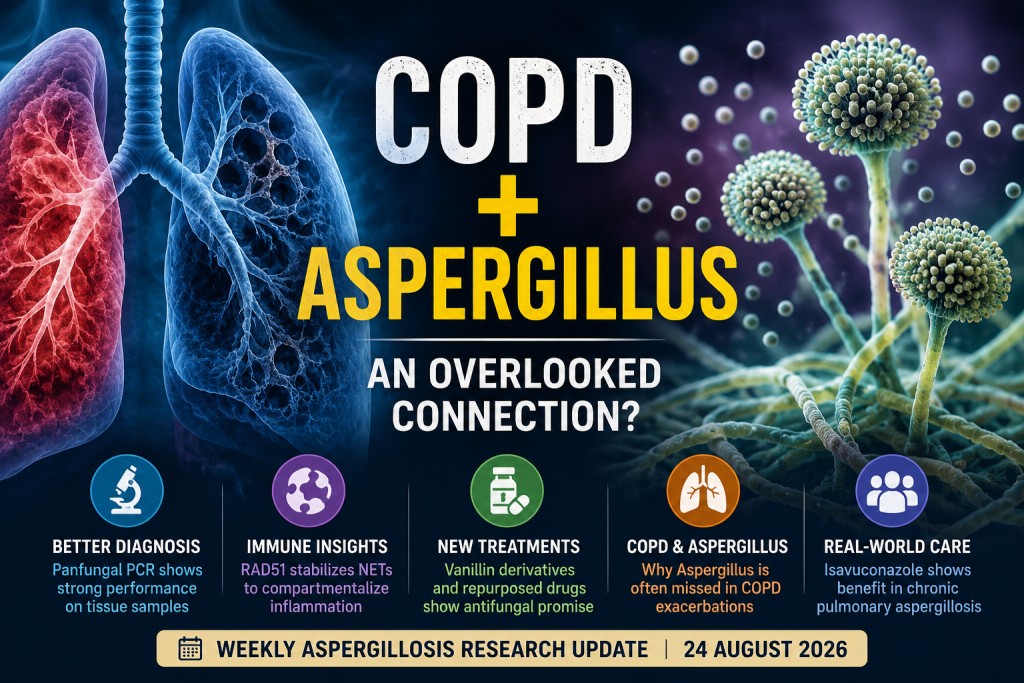
Illustration summarising new research showing allergic bronchopulmonary aspergillosis (ABPA) and Aspergillus sensitisation may be more common in people with chronic obstructive pulmonary disease (COPD).

Weekly Aspergillosis Research Update: June 29

Illustration summarising new research showing allergic bronchopulmonary aspergillosis (ABPA) and Aspergillus sensitisation may be more common in people with chronic obstructive pulmonary disease (COPD).
New research suggests Aspergillus sensitisation and allergic bronchopulmonary aspergillosis (ABPA) may occur more frequently in people with COPD than previously recognised. This week's update also highlights invasive aspergillosis in autoimmune disease, cerebral aspergillosis associated with ibrutinib therapy and influenza, and emerging inhaled antifungal drug delivery systems.

COPD, autoimmune disease and new approaches to antifungal treatment

Published: 29 June 2026

Every week we review the latest research on aspergillosis and related fungal diseases, selecting the studies most likely to influence patient care and clinical practice. This week's research focuses on an increasingly important theme: recognising Aspergillus disease in patient groups where it has traditionally been overlooked.

The highlight is a large systematic review suggesting that allergic Aspergillus disease may be more common in people living with chronic obstructive pulmonary disease (COPD) than previously appreciated.


Featured Paper

COPD and Aspergillus: Is allergic aspergillosis more common than we thought?

For decades, allergic bronchopulmonary aspergillosis (ABPA) has been regarded primarily as a complication of asthma and cystic fibrosis. However, respiratory specialists have increasingly reported Aspergillus-related disease in patients with COPD.

A new systematic review and meta-analysis has now brought together the available evidence.

Paper: Ajayababu A, Antony A, Goyal B, Ray A. Prevalence of allergic bronchopulmonary aspergillosis/Aspergillus sensitization in chronic obstructive pulmonary disease: A systematic review and meta-analysis. Respiratory Investigation. 2026. PubMed PMID: 42361722

What did the researchers do?

The authors searched four major medical databases for studies reporting either:

  • Allergic bronchopulmonary aspergillosis (ABPA)
  • Aspergillus sensitisation (AS)

Among patients with COPD, the review identified 23 suitable studies, including:

  • 1,529 patients for analysis of ABPA
  • 3,505 patients for analysis of Aspergillus sensitisation

Pooling data from many studies provides a more reliable estimate than individual reports alone.

What did they find?

The results suggest Aspergillus-related disease is not rare in COPD.

The pooled prevalence was:

  • ABPA: 2.1%
  • Aspergillus sensitisation: 10.4%

Put another way:

  • around 1 in 50 people with COPD may have ABPA
  • approximately 1 in 10 have evidence of sensitisation to Aspergillus

Studies using Aspergillus-specific IgE as part of their diagnostic strategy detected more ABPA than studies using skin testing or total IgE alone. This suggests that the choice of diagnostic tests may influence how many patients are identified.

Why is this important?

Many symptoms of COPD overlap with Aspergillus-related disease, including:

  • persistent cough
  • breathlessness
  • increased sputum production
  • recurrent exacerbations

As a result, some patients may continue to receive repeated courses of antibiotics or steroids while an underlying Aspergillus-related condition remains unrecognised.

This study does not suggest that everyone with COPD should undergo routine fungal testing. However, it supports considering Aspergillus investigations in selected patients with:

  • recurrent exacerbations despite optimal therapy
  • unexplained eosinophilia or raised IgE
  • bronchiectasis
  • persistent mucus plugging
  • radiological abnormalities that do not fit the expected pattern

Strengths and limitations

This is currently one of the largest reviews examining COPD and Aspergillus disease.

Its strengths include:

  • systematic literature search
  • formal meta-analysis
  • inclusion of more than 5,000 patients overall

However, the included studies differed considerably in patient populations, diagnostic methods and disease severity. This statistical heterogeneity means the true prevalence almost certainly varies between different clinical settings.

The review also demonstrates an association rather than proving that COPD itself causes ABPA.

What does this mean for patients?

The main message is one of greater awareness.

For patients with COPD whose symptoms remain difficult to explain despite appropriate treatment, clinicians may increasingly consider whether Aspergillus sensitisation or ABPA could be contributing to ongoing respiratory problems.

Earlier recognition has the potential to improve diagnosis and ensure that patients receive the most appropriate investigations and treatment.


Research in Brief

Invasive aspergillosis in autoimmune inflammatory rheumatic diseases

Paper: Liang P, Zhang X, Cai S, Hu Z, Dong L. Invasive aspergillosis in autoimmune inflammatory rheumatic diseases: epidemiology, risk factors, diagnosis, management and challenges. Annals of Medicine. 2026. PubMed PMID: 42343869

A comprehensive new review highlights the growing importance of invasive aspergillosis in people with autoimmune inflammatory rheumatic diseases such as rheumatoid arthritis and systemic vasculitis.

The increasing use of corticosteroids, biologic therapies and other immunosuppressive medications has expanded the population at risk. The authors note that invasive aspergillosis remains uncommon but carries a high mortality when diagnosis is delayed.

A particular challenge is that symptoms and imaging findings can resemble a flare of the underlying autoimmune disease, making diagnosis difficult. The review emphasises combining clinical assessment with microbiological tests, including galactomannan, PCR and bronchoalveolar lavage where appropriate, and careful interpretation of imaging findings.

Why it matters: Clinicians should maintain a high index of suspicion for invasive fungal disease in immunosuppressed patients who fail to respond as expected to conventional treatment.

Cerebral aspergillosis following influenza and ibrutinib therapy

Paper: Haraguchi M, Kimura M, Uruga H, Takahashi Y, Takaya H, Arisawa K, et al. Cerebral aspergillosis caused by Aspergillus flavus following seasonal influenza infection in a patient receiving ibrutinib for Waldenström's macroglobulinemia. Journal of Infection and Chemotherapy. 2026. PubMed PMID: 42331321

A Japanese case report describes successful treatment of cerebral aspergillosis caused by Aspergillus flavus in a patient receiving the Bruton tyrosine kinase inhibitor ibrutinib after seasonal influenza infection.

The patient developed both pulmonary and cerebral aspergillosis, underwent neurosurgical debridement and was successfully treated with isavuconazole.

Although this represents a single case, it reinforces growing evidence that BTK inhibitors and severe viral infections are emerging risk factors for invasive aspergillosis.

Why it matters: Patients receiving targeted therapies who develop persistent respiratory or neurological symptoms following influenza warrant careful assessment for opportunistic fungal infection.

Looking ahead: New ways to deliver antifungal drugs

Paper: Martins YA, Anselmo-Lima WT, Tamashiro E, Ho E, Valera FCP. Next-generation drug delivery systems for aspergillosis: Overcoming barriers in antifungal therapy. Biomedicine & Pharmacotherapy. 2026. PubMed PMID: 42361622

Another review this week explores next-generation drug delivery systems designed to improve treatment of aspergillosis.

Researchers are developing inhaled formulations, nanoparticles and targeted drug-delivery technologies that aim to increase antifungal concentrations directly within the lungs while reducing systemic side effects.

Most of these approaches remain experimental, but they offer possibilities for the future management of chronic pulmonary aspergillosis and other forms of pulmonary fungal disease.


What this week's research tells us

Although these papers address different aspects of aspergillosis, they all point in the same direction.

Increasingly, Aspergillus disease is being recognised in patient groups previously considered to be at relatively low risk, including people with COPD and those receiving modern immunosuppressive therapies.

At the same time, advances in diagnostics and drug delivery are creating opportunities for earlier diagnosis and more targeted treatment.

For patients, the message is reassuring but important: persistent or unexplained respiratory symptoms deserve careful evaluation, particularly when standard treatments are not achieving the expected improvement.

As awareness continues to grow, more patients may receive the correct diagnosis earlier in the course of their illness.


References

  1. Ajayababu A, Antony A, Goyal B, Ray A. Prevalence of allergic bronchopulmonary aspergillosis/Aspergillus sensitization in chronic obstructive pulmonary disease: A systematic review and meta-analysis. Respiratory Investigation. 2026. doi:10.1016/j.resinv.2026.101469. PubMed
  2. Liang P, Zhang X, Cai S, Hu Z, Dong L. Invasive aspergillosis in autoimmune inflammatory rheumatic diseases: epidemiology, risk factors, diagnosis, management and challenges. Annals of Medicine. 2026. doi:10.1080/07853890.2026.2685285. PubMed
  3. Haraguchi M, Kimura M, Uruga H, Takahashi Y, Takaya H, Arisawa K, et al. Cerebral aspergillosis caused by Aspergillus flavus following seasonal influenza infection in a patient receiving ibrutinib for Waldenström's macroglobulinemia. Journal of Infection and Chemotherapy. 2026. doi:10.1016/j.jiac.2026.103020. PubMed
  4. Martins YA, Anselmo-Lima WT, Tamashiro E, Ho E, Valera FCP. Next-generation drug delivery systems for aspergillosis: Overcoming barriers in antifungal therapy. Biomedicine & Pharmacotherapy. 2026. doi:10.1016/j.biopha.2026.119691. PubMed

```


Medical illustration showing Aspergillus fumigatus, PCR diagnostics, lung imaging, antifungal medicines and laboratory research representing recent advances in aspergillosis diagnosis, treatment and antifungal resistance research.

Weekly Aspergillosis Research Update: New Diagnostics, CAPA Evidence, and Why Azole Tolerance Matters

Medical illustration showing Aspergillus fumigatus, PCR diagnostics, lung imaging, antifungal medicines and laboratory research representing recent advances in aspergillosis diagnosis, treatment and antifungal resistance research.
This week's aspergillosis research highlights include PCR diagnostics, a potential new bronchoscopic approach to aspergilloma management, COVID-19-associated pulmonary aspergillosis (CAPA) evidence, and emerging insights into azole tolerance.

Last reviewed: 23 June 2026

Author: National Aspergillosis Centre Team

Audience: People living with aspergillosis, carers, healthcare professionals, and interested readers.


In one sentence: This week's aspergillosis research highlights a possible new bronchoscopic approach to aspergilloma management, growing use of PCR diagnostics, a major review of COVID-19-associated pulmonary aspergillosis, and new discoveries explaining how Aspergillus fumigatus may survive antifungal treatment.

Research Highlight of the Week

Why azole tolerance is more complex than resistance

The most important scientific theme this week is the growing recognition that Aspergillus fumigatus can sometimes survive antifungal treatment without possessing classic resistance mutations. Three separate studies suggest that iron availability, cellular stress responses, epigenetic regulation and long non-coding RNA may all influence how the fungus responds to azole drugs. These findings do not change treatment today, but they could shape future approaches to antifungal resistance monitoring and antifungal drug development.

Who Should Read This Update?

This update may be particularly relevant for:

  • People living with chronic pulmonary aspergillosis (CPA)
  • People with aspergilloma or a history of haemoptysis (coughing up blood)
  • Patients receiving antifungal treatment such as itraconazole, voriconazole, posaconazole or isavuconazole
  • Healthcare professionals interested in aspergillosis diagnostics and antifungal resistance
  • Anyone following developments in fungal disease research

Key Points

  • A study explored bronchoscopic removal of aspergilloma in selected patients with post-tuberculosis chronic cavitary pulmonary aspergillosis.
  • Real-time polymerase chain reaction (PCR) testing may provide additional support when diagnosing invasive aspergillosis.
  • A major review confirms that COVID-19-associated pulmonary aspergillosis (CAPA) remains a serious complication of severe COVID-19.
  • New research suggests that antifungal treatment response is influenced by much more than simple resistance mutations.
  • None of these findings should lead patients to change treatment without specialist medical advice.

Contents


Overview

Research into aspergillosis continues to advance on several fronts. This week's papers range from practical clinical studies investigating new ways to manage aspergilloma, through to laboratory research exploring how Aspergillus fumigatus survives antifungal treatment.

While none of these studies are likely to change patient care immediately, they highlight important trends in the field. Researchers are working to improve diagnosis, develop new treatment approaches, and better understand why some infections persist despite treatment.

The strongest overall message this week is that aspergillosis research is moving beyond simple categories such as “susceptible” or “resistant”. Aspergillus fumigatus can adapt to stress, tolerate antifungal pressure, and sometimes survive long enough to acquire more stable resistance.

Most of the studies featured this week improve our understanding of aspergillosis rather than changing treatment directly. Nevertheless, several findings point towards future improvements in diagnosis, patient monitoring and antifungal therapy.


A Possible New Approach for Aspergilloma

One of the most clinically interesting papers this week investigated bronchoscopic removal of aspergilloma in patients with post-tuberculosis chronic pulmonary aspergillosis (CPA).

An aspergilloma, sometimes called a fungal ball, develops when Aspergillus grows within an existing cavity in the lung. These cavities can develop after conditions such as tuberculosis, sarcoidosis, or previous severe lung infections.

Post-tuberculosis chronic cavitary pulmonary aspergillosis refers to CPA developing in lung cavities left behind after previous tuberculosis.

Traditionally, treatment options include antifungal medication, surgery in carefully selected patients, and procedures such as bronchial artery embolisation to control significant bleeding.

This study explored whether bronchoscopy could be used to remove fungal material directly from affected cavities.

Why many patients will find this interesting: Antifungal treatment can help control chronic pulmonary aspergillosis, but it does not usually remove an established fungal ball. Surgery can sometimes be curative, but many patients are not suitable surgical candidates because of reduced lung function or other medical conditions. A successful bronchoscopic approach could eventually provide an additional option for selected patients.

Why is this important?

Many patients with chronic pulmonary aspergillosis are not suitable candidates for surgery because of reduced lung function or other health problems. A bronchoscopic approach could potentially offer a less invasive alternative in selected cases.

However, several important questions remain unanswered:

  • Which patients benefit most?
  • How often does the aspergilloma return?
  • What is the risk of bleeding?
  • Is antifungal treatment still required afterwards?
  • How durable are the results over longer follow-up?

At present, this should be viewed as a promising specialist-centre approach rather than a new standard of care.

Evidence strength: Clinical interventional study.

Practice-changing now? No. Potentially important, but not yet routine management.

Bottom line: Bronchoscopic removal of aspergilloma is an interesting specialist approach that may eventually help some patients who are unsuitable for surgery, but it is not yet standard treatment.

Read more:
Investigating the efficacy and safety of bronchoscopic removal of aspergilloma in PTB-CCPA


PCR Testing May Help Diagnose Invasive Aspergillosis

Another paper examined the role of real-time polymerase chain reaction (PCR) testing in diagnosing invasive aspergillosis.

PCR detects fungal genetic material and can potentially identify infection more quickly than conventional culture methods.

Why is this important?

Diagnosing invasive aspergillosis remains challenging. No single test is perfect, and clinicians often need to combine information from:

  • CT scans and other imaging
  • Bronchoscopy findings
  • Fungal culture
  • Microscopy
  • Galactomannan testing
  • Clinical risk factors

PCR has been studied for many years, but its performance varies depending on the patient group, sample type, laboratory method and whether the patient has already received antifungal treatment.

This study supports the growing role of molecular diagnostics but does not suggest that PCR should replace existing tests. Instead, it reinforces the idea that combining several diagnostic approaches usually provides the most reliable diagnosis.

A key caution is that PCR detects fungal DNA. It does not always prove invasive disease. This is especially important in people with structurally abnormal lungs, where colonisation can complicate interpretation.

Evidence strength: Diagnostic utility study.

Practice-changing now? No. PCR may be a useful additional test but should always be interpreted alongside the wider clinical picture.

Bottom line: PCR is becoming an increasingly useful diagnostic tool, but it works best when combined with scans, biomarkers, culture results and clinical assessment.

Read more:
Utility of Real-Time PCR in the Diagnosis of Invasive Aspergillosis


Five Years of Evidence on COVID-19-Associated Pulmonary Aspergillosis

Researchers also published a major umbrella review examining evidence from 2020 to 2025 on COVID-19-associated pulmonary aspergillosis (CAPA).

CAPA emerged during the COVID-19 pandemic as an important complication affecting some patients with severe COVID-19, particularly those requiring intensive care.

What did the review find?

The review confirms that CAPA remains associated with:

  • Severe illness
  • Intensive care admission
  • Mechanical ventilation
  • High mortality

However, estimating exactly how common CAPA is remains difficult.

Different studies used different definitions, diagnostic methods and screening approaches, making direct comparison challenging. Bronchoscopy was also limited in many settings early in the pandemic, which affected how cases were detected and classified.

Studies have also differed because of:

  • Different diagnostic criteria
  • Changes in COVID-19 treatment over time
  • Vaccination status
  • Use of corticosteroids and immunomodulators
  • Different intensive care unit screening practices

The review is valuable because it brings together several years of evidence, but it is unlikely to change current management directly.

Evidence strength: Umbrella review and meta-meta-analysis.

Practice-changing now? No. It reinforces awareness rather than introducing a new treatment approach.

Bottom line: CAPA remains a serious complication of severe COVID-19, but this review largely confirms what clinicians already suspected rather than changing current practice.

Read more:
Incidence, Mortality and Risk Factors in COVID-19-Associated Pulmonary Aspergillosis (CAPA)


Why Azole Tolerance Is More Complex Than Resistance

The most scientifically important theme this week comes from three studies investigating how Aspergillus fumigatus survives exposure to azole antifungal drugs.

For many years, discussions about antifungal treatment failure have focused heavily on resistance mutations, particularly changes involving the CYP51A gene. These mutations can make the fungus less susceptible to antifungal drugs such as itraconazole, voriconazole, posaconazole and isavuconazole.

However, these new studies suggest the situation may be considerably more complicated.

Researchers found that fungal survival may also be influenced by:

  • Iron availability
  • Mitochondrial function
  • Epigenetic regulation
  • Long non-coding RNA molecules

Why this matters for patients: Laboratory testing may sometimes suggest that an Aspergillus isolate is susceptible to treatment, yet the infection can still prove difficult to control. Researchers increasingly believe that fungal tolerance and stress-response mechanisms may help explain some of these situations. Understanding these processes could eventually lead to better resistance monitoring and more effective treatments.

Resistance vs Tolerance: What's the Difference?

Resistance and tolerance are related but different concepts.

Resistance usually refers to genetic changes that allow the fungus to continue growing despite exposure to an antifungal drug.

Tolerance refers to the ability of some fungal cells to survive drug exposure without necessarily having permanent resistance mutations.

This distinction matters because tolerance may allow the fungus to persist long enough to eventually acquire more stable resistance.

In simple terms, researchers are increasingly asking whether some cases of treatment failure occur because the fungus first becomes tolerant and only later becomes resistant.

The emerging model:
Azole exposure → Temporary tolerance → Fungal survival → Opportunity for resistance mutations → Stable resistance


Iron Starvation and Azole Tolerance

One study found that iron starvation may increase azole tolerance in Aspergillus fumigatus through effects on mitochondrial function.

Iron is essential for both humans and fungi. During infection, the immune system attempts to limit fungal access to iron as part of a defence strategy known as nutritional immunity.

The study suggests that when iron becomes scarce, the fungus may alter its metabolism in ways that help it survive antifungal stress.

This does not mean that iron supplements or dietary changes would affect antifungal treatment. The work is exploring complex biological processes occurring within infected tissues.

Instead, the study provides another clue about how the fungus adapts to hostile conditions inside the body.

Evidence strength: Mechanistic laboratory research.

Practice-changing now? No.

View on PubMed


Epigenetics and the Development of Resistance

Perhaps the most influential paper this week examined an epigenetic mechanism that appears to promote azole tolerance and facilitate the later development of antifungal resistance.

Epigenetics refers to changes in gene activity that occur without altering the underlying DNA sequence itself.

In recent years, researchers have increasingly recognised that fungal adaptation is not driven solely by permanent genetic mutations. Instead, fungi can alter gene activity in response to environmental stress.

This study supports a model in which antifungal exposure may trigger a temporary tolerant state. That tolerant state may then allow some fungal cells to survive long enough to acquire permanent resistance mutations.

Importantly, this does not replace the existing understanding of CYP51A-mediated resistance. Instead, it expands it.

Rather than viewing resistance as a single event, researchers are increasingly seeing it as a process that may develop over time.

Evidence strength: Strong mechanistic evidence.

Practice-changing now? No, but potentially important for future resistance monitoring and antifungal development.

View on PubMed


Long Non-Coding RNA and Antifungal Susceptibility

The third paper identified a long non-coding RNA that appears to influence triazole susceptibility in Aspergillus fumigatus.

Long non-coding RNAs are molecules that do not produce proteins themselves but can still influence how genes are switched on or off.

Although these molecules are increasingly recognised as important regulators of biological processes, their role in fungal antifungal susceptibility remains relatively unexplored.

The researchers found that altering the activity of a specific long non-coding RNA changed how the fungus responded to azole antifungal drugs in laboratory experiments and animal models.

This is still early-stage science and has no immediate impact on patient treatment. However, it provides another example of how fungal responses to antifungal drugs may be regulated by multiple biological pathways.

Evidence strength: Moderate to strong mechanistic evidence.

Practice-changing now? No.

View on PubMed


Bottom line: These studies suggest that antifungal treatment response is influenced by much more than classic resistance mutations. Scientists are uncovering a complex network of stress responses, metabolic adaptations and gene regulation mechanisms that may help Aspergillus survive antifungal exposure. While this research will not change treatment today, it may eventually lead to better ways of predicting, preventing and overcoming antifungal resistance.


Also Noted This Week

Breakthrough Aspergillosis Despite Prophylaxis

A case report described tracheobronchial aspergillosis developing in a lung transplant recipient despite receiving combined antifungal prophylaxis. The infection involved Aspergillus calidoustus and Aspergillus niger.

While only a single case, it serves as a reminder that prophylactic treatment reduces risk but cannot eliminate it completely, particularly in highly immunosuppressed patients and where less common or resistant Aspergillus species may be involved.

Evidence strength: Case report. Clinically notable, but very low-level evidence.

Practice-changing now? No.

Read more:
View on PubMed |
Read via DOI


Therapeutic Drug Monitoring Remains Important

A bibliometric review highlighted growing interest in antifungal therapeutic drug monitoring (TDM).

Therapeutic drug monitoring means measuring antifungal drug levels in the blood to help ensure that treatment is high enough to be effective while minimising toxicity and drug interactions.

This does not provide new clinical trial evidence, but it supports the growing importance of antifungal stewardship, pharmacokinetic monitoring, toxicity prevention and pharmacy-led optimisation of antifungal treatment.

Evidence strength: Bibliometric and service-focused review.

Practice-changing now? No, but relevant to service development and pharmacy practice.

Read more:
View on PubMed |
Read via DOI


Potential Future Drug Targets

A bioRxiv preprint investigated the mannitol biosynthesis pathway in Aspergillus fumigatus, focusing on mannitol-2-dehydrogenase as a possible antifungal target.

This is early preclinical research and does not affect current treatment. However, it is worth watching as part of wider efforts to identify fungal-specific metabolic vulnerabilities that could eventually support new antifungal strategies.

Evidence strength: Preclinical antifungal-target discovery.

Practice-changing now? No. Interesting, but very early.

Read more:
Search bioRxiv for this preprint


Why This Research Matters

  • Diagnosis continues to improve through molecular testing.
  • Researchers are exploring less invasive options for managing aspergilloma.
  • COVID-19-associated pulmonary aspergillosis remains an important complication of severe COVID-19.
  • Scientists are discovering new mechanisms that help Aspergillus survive antifungal treatment.
  • Future antifungal therapies may target fungal stress responses as well as traditional resistance mechanisms.

What Researchers Will Be Watching Next

  • Whether bronchoscopic aspergilloma removal can be replicated in larger studies and specialist centres.
  • How PCR testing can be integrated most effectively into routine diagnostic pathways.
  • Whether CAPA rates continue to change as COVID-19 evolves and vaccination remains widespread.
  • How fungal tolerance contributes to treatment failure and acquired azole resistance.
  • Whether new antifungal drugs can exploit pathways such as mannitol metabolism, stress adaptation and epigenetic regulation.

What This Means for Patients

This week's research illustrates how aspergillosis science is advancing in two important directions at the same time.

Firstly, researchers are developing better ways to diagnose and manage disease through improved testing and new interventional approaches.

Secondly, scientists are learning much more about the biology of Aspergillus itself, particularly how it survives antifungal treatment and adapts to stressful environments.

Although none of these studies should change individual treatment decisions today, they contribute to a growing body of knowledge that may improve diagnosis, monitoring and treatment options in the future.

The most immediate clinical relevance comes from studies investigating diagnosis and management. The laboratory studies are less likely to affect care in the short term but may contribute to future advances in treatment and resistance prevention.

For now, the main message is that aspergillosis remains a complex condition that requires specialist assessment and interpretation of test results within the wider clinical picture.

None of the papers discussed in this update support changing treatment without specialist medical advice.


When to Speak to Your Clinical Team

Contact your clinical team promptly if you experience:

  • Significant haemoptysis (coughing up blood)
  • Worsening breathlessness
  • Persistent fever
  • New or worsening chest pain
  • Severe side effects from antifungal treatment
  • New confusion or sudden deterioration
  • A sudden worsening of your usual aspergillosis symptoms

Do not stop, reduce, or change antifungal treatment without discussing it with your healthcare team first.

If you cough up a large amount of blood, have severe breathlessness, chest pain, collapse, or feel acutely unwell, seek urgent medical help.


Evidence Strength Summary

Topic Evidence type Clinical relevance Practice-changing now?
Bronchoscopic aspergilloma removal in post-tuberculosis CPA Clinical interventional study Medium to high No
Real-time PCR for invasive aspergillosis Diagnostic utility study Moderate No
CAPA umbrella review Evidence synthesis High No
Iron starvation and azole tolerance Mechanistic study Medium No
Epigenetic azole tolerance Mechanistic study Medium to high No
Long non-coding RNA and triazole susceptibility Mechanistic study Medium No
Breakthrough tracheobronchial aspergillosis case report Case report Low to moderate No
Antifungal therapeutic drug monitoring Bibliometric/service review Moderate for services No
Mannitol pathway preprint Preclinical target discovery Low at present No

Frequently Asked Questions

What is azole tolerance in Aspergillus?

Azole tolerance describes the ability of some Aspergillus cells to survive exposure to antifungal drugs without possessing the classic resistance mutations normally associated with azole resistance. Researchers believe tolerance may sometimes contribute to persistent infection and could provide an opportunity for more stable resistance to develop later.

Can PCR diagnose aspergillosis?

Polymerase chain reaction (PCR) testing can help detect Aspergillus genetic material and may support diagnosis, particularly when combined with imaging, culture, galactomannan testing and clinical assessment. PCR alone cannot confirm invasive disease.

What is COVID-19-associated pulmonary aspergillosis (CAPA)?

COVID-19-associated pulmonary aspergillosis, or CAPA, is a form of aspergillosis that can occur in some patients with severe COVID-19, particularly those requiring intensive care treatment.

Can aspergilloma be removed without surgery?

Research is exploring bronchoscopic removal of aspergilloma in carefully selected patients. However, this remains a specialist procedure and is not currently considered standard treatment. Further studies are needed to determine which patients benefit most.

Does antifungal resistance mean treatment will stop working?

Not necessarily. Many patients respond well to antifungal treatment. Resistance is only one factor influencing treatment success. Drug levels, immune function, disease severity and fungal tolerance mechanisms may also influence outcomes.

Should I change my antifungal treatment because of these studies?

No. None of the studies discussed in this update support changing treatment without specialist medical advice. Patients should always discuss treatment decisions with their clinical team.


Infographic summarising June 2026 aspergillosis research including tuberculosis-related chronic pulmonary aspergillosis risk, fungal ball biology, ABPA, advanced diagnostics and emerging immunotherapies.

Weekly Aspergillosis Research Update – 15 June 2026

Infographic summarising June 2026 aspergillosis research including tuberculosis-related chronic pulmonary aspergillosis risk, fungal ball biology, ABPA, advanced diagnostics and emerging immunotherapies.
New research highlights increased CPA risk after tuberculosis, advances in Aspergillus diagnostics, improved understanding of fungal balls, and emerging immune-based treatments.

Key Points

  • A large population study confirms that people who have survived tuberculosis (TB) have a substantially increased risk of developing chronic pulmonary aspergillosis (CPA).
  • New UK data highlight the significant burden of Aspergillus-related chronic lung diseases in routine respiratory care.
  • Research suggests that fungal balls (aspergillomas) are complex microbial ecosystems rather than simple collections of fungal growth.
  • New diagnostic approaches using proteomics, DNA methylation and sequencing continue to show promise.
  • Several studies explore improved diagnosis and treatment of aspergillosis in transplant recipients and other highly vulnerable patients.

Contents


Tuberculosis Survivors Face a Much Higher Risk of Pulmonary Aspergillosis

One of the most important studies published this week examined the long-term risk of pulmonary aspergillosis among people who have previously had tuberculosis (TB).

Researchers analysed nationwide health data and found that pulmonary aspergillosis occurred almost ten times more frequently in TB survivors than in matched controls. The incidence was 0.89 cases per 1,000 person-years among TB survivors compared with 0.09 cases per 1,000 person-years in the control group.

After adjusting for other risk factors, individuals with a history of TB remained nearly seven times more likely to develop pulmonary aspergillosis.

This finding reinforces a growing body of evidence showing that chronic pulmonary aspergillosis (CPA) is an important long-term complication of tuberculosis. Residual lung cavities and structural lung damage may provide an environment in which Aspergillus can establish chronic infection.

  1. Zo S, Lee KN, Han K, et al. Risk of Pulmonary Aspergillosis in Tuberculosis Survivors: A Nationwide Population-based Study.
    International Journal of Antimicrobial Agents. 2026.
Why this matters:
Patients who have previously had tuberculosis and continue to experience symptoms such as chronic cough, breathlessness, fatigue, weight loss or coughing up blood should discuss the possibility of CPA with their healthcare team.

New UK Data Highlight the Burden of Aspergillus-Related Lung Disease

A 10-year retrospective study from Imperial College Healthcare NHS Trust provides valuable insight into the scale of Aspergillus-related lung disease seen within a large UK respiratory service.

The researchers identified:

  • 334 patients with serological allergic bronchopulmonary aspergillosis (sABPA)
  • 145 patients with allergic bronchopulmonary aspergillosis (ABPA)
  • 74 patients with chronic pulmonary aspergillosis (CPA)
  • 38 patients with simple aspergilloma
  • 11 patients with CPA-ABPA overlap disease

These figures demonstrate that Aspergillus-related conditions are encountered across a broad range of respiratory clinics and are not confined to specialist fungal centres.

  1. Venkatesan T, Nagi N, Nwankwo L, et al. Describing the Burden and Characteristics of Aspergillus-related Chronic Lung Disease at Imperial College Healthcare Trust: a 10-year Retrospective Study.
    BMJ Open Respiratory Research. 2026.
Why this matters:
The study highlights the importance of awareness among respiratory specialists, general physicians and primary care clinicians. Early recognition remains one of the biggest challenges in Aspergillus-related lung disease.

Fungal Balls Are More Complex Than Previously Thought

A fascinating multi-omics study examined fungal balls (aspergillomas) removed from patients with chronic pulmonary aspergillosis.

Traditionally, aspergillomas have been viewed as relatively simple accumulations of fungal material within pre-existing lung cavities. However, this research paints a much more complex picture.

The investigators found evidence that aspergillomas function as resilient microbial ecosystems involving interactions between Aspergillus species and bacteria, including organisms such as Pseudomonas aeruginosa.

The fungal communities also showed metabolic adaptations that may help them survive within the challenging environment of the lung cavity.

  1. Liu C, Ribeiro MM, Yang J, et al. Multi-omics Profiling of Fungal Balls in Chronic Pulmonary Aspergillosis Patients Reveals Microbiome Dynamics and Metabolic Adaptations.
    mBio. 2026.
Why this matters:
These findings may help explain why some aspergillomas remain difficult to eradicate and why bacterial co-infections can sometimes influence symptoms and treatment outcomes.

New Diagnostic Technologies Continue to Advance

Two veterinary studies published this week demonstrate the rapid development of advanced fungal diagnostic technologies.

Proteomics in Falcons

Researchers studying aspergillosis in falcons used plasma proteomics to identify potential biomarkers that may allow earlier diagnosis of infection.

Current diagnostic approaches often detect disease only after significant progression. The identification of blood-based biomarkers could eventually improve earlier detection and monitoring.

  1. Vieu S, Lozano C, Azmanis P, et al. Falcon Plasma Proteomics to Improve Avian Aspergillosis Diagnosis.
    Journal of Proteomics. 2026.

DNA Methylation and Nanopore Sequencing in Chickens

A second study used host cell-free DNA methylation combined with nanopore sequencing to diagnose Aspergillus fumigatus infection in chickens with high accuracy.

Although these studies involve birds, they reflect wider trends in fungal diagnostics, where researchers are increasingly exploring:

  • Proteomics
  • Cell-free DNA analysis
  • Next-generation sequencing
  • Machine learning approaches
  • Biomarker-based diagnostics
  1. Drag MH, Hvilsom C, Poulsen LL, et al. MethylSense: High Accuracy Machine Learning-Based Diagnostics for Aspergillus fumigatus Infection in Chickens Using Host Cell-free DNA Methylation and Nanopore Sequencing.
Why this matters:
Future human diagnostics may rely less on culture-based testing and more on sophisticated molecular techniques that can identify disease earlier and more accurately.

Influenza and Aspergillosis: Understanding the Immune Response

A review published in Trends in Microbiology explores the mechanisms underlying influenza-associated pulmonary aspergillosis (IAPA).

Over the past decade, clinicians have recognised that severe influenza can predispose some patients to invasive Aspergillus infection.

The review discusses how viral infection can disrupt the delicate balance of immune responses in the lungs, creating conditions that allow Aspergillus to invade tissue.

The authors describe this balance as an inflammatory "rheostat" that regulates protection against infection while avoiding excessive tissue damage.

  1. Charrier Le Blan M, Biquand E, Briard B. Critical Role of the Inflammatory Rheostat in Influenza-associated Pulmonary Aspergillosis.
    Trends in Microbiology. 2026.
Why this matters:
While primarily relevant to critically ill hospitalised patients, the work improves our understanding of how viral infections and fungal infections interact.

Transplantation and Immunotherapy Research

Several studies this week focused on patients with severe immune suppression and organ transplantation.

Improved Diagnosis After Lung Transplantation

The GALACTBAS study suggests that galactomannan testing of tracheobronchial aspirates may improve detection of Aspergillus infection in lung transplant recipients.

The findings support the idea that some transplant-associated Aspergillus infections begin within the bronchial tree and may not always be detected early using traditional bronchoalveolar lavage (BAL) samples.

  1. Monforte A, Martín-Gómez MT, Berastegui C, et al. Diagnostic Value of Galactomannan in Tracheobronchial Aspirate for Aspergillus Infection in Lung Transplant Recipients.
    Journal of Clinical Microbiology. 2026.

Kidney Transplant Patients

A prospective multicentre study found that invasive aspergillosis remained one of the most serious fungal complications after kidney transplantation, with mortality exceeding 40%.

Emerging Immunotherapies

Another review evaluated growing evidence supporting the use of immune-enhancing treatments such as:

  • Interferon-gamma (IFN-γ)
  • Anti-programmed death-1 (anti-PD-1) therapies

These approaches aim to strengthen antifungal immunity alongside standard antifungal treatment in selected patients with severe invasive mould infections.

Although still considered specialist therapies, interest in immunomodulation continues to grow.

  1. Serris A, Guihot A, Joffre J, et al. Emerging Evidence for Anti-PD-1 and IFN-γ as Adjunctive Immunotherapy in Invasive Mold Infections.
    mBio. 2026.

What Does This Mean for Patients?

Several themes emerge from this week's publications:

  1. Previous tuberculosis remains one of the most important risk factors for chronic pulmonary aspergillosis.
  2. Aspergillus-related lung diseases continue to be under-recognised outside specialist centres.
  3. Fungal balls are biologically complex and involve interactions between fungi, bacteria and the lung environment.
  4. Diagnostic technology is advancing rapidly, particularly in biomarker and sequencing-based approaches.
  5. Research into immune-based treatments continues to expand alongside antifungal drug development.

Although many of these studies are early-stage or aimed primarily at researchers and specialists, together they show a field that is continuing to improve our understanding of how Aspergillus causes disease and how it might be diagnosed and treated more effectively in the future.


When to Seek Medical Advice

Patients with known lung disease should seek medical advice if they experience:

  • Persistent or worsening breathlessness
  • New or worsening cough
  • Unexplained weight loss
  • Fatigue that is worsening over time
  • Coughing up blood (haemoptysis)
  • New chest pain
  • Persistent fever or night sweats

Individuals who have previously had tuberculosis should be particularly aware that chronic pulmonary aspergillosis can develop months or years after apparent recovery from TB.


References

  1. Zo S, Lee KN, Han K, et al. Risk of Pulmonary Aspergillosis in Tuberculosis Survivors: A Nationwide Population-based Study.
    International Journal of Antimicrobial Agents. 2026.
  2. Venkatesan T, Nagi N, Nwankwo L, et al. Describing the Burden and Characteristics of Aspergillus-related Chronic Lung Disease at Imperial College Healthcare Trust: a 10-year Retrospective Study.
    BMJ Open Respiratory Research. 2026.
  3. Liu C, Ribeiro MM, Yang J, et al. Multi-omics Profiling of Fungal Balls in Chronic Pulmonary Aspergillosis Patients Reveals Microbiome Dynamics and Metabolic Adaptations.
    mBio. 2026.
  4. Vieu S, Lozano C, Azmanis P, et al. Falcon Plasma Proteomics to Improve Avian Aspergillosis Diagnosis.
    Journal of Proteomics. 2026.
  5. Drag MH, Hvilsom C, Poulsen LL, et al. MethylSense: High Accuracy Machine Learning-Based Diagnostics for Aspergillus fumigatus Infection in Chickens Using Host Cell-free DNA Methylation and Nanopore Sequencing.
    Journal of Clinical Microbiology. 2026.
  6. Charrier Le Blan M, Biquand E, Briard B. Critical Role of the Inflammatory Rheostat in Influenza-associated Pulmonary Aspergillosis.
    Trends in Microbiology. 2026.
  7. Monforte A, Martín-Gómez MT, Berastegui C, et al. Diagnostic Value of Galactomannan in Tracheobronchial Aspirate for Aspergillus Infection in Lung Transplant Recipients.
    Journal of Clinical Microbiology. 2026.
  8. Serris A, Guihot A, Joffre J, et al. Emerging Evidence for Anti-PD-1 and IFN-γ as Adjunctive Immunotherapy in Invasive Mold Infections.
    mBio. 2026.

Author: Graham Atherton, National Aspergillosis Centre (NAC)

Clinical Review: National Aspergillosis Centre Clinical Team

Last Reviewed: 15 June 2026

For Patient Education Only: This article is intended for educational purposes and should not replace professional medical advice.


Scientific illustration showing Aspergillus research, antifungal susceptibility testing, therapeutic drug monitoring and clinical management featured in the May 2026 Professional Aspergillosis Update.

Professional Aspergillosis Update: May 2026

Audience: respiratory physicians, infectious diseases physicians, clinical microbiologists, haematologists, pharmacists, specialist nurses, laboratory scientists and researchers with an interest in aspergillosis.

Purpose of this update: to highlight recent papers that may be clinically relevant to aspergillosis care, antifungal stewardship, diagnostics, invasive mould disease management, and future research. This update is intended to help busy professionals identify papers worth reading in full.


Contents


Key messages

  • Isavuconazole therapeutic drug monitoring may have a selective role. Although isavuconazole is usually more predictable than voriconazole, real-world pharmacokinetic variability remains clinically relevant in some patients.
  • Posaconazole prophylaxis should not automatically be avoided with midostaurin. The interaction is real, but clinical consequences may often be manageable with careful monitoring.
  • Surrogate azole susceptibility testing has limits. Voriconazole gradient diffusion testing may help screen for broader azole resistance, but it should not replace direct susceptibility testing where treatment decisions depend on the result.
  • Invasive fungal sinusitis remains a high-mortality emergency in haematological malignancy. Early tissue diagnosis, ENT involvement and multidisciplinary management remain central.
  • Non-fumigatus Aspergillus species are becoming more important research targets. New CRISPR-Cas9 tools for Aspergillus calidoustus may support future work on virulence and antifungal resistance.

Top papers this month

1. Isavuconazole pharmacokinetics and pharmacodynamics in real-world practice

Guidi M, Couchepin J, Reinhold I, Kronig I, Neofytos D, Schreiber PW, André P, Buclin T, Lamoth F.
Characterization of isavuconazole pharmacokinetics and pharmacodynamics in a real-life cohort.
JAC Antimicrobial Resistance. 2026;8(3):dlag071.
PMID: 42088097

Why this paper was selected

Isavuconazole is increasingly used for invasive aspergillosis because of its favourable safety profile and generally more predictable pharmacokinetics compared with voriconazole. This study provides important real-world evidence that clinically relevant interpatient variability still occurs and that therapeutic drug monitoring may have a role in selected patients.

Key findings

  • Isavuconazole showed relatively predictable pharmacokinetics overall.
  • Clinically relevant variability in drug exposure was still observed between patients.
  • Therapeutic drug monitoring identified patients with atypically low or high exposure.
  • Exposure relative to fungal minimum inhibitory concentration may be more informative than plasma concentration alone.
  • No strong concentration-dependent toxicity signal was observed within the exposure range studied.

Clinical significance

This paper challenges the assumption that isavuconazole therapeutic drug monitoring is rarely useful. While the findings do not justify universal routine monitoring, they support selective monitoring in complex patients, particularly where there is treatment failure, suspected malabsorption, significant drug interactions, unusual body composition, long-term therapy, or infection with isolates showing elevated minimum inhibitory concentrations.

Implications for practice

Classification: Important but not yet practice changing.

The study supports a more individualised approach to isavuconazole use. It also reinforces the direction of travel in antifungal stewardship: interpreting drug exposure alongside fungal susceptibility rather than considering plasma concentrations in isolation.

Evidence assessment

Evidence quality: Moderate. The real-world dataset and pharmacokinetic-pharmacodynamic modelling strengthen the evidence base, but the observational design limits causal inference and definitive exposure targets were not established.

Editorial assessment

This is one of the most clinically relevant antifungal pharmacology papers in this update. It does not establish mandatory isavuconazole monitoring, but it provides a strong argument for selective therapeutic drug monitoring in high-risk or complex aspergillosis patients.


2. Managing posaconazole and midostaurin interactions in FLT3-mutated AML

Joisten CS, Mellinghoff SC, Seidel D, Müller C, Müller-Ohrem C, Kreuzer K-A, Frenzel LP, Simon F, Hallek M, Koehler P, Cornely OA, Stemler J.
Clinical impact of potential drug-drug interactions between midostaurin and posaconazole in FLT3-mutated AML.
Antimicrobial Agents and Chemotherapy. 2026;70(6):e01951-25.
PMID: 42118097

Why this paper was selected

Posaconazole prophylaxis is central to prevention of invasive aspergillosis in patients undergoing intensive acute myeloid leukaemia treatment. Midostaurin is metabolised through CYP3A4, and posaconazole is a potent CYP3A4 inhibitor. This study addresses a common real-world dilemma: whether this interaction should alter antifungal prophylaxis practice.

Key findings

  • The pharmacokinetic interaction between posaconazole and midostaurin was confirmed.
  • Clinical toxicity appeared less severe than theoretical concerns might suggest.
  • Many patients were able to receive both agents without major treatment-limiting toxicity.
  • Individual variability in exposure and tolerability remained important.
  • The findings support continued attention to monitoring rather than automatic avoidance of posaconazole.

Clinical significance

This paper is important because it addresses an immediate bedside decision. Avoiding posaconazole because of interaction concerns may leave high-risk acute myeloid leukaemia patients vulnerable to invasive aspergillosis. The study suggests that the interaction is clinically manageable in many patients when appropriate monitoring and multidisciplinary oversight are in place.

Implications for practice

Classification: Important but not yet practice changing.

The paper supports continued use of posaconazole prophylaxis where clinically indicated, with careful monitoring for toxicity and close collaboration between haematology, infectious diseases, microbiology and pharmacy teams.

Evidence assessment

Evidence quality: Moderate. The study is clinically relevant and real-world, but observational. It does not establish definitive dose-adjustment protocols or replace existing guideline recommendations.

Editorial assessment

The key message is that proven antifungal prophylaxis should not be abandoned solely because of theoretical interaction concerns. The interaction is real, but careful monitoring is generally preferable to withholding protection against invasive aspergillosis in a very high-risk group.


3. Can voriconazole susceptibility predict isavuconazole or posaconazole susceptibility?

Vahedi-Shahandashti R, Nickel A-S, Eisele D, Lass-Flörl C; ISHAM Working Group Member of Intrinsic Antifungal Resistance.
Can voriconazole gradient diffusion testing results be extrapolated to isavuconazole and posaconazole in Aspergillus spp.? Comparative analysis with CLSI broth microdilution and cyp51A gene sequencing.
Antimicrobial Agents and Chemotherapy. 2026;70(6):e01813-25.
PMID: 42138696

Why this paper was selected

Azole resistance in Aspergillus species is a growing problem, but not all laboratories can perform comprehensive susceptibility testing for every triazole. This paper asks whether voriconazole gradient diffusion testing can be used as a practical surrogate marker for broader azole susceptibility.

Key findings

  • Voriconazole susceptibility often correlated with broader azole susceptibility patterns.
  • Elevated voriconazole minimum inhibitory concentrations frequently corresponded with reduced isavuconazole susceptibility.
  • Prediction of posaconazole susceptibility was less reliable.
  • Discordant susceptibility profiles occurred, particularly among resistant isolates.
  • cyp51A sequencing helped explain many resistance patterns but did not account for all phenotypes.

Clinical significance

The study supports voriconazole gradient diffusion testing as a useful first-line screening approach, especially where full reference testing is not immediately available. However, it also highlights a critical limitation: susceptibility to one triazole cannot be assumed to guarantee susceptibility to another.

Implications for practice

Classification: Important but not yet practice changing.

Voriconazole gradient diffusion testing may help identify isolates that require further investigation, but it should not replace direct isavuconazole or posaconazole susceptibility testing where treatment decisions depend on accurate results.

Evidence assessment

Evidence quality: Moderate to high for a laboratory diagnostic study. The use of CLSI broth microdilution and cyp51A sequencing strengthens the analysis, but clinical outcome data were not assessed.

Editorial assessment

This is a practical paper for clinical mycology laboratories. The main message is that surrogate azole testing can support screening and stewardship, but definitive treatment decisions should still be based on agent-specific susceptibility testing and molecular resistance analysis where available.


4. Invasive fungal sinusitis in haematological malignancy

Athni TS, Strauch CB, Kovac V, Arbona-Haddad E, Villa IP, Gupta S, Aleissa MM, Liakos AD, Tong A, Vedula RS, Maxfield AZ, Bergmark RW, Sherman AC.
Invasive fungal sinusitis in patients with hematological malignancies: a 20-year study from a tertiary academic US hospital system.
Open Forum Infectious Diseases. 2026;13(6):ofag304.
PMID: 42238379

Why this paper was selected

Invasive fungal sinusitis is a severe but less commonly discussed manifestation of invasive mould disease. In haematological malignancy, delayed recognition can lead to orbital, intracranial and fatal complications. This 20-year cohort provides useful long-term clinical insight.

Key findings

  • Aspergillus species and Mucorales were the dominant pathogens.
  • Mortality remained substantial despite modern antifungal therapy and supportive care.
  • Early imaging, endoscopic assessment, tissue biopsy and histopathology remained central to diagnosis.
  • Successful management frequently required combined medical and surgical approaches.
  • Multidisciplinary care involving haematology, infectious diseases, ENT, microbiology and radiology was essential.

Clinical significance

This study reinforces that invasive aspergillosis is not solely a pulmonary disease. Sinonasal invasive fungal disease remains an emergency in profoundly immunocompromised patients. Distinguishing aspergillosis from mucormycosis is particularly important because antifungal treatment choices differ substantially.

Implications for practice

Classification: Important but not practice changing.

The paper reinforces existing best practice: early suspicion, urgent ENT involvement, tissue diagnosis, prompt antifungal therapy and multidisciplinary management.

Evidence assessment

Evidence quality: Moderate. The long observation period and detailed clinical experience are strengths, but the retrospective single-system design limits causal conclusions.

Editorial assessment

This paper is a useful reminder that early recognition remains one of the strongest determinants of outcome in invasive fungal disease. Persistent or atypical sinus symptoms in high-risk haematology patients should prompt urgent assessment rather than routine treatment as uncomplicated bacterial sinusitis.


Important development

5. Invasive mould infections in transplant recipients

Sudhaharan S, Pamidimukkala U, Bojja S, Raju DSB, Kk R, Gopal PSS.
Invasive mold infections among transplant recipients: a single-center observational study.
Journal de Mycologie Médicale / Journal of Medical Mycology. 2026;36(2):101629.
DOI: 10.1016/j.mycmed.2026.101629

Why this paper was selected

Transplant recipients remain a key high-risk population for invasive aspergillosis and other invasive mould infections. This observational study provides contemporary real-world data on presentation, diagnosis, microbiology, treatment and outcomes in a transplant centre.

Key findings

  • Aspergillus species remained the predominant mould pathogen.
  • Pulmonary disease was the most common presentation.
  • Diagnosis required multimodal assessment combining clinical, radiological and mycological data.
  • Invasive mould infections remained associated with substantial morbidity and mortality.
  • Earlier diagnosis was associated with more favourable outcomes.

Clinical significance

The study confirms rather than changes current understanding. Its main value is as a contemporary reminder that invasive aspergillosis remains a major threat in transplantation despite advances in prophylaxis, diagnostics and antifungal treatment.

Implications for practice

Classification: Important but not practice changing.

The findings support ongoing vigilance, rapid investigation pathways, early multidisciplinary input and antifungal stewardship in transplant programmes.

Evidence assessment

Evidence quality: Moderate. Real-world applicability is useful, but the single-centre observational design and modest sample size limit generalisability.

Editorial assessment

This paper does not introduce a new management strategy, but it reinforces an enduring message: invasive aspergillosis outcomes in transplant recipients remain strongly dependent on early recognition and timely treatment.


Research horizon

6. CRISPR-Cas9 gene editing in Aspergillus calidoustus

Hollomon JM, Dahlstrom KM.
CRISPR-Cas9-mediated targeted gene deletion in Aspergillus calidoustus, a non-model environmental mold.
Microbiology Spectrum. 2026;14(6):e03899-25.
PMID: 42112836

Why this paper was selected

Most molecular understanding of pathogenic Aspergillus species comes from Aspergillus fumigatus. This study establishes a CRISPR-Cas9 gene-editing system for Aspergillus calidoustus, an emerging opportunistic mould with clinical relevance and reduced susceptibility to some antifungals.

Key findings

  • The authors successfully developed a CRISPR-Cas9 platform for targeted gene deletion in A. calidoustus.
  • The system provides a method for functional genetic studies in a previously less tractable species.
  • The platform may support future research into virulence, environmental adaptation, antifungal resistance and novel drug targets.

Clinical significance

There is no immediate clinical application. However, the study is important as enabling science. As non-fumigatus Aspergillus species are increasingly recognised in clinical practice, tools that allow their biology to be studied directly may become increasingly valuable.

Implications for practice

Classification: Early-stage research requiring further validation.

This paper does not alter clinical management, diagnostics or guidelines. Its value lies in supporting future translational research.

Editorial assessment

This is a foundational research paper. It will not change patient care today, but it may help build the scientific infrastructure needed to understand emerging mould pathogens and their resistance mechanisms over the next decade.


Clinical pearl

7. Primary traumatic cutaneous aspergillosis caused by Aspergillus terreus

Ing SK, Lee YH, Tan YY, Aziz MBA, Chang AKW.
Primary traumatic cutaneous aspergillosis of the hand caused by Aspergillus terreus following a mould-contaminated penetrating injury.
Medical Mycology Case Reports. 2026;52:100798.
PMID: 42237979

Why this case was noted

This case report describes primary traumatic cutaneous aspergillosis of the hand caused by Aspergillus terreus following a mould-contaminated penetrating injury.

Clinical take-home points

  • Aspergillosis is not always acquired through inhalation.
  • Direct traumatic inoculation can cause localised Aspergillus infection.
  • Persistent or atypical wounds following mould-contaminated trauma should prompt consideration of fungal infection.
  • Tissue sampling is essential for diagnosis.
  • Species-level identification matters because Aspergillus terreus is intrinsically resistant to amphotericin B.

Editorial assessment

This is not a practice-changing paper, but it is a useful educational case. It broadens clinical awareness beyond pulmonary aspergillosis and highlights the importance of early tissue diagnosis when wounds behave unexpectedly after contaminated trauma.


Overall editorial summary

The May 2026 literature contains several papers that are useful for clinicians and laboratory professionals working in aspergillosis and invasive mould disease. The strongest clinical themes are antifungal stewardship, drug exposure, azole resistance, and the continued importance of early diagnosis in high-risk populations.

The isavuconazole pharmacokinetic-pharmacodynamic study and the midostaurin-posaconazole interaction paper are particularly relevant because they address practical treatment decisions. The azole susceptibility study is highly relevant to clinical mycology laboratories and reinforces the need for careful interpretation of surrogate resistance testing. The invasive fungal sinusitis and transplant studies reinforce a familiar but important message: outcomes remain closely linked to early recognition, tissue diagnosis where appropriate, and multidisciplinary management.

Finally, the CRISPR-Cas9 paper and traumatic cutaneous aspergillosis case illustrate the breadth of modern aspergillosis research, from molecular tools for emerging moulds to unusual clinical presentations outside the respiratory tract.


References

  1. Guidi M, Couchepin J, Reinhold I, Kronig I, Neofytos D, Schreiber PW, André P, Buclin T, Lamoth F. Characterization of isavuconazole pharmacokinetics and pharmacodynamics in a real-life cohort. JAC Antimicrobial Resistance. 2026;8(3):dlag071. PMID: 42088097
  2. Joisten CS, Mellinghoff SC, Seidel D, Müller C, Müller-Ohrem C, Kreuzer K-A, Frenzel LP, Simon F, Hallek M, Koehler P, Cornely OA, Stemler J. Clinical impact of potential drug-drug interactions between midostaurin and posaconazole in FLT3-mutated AML. Antimicrobial Agents and Chemotherapy. 2026;70(6):e01951-25. PMID: 42118097
  3. Vahedi-Shahandashti R, Nickel A-S, Eisele D, Lass-Flörl C; ISHAM Working Group Member of Intrinsic Antifungal Resistance. Can voriconazole gradient diffusion testing results be extrapolated to isavuconazole and posaconazole in Aspergillus spp.? Comparative analysis with CLSI broth microdilution and cyp51A gene sequencing. Antimicrobial Agents and Chemotherapy. 2026;70(6):e01813-25. PMID: 42138696
  4. Athni TS, Strauch CB, Kovac V, Arbona-Haddad E, Villa IP, Gupta S, Aleissa MM, Liakos AD, Tong A, Vedula RS, Maxfield AZ, Bergmark RW, Sherman AC. Invasive fungal sinusitis in patients with hematological malignancies: a 20-year study from a tertiary academic US hospital system. Open Forum Infectious Diseases. 2026;13(6):ofag304. PMID: 42238379
  5. Sudhaharan S, Pamidimukkala U, Bojja S, Raju DSB, Kk R, Gopal PSS. Invasive mold infections among transplant recipients: a single-center observational study. Journal de Mycologie Médicale / Journal of Medical Mycology. 2026;36(2):101629. DOI: 10.1016/j.mycmed.2026.101629
  6. Hollomon JM, Dahlstrom KM. CRISPR-Cas9-mediated targeted gene deletion in Aspergillus calidoustus, a non-model environmental mold. Microbiology Spectrum. 2026;14(6):e03899-25. PMID: 42112836
  7. Ing SK, Lee YH, Tan YY, Aziz MBA, Chang AKW. Primary traumatic cutaneous aspergillosis of the hand caused by Aspergillus terreus following a mould-contaminated penetrating injury. Medical Mycology Case Reports. 2026;52:100798. PMID: 42237979

Article information

Prepared for: aspergillosis.org professionals section

Intended audience: healthcare professionals and researchers

Article type: monthly professional literature update

Coverage period: May 2026

Last reviewed: June 2026


Respiratory specialist discussing lung scan results with a patient, illustrating diagnosis of Allergic Bronchopulmonary Aspergillosis (ABPA), Chronic Pulmonary Aspergillosis (CPA), eosinophils, IgE testing, antifungal treatment and home monitoring.

Aspergillosis Research Update: Week Ending 8 June 2026

Key Points

  • This was a relatively quiet week for aspergillosis research, with few major new clinical studies.
  • A review explored whether positive parasite blood tests in people with Allergic Bronchopulmonary Aspergillosis (ABPA) may represent true infection or immune cross-reactivity.
  • Chronic Pulmonary Aspergillosis (CPA) continues to gain recognition as an important complication following tuberculosis.
  • Researchers are investigating home monitoring technologies and microsampling approaches.
  • Antifungal resistance remains an important area of global surveillance.
  • A major review examined Aspergillus species beyond Aspergillus fumigatus.

Contents


This week was dominated by review articles rather than major new clinical trials. While there were no obvious practice-changing breakthroughs, several useful papers provide updated summaries of important topics including ABPA diagnosis, Chronic Pulmonary Aspergillosis (CPA), antifungal resistance and future monitoring technologies.

These reviews help clinicians and researchers understand where the field currently stands and identify areas where further research is needed.


Can ABPA Be Confused with Parasitic Infections?

Our research highlight this week is a review by Mewara and colleagues examining the relationship between Allergic Bronchopulmonary Aspergillosis (ABPA) and parasitic worm (helminth) infections. Read the paper on PubMed.

ABPA and some parasitic infections can trigger remarkably similar immune responses, including:

  • Very high Immunoglobulin E (IgE) levels
  • Raised eosinophils
  • Allergic inflammation
  • Positive antibody tests

This can occasionally create diagnostic uncertainty. The authors discuss whether positive parasite blood tests in some patients with ABPA represent genuine infection, previous exposure or immune cross-reactivity caused by overlapping allergic responses.

Are parasitic infections common in the UK?

For most patients living in the UK, USA, Canada and much of Europe, parasitic worm infections remain relatively uncommon. However, doctors may consider them in people who have:

  • Lived abroad
  • Travelled extensively
  • Worked overseas
  • Been exposed to contaminated soil or freshwater in higher-risk regions

One parasite of particular interest is Strongyloides stercoralis, which can persist silently for many years and may become dangerous if someone receives high-dose steroids or other immunosuppressive treatments.

Take-home message: A positive blood test rarely tells the whole story. Symptoms, scans, blood tests and clinical history all contribute to making the correct diagnosis.


Can Tuberculosis Lead to CPA?

A large scoping review examining lung disease after tuberculosis highlighted the growing recognition of Chronic Pulmonary Aspergillosis (CPA) as an important and potentially treatable complication. Read the review on PubMed.

The review identified evidence that antifungal treatment can improve:

  • Symptoms
  • Radiological findings
  • Markers of inflammation

Tuberculosis remains one of the most important risk factors for CPA worldwide.

Many people continue to experience symptoms after completing tuberculosis treatment, including:

  • Breathlessness
  • Persistent cough
  • Fatigue
  • Weight loss
  • Haemoptysis (coughing up blood)

Increasingly, researchers recognise that some of these patients may have treatable Aspergillus-related disease rather than simply permanent lung damage.

Not all ongoing symptoms after tuberculosis are simply due to old lung damage. Some patients may have treatable Chronic Pulmonary Aspergillosis.


Could Home Blood Testing Help Aspergillosis Patients?

A review of respiratory biomarkers and patient-centred microsampling explored technologies that may eventually make monitoring chronic respiratory diseases easier and more convenient. Read the review on PubMed.

Areas under investigation include:

  • Finger-prick blood testing
  • Home sample collection
  • Microsampling technologies
  • Remote monitoring
  • Personalised treatment optimisation

These approaches are particularly attractive for patients with long-term conditions who require regular monitoring.

Although still developing, they align closely with the wider move towards patient-centred care and remote monitoring.


What Is Antifungal Resistance?

A review from Japan examined azole-resistant Aspergillus species and their implications for patient care. Read the review on PubMed.

Azole antifungal drugs remain central to treatment for:

  • Chronic Pulmonary Aspergillosis (CPA)
  • Aspergillus bronchitis
  • Invasive aspergillosis

The review highlights the continuing importance of:

  • Fungal culture
  • Susceptibility testing
  • Therapeutic drug monitoring
  • Clinical review when treatment is not working as expected

Resistance remains relatively uncommon in many patient groups but continues to be monitored closely worldwide.


Are There Aspergillus Species Other Than Aspergillus fumigatus?

Most patients are familiar with Aspergillus fumigatus, the species most commonly associated with lung disease.

However, a major review published in Clinical Microbiology Reviews examined the black aspergilli, including the Aspergillus niger complex. Read the review on PubMed.

While less common causes of lung disease, these fungi can also be associated with:

  • Ear infections
  • Nail infections
  • Chronic pulmonary disease
  • Rare invasive infections

The review serves as a useful reminder that Aspergillus is a large family of related fungi rather than a single organism.


New Aspergillus Research

One of the few original research studies highlighted this week investigated how Aspergillus fumigatus builds and repairs its cell wall. Read the study on PubMed.

The researchers explored how fungal growth is affected by antifungal drugs that target cell wall synthesis.

Although this laboratory work is unlikely to affect patient care immediately, it improves our understanding of how antifungal drugs work and may help identify future treatment targets.


Other Interesting Publications

  • Fosmanogepix: A review of an emerging antifungal drug that may play a future role in treating resistant fungal infections. PubMed.
  • ABPA and Eosinophilic Granulomatosis with Polyangiitis (EGPA): A rare case report describing overlapping eosinophilic disease and ABPA. PubMed.
  • Hyper-IgE Syndrome and Pulmonary Aspergillosis: A case report highlighting fungal infection in a rare inherited immune disorder. PubMed.

What Does This Mean for Patients?

While this was not a week of major breakthroughs, the research reinforces several important messages:

  • Diagnosing ABPA can sometimes be complicated because different conditions can produce similar immune responses.
  • CPA remains an important and potentially treatable complication after tuberculosis.
  • Future monitoring technologies may allow more care to take place at home.
  • Antifungal resistance continues to be monitored closely worldwide.
  • Research into Aspergillus biology continues to support the development of future treatments.

When Should Patients Seek Medical Advice?

Patients should contact their healthcare team if they experience:

  • Increasing breathlessness
  • Coughing up blood
  • Persistent fever
  • Unexplained weight loss
  • New chest pain
  • A significant increase in sputum production
  • New or worsening treatment side effects

Anyone with a history of living or travelling in regions where parasitic infections are common should mention this to their healthcare team before starting high-dose steroid treatment.


Review Information

Last reviewed: 8 June 2026

Prepared for: Aspergillosis.org Weekly Research Update

Audience: Patients, carers and non-specialist readers

This article summarises recently published research. Research findings may take years to influence routine clinical practice and should not replace personalised medical advice from your healthcare team.

```


Illustration showing recent aspergillosis research advances including improved diagnostics, ABPA risk factors, chronic pulmonary aspergillosis testing, immune therapies and patient-centred care.

Aspergillosis Research Update: Earlier Diagnosis, Better Testing and New Treatment Possibilities

Illustration showing recent aspergillosis research advances including improved diagnostics, ABPA risk factors, chronic pulmonary aspergillosis testing, immune therapies and patient-centred care.
Recent aspergillosis research highlights advances in diagnosis, understanding of Allergic Bronchopulmonary Aspergillosis (ABPA), chronic pulmonary aspergillosis (CPA), immune responses and emerging treatment approaches.

Research update covering mid-May to early June 2026

Key points

  • New research suggests Aspergillus infection may develop during tuberculosis treatment, rather than only years afterwards.
  • A large cystic fibrosis registry study has improved understanding of who is most at risk of developing Allergic Bronchopulmonary Aspergillosis (ABPA).
  • A case report highlights that ABPA can occasionally cause severe mucus plugging and even lung collapse.
  • New studies continue to improve testing for Chronic Pulmonary Aspergillosis (CPA), including Aspergillus antibody tests.
  • Several papers evaluated newer diagnostic tools including PCR, galactomannan, lateral flow testing and metagenomic sequencing.
  • Researchers are increasingly exploring treatments that support the immune system, rather than only targeting the fungus directly.

Introduction

The last two weeks have seen a wide range of new aspergillosis research covering diagnosis, risk factors, immune responses and future treatment possibilities.

A clear theme emerging from recent studies is the move towards earlier diagnosis and more personalised approaches to care. Researchers are also increasingly investigating how the immune system interacts with Aspergillus and whether improving immune function could become part of future treatment strategies.

Can Aspergillus infection begin during tuberculosis treatment?

One of the most interesting studies came from Peru, where researchers investigated Aspergillus infection among patients receiving treatment for pulmonary tuberculosis.

Traditionally, doctors have believed that Chronic Pulmonary Aspergillosis often develops months or years after tuberculosis causes lung damage. However, this study raises the possibility that Aspergillus infection may sometimes emerge during active tuberculosis treatment itself.

This finding is important because CPA is a recognised complication of tuberculosis worldwide. If future studies confirm these findings, clinicians may need to monitor some tuberculosis patients more closely for signs of fungal infection much earlier than previously thought.

Read the PubMed record

Large registry study improves understanding of ABPA risk

Researchers in Turkey analysed data from a national cystic fibrosis registry to examine how often Allergic Bronchopulmonary Aspergillosis develops and which patients are most likely to be affected.

Large registry studies are valuable because they include information from many patients over extended periods of time. This allows researchers to identify patterns that smaller studies may miss.

The study helps improve understanding of how frequently ABPA develops, which patients appear to be at greatest risk, and which factors may be associated with disease development.

Read the PubMed record

ABPA can sometimes cause severe airway blockage

A striking case report described a patient whose ABPA presented with complete collapse of one lung and respiratory failure.

Although uncommon, this case highlights an important aspect of ABPA that many patients already recognise from personal experience: mucus plugging can sometimes become severe.

In ABPA, inflammation causes excessive mucus production within the airways. In some cases, thick mucus plugs can partially or completely block sections of the lung.

Read the PubMed record

Improved blood tests for Chronic Pulmonary Aspergillosis

Researchers have reported new work aimed at improving Aspergillus antibody testing for Chronic Pulmonary Aspergillosis.

Diagnosis of CPA often depends on a combination of symptoms, CT scan findings, evidence of Aspergillus infection and Aspergillus antibody testing. Current blood tests are useful but not perfect. Improving their accuracy could help reduce missed diagnoses and improve confidence when diagnosing CPA.

Read the PubMed record

New diagnostic technologies continue to advance

PCR testing

A clinical evaluation of a commercial Aspergillus fumigatus PCR test in patients with haematological malignancies examined how accurately the test identifies invasive pulmonary aspergillosis.

Read the PubMed record

Metagenomic sequencing

Researchers also published a systematic review and meta-analysis examining metagenomic next-generation sequencing for invasive pulmonary aspergillosis.

This technology analyses genetic material from all organisms present in a sample rather than looking for a single pathogen. Although currently expensive and not widely available, it may play an increasing role in future fungal diagnostics.

Read the PubMed record

Lateral flow testing

Another study evaluated a lateral flow device designed to detect Aspergillus antigens. These tests could eventually help make fungal diagnostics faster and more accessible.

Read the PubMed record

New insights into galactomannan testing

Researchers investigated whether comparing galactomannan levels in bronchial washing samples and blood samples could improve diagnosis of pulmonary aspergillosis.

Galactomannan is one of the most widely used fungal biomarkers. Refining how it is interpreted may improve diagnostic accuracy and help clinicians distinguish between infection and other conditions.

Read the PubMed record

Could future treatment involve strengthening the immune system?

Some of the most exciting research focused on immune-based therapies. Rather than directly targeting Aspergillus, researchers are exploring ways to improve the body's ability to fight infection.

Anti-PD-1 and interferon-gamma

A study examined emerging evidence for anti-PD-1 therapy and interferon-gamma as adjunctive immunotherapy in invasive mould infections.

These approaches aim to reverse immune exhaustion and improve natural antifungal responses. They remain experimental, but they represent an important future direction.

Read the PubMed record

Enhancing neutrophil function

Another study examined how G-CSF may improve neutrophil activity during Aspergillus fumigatus infection.

Neutrophils are among the body's most important immune cells for controlling Aspergillus. Improving their function could potentially help patients whose immune systems struggle to clear fungal infections.

Read the PubMed record

Therapeutic drug monitoring remains important

A case report highlighted how voriconazole blood levels changed significantly as inflammation improved during treatment.

This reinforces an important principle already recognised by specialist centres: antifungal drug levels can change over time, and therapeutic drug monitoring remains an important part of safe and effective treatment.

Read the PubMed record

What does this mean for patients?

Several themes stand out from this fortnight's research.

First, researchers continue to focus heavily on earlier diagnosis. Better blood tests, improved PCR methods, lateral flow devices and sequencing technologies all aim to identify aspergillosis more accurately and more quickly.

Second, there is growing interest in understanding which patients are most at risk of developing aspergillosis. This may eventually lead to more personalised monitoring and earlier intervention.

Finally, scientists are increasingly exploring immune-based therapies. While antifungal drugs remain the foundation of treatment, future care may involve helping the immune system fight fungal infection more effectively.

When should patients seek medical advice?

Patients should seek medical advice if they experience:

  • worsening breathlessness
  • persistent cough
  • new coughing up of blood
  • unexplained weight loss
  • increasing fatigue
  • persistent chest symptoms despite treatment

Patients with previous tuberculosis, bronchiectasis, severe asthma or cystic fibrosis should be particularly aware of symptoms that do not improve as expected.

References

  • Bigot J et al. Aspergillus serology for chronic pulmonary aspergillosis diagnosis. Journal of Clinical Microbiology, 2026. PubMed
  • Demir HI et al. Yearly distribution and risk factors for ABPA in the Turkish cystic fibrosis registry. Chronic Illness, 2026. PubMed
  • Gibert C et al. Clinical evaluation of a commercial Aspergillus fumigatus PCR assay. Journal of Infectious Diseases, 2026. PubMed
  • Lv H et al. Diagnostic accuracy of metagenomic next-generation sequencing for invasive pulmonary aspergillosis. International Journal of Infectious Diseases, 2026. PubMed
  • Madden AE et al. Prevalence and clinical implications of Aspergillus infection among tuberculosis patients in Peru. Journal of Infection, 2026. PubMed
  • Medina A et al. Real-life performance of AspLFD in lower respiratory tract and serum specimens. Diagnostic Microbiology and Infectious Disease, 2026. PubMed
  • Rai DK et al. ABPA presenting as unilateral lung collapse with respiratory failure. BMJ Case Reports, 2026. PubMed
  • Serris A et al. Anti-PD-1 and interferon-gamma as adjunctive immunotherapy in invasive mould infections. mBio, 2026. PubMed
  • Toychiev A et al. Vitamin D status and immune response in pulmonary tuberculosis patients with CPA. Tuberculosis, 2026. PubMed
  • Yamaguchi K et al. Bronchial washing-to-serum galactomannan antigen ratio for pulmonary aspergillosis diagnosis. Journal of Microbiological Methods, 2026. PubMed

Last reviewed: 1 June 2026

```


Person reading a patient-friendly aspergillosis research update with lung, laboratory and fungal research illustrations.

Weekly Aspergillosis Research Update 18th May 2026

In this week’s aspergillosis research update, several newly published papers highlight how varied aspergillosis can be. Some papers focus on chronic pulmonary aspergillosis, others on allergic bronchopulmonary aspergillosis, invasive aspergillosis, antifungal resistance, diagnostic capacity, drug interactions and unusual case reports.

This update is written for patients, carers and non-specialists. It is not medical advice, but it may help explain why specialist assessment, careful monitoring and joined-up care are so important in aspergillosis.

Key points

  • Aspergillosis is not one single illness. It includes allergic, chronic and invasive forms, each needing different assessment and treatment.
  • Several recent papers show that Aspergillus disease often develops where the lungs are already vulnerable, damaged or scarred.
  • Invasive aspergillosis remains mainly a concern for people who are severely unwell or immunocompromised.
  • Antifungal resistance, drug interactions and access to specialist fungal diagnostics continue to be important themes.
  • Some papers describe unusual or experimental approaches, but these should not be seen as standard treatment unless recommended by a specialist team.

1. Aspergillosis can develop in already damaged lungs

One recent case report described chronic pulmonary aspergillosis complicated by a bacterial lung abscess inside a lung cavity. The patient was successfully treated with percutaneous drainage, where fluid or infected material is drained through the skin using imaging guidance, alongside medical care.

Another recent paper examined aspergillosis complicating idiopathic pulmonary fibrosis. Idiopathic pulmonary fibrosis is a serious lung-scarring condition. This paper is important because fungal infection in people with fibrotic lung disease remains relatively understudied.

A separate review on the gut-lung axis in people with cystic fibrosis on CFTR modulators also reflects the growing interest in how long-term lung disease, airway microbes, inflammation and wider body systems interact. This is not only about Aspergillus, but it is relevant to understanding why airway infections and immune responses can vary between patients.

Why this matters: Aspergillus can sometimes take advantage of areas of lung that are already damaged by previous infection, cavities, scarring, bronchiectasis, chronic obstructive pulmonary disease, tuberculosis, cystic fibrosis, fibrosis or other long-term lung conditions. This does not mean everyone with lung damage will develop aspergillosis, but it does explain why doctors may investigate new or worsening symptoms carefully.

2. Nutritional health and immune resilience

A paper on aspergillosis in anorexia nervosa reported two cases and reviewed previous published cases. Severe malnutrition can affect the immune system, making some infections more likely or harder to recover from.

Why this matters: nutrition is part of immune resilience. This does not mean that poor diet directly causes aspergillosis, but severe undernutrition may reduce the body’s ability to respond to infection. For patients living with chronic illness, maintaining nutrition, weight and muscle strength can be an important part of overall care.

3. Invasive aspergillosis remains a serious infection in high-risk groups

Several papers this week focused on invasive aspergillosis. These included a 12-year retrospective cohort study of invasive aspergillosis in children, a review of invasive mould infections in children, and a case report of pulmonary aspergillosis following severe fever with thrombocytopenia syndrome.

Other papers reported invasive Aspergillus disease in very specific high-risk settings, including extensive facial tissue necrosis after paediatric peripheral blood stem cell transplantation and a Chinese-language report on bronchoscopic interventional therapy for invasive pulmonary aspergillosis.

Why this matters: invasive aspergillosis is different from allergic bronchopulmonary aspergillosis and chronic pulmonary aspergillosis. It usually occurs in people who are severely unwell or whose immune system is significantly weakened. It is a medical emergency and requires urgent specialist care.

For patients and families, it is useful to understand that the word aspergillosis covers several different diseases. The outlook, urgency and treatment plan can be very different depending on which form is present.

4. Better diagnosis depends on awareness and laboratory capacity

A French multicentre survey looked at laboratory capacity for diagnosing fungal infections. This type of research is important because diagnosis does not depend only on the doctor thinking of fungal disease. It also depends on access to the right laboratory tests, fungal culture, antigen testing, molecular testing, susceptibility testing and specialist interpretation.

Another paper on primary ciliary dyskinesia in children included aspergillosis among the infections and differential diagnoses clinicians may need to consider when assessing complex chronic respiratory symptoms. Although this was not primarily an aspergillosis paper, it reinforces the wider point that fungal disease can be part of a broader diagnostic picture in patients with long-term airway problems.

Why this matters: delays in diagnosing aspergillosis are common. Improving diagnosis means improving the whole pathway: clinical awareness, access to tests, expert laboratories and specialist teams who can interpret complex results.

5. Antifungal resistance remains an important issue

A review on a One Health approach to antifungal resistance in allergic bronchopulmonary aspergillosis highlighted the wider problem of antifungal resistance. A One Health approach recognises that human health, animal health and the environment are connected.

Aspergillus species live widely in the environment. Resistance may emerge not only through medical antifungal use, but also through environmental exposure to antifungal compounds used in agriculture or other settings.

Why this matters: antifungal resistance can make treatment more difficult. This is one reason why specialist teams may request fungal cultures, susceptibility testing, antifungal drug-level monitoring or treatment changes. It is also why antifungals should be used carefully and monitored properly.

6. Drug interactions are a practical safety issue

One paper examined possible drug interactions between midostaurin and posaconazole in people with a type of acute myeloid leukaemia. Although this is a specialist cancer-treatment paper, it illustrates a wider issue that is relevant to many patients taking antifungal medicines.

Azole antifungals such as itraconazole, voriconazole, posaconazole and isavuconazole can interact with other medicines. These interactions may affect antifungal levels, side effects or the levels of other medicines.

Why this matters: patients taking antifungals should tell their doctor and pharmacist about all prescribed medicines, over-the-counter medicines, inhalers, herbal products and supplements. Monitoring is part of safe antifungal treatment.

7. New or alternative antifungal approaches are being explored

One case report described pulmonary aspergillosis treated with oral amphotericin B, known as MAT2203, in a patient with human immunodeficiency virus-related cryptococcal meningitis. This is interesting because amphotericin B is usually given intravenously, and oral formulations are being explored for specific situations.

A Scite literature check also highlighted recent specialist papers on endoscopic liposomal amphotericin B therapy in semi-invasive pulmonary aspergillosis and newer antifungal approaches such as manogepix. These were not central to the PubMed list used for this update, but they support the wider message that antifungal research is active.

Why this matters: research into new ways of treating Aspergillus infection is active. This is encouraging, especially for difficult cases where standard antifungal treatment is limited by resistance, side effects or interactions. However, case reports and early-stage studies should not be seen as proof that a treatment is ready for routine use.

8. Allergic bronchopulmonary aspergillosis guidance continues to evolve

A Chinese-language expert consensus paper considered the diagnosis and treatment of allergic bronchopulmonary aspergillosis with integrated traditional Chinese and western medicine. This is not directly applicable to UK practice, but it reflects the continued international interest in improving diagnosis and management of allergic bronchopulmonary aspergillosis.

Why this matters: allergic bronchopulmonary aspergillosis can be difficult to diagnose because it overlaps with asthma, bronchiectasis, mucus plugging, raised immunoglobulin E and eosinophilic inflammation. Different countries and specialist groups continue to refine how they classify and manage the condition.

9. Laboratory science continues to improve understanding of Aspergillus

One paper investigated Aspergillus fumigatus morphogenesis and pathogenesis through a putative lipid transporter called ArvA. This is laboratory-based science rather than an immediate patient-care paper.

Why this matters: basic science helps researchers understand how Aspergillus grows, adapts and interacts with the immune system. Over time, this type of work may help identify new treatment targets or explain why some infections behave differently from others.

10. A note of caution about non-standard treatments

One paper reported follow-up of a previous aspergillosis case treated with oxygen-ozone therapy. This should be interpreted very cautiously. Pulmonary aspergillosis usually requires specialist assessment and, when treatment is needed, evidence-based antifungal therapy and monitoring.

Important: patients should not stop prescribed antifungal treatment or replace it with non-standard approaches without discussion with their specialist clinical team.

What this means for patients

This week’s research shows again that aspergillosis is complex. It can be allergic, chronic or invasive. It can affect people with asthma, cystic fibrosis, damaged lungs, weakened immune systems or severe underlying illness. It may require imaging, blood tests, sputum tests, bronchoscopy, antifungal drug monitoring and careful review by experienced clinicians.

The most useful message for patients is that persistent or worsening symptoms should be taken seriously, especially in people with known lung disease or immune problems. Good communication with healthcare teams, careful monitoring and specialist fungal expertise remain central to safe care.

When to seek medical advice

People living with aspergillosis or long-term lung disease should seek medical advice if they notice:

  • new or worsening breathlessness
  • coughing up blood
  • persistent fever or night sweats
  • unexplained weight loss
  • worsening fatigue or weakness
  • new chest pain
  • symptoms that are not improving despite treatment
  • possible side effects from antifungal medicines

Urgent medical help is needed for severe breathlessness, significant coughing up of blood, confusion, collapse, severe chest pain or rapidly worsening symptoms.

References and papers included in this update

  1. Okazaki Y, Shirata M, Koma K, et al. Chronic pulmonary aspergillosis complicated by a lung abscess within a pulmonary cavity successfully treated with percutaneous drainage: A case report.
    Internal Medicine. 2026.
  2. Mercier A, Loridant S, Tetart M, et al. Aspergillosis in anorexia nervosa: a report of two cases and review of the literature.
    BMC Infectious Diseases. 2026.
  3. Gutierrez-Perez C, Jones JT, Puerner CTS, et al. Insights into Aspergillus fumigatus morphogenesis and pathogenesis through the putative lipid transporter ArvA.
    mSphere. 2026.
  4. Greydanus DE, Bhave SY, Ashok N, Goel A. Primary ciliary dyskinesia in pediatric persons: A microscopic movement malady.
    Disease-a-Month. 2026.
  5. Lai X, Gao Q, Wu L. A 56-Year-Old Male Farmer From China With Severe Fever With Thrombocytopenia Syndrome and Pulmonary Aspergillosis: A Case Report and Review of Literature.
    American Journal of Case Reports. 2026.
  6. Morio F, Alanio A, Boukris-Sitbon K, et al. Assessing Laboratory Capacity for Diagnosis of Fungal Infections in France: A Multicentre survey within the SINFONI Network.
    Medical Mycology. 2026.
  7. Falcon RMG, Asedillo KFY, Gilo AJG, et al. One health approach to management of antifungal resistance in allergic bronchopulmonary aspergillosis.
    Molecular Biology Reports. 2026.
  8. Kagimu E, Senkoro E, Gakuru J, et al. Pulmonary Aspergillosis Treated With Oral Amphotericin B (MAT2203) in a Patient With HIV-Related Cryptococcal Meningitis.
    Clinical Case Reports. 2026.
  9. Lefranc M, Ramel E, Marsh R, et al. Towards a gut-lung axis role in pwCF on CFTR modulators: rationale, clinical evidence and perspectives.
    Journal of Cystic Fibrosis. 2026.
  10. Bermudez J, Debray MP, Uzunhan Y, et al. Aspergillosis complicating idiopathic lung fibrosis: a multicentric series.
    Respiratory Medicine. 2026.
  11. Franzini M, Valdenassi L, Chirumbolo S. Follow up of a previous aspergillosis case report treated with oxygen-ozone therapy, reporting clinical remission of the lung fungal infection.
    International Immunopharmacology. 2026.
  12. Karaman A, Cengiz AB, Aykac K, et al. Evaluation of the Clinical Characteristics and Survival of Pediatric Patients with Invasive Aspergillosis: A 12-year Retrospective Cohort Study.
    Mycopathologia. 2026.
  13. Joisten CS, Mellinghoff SC, Seidel D, et al. Clinical impact of potential drug-drug interactions between midostaurin and posaconazole in FLT3-mutated AML.
    Antimicrobial Agents and Chemotherapy. 2026.
  14. Lim H, Kim MW, Lee JW. Delayed Anterolateral Thigh Free Flap Reconstruction for Extensive Buccal-Midfacial Necrosis Caused by Invasive Aspergillosis After Pediatric PBSCT: A 7-Year Follow-Up.
    Journal of Craniofacial Surgery. 2026.
  15. Warris A, Rojo P, Groll AH, Arrieta AC. Invasive mold infections in the pediatric setting: current status and new developments.
    Expert Review of Anti-Infective Therapy. 2026.
  16. Li J, Cai CL, Zhao LN, Wang YH, Mu XD. Clinical analysis of comprehensive bronchoscopic interventional therapy for invasive pulmonary aspergillosis.
    Zhonghua Jie He He Hu Xi Za Zhi. 2026.
  17. Allergy Committee of Chinese Association of Integrative Medicine. Expert consensus on the diagnosis and treatment of allergic bronchopulmonary aspergillosis with integrated traditional Chinese and western medicine: 2026 edition.
    Zhonghua Yi Xue Za Zhi. 2026.

Editor’s note

This article is based mainly on a PubMed search for recent aspergillosis papers. Each reference links to its PubMed record where readers can view the abstract, journal details and, where available, links to free full text. A brief Scite search was also used to identify related recent papers and research themes, but the main patient-facing interpretation has been written from the PubMed results listed above.

Last reviewed: May 2026


Illustration of aspergillosis research papers, a microscope, lung scan and fungal spores representing a weekly update on new Aspergillus and aspergillosis studies.

Weekly aspergillosis research update: papers published 4–12 May 2026

This week’s PubMed search for aspergillosis identified several new papers relevant to aspergillosis diagnosis, treatment, host-pathogen biology, allergic bronchopulmonary aspergillosis (ABPA), invasive pulmonary aspergillosis (IPA), and chronic pulmonary aspergillosis (CPA).

Key themes this week

  • Bronchoscopic intervention in invasive pulmonary aspergillosis: a Chinese clinical analysis reports on bronchoscopic features and interventional therapy in IPA.
  • ABPA guidance and imaging: one expert consensus paper and one adult asthma imaging study add to the ABPA literature.
  • Diagnostics: new papers discuss galactomannan biology, metagenomic next-generation sequencing, and radiological assessment.
  • Complex invasive fungal infection: several case-based reports highlight diagnostic difficulty in mixed or unusual fungal infections.
  • Antifungal pharmacology: a real-life cohort study examines isavuconazole pharmacokinetics and pharmacodynamics.

Allergic bronchopulmonary aspergillosis (ABPA)

Expert consensus on ABPA diagnosis and treatment using integrated traditional Chinese and western medicine

Allergy Committee of Chinese Association of Integrative Medicine.
Zhonghua Yi Xue Za Zhi. 2026 May 12;106(17):1678-1695.
doi: 10.3760/cma.j.cn112137-20260101-00001
PMID: 42103676

This Chinese expert consensus addresses diagnosis and treatment of allergic bronchopulmonary aspergillosis. The abstract notes that ABPA is a hypersensitivity lung disease triggered by sensitisation to Aspergillus fumigatus or other Aspergillus species, with reported incidence of 1.0–3.5% in asthma patients and 7–15% in cystic fibrosis patients.

Why it matters: Although this is a Chinese-language consensus document and includes integrated traditional Chinese and western medicine approaches, it may still be useful to track because international consensus documents can show how ABPA recognition and management are evolving globally.

Radiological manifestations of ABPA in adult asthmatic patients

Wahab F, Hussain Babar T, Nadeem SF, Amin Z, Sarwar S, Ahmad S, Wahab A, Mukhtar S.
Monaldi Archives for Chest Disease. 2026 May 7. Online ahead of print.
doi: 10.4081/monaldi.2026.3648
PMID: 42099257

This paper focuses on radiological findings in adults with asthma and allergic bronchopulmonary aspergillosis. The PubMed abstract describes ABPA as developing through type I or type III hypersensitivity reactions to filamentous fungi such as Aspergillus.

Why it matters: Imaging remains central to recognising ABPA complications such as bronchiectasis, mucus plugging and other structural airway changes. Papers that improve recognition of radiological patterns may help reduce diagnostic delay in patients labelled as having difficult asthma alone.


Invasive pulmonary aspergillosis (IPA) and complex fungal infection

Clinical analysis of comprehensive bronchoscopic interventional therapy for invasive pulmonary aspergillosis

Li J, Cai CL, Zhao LN, Wang YH, Mu XD.
Zhonghua Jie He He Hu Xi Za Zhi. 2026 May 12;49(5):555-560.
doi: 10.3760/cma.j.cn112147-20250719-00420
PMID: 42108177

This Chinese-language clinical analysis investigates bronchoscopic features of invasive pulmonary aspergillosis and summarises the clinical efficacy of comprehensive bronchoscopic interventional therapy. Underlying conditions in the reported cases included diabetes mellitus and haematological malignancy.

Why it matters: Bronchoscopy can contribute both diagnostically and therapeutically in selected patients with IPA, particularly where airway obstruction, fungal plaques, necrotic material or local complications are present. This paper may be of interest to clinicians managing complex IPA cases.

Fatal triple co-infection with Aspergillus, Mucorales and Nocardia in aplastic anaemia

Sadeghi Borkehim S, Azhdari Tehrani H, Javandoust Gharehbagh F, Kord M, Azimi M, Alavi Darazam I.
BMC Infectious Diseases. 2026 May 9.
doi: 10.1186/s12879-026-13190-0
PMID: 42106631

This case report describes a fatal triple co-infection involving Aspergillus, Mucorales and Nocardia in a patient with aplastic anaemia.

Why it matters: In severely immunocompromised patients, invasive fungal disease may not occur in isolation. Mixed infections can complicate diagnosis, delay targeted treatment and require broader microbiological investigation than would be needed for a single-pathogen infection.

Cladribine treatment in pulmonary Langerhans cell histiocytosis complicated by invasive aspergillosis

Piekarczyk P, Pajer M, Kupis W, Wojda E, Nowicka U, Radzikowska E.
Polish Archives of Internal Medicine. 2026 May 4. Online ahead of print.
doi: 10.20452/pamw.17292
PMID: 42100864

This free article reports cladribine treatment in a young patient with isolated progressive pulmonary Langerhans cell histiocytosis complicated by invasive aspergillosis. No abstract was available in the PubMed record.

Why it matters: This appears to be a highly specialised case, but it highlights the intersection between rare lung disease, immunomodulatory treatment and risk of invasive fungal infection.

Invasive pulmonary aspergillosis in an apparently immunocompetent host

Beeravolu HR, Ghewade B, Alone V, Mummaneni R, Patil PA.
Respiratory Medicine Case Reports. 2026 Apr 27;61:102425. eCollection 2026.
doi: 10.1016/j.rmcr.2026.102425
PMID: 42088316

This case report describes invasive pulmonary aspergillosis in an immunocompetent host. Although IPA classically occurs in immunocompromised patients, the authors note that it can occasionally occur without obvious immunosuppression, which may contribute to diagnostic delay.

Why it matters: Case reports of IPA in apparently immunocompetent patients should be interpreted cautiously, but they are useful reminders that clinical context, imaging, microbiology and disease trajectory all matter when assessing possible invasive fungal infection.


Diagnostics, biomarkers and fungal biology

Structure and biosynthetic mechanisms of galactomannans in filamentous fungi

Oka T, Kadooka C, Tanaka Y, Hira D.
Biochimica et Biophysica Acta - General Subjects. 2026 May 7;1870(8):130960. Online ahead of print.
doi: 10.1016/j.bbagen.2026.130960
PMID: 42105885

This review focuses on galactomannans in filamentous fungi. Galactomannan contains mannose and galactofuranose; galactofuranose is absent in humans and is clinically important because galactomannan detection is used in the diagnosis of invasive pulmonary aspergillosis.

Why it matters: Galactomannan is one of the best-known fungal biomarkers in aspergillosis diagnostics. Understanding its structure and biosynthesis helps explain both the value and limitations of galactomannan-based testing.

Metagenomic next-generation sequencing for severe influenza complicated by invasive pulmonary aspergillosis

Niu S, Guo L, Li Z, Liu Y, Zhao L.
Frontiers in Cellular and Infection Microbiology. 2026 Apr 21;16:1746504. eCollection 2026.
doi: 10.3389/fcimb.2026.1746504
PMID: 42093770

This study evaluates the diagnostic performance of metagenomic next-generation sequencing for detecting invasive pulmonary aspergillosis in patients with severe influenza.

Why it matters: Influenza-associated pulmonary aspergillosis is increasingly recognised in critically ill patients. Rapid molecular methods such as metagenomic next-generation sequencing may help identify fungal infection earlier, although interpretation requires care because detection of fungal DNA does not always prove invasive disease.


Antifungal treatment and pharmacology

Real-life pharmacokinetics and pharmacodynamics of isavuconazole

Guidi M, Couchepin J, Reinhold I, Kronig I, Neofytos D, Schreiber PW, André P, Buclin T, Lamoth F.
JAC-Antimicrobial Resistance. 2026 May 5;8(3):dlag071. eCollection 2026 Jun.
doi: 10.1093/jacamr/dlag071

This paper reports real-life pharmacokinetic and pharmacodynamic data for isavuconazole, an antifungal used in invasive aspergillosis and mucormycosis.

Why it matters: Real-world pharmacology studies are important because antifungal exposure can vary between patients. Better understanding of drug levels, exposure-response relationships and clinical outcomes may help refine antifungal monitoring and dosing strategies.


Aspergillus species, virulence and non-human disease

Pathogenic mechanisms of Aspergillus lentulus infection in Galleria mellonella

Zhang L, Ji M, Hasimu H, Abliz P.
Mycopathologia. 2026 May 9;191(3):51.
doi: 10.1007/s11046-026-01072-7
PMID: 42105125

This experimental study investigates pathogenic mechanisms of Aspergillus lentulus infection using Galleria mellonella larvae, focusing on oxidative stress and tissue damage.

Why it matters: Aspergillus lentulus is a clinically important cryptic species within the Aspergillus fumigatus complex and may show reduced susceptibility to some antifungals. Model systems such as Galleria mellonella can help explore fungal virulence mechanisms before moving into more complex models.

Antemortem diagnosis of aspergillosis in a gentoo penguin

Matsumoto N, Itoh M, Toyotome T, Watanabe K, Yamada M, Hagino K, Neo S, Yamada K.
Journal of Veterinary Medical Science. 2026 May 7. Online ahead of print.
doi: 10.1292/jvms.25-0377
PMID: 42091553

This veterinary case report describes antemortem diagnosis of aspergillosis in a gentoo penguin using computed tomography and air sac fluid aspiration.

Why it matters: Aspergillosis is an important disease in birds, particularly captive penguins. Although not directly relevant to human clinical care, veterinary aspergillosis studies can contribute to understanding host susceptibility, environmental exposure and diagnostic approaches across species.


Related respiratory and microbiome research

The gut microbiome in cystic fibrosis

Marsh R, Tricker JM, Delhaes L, Bomberger JM, van der Gast C.
Journal of Cystic Fibrosis. 2026 May 9. Online ahead of print.
doi: 10.1016/j.jcf.2026.05.003
PMID: 42108153

This review discusses recent findings and future opportunities relating to the gut microbiome in cystic fibrosis.

Why it matters: This is not primarily an aspergillosis paper, but cystic fibrosis is an important context for allergic bronchopulmonary aspergillosis and airway fungal colonisation. Microbiome research may eventually help clarify how bacterial, fungal and host factors interact in chronic airway disease.


Summary

This week’s most directly relevant papers include new work on bronchoscopic management of invasive pulmonary aspergillosis, ABPA consensus and imaging, galactomannan biology, molecular diagnosis in influenza-associated pulmonary aspergillosis, and real-world isavuconazole pharmacology. Several case reports also underline the continuing diagnostic difficulty of invasive fungal disease, particularly in complex or immunocompromised patients.