Every day, we breathe in fungal spores, including spores of Aspergillus. Most of the time, our immune system deals with them without us even noticing.
But how does it do that?
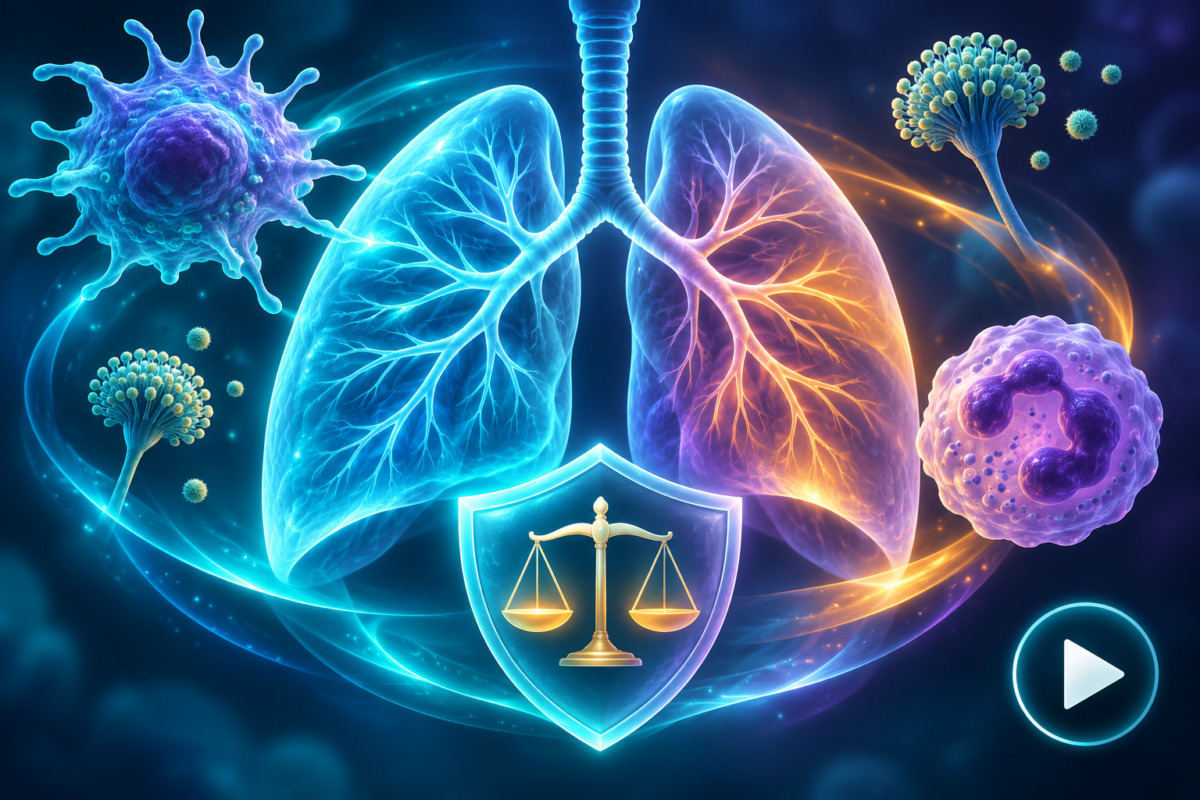
In this six-minute video, we introduce two important types of immune cells: macrophages and neutrophils.
Watch: How your immune system fights Aspergillus
Macrophages: the first responders
Macrophages are immune cells that patrol our tissues, recognising and engulfing unwanted particles and microorganisms.
In the lungs, specialised macrophages help remove inhaled Aspergillus spores before they can establish an infection.
They also communicate with other immune cells, helping organise the response when additional protection is needed.
Neutrophils: the rapid-response team
Neutrophils are white blood cells that can be recruited quickly when the immune system detects a threat.
They are particularly important when Aspergillus spores begin to germinate and develop into fungal filaments called hyphae.
Neutrophils can attack these growing fungal structures using several antimicrobial mechanisms.
Why does this matter in aspergillosis?
In most healthy people, these defences prevent inhaled Aspergillus spores from causing disease.
However, problems can arise when immune defences are weakened, when the lungs have existing damage, or when immune responses become excessive.
This helps explain why aspergillosis can take several different forms, including allergic bronchopulmonary aspergillosis (ABPA), chronic pulmonary aspergillosis (CPA) and invasive aspergillosis.
The immune system has to achieve a balance: controlling fungi while limiting damage to our own tissues.
Learn more
Explore our information about aspergillosis, immune responses and the different ways Aspergillus can affect the lungs.
You can also join our online patient support meetings to ask questions and discuss topics like this with others affected by aspergillosis.

Did this page help you?
Tell us in one minute