

Antifungal drug interactions: what patients with aspergillosis need to know

Last reviewed: April 2026

Key points

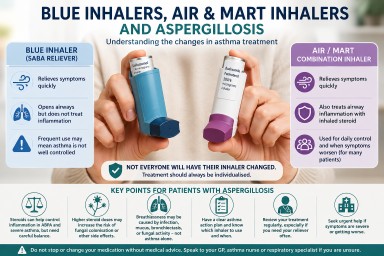
  • Antifungal medicines can interact with other medicines, including inhalers, steroid tablets, blood thinners, heart medicines, cholesterol tablets, and some over-the-counter or herbal products.
  • The azole antifungals usually interact by affecting how the liver handles medicines.
  • Amphotericin B is different: its main interaction risks are more often linked to kidneys, potassium, magnesium, and infusion-related effects.
  • This page gives an overview. It does not list every interaction.
  • For a full medicine-by-medicine check, use the BNF interaction checker or ask a pharmacist or clinician.

Why interactions matter in aspergillosis

People with aspergillosis often take more than one medicine. This may include inhalers, steroid tablets, medicines for reflux, antibiotics, pain relief, blood pressure treatment, blood thinners, cholesterol tablets, and drugs for other long-term conditions. That means medicine checks are especially important whenever an antifungal is started, stopped, or changed.

How the main antifungals differ

Most long-term interaction questions in aspergillosis involve the azole antifungals: itraconazole, voriconazole, posaconazole, and isavuconazole. These mainly interact because they affect liver enzymes, especially CYP3A4, although some also affect CYP2C9 and CYP2C19.

Amphotericin B behaves differently. Its most important risks are usually kidney stress, low potassium, low magnesium, and additive toxicity with other medicines rather than classic liver-enzyme interactions.

Quick comparison table

Antifungal Main interaction pattern Typical complexity Important extra point
Itraconazole Strong enzyme-based interactions, especially CYP3A4 High Capsules and liquid are not handled by the body in the same way
Voriconazole Complex enzyme-based interactions involving several CYP pathways High More variable between patients; visual side effects and photosensitivity are well recognised
Posaconazole Mainly CYP3A4-related interactions Moderate Tablets and oral suspension are not interchangeable in the same way
Isavuconazole Mainly CYP3A4-related interactions, usually less complex than older azoles Lower to moderate Can shorten the QT interval
Amphotericin B Kidney, potassium, magnesium, and infusion-related interaction risks Different rather than simpler Formulations are not interchangeable

Individual antifungal guides

What patients should do in practice

  • Keep an up-to-date list of all medicines, including inhalers, creams, over-the-counter medicines, supplements, and herbal products.
  • Tell your doctor, nurse, pharmacist, or hospital team that you are taking an antifungal.
  • Do not start, stop, or swap medicines on your own because of something you have read online.
  • Ask specifically about new medicines, steroid changes, reflux treatment, blood thinners, cholesterol medicines, and heart medicines.

When to seek medical advice

Seek medical advice promptly if symptoms change after a medicine is started, stopped, or changed. Seek urgent help for severe bleeding, fainting, severe muscle pain, marked palpitations, rapidly worsening breathlessness, severe drowsiness, or a sudden significant decline in your health.

Important

This resource is educational. It does not replace personalised advice from your clinical team, GP, or pharmacist, and it is not a complete interaction database.

References


Why Headaches Can Occur in Aspergillosis

Last reviewed: March 2026

Key Points

  • Headaches are relatively common in people living with aspergillosis, but they usually have multiple contributing causes.
  • Common causes include sinus involvement, inflammation, sleep disturbance, and medication effects.
  • Antifungal medicines such as itraconazole may improve some symptoms indirectly but can also occasionally cause headaches.
  • Patterns (timing, location, triggers) can help identify likely causes, but headaches are rarely due to one factor alone.
  • New, severe, or unusual headaches should always be assessed by a healthcare professional.

Table of Contents

Overview

Many people living with aspergillosis report headaches at some point during their illness. These headaches can vary in type, severity, and timing, and may be confusing—especially when they change over time or seem linked to treatment.

In most cases, headaches are not caused by a single factor. Instead, they reflect a combination of:

  • local effects (such as sinus pressure)
  • immune system activity
  • medication effects
  • sleep and general health factors

Understanding these different contributors can help make sense of symptoms and support more informed discussions with your clinical team.

Sinus involvement (common cause)

When Aspergillus affects the sinuses (sometimes called fungal sinusitis), this can directly cause headaches.

This happens because:

  • sinus drainage becomes blocked
  • pressure builds up in the sinus cavities
  • the lining of the sinuses becomes inflamed

Typical features:

  • pain or pressure in the forehead, cheeks, or behind the eyes
  • worsening when bending forward
  • a feeling of fullness or congestion

This is one of the most direct ways aspergillosis can lead to headaches.

Inflammation and immune response

Even when the sinuses are not directly involved, the body’s immune response to fungal material can cause systemic effects.

The immune system releases signalling molecules (such as cytokines) that can:

  • increase inflammation
  • affect blood vessels
  • trigger headache pathways

This type of headache can feel similar to a “flu-like” or inflammatory headache.

Allergic-type responses (e.g. ABPA)

In conditions such as Allergic Bronchopulmonary Aspergillosis (ABPA), the immune system reacts strongly to Aspergillus.

This may involve:

  • allergic pathways
  • histamine and related mediators
  • ongoing airway inflammation

Possible symptoms:

  • head pressure or discomfort
  • fluctuating headaches
  • a “foggy” or unwell feeling

These headaches are often less clearly localised than sinus-related pain.

Medication effects

Some treatments used in aspergillosis can contribute to headaches.

Antifungal medications (e.g. itraconazole):

  • headache is a recognised side effect in some people
  • effects vary between individuals

Steroids (if prescribed):

  • can affect sleep and mood
  • may influence blood pressure
  • can indirectly contribute to headaches

Medication effects can sometimes overlap with disease-related symptoms, making patterns harder to interpret.

Sleep disturbance and night symptoms

Sleep disruption is common in chronic lung conditions.

Possible contributors include:

  • night-time coughing
  • breathlessness
  • discomfort or anxiety

Poor sleep can lead to:

  • morning headaches
  • increased sensitivity to pain
  • fatigue-related headaches

Breathing and oxygen levels

In some people with more advanced lung involvement:

  • oxygen levels may be slightly reduced
  • breathing effort may increase

This can contribute to:

  • morning headaches
  • fatigue and cognitive symptoms

Not all patients experience this, but it is an important factor in some cases.

General health factors

Headaches can also be influenced by general aspects of living with a long-term condition:

  • dehydration
  • fatigue
  • reduced activity levels
  • stress or anxiety

These factors can contribute to tension-type headaches or make other headache types more noticeable.

Understanding headache patterns

Looking at patterns can sometimes help identify likely contributors.

  • Facial pressure worse on bending: may suggest sinus involvement
  • Early morning headaches: may relate to sleep or breathing patterns
  • Fluctuating or “wave-like” symptoms: may reflect inflammation or immune activity
  • New headaches after starting medication: may be treatment-related

However, these are general observations only and do not replace clinical assessment.

Headaches in Aspergillosis: Interactive Decision Aid

This tool helps patients and carers think about common patterns that can contribute to headaches in aspergillosis. It does not diagnose the cause of a headache.

It is designed to support discussion with a healthcare professional and highlight possible contributors such as sinus involvement, inflammation, medication effects, sleep disturbance, and breathing-related factors.

Important: This tool is for general information only. It cannot determine the cause of an individual’s symptoms and does not replace medical advice. If you are concerned about headaches or changes in symptoms, please speak to your healthcare team.

1. Where is the pain mainly felt?


2. When is it most noticeable?


3. What does it feel like?


4. What other features are present?


5. Are there any red flags?


Possible contributors

This panel highlights common patterns only. It is not a diagnosis and does not replace medical assessment.

These are possible patterns only and are not a diagnosis.
This tool is intended to support discussion and reflection. If your headaches are new, worsening, or concerning, speak to your healthcare team.
Select your answers and click Show possible contributors.

Common questions

Are headaches a recognised symptom of aspergillosis?

They can occur, but are usually indirect and caused by associated factors such as sinus disease or inflammation.

Can antifungal treatment improve headaches?

In some cases, yes—if symptoms are linked to fungal-related inflammation. However, antifungals can also occasionally cause headaches as a side effect.

Are “histamine-type” headaches part of aspergillosis?

Some patients describe symptoms in this way, but the underlying mechanism is often more complex than histamine alone.

Why do my headaches change over time?

This is common and may reflect changes in inflammation, treatment, sleep, or overall health.

When to seek medical advice

You should seek medical advice if you experience:

  • new or unusually severe headaches
  • headaches that are worsening over time
  • neurological symptoms (e.g. vision changes, weakness, confusion)
  • fever, neck stiffness, or other concerning symptoms

If you are unsure whether your headaches are related to aspergillosis, treatment, or another cause, it is important to discuss this with your healthcare team.

Summary

Headaches in people with aspergillosis are usually caused by a combination of factors rather than a single issue.

The most common contributors include:

  • sinus involvement
  • immune and inflammatory responses
  • sleep disturbance
  • medication effects

Understanding patterns and changes over time can be helpful, but medical assessment is important if symptoms are new, severe, or concerning.

Author and review

Prepared for: aspergillosis.org

Audience: Patients and non-specialist readers

Important: This article is for general information only and does not replace individual medical advice.

References

  1. Patterson TF et al. (2016). Practice Guidelines for the Diagnosis and Management of Aspergillosis.
    PMID: 27365388
  2. Denning DW et al. (2016). Chronic pulmonary aspergillosis guidelines.
    PMID: 26699723
  3. Chakrabarti A et al. (2009). Fungal sinusitis: a categorization and definitional schema.
    PMID: 19522756

Why Join an Online Support Group if You Have Aspergillosis?

You are not alone with aspergillosis

Join a friendly online support meeting — no pressure, just listen if you prefer.

Many patients find that even attending once helps them feel more reassured, informed, and supported.


View meeting times and book your place

Why Join an Online Support Group if You Have Aspergillosis?

Living with aspergillosis can feel isolating. Many people go for years without meeting another person with the same condition. Family and friends may be supportive, but they may not fully understand what it is like to live with breathlessness, fatigue, treatment side effects, uncertainty, or repeated hospital visits.

That is one reason online support groups can be so valuable. They bring people together who understand, often immediately, many of the challenges that aspergillosis can bring.

Key points

  • Online support groups reduce isolation and help patients feel understood
  • They offer shared experience alongside emotional support
  • They improve confidence and understanding of the condition
  • They help patients feel better prepared for appointments
  • They are flexible — you can simply listen if you prefer

What changes when people join a support group?

Before joining

  • Feeling alone with the condition
  • Uncertainty about symptoms
  • Limited practical advice
  • Low confidence at appointments
  • Worry about the future

After joining

  • Connection with others who understand
  • Better understanding of the condition
  • Practical day-to-day coping ideas
  • More confidence asking questions
  • Feeling more supported and reassured

Why aspergillosis can feel so isolating

Aspergillosis is a relatively rare condition, and many patients never meet someone else with the same diagnosis. Online support groups help bridge that gap by creating a shared space for understanding and connection.

1. You realise you are not alone

Hearing others describe similar symptoms and challenges can be immediately reassuring and reduce feelings of isolation.

2. Shared experience can be deeply reassuring

Support groups provide practical, real-world insight into managing fatigue, pacing, work, and daily life.

3. You may understand your condition better

Listening to others and accessing shared resources helps build confidence and understanding.

4. It can help you feel more confident at appointments

Patients often feel better prepared and more able to ask the right questions.

5. Emotional support matters too

These groups provide encouragement, understanding, and a sense of belonging.


What happens in a typical online support session?

  • Friendly welcome — no pressure to speak
  • Open discussion — share or listen
  • Optional topics — such as fatigue or treatment experiences
  • Flexible participation — camera and microphone optional
  • Safe, moderated space

Many people attend their first session just to listen — and that is completely fine.


What patients often say

“I wish I had joined sooner. Just hearing others talk made a huge difference.”

“I didn’t speak in my first meeting, but it really helped just listening.”

“It helped me understand my condition and feel more confident.”


Thinking of joining?

You can attend once, listen, and decide if it feels helpful. There is no obligation to continue.

View meeting times and book here:

https://aspergillosis.org/support-meetings/

Meetings are held online using Microsoft Teams. You will receive a joining link after booking.


Bottom line

Online support groups offer connection, reassurance, and understanding. They cannot replace medical care, but they can make living with aspergillosis feel more manageable and less lonely.


Please note: These groups are for support and shared experience. They do not replace advice from your own doctor or specialist team.


Donating Your Body for Medical Research in the UK

Including research that may help conditions such as aspergillosis

This is an uncommon request, but it can be very helpful to researchers. There is no compulsion at all to consider body donation. It is entirely a personal choice. Many people will decide that it is not for them, and that is completely understandable. For those who do wish to explore it, however, body donation can make an important contribution to medical education, training, and research.

What does body donation mean?

In the UK, donating your body means leaving it after death to a medical school or other appropriately licensed institution for anatomical examination, education, training, or research.

You cannot usually donate your body specifically to “aspergillosis research” alone. However, donation may still support work that is highly relevant to people affected by aspergillosis, including:

  • lung disease
  • infection
  • immune responses
  • medical training in complex respiratory illness

The most important point: consent must be given in advance

Under UK law, body donation must be arranged before death. This means:

  • you must give written consent
  • the consent must usually be witnessed
  • your family cannot normally make this decision for you after you die

How to arrange body donation

  1. Choose a medical school
    You need to contact a medical school directly. Most only accept donations from their local area.
  2. Request an information pack
    The school will explain its process, send consent forms, and set out any restrictions.
  3. Complete the consent forms
    Keep copies with your important papers and let your family know your wishes.
  4. Tell your next of kin or executor
    They will usually need to contact the medical school promptly after death.

Important to understand

  • Not every donation can be accepted. Even if you have registered, a medical school may not be able to accept the body in every circumstance.
  • A backup funeral plan is important.
  • Body donation is separate from organ donation. They are different systems and require separate arrangements.

Can I ask for donation to help lung or aspergillosis-related research?

You can certainly explain that your interest is in supporting research and education relevant to lung disease, infection, or aspergillosis. However, you cannot usually guarantee exactly how a donated body will be used. Even so, donation may still support education and research that benefits future patients with complex respiratory and fungal conditions.

Where to start: Human Tissue Authority

The best first step is the Human Tissue Authority (HTA), which provides UK guidance and a way to identify the correct medical school for your postcode.

Examples of medical school body donation pages

Please note: contact details and catchment arrangements can change, so it is wise to confirm current information directly on each medical school’s website.

Final thought

Donating your body for medical education or research is an unusual and deeply personal decision. There is absolutely no obligation to consider it. But for those who do, it can be a generous and lasting way to support future learning, better care, and research that may help people living with serious conditions, including aspergillosis.

Last reviewed: March 2026


Why Diagnosis Can Take Time — and Why You Are Not Alone

Last reviewed: 18 March 2026

Who this page is for: Patients and carers who have been living with symptoms for some time without a clear diagnosis, including those eventually diagnosed with aspergillosis.

Key points

  • Long diagnostic journeys are common in many chronic and rare conditions—not just aspergillosis.
  • Delays do not mean your symptoms were not real or important.
  • Diagnosis often becomes clear over time, as patterns develop.
  • Many patients go through similar experiences before reaching answers.
  • Specialist centres play an important role when conditions are complex.

You are not alone in this

One of the most important things to understand is this:

Long and difficult diagnostic journeys are common—especially in chronic or complex illness.

Many people living with conditions such as chronic pulmonary aspergillosis (CPA) or allergic bronchopulmonary aspergillosis (ABPA) describe months or years of symptoms before a clear diagnosis was made.

This experience, while frustrating, is not unusual—and it does not mean your care has failed.

This happens in many conditions

Aspergillosis is not unique in this respect.

Similar diagnostic journeys are seen in:

  • chronic lung diseases
  • autoimmune conditions
  • rare infections
  • conditions with overlapping symptoms (e.g. fatigue syndromes)

In all of these, the same pattern often occurs:

  • early symptoms are non-specific
  • common conditions are treated first
  • tests may initially be normal
  • the true pattern only becomes clear over time

Why time helps diagnosis

Many conditions only become recognisable as patterns develop over time.

Although it can feel like delay, time often provides essential information.

Patterns emerge

  • symptoms become more consistent
  • flare-ups follow recognisable triggers
  • response to treatment becomes clearer

Tests become more informative

  • changes appear on imaging (e.g. CT scans)
  • blood markers become more clearly abnormal
  • microbiology results become more consistent

What was unclear early on can become much more visible later.

The turning point

Many patients describe a moment when things begin to change:

  • symptoms no longer fit common conditions
  • treatments stop working as expected
  • a clinician recognises a pattern

This is often the point where less common diagnoses—including aspergillosis—are considered.

The role of specialist centres

Complex conditions are often best diagnosed in specialist centres with experience in that field.

In the UK, the National Aspergillosis Centre provides:

  • expert multidisciplinary assessment
  • access to specialist diagnostics
  • experience in recognising patterns of disease

Referral to a specialist centre is often a key step in reaching a diagnosis.

The emotional impact

Long periods without answers can be deeply challenging.

Patients often describe:

  • frustration and uncertainty
  • feeling unheard or misunderstood
  • loss of confidence in their own body

These reactions are entirely understandable.

Your experience is valid—even if the diagnosis took time to emerge.

Moving forward

Once a diagnosis is made, many patients feel a sense of relief—even if treatment is still needed.

A diagnosis provides:

  • an explanation for symptoms
  • a direction for treatment
  • a clearer future plan

Even before diagnosis, it is important to remember:

You are still on a pathway—just not always a straight one.

Common questions

Does a long delay mean something was missed?

Not necessarily. Many conditions are only diagnosable once they have developed further.

Should I have been referred earlier?

Sometimes earlier referral is helpful, but it usually depends on how symptoms evolve over time.

Is this unique to aspergillosis?

No—this pattern is seen across many chronic and rare conditions.


Why Aspergillosis Is So Hard to Diagnose


Last reviewed: 18 March 2026
Who this page is for: Patients, carers, general practitioners, respiratory clinicians, specialist nurses, and anyone trying to understand why the road to diagnosis can be long and confusing.

Key points

  • Aspergillosis is often difficult to diagnose because its symptoms can look very similar to those of more common conditions.
  • Diagnosis usually depends on several pieces of evidence being brought together, rather than one simple test.
  • Doctors are trained to consider common conditions first, because this is usually the safest and most efficient approach.
  • This approach works well for many patients, but it can delay recognition of conditions such as aspergillosis.
  • Delays are often caused by the way healthcare systems are organised, not by lack of care or effort from individual clinicians.
  • Patients can help by keeping a clear record of symptoms, tests, treatments, and how things have changed over time.
Many people with aspergillosis say that one of the hardest parts of their illness was not just the symptoms, but the long and uncertain path to getting an answer. Some were treated several times for asthma flare-ups, chest infections, or chronic obstructive pulmonary disease (COPD) before fungal disease was seriously considered.This can be frightening and frustrating. It is natural to ask: Why did it take so long?The answer is usually not that nobody was trying. More often, it is because aspergillosis does not fit neatly into the way modern medicine is designed to recognise disease.

Why diagnosis can be difficult

Aspergillosis is not a single illness but a group of conditions caused by Aspergillus, a mould commonly found in the environment. These include:

Diagnosis usually depends on combining:

  • symptoms over time
  • CT scan findings
  • blood tests (including immunological tests)
  • sputum microbiology
  • clinical history

There is rarely a single “yes or no” test, which is why diagnosis can take time.

What the patient journey often looks like

Early symptoms

Symptoms such as cough, breathlessness, fatigue, or sputum are common across many conditions including bronchiectasis, asthma, and infection.

Treatment for common conditions

Initial treatment often includes antibiotics, inhalers, or steroids. These are appropriate first steps based on clinical guidelines such as those from the British Thoracic Society (BTS).

Ongoing symptoms

When symptoms persist or return, further investigation is usually needed.

The turning point

At some stage, fungal disease may be considered and tests for Aspergillus are performed.

Why doctors tackle common conditions first

Why do doctors start with common conditions?

Doctors treat common diseases first, prioritizing efficiency, patient safety, and high-probability outcomes. This approach, considering the most likely diagnosis first, helps manage patient health efficiently and effecctively before investigating rare or complex conditions.

This approach is safe and effective for most people, but conditions like aspergillosis can sit outside these usual pathways.

Where delays can happen

Overlap of symptoms

Symptoms overlap with many conditions, including tuberculosis and lung cancer.

No single definitive test

Diagnosis often requires combining multiple test results rather than relying on one.

Gradual disease progression

Conditions such as CPA may evolve over months or years.

Multiple conditions

Patients may have more than one lung condition at the same time.

Why this is often about the system, not the individual doctor

Healthcare systems are designed to manage large numbers of patients efficiently and safely. This means prioritising common conditions first.

However, aspergillosis often requires specialist input. In the UK, this may include referral to the National Aspergillosis Centre, which provides expert assessment and management.

International guidance from organisations such as ESCMID (European Society of Clinical Microbiology and Infectious Diseases) also highlights the complexity of fungal diseases.

What patients can do

  • Keep a record of symptoms and treatments
  • Ask when diagnosis should be reviewed
  • Discuss whether further tests are needed
  • Use trusted information sources such as our diagnosis guide

A more balanced way to think about delay

Diagnosis is often not a single event but a process that unfolds over time.

The goal is to recognise patterns earlier and ensure patients who need specialist input are identified sooner.

Common questions

Why was I treated for other conditions first?

Because those conditions are more common and more likely.

Should I ask about aspergillosis?

Yes, especially if symptoms are persistent or unusual—but it should be part of a broader discussion.

When to seek medical advice

  • Persistent or worsening symptoms
  • Coughing up blood
  • Unexplained weight loss

References and further reading


Nontuberculous Mycobacteria (NTM–MAC) and Aspergillosis

Why these infections sometimes occur together

Audience: Aspergillosis patients, carers, GPs and non-specialist clinicians

Some patients with Allergic Bronchopulmonary Aspergillosis (ABPA) may be investigated for nontuberculous mycobacteria (NTM), because airway damage from ABPA can increase susceptibility to other lung infections.


Key points

  • Nontuberculous mycobacteria (NTM) are environmental bacteria that sometimes infect damaged lungs.
  • The most common NTM causing lung disease is the Mycobacterium avium complex (MAC).
  • NTM infection and aspergillosis often occur in the same patients because both thrive in damaged airways such as bronchiectasis or lung cavities.
  • Some patients with ABPA are investigated for NTM because ABPA can lead to bronchiectasis and impaired mucus clearance.
  • NTM infections usually grow very slowly, so treatment is sometimes monitored rather than started immediately.
  • Treating NTM and aspergillosis together can be difficult because some NTM antibiotics interfere with antifungal medicines.
  • Doctors usually treat the infection causing the most harm first while monitoring the other carefully.

Table of contents

  1. What are NTM?
  2. What is Mycobacterium avium complex (MAC)?
  3. Why NTM infections occur in some people
  4. What is bronchiectasis?
  5. Why patients with ABPA may be asked about NTM
  6. Why NTM and Aspergillus infections often occur together
  7. The lung infection cycle
  8. Chronic lung disease as a microbial ecosystem
  9. Why treatment can be complicated
  10. When treatment for NTM may be delayed
  11. How doctors balance treatment decisions
  12. NTM vs Aspergillosis – comparison table
  13. Common questions patients ask about NTM and Aspergillus
  14. When should patients seek medical advice?
  15. Reducing exposure to NTM in the environment

What are nontuberculous mycobacteria (NTM)?

Nontuberculous mycobacteria (NTM) are bacteria found naturally in the environment.

They live in:

  • soil
  • water
  • dust
  • plumbing systems
  • shower heads and taps

Unlike tuberculosis, these bacteria are not normally spread between people.

Most people inhale them regularly without becoming ill. However, in some people with damaged lungs, these bacteria can establish a long-term lung infection.

Back to top

What is Mycobacterium avium complex (MAC)?

The Mycobacterium avium complex (MAC) is the most common cause of NTM lung disease.

This group includes:

  • Mycobacterium avium
  • Mycobacterium intracellulare

MAC lung disease usually develops slowly over months or years.

Symptoms may include:

  • chronic cough
  • sputum production
  • breathlessness
  • fatigue
  • weight loss

Because symptoms develop gradually, diagnosis can sometimes take time.

Back to top

Why NTM infections occur in some people

NTM infections usually develop in people who already have structural lung disease.

Examples include:

  • bronchiectasis
  • chronic obstructive pulmonary disease (COPD)
  • cystic fibrosis
  • previous tuberculosis
  • severe asthma
  • aspergillosis

In these conditions, the lungs have damaged or widened airways, making it harder to clear mucus and microbes.

Back to top

What is bronchiectasis?

Bronchiectasis is a condition where the airways become permanently widened and distorted.

In healthy lungs, mucus is cleared using:

  • mucus movement
  • tiny hair-like structures called cilia
  • coughing

In bronchiectasis:

  • mucus collects in the airways
  • microbes become trapped
  • infections become more likely

Bronchiectasis is common in patients with Allergic Bronchopulmonary Aspergillosis (ABPA) and other chronic lung diseases.

Back to top

Why patients with ABPA may be asked about NTM

Some patients with Allergic Bronchopulmonary Aspergillosis (ABPA) are surprised when their doctors start investigating nontuberculous mycobacteria (NTM).

This usually happens because ABPA can lead to bronchiectasis, which increases the risk of other lung infections.

In ABPA:

  • inflammation caused by allergic reactions to Aspergillus can damage the airways
  • over time the airways may become widened and distorted, causing bronchiectasis
  • mucus clearance becomes less effective

When mucus accumulates in the airways, microbes that are normally cleared from the lungs can sometimes persist. These may include:

  • nontuberculous mycobacteria (NTM)
  • Pseudomonas bacteria
  • other organisms that affect bronchiectasis patients

For this reason, doctors sometimes test patients with ABPA for NTM if:

  • CT scans show bronchiectasis or nodules
  • sputum cultures repeatedly grow unusual organisms
  • symptoms worsen without a clear explanation

Importantly, having ABPA does not mean you will develop NTM infection. Most patients with ABPA never develop NTM disease.

However, because the conditions share similar risk factors, doctors sometimes check for both.

Back to top

Why NTM and Aspergillus infections often occur together

NTM bacteria and Aspergillus fungi both thrive in damaged lungs.

Three factors explain the overlap.

1. Damaged airways trap microbes

When airways are widened or distorted:

  • mucus collects
  • microbes are not cleared effectively

This allows organisms such as NTM and Aspergillus to persist.

2. Chronic infection causes further lung damage

NTM infection can lead to:

  • inflammation
  • worsening bronchiectasis
  • lung nodules
  • sometimes lung cavities

These cavities can then be colonised by Aspergillus, which may lead to chronic pulmonary aspergillosis (CPA).

3. Aspergillus can worsen structural damage

Once Aspergillus becomes established it can cause:

  • inflammation
  • enlargement of lung cavities
  • worsening bronchiectasis

This further damage makes the lungs even more susceptible to infection.

Back to top

The lung infection cycle

In many patients the relationship between bronchiectasis, NTM and Aspergillus becomes a cycle:

  1. Lung disease develops
  2. Bronchiectasis forms
  3. NTM infection establishes
  4. Lung damage worsens
  5. Aspergillus colonises damaged tissue
  6. Chronic aspergillosis develops
  7. Lung damage continues

At this stage the lungs may contain multiple organisms simultaneously.

Back to top

Chronic lung disease as a microbial ecosystem

Doctors increasingly recognise that damaged lungs may contain several interacting microbes rather than a single infection.

Common organisms include:

  • Mycobacterium avium complex (MAC)
  • Aspergillus species
  • Pseudomonas bacteria
  • other organisms

For this reason clinicians sometimes describe chronic lung disease as a disturbed lung microbial ecosystem.

Back to top

Why treatment can be complicated

NTM and aspergillosis treatments can interact.

Typical MAC treatment includes:

  • azithromycin or clarithromycin
  • ethambutol
  • rifampicin

However rifampicin strongly reduces levels of antifungal drugs, including:

  • itraconazole
  • voriconazole
  • posaconazole

These antifungals are commonly used to treat chronic pulmonary aspergillosis.

Because of this interaction, treating both infections at the same time can be challenging.

Other medicines that may interact with rifampicin

Rifampicin affects how the liver processes many medicines. This means it can reduce the effectiveness of several commonly used drugs, including some treatments for heart conditions, blood thinners, hormonal medicines, and certain antidepressants.

Because of this, doctors and pharmacists always review a patient’s medication list before starting rifampicin. Patients should tell their healthcare team about all medicines they take, including over-the-counter medicines, inhalers, and herbal supplements. In most cases, safe alternatives or dose adjustments can be used if needed.

Back to top

When treatment for NTM may be delayed

Unlike many bacterial infections, MAC often progresses slowly.

Doctors sometimes monitor the infection before starting treatment. This approach is called active monitoring or watchful waiting.

Monitoring may include:

  • CT scans
  • sputum cultures
  • lung function tests
  • symptom assessment

Treatment may be delayed if:

  • symptoms are mild
  • CT scans are stable
  • another condition requires more urgent treatment

For example, aspergillosis may be treated first if it is causing the main symptoms or lung damage.

Back to top

How doctors balance treatment decisions

When both infections are present, clinicians try to identify which infection is currently causing the most harm.

Doctors consider:

Symptoms

  • worsening cough
  • breathlessness
  • fatigue
  • weight loss
  • haemoptysis (coughing blood)

CT scan findings

  • enlarging cavities
  • fungal balls
  • nodules typical of NTM disease
  • worsening bronchiectasis

Laboratory results

  • sputum cultures for NTM
  • Aspergillus blood tests, such as Aspergillus IgG

If one infection clearly explains the patient’s symptoms, that infection usually becomes the treatment priority.

Treatment plans may then change over time as the balance of disease changes.

Back to top

NTM vs Aspergillosis – What’s the difference?

Feature NTM (MAC) Lung Disease Aspergillosis
Type of organism Bacteria Fungus
Source Soil, water, plumbing Airborne fungal spores
Spread between people Rare Does not spread
Typical speed Slow, chronic infection Variable
Typical CT findings Nodules, bronchiectasis, cavities Cavities, fungal balls, airway inflammation
Treatment Long antibiotic courses, often 12–18 months Antifungal medicines
Drug interaction issues Rifampicin interferes with antifungals Antifungal levels can be reduced by rifampicin

Back to top

Common questions patients ask about NTM and Aspergillus

If MAC grows slowly, why treat it?

Although MAC grows slowly, it can still cause progressive lung damage over time.

Treatment is usually recommended if there is:

  • worsening symptoms
  • declining lung function
  • progressive CT scan changes

Can NTM be present without causing disease?

Yes. Some people have NTM colonisation without active infection.

Doctors diagnose NTM lung disease only when symptoms, imaging findings and repeated cultures all support the diagnosis.

Why do NTM and Aspergillus often occur together?

Both organisms tend to grow in damaged airways, especially where bronchiectasis is present and mucus clearance is poor.

Will both infections always be treated?

Not necessarily. Doctors often treat the infection causing the most immediate problem while monitoring the other.

Does NTM mean my aspergillosis is worsening?

Not necessarily. Both infections occur in damaged lungs, so they may simply share the same environment.

Can NTM lead to aspergillosis?

Sometimes. If NTM infection causes lung cavities or worsening bronchiectasis, these damaged areas may later become colonised by Aspergillus.

Should I worry if my doctor decides not to treat NTM immediately?

Not necessarily. Because MAC often progresses slowly, doctors sometimes choose active monitoring rather than immediate treatment.

Back to top

When should patients seek medical advice?

People living with aspergillosis, bronchiectasis or NTM infection often have ongoing symptoms such as cough and sputum production. These symptoms may fluctuate and do not always mean the disease is worsening.

However, certain changes should prompt medical review.

Seek medical advice if you notice worsening breathing symptoms

  • increasing breathlessness
  • a significant increase in cough
  • a noticeable increase in sputum production
  • sputum becoming thicker, darker or foul-smelling

These symptoms may indicate:

  • bacterial infection
  • worsening bronchiectasis
  • progression of NTM infection
  • worsening aspergillosis

Coughing up blood (haemoptysis)

Haemoptysis can occur in both bronchiectasis and aspergillosis.

Seek medical advice if:

  • bleeding increases
  • blood appears repeatedly
  • there is more than a small amount of blood
  • bleeding occurs suddenly with breathlessness

Large amounts of blood should be treated as a medical emergency.

Unexplained weight loss or increasing fatigue

Persistent or worsening:

  • weight loss
  • fatigue
  • loss of appetite

may indicate:

  • progressive infection
  • increasing inflammation
  • advancing NTM disease

Fever or feeling unwell

New symptoms such as:

  • fever
  • chills
  • chest discomfort
  • feeling generally unwell

may suggest a new infection, such as a bacterial chest infection, which may require treatment.

Rapid change in symptoms

Seek medical advice if you experience:

  • sudden worsening breathlessness
  • significant chest pain
  • new wheezing
  • severe fatigue developing quickly

Symptoms that may remain stable

Many people with chronic lung disease experience symptoms that remain relatively stable for long periods, including:

  • a chronic cough
  • daily sputum production
  • mild breathlessness
  • intermittent fatigue

Doctors monitor these symptoms over time using:

  • CT scans
  • sputum cultures
  • lung function tests

These investigations help clinicians determine whether infections such as NTM or Aspergillus are stable or progressing.

Back to top


Reducing exposure to NTM in the environment

Patients with bronchiectasis, ABPA, or other chronic lung diseases sometimes ask whether they should try to avoid environmental exposure to nontuberculous mycobacteria (NTM).

NTM are very common in the natural environment and cannot be completely avoided. They are found in:

  • soil and compost
  • garden dust
  • natural water sources
  • tap water and plumbing systems
  • showerheads
  • hot tubs and spa pools

For most people, the goal is sensible risk reduction rather than strict avoidance. Major lifestyle restrictions are usually not necessary.

Water exposure

NTM can grow in biofilms inside plumbing systems, including showerheads. Small amounts of bacteria may become airborne when water is aerosolised.

Some simple precautions may help reduce exposure:

  • avoid frequent use of hot tubs or spa pools
  • allow taps or showers to run briefly if they have not been used for several days
  • clean showerheads periodically to remove biofilm and limescale

Normal showering and bathing are considered safe for most patients.

NTM infection occurs when bacteria are inhaled into the lungs rather than swallowed. Drinking ordinary tap water is therefore considered safe for most people, and patients are not usually advised to avoid tap water for drinking.

Gardening and soil exposure

NTM bacteria are often present in soil and compost. Gardening can still be enjoyed safely with a few sensible precautions.

  • wear gloves when gardening
  • avoid inhaling dust from dry compost or soil
  • dampen compost before handling to reduce dust
  • wash hands after gardening

For people with bronchiectasis or NTM disease, wearing a mask during dusty gardening activities may help reduce inhalation of soil particles.

Reducing dust exposure

Activities that generate dust can increase inhalation of environmental microbes.

Helpful precautions include:

  • avoiding sweeping very dusty areas indoors
  • ventilating indoor spaces
  • wearing a mask during dusty tasks such as handling compost or dry soil

Cleaning showerheads

Cleaning showerheads periodically can help remove limescale and biofilms where microbes may grow.

A simple method is:

  1. Remove the showerhead if possible.
  2. Soak it in white vinegar for about 30–60 minutes.
  3. Gently scrub the spray holes with a small brush.
  4. Rinse thoroughly.
  5. Run hot water for 30–60 seconds before use.

If the showerhead cannot be removed, a plastic bag filled with vinegar can be tied around the head so that it soaks.

Cleaning every 1–3 months is usually sufficient.

What is usually not necessary

Experts generally do not recommend major lifestyle changes to avoid NTM exposure. In most cases it is not necessary to:

  • avoid showers
  • avoid gardening completely
  • install specialised water filtration systems

These activities are important for quality of life and general health, and evidence that strict avoidance prevents NTM disease is limited.

The most important protection

For patients with ABPA, bronchiectasis or aspergillosis, the most important protective measures remain:

  • good airway clearance
  • regular medical monitoring
  • prompt treatment of infections
  • maintaining overall lung health

Reducing environmental exposure may help slightly, but good management of lung disease remains the most important factor.

Back to top

Key message

When NTM and Aspergillus infections occur together, treatment decisions focus on which infection is currently causing the most damage, while avoiding harmful drug interactions.

For patients with ABPA, one reason NTM may be discussed is that ABPA can lead to bronchiectasis and impaired mucus clearance, which can make other infections more likely.

Many patients live with these conditions for years with careful monitoring and specialist management.


Author: National Aspergillosis Centre Patient Information Team
Last reviewed: March 2026


National Aspergillosis Centre, Antifungal Therapeutic Drug Monitoring (TDM), Molecular Resistance Testing & Antimicrobial Stewardship

How the National Aspergillosis Centre Supports UK Clinicians

Long-term antifungal therapy in aspergillosis presents a distinct antimicrobial stewardship (AMS) challenge. Treatment is often prolonged, drug exposure is highly variable, and resistance may emerge during therapy.

The National Aspergillosis Centre (NAC), working closely with the Mycology Reference Centre Manchester (Manchester UK"], provides national expertise through:

  • Therapeutic drug monitoring (TDM)

  • Molecular resistance testing

  • Specialist Advice & Guidance

  • Remote multidisciplinary team (MDT) review

  • Standardised laboratory processes

Together, these services enable UK clinicians to optimise antifungal therapy while aligning with national AMS strategy and antimicrobial resistance (AMR) policy.


The National AMS Framework: Why This Matters

Antifungal stewardship sits within the wider UK antimicrobial resistance strategy.

Key national resources include:

1️⃣ NHS England – Digital Vision for Antimicrobial Stewardship

https://www.england.nhs.uk/long-read/digital-vision-for-antimicrobial-stewardship-in-england/

Emphasises:

  • Data-driven optimisation

  • Decision support

  • Clear documentation

  • Measurable stewardship interventions


2️⃣ Antimicrobial Prescribing & Stewardship Competency Framework

https://www.gov.uk/government/publications/antimicrobial-prescribing-and-stewardship-competencies

Defines clinician responsibilities including:

  • Right drug

  • Right dose

  • Right duration

  • Monitoring for toxicity

  • Review and stop decisions


3️⃣ English Surveillance Programme for Antimicrobial Utilisation and Resistance (ESPAUR)

https://www.gov.uk/government/publications/english-surveillance-programme-for-antimicrobial-utilisation-and-resistance-espaur-report

Supports:

  • National resistance monitoring

  • Stewardship benchmarking

  • Reduction of inappropriate antimicrobial exposure


4️⃣ Chronic Pulmonary Aspergillosis (CPA) Service Specification

https://www.england.nhs.uk/publication/chronic-pulmonary-aspergillosis-service-adults/

This specialised service model explicitly includes:

  • Optimisation of antifungal therapy

  • Toxicity monitoring

  • Therapeutic drug monitoring

Antifungal stewardship is embedded within the commissioned service design.


Why Aspergillosis Requires Enhanced Stewardship

Unlike short-course antibacterial therapy, aspergillosis often involves:

  • Long-term triazole therapy

  • Structural lung disease

  • High interaction burden

  • Emerging environmental resistance

  • Potential for treatment failure despite adequate adherence

Effective stewardship therefore requires both:

  1. Assurance of adequate drug exposure (TDM)

  2. Assurance of organism susceptibility (molecular testing)


1️⃣ Therapeutic Drug Monitoring (TDM)

Triazole antifungals demonstrate:

  • High pharmacokinetic variability

  • Concentration-dependent toxicity

  • Reduced efficacy if under-dosed

TDM enables:

✔ Early detection of subtherapeutic exposure
✔ Prevention of toxicity
✔ Dose optimisation
✔ Reduction of avoidable escalation

This directly fulfils AMS competency expectations.


2️⃣ Molecular Resistance Testing

Azole resistance in Aspergillus fumigatus is increasingly recognised in the UK.

Through MRCM, NAC supports:

CYP51A Mutation Analysis

Common mutations include:

  • TR34/L98H

  • TR46/Y121F/T289A

These may arise:

  • Environmentally (azole fungicide pressure)

  • During long-term therapy


Phenotypic Susceptibility Testing

Where viable isolates are available:

  • Minimum inhibitory concentration (MIC) testing

  • Clinical interpretation to guide therapy


Why Resistance Testing Is Essential for AMS

If a patient deteriorates despite adequate serum levels:

  • Continuing the same azole is not stewardship

  • Escalating empirically without evidence increases antimicrobial pressure

Molecular confirmation ensures:

✔ Rational switching
✔ Avoidance of ineffective therapy
✔ Contribution to national resistance surveillance

This aligns with ESPAUR and national AMR objectives.


3️⃣ Remote Advice & Guidance & MDT Review

The NAC provides structured national clinician support.

This strengthens stewardship by:

✔ Refining diagnosis
✔ Preventing indication drift
✔ Setting defined review points
✔ Supporting stop decisions
✔ Reducing empirical prolonged therapy

Early specialist review is one of the most effective stewardship interventions.


Integrated Stewardship Model

Clinical Situation TDM Molecular Testing
Initiation of azole Yes Not routine
Poor response + low level Adjust dose Not primary
Poor response + adequate level Confirm exposure Essential
Long-term therapy Periodic monitoring Consider if progression
Relapse on therapy Check level Strongly consider

Exposure optimisation + susceptibility confirmation = complete antifungal stewardship.


Practical Workflow for UK Teams

Step 1 – Define Indication

  • Syndrome

  • Treatment objective

  • Planned review date

Step 2 – Baseline Safety Checks

  • Interaction review

  • Liver function tests

  • ECG where appropriate

Step 3 – Perform TDM

Include:

  • Drug

  • Dose

  • Time of last dose

  • Time of sampling

Step 4 – If Clinical Failure Occurs

  • Confirm adequate drug exposure

  • Consider molecular resistance testing

Step 5 – Define Stop/Review Criteria

Avoid open-ended therapy without documented reassessment.


Demonstrating AMS Compliance in Practice

Using NAC-supported services allows Trusts to evidence:

✔ Documented indication
✔ Dose optimisation
✔ Toxicity mitigation
✔ Rational escalation
✔ Defined review intervals
✔ Resistance surveillance contribution
✔ Specialist consultation

This is measurable, defensible antimicrobial stewardship.


Conclusion

Antifungal stewardship in aspergillosis cannot rely on restriction alone.

It requires:

  • Precision dosing

  • Genetic resistance detection

  • Structured specialist review

  • Alignment with national AMS frameworks

Through integrated therapeutic drug monitoring, molecular resistance testing, and national clinical support, the National Aspergillosis Centre provides a UK model for precision antifungal stewardship aligned with national antimicrobial resistance strategy.


🏥 Good News: New AI “Digital Scribe” Helping Doctors Spend More Time With Patients

We’re pleased to share some exciting developments from Manchester University NHS Foundation Trust that could directly improve your experience at clinic appointments.

A new technology called Ambient Voice Technology (AVT) is gradually being introduced across parts of the Trust. Think of it as a secure “digital scribe” that supports your clinician during your consultation.

What does it do?

With your permission, the system listens to the natural conversation between you and your doctor or nurse. It then:

  • Creates the clinical notes automatically

  • Drafts follow-up actions

  • Updates the electronic patient record (*i.e. another reason to use myMFT)

This means your clinician doesn’t need to spend as much time typing or looking at a screen — and can focus more fully on you.

📊 What Have the Early Results Shown?

Colleagues from Manchester University NHS Foundation Trust recently presented results from the Dragon Copilot trial at the Microsoft AI Tour in London.

The findings are encouraging:

88% of clinicians report saving around 2 minutes per appointment on documentation
88% say it improves quality and increases face-to-face time with patients
✅ Reduced mental workload for clinicians
✅ Significant reduction in after-clinic administrative work

Two minutes may not sound like much — but across a full clinic list, it adds up. Over time, this could help improve efficiency, reduce waiting times, and improve the overall clinic experience.


💻 How Is It Being Used?

The Dragon Copilot system connects directly into the Trust’s Hive Electronic Patient Record system. It is currently being used in:

  • Outpatient clinics

  • Manchester Royal Infirmary’s Emergency Department

Further expansion is planned in the coming weeks.


❤️ Why This Matters for NAC Patients

For patients with chronic conditions such as aspergillosis, consultations are often detailed and complex. Anything that:

  • Frees up clinician time

  • Improves note accuracy

  • Reduces administrative burden

  • Supports more focused, human interaction

…is a positive step forward.

The aim is not to replace clinicians — but to support them, so your appointment time is spent on what matters most: listening, explaining, planning, and answering your questions.


We’ll continue to keep you updated as this technology develops. It’s encouraging to see innovation being used to strengthen patient-centred care.

If you’d like to learn more, a short video featuring Trust leaders and clinicians was showcased at the Microsoft AI Tour and is available via Trust communications channels.


Watch the World Aspergillosis Day 2026 talks

World Aspergillosis Day 2026 brought together patients, carers, clinicians and researchers to explore how new science and better understanding can improve care for aspergillosis.

Below you can watch the full set of 12 recorded talks from the day, including expert presentations and lived-experience perspectives. You can play them in order, or open the playlist menu to jump to any session.

If you find these videos helpful, please share them — it helps more people living with aspergillosis (and those supporting them) access reliable information and support.

Watch the World Aspergillosis Day 2026 talks

World Aspergillosis Day 2026 brought together patients, carers, clinicians and researchers to explore how new science and better
understanding can improve care for aspergillosis.

Below you can watch the full set of 12 recorded talks from the day, including expert presentations and
lived-experience perspectives. You can play them in order, or open the playlist menu to jump to any session.

If you find these videos helpful, please share them — it helps more people living with aspergillosis (and those supporting them)
access reliable information and support.

Prefer a direct link to the playlist on YouTube?
Open the WAD2026 playlist.