For patients, families and non-specialist healthcare professionals
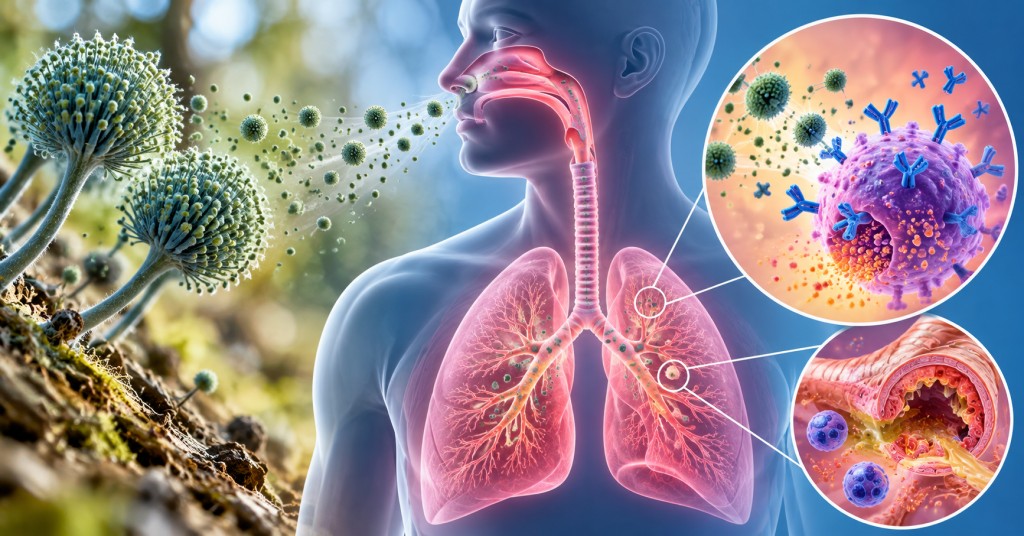
Allergic bronchopulmonary aspergillosis (ABPA) is an immune reaction to Aspergillus that usually affects people with asthma or cystic fibrosis. It can cause worsening wheeze, cough, thick mucus, repeated flare-ups and, over time, bronchiectasis.
ABPA is treatable, but is often mistaken for difficult asthma, recurrent chest infections or a routine asthma flare. Earlier recognition matters because repeated inflammation and mucus plugging can cause avoidable airway damage.
Why ABPA is missed
It can look like difficult asthma
Wheeze, cough, breathlessness and sputum are common in asthma. When symptoms continue despite appropriate inhaler treatment, repeated courses of oral steroids, or biologic treatment, it is easy to keep escalating asthma treatment without considering a fungal allergy.
Flare-ups may be labelled as “chest infections”
ABPA can cause new or worsening cough, mucus, chest tightness and changes on an X-ray or CT scan. These episodes may be treated as bacterial or viral infections. Infection can certainly coexist, but recurring episodes should prompt a review of whether ABPA has been considered.
Blood results need context
Total IgE, Aspergillus-specific IgE, Aspergillus-specific IgG and eosinophils can all help, but none is sufficient alone. Oral steroids and some biologic medicines can alter eosinophil counts; different laboratories also use different methods and reference ranges.
Imaging clues can be overlooked
Mucus plugging, fleeting lung shadows, bronchiectasis and—in some people—high-attenuation mucus are important clues. Comparing scans over time and asking the radiology team to consider ABPA can be helpful when the clinical picture fits.
Responsibility crosses several specialties
ABPA may first be encountered in general practice, severe-asthma services, respiratory medicine, emergency care, radiology or cystic fibrosis services. That makes a simple shared question valuable: could fungal sensitisation or ABPA explain this pattern?
Who is most likely to need assessment?
- People with asthma that remains poorly controlled despite appropriate treatment.
- People needing repeated rescue courses of oral steroids.
- People with recurrent episodes of thick mucus, mucus plugging or unexplained changes on chest imaging.
- People with asthma and bronchiectasis, especially when flare-ups are frequent.
- People with cystic fibrosis and compatible symptoms or imaging changes.
- People with known sensitisation to Aspergillus whose respiratory symptoms are worsening.
How ABPA is assessed
Current international guidance uses a combination of clinical, laboratory and imaging findings. In someone with asthma, cystic fibrosis or a compatible clinical-radiological presentation, clinicians usually look for:
- Sensitisation to Aspergillus, most commonly a positive A. fumigatus-specific IgE test.
- Total IgE of 500 IU/mL (kU/L) or above, recognising that treatment and clinical circumstances can affect results.
- At least two supporting features: Aspergillus-specific IgG, a current or previous raised eosinophil count, or imaging changes that fit ABPA.
This is a clinician-led diagnostic framework, not a checklist for self-diagnosis. The tests and thresholds need to be interpreted with symptoms, medicines, scan findings and the laboratory method in mind.
Red flags worth discussing with a clinician
- Asthma with repeated unexplained exacerbations or poor response to usual treatment.
- Thick plugs of mucus, especially recurrent or dramatic episodes.
- A high or rising total IgE, particularly alongside evidence of Aspergillus sensitisation.
- Bronchiectasis, new infiltrates, mucus plugging or other suggestive CT findings.
- A current or previous raised eosinophil count, while recognising this may be suppressed by treatment.
- Aspergillus detected in sputum in a person with compatible asthma symptoms or imaging.
What can happen if diagnosis is delayed?
Untreated or repeatedly active ABPA can contribute to ongoing inflammation, recurrent flare-ups, mucus plugging and bronchiectasis. These can affect day-to-day quality of life and may make respiratory problems harder to manage. Timely recognition does not guarantee that all damage can be reversed, but it gives the best opportunity to control inflammation and reduce further harm.
What should patients do?
If this description sounds familiar, do not change treatment yourself. Ask your GP, respiratory clinician or asthma team whether ABPA has been considered, and whether blood tests, sputum testing or chest imaging should be reviewed. Keep a record of flare-ups, steroid courses, mucus symptoms and previous scans if you can.
Seek urgent medical help for severe breathlessness, significant coughing of blood, severe chest pain, confusion, blue lips or face, or rapidly worsening illness.
When is specialist advice helpful?
Specialist advice can be useful when the diagnosis remains uncertain, treatment has not worked as expected, there are important drug interactions or side effects, or there is complex coexisting bronchiectasis or chronic lung disease. The National Aspergillosis Centre provides specialist support and remote advice for complex cases through the usual clinical referral routes.
Further reading
- Understanding Aspergillus blood tests: IgE and IgG
- Allergic bronchopulmonary aspergillosis (ABPA)
- Diagnosing Aspergillus infections in the lungs
- Find an aspergillosis clinic
- Revised ISHAM guidance on diagnosing and managing ABPA
Last reviewed: August 2026.

Did this page help you?
Tell us in one minute