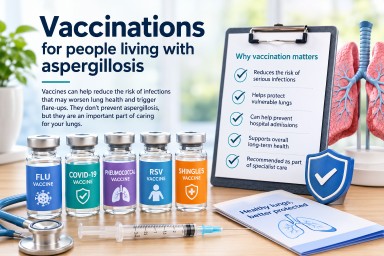
Patients sometimes ask whether there is progress towards a vaccine for aspergillosis, and whether it could help people with chronic pulmonary aspergillosis (CPA).
The short answer is: research is continuing, but there is not yet a vaccine available for CPA or any other form of aspergillosis. In fact, there is currently no licensed vaccine for any human fungal infection.
Why has this taken so long?
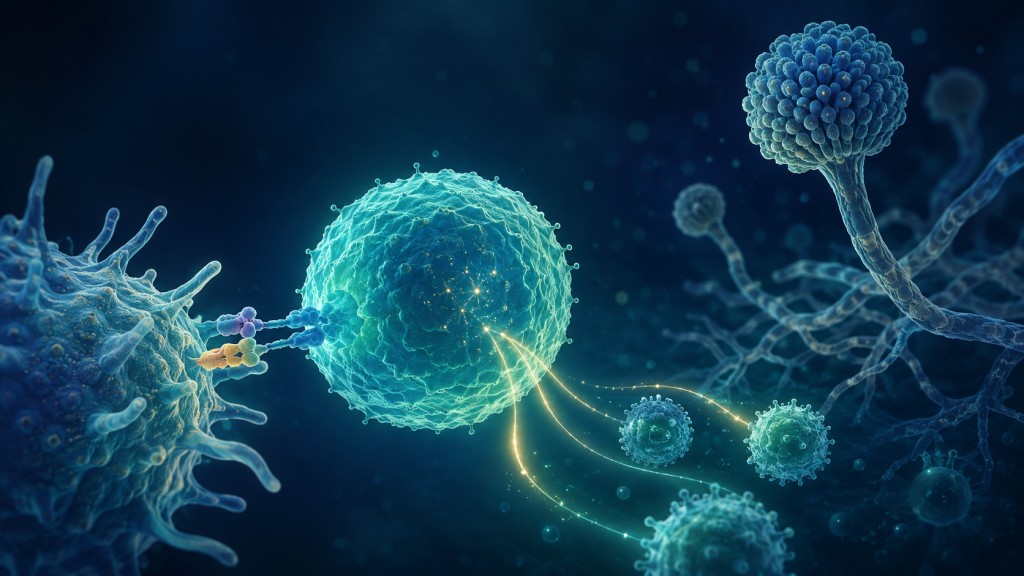
Scientists have been investigating vaccines against Aspergillus fumigatus for more than 20 years. Early studies showed that several experimental vaccines could help protect mice from severe invasive aspergillosis. Some were based on individual fungal proteins; others used immune cells or parts of the fungal cell wall to train the immune system.
However, a result in mice is only the beginning. A vaccine has to be made consistently, shown to be safe, and then tested in people. This is particularly challenging for aspergillosis because people at greatest risk of severe invasive infection—such as people having chemotherapy or a transplant—may have an immune system that cannot respond strongly to vaccination.
Which forms of aspergillosis are vaccine researchers concentrating on?
Most vaccine research has focused on preventing invasive aspergillosis: the rapidly developing infection that can affect people with severely weakened immune systems. It has the strongest scientific case for prevention, because it can be life-threatening and is often linked to a known period of risk, such as chemotherapy or transplantation.
However, this also creates the central difficulty: people at greatest risk may be least able to produce a strong and lasting response to a vaccine. There is no vaccine for invasive aspergillosis close to routine clinical use.
The chronic and allergic forms of aspergillosis bring further challenges. In allergic bronchopulmonary aspergillosis (ABPA), severe asthma with fungal sensitisation and allergic fungal sinusitis, any approach that stimulates immunity against Aspergillus would have to avoid increasing allergy, IgE responses or harmful inflammation. For aspergillus bronchitis and bronchiectasis, there is not currently a specific vaccine pathway; better diagnosis, airway clearance and antifungal treatment remain the more immediate priorities.
What about CPA?
CPA is different again. It is a long-term infection which usually develops in lungs already affected by conditions such as COPD, previous tuberculosis, bronchiectasis, non-tuberculous mycobacterial infection or previous lung surgery. The relationship between the fungus, the damaged lung and the immune system is complex.
A future vaccine might potentially reduce the risk of infection in some people, but it would not repair the damaged lung that makes CPA possible. There is no vaccine currently in clinical development that is expected to treat established CPA. Treatment continues to rely on careful diagnosis, antifungal medicines when appropriate, monitoring, management of the underlying lung condition, and sometimes surgery or other procedures.
Is there any reason for optimism?
Yes—but it is realistic, long-term optimism. Newer vaccine work is looking at better ways to stimulate the T-cell part of the immune system, which is important in protection against fungi. Researchers are also exploring “pan-fungal” vaccines, designed to protect against more than one serious fungal infection, including Aspergillus.
A vaccine that could help protect against several fungi may be more attractive to fund and develop than one aimed at a single infection. This is a potentially important direction for the field, but it remains early-stage research rather than a treatment likely to reach CPA clinics soon.
For people with CPA, the nearer-term progress is more likely to come from improved diagnosis, new antifungal drugs, better use of existing medicines, therapeutic drug monitoring and research into how the immune response can be supported safely.
Further reading
- 2006 study: an experimental Aspergillus vaccine protected mice from invasive aspergillosis
- 2012 research on the immune mechanisms involved
- 2025 review of progress and challenges in fungal vaccine development
This information is for general education and is not a substitute for individual medical advice. If you have CPA, discuss questions about your treatment or future options with your specialist team.

Did this page help you?
Tell us in one minute