Nontuberculous mycobacteria (NTM) and aspergillosis are different types of lung disease, but they can sometimes occur together. Both may develop in lungs that have already been damaged by bronchiectasis, COPD, previous tuberculosis or other chronic conditions.
When NTM and aspergillosis overlap, symptoms and CT scan changes can be difficult to interpret. It may not be immediately clear whether deterioration is caused by NTM, chronic pulmonary aspergillosis (CPA), another infection, or more than one condition at the same time.
What is NTM lung disease?
Nontuberculous mycobacteria are environmental bacteria related to the organism that causes tuberculosis. They are found naturally in soil, water, dust and plumbing systems.
There are many species of NTM. Those most commonly associated with lung disease include:
- Mycobacterium avium complex (MAC)
- Mycobacterium abscessus complex
- Mycobacterium kansasii
NTM are not the same as tuberculosis and, in general, NTM lung disease is not spread from person to person.
Many people encounter NTM without becoming ill. Infection is more likely when the lungs are already damaged or when the immune system cannot clear the bacteria effectively.
How does NTM affect the lungs?
NTM can cause a long-term inflammatory infection in the lungs. It may produce nodules, bronchiectasis, cavities or areas of lung inflammation.
Symptoms may include:
- persistent cough
- increasing sputum
- breathlessness
- fatigue
- weight loss
- low-grade fever or night sweats
- recurrent chest infections
- coughing up blood
Some people have NTM detected in a respiratory sample without clear evidence of active lung disease. This may be described as NTM isolation or colonisation. Active NTM pulmonary disease requires the clinical, radiological and microbiological findings to fit together.
Why can NTM and aspergillosis occur together?
Both conditions are more likely when the lungs have structural damage. Bronchiectasis and cavities can make it easier for NTM and Aspergillus to remain in the lungs.
Several factors may contribute:
- damaged or widened airways
- cavities within the lungs
- impaired mucus clearance
- persistent inflammation
- repeated antibiotic or steroid treatment
- low body weight or poor nutritional status
- reduced immune protection
NTM infection may further damage lung tissue, creating conditions in which Aspergillus can grow. Conversely, existing Aspergillus-related disease may make the lungs more vulnerable to NTM.
What forms of aspergillosis may occur?
Several different Aspergillus-related conditions can occur in people with NTM lung disease.
- Chronic pulmonary aspergillosis (CPA), a long-term fungal infection
- chronic cavitary pulmonary aspergillosis
- chronic fibrosing pulmonary aspergillosis
- Aspergillus nodules
- an aspergilloma or fungal ball within a cavity
- less commonly, subacute invasive pulmonary aspergillosis
A positive Aspergillus culture or blood test does not automatically mean that active CPA is present. Aspergillus may sometimes be detected in damaged airways without causing progressive disease.
Why can the diagnosis be difficult?
NTM and CPA can cause similar symptoms and similar changes on CT scans. Both may produce:
- cavities
- nodules
- bronchiectasis
- lung inflammation
- progressive scarring
- persistent cough and sputum
- weight loss and fatigue
This means that a new cavity or worsening scan does not always identify which infection is responsible.
Doctors may need to compare scans over time and look for clues such as:
- a new or enlarging cavity
- a fungal ball within a cavity
- progressive fibrosis around a cavity
- increasing pleural thickening
- new nodules or areas of consolidation
- symptoms that continue despite treatment for NTM
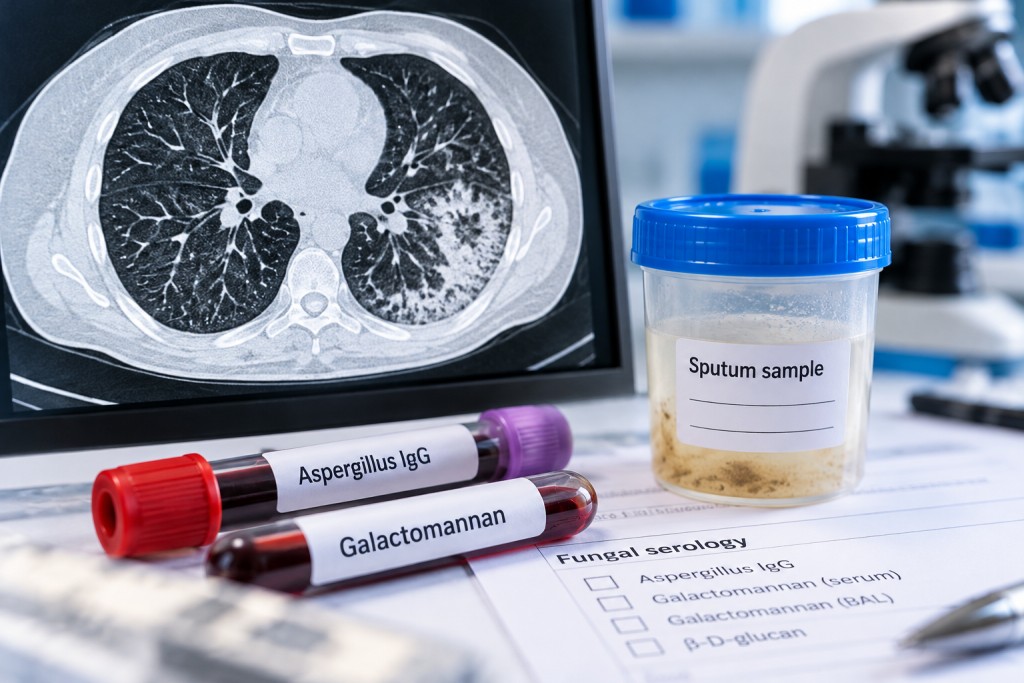
CT findings can suggest CPA, but they need to be interpreted alongside blood tests, sputum results and the clinical course.
What does recent research show?
A 2026 multicentre prospective study followed 365 people with respiratory samples positive for NTM, including MAC, M. kansasii and M. abscessus complex.
Approximately one-third had raised Aspergillus-specific IgG, while 9% developed CPA during the study period. CPA was more common in people with active NTM pulmonary disease than in those with NTM detected without clear evidence of active disease.
The risk of CPA increased over time. Among people with active NTM pulmonary disease, the cumulative incidence of CPA was approximately 2.7% at one year, 8.3% at two years and 14.7% at three years.
People who developed CPA had a higher risk of radiological progression and poorer overall survival. The study also found that some people who initially had a negative Aspergillus IgG test later became positive, suggesting that the result can change during follow-up.
These findings do not mean that everyone with NTM needs antifungal treatment. They do suggest that new or worsening symptoms and CT changes should prompt consideration of CPA, particularly in people with cavities, active NTM disease or repeated steroid treatment.
How is NTM lung disease diagnosed?
Diagnosis usually requires three types of evidence:
- symptoms or other clinical evidence of lung disease
- compatible changes on chest imaging
- repeated or otherwise convincing microbiological evidence of NTM
A single positive sputum sample does not always prove active NTM lung disease. NTM can sometimes be present in the airways without causing progressive infection.
Testing may include:
- sputum cultures for mycobacteria
- chest X-rays and CT scans
- bronchoscopy and bronchoalveolar lavage
- lung-function tests
- blood tests and inflammatory markers
How is CPA investigated?
Assessment for CPA may include:
- symptoms and how they have changed
- comparison of serial CT scans
- Aspergillus-specific IgG
- sputum culture or PCR for Aspergillus
- galactomannan testing in selected circumstances
- bronchoscopy or tissue sampling when necessary
Read more about how aspergillosis is diagnosed.
A raised Aspergillus IgG supports the possibility of CPA but does not prove it on its own. People with structural lung disease may have raised antibody levels without active CPA, so the result must be interpreted with the CT findings and clinical progression.
Can treatment for one condition affect the other?
Yes. Treatment can be complicated when NTM and CPA occur together.
NTM treatment often involves several antibiotics over many months. CPA may require a prolonged course of an oral azole antifungal. These medicines can interact with one another and may affect liver function, heart rhythm or the blood levels of other medicines.
It is therefore important that treatment is coordinated between respiratory, infectious-disease and fungal-disease specialists where appropriate.
Corticosteroids may also require careful consideration. They can be essential for some people with asthma, ABPA or other inflammatory conditions, but they may reduce the immune response that helps control NTM and Aspergillus.
Medicines should never be stopped or changed without advice from the treating team.
What does this mean for someone with NTM?
Having NTM detected in a respiratory sample does not mean that you will develop aspergillosis. Many people with NTM do not develop CPA.
Further assessment may be particularly important if you develop:
- new or worsening breathlessness
- persistent cough or sputum despite NTM treatment
- unexplained weight loss or fatigue
- new or enlarging cavities on CT
- new haemoptysis
- progressive changes despite apparently successful treatment
- repeated courses of steroids
These symptoms can have many causes. They do not automatically mean that CPA is present, but they deserve review rather than being attributed to NTM alone.
Key message: NTM and aspergillosis are different diseases, but they can coexist in structurally damaged lungs. Because symptoms and CT findings overlap, diagnosis may require repeated assessment, Aspergillus IgG testing, sputum microbiology and comparison of scans over time.
Reducing exposure to NTM
NTM are environmental organisms and cannot be avoided completely. They are commonly found in soil, dust, natural water and household plumbing.
People with chronic lung disease may choose to reduce exposure to heavily aerosolised water or soil by:
- avoiding breathing in steam from hot tubs or spa pools
- using care around dusty soil, compost and potting mix
- wearing a well-fitting mask when gardening or working with dusty materials
- maintaining nebulisers and humidifiers carefully
- following local advice about water and plumbing hygiene
These measures cannot guarantee prevention and should not become a source of anxiety. Discuss personal precautions with your healthcare team.
Related information
- Understanding chronic pulmonary aspergillosis
- Bronchiectasis and aspergillosis
- COPD and aspergillosis
- How aspergillosis is diagnosed
- Mucus clearance techniques
- Staying safe from NTM
- Diseases associated with aspergillosis
Further reading
Lee M-R, Shao P-L, Wu C-W, et al.
Clinical impact of chronic pulmonary aspergillosis in patients with pulmonary nontuberculous mycobacterial disease and colonization: a multicentre prospective cohort study.
Annals of Medicine. 2026.
Read the study on PubMed
Clinical impact of chronic pulmonary aspergillosis in patients with nontuberculous mycobacterial pulmonary disease and role of computed tomography in the diagnosis.
Internal Medicine. 2023.
Read the study on PubMed
This information is for education and should not replace advice from your own healthcare team.

Did this page help you?
Tell us in one minute