Chronic obstructive pulmonary disease (COPD) and aspergillosis are separate conditions, but they can sometimes occur together. COPD can damage the airways and lung tissue, making it more difficult to clear inhaled Aspergillus spores.
Most people with COPD will not develop aspergillosis. However, Aspergillus-related disease may be overlooked because its symptoms can resemble a COPD flare-up or a chest infection.
What is COPD?
Chronic obstructive pulmonary disease (COPD) is a long-term condition in which airflow through the lungs becomes restricted. The obstruction usually develops gradually and may become more noticeable over time.
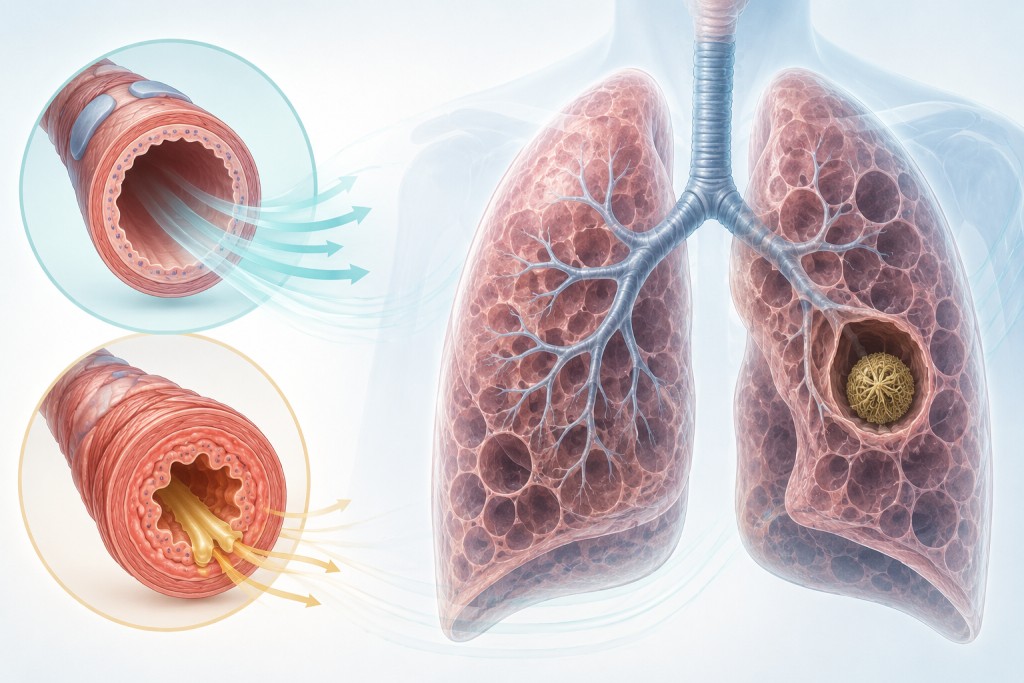
COPD mainly includes two overlapping types of lung damage:
- Chronic bronchitis: long-term inflammation of the airways, often with increased mucus production and a persistent cough.
- Emphysema: damage to the small air sacs in the lungs, reducing the area available for oxygen to pass into the blood.
Many people have features of both. COPD can also cause narrowing of the smaller airways, trapping of air and difficulty clearing mucus from the lungs.
Symptoms may include:
- breathlessness, especially during activity
- a persistent cough
- regular production of sputum
- wheezing or chest tightness
- repeated chest infections
- reduced exercise tolerance
- fatigue
Symptoms may remain fairly stable for long periods, but can suddenly worsen during an exacerbation. An exacerbation may be triggered by a viral or bacterial infection, air pollution, smoke, cold weather or other factors.
COPD is often associated with smoking, but it can also result from long-term exposure to air pollution, occupational dusts and fumes, previous infections, childhood lung problems or genetic conditions such as alpha-1 antitrypsin deficiency.
COPD is not contagious. It is also not simply an inevitable part of getting older. Diagnosis usually involves a medical history, examination and breathing tests such as spirometry.
What is aspergillosis?
Aspergillosis describes several different conditions caused by Aspergillus, a common mould found in soil, dust, compost and the air.
Most people breathe in Aspergillus spores without becoming ill. Problems are more likely when a person has damaged lungs, an altered immune response or treatment that suppresses immunity.
Relevant forms of disease include:
- chronic pulmonary aspergillosis (CPA)
- aspergilloma, sometimes called a fungal ball
- Aspergillus bronchitis
- allergic bronchopulmonary aspergillosis (ABPA)
- invasive pulmonary aspergillosis
These conditions are different and require different investigations and treatments.
Why can COPD increase the risk of aspergillosis?
COPD can affect the lungs in several ways that may increase vulnerability to Aspergillus:
- damaged airways may clear mucus and inhaled particles less effectively
- emphysema can create areas of structurally abnormal lung
- previous infections may leave scars or cavities
- repeated exacerbations can increase inflammation and lung damage
- corticosteroid treatment can alter the immune response
The risk is not caused by COPD alone. It depends on the severity and type of lung damage, previous infections, smoking history, immune function, steroid exposure and other health conditions.
New research: Aspergillus allergy and sensitisation in COPD
A 2026 systematic review and meta-analysis examined allergic bronchopulmonary aspergillosis (ABPA) and Aspergillus sensitisation in people with COPD. The researchers combined evidence from 23 studies involving more than 5,000 people.
They estimated that:
- approximately 2.1% of people with COPD had ABPA
- approximately 10.4% had evidence of sensitisation to Aspergillus
These findings suggest that Aspergillus-related allergy may occur in COPD more often than previously recognised. However, sensitisation is not the same as active infection or ABPA. A positive allergy or blood test does not automatically mean that treatment is needed.
The findings support a more careful assessment of people with COPD who have unexplained wheezing, difficult-to-control symptoms, recurrent exacerbations or features suggesting an allergic fungal response.
Read our summary of the 2026 COPD and Aspergillus review.
Chronic pulmonary aspergillosis and COPD
CPA is a long-term fungal lung infection that usually develops in areas of existing lung damage. It may cause cavities, thickening around cavities, nodules or progressive changes in the lungs.
Symptoms of CPA can include:
- persistent cough
- increasing breathlessness
- fatigue
- weight loss
- night sweats or a low-grade fever
- persistent or increasing sputum
- coughing up blood
These symptoms can also occur during COPD exacerbations, which makes diagnosis difficult. Symptoms that continue after the usual treatment for a COPD flare-up may need further investigation.
Could Aspergillus be contributing to repeated COPD flare-ups?
Not every COPD exacerbation is caused by Aspergillus. Bacteria, viruses, pollution, smoking, weather changes and other factors can all trigger worsening symptoms.
However, Aspergillus may sometimes be involved when a person has:
- frequent or unusually severe exacerbations
- symptoms that do not respond as expected to antibiotics or inhalers
- persistent chest symptoms between exacerbations
- unexplained weight loss or fatigue
- new cavities, nodules or other changes on a CT scan
- recurrent haemoptysis
- a history of tuberculosis or another condition causing structural lung damage
Research has also found Aspergillus in the airways of some people with COPD without proving that it is causing active disease. Detection of Aspergillus therefore needs to be interpreted alongside symptoms, imaging and other test results.
Why steroids need careful balancing
Corticosteroids may be prescribed during COPD exacerbations and, in some people, as part of regular inhaled treatment. They can reduce airway inflammation and improve symptoms.
However, corticosteroids can also affect the immune response that helps control Aspergillus. Recent research has reported an association between corticosteroid exposure and pulmonary aspergillosis, with higher exposure associated with greater risk.
This does not mean that people with COPD should stop their inhalers or avoid steroids when they are medically necessary. Treatment should only be changed with advice from a healthcare professional.
The important point is that repeated or prolonged steroid treatment, particularly when symptoms are not improving as expected, may be one reason to review the diagnosis and consider whether fungal disease or another infection is contributing. Read more about steroids, aspergillosis and the immune system.
How might doctors investigate aspergillosis?
There is no single test that diagnoses every form of aspergillosis. Assessment may include:
- symptoms and how long they have been present
- previous chest imaging and a current CT scan
- lung-function testing
- Aspergillus-specific IgG blood testing
- total IgE and Aspergillus-specific IgE when ABPA is suspected
- sputum culture, PCR or other microbiology
- occasionally bronchoscopy
Read more about how aspergillosis is diagnosed.
An Aspergillus IgG blood test can provide evidence of a longer-term immune response to Aspergillus and is often useful when CPA is being considered. However, a positive result does not prove active CPA by itself.
CT scans may help identify cavities, nodules, fibrosis, emphysema, mucus plugging or other changes that are difficult to see on a chest X-ray. Read more about why CT scans are used in aspergillosis.
When should someone with COPD seek further assessment?
Speak to your healthcare team if you have COPD and develop:
- breathlessness that is worsening or different from usual
- a cough that does not settle after an exacerbation
- persistent or increasing sputum
- unexplained weight loss or fatigue
- repeated courses of antibiotics or steroids
- new abnormalities on a chest X-ray or CT scan
- coughing up blood
These symptoms do not necessarily mean that you have aspergillosis. They may result from COPD itself, infection, heart disease, medication effects or other causes. The purpose of further assessment is to identify the cause accurately so that treatment can be chosen appropriately.
Key message: Most people with COPD will not develop aspergillosis. However, COPD-related lung damage, repeated exacerbations and corticosteroid exposure may increase susceptibility. If symptoms are unusually persistent, severe or difficult to explain, Aspergillus-related disease may need to be considered alongside the more common causes of COPD deterioration.
Related information
- Understanding chronic pulmonary aspergillosis
- How aspergillosis is diagnosed
- Understanding Aspergillus blood tests
- Steroids and the immune system
- Diseases associated with aspergillosis
Further reading
Recent systematic review: Ajayababu A, Antony A, Goyal B, Ray A.
Prevalence of allergic bronchopulmonary aspergillosis/Aspergillus sensitization in chronic obstructive pulmonary disease: A systematic review and meta-analysis.
Respiratory Investigation. 2026.
Read the paper on PubMed
Clinical overview: Otu A, et al.
The clinical spectrum of aspergillosis in chronic obstructive pulmonary disease.
Infection. 2023;51:813–829.
Clinical guidance: The British Thoracic Society has published a clinical statement on
Aspergillus-related chronic lung disease
This information is for education and should not replace advice from your own healthcare team.

Did this page help you?
Tell us in one minute