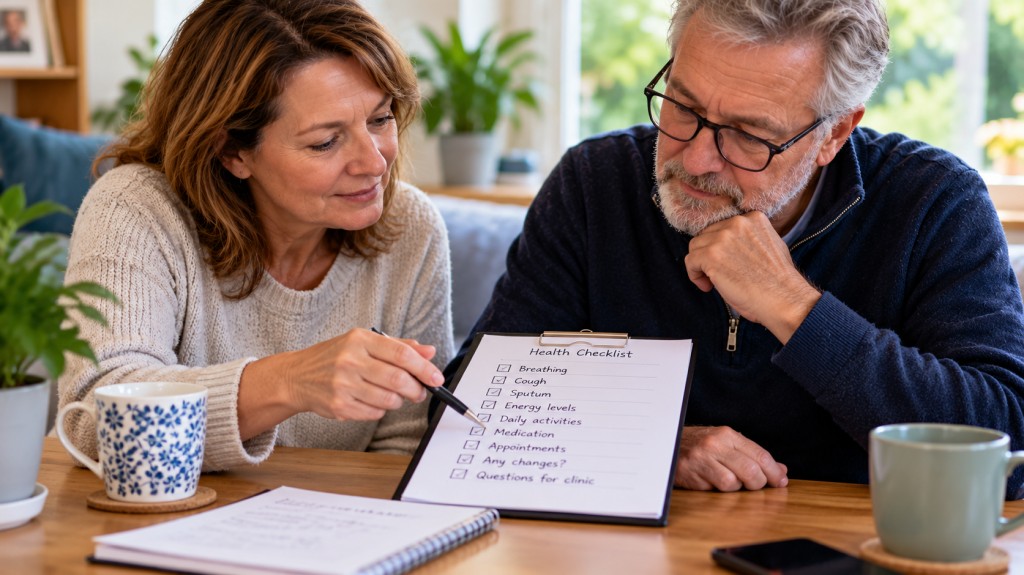
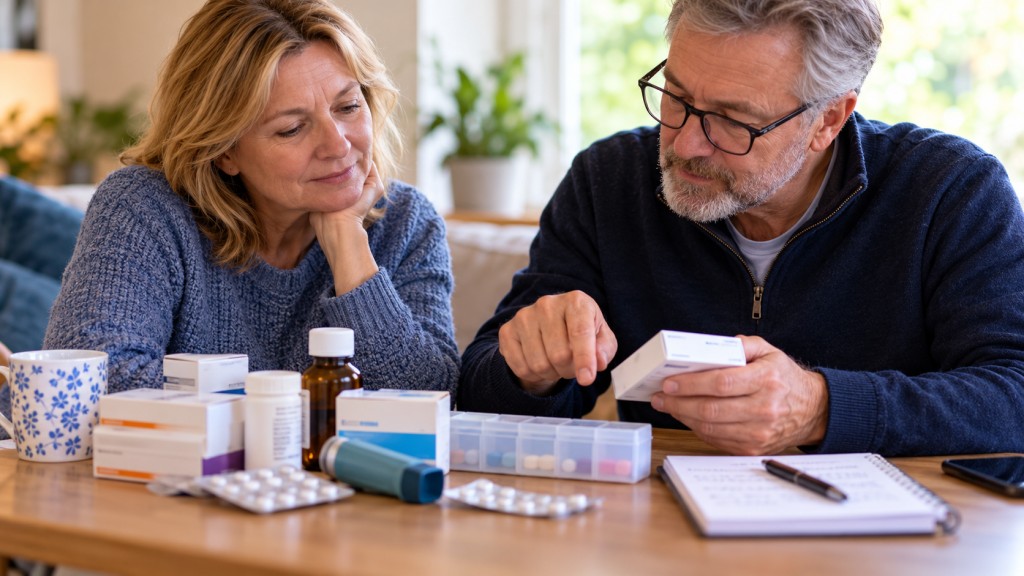
Keith shares what it was like to care for his wife, Marie, as her asthma and breathing problems increasingly limited what she could do. He writes about taking over the household jobs, the strain this brought to their relationship, and how gardening helped Marie regain a little independence and something to look forward to.
Keith’s account reflects his and Marie’s experience at the time it was written. Marie’s diagnosis was still being investigated then. Every person and family is different, and this story is not a guide to diagnosis or treatment.
Keith’s story
This is a bright light in a very dark tunnel. I suppose I should start with a bit of background.
I met Marie on our first day of school, when we were five. She has had asthma and a “bad chest” for as long as I can remember. We have been married for 39 years, and she is my wife, my partner, the love of my life, my soulmate and the mother of our children. She means everything to me.
Over the years, Marie’s asthma became steadily worse. After many tests at Preston Royal Hospital, her doctors thought they might have found an explanation. In January 2013, she was told she was allergic to mould and was prescribed itraconazole. We were still waiting for blood test results. I wondered whether this meant she had aspergillosis, because so many of the experiences I read about sounded like what Marie had been going through. At that point, though, we did not yet have a confirmed answer.
What could I do? I took early retirement and took over the daily housework—vacuuming, dusting, polishing, ironing and so on. I’m told I do a “fair” job of ironing, although I still haven’t worked out how to get the pointy end of the iron into a bra!
Marie had not worked outside the home since we married in 1974. She had brought up our children and looked after our home. Watching her slowly become less able to do things took its toll on me too.
We live close to the beach at the southern end of Morecambe Bay. For years, we loved walking the dog—and the children—along the shore, enjoying the sea air and sunshine. But by then, it had been more than four years since we had been able to do those things together. Marie could no longer walk far or manage the weekly shop, so I took over the day-to-day running of our home.
That brought its own difficulties. Marie had to sit and watch me do the jobs she used to do, almost like a manager. And, let’s face it, nobody does things quite the way you are used to doing them!
We became depressed and argued more than we talked. Fortunately, Marie loves gardening. Our seaside garden has raised beds made from driftwood we collected from the beach after storms. She could still potter about in the garden, while I kept an eye on her. She would point out which plants needed attention and which did not.
It seemed to help her feel more independent and gave her something to look forward to. At the time I wrote this, she was eagerly waiting for the daffodils to appear and watching for the first buds on the trees.
I came to feel that it mattered to care for the person as well as the illness. Treatment was important, but the things that gave Marie a reason to look forward to the day mattered to us too. When she wanted to try to do something, I did not stop her. I might end up doing most of it, but I made sure she knew how much she had managed herself.
That is what helped us. I hope sharing it may be of some help to someone else.
All the best, Keith and Marie

Did this page help you?
Tell us in one minute