Cystic fibrosis (CF) affects the way mucus is made and cleared from the lungs. Thick, sticky mucus can make it easier for bacteria and fungi to remain in the airways, including Aspergillus fumigatus.
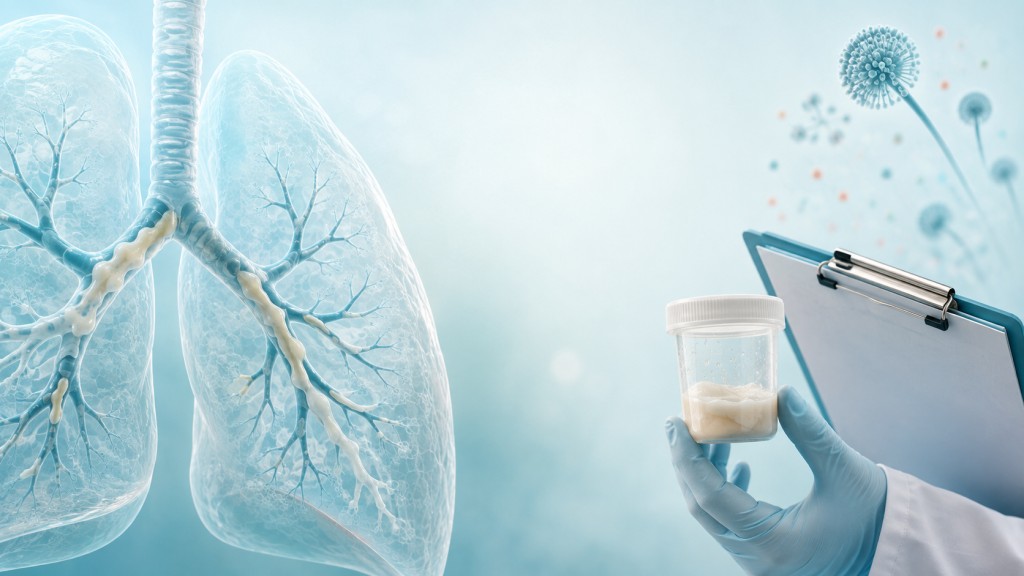
An Aspergillus result in sputum is therefore not unusual in CF. But it does not automatically mean that the fungus is causing lung disease or that antifungal treatment is needed. The key question is whether it is contributing to a change in symptoms, inflammation or lung damage.
Why Aspergillus is more common in cystic fibrosis
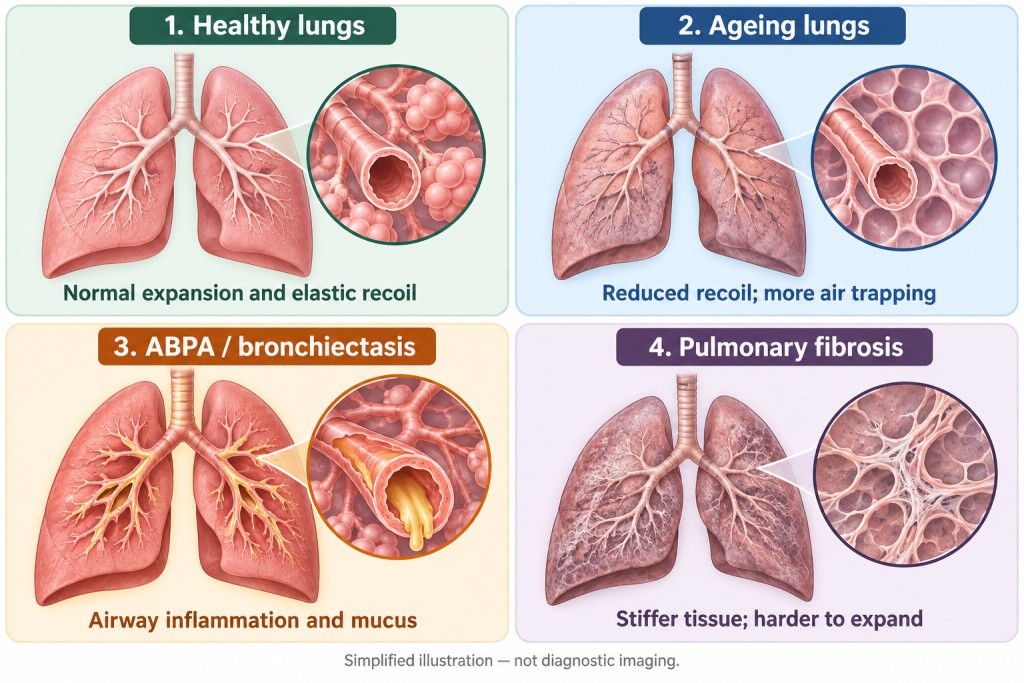
Healthy airways clear inhaled particles and fungal spores through mucus and tiny hairs called cilia. In CF, mucus is harder to move and can collect in the airways. Repeated infection and inflammation may also lead to bronchiectasis, where airways become widened and further mucus can build up.
These conditions can allow Aspergillus to be found repeatedly in respiratory samples. This may be described as colonisation: the fungus is present, but there is no clear evidence that it is causing an active Aspergillus-related illness.
Do highly effective CF medicines change this?
Highly effective CFTR modulator medicines, especially the triple treatment elexacaftor/tezacaftor/ivacaftor (Kaftrio), improve CFTR function and mucus clearance. Recent studies suggest that, after starting this treatment, Aspergillus fumigatus is found less often and in smaller amounts in respiratory samples from people with CF.
This may also reduce the chance of Aspergillus-related inflammation and ABPA. However, it does not mean that every existing Aspergillus problem disappears: ABPA and other lung complications can still need assessment, monitoring and treatment.
Aspergillus can mean different things
In CF, clinicians consider several possible explanations.
Colonisation
Aspergillus is detected in sputum or another respiratory sample, but there is no clear associated deterioration or allergic reaction. It may be monitored rather than treated.
Aspergillus sensitisation
The immune system shows an allergic response to Aspergillus, often on blood or skin testing, without enough features to diagnose ABPA. This can be relevant when reviewing ongoing symptoms, but it is not the same as ABPA.
Allergic bronchopulmonary aspergillosis (ABPA)
ABPA is an excessive allergic immune reaction to Aspergillus growing in the airways. It is a recognised complication of CF, and can cause wheeze, cough, thick mucus plugs, worsening breathlessness, changes on chest imaging and a fall in lung function.
Symptoms often overlap with a CF pulmonary exacerbation, so ABPA can be difficult to recognise.
Other Aspergillus-related lung disease
Less commonly, clinicians may consider other forms of Aspergillus-related disease. The interpretation depends on the whole picture: symptoms, CT scans, sputum results, blood tests, previous lung damage and response to usual CF treatment.
When should ABPA be considered?
ABPA may be considered when someone with CF develops a deterioration that is not fully explained by a usual bacterial infection, particularly if antibiotics are not helping as expected.
Possible clues include:
- New or increased wheeze, cough or breathlessness
- Thick mucus plugs or a change in sputum
- A fall in lung function
- New shadows, mucus impaction or other changes on chest imaging
- Raised total IgE and evidence of allergy to Aspergillus
- Repeated growth of Aspergillus in respiratory samples
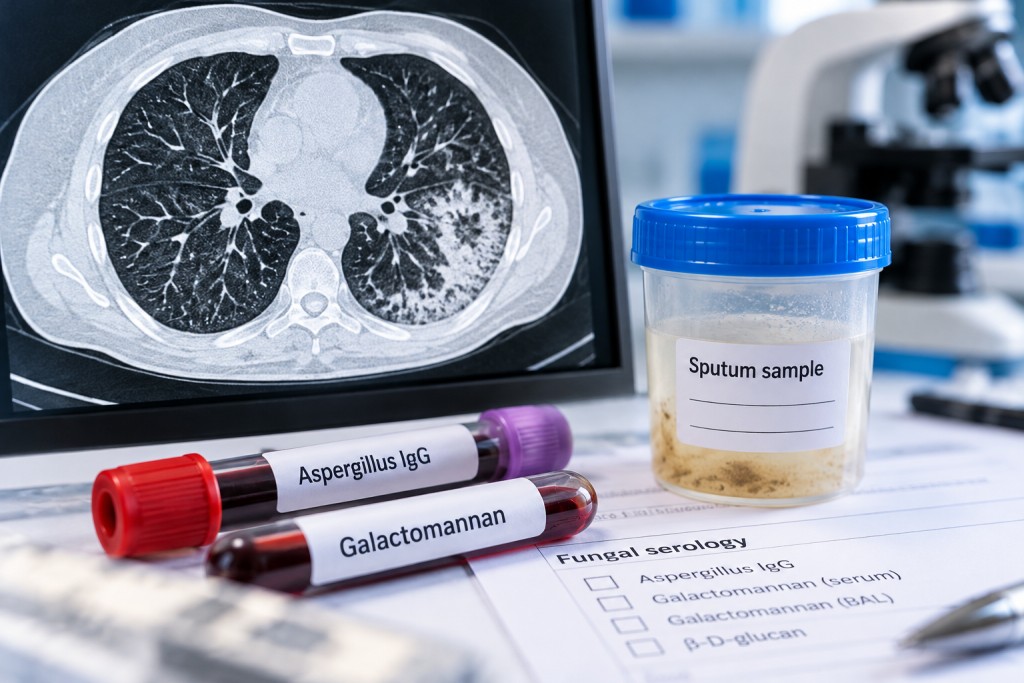
No single test gives the answer. The diagnosis is usually based on a combination of symptoms, blood tests, sputum or other respiratory samples, lung function and imaging. This is important because CF, bacterial infection, bronchiectasis and ABPA can all produce similar symptoms and scan appearances.
Why the distinction matters
ABPA causes inflammation that can lead to further airway damage if it is not recognised and treated. On the other hand, treating every positive sputum culture for Aspergillus would expose people to medicines and potential side effects without clear benefit.
Treatment for ABPA is planned by the CF and respiratory teams. It commonly aims to control the allergic inflammation, sometimes alongside antifungal treatment to reduce the amount of fungus in the airways. The best approach varies between individuals and needs to take account of other CF medicines, possible drug interactions and monitoring requirements.
What you can do
Tell your CF team if your symptoms change, especially if you have more wheeze, persistent deterioration, new mucus plugging or a flare that is not improving as expected. Ask what a positive Aspergillus result means in your particular situation, and whether further testing is needed.
Do not assume that a positive culture means you have ABPA—or that it can be ignored. In CF, Aspergillus findings need to be interpreted alongside the full clinical picture.
Related information
- Allergic bronchopulmonary aspergillosis (ABPA)
- Understanding bronchiectasis
- How aspergillosis is diagnosed
- Treatment for aspergillosis
- Common associated conditions
Source: Cystic Fibrosis Foundation ABPA clinical care guidance.

Did this page help you?
Tell us in one minute