
If you have asthma or bronchiectasis, you may have been tested for allergic bronchopulmonary aspergillosis (ABPA). It is common to hear that ABPA is diagnosed using an IgE blood test, but the reality is more complicated.
A high IgE result can support a diagnosis of ABPA, but it does not prove that you have ABPA.
Specialists usually need to bring together several different pieces of information, including symptoms, blood tests, scans and your medical history.
What is ABPA?
ABPA is an allergic lung condition caused by an exaggerated immune response to Aspergillus, a common mould found in the environment.
It most often affects people with asthma or cystic fibrosis, but it can also occur in people with bronchiectasis and other chronic airway conditions.
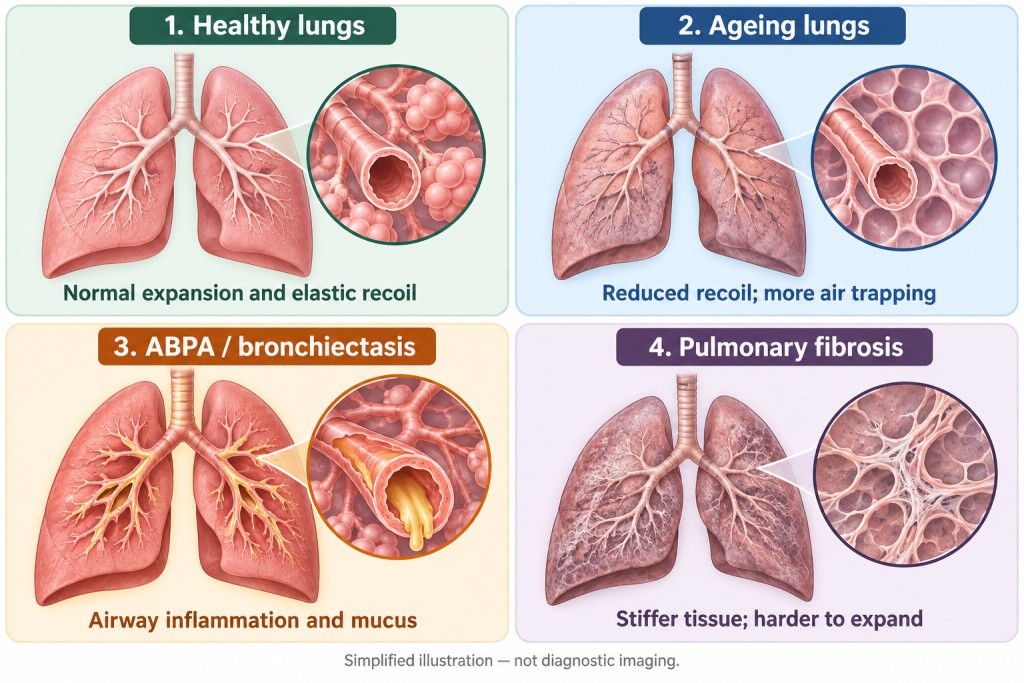
The immune response can cause airway inflammation, mucus plugging and, over time, bronchiectasis or worsening lung damage.
Why is ABPA difficult to diagnose?
Many of the symptoms of ABPA are also common in asthma, bronchiectasis and respiratory infections. These may include:
- cough;
- wheezing;
- breathlessness;
- increased mucus;
- chest tightness;
- tiredness; and
- repeated flare-ups.
Blood-test results can also overlap with other allergic and inflammatory conditions. A person may have a high IgE level without having ABPA, or may have ABPA even when not every test is strongly abnormal.
What does IgE tell doctors?
IgE is an antibody involved in allergic reactions. Doctors may measure:
- total IgE, which reflects the overall amount of IgE in the blood; and
- Aspergillus-specific IgE, which indicates sensitisation to Aspergillus.
These tests are important, but they answer slightly different questions.
Aspergillus-specific IgE can show that the immune system reacts to Aspergillus. This is called sensitisation. Sensitisation does not always mean that a person has ABPA.
Total IgE may be raised in ABPA, but it can also be raised because of other allergic conditions, asthma, eczema or other causes. Levels can also change over time and may be affected by treatment.
Other information used to diagnose ABPA
Depending on the situation, clinicians may consider:
Symptoms and medical history
Doctors may look for worsening asthma, repeated flare-ups, difficulty clearing mucus, brownish mucus plugs or symptoms that do not behave as expected with usual asthma treatment.
Aspergillus-specific IgE
This helps show whether the immune system is sensitised to Aspergillus. It is an important part of assessment but does not diagnose ABPA by itself.
Aspergillus-specific IgG
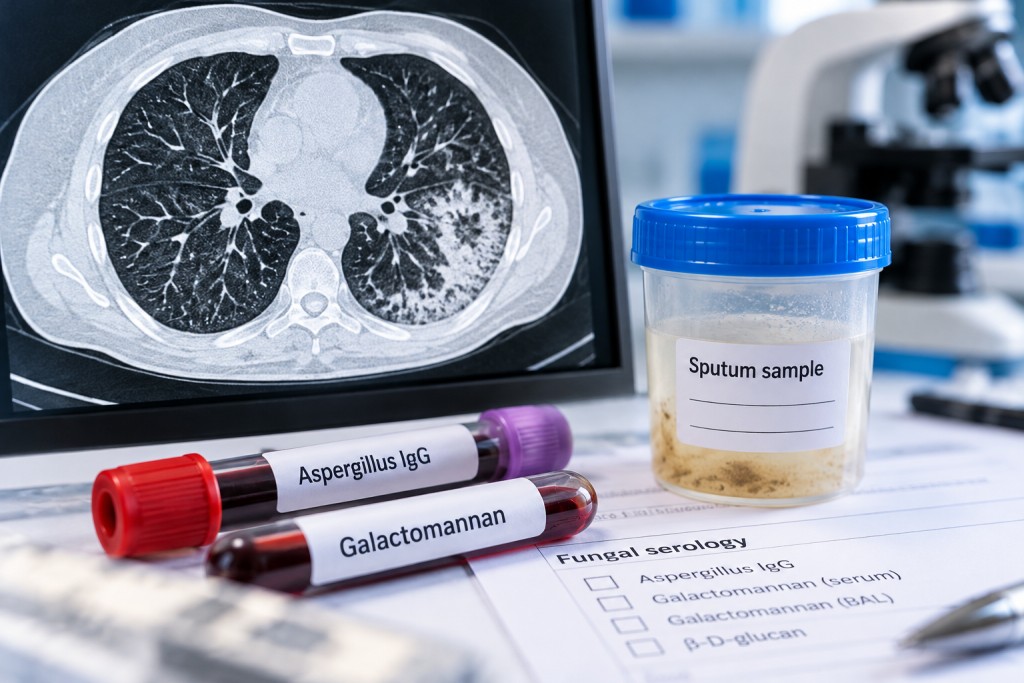
IgG or precipitins may provide additional information about the immune response to Aspergillus. These tests are used differently from IgE tests and may be helpful when considered alongside other findings.
Eosinophils
Eosinophils are a type of white blood cell involved in allergic inflammation. A raised eosinophil count may support the diagnosis, but eosinophils can also be raised in asthma, other allergic conditions and several other diseases.
Chest imaging
A chest X-ray or CT scan may show features such as bronchiectasis, mucus plugging or changes that support an ABPA diagnosis.
High-attenuation mucus on a CT scan can be particularly helpful when present, but not everyone with ABPA has this feature.
Changes over time
Doctors may compare blood tests, symptoms and scans over time. A pattern of worsening symptoms, increasing inflammation and changing imaging may be more informative than one isolated result.
A new approach to combining ABPA test results
A recent study examined whether a weighted diagnostic score could improve the way ABPA test results are combined.
The idea is that different diagnostic findings do not necessarily provide the same amount of information. A weighted approach gives greater importance to findings that are more strongly associated with ABPA, rather than treating every result as equally informative.
This may eventually help specialists assess people whose symptoms, blood tests and scans do not fit neatly into one category.
However, this approach is still research. It is not currently a routine clinical test and it does not replace the existing international guidance for diagnosing ABPA.
Read the research paper on PubMed
Why specialist assessment can be important
ABPA can sometimes be diagnosed and managed outside a specialist centre, but difficult or borderline cases may require specialist input.
This is because the diagnosis involves interpreting several imperfect pieces of evidence together. A specialist may need to decide whether a result represents:
- Aspergillus sensitisation;
- ABPA;
- severe asthma with fungal sensitisation;
- another allergic or inflammatory condition;
- bronchiectasis with mucus plugging; or
- another form of aspergillosis.
Specialist review may be especially helpful when symptoms continue despite treatment, when test results disagree, when scans show extensive mucus plugging or bronchiectasis, or when repeated courses of steroids are being considered.
Questions you could ask your doctor
If you have been told that your IgE is high or that you may have ABPA, you could ask:
- Does my result show sensitisation or does it support a diagnosis of ABPA?
- What do my Aspergillus-specific IgE and IgG results mean?
- Have my eosinophils been measured?
- Do my CT or X-ray findings support ABPA?
- Could another condition explain these results?
- Would specialist advice be helpful?
The important message
ABPA is not diagnosed by IgE alone.
IgE is an important part of the assessment, but doctors usually need to consider it alongside symptoms, asthma or bronchiectasis, eosinophils, other Aspergillus blood tests, chest imaging and changes over time.
New research is exploring whether these findings can be combined more accurately. This may eventually make ABPA diagnosis more consistent, particularly for people whose results are difficult to interpret.
For now, if you have been told that your IgE is high, it is reasonable to ask what the result means in the context of your other tests and symptoms.
This article is for information only and is not a substitute for medical advice. Do not start, stop or change treatment without discussing it with your healthcare team.
Further information
- Allergic bronchopulmonary aspergillosis (ABPA)
- Diagnosis of aspergillosis
- Severe asthma with fungal sensitisation

Did this page help you?
Tell us in one minute