Antifungal cleaning

In the UK, if you're trying to reduce fungal exposure in your home environment — especially important for those with CPA or ABPA — there are several effective antifungal cleaning solutions you can use safely and routinely.

Here’s a list of recommended antifungal solutions available or commonly used in the UK:

🧴 1. White Vinegar (Acetic Acid)

  • Effectiveness: Kills many types of mould, including Aspergillus.
  • How to use: Use neat (undiluted) on tiles, windowsills, bathroom surfaces. Leave for 30–60 mins, then scrub and rinse.
  • Pros: Natural, low-toxicity.

Caution: Not suitable on stone surfaces like marble or granite.

🧴 2. Hydrogen Peroxide (3–6%)

  • Effectiveness: Antifungal and antibacterial.
  • How to use: Spray on mould-affected areas. Leave 10–15 mins, scrub, then wipe clean.
  • Availability: Sold in chemists and online (e.g., Amazon UK).
  • Tip: Can bleach fabrics or surfaces — spot test first.

🧴 3. Borax (Sodium Borate)

  • Effectiveness: Inhibits fungal regrowth.
  • How to use: Mix 1 cup borax to 1 litre warm water. Apply with sponge or spray bottle.
  • Availability: Harder to find in shops, available online.
  • Caution: Keep away from children/pets; don’t ingest.

🧴 4. Specialist Mould Sprays (Commercial Products)
These are widely available in UK hardware stores (B&Q, Homebase, Screwfix) and supermarkets:

Brand Key Ingredient Notes
HG Mould Spray Benzalkonium chloride Strong, effective on black mould.
Astonish Mould & Mildew Blaster Sodium hypochlorite Bleach-based, powerful but with strong fumes.
Dettol Mould & Mildew Remover Sodium hypochlorite Good for bathroom tiles and grout.

💡 Note: While bleach can kill surface mould, it may not penetrate porous materials (like wood or plaster) deeply.

🧼 5. HEPA Filtered Vacuum + Antifungal Surface Wipes

  • Use a vacuum with HEPA filtration to reduce airborne spores.
  • Clean surfaces with fungal control wipes (some contain quaternary ammonium compounds***).

🔥 Do NOT Use:

  • Air fresheners or “mould foggers” not approved for respiratory-safe use.
  • DIY essential oil blends (like tea tree) unless confirmed safe — some oils can worsen respiratory irritation.

🛒 Where to Buy (UK):

  • Boots: Hydrogen peroxide, Dettol products.
  • Amazon UK: Borax, HG Mould Spray, vinegar in bulk.
  • B&Q, Wickes, Screwfix: Specialist mould removers.


*** Here's a deeper look at quaternary ammonium compounds (QACs) — often found in cleaning products marketed for killing mould, fungi, and bacteria — and their relevance for people with CPA or ABPA:


🧪 What Are Quaternary Ammonium Compounds (QACs)?

Quaternary ammonium compounds (often shortened to “quats”) are broad-spectrum disinfectants used in many household cleaners, hospital disinfectants, and antifungal sprays.

They’re especially effective against:

  • Fungal spores (including Aspergillus on surfaces),

  • Bacteria,

  • Viruses (enveloped types like coronaviruses),

  • And can inhibit regrowth of mould on treated surfaces.


🧼 Common QAC-Containing Products (UK)

Product Contains QACs Where Used
HG Mould Spray Benzalkonium chloride Bathroom tiles, windowsills.
Dettol Surface Cleanser (Clear spray) Benzalkonium chloride Kitchens, surfaces, bathrooms.
Zoflora (certain formulas) QACs + fragrance General cleaning (must be diluted).
Clinell Universal Wipes QACs + alcohol Hospital-grade surface wipes.

🟡 Note: Always check the label — not all Dettol or Zoflora products contain QACs.


💡 Why QACs Matter in CPA and ABPA Homes

  • CPA patients are at risk of colonisation or reinfection from Aspergillus spores, especially in damp, dusty, or unventilated environments.

  • ABPA patients can react allergically to spores, triggering flare-ups of wheezing, coughing, or chest tightness.

  • QACs are more effective than bleach at preventing fungal regrowth, especially on non-porous surfaces like plastic, glass, tiles, and sealed wood.


⚠️ Precautions When Using QACs

Although QACs are highly effective, they can be irritating to lungs and skin, particularly if:

  • The area is not well ventilated,

  • The product contains added fragrance (as with Zoflora),

  • Used in aerosol sprays (fine mist can be inhaled).

Tips for safer use:

  • Use gloves and open windows when cleaning.

  • Avoid spraying into the air; apply with a cloth instead.

  • Choose unscented, low-fragrance options (e.g., hospital-grade wipes or Dettol Surface Cleanser).

  • Do not mix with other products like vinegar or bleach — can release dangerous fumes.


Safe-for-Lungs Options (with QACs)

If you or a loved one has ABPA or CPA, consider:

  • HG Mould Spray — effective and well-tolerated if room is ventilated.

  • Clinell Universal Wipes — used in NHS settings, fragrance-free versions available.

  • Dettol Surface Cleanser Spray (Clear bottle) — QAC-based, not bleach-based, less irritating.


Aspergilloma: Complete Patient Guidance

🦠 Aspergilloma: Complete Patient Guidance

📌 What Is an Aspergilloma?

An aspergilloma, or fungal ball, is a clump of Aspergillus fungus, mucus, and dead tissue that forms in a pre-existing cavity in the lungs. These cavities often result from conditions like:

  • Bronchiectasis

  • Tuberculosis (TB)

  • Emphysema

  • Sarcoidosis

The fungal ball is typically non-invasive, but it can still cause significant problems such as persistent coughing, airway obstruction, and especially hemoptysis (coughing up blood).


🔁 Which Comes First: Bronchiectasis or Aspergilloma?

This varies by patient:

  • In most cases, bronchiectasis develops first, creating abnormal airway spaces where Aspergillus can settle and grow.

  • In others, the presence of a fungal ball may worsen existing bronchiectasis through inflammation and mechanical irritation.


⚠️ Risks of Leaving Aspergilloma Untreated

If unmanaged, aspergillomas can cause:

1. Fungal Ball Growth

  • The ball can enlarge, worsening obstruction or symptoms.

2. Severe Bleeding

  • The ball can erode nearby blood vessels and lead to potentially fatal hemoptysis.

3. Worsening Lung Function

  • Chronic inflammation and local damage can lead to scarring and reduced breathing capacity.

4. Progression to Chronic Pulmonary Aspergillosis (CPA)

  • Over time, the infection can spread into surrounding lung tissue and evolve into CPA, which is harder to treat and more systemic.


⚕️ Treatment Options for Aspergilloma

✅ 1. Surgery (Lobectomy or Segmentectomy)

  • Surgery involves removing the cavity and fungal ball and is considered a definitive treatment, especially when:

    • There is severe or repeated bleeding

    • The fungal ball is enlarging

    • Lung function is still sufficient

Limitations:

  • Expensive and high-risk, especially in patients with poor lung function.

  • Post-surgical complications can include air leaks, infections, or respiratory failure.

🛑 Important: Fungal ball regrowth after surgery is possible, especially if underlying lung disease (like bronchiectasis or cavities from TB) remains. This happens in 5 - 15% of patients. Aspergillus can recolonize new or residual cavities, particularly if exposure to spores continues. Therefore, continued monitoring and preventive care are essential even after surgery.


⚠️ Non-Surgical Options (If Surgery Is Too Risky or Unaffordable)

1. Observation

  • For patients with no bleeding and stable imaging, regular monitoring is safe.

  • Includes imaging every 6–12 months and symptom review.

2. Oral Antifungal Therapy

  • Drugs like itraconazole, voriconazole, or posaconazole may help:

    • Reduce fungal burden

    • Minimize inflammation

    • Delay progression to CPA

  • They do not eliminate the fungal ball but may reduce symptoms or stop growth.

3. Embolization (BAE)

  • Used to control bleeding by blocking the feeding blood vessels.

  • Less invasive than surgery, but the bleeding may recur.

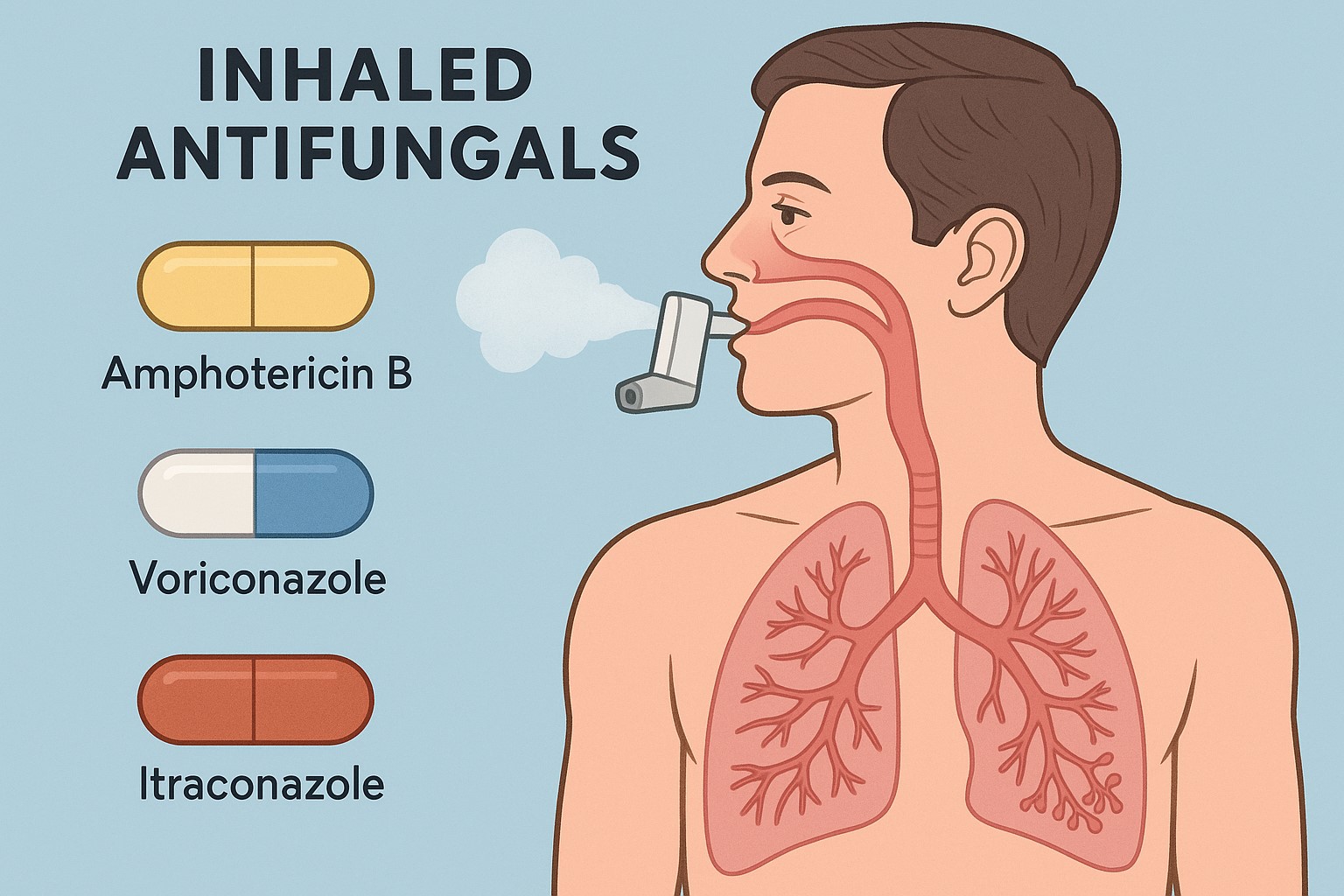
4. Inhaled Antifungals

  • Nebulized amphotericin B may reduce local fungal activity.

  • Used in some specialist centres for high-risk, inoperable patients.


🛡️ Supportive Management

For co-existing bronchiectasis and aspergilloma, supportive care is vital:

  • Continue mucus clearance (e.g. Fluimucil, chest physiotherapy)

  • Avoid dust, mold, compost, rotting vegetation, or ivy

  • Use FFP2/FFP3 masks during risky exposures

  • Get vaccinated (e.g., flu, pneumococcus, COVID-19)

  • Monitor for new or worsening symptoms


🧾 Summary Table of Aspergilloma Treatments

Option Removes Aspergilloma? Used When Cost/Risk
Surgery (resection) ✅ Yes Hemoptysis, large fungal ball High cost/risk
Antifungal meds ❌ No (but may help) Symptoms or growth risk Moderate
Observation only ❌ No No symptoms or stable Low
Embolization (BAE) ❌ No Bleeding emergency Moderate
Inhaled antifungals ❌ No (experimental) Adjunct or palliative Variable

🩺 Final Thoughts

  • Surgery is curative but not always an option—due to risk, cost, or lung function.

  • Fungal ball regrowth can occur, even after surgery, especially if cavities remain and exposure to spores continues.

  • Long-term monitoring, antifungal support, and environmental precautions are critical.

  • If you experience bleeding, sudden worsening cough, or weight loss, seek medical help immediately.


I'm frightened by the thought of visual disturbances if I take voriconazole

It's completely understandable to feel frightened about potential side effects like visual disturbances with voriconazole—especially if you've read about how common they can be. The good news is that while these effects are indeed reported, they're usually temporary, not harmful to the eyes, and tend to go away either within hours after a dose or over time as your body adjusts.

Here are some reassuring points:

  • Common but often mild: Around 30–40% of people report visual changes (like blurred vision, color changes, or brightness), but most describe them as minor and not distressing.

  • Usually short-lived: These effects often appear within 30–60 minutes after a dose and usually fade within a few hours.

  • Reversible: They're not linked to lasting damage and generally stop after discontinuing the drug.

  • Lower risk with lower doses or slow titration: If you're particularly sensitive or anxious, your doctor might be able to start with a lower dose or switch to a slower-release formulation (if available).

If you're at higher risk (e.g. already have eye issues, neurological concerns, or are taking interacting medications), this is worth discussing with your prescriber—sometimes a different antifungal like posaconazole or isavuconazole might be considered.


Living with Aspergillosis: What You Don’t See

An invisible illness that changes everything.


What is Aspergillosis?

Aspergillosis is a long-term lung condition caused by a common mould (Aspergillus) found in the environment. For most people it’s harmless, but in some it causes serious illness, lung damage, and long-lasting symptoms. It can come in different forms such as:

  • Chronic Pulmonary Aspergillosis (CPA)
  • Allergic Bronchopulmonary Aspergillosis (ABPA)
  • Aspergilloma (fungal ball)

These are not contagious, but they are serious.


Why It's Hard to See

People with aspergillosis may look well but feel incredibly unwell. This condition is invisible but can cause:

  • Constant breathlessness
  • Severe fatigue
  • Chest pain or coughing (sometimes with blood)
  • Frequent infections
  • Side effects from long-term antifungal or steroid treatments

Patients may use walkers, oxygen, or mobility aids some days and not others. That doesn’t mean they are better or faking. This is a fluctuating illness.


"But You Look Fine..."

Looks can be deceiving. People with aspergillosis are often battling infection, inflammation, medication side effects, and mental strain every day.

Please don’t assume someone is well because they don’t look ill. If they cancel plans, rest more than others, or seem tired, it’s not laziness — it’s medical reality.


How You Can Support

  • Listen without judgement
  • Believe what they tell you about how they feel
  • Be flexible and patient
  • Offer practical help (shopping, transport, etc.)
  • Understand their limits can change daily

Final Words

Aspergillosis is an invisible disability. Your understanding makes an enormous difference. With the right support, people with this condition can live meaningful and dignified lives.

To learn more, visit: https://aspergillosis.org  https://www.aspergillosistrust.org/socialmedia

Thank you for taking the time to understand what you can’t always see.


Could You Help Transform the Future of CPA Treatment?

Join the INCAS Trial at the National Aspergillosis Centre

If you’ve recently been diagnosed with chronic pulmonary aspergillosis (CPA) and are starting antifungal treatment, you may be eligible to take part in a pioneering clinical trial that could shape the future of care. If that is the case we will approach you to ask if you would like to join.

CPA is a long-term lung infection caused by the fungus Aspergillus, often in people with conditions like COPD or previous tuberculosis. It leads to progressive lung damage, frequent infections, and significant impact on quality of life. Current antifungal treatments help only about 60% of patients, and many face relapses, side effects, and long-term medication use.

The INCAS trial is testing whether adding a naturally occurring immune protein called interferon-gamma to standard antifungal therapy can lead to better outcomes — fewer infections, less lung damage, and improved day-to-day wellbeing. Interferon-gamma is already used safely in the NHS for other conditions, and early research at the National Aspergillosis Centre (NAC) has shown promising results for CPA.


What Is Involved?

If you choose to take part:

  • You’ll continue with standard antifungal treatment

  • You may be randomly assigned to receive interferon-gamma injections for 12 weeks (3 injections per week)

  • You’ll receive regular follow-up with chest scans, symptom tracking, and support from our expert team

All patients are closely monitored to ensure safety and comfort throughout the trial.


What Have Previous Participants Said?

Patients who took part in earlier studies shared their experiences with honesty and encouragement:

“They are missing a great opportunity… I certainly didn’t want to inject, but I need to be well, and this was a good chance at fewer infections and damping down the Aspergillus.”

“I only had one bad day — I phoned the NAC nurses, who reassured me it was expected and to carry on. Now, side effects are mild and usually gone by lunchtime. They don’t stop me like the chest problems used to.”

“I would really encourage patients to seize this chance of having gamma interferon.”

Others mentioned they were concerned at first about injections or travel, but found ways to manage:

“It doesn’t always hurt — yellow paediatric needles are the key, and a bit of tummy fat helps. Legs rarely hurt.”
“Travel’s harder now that my husband has trouble with his sight… but I understand the issue and can empathise.”


Is It Safe? What About Side Effects?

In our previous study, interferon-gamma was generally well tolerated. Some patients had mild flu-like symptoms after the injection, but these usually faded with time and were far less disruptive than a flare of CPA itself. Your care team will work closely with you and adjust support as needed.

This trial is all about learning more — not only about effectiveness, but also how easy and acceptable the treatment is for patients. The insights we gain will help shape a larger trial and may eventually transform the standard of care for CPA.


Why Take Part?

CPA affects around 3,600 people in the UK, with mortality as high as 40% within five years. If interferon-gamma proves successful, it could:

  • Shorten treatment durations

  • Reduce relapses

  • Improve quality of life for you and others

  • Open the door for better treatments in other chronic lung diseases too

You won’t just receive expert support from the UK’s leading CPA centre — you’ll help build the future of care.

“I wouldn’t be influenced by being paid. I’d be more concerned about safety and careful monitoring – which I got.”

🔗 Learn more at clinicaltrials.gov/NCT05653193 or speak to your team at the National Aspergillosis Centre.

You could be part of something that changes CPA care for good.


Understanding Drug Interactions with Antifungal Medications

Information for patients and carers receiving treatment for aspergillosis


Why drug interactions matter

Many antifungal medications used to treat aspergillosis can affect — or be affected by — other medicines you may be taking. These drug interactions can change how well a medication works, increase side effects, or cause unexpected reactions.

Knowing what to watch for and sharing your full medication list with your healthcare team can help keep you safe.


Antifungal medicines that interact with other drugs

Common antifungals:

  • Voriconazole
  • Posaconazole
  • Itraconazole
  • Isavuconazole

These drugs are processed through the liver and can interfere with enzymes (like CYP3A4) that control how other medications are broken down.


Examples of drugs that may interact

Heart medications

  • Statins (e.g. simvastatin) — can build up and cause muscle damage
  • Calcium channel blockers (e.g. amlodipine) — may cause low blood pressure
  • Warfarin and other anticoagulants — may require closer INR monitoring

Mental health medications

  • SSRIs (e.g. sertraline, fluoxetine) — can increase side effects
  • Benzodiazepines (e.g. diazepam) — may be stronger or last longer

Steroids

  • Prednisolone — levels may increase with antifungals, increasing risk of side effects

Immunosuppressants

  • Tacrolimus, cyclosporine — antifungals can raise their levels significantly

Other

  • Oral contraceptives — effectiveness may be reduced (use backup contraception)
  • Some diabetes medications — risk of low or high blood sugar
  • Antacids or proton pump inhibitors — can reduce absorption of antifungals

What you can do

  • Make sure your drug list is kept up to date and brought to every clinic visit or hospital appointment
  • You can ask your pharmacist or look up your medicines in the British National Formulary (BNF) or NHS Medicines A-Z to find out more about possible interactions. The Fungal Infection Trust also maintains a list specifically for antifungal medication
  • Always give your care team a full, up-to-date medication list, including over-the-counter medicines, supplements, and herbal remedies
  • Don’t stop or start any medicines without checking first
  • Let your GP and pharmacist know you're taking antifungal treatment
  • Ask your team if your medication needs to be monitored more closely (e.g. blood levels)

Signs of a potential drug interaction

  • Unexplained dizziness, fainting, or fast heart rate
  • New or worsening side effects
  • Signs of toxicity (nausea, confusion, muscle pain, tremors)
  • Bleeding or bruising more easily

If you notice anything unusual, contact your healthcare team or pharmacist.


When to Speak Up About Side Effects

For patients and carers managing aspergillosis treatment


Why this matters

Treatment for aspergillosis is often long-term and involves medications that can affect people in different ways. It's important to know that you don’t have to suffer in silence. Recognising side effects early and reporting them can help you stay well and improve your quality of life.


Medications commonly used in aspergillosis

Antifungals
Voriconazole, Posaconazole, Itraconazole, Isavuconazole

Steroids
Prednisolone (oral), Inhaled corticosteroids

Biologic therapies
Omalizumab (anti-IgE), Mepolizumab/Benralizumab (anti-IL-5), Dupilumab (anti-IL-4/IL-13)


What to watch for

Note: These side effects range from common to rare. Most people do not experience all of them, but it's important to be aware of what might occur. If you’re unsure whether a symptom is related to your medication, always ask.

Cardiac side effects (uncommon to rare, but important to report)

  • Palpitations (racing or irregular heartbeat)
  • Dizziness or fainting
  • Swelling in the legs or ankles
  • Chest pain or tightness
  • Changes in blood pressure or heart rhythm (QT prolongation) (can occur with antifungals or steroids)
  • Palpitations (racing or irregular heartbeat)
  • Dizziness or fainting
  • Swelling in the legs or ankles
  • Chest pain or tightness
  • Changes in blood pressure or heart rhythm (QT prolongation)

Let your healthcare team know if you have a history of heart conditions, or experience any of these symptoms during treatment.

Antifungal side effects (common to occasional)

  • Skin rash, burning, or sun sensitivity, even indoors (through windows or from reflected light)
  • Visual changes (blurred vision, colour distortion, photophobia)
  • Liver enzyme abnormalities (can show up on blood tests)
  • Nausea, abdominal discomfort, or taste changes
  • Hallucinations, anxiety, or confusion (rare but serious — seek help immediately)

Steroid side effects (common with long-term use)

  • Mood swings, anxiety, or irritability
  • Insomnia or restlessness
  • Increased appetite or weight gain
  • High blood sugar, especially if diabetic
  • Bone thinning (osteoporosis) over time
  • Skin thinning, easy bruising, or delayed healing
  • Eye pressure/glaucoma or cataracts (with long-term use)

Biologic side effects (generally well-tolerated; uncommon side effects listed below)

  • Localised reactions at the injection site (pain, swelling, redness)
  • Headache, fatigue, or low-grade fever
  • Worsening eye symptoms, especially with dupilumab (e.g. dry eyes, redness)
  • Rare: allergic reactions or increased infection risk (let your team know if you’re feeling unwell after a dose)

When to get in touch

You should contact your care team if:

  • A side effect is persistent, worsening, or interfering with your daily life
  • You notice any mental health changes (anxiety, low mood, agitation)
  • You feel dizzy, unwell, or unable to tolerate food or fluids
  • There are signs of infection (e.g. fever, cough, chills, pain)
  • You are unsure whether what you’re feeling is a side effect or something else

You're not being a nuisance

Asking questions or raising concerns is part of staying safe. Medications can usually be adjusted, paused, or switched — but your team needs to know how you’re feeling to make those decisions. You are an expert in your own experience.


Tip: Keep a side effect diary

  • Note any changes in sleep, mood, appetite, skin, or digestion
  • Bring this with you to appointments
  • If helpful, ask a family member or friend to help observe changes

Voriconazole and Sun Sensitivity

People taking voriconazole need to be very cautious in the sun because this antifungal can cause photosensitivity reactions—meaning the skin becomes more sensitive to sunlight, even through glass or on cloudy days. This can lead to severe sunburn, skin blistering, and long-term damage, including premalignant and malignant skin changes (like squamous cell carcinoma), especially with prolonged use.

Here’s what people on voriconazole should do to protect themselves:


☀️ Sun Safety Tips for Voriconazole Users

  1. Avoid direct and reflected sunlight:

    • Try to stay indoors between 10 a.m. and 4 p.m., when UV rays are strongest.

    • Choose shaded routes or walk on the shady side of the street.

    • Avoid indirect or reflected sunlight (e.g. off windows, water, sand, snow)
  2. Wear protective clothing:

    • Long-sleeved tops, trousers, and wide-brimmed hats are essential.

    • Consider UV-protective clothing (many brands offer this specifically).

    • Use UV-protective sunglasses to shield your eyes.

  3. Use high-factor sunscreen:

    • Broad-spectrum SPF 50+ sunscreen is best.

    • Apply generously to all exposed skin, including hands, ears, and neck.

    • Reapply every 2 hours, and after sweating or washing.

  4. Avoid sunbeds and tanning lamps:

    • Artificial UV exposure can also cause damage.

  5. Check windows:

    • UV-A rays can penetrate glass, so use UV-filtering films on car and home windows if needed.

  6. Regular skin checks:

    • Long-term voriconazole use has been linked to skin cancer, especially in immunocompromised individuals.

    • See a dermatologist regularly, and report any new or changing skin lesions.


⚠️ Signs of Photosensitivity to Watch For:

  • Red, itchy, or painful rash in sun-exposed areas

  • Skin blistering or peeling

  • New moles or spots, or changes to existing ones


If you're on long-term voriconazole and sun exposure is unavoidable, it might be worth discussing alternative antifungal treatments with your doctor, especially if skin damage begins to occur.

Here’s a mix of recommended sunscreens and UV-protective gear that people on voriconazole (especially those with prolonged use or immunosuppression) often find effective. These are high-protection, broad-spectrum, and suitable for sensitive or compromised skin.


🧴 Top Sunscreens for Voriconazole Users

🇬🇧 Available in the UK

  1. La Roche-Posay Anthelios UVMune 400 Invisible Fluid SPF 50+

    • Extremely high UVA/UVB protection.

    • Lightweight, non-greasy, great for sensitive skin.

    • Popular among transplant and cancer patients for sun protection.

  2. Altruist Dermatologist Sunscreen SPF 50/50+

    • Developed by a UK dermatologist.

    • Broad-spectrum, affordable, fragrance-free.

    • Available in bulk (good for daily use on large areas).

  3. Ultrasun Extreme SPF 50+

    • Long-lasting protection, water-resistant.

    • Ideal for extreme sun sensitivity.

    • One application can last several hours if you’re not sweating heavily.

  4. Eucerin Sun Fluid Pigment Control SPF 50+

    • High UVA/UVB and HEVIS (visible light) protection.

    • Helps prevent hyperpigmentation from sun damage.

  5. Heliocare 360° Mineral Tolerance Fluid SPF 50+

    • 100% mineral filters (ideal for highly sensitive or reactive skin).

    • Broad-spectrum including infrared and visible light.

    • Often recommended by dermatologists for patients with photosensitive conditions.


👕 UV-Protective Clothing

Look for clothes labelled UPF 50+ (Ultraviolet Protection Factor), which blocks 98% of UV rays. Here are some trusted brands:

🇬🇧 Available in the UK or for international shipping:

  1. Solbari (Australia/UK)

    • Offers UPF 50+ certified clothing, including hats, long-sleeve tops, trousers, and gloves.

    • Specifically designed for people with photosensitivity and skin cancer risks.

  2. Coolibar (US-based, ships to UK)

    • One of the gold-standard brands for UV-protective clothing.

    • Comfortable, stylish, and medically recommended for sun-sensitive conditions.

  3. Uniqlo Airism Long Sleeve Tops

    • While not marketed as UV-protective, many of their Airism or UV-cut ranges have built-in UV filters.

    • Great for layering or casual use.

  4. Decathlon UV Protection Range

    • Affordable UPF clothing, especially good for outdoor walking and travel.

    • Includes UV-protective hats, neck gaiters, and swimwear.


🕶️ UV-Protective Sunglasses

Make sure they:

  • Are labelled UV400 or 100% UVA & UVB protection

  • Preferably have wraparound lenses to protect the sides

  • Brands: Ray-Ban, Oakley, M&S UV-protection glasses, or Fitovers if you already wear prescription glasses.


What drugs are being developed to reduce steroid intake

New drugs and strategies are being developed or repurposed to reduce or even eliminate the need for steroids in diseases like ABPA, where inflammation is driven by an allergic immune response to Aspergillus.

Here’s a breakdown of what’s already available and what’s on the horizon:


🧬 Biologics – the biggest game-changer

These are antibody-based therapies that target specific immune pathways, rather than suppressing the whole immune system like steroids do.

✅ Already used off-label or in trials for ABPA:

1. Omalizumab (Xolair)

  • Targets IgE (the allergy antibody that’s sky-high in ABPA)

  • Already licensed for severe allergic asthma

  • Studies show it reduces exacerbations, improves lung function, and helps taper off steroids

  • Limitations: expensive, dosing based on IgE levels and weight (difficult in patients with very high IgE)

2. Mepolizumab (Nucala)

  • Targets IL-5, which drives eosinophil activity

  • Approved for eosinophilic asthma

  • Used in some ABPA patients, especially when eosinophils remain high

  • Can help reduce steroid use and fungal exacerbations

3. Benralizumab (Fasenra)

  • Also targets IL-5 receptor – causes direct depletion of eosinophils

  • Similar benefits to mepolizumab but may act faster

  • Small studies and case reports show promise in ABPA and chronic pulmonary aspergillosis with eosinophilia

4. Dupilumab (Dupixent)

  • Blocks IL-4 and IL-13, key drivers of Th2 inflammation

  • Approved for asthma, atopic dermatitis, and nasal polyps

  • Early evidence suggests it may benefit ABPA patients, especially those with co-existing nasal polyps or eczema

  • Could be ideal for steroid-sparing in allergic fungal disease


💊 Antifungals as steroid-sparing agents

Already in use, but still being optimized:

  • Itraconazole

  • Voriconazole

  • Posaconazole

  • Isavuconazole (being explored more recently, better tolerated in some patients)

These reduce fungal burden, which helps turn down the immune overreaction—letting steroids be tapered or even avoided in some patients.


🔬 In Development or Under Investigation

🧪 Tezepelumab

  • Blocks TSLP (thymic stromal lymphopoietin) – an early signal in allergic inflammation

  • In trials for severe asthma

  • May be helpful in ABPA down the line – trials are ongoing

🧪 Anti-IL-33 and Anti-ST2 therapies

  • IL-33 is another "alarmin" involved in allergic responses

  • Still in early stages, but being watched closely for steroid-sparing potential in allergic lung diseases


🌍 Other Strategies Being Studied

  • Inhaled antifungals (e.g., inhaled voriconazole or amphotericin B) – may reduce systemic side effects

  • Vaccines against Aspergillus – still early stage

  • Mucolytics and anti-inflammatory antibiotics (e.g., azithromycin) as steroid-sparing support in some patients


🤔 What You Can Do Now

  • If you’re struggling with steroid side effects or dependency, it’s totally reasonable to ask your respiratory team:

    • “Am I a candidate for a biologic like omalizumab or mepolizumab?”

    • “Is my antifungal therapy optimized?”

    • “Would a switch to inhaled or combination therapy help reduce my steroid use?”


Help Us Explore a New Treatment for Chronic Pulmonary Aspergillosis (CPA)

We’re Recruiting for a Clinical Trial of Interferon-Gamma (IFNγ)

We’re looking for people with chronic pulmonary aspergillosis (CPA) to take part in an exciting clinical trial testing a new treatment approach using interferon-gamma (IFNγ) — a substance that could help the immune system fight the Aspergillus infection more effectively.


What is CPA?

CPA is a long-term lung infection caused by the fungus Aspergillus. It usually affects people with chronic lung diseases like COPD or those who’ve had tuberculosis (TB) in the past. Over time, CPA can cause:

  • Enlarging cavities in the lungs

  • Recurrent chest infections

  • Persistent coughing and fatigue

  • Worsening breathlessness and reduced quality of life

It’s a progressive condition and can be hard to diagnose early. Around 3,600 people are living with CPA in the UK. Without effective treatment, CPA can be life-limiting — up to 4 in 10 people may die within five years of diagnosis.


Current Treatment Challenges

Treatment typically involves long-term antifungal medication, but:

  • Only about 60% of patients improve

  • Treatment can be lifelong, with relapses common

  • There is only one class of oral antifungals available

  • Side effects and high costs are frequent problems

This is why we urgently need better treatment options.


Why Interferon-Gamma?

Our research suggests that many CPA patients may have a weakened immune response, particularly a lower production of interferon-gamma (IFNγ) — a natural substance that helps the body fight fungal infections like Aspergillus.

In small studies, giving IFNγ to patients who didn’t respond to antifungals showed fewer lung flares, fewer hospital stays, and better quality of life. It’s already used safely in other NHS treatments — now we want to explore its role in CPA.


What This Trial Involves

We’re running a randomised clinical trial to test IFNγ in CPA. Here’s what to expect:

  • You must be starting antifungal treatment for CPA

  • You’ll be randomly placed in one of two groups:

    • One group receives IFNγ + antifungals for 12 weeks

    • The other group receives antifungals only

  • We’ll monitor:

    • Changes in lung CT scans

    • Quality-of-life scores

    • Any side effects or problems with tolerability

The trial will include 50 participants in total (25 in each group) and is expected to run until August 2026.


Why Your Participation Matters

By joining this study, you’ll help us find out whether IFNγ could:

  • Improve treatment outcomes

  • Shorten the duration of therapy

  • Prevent relapses

  • Potentially benefit others with chronic lung diseases

If successful, this could lead to a larger trial and possibly a new standard treatment for CPA.


Interested in Taking Part?

You may be eligible if you:

  • Have been diagnosed with CPA

  • Are about to start antifungal treatment

  • Are willing to attend follow-up appointments for 12 weeks

👉 Click here for full details and how to take part