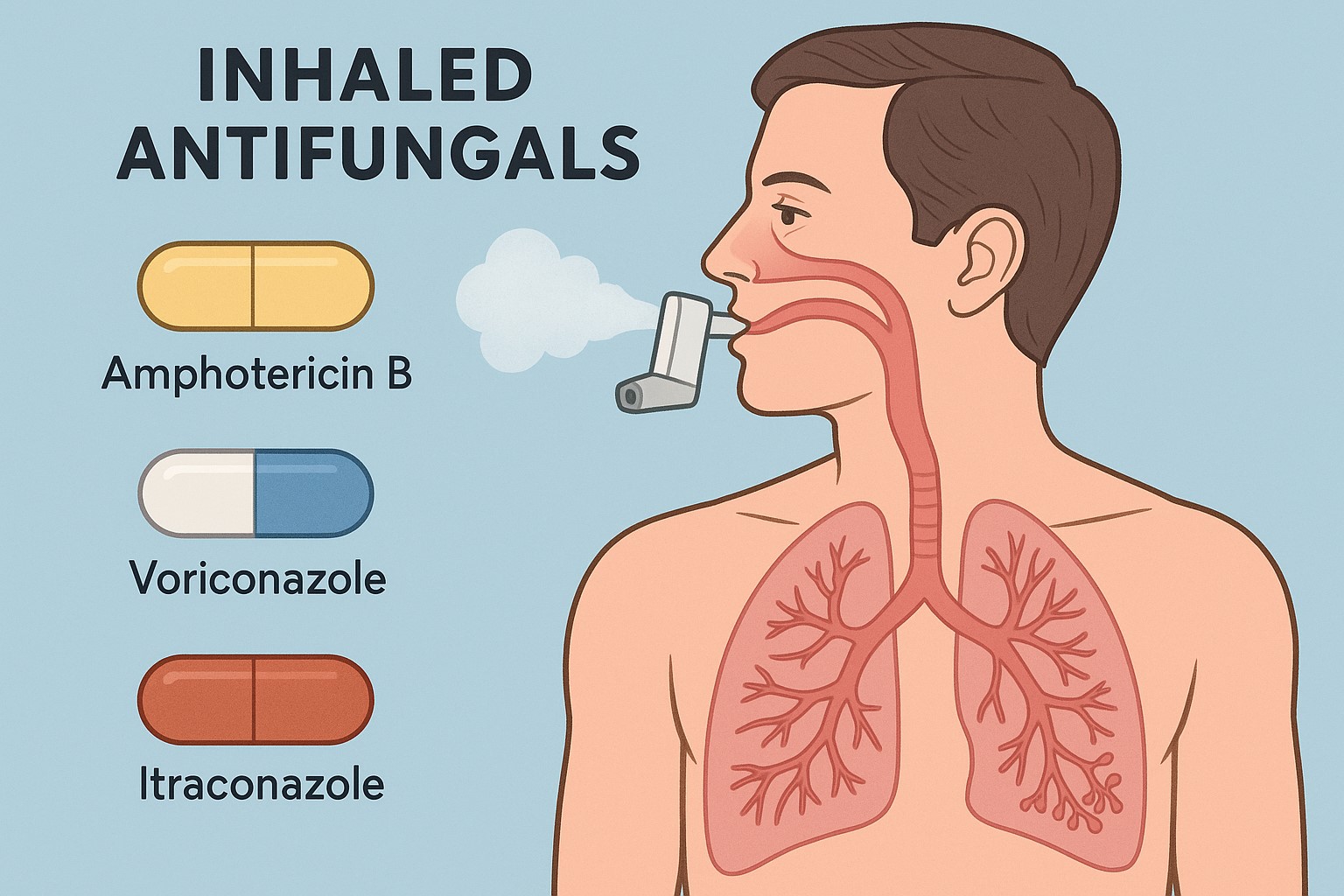
Inhaled antifungals are an area of active development, especially for targeting fungal lung infections like aspergillosis and candidiasis. This approach allows for high local drug concentrations in the lungs while minimizing systemic side effects. Here’s a summary of current and emerging inhaled antifungals:
✅ Currently Available or in Clinical Use (select cases or trials)
| Antifungal | Formulation | Indication / Use | Notes |
|---|---|---|---|
| Amphotericin B (liposomal) | Inhaled (off-label) | Prophylaxis in immunocompromised patients (e.g. post-transplant) | Used for inhaled prophylaxis against invasive aspergillosis; available in some UK centres |
| Voriconazole | Inhaled (compounded) | Limited use in chronic fungal lung disease | Very limited data; some use in compassionate settings |
| Itraconazole | Inhaled (experimental) | Chronic pulmonary aspergillosis | Inhalable versions have been studied (e.g. PUR1900/Pulmazole) |
| Nystatin | Inhaled (rare/off-label) | Oropharyngeal candidiasis or tracheobronchial use | Sometimes nebulized in ICU; limited absorption |
🧪 In Development / Clinical Trials
| Antifungal | Developer / Status | Target Use | Notes |
|---|---|---|---|
| Opelconazole (PC945) | Pulmocide Ltd – in Phase 3 trials | Inhaled for chronic aspergillosis, prophylaxis | Designed specifically for inhalation; long lung retention, minimal systemic exposure |
| Pulmazole (PUR1900) | Pulmatrix (partnering with Cipla) – early trials | ABPA, CPA in asthma/bronchiectasis | Inhaled itraconazole dry powder; promising lung targeting |
| Inhaled amphotericin B lipid complex | Aridis / others | Invasive fungal prophylaxis | Advanced animal and some early human data |
| Encochleated Amphotericin B | Matinas BioPharma (oral/inhaled being explored) | Aspergillosis, mucormycosis | Cochleate delivery protects drug; inhaled route under study |
🔬 Preclinical / Exploratory
| Antifungal Class | Notes |
|---|---|
| Echinocandins (e.g. caspofungin) | Not yet available in inhaled form, but being explored for nebulization |
| Azole reformulations | Research ongoing into nebulized posaconazole or isavuconazole for direct lung delivery |
| Novel agents (e.g. olorofim) | Olorofim is oral/IV only currently, but inhaled versions could emerge in future studies |
🧩 Potential Advantages of Inhaled Antifungals
-
High concentration directly at the site of infection (lungs)
-
Reduced systemic toxicity
-
Less interaction with hepatic CYP450 pathways (important for azoles)
-
Better for long-term suppression in CPA, ABPA, SAFS
🚧 Challenges
-
Delivery devices and patient technique (e.g. DPI vs nebuliser)
-
Ensuring adequate deposition in damaged or obstructed airways
-
Regulatory hurdles due to novel delivery routes
-
Limited real-world data so far

Path:
Start » Treatment » Antifungals »
Did this page help you?
Tell us in one minute