🫁 Understanding Chronic Cough in Aspergillosis
What the latest British Thoracic Society statement means for you
🌬️ Why This Matters
If you live with aspergillosis, Allergic Bronchopulmonary Aspergillosis (ABPA), or bronchiectasis, coughing can dominate your life. It’s tiring, painful, and socially awkward — especially when people assume it means infection.
Doctors used to see cough as just a symptom of another problem, but the British Thoracic Society (BTS) Clinical Statement on Chronic Cough in Adults (2023) recognises something new:
For many people, a cough can become a condition in its own right — caused by airway and nerve hypersensitivity, not just infection.
This matters for aspergillosis patients because fungal allergy and inflammation make the airways especially sensitive.
💡 What Is “Chronic Cough”?
A chronic cough is one lasting eight weeks or more.
It may be:
-
Dry – little or no mucus
-
Productive – thick sputum (common in bronchiectasis or chronic aspergillosis)
-
Triggered by dust, cold air, perfume, or strong scents
For people with aspergillosis, several overlapping causes may exist:
-
Fungal colonisation or infection
-
Allergic inflammation (ABPA)
-
Bronchiectasis and mucus retention
-
Reflux or post-nasal drip
-
Nerve hypersensitivity
This is why one treatment rarely fixes everything — different “treatable traits” must be addressed together.
🧬 Why It Happens
1️⃣ The Hypersensitive Cough Reflex
People with aspergillosis often develop overactive airway nerves — so normal irritants like dust, scent, or cold air trigger coughing fits.
This “cough reflex hypersensitivity” happens because:
-
Ongoing inflammation damages the airway lining.
-
Nerve endings in the throat and lungs become over-responsive.
-
Even mild triggers set off powerful reflexes.
This is a real physiological process, not psychological.
It’s why cough can continue even when infection is under control.
2️⃣ Treatable Traits – Finding the Real Drivers
| Treatable Trait | What It Means | What Helps |
|---|---|---|
| Airway infection or colonisation | Persistent fungi or bacteria | Antifungal or antibiotic therapy, sputum tests |
| Allergic inflammation | ABPA or asthma-type airway swelling | Corticosteroids, biologics (e.g., mepolizumab, benralizumab) |
| Cough reflex hypersensitivity | Overactive airway nerves | Speech therapy, nerve-modulating medication |
| Airway clearance problems | Mucus that’s hard to shift | Physiotherapy, saline or mucolytic therapy |
| Reflux or postnasal drip | Acid or sinus drainage irritation | Reflux management, ENT care |
Identifying these traits helps your clinician personalise treatment.
💊 Medications That Can Cause or Worsen Cough
The BTS statement highlights that some medicines can trigger or amplify chronic cough — especially in people with already-sensitive lungs.
🔹 ACE Inhibitors (Blood pressure or heart disease)
Examples: Ramipril, Lisinopril, Enalapril, Perindopril
-
Can cause a dry, tickly cough due to bradykinin build-up.
-
Happens in ~1 in 5 users, sometimes months after starting.
-
GP can switch to a similar drug (ARB – e.g., losartan) that doesn’t cause cough.
🔹 Beta Blockers (Heart or migraine medicines)
Examples: Atenolol, Propranolol, Bisoprolol
-
May tighten airways, worsening wheeze or cough.
-
Safer “lung-selective” versions exist but should still be monitored.
🔹 Inhalers
Examples: Fluticasone, Budesonide, Salbutamol
-
Can irritate the throat if used without a spacer or if technique is poor.
-
Always rinse or gargle after use, and ask your pharmacist to review inhaler technique.
🔹 Antifungal or Reflux Medicines
-
Antifungals (itraconazole, voriconazole) don’t directly cause cough, but reflux or nausea can trigger coughing indirectly.
-
PPIs (omeprazole, lansoprazole) usually help reflux-related cough, but long-term use should be reviewed regularly.
🔹 Other Drugs
-
Amiodarone, methotrexate, and some biologics can rarely cause cough due to lung inflammation.
-
Nasal sprays or lozenges with menthol/alcohol may irritate already-sensitive airways.
💬 If you suspect a medicine is contributing, don’t stop it suddenly — speak to your doctor or pharmacist first.
They can review interactions using the
👉 BNF Interactions Checker – NICE Medicines Guidance.
🔍 How Doctors Assess Chronic Cough
BTS recommends a structured pathway:
-
Basic tests: chest X-ray, spirometry, bloods (eosinophils, IgE), FeNO if available.
-
Further tests: CT scan, allergy or sputum studies if initial tests are abnormal.
-
Trait-based review: identifying overlapping issues — fungal, allergic, nerve-related, or reflux-related.
-
Specialist referral: to a Cough Clinic or Aspergillosis Centre if symptoms persist.
🧴 Pharmacists: Your Safety Specialists
Pharmacists — hospital or community — are crucial for managing long-term cough and medication safety:
-
Check for cough-inducing drugs or interactions.
-
Advise on best timing for antifungal and steroid doses.
-
Help switch to fragrance-free personal or cleaning products.
-
Liaise with your GP and consultant to fine-tune treatment.
🧭 Regular medication reviews every few months can prevent small problems becoming major triggers.
💬 How It Feels — and Why It’s Misunderstood
People with aspergillosis often describe:
“A tickle that turns into a spasm I can’t stop.”
“People think I’m ill, but it’s just the air or perfume.”
This happens because your airway nerves and immune cells are already primed.
Coughing doesn’t mean you’re infectious — it’s your body’s protective reflex in overdrive.
🩺 What Helps Most
-
Optimise your aspergillosis and ABPA treatment.
-
Cough-control physiotherapy or speech therapy for nerve-related cough.
-
Airway clearance techniques for mucus.
-
Identify and avoid irritants: perfume, smoke, strong detergents, cold air.
-
Ask about biologics if inflammation remains active despite steroids.
-
Use nerve-modulating medicines only under specialist advice.
🧘 Emotional Health Matters Too
Living with a chronic cough can cause anxiety, embarrassment, and isolation.
Support from counsellors, CBT therapists, or patient groups helps manage this stress — and can actually reduce cough frequency through better relaxation and breathing control.
🌱 Key Takeaway
Chronic cough in aspergillosis isn’t “just a symptom” — it’s often a mix of airway inflammation, fungal allergy, nerve hypersensitivity, and sometimes side effects of medicines.
The good news is that every contributing factor is treatable once identified — and cough can improve significantly with the right combination of medical, physical, and environmental care.
🔗 Trusted Resources
💼 Aspergillosis, Scent Sensitivity, and the Workplace
Understanding why everyday environments can trigger coughing — and what you can do about it
🌫️ When the Air Itself Feels Unsafe
Many people living with aspergillosis, Allergic Bronchopulmonary Aspergillosis (ABPA), or severe allergies feel anxious about returning to offices or shared spaces.
It isn’t the job that’s difficult — it’s the environment.
Dusty desks, neglected air vents, cold air-conditioning, and strong perfumes can all trigger coughing or wheezing.
Even a few minutes in a scented or dusty room can leave you coughing for hours — and explaining (again) that you’re not contagious.
If this sounds familiar, you’re not being oversensitive — you’re reacting to real biological triggers.
🧬 Why These Reactions Happen
1️⃣ Chemical Irritants and Perfumes
Perfumes, air fresheners, and cleaning sprays release volatile organic compounds (VOCs) such as limonene, linalool, and formaldehyde.
In sensitive lungs, these cause irritation and inflammation of the airways.
-
Research shows VOCs can provoke coughing, wheezing, and chest tightness in people with asthma or allergic airway disease.
-
These chemicals also activate airway nerve endings (trigeminal and vagal nerves) that trigger coughing reflexes — even when no infection or allergy is present.
This is known as neurogenic inflammation — a real, measurable process that makes you cough within seconds of exposure.
2️⃣ Damaged or Sensitive Airways
People with aspergillosis, bronchiectasis, or ABPA already have inflamed, scarred, or hypersensitive airways.
The airway lining (epithelium) is fragile and “leaky,” letting irritants trigger inflammation more easily.
Cough receptors are overactive, so small exposures — to scent, dust, or cold air — produce a big response.
Doctors call this airway hyperreactivity or irritant-induced cough reflex hypersensitivity.
It’s not psychological — it’s your lungs doing too good a job of protecting themselves.
3️⃣ Immune System Over-Response
Because aspergillosis and ABPA involve Type-2 immune inflammation (involving eosinophils and Th2 cytokines), your body’s defence cells are already primed.
When you inhale perfumes, dust, or fungal spores, those same immune pathways may flare up — releasing histamine and other inflammatory chemicals.
That’s why even non-allergic triggers can cause coughing or breathlessness.
4️⃣ Combined Triggers
Reactions are often additive.
Dust, perfume, cold air, and low humidity can act together:
-
VOCs stick to dust particles and linger.
-
Cold air increases nerve sensitivity.
-
Mould fragments or Aspergillus spores amplify inflammation.
So what seems like “just perfume” may actually be a cocktail of irritants acting on already-inflamed lungs.
💬 The Social Challenge
Explaining a chronic cough can feel awkward.
Colleagues often assume it means infection — and that’s stressful when you’re already managing symptoms.
You shouldn’t have to justify your condition, but some people find it helps to have a short, calm explanation ready:
“I have a long-term lung condition that makes me cough when the air is dusty or scented — it’s not infectious.”
If you’re comfortable, let HR or Occupational Health know so they can help set expectations and prevent misunderstandings.
🏥 Your Rights and Reasonable Adjustments (UK)
Under the Equality Act 2010, aspergillosis and severe environmental allergies can qualify as a disability because they substantially affect daily life.
That means employers have a legal duty to make reasonable adjustments, such as:
-
A clean, fragrance-free workspace
-
Portable air purifier or improved ventilation
-
Flexible or hybrid working
-
Adjusting temperature or airflow
-
Asking cleaning teams to use low-VOC products
Occupational Health can formalise these requests confidentially so you’re not seen as a “complainer.”
👉 Equality Act 2010 – Reasonable Adjustments (GOV.UK)
👉 ACAS Guidance on Long-Term Health Conditions
🧴 Pharmacists: The Unsung Safety Specialists
Your hospital or local pharmacist is an important ally.
They can:
-
Review all your medicines for interactions or side effects that might worsen coughing.
-
Advise how to take antifungals (e.g., with food, not with antacids).
-
Suggest fragrance-free personal care or cleaning products.
-
Liaise with your GP or hospital consultant if medication changes are needed.
You can also use the official
👉 BNF Interactions Checker (NICE Medicines Guidance)
to look up possible drug interactions — but always confirm findings with your pharmacist.
🏡 Considering Remote or Hybrid Work
If triggers are unavoidable in your current workplace, remote or hybrid work may be a safe and realistic alternative.
A Fit Note from your consultant or GP can recommend home working as a health adjustment.
When searching for jobs, look for roles described as remote, home-based, or flexible — many NHS, charity, and tech employers are now supportive of this.
🧘 Managing the Emotional Side
Anxiety about returning to work is natural.
Many people find that anticipating exposure — and potential misunderstanding — is almost as stressful as the symptoms themselves.
Talking to your consultant or GP about counselling or CBT for health anxiety can help you build confidence and coping strategies.
Peer support from others with chronic respiratory disease can be just as powerful — you’re not alone in feeling this way.
🌱 Key Takeaways
-
Reactions to perfume, dust, and cold air are real physiological responses, not oversensitivity.
-
They occur because inflamed airways and primed immune systems are hypersensitive to chemical and physical irritants.
-
Simple environmental changes — plus understanding from employers and colleagues — can make a huge difference.
-
Pharmacists, doctors, and occupational-health teams can help you manage medicines and advocate for a safe workspace.
You deserve an environment that helps you stay well — not one that forces you to prove you’re not sick.
Further Reading
-
“Airway Hyperresponsiveness in Asthma: Its Measurement and Clinical Significance” (PMC full-text) — a detailed review of what airway hyper-responsiveness (AHR) is, how it happens, and why it matters. Link
-
“Cough Hypersensitivity” (PDF patient leaflet, UK NHS trust) — explains how the airway nerves become too sensitive, what triggers are, and how the cycle of cough can develop. Link
⚠️ Omeprazole and PPIs: What’s Behind the Recent Warning?
Recently, several newspapers – including The Mirror – reported that a “BBC doctor” had issued a warning to anyone taking omeprazole, a commonly prescribed drug for acid reflux and heartburn.
So, is this something new, or just another media scare? Let’s look at what the evidence actually says – and what it means if you’re living with aspergillosis, bronchiectasis, or other chronic lung diseases.
💊 What Are PPIs?
Proton Pump Inhibitors (PPIs) such as omeprazole, lansoprazole, and esomeprazole are medicines that reduce stomach acid.
They’re often used to:
-
Treat reflux, indigestion, or stomach ulcers
-
Protect the stomach from irritation caused by anti-inflammatory drugs or steroids
They’re very effective and widely prescribed — millions of people in the UK take them every day.
⚠️ Why the Headlines?
The recent news stories stem from a discussion on BBC Morning Live, where GP Dr Punam Krishan highlighted the potential long-term side effects of PPIs.
Although these aren’t “new discoveries”, they serve as an important reminder that long-term PPI use should be reviewed regularly.
🧠 What the Evidence Shows
Research over the past decade has shown that taking PPIs for a long time or at high doses can lead to several possible side effects:
| Possible Issue | What Happens | Why It Matters |
|---|---|---|
| Infections | Higher risk of gut infections such as Clostridioides difficile and bacterial overgrowth | Stomach acid normally helps kill harmful bacteria; reducing it alters the balance |
| Changes in gut microbiome | Loss of protective “friendly” bacteria | May influence digestion, immunity, and inflammation |
| Reduced absorption of nutrients | Low magnesium, iron, or vitamin B12 | Can lead to tiredness, cramps, or anaemia |
| Bone health | Slightly higher risk of fractures with very long-term use | May relate to calcium absorption |
| Kidney and heart effects (rare) | Observed in some studies | Still being researched |
Most of these risks are small, and for many people the benefits outweigh them — but it’s still important to make sure you’re taking the lowest effective dose and that your doctor reviews the need for it periodically.
🫁 Why It Matters for Aspergillosis and Lung Conditions
If you have aspergillosis, bronchiectasis, or Primary Ciliary Dyskinesia (PCD), there are extra reasons to think carefully about long-term PPI use:
-
Microbiome connections: The gut and lungs are linked through what’s called the gut–lung axis. Disturbances in gut bacteria can affect immune responses elsewhere in the body — possibly including the lungs.
-
Infection control: PPIs can slightly increase the risk of bacterial or fungal overgrowth in the gut. While this doesn’t directly cause lung infection, it may influence the body’s balance between helpful and harmful microbes.
-
Medication interactions: Some antifungal medicines (like itraconazole or posaconazole) rely on stomach acidity for absorption — so PPIs can reduce their effectiveness. Your specialist will usually time doses or adjust medication accordingly.
-
Reflux and aspiration: On the other hand, reflux itself can worsen lung disease if acid is inhaled into the lungs — so stopping PPIs suddenly can make things worse. Always discuss any change with your doctor first.
🩺 What You Can Do
If you take omeprazole or another PPI:
-
Check why you’re on it – Is it for reflux, ulcer protection, or another reason?
-
Review the dose and duration – Many people can step down to a lower dose or switch to on-demand use once symptoms are controlled.
-
Don’t stop suddenly – Stopping PPIs abruptly can cause a rebound in acid production and make symptoms flare.
-
Ask about alternatives – Some people can switch to H2-blockers (e.g. ranitidine-type medicines), or use lifestyle changes such as avoiding late meals, raising the bedhead, and reducing caffeine or alcohol.
-
Discuss with your specialist team – Particularly if you’re also on antifungal or antibiotic treatments, as interactions can occur.
🧩 Key Takeaway
The recent headlines about omeprazole are not new, but they highlight a genuine issue:
PPIs are very useful drugs — but long-term use should always be reviewed to make sure the benefits outweigh the risks.
For most people, there’s no need to panic.
Just make sure you:
-
Use the lowest effective dose
-
Review your need for PPIs at least once a year
-
Discuss any concerns with your respiratory or gastroenterology team
🔗 Useful References
-
NHS Guidance: Proton Pump Inhibitors – Risks and Review Advice
-
PrescQIPP PPI Safety Review (UK 2023) – Long-term safety and deprescribing guidance
-
Gut (BMJ): Proton pump inhibitors and gut microbiota: cause for concern? (Gut 2016;65:740–748)
Living with Primary Ciliary Dyskinesia (PCD) and Bronchiectasis
People living with Primary Ciliary Dyskinesia (PCD) and bronchiectasis often face long-term challenges with their lungs. These conditions can make it difficult to clear mucus effectively, creating a perfect environment for bacteria and fungi to grow — including Aspergillus species and bacteria such as Haemophilus influenzae.
What Is Primary Ciliary Dyskinesia?
Primary Ciliary Dyskinesia is a rare, inherited condition that affects the microscopic hair-like structures (cilia) that line the airways, ears, and sinuses. Normally, cilia move in a coordinated way to sweep mucus, bacteria, and debris out of the lungs.
In PCD, these cilia don’t move properly. As a result, mucus builds up, causing chronic infections and inflammation.
How PCD Leads to Bronchiectasis
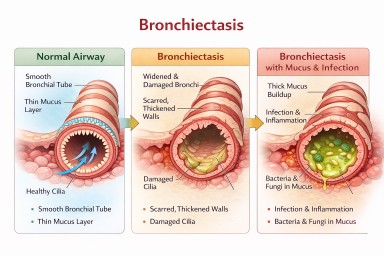
Over time, repeated infections and inflammation can damage the airways, leading to bronchiectasis — a condition where the bronchial tubes become widened and scarred. This makes it even harder to clear mucus and allows bacteria and fungi to settle in the lungs more easily.
Common organisms that may persist include:
-
Haemophilus influenzae
-
Pseudomonas aeruginosa
-
Staphylococcus aureus
-
Aspergillus fumigatus
The Role of Aspergillus
When Aspergillus spores are inhaled, most people clear them easily.
In PCD and bronchiectasis, however, mucus clearance is reduced and the airways are damaged — so Aspergillus can remain trapped.
Over time, this can lead to sensitisation (as in Allergic Bronchopulmonary Aspergillosis, ABPA) or even chronic infection (Chronic Pulmonary Aspergillosis, CPA).
Both conditions can worsen existing bronchiectasis and make bacterial infections harder to control.
Why Bacteria Like Haemophilus Stick Around
Many patients with PCD or bronchiectasis find that bacteria such as Haemophilus influenzae are always present in their sputum, even when they feel well.
This doesn’t always mean there’s an active infection — it can simply reflect colonisation (the bacteria living there without causing symptoms).
However, when bacterial numbers rise or resistance develops, this can trigger a flare-up with more cough, sputum, or breathlessness.
Managing Persistent Infections
Because eradication is often not possible, the goal is control rather than cure.
Typical strategies include:
-
Regular sputum cultures to monitor bacterial and fungal growth and check for antibiotic resistance.
-
Targeted antibiotic treatment when symptoms worsen, chosen based on recent resistance results.
-
Airway clearance techniques, such as physiotherapy, postural drainage, or devices that help loosen mucus.
-
Nebulised saline (often hypertonic) to thin mucus and make it easier to clear.
-
Vaccinations (e.g., flu and pneumococcal) to reduce viral triggers.
-
Anti-inflammatory and antifungal treatments when fungal infection or allergic sensitisation are part of the problem.
-
Regular monitoring with a respiratory specialist to adjust treatment plans.
Living Well with PCD and Bronchiectasis
Many people manage to live active lives by learning what works best for their lungs — combining daily airway clearance, careful infection monitoring, and prompt treatment of flare-ups.
Some also find it useful to join patient support groups, where experiences with long-term bacterial and fungal infections can be shared.
Key Takeaway
For people with PCD and bronchiectasis, infections like Haemophilus influenzae and Aspergillus fumigatus often can’t be completely removed. The focus is on keeping infection levels low, preventing flare-ups, and protecting the lungs for the long term. With good self-management, regular review, and the right treatment plan, symptoms can be controlled and quality of life maintained.
🏠 Awaab’s Law: What It Means for Social Housing Tenants
Awaab’s Law is one of the most important housing reforms in years.
It aims to protect tenants from damp, mould and unsafe living conditions — problems that can seriously affect health, especially for people with asthma, bronchiectasis or fungal lung disease.
The law starts to take effect in October 2025 and is named in memory of Awaab Ishak, a two-year-old who tragically died from prolonged exposure to damp and mould in a housing association flat in Rochdale.
His case led to new, legally enforceable time limits for social landlords to investigate and repair health hazards in rented homes.
📜 Where the Law Comes From
Awaab’s Law forms part of the Social Housing (Regulation) Act 2023.
It adds a new legal duty (Section 10A) to the Landlord and Tenant Act 1985, requiring every social landlord to comply with “prescribed requirements” about how quickly hazards must be investigated and repaired.
These rules are set out in the Awaab’s Law Regulations, published on GOV.UK, and enforced by the Regulator of Social Housing.
👥 Who the Law Covers
Awaab’s Law applies to:
-
Social landlords in England, such as housing associations and local authorities
-
Tenants living in social housing under secure, assured, or introductory tenancy agreements
Awaab’s Law does not yet apply to:
-
Private landlords or the private rented sector (PRS)
-
Owner-occupiers or leaseholders
The Government has confirmed that lessons from this law will inform future private-rented-sector reforms.
(Official source: GOV.UK – Awaab’s Law Guidance)
🏘️ What Is Social Housing?
Social housing is housing owned or managed by public or not-for-profit organisations and rented out at below-market rates to people in housing need.
It provides secure, long-term homes and is regulated by the Regulator of Social Housing.
(Official source: Regulator of Social Housing – GOV.UK)
🧱 Who Provides It
-
Local authorities (councils) – council housing
-
Housing associations – independent, not-for-profit registered providers
-
Charitable or community landlords – smaller providers that must still meet national standards
These organisations are known as registered providers under the Housing and Regeneration Act 2008.
💰 How Social Housing Differs from Other Tenancies
| Feature | Social Housing | Private Rented Housing | Shared Ownership / Leasehold |
|---|---|---|---|
| Who owns it | Council / housing association | Private landlord / company | Part tenant part provider |
| Rent level | Below market (50–80%) | Market rate | Rent on unsold share + mortgage |
| Tenancy type | Secure / assured (long-term) | Assured shorthold (short-term) | Leasehold ownership |
| Regulation | Regulator of Social Housing | Local authority & housing law | Leasehold law |
| Repair standards | Decent Homes Standard + Awaab’s Law | General HHSRS duties | As defined in lease |
| Who qualifies | Based on housing need | Anyone meeting market criteria | Specific financial criteria |
⚙️ What Landlords Must Do Under Awaab’s Law
Social landlords must:
-
Investigate reported hazards quickly
-
Provide written findings after inspection
-
Repair and make safe within legal deadlines
-
Offer temporary accommodation if the home cannot be made safe in time
These duties cover damp and mould and any emergency hazard posing serious risk to health or safety.
🕒 Timeframes Landlords Must Follow
| Stage | Time Allowed | Example |
|---|---|---|
| Emergency hazard | Make safe immediately / within 24 hours | Gas leak, severe mould, electrical fault |
| Significant hazard | Investigate within 10 working days | Damp, cold, structural issues |
| Tenant update | Written summary within 3 working days | Explain findings + repairs |
| If not safe in time | Provide alternative accommodation | Until repairs complete |
(Source: GOV.UK – Draft Guidance)
💬 Why Mould and Damp Matter
Damp and mould are common and dangerous in UK housing and can worsen or trigger asthma, ABPA, CPA, and COPD.
The English Housing Survey (2023) found 1 in 10 social homes had damp or mould problems.
Mould exposure can cause:
-
Asthma flare-ups and new respiratory infections
-
Worsening of fungal lung disease
-
Eye, throat, and skin irritation
Awaab’s Law recognises that poor building design and ventilation, not “tenant lifestyle,” are usually to blame.
🏘️ Why Shared and Multiple-Occupancy Homes Are Higher Risk
Buildings converted into Houses in Multiple Occupation (HMOs) are prone to damp and mould because they:
-
House many people in small spaces
-
Were often converted without proper ventilation or insulation
-
Rely on multiple tenants to report and manage repairs
HMOs are mainly in the private rented sector and not covered by Awaab’s Law.
They are regulated separately under the Housing Act 2004 and inspected by councils using the Housing Health and Safety Rating System (HHSRS).
These homes frequently house students, low-income workers, and people with chronic illness, making damp-related respiratory illnesses a particular concern.
🧱 Why HMOs Need Stronger Oversight
Local authorities can issue Improvement Notices or prosecute landlords for neglecting repairs, but Awaab’s Law’s fixed deadlines do not yet apply.
Government statements indicate future reforms will extend similar protections to private and HMO tenants.
💬 Why This Matters for Health
For anyone with chronic lung disease (ABPA, CPA, asthma, bronchiectasis), damp and mould can trigger flare-ups and new infections.
Awaab’s Law now forces social landlords to act promptly within set legal time limits.
Tenants can:
-
Use the landlord’s complaints procedure
-
Contact the Housing Ombudsman Service
-
Report serious risks to the Regulator of Social Housing or local council
🏛️ Does Awaab’s Law Apply to MOD, NHS, and Other Service Housing?
No — not directly.
Awaab’s Law covers registered social housing providers in England (local authorities and housing associations).
It does not extend to housing owned or managed by the Ministry of Defence (MOD), NHS Trusts, or other public-service employers, unless they are formally registered social landlords (which is rare).
| Housing Type | Covered by Awaab’s Law? | Notes |
|---|---|---|
| Council / Housing Association Homes | ✅ Yes | Registered providers under the Regulator of Social Housing |
| Private Rented Sector | ❌ No (not yet) | May be included in future reforms |
| MOD (Service Family Accommodation) | ❌ No | Managed by Defence Infrastructure Organisation; standards set by policy, not law |
| NHS Staff Accommodation | ❌ No | Governed by occupational licence terms and health & safety law |
| University or Key Worker Housing | ❌ No | Treated as private or institutional housing |
| Charitable / Supported Housing | ⚠️ Sometimes | Only if registered with the Regulator of Social Housing |
These providers must still maintain safe conditions under Health and Safety law, but they do not yet have the same legal repair timescales as social landlords.
The Government has stated that principles from Awaab’s Law may be used to improve MOD and NHS housing standards in future.
(Sources: legislation.gov.uk, GOV.UK – Awaab’s Law Guidance, Parliament.uk HCWS423)
🧩 Summary
| Key Point | What It Means |
|---|---|
| Who it covers | Tenants in social housing (England only) |
| What it covers | Damp, mould, and serious health hazards |
| When it starts | From 27 October 2025 |
| Who it excludes | Private, MOD, NHS and service housing |
| Why it matters | Protects tenants from unsafe homes and poor health |
| Who enforces it | Regulator of Social Housing / Local Authorities |
| Official sources | GOV.UK / legislation.gov.uk / Parliament.uk |
🔗 Official References
🧠 Can Aspergillosis Spread to the Brain?
You may have read headlines saying “Aspergillosis can spread to the brain and is one of the world’s deadliest fungal infections.”
That sounds frightening — but here’s what’s really known.
💬 The truth behind the headline
It’s true that the Aspergillus fungus can affect the brain, but this is very rare and happens only in people who are severely unwell or have very weak immune systems (for example, after chemotherapy, bone-marrow transplant, or very high-dose steroids for long peroids).
For most people with aspergillosis — whether allergic (ABPA) or chronic (CPA) — the infection stays in the lungs or sinuses. These forms do not usually spread to other parts of the body.
⚙️ How brain infection can happen
When it does occur, the fungus can reach the brain in two ways:
-
Through the bloodstream — from an invasive infection in the lungs.
-
By direct spread from the sinuses — through the bone between the sinuses and the brain.
These situations are very unusual and normally occur in patients whose immune defences are severely damaged.
📉 How common is it?
CNS (brain) aspergillosis makes up only a small fraction of all cases worldwide.
Even in high-risk hospital patients, it affects fewer than 1 in 10 people with invasive aspergillosis.
In people with allergic or chronic forms like ABPA or CPA, it’s almost unheard of.
❤️ What this means for you
If you have ABPA or CPA, the fungus in your lungs is not invading tissue in the same way.
It causes inflammation, allergy, or slow-growing cavities, but not deep invasion into blood vessels or brain tissue.
So, the risk of it spreading to the brain is extremely low.
Keep up with your usual care, medications, and check-ups — these control the lung disease and help prevent complications.
⚠️ When to seek medical advice
Contact your doctor urgently if you ever notice:
-
New or severe headaches
-
Changes in vision
-
Seizures or sudden weakness
-
Confusion or loss of balance
These symptoms are not common, but they’re always worth checking.
✅ Bottom line
The media headline is partly true — aspergillosis can reach the brain, but this happens almost only in people who are very immunocompromised.
For patients with ABPA or CPA, it is extremely rare and not something to fear day-to-day.
🌬️ Inhaled Antifungal Treatments for Chronic Pulmonary Aspergillosis (CPA)
Updated: October 2025
💡 Why are inhaled antifungals being developed?
For people living with Chronic Pulmonary Aspergillosis (CPA), treatment usually involves long courses of oral antifungal tablets such as itraconazole, voriconazole, or posaconazole.
These medicines circulate through the whole body to reach the lungs — but sometimes they cause side-effects, interact with other drugs, or fail to reach high enough levels in thick mucus, cavities, or scarred areas of lung tissue.
Inhaled antifungal therapy aims to solve this problem by delivering medicine directly to the lungs using a nebuliser or inhaler device.
This can potentially mean:
-
✅ Higher drug levels exactly where infection is active
-
⚡ Faster local action
-
🚫 Fewer whole-body side-effects
-
🧩 Fewer drug interactions
This approach is especially promising for patients with localized lung disease, such as CPA or aspergillus bronchitis, where the fungus lives in damaged parts of the lung.
💊 Current inhaled antifungal options (used off-label)
🧪 Nebulised Amphotericin B
At the moment, nebulised amphotericin B is the only inhaled antifungal used in hospitals, although it is off-label for CPA.
It is more commonly used to prevent infection in people who have had a lung transplant or who are severely immunocompromised.
In some specialist centres, it may be used as maintenance therapy or an add-on for CPA if other antifungals have not worked or cannot be tolerated.
Advantages
-
High concentration in lung tissue
-
Minimal effects on other organs (especially the kidneys)
Drawbacks
-
Possible airway irritation (cough, tight chest, wheezing)
-
Requires specialist supervision and appropriate nebuliser equipment
🔬 New treatments in development
💨 Opelconazole (also called PC-945)
Opelconazole is a new inhaled triazole antifungal developed by Pulmocide Ltd in the UK.
It works in the same way as existing azole antifungals — by blocking the fungal enzyme CYP51 — but has been specially designed to stay in the lungs and minimise side-effects elsewhere.
In laboratory and early human studies, opelconazole has shown:
-
Strong activity against Aspergillus fumigatus
-
High and lasting drug levels in the lungs
-
Very low blood levels (reducing risk of toxicity and drug interactions)
-
Good tolerability in early trials
Although not yet licensed, it has been used compassionately in small numbers of patients with difficult-to-treat lung aspergillosis at centres such as Manchester and London.
🧾 Current and recent clinical trials
| Trial ID | Treatment | Condition | Purpose / Summary | Status |
|---|---|---|---|---|
| NCT06447402 | Nebulised Amphotericin B vs Saline | Chronic Pulmonary Aspergillosis | Tests whether regular nebulised amphotericin can help prevent CPA relapse compared with saline. | Recruiting |
| NCT03656081 | Itraconazole ± Nebulised Liposomal Amphotericin B | CPA | Compares oral itraconazole alone versus itraconazole plus inhaled amphotericin for symptom and scan improvement. | Completed – results pending |
| NCT05238116 | Inhaled Opelconazole + Standard Therapy | Refractory Invasive Pulmonary Aspergillosis | Phase 3 trial evaluating safety and added benefit of inhaled opelconazole. UK, EU, and US sites. | Recruiting |
| NCT05037851 | Inhaled Opelconazole (PC-945) | Post-Lung Transplant Prophylaxis | Assesses prevention of fungal infection after transplant. Found well tolerated. | Completed |
| PubMed 34058036 | Nebulised Amphotericin B vs Oral Itraconazole | Pulmonary Aspergilloma (CPA subset) | Six-month open study found similar improvement rates between inhaled amphotericin and oral itraconazole. | Completed |
👉 You can look up any of these studies on ClinicalTrials.gov by entering the trial ID (e.g. NCT06447402).
⚠️ Things to keep in mind
-
Not yet routine — Inhaled antifungals are available only in research or specialist centres.
-
Limited evidence — Most data come from transplant or invasive aspergillosis studies, not chronic infection.
-
Delivery challenges — Damaged or scarred areas of lung may be hard for inhaled drugs to reach.
-
Possible side-effects — Coughing or mild bronchospasm are common; pre-treatment with an inhaler may help.
-
Monitoring still needed — Even with inhaled therapy, your care team will continue to check symptoms, lung scans, and blood markers (such as Aspergillus IgG).
🧭 Questions to ask your specialist
If you are interested in this type of therapy, you could ask:
-
Does my centre offer nebulised amphotericin as part of CPA care?
-
Are there any clinical trials nearby (for example NCT06447402 or NCT05238116)?
-
Could an inhaled antifungal be used with my current oral treatment?
-
What are the side-effects and how are they monitored?
-
What nebuliser device is required and how often would I use it?
🏥 UK research centres involved
Current UK involvement is mainly through:
-
National Aspergillosis Centre, Wythenshawe Hospital (Manchester)
-
Royal Brompton and Harefield Hospitals (London)
-
UK transplant centres participating in Pulmocide’s opelconazole studies
🗝️ Key takeaway
Inhaled antifungal medicines are an exciting development that could make CPA treatment safer and more targeted in the future.
For now, they are mainly available through clinical trials or specialist centres, but the early results are promising — especially for those who have struggled with oral antifungal side-effects or limited success.
If you’re interested, speak to your CPA specialist or the National Aspergillosis Centre team about ongoing research and eligibility.
🌿 Aspergillosis in the Sinuses (Allergic Fungal Rhinosinusitis – AFRS)
It’s quite possible for Aspergillus to affect both the lungs and the sinuses.
The sinuses are small air-filled spaces behind the nose, eyes, and cheeks that normally drain mucus freely. When Aspergillus spores become trapped there, they can trigger an allergic or inflammatory reaction — rather like ABPA in the lungs.
This allergic form is called Allergic Fungal Rhinosinusitis (AFRS).
It isn’t a contagious infection — it’s an overreaction of the immune system to fungal spores. Over time, it can lead to thick mucus, nasal blockage, and sometimes nasal polyps.
🩵 Common symptoms
-
Persistent nasal congestion or blockage
-
Thick or sticky mucus (sometimes with brown or dark flecks)
-
Reduced or lost sense of smell
-
Facial pressure, pain, or fullness (especially around the eyes or cheeks)
-
Post-nasal drip (mucus running down the throat)
-
Fatigue or worsening asthma symptoms
🔬 Diagnosis
-
CT scan of the sinuses – shows thickened or blocked areas
-
Nasal endoscopy – a tiny camera used to look inside
-
Fungal culture or microscopy from mucus samples
-
Blood tests – sometimes show raised total IgE or Aspergillus-specific IgE
💊 Treatment
-
Topical nasal steroids (sprays or rinses) or short courses of oral steroids to reduce inflammation
-
Saline rinses to help keep the sinuses clear
-
ENT surgery if sinuses are blocked or filled with thick fungal debris
-
Antifungal medication in some cases, especially if fungal growth is confirmed
🌸 The Main Types of Aspergillus Sinus Disease
There are several recognised types of sinus aspergillosis. Most people with ABPA or asthma experience only the allergic form (AFRS).
1️⃣ Allergic Fungal Rhinosinusitis (AFRS)
-
Caused by an allergic reaction to Aspergillus
-
Leads to inflammation, thick mucus, and polyps
-
Non-invasive – the fungus stays on the surface
-
Managed with steroids, nasal rinses, and sometimes surgery
✅ This is the type most relevant for ABPA patients.
2️⃣ Fungal Ball (Mycetoma)
-
A clump of fungus (usually A. fumigatus) in a single sinus, often the cheek (maxillary) sinus
-
Common in otherwise healthy people
-
Causes chronic congestion or facial pain
-
Treated surgically – antifungals rarely needed
-
Not allergic and not invasive
3️⃣ Invasive Aspergillus Sinusitis
-
Rare, seen mostly in people with severely weakened immunity (e.g., chemotherapy, bone marrow transplant, uncontrolled diabetes)
-
The fungus invades surrounding tissue and blood vessels
-
Causes severe facial pain, swelling, fever, sometimes affecting the eyes
-
Needs urgent treatment with antifungal drugs and surgery
⚠️ Very rare in people with ABPA or CPA.
🤝 Specialist care
If you have lung aspergillosis (such as ABPA or CPA) and start noticing more nasal congestion, sinus pressure, or post-nasal drip, it’s sensible to mention it to your respiratory or mycology team.
At the National Aspergillosis Centre (NAC), sinus disease is often co-managed by ENT surgeons, respiratory physicians, and mycology specialists, ensuring coordinated care.
With the right combination of treatments — and early recognition of symptoms — most people find their sinus symptoms improve, and controlling sinus inflammation can even help with overall breathing and energy.
🩵 Coughing and Aspergillosis: Why You Might Still Cough Even When You Feel Well
Many people living with Allergic Bronchopulmonary Aspergillosis (ABPA) or bronchiectasis notice that they still cough regularly — even when their blood tests and scans show their condition is stable. It can be confusing to feel well and yet still have daily coughing or occasional coughing fits.
This article explains why that happens and when you should be concerned.
🌿 Why coughing can continue between flare-ups
ABPA and other forms of aspergillosis can cause long-term changes in the airways. Even when the allergic inflammation has settled and your Immunoglobulin E (IgE) levels are back to baseline, the airways may remain a little widened or scarred. This means:
-
Mucus can collect in the airways more easily.
-
The lining of the bronchi can stay slightly “twitchy” or reactive.
-
Your lungs may continue to produce small amounts of sticky, clear mucus that needs to be cleared out.
Coughing is your body’s way of keeping those airways clear — so a light, regular cough can actually be a sign that your lungs are doing their job.
💨 Why you might not cough during exercise
Many patients notice something surprising:
“I can walk or exercise in the gym for a couple of hours without coughing at all — but later, I get a coughing fit and bring up mucus.”
This is quite normal. When you exercise, you breathe more deeply and more rapidly. This helps:
-
Keep the airways open
-
Move mucus towards the larger airways
-
Reduce the irritation that triggers coughing
When you stop exercising, mucus that’s been loosened can settle again — and that’s often when a coughing fit happens to clear it out. It’s part of your lungs’ natural “housekeeping” system.
🌬️ What you can do to help
-
Stay active: Gentle exercise is good for your lungs. It keeps the airways open and improves mucus clearance.
-
Hydration helps: Drinking enough water or warm fluids keeps mucus less sticky.
-
Airway-clearance techniques: Ask your physiotherapist about huff coughing or devices like the Aerobika or Acapella, which help loosen and move mucus.
-
Watch for changes:
-
Mucus turning yellow, green, or brown
-
Increased shortness of breath or fatigue
-
A rise in IgE or worsening symptoms
-
If any of these occur, contact your respiratory or mycology team — it might mean an infection or early flare-up.
💙 The key message
A mild, regular cough between flare-ups is normal for many ABPA or bronchiectasis patients.
It doesn’t mean your condition is worsening — it’s often your lungs simply clearing secretions.
If your IgE levels are stable and you feel well, that’s a strong sign your disease is under good control.
💚 Living With Aspergillus fumigatus and Starting Antifungal Treatment
Question: “I have Aspergillus fumigatus and I’d like to ask a few questions.
After starting antifungal treatment, how long did it take before you noticed improvement or a stop in the bleeding cough?
Has anyone reached a stable condition or full recovery?
Please share your experiences — it would really help to hear from you.” 💚
🌿 A Supportive Note
Many people ask this question when they first begin treatment — and it’s a very normal concern. Aspergillus fumigatus can cause a range of lung problems such as chronic pulmonary aspergillosis (CPA), aspergilloma, or Allergic Bronchopulmonary Aspergillosis (ABPA), and each responds differently to antifungal therapy.
Improvement can take time and patience.
Some notice changes within weeks, while for others, it can take several months before symptoms start to ease or stabilise.
💊 Understanding How Antifungal Treatment Works
Antifungal medicines — such as itraconazole, voriconazole, or posaconazole — don’t destroy Aspergillus overnight.
They work by slowing or stopping fungal growth, allowing the body’s immune system and lung healing processes to gradually take over.
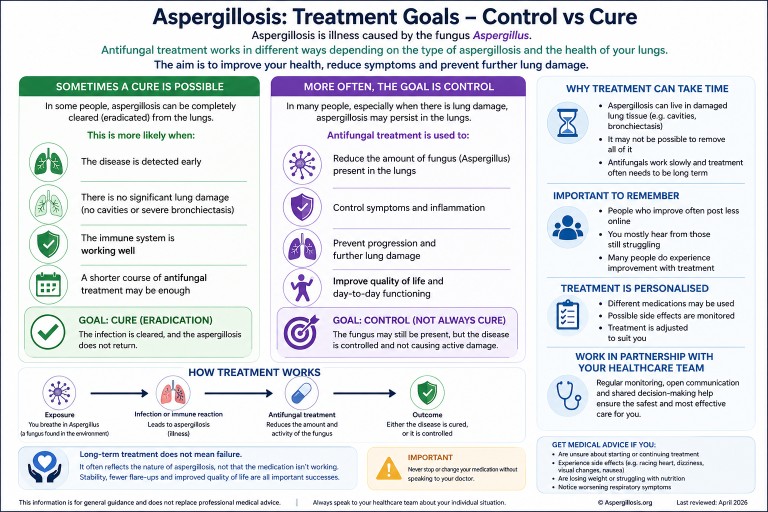
Because these infections are often chronic, the goal is usually to:
-
Control symptoms
-
Prevent further damage
-
Reduce inflammation and flare-ups
-
Stabilise lung function
For most patients, this means aiming for long-term stability rather than complete eradication of the fungus.
⏳ How Long Before You Feel Better?
Every patient is different, but this is a general pattern doctors often see:
| Time after starting treatment | What you might notice |
|---|---|
| First few weeks | Some reduction in coughing or mucus; fewer night sweats; side effects settling as your body adjusts. |
| 1–3 months | Energy may start to improve; less coughing or blood in sputum; breathing slightly easier. |
| 3–6 months | Signs of stability — symptoms no longer worsening, CT scans showing improvement, or blood markers (e.g. Aspergillus IgG) falling. |
| 6–12 months | Some people achieve remission or long-term stability. For others, antifungal therapy continues as maintenance. |
If you have a fungal ball (aspergilloma), improvements are often slower, and sometimes bleeding episodes take longer to settle.
🩸 About Bleeding (Haemoptysis)
Coughing up blood can be one of the most distressing symptoms.
It usually improves once antifungals reduce inflammation, but if bleeding continues:
-
Doctors may prescribe tranexamic acid to help the blood clot more easily.
-
In some cases, embolisation (a targeted procedure to seal a bleeding blood vessel) may be needed.
-
Ongoing bleeding should always be reported — even small amounts — so your team can reassess treatment or check for infection changes.
🫁 Why “Stable” Can Be a Positive Outcome
Although “cure” is possible in some early or mild cases, most people live with aspergillosis as a chronic condition.
With consistent antifungal therapy, airway clearance, and monitoring, many reach a stable stage — where symptoms are minimal, life feels more predictable, and flare-ups are rare.
This stability is a real success.
It means your body and treatment are keeping the infection under control, preventing further lung damage.
💚 Real Experiences
Patients often describe:
-
Energy and breathlessness improving slowly
-
Bleeding stopping after several months
-
A new sense of normality once medication side effects settle
Some take antifungals for a set course (e.g. 6–12 months), while others remain on long-term maintenance to stay stable.
It’s common for treatment to be adjusted based on blood levels, side effects, or new sputum results.
💬 Patient Voices
Many people in our community say they wish they’d known:
-
“Improvement isn’t quick — it’s gradual, but it does come.”
-
“Side effects can be managed — don’t stop without advice.”
-
“It’s okay to ask your team what ‘stable’ looks like for you.”
-
“You’re not alone — others have been through this too.”
🧭 Looking After Yourself Along the Way
-
Keep up airway clearance (physiotherapy, saline nebulisers, or airway devices).
-
Attend regular clinic appointments for blood levels and liver tests.
-
Report side effects early — dose adjustments or switching antifungals often helps.
-
Maintain good nutrition and hydration.
-
Reach out for emotional support. Living with a chronic infection can be mentally exhausting; anxiety and fatigue are common.
💬 We’d Love to Hear From You
If you’ve been through antifungal treatment, please share your story:
-
How long it took before you felt a difference
-
What helped you most
-
How you manage side effects or flare-ups
Your experience could make a real difference to someone who’s just starting this journey. 💚