

🌿 Biologics when ABPA and CPA overlap: What Patients Need to Know

Understanding how they work, when they’re helpful, and when extra care is needed

Biologic medicines (such as omalizumab, mepolizumab, benralizumab, dupilumab and newer options like tezepelumab) are increasingly used to treat Allergic Bronchopulmonary Aspergillosis (ABPA) and severe asthma. They can be life-changing for some people.

However, their place in Chronic Pulmonary Aspergillosis (CPA) — especially in people who have both ABPA and CPA together — is more complicated and needs careful specialist supervision.

This article explains what we know so far.


🌟 1. ABPA and CPA are different conditions — but some people have both

  • ABPA is mainly an allergic reaction to Aspergillus in the airways.

  • CPA is a chronic fungal infection that causes cavities, scarring, and long-term lung damage.

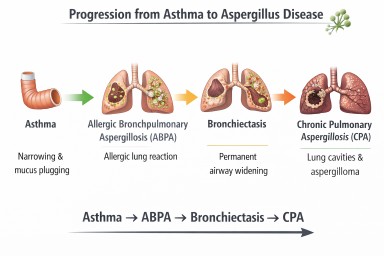
  • Some people start with ABPA and later develop CPA, or the two conditions overlap.

  • The 2024 international ABPA guidelines now recognise this overlap as real and important.

Because biologics target allergy pathways rather than fungal infection, treatment decisions must look at both sides of the disease.


🌿 2. Biologics in ABPA: the evidence is strong and growing

Biologics can help patients with ABPA or severe asthma by:

  • reducing steroid use

  • improving breathing

  • decreasing mucus plugging

  • lowering flare-ups

  • improving quality of life

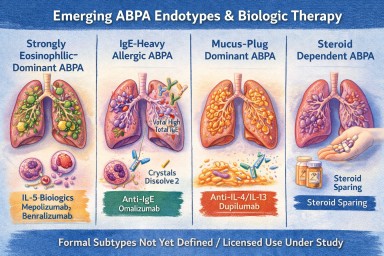
Biologics most commonly used in ABPA include:

Biologic Target Notes
Omalizumab IgE Well established, helps many ABPA patients
Mepolizumab IL-5 Helps eosinophilic inflammation
Benralizumab IL-5Rα Similar to mepolizumab; long-acting
Dupilumab IL-4Rα Very promising for allergic disease; growing evidence for ABPA
Tezepelumab TSLP Very new; limited ABPA data so far

For many people with ABPA, biologics are safe and effective when monitored.


⚠️ 3. Biologics and CPA: much less evidence

  • CPA is caused by persistent fungal infection and structural lung damage.

  • Biologics do not treat fungal infection, and they do not prevent cavities.

  • In CPA, the mainstay of treatment is still:

    • antifungal medication (usually itraconazole, voriconazole or posaconazole)

    • careful imaging (CT scans)

    • airway clearance

    • sometimes surgery or bronchoscopy

There is no strong evidence that biologics help CPA itself.


🔄 4. What about patients who have both ABPA and CPA?

This is where things become more complex.

Biologics may help the allergic part (ABPA), but:

  • they do not treat fungal infection

  • they do not stop fungal cavities from progressing

  • they may reduce inflammation that normally helps the body contain infection

If antifungal treatment is interrupted or not strong enough, fungal activity may increase while the allergic symptoms improve — so regular monitoring is essential.

Specialist centres (like the NAC) now emphasise:

✔️ Continue antifungals if CPA is active
✔️ Watch cavities with regular CT scans
✔️ Monitor Aspergillus IgG/IgE and fungal cultures
✔️ Check whether symptoms are from allergy, infection, or both
✔️ Make joint plans between asthma/airway doctors and mycology specialists


5. Are some biologics better than others for ABPA/CPA overlap?

There is no official guidance yet, but early observations suggest:

Most promising for ABPA:

  • Dupilumab seems particularly effective for allergic disease (IgE, mucus, airflow), though still off-label for ABPA.

Increasing interest:

  • Tezepelumab works outside the eosinophil pathway and may be useful in some asthma types, but research in ABPA is only just starting.

Useful in selected cases:

  • Anti-IL-5 biologics (mepolizumab, benralizumab) help airway eosinophils but may not help every ABPA patient.

⚠️ Uncertain in CPA:

  • None of the biologics treat fungal infection or cavities directly.

  • Their role in active CPA remains unclear and requires careful oversight.


🧭 6. What this means for patients

If you have ABPA only, biologics may be an excellent option — especially if:

  • steroids cause side-effects

  • your asthma is uncontrolled

  • you have frequent flare-ups

  • your IgE levels are very high

  • mucus plugging or wheezing continues despite treatment

If you have CPA or cavities, treatment needs to be more cautious:

  • antifungal medication usually needs to continue

  • biologics may still help if the allergic component is significant

  • CT scans must be repeated to make sure cavities are not progressing

  • specialists must weigh benefits vs. risk for each patient individually


💬 7. Summary

  • Biologics can be extremely helpful for ABPA.

  • They do not treat CPA, and cannot replace antifungal medicines.

  • In patients with both ABPA and CPA, the approach must be personalised.

  • Dupilumab and (possibly) tezepelumab are emerging biologics with promise, but evidence is still developing.

  • Decisions should always be made with a specialist centre such as the National Aspergillosis Centre (NAC).


Understanding Mucous Casts in Allergic Bronchopulmonary Aspergillosis (ABPA)

People living with Allergic Bronchopulmonary Aspergillosis (ABPA) often notice thick, unusual mucus coming up during a flare. Some of this mucus can look very different from “normal” sputum and may be described as mucous casts. This leaflet explains what they are, why they happen, and what they mean for your ABPA.


What are mucous casts?

A mucous cast is a thick, sticky plug of mucus that forms inside your airways.
It takes on the exact shape of the airway or branch it was sitting in – a bit like a soft mould of the inside of your lungs.

When coughed up, casts may look:

  • long and tube-shaped

  • soft and rubbery

  • curled or C-shaped

  • occasionally branching, like a twig

  • pale yellow/cream with darker specks

These darker flecks can include dead inflammatory cells, airway debris, and sometimes tiny amounts of fungal material trapped inside.


Why do they happen in ABPA?

ABPA is not an infection, but an allergic over-reaction to the Aspergillus fungus.
This allergic inflammation causes:

1. Excess mucus production

Your airways create far more mucus than usual.

2. Thicker, stickier mucus

Inflammation changes the chemistry of the mucus, making it harder to clear.

3. Swollen, narrowed airways

This makes it easy for mucus to get stuck and form plugs.

4. Trapped material

Casts can contain:

  • fungal spores

  • inflammatory cells

  • dust or other inhaled particles

  • old blood or tissue debris

All of this can glue together into a cast.


Are mucous casts harmful?

They are not dangerous on their own, but they can cause problems:

  • Airway blockage → breathlessness, wheeze, sudden tightness

  • Chest infections → trapped mucus is an ideal place for bacteria

  • ABPA flare-ups → casts often appear during periods of high inflammation

  • Reduced airflow on CT scans → seen as “bronchial impaction”

Telling your clinical team when you notice casts helps them judge how active your ABPA is.


What do mucous casts look like in ABPA?

Patients often describe:

  • “noodles”

  • “worms”

  • “rubbery plugs”

  • “little branches”

  • “specks of brown/black” within pale mucus

These appearances are normal in ABPA and do not mean your lungs are permanently worsening.


How are mucous casts managed?

1. Airway clearance

This is the most important step. Techniques include:

  • huff-coughing

  • active cycle of breathing

  • nebulised saline (hypertonic or isotonic)

  • flutter/PEP devices (Acapella, Aerobika)

  • chest physiotherapy

These help loosen and move mucus from deeper airways.

2. Medication

Depending on your treatment plan:

  • inhalers (bronchodilator + inhaled steroids)

  • biologics (e.g., mepolizumab, dupilumab, omalizumab)

  • antifungal medication if prescribed as part of your ABPA care

  • oral steroids if medically appropriate

Biologics can reduce the inflammation that causes casts, so many patients notice fewer plugs over time.

3. Monitoring

Your team may keep an eye on:

  • sputum samples

  • IgE levels

  • CT scan changes

  • symptom patterns


When should I tell my team?

Contact your clinical team if you notice:

  • more frequent mucous casts

  • sudden breathlessness or chest tightness

  • a drop in your usual oxygen saturation

  • fever or signs of infection

  • coughing up blood

  • a change in colour or smell of mucus


Reassurance

Mucous casts are very common in ABPA.
They can look alarming, but they are simply a sign that your airways are inflamed and producing thick mucus.

Coughing them out is helpful, not harmful.
It allows the affected airway to reopen and can rapidly improve breathing.

✅ Further Reading

For more patient-oriented information, you can visit the AFIT website where the term “casts” is discussed in the context of aspergillosis: Aspergillus.org.uk – search “casts”.


🌿 ABPA: Infection, Allergy, Biologics, and What It All Means for You

A calm, supportive guide for patients living with Allergic Bronchopulmonary Aspergillosis (ABPA)

Allergic Bronchopulmonary Aspergillosis (ABPA) can be confusing.
Some people hear “fungus” and think it is a dangerous infection.
Others hear “allergy” and think it has nothing to do with fungi at all.

The truth is somewhere in the middle — and understanding this can make your treatment feel much clearer and less frightening.

This article explains:

  • Whether ABPA is an infection, an allergy, or both

  • How the fungus Aspergillus fumigatus fits into the picture

  • Why biologics help — and whether they allow the fungus to grow

  • Why your future with ABPA is more hopeful than ever


🌼 1. Is ABPA an infection or an allergic over-reaction?

The simplest explanation is:

ABPA happens when Aspergillus lives in mucus in the airways, and the immune system overreacts. It’s driven by allergy, not by fungal invasion.

In ABPA:

  • Aspergillus fumigatus sits in mucus, especially in asthma, bronchiectasis or cystic fibrosis

  • It does not invade or damage lung tissue

  • The immune system becomes over-sensitised and reacts too strongly

This allergic reaction triggers:

  • Very high IgE

  • High eosinophils

  • Swelling, tightness, wheeze

  • Thick “stringy” mucus or plugs

  • Repeated flare-ups that feel like chest infections

The inflammation — not the fungus — is what damages the lungs over time.


🌻 2. If it’s not a typical infection, why treat the fungus?

Even though ABPA is allergic, reducing fungal load can still help.

Here’s why:

  • Less fungus in mucus → less allergen

  • Less allergen → less immune reaction

  • Less reaction → fewer flare-ups, better breathing

This is why some people take antifungals.
But antifungals are not always necessary, especially today with the arrival of biologics.


🌈 3. Do biologics weaken the immune system and let the fungus grow?

No.
This is a very common worry — but the biologics used for ABPA do not suppress the parts of the immune system that keep you safe from fungi.

Biologics such as:

  • Omalizumab (anti-IgE)

  • Mepolizumab / Benralizumab (anti-IL-5)

  • Dupilumab (anti-IL-4/IL-13)

  • Tezepelumab (anti-TSLP)

target overactive allergic pathways, not antifungal defences.

They do not affect:

  • Neutrophils

  • Macrophages

  • Dectin-1

  • TLR antifungal pathways

  • Complement

These are the real fungus-clearing systems — and biologics leave them intact.


🍃 4. Do biologics actually help clear fungus? Surprisingly, sometimes yes.

Many patients on biologics show:

  • Fewer mucus plugs

  • Better airflow

  • Fewer positive sputum cultures

  • Reduced symptoms

  • Lower exacerbation rates

  • Less need for steroids or antifungals

When mucus plugs shrink, fungus loses its hiding place.
Your natural defences can finally clear it.

So biologics do not encourage growth — they may even help reduce fungal load.


🌺 5. Why are outcomes improving so much?

ABPA used to be a condition dominated by:

  • frequent flare-ups

  • repeated steroids

  • fear of lung damage

  • long periods of being unwell

Today, with biologics:

  • far fewer flare-ups

  • easier breathing

  • more stable lung function

  • much less steroid use

  • better quality of life

  • higher confidence and control

For many patients, biologics are transforming ABPA from a cycle of crises into a more manageable long-term condition.


🌼 6. Key reassurance

If you remember only one sentence, let it be this:

Biologics calm the allergic response that causes ABPA, without weakening your natural ability to clear fungus — and many patients do better than ever on them.


🌟 7. Moving forward with confidence

ABPA is complex, but it is treatable, manageable, and increasingly well-understood.
You are not dealing with a dangerous lung infection — you are dealing with an over-active immune response that modern treatments can control.

With the right support, airway clearance, the best inhalers, and (where needed) biologics or antifungals, most people:

  • stabilise

  • breathe more easily

  • reduce flare-ups

  • protect their lungs

  • live full, active lives

You’re not alone — and the future for ABPA care has never looked brighter.


Inhaled Steroids and ABPA: Do They Help or Should They Be Avoided?

Many people living with allergic bronchopulmonary aspergillosis (ABPA) also use inhaled steroid inhalers such as Symbicort, Fostair, Seretide or Clenil. It’s common to feel confused about whether these inhalers help, whether they should be continued, or whether they could cause harm.

This guide explains what inhaled steroids do, what they don’t do, and how they fit into the treatment of ABPA, asthma, and bronchiectasis.


1. Understanding the basics

What are inhaled steroids?

Inhaled corticosteroids (ICS) are medications breathed directly into the lungs to reduce airway inflammation, especially in asthma. Combination inhalers (e.g., Symbicort, Fostair) contain a steroid + a long-acting bronchodilator.

What they don’t do

Inhaled steroids do not treat ABPA itself.
ABPA is caused by an immune over-reaction to Aspergillus in the lungs. This reaction sits too deep in the airways for inhaled steroids to reach, and the inflammation is too strong for inhaled doses to control.

This is why ABPA flares are treated with:

  • Oral steroids, or

  • Biologics, such as mepolizumab, benralizumab, dupilumab or omalizumab.


2. Why inhaled steroids are still useful for many ABPA patients

Although inhaled steroids don’t treat ABPA directly, most people with ABPA also have asthma.
In asthma:

  • the airways are twitchy

  • inflamed

  • narrow easily

  • and respond well to inhaled steroids

If your symptoms include wheeze, chest tightness, breathlessness that varies from day to day, or a good response to your reliever inhaler, there is a strong chance that asthma is part of your condition.

In those cases, inhaled steroids can be very helpful in keeping the asthma component under control.


3. When inhaled steroids may offer little benefit

Some patients with ABPA have:

  • minimal asthma

  • mainly bronchiectasis

  • or are fully controlled on a biologic

In these situations, inhaled steroids might not provide much additional benefit and occasionally can increase the risk of airway infections, especially in people with significant bronchiectasis.

This is why doctors sometimes sound vague: the answer genuinely depends on your individual mix of ABPA, asthma, and bronchiectasis.


4. How biologics change the picture

Biologics used for ABPA and asthma (e.g., benralizumab, mepolizumab, dupilumab) reduce airway inflammation far more effectively than inhaled steroids. Once a patient is stable on a biologic, many specialists will slowly reduce the inhaled steroid dose if asthma symptoms remain well-controlled.

This does not happen quickly — it is done gradually and only if your breathing tests and symptoms stay stable.


5. Why there is no simple “yes” or “no” answer

Doctors often hesitate to give a straight answer because inhaled steroids can be:

  • Essential for asthma

  • Optional for mild asthma

  • Less useful if ABPA is the main issue

  • Potentially overused in some bronchiectasis patients

  • Safely reduced in people doing well on biologics

Your treatment has to sit in the right place on that spectrum.


6. Questions that can help you get a clear answer from your own team

Many patients say they receive vague responses. These direct questions can help:

✔ “Am I using this inhaler for my asthma, or for my ABPA?”

(If it’s for ABPA, that usually signals a misunderstanding.)

✔ “Do you think my asthma is active, and is the dose of inhaled steroid still appropriate?”

This invites your clinician to be specific.

✔ “If I stay stable on my biologic, could we review the inhaled steroid dose in the future?”

This aligns with typical specialist practice.


7. The bottom line

  • Inhaled steroids do not treat ABPA itself.

  • They are helpful if you also have asthma — which many ABPA patients do.

  • They may be less useful if asthma is mild or absent, especially in pure bronchiectasis.

  • When patients stabilise on biologics, inhaled steroid doses are often reviewed and sometimes reduced.

  • The best approach is individual: the right treatment mix varies from patient to patient.

If you’re unsure what role your inhaler is playing, it’s absolutely reasonable to ask your specialist to explain exactly why you’re on it and whether the dose is still right for you.


ABPA or Bronchiectasis? A Detailed Guide to Understanding Flare-Ups

Many people with allergic bronchopulmonary aspergillosis (ABPA) also live with bronchiectasis, and the symptoms can overlap so much that it’s difficult to know what’s flaring. This guide explains what is happening inside the lungs, the typical signs of each condition, and how to judge when to seek help.


1. What exactly happens during an ABPA flare?

ABPA is an allergic immune reaction to Aspergillus in the airways.
The fungus is usually present in tiny amounts, but the immune system over-reacts to it.

During a flare:

  • The immune system releases large amounts of inflammatory chemicals (especially IgE and eosinophils).

  • Airways become swollen, narrow and sticky.

  • Thick, glue-like mucus forms and can block off airway sections.

Typical symptoms of an ABPA flare

  • Increased wheeze, chest tightness or asthma-like symptoms

  • Shortness of breath, sometimes sudden

  • Very thick, sticky, tenacious sputum

  • Mucus plugs — sometimes shaped like soft tubes or “casts” of an airway

  • Drop in peak flow or lung function

  • IgE levels rising (but this may lag behind symptoms by days or weeks)

Colour of mucus in ABPA

  • Often golden-brown

  • Can be brown or even dark brown if old mucus is clearing

  • May contain small black dots (fungal elements) but this can also appear in bronchiectasis


2. What happens during a bronchiectasis flare?

Bronchiectasis is a structural lung condition. The airways are wider and more damaged, meaning mucus gets trapped more easily.

During a flare:

  • The airway lining becomes irritated or infected.

  • Mucus production increases.

  • Trapped mucus becomes a breeding ground for bacteria.

  • Breathing may be heavier simply because of mucus load.

Typical symptoms of a bronchiectasis flare

  • Increase in sputum volume

  • Change in sputum colour (yellow, green, brown)

  • Worsening cough

  • Feeling more tired, feverish, or run down

  • Chest tightness from mucus but not usually dramatic wheeze

  • No immediate change in IgE levels

Bronchiectasis and brown sputum

  • Brown sputum is common when old blood, dried mucus or debris is being cleared.

  • After a lung bleed, blood changes colour as it ages:

    • Fresh = bright red

    • 24–48 hours = dark red

    • After a few days = brown, tar-like, sticky

This often appears suddenly after you think everything has settled.


3. Comparing the two conditions side-by-side

Feature ABPA Flare Bronchiectasis Flare
Main cause Immune/allergic reaction to Aspergillus Infection, inflammation, mucus trapping
Breathing Sudden ↑ wheeze + breathlessness Heavy/chesty breathing, fatigue
Mucus amount Normal amount but very thick or plug-like More mucus than usual
Mucus colour Golden-brown, brown, plug-like Yellow, green, brown
Mucus plugs Common Possible but less typical
IgE Often rises (but may lag) Stable
Peak flow Drops significantly Mild change or no change
General wellbeing Often feel “inflamed” without infection symptoms More infection-like tiredness/malaise

4. Understanding brown sputum properly

Brown sputum doesn’t always mean ABPA.

It can be:

  • Old blood breaking loose

  • Dried mucus from bronchiectasis

  • A mixture of dried secretions and oxidised blood proteins

  • Debris from a recently cleared airway infection

This is why a single brown plug — especially after a bleed — is rarely a sign of ABPA on its own.


5. When you should ask for help

Contact your specialist if you notice any of these:

  • Several days of brown plugs or repeated mucus casts

  • Dramatically increased wheeze

  • Peak flow drop >20% from your baseline

  • Fever, chills, or sudden tiredness

  • Breathlessness that feels “different” from normal

  • A major change in your usual bronchiectasis pattern

  • New chest pain

Seek urgent help if:

  • You cough up fresh bright red blood

  • You feel suddenly very breathless

  • You cough up a large amount of blood-stained sputum

  • You have signs of severe infection (rigors, high fever, confusion)


6. And what about IgE?

IgE is helpful, but has limitations:

  • It rises slowly — sometimes days or weeks after symptoms appear.

  • It can stay stable at your “baseline” even when mild inflammation is happening.

  • A stable IgE level is reassuring, but it does not rule out a flare.

Think of IgE as a trend, not an immediate alarm light.


7. The real-world takeaway

  • Bronchiectasis = more mucus, infected/inflamed feeling, colour change.

  • ABPA = allergic response, wheeze, plugs, sudden breathing changes.

  • Brown sputum alone is not enough to diagnose either way.

  • After a bleed, brown sputum is expected for days as the airway clears.

Learning your own pattern takes time. Even experienced patients still contact their team if something feels wrong — and that’s always the safest approach.


🌲 Why Rough-Cut Wood Arrives Mouldy — and How to Reduce the Risk (Important for Aspergillosis Patients)

For anyone living with aspergillosis, ABPA, bronchiectasis or asthma, mould exposure can trigger symptoms or flares. Recently, several patients have reported that rough-cut timber is arriving mouldy from DIY suppliers, sawmills, or timber merchants.

Here’s why this happens — and what suppliers should be doing to prevent it.


Why rough-cut wood gets mouldy (especially in the UK)

Mould grows on timber whenever three conditions are present:

  1. Moisture

  2. Poor airflow

  3. Warm or humid air

Rough-cut timber is especially vulnerable because:

  • its uneven surface holds moisture,

  • it is often stacked tightly,

  • it may not be dried properly,

  • and UK weather (rain + high humidity) encourages mould.

Many suppliers wrap wood in plastic, which traps condensation during transport. This can create a humid “greenhouse” around the timber — perfect for mould growth in only 24–48 hours.


What UK suppliers should be doing (even for low-cost timber)

These are standard industry practices in UK timber yards and sawmills. None of them require wood to be kiln-dried (which is more expensive).

✔ 1. Air-dry properly (“sticker stacking”)

Boards must be stacked with spacers (“stickers”) between them so air can circulate.
No airflow = mould.

✔ 2. Store under cover, not outside in the rain

A simple open-sided shelter is enough.
Rain-soaked timber nearly always grows mould in transit.

✔ 3. Use breathable wrapping — NOT plastic sheeting

Plastic traps moisture.
Breathable paper wrap or perforated cover prevents condensation build-up.

✔ 4. Apply anti-fungal dip (borate)

Most UK sawmills use anti-mould dips to prevent blue-stain and mould during storage.
This costs pennies per board.

✔ 5. Moisture-test before delivery

A good supplier will check wood is below 20–22% moisture before dispatch.
Wet wood + UK weather = guaranteed mould.


Kiln drying is not essential

Kiln-dried timber is more expensive because it uses energy, equipment, and time to force-dry the wood.

But you do not need kiln-dried timber to avoid mould.

You simply need a supplier who:

  • stores the timber properly,

  • allows airflow,

  • avoids plastic,

  • and checks moisture before delivery.

If rough-cut wood is arriving mouldy, it usually means these steps were not followed.


What you can do to protect yourself (aspergillosis patients)

If you receive wood that:

  • smells musty,

  • has surface mould,

  • or shows green/black spots,

…it is best not to bring it indoors until cleaned.

✔ Immediately unwrap outdoors

Plastic wrapping traps mould spores.

✔ Keep well away from ventilation intakes, windows, or living areas

This avoids airborne spores entering the home.

✔ If mould is visible — return it

You have the right to reject mouldy timber.

✔ If keeping it, clean outdoors with PPE

Use:

  • gloves

  • FFP3 mask

  • borax solution (borax + hot water)
    to remove early surface mould.

Never sand mould indoors — sanding releases spores.


Simple Diagram: Correct Way to Store Wood to Prevent Mould

Correct storage includes:

  • boards stacked with spacers between them (“sticker stacked”),

  • raised on bearers above the ground,

  • stored under a roof with airflow on all sides,

  • NEVER wrapped in sealed plastic,

  • ends exposed to allow moisture to escape.

This method is cheap, simple, and prevents mould without needing expensive kiln drying.


Summary for Aspergillosis Patients

Rough-cut wood should not arrive mouldy.
Mould growth usually means it was:

  • stacked badly,

  • stored wet,

  • wrapped in plastic,

  • or shipped before drying.

For people with aspergillosis, ABPA, bronchiectasis or severe asthma, mould spores can trigger symptoms — so it’s completely reasonable to:

  • refuse mouldy timber,

  • request proper handling,

  • or ask the supplier to follow UK best practice.


Why Exposure to Young Children Can Increase Illness in Aspergillosis, ABPA, and Bronchiectasis — and How to Track Viral Outbreaks

Many patients with Allergic Bronchopulmonary Aspergillosis (ABPA), aspergillus-related asthma, or bronchiectasis notice that they become ill far more often when spending time around younger children. This applies whether you work with them, live with them, or spend time with grandchildren or family groups. Here’s why it happens, what other patients experience, and how to monitor viral outbreaks so you can protect yourself.


Why Young Children Increase Illness Risk

1. Young children spread far more respiratory infections

Children under 11:

  • Carry more colds, viruses, and respiratory bugs

  • Shed viruses for longer periods

  • Have high viral loads

  • Are still learning hygiene habits

  • Spend a lot of time in close physical contact with adults

Even small viral infections can cause major lung flares in ABPA and bronchiectasis.


2. Viral infections trigger flare-ups, exacerbations, and pneumonia

With:

  • Bronchiectasis → mucus doesn’t clear properly, so infections “stick”

  • ABPA → airways are inflamed, reactive, and mucus-filled

  • Asthma → viruses are the most common exacerbation trigger

A simple cold in a child can turn into:

  • Fever

  • Chest infection

  • Need for antibiotics

  • Pneumonia

  • Weeks of recovery

This pattern is extremely common.


3. Children spread viruses even when only mildly ill

Some viruses (RSV, adenovirus, flu) spread before symptoms, or for many days after a child appears well.

Adults with lung conditions may experience far more severe symptoms from these same infections.


4. Any indoor, close-contact time increases risk

This includes:

  • Teaching music or classroom work

  • Caring for grandchildren

  • Sitting in cars together

  • Birthday parties, playgroups, soft play

  • Family gatherings

  • Living in the same household

Even short exposures can be enough in winter months.


What Other Aspergillosis Patients Report

Across support groups and clinics:

  • Many patients stay well until grandchildren reach nursery/school age.

  • Switching from high school to primary/elementary teaching often leads to repeated infections.

  • People frequently report more pneumonias in winter when around young children.

This is very common and not your fault.


How to Reduce Risk (Realistically)

1. Improve ventilation

  • Open windows/doors during visits or lessons

  • Use a HEPA air purifier at home or work

  • Avoid long stays in small rooms

2. Control exposure without avoiding children

Shorter visits with good ventilation are safer than long indoor contact.

3. Keep up with airway clearance routines

Vital for preventing infections from settling.

4. Mask during periods of high virus circulation

Especially when RSV, flu, COVID, or “winter bugs” are rising.

5. Stay vaccinated

Flu, pneumococcal, COVID (if eligible), and pertussis if around infants.

6. Get medical review if you're repeatedly unwell

Your team may consider:

  • Prophylactic antibiotics

  • Nebulised saline

  • Optimising inhalers/biologics

  • Checking ABPA control

7. Use Occupational Health if exposure is workplace-related

Ask for:

  • Teaching older groups

  • Ventilation improvements

  • Reduced winter exposure


Where to Get Reliable Information on Viral Outbreaks

Tracking viral activity can help you plan safer weeks and reduce the chance of flare-ups.

1. UK Health Security Agency (UKHSA)

Weekly reports on:

  • Flu

  • COVID

  • RSV

  • Measles and other outbreaks

  • Regional activity levels

Best official national overview. Link


2. GOV.UK Infectious Disease Reports

Lists:

  • Confirmed outbreaks

  • Public health warnings

  • School/nursery clusters

  • Localised alerts


3. Local NHS Trust or ICB Websites

Many publish:

  • Weekly respiratory dashboards

  • Local flu/RSV alerts

  • Outbreak notices for schools and care settings

(Example: Greater Manchester ICB has regular respiratory activity updates.)


4. GP Surgeries & NHS App Alerts

GPs can push:

  • Local viral alerts

  • Flu surges

  • Measles/strep notifications

Often one of the earliest local signals.


5. School/Nursery Letters and Newsletters

Schools must notify families about:

  • Flu/strep outbreaks

  • High absence levels

  • Confirmed clusters

Very useful if you work with or spend time around children.


6. Zoe Health Study App

Crowd-sourced, real-time data on:

  • Colds

  • Flu-like illness

  • COVID

  • Regional spikes

Good for early warning.


7. Local Council Public Health

Check:
[Your council] + “Public Health”
They often post:

  • Local outbreak alerts

  • Enhanced infection-control notices

  • Community virus trends


8. NHS 111 Online Data

Shows real-time spikes in:

  • Cough

  • Fever

  • Chest infections

  • Sore throat or strep symptoms

A useful snapshot of local trends.


Key Message

Yes — any exposure to young children can raise infection risk when you have aspergillosis, ABPA, or bronchiectasis.
Tracking viral outbreaks helps you plan safer contact, adjust your activities, and reduce the chance of pneumonia or flare-ups.


Resources

Here are direct links to trusted resources you can use to monitor viral outbreaks and infection risk (especially helpful for those with ABPA, bronchiectasis, asthma, and other lung conditions):


🌬️ Breathing Easier: Keeping Your Air Clean at Home, Work and When Travelling

People with lung conditions such as aspergillosis, asthma, or bronchiectasis often find their symptoms worsen in certain environments — especially where the air feels dusty, damp, or polluted.
The good news is that there are simple, practical steps you can take to control your surroundings, reduce flare-ups, and make your home a safer, healthier place to breathe.


🏠 At Home

Keep It Dry and Well-Ventilated

  • Tackle damp and leaks early. Mould thrives in moist places — even hidden behind furniture or under wallpaper.

  • Trust your nose. If something smells damp, it probably is. A musty smell means moisture is trapped somewhere — investigate and dry it before mould can grow.

  • Ventilate daily. Open windows when outdoor air is clean, or use extractor fans in kitchens and bathrooms.

  • Prevent moisture spreading. When showering, cooking, or drying laundry, close doors to other rooms so steam and humidity don’t spread through the house.

    • Run the extractor fan during and for at least 15–20 minutes afterwards, or until humidity drops.

    • Short humidity spikes are normal. It’s common for relative humidity (RH) to rise above 60% during cooking, showering, or drying clothes — what matters is that it returns below 60% quickly once fans or windows are open.

    • If condensation lingers or humidity stays high for more than 30–40 minutes, increase ventilation or use a dehumidifier.

  • Use humidity-sensing extractor fans. These switch on automatically when humidity rises and off when it falls.

    • Choose one with a humidistat and timer, vented directly outdoors (not into a loft or wall cavity).

    • Clean the fan cover and check filters every few months.

  • Dry laundry safely. Use a vented or condenser tumble dryer and empty or clean filters and tanks regularly.

    • Avoid drying clothes on radiators unless you’re using a dehumidifier or have good airflow.

  • Monitor humidity. Use a small digital hygrometer to track RH in different rooms.

    • Aim for 40–60% most of the time — this discourages mould and keeps air comfortable.

    • Above 60% for long periods encourages condensation and spores; below 35% can dry and irritate airways.

  • Use the right size dehumidifier.

    • Check the model’s rated room area (m²) or litres per day extraction rate.

    • A compact unit may cope with a small bedroom or bathroom but not a whole flat or open-plan area.

    • Keep doors closed while it’s running for best results, and empty and clean the water tank regularly to prevent bacterial build-up.


Control Dust and Irritants

  • Vacuum regularly with a HEPA-filtered vacuum cleaner.

  • Use microfibre cloths for dusting rather than dry dusters that stir particles into the air.

  • Avoid strongly fragranced cleaning products, candles, incense, and air fresheners — they release fine particles and chemicals that irritate sensitive lungs.

  • Choose low-VOC (low-odour) paints and furnishings when redecorating.


Keep Air Clean

  • If you live near traffic or building work, keep windows closed during busy times and ventilate later.

  • A room air purifier with a true HEPA filter can remove dust, pollen, and fungal spores effectively.

  • Choose the right size for your room.

    • Check the purifier’s Clean Air Delivery Rate (CADR) or maximum room coverage and ensure it matches or slightly exceeds your room size.

    • A small desktop purifier won’t clean a large living room or bedroom effectively.

    • For open-plan or high-ceiling spaces, you may need more than one unit.

  • Maintain it properly:

    • Replace or clean filters exactly as the manufacturer recommends (usually every 6–12 months).

    • Never wash or vacuum a disposable HEPA filter unless the manual allows it.

    • A clogged or undersized filter won’t clean air effectively and may re-release particles.


🌤️ Knowing When the Outside Air Is Clean — and How to Filter It Indoors

1. Check Air Quality Before Ventilating

It isn’t always obvious when outdoor air is safe to bring inside.
Modern air-quality data helps you choose the best times to open windows or run fans.

How to check:

  • Use free apps such as Air Quality Index (AQI) UK, Breezometer, Plume Labs, or AirVisual.

  • Visit DEFRA’s UK Air Information or check BBC Weather → Air Quality.

  • Look for PM2.5 (fine particles) and NO₂ (traffic pollution) levels — these are key irritants for sensitive lungs.

  • “Good” or “Low” readings mean it’s a good time to ventilate or air rooms.

  • Avoid opening windows near busy roads during rush hour or when pollution alerts are issued.

💡 Tip: Air quality is often better early in the morning or late in the evening when traffic and heat are lower.


2. Filter the Air as It Comes In

If you live near roads, building work, or farmland, you can reduce what enters while keeping ventilation safe:

🪟 Window Vent Filters

  • Many modern trickle vents can take fine mesh or electrostatic filters to trap pollen, dust, and spores.

  • Replace or wash filters regularly — clogged filters restrict airflow.

🌀 Filtered Ventilation Systems

  • MVHR systems (Mechanical Ventilation with Heat Recovery) pull in outdoor air, filter it, and expel stale indoor air — great for energy-efficient or damp-prone homes.

    • They help control humidity and filter pollutants.

    • Filters must be cleaned or replaced every few months.

  • Positive Input Ventilation (PIV) systems bring in filtered air gently from a roof or external vent, improving airflow and reducing condensation.

🧺 DIY Improvements

  • Clip-on intake filters can fit over some wall vents or fan inlets.

  • Use a portable HEPA purifier placed near an open window to “clean” incoming air as it circulates.

  • Keep window ledges, vent grilles, and trickle vents dust-free — they collect spores over time.


3. Balance Fresh Air and Safety

It’s important not to seal up a home completely — stale, humid air encourages mould.
The goal is controlled ventilation:

  • Ventilate when outdoor air is cleanest and driest.

  • Keep extractor fans running during steamy activities.

  • When outdoor air quality is poor, use purifiers and dehumidifiers indoors until it improves.


4. Low-Cost Monitoring at Home

You can buy small indoor/outdoor air-quality monitors that track PM2.5, temperature, and humidity.
These help you:

  • Spot pollution drifting indoors (from traffic, wood smoke, etc.).

  • Choose the best times to ventilate.

  • See how quickly humidity or particles fall after cooking or cleaning.


🌱 Summary

What to Do Why It Helps
Check local air-quality apps before opening windows Avoids letting polluted air inside
Ventilate during low-pollution hours Brings in cleaner, fresher air
Fit filters to vents or use MVHR/PIV systems Reduces dust and spores from incoming air
Clean vents, trickle filters, and window frames regularly Prevents build-up of trapped dust
Use a portable HEPA purifier near open windows Cleans incoming air in real time

🧽 Dealing with Mould and Dust Safely

Even in well-kept homes, mould and dust can build up in damp weather or hidden corners. If you see black or green patches, or notice a musty smell, act promptly — but take care to protect your lungs.

⚠️ Before You Start

  • Protect yourself: wear a well-fitted FFP2 or N95 mask, gloves, and, if possible, eye protection.

  • Avoid dry brushing or vacuuming visible mould — this can spread spores into the air.

  • Keep the area well ventilated but close doors to other rooms so spores don’t travel.

  • If the mould covers more than 1 square metre, keeps returning, or is linked to a leak, ask your landlord or council for professional help.

🧴 Cleaning Small Areas of Mould

  1. Wipe gently — don’t scrape.
    Use disposable cloths or ones you can boil-wash later. Avoid wire brushes.

  2. Use mild cleaning solutions:

    • Mix a few drops of washing-up liquid in warm water, or

    • Use a dilute bleach solution (1 part thin bleach to 9 parts water) on tiles or uPVC — ventilate well and never mix bleach with other cleaners, or

    • Try a specialist anti-fungal cleaner for painted or porous surfaces.

  3. Dry the area thoroughly.
    Use ventilation or a dehumidifier; mould will return if the surface stays damp.

  4. Dispose of cloths and gloves in a sealed bag. Wash hands well afterwards.

🧹 Managing Dust and Allergens

  • Vacuum at least twice weekly with a HEPA-filtered cleaner.

  • Dust with a damp microfibre cloth, not a feather duster.

  • Wash bedding and soft furnishings regularly at 60 °C if the fabric allows.

  • Avoid clutter that collects dust (papers, books, soft toys).

  • Keep humidity within 40–60% and fix damp quickly.

🌱 Preventing Mould and Dust Returning

Action Why It Helps
Find and fix leaks or condensation sources Mould needs moisture to grow
Ventilate kitchens, bathrooms, and drying areas Removes steam before it spreads
Use humidity-sensing fans or dehumidifiers Keeps humidity in a safe range
Maintain a steady indoor temperature Reduces cold surfaces and condensation
Close doors during steamy activities Stops damp air moving into other rooms
Replace or clean HEPA filters regularly Maintains air-cleaning performance
Check behind furniture and on windowsills Finds hidden damp early
Repaint cleaned areas with mould-resistant paint Discourages regrowth

🚫 What Not to Do

  • Don’t paint over mould — it will grow back.

  • Don’t use strong chemicals or foggers in small spaces — they can irritate lungs.

  • Don’t use steam cleaners on large mould patches — they can spread spores.

  • Don’t ignore damp smells — they always mean hidden moisture somewhere.


💼 At Work

  • Ask about ventilation and report any damp, leaks, or condensation.

  • Keep your workspace tidy and free of dust-collecting clutter.

  • If cleaning sprays or perfumes cause coughing, discuss adjustments with your manager or occupational health team.


✈️ When Travelling

  • Check air-quality forecasts before travelling and avoid outdoor activity on high-pollution or pollen days.

  • Choose clean, dry accommodation — avoid musty or damp-smelling rooms.

  • Pack a small hygrometer or travel dehumidifier for longer stays.

  • Use a well-fitted FFP2 or N95 mask in crowded or polluted environments.

  • Stay hydrated and pace activities in humid or hot weather.


🩺 Listen to Your Body

Keep a short diary of when and where your symptoms flare up, along with temperature, humidity, or smells you notice. Patterns often reveal your personal triggers.


🌱 Key Points

Good Practice Why It Matters
Keep home dry, clean, and ventilated Reduces mould and spore exposure
If it smells damp, it probably is Early warning of hidden moisture
Humidity above 60% after showering or cooking is normal — keep it short Prevents condensation and mould
Close doors while cooking, showering, or drying laundry Stops moisture spreading
Use humidity-sensing extractor fans Clears steam automatically
Monitor humidity (40–60%) Keeps air comfortable and discourages spores
Match HEPA filters and dehumidifiers to room size Ensures real air-cleaning and drying effect
Maintain and replace filters regularly Keeps air safe and fresh
Check outside air quality before opening windows Avoids bringing pollution indoors
Filter incoming air with vents or MVHR/PIV systems Keeps dust and spores out
Clean small mould patches safely with mild detergent Removes spores without irritation
Fix leaks, repaint with mould-resistant paint Prevents regrowth
Avoid strong scents and aerosols Reduces airway irritation
Plan travel around clean-air days Lowers risk of flares and infections

💬 Final Thought

You can’t control every environment — but small, steady habits make a big difference.
If something smells damp, it probably is. Deal with it early, clean gently, dry thoroughly, and keep air moving.
Short humidity spikes after showering or cooking are normal — just make sure they don’t linger.
Choose purifiers and dehumidifiers that are the right size for your rooms, and maintain them well.
Check outdoor air quality before airing your home, and use filters to keep what’s good while blocking what’s not.
A dry, clean, well-ventilated home gives your lungs the best chance to stay healthy every day — wherever you are.


🧬 What IgE Is and Why It Matters

IgE is a type of antibody your immune system makes when it reacts to something it sees as harmful — such as pollen, mould, pet dander, or certain foods.
In people with allergic or fungal lung disease, IgE can rise sharply because the body’s immune system is over-reacting.

High IgE isn’t dangerous on its own, but it shows that your immune system is “switched on” and inflamed. The goal is to calm that inflammation and reduce exposure to what’s triggering it — not simply to force the number down.


✅ Best Practices for Reducing IgE Levels

1️⃣ Identify and Avoid Triggers

Reducing exposure is the first and most effective step.

  • Allergens: dust mites, moulds (especially Aspergillus), pollens, pets.

  • Environmental irritants: cigarette smoke, air pollution, strong odours, damp housing.

  • Use HEPA filters, good ventilation, and address damp or mould at home.

  • In ABPA, avoiding heavy exposure to fungal spores (e.g. gardening compost, rotting leaves, renovation dust) is particularly important.


2️⃣ Control Inflammation and Allergic Response

Because IgE is a marker of allergic inflammation, treatment focuses on calming the immune system:

  • Corticosteroids (oral or inhaled) can suppress inflammation and lower IgE over time.

  • Biologic therapies such as:

    • Omalizumab (Xolair) – directly targets IgE and lowers levels in allergic asthma or ABPA.

    • Mepolizumab, Benralizumab, or Dupilumab – reduce eosinophil-driven inflammation and may indirectly lower IgE.

    • Choice depends on your disease type and blood test results.

  • Antifungal therapy (e.g. itraconazole, voriconazole, posaconazole) can help reduce fungal load in ABPA and often leads to gradual IgE reduction as the reaction settles.


3️⃣ Manage Asthma or Lung Disease Well

Stable lungs mean fewer immune flares and less IgE activity:

  • Use prescribed inhalers regularly (preventers, not just relievers).

  • Follow your asthma or CPA action plan.

  • Attend regular reviews with your respiratory team.

  • Report any new symptoms such as increased cough, wheeze, or mucus plugs early.


4️⃣ Support Overall Immune Balance

Simple lifestyle steps can also help keep inflammation low:

  • Eat a balanced diet rich in fruit, vegetables, and omega-3 fats.

  • Sleep well and manage stress (both can worsen inflammation).

  • Avoid smoking or vaping.

  • Keep vaccinations (e.g. flu, COVID, pneumococcal) up to date.


📊 Interpreting IgE Levels

  • IgE levels naturally fluctuate and may take weeks or months to fall after treatment.

  • Doctors often look at the trend (rising or falling) rather than one number.

  • In ABPA, a fall of 35–50 % from baseline after treatment usually shows improvement.

  • It’s also possible to feel better while IgE remains high — so the result must always be interpreted alongside symptoms and scans.


🚫 What Not to Do

  • Don’t chase a “perfect” IgE number — focus on feeling better and reducing inflammation.

  • Don’t stop steroids or antifungals suddenly unless advised by medical doctor, as this can cause a rebound flare.

  • Don’t rely on supplements or “immune boosters” that claim to lower IgE — none are proven to help and some may worsen allergies.


🩺 In Summary

Goal Best Approach
Reduce IgE triggers Avoid mould, dust, smoke, allergens
Calm inflammation Steroids or biologics under medical supervision
Treat underlying disease Antifungals for ABPA/CPA, good asthma control
Support immune balance Healthy lifestyle, good sleep, stress reduction

🌱 Key Message

You can’t “switch off” IgE completely — it’s part of your immune defence.
The aim is to reduce unnecessary immune activation, keep symptoms stable, and prevent lung damage.
With the right mix of trigger avoidance, anti-inflammatory treatment, and regular monitoring, IgE levels usually fall gradually as the condition improves.


When Scents Cause Symptoms: What Patients Say About Odour Triggers

Many people living with asthma, Allergic Bronchopulmonary Aspergillosis (ABPA), or bronchiectasis describe strong reactions to everyday smells — perfumes, cleaning products, paints, or air fresheners.
These reactions can cause immediate coughing, wheezing, throat irritation, or chest tightness, and they can last for hours or even days.

To understand this better, we asked members of our patient community:

“Are there any smells that don’t affect you?”

Their replies were detailed, honest, and very relatable.


💬 What patients told us

“I’m OK with most perfumes, but not Estée Lauder. Aftershaves can be troublesome.”
“Unfragranced alcohol hand sanitiser is fine — even though it smells strong.”
“Cooking smells are OK if it’s food I can eat, but not frying.”
“Crowded rooms full of cleaning products or perfume — that’s when I start coughing.”
“I use peppermint essential oil to mask other smells if I get caught off guard.”
“If I avoid mould, dust, aerosols, and detergents, I can generally stay well.”

These voices show that odour sensitivity varies hugely from person to person — and what’s tolerable one day might trigger symptoms another.


🌸 Smells people can usually tolerate

Even among those highly sensitive to scents, a few odours were commonly reported as “safe”:

  • Some light or natural perfumes

  • Alcohol-based hand sanitisers (if unfragranced)

  • Food smells from meals the person can eat

  • Saline or hypertonic saline nebulisers

  • Outdoors air after rain — described by some as “clear” or “fresh”

Many added that they simply don’t notice safe smells — because their airways stay calm.


🚫 Common odour triggers

Category Examples mentioned by patients
Fragrances & aerosols Perfume, hairspray, carpet freshener, pet grooming sprays, room sprays, vapes
Household products Detergents, polish, disinfectants, scented candles, new rugs or furniture “off-gassing”, silicone sealant, fresh paint
Environmental triggers Dust, damp wood, mould, oil fumes, cigarette smoke, some trees or plants
Crowded indoor air Theatres, shops, salons, or restaurants where several products and fragrances combine

Reactions were often described as immediate:

“Aerosols set me off straight away — I feel it in my chest before I even notice the smell.”


🧩 Why odours trigger symptoms

Odour sensitivity isn’t usually an allergy — it’s caused by airway hyperreactivity.
In these conditions, nerve endings in the bronchial walls become oversensitive.
When exposed to volatile organic compounds (VOCs), aerosols, or fine particles, the airways tighten and release inflammatory mediators — a reaction that’s stronger and longer-lasting in those with existing lung inflammation.

People with ABPA, Severe Asthma with Fungal Sensitisation (SAFS), or Chronic Pulmonary Aspergillosis (CPA) often have inflamed, mucus-filled, or scarred airways, making them far more reactive to irritants.


🧭 Factors that make reactions worse

Patients pointed out that it’s not just what’s in the air, but also:

  • Concentration – strong or enclosed fumes trigger faster responses

  • Combination – multiple scents together (perfume + cleaner + paint) are far harder to tolerate

  • Duration – prolonged exposure leaves lingering symptoms


💡 Tips for managing odour sensitivity

Plan ahead

  • Choose quiet times for haircuts, shopping, or social events.

  • Check if venues use air fresheners or scented cleaning products.

Control your environment

  • Use fragrance-free detergents and cleaning products.

  • Ventilate your home after cleaning or decorating.

  • Keep dehumidifiers and air purifiers running in damp areas.

Be prepared

  • Carry a reliever inhaler or antihistamine if prescribed.

  • Consider a FFP2/FFP3 mask in heavily fragranced or dusty places.

  • A small bottle of peppermint oil or menthol inhaler may help mask irritant odours temporarily.

Communicate

  • Let friends, family, or workplaces know that fragrances affect your breathing.

  • If public spaces (like theatres or salons) are overwhelming, it’s okay to step out — health comes first.


🧠 Understanding and empathy

“It’s not about disliking smells — it’s that my lungs treat them as an attack.”

For many, this sensitivity means planning life around exposure — avoiding crowds, timing visits, or even missing social events.
Recognising that these reactions are physiological, not psychological, can help families, friends, and employers offer real support.


❤️ Takeaway message

Odour sensitivity is part of the lived experience of reactive airway disease.
It isn’t always predictable, but understanding your triggers — and which scents are safe — can make everyday life much easier.
As one patient put it:

“If I can avoid mould, dust, aerosols, and detergents, I can generally stay well.”

By sharing these experiences, patients are helping others realise they’re not alone — and helping clinicians understand just how much “harmless” smells can matter.

