Flu (influenza) and COVID-19 can be particularly difficult for people with lung conditions. They may worsen cough, breathlessness, fatigue or asthma symptoms, and can sometimes lead to pneumonia or a flare of an existing lung disease.
Very rarely, severe viral pneumonia can also be complicated by a type of invasive aspergillosis. This is mainly a concern for people who are seriously ill in hospital, particularly in intensive care. It is not something that usually follows an ordinary flu-like illness or a positive COVID-19 test managed at home.
This article is about severe viral pneumonia in hospital or intensive care. It does not mean that people with asthma, COPD, bronchiectasis, ABPA or CPA will develop invasive aspergillosis whenever they catch flu or COVID-19.
Why can severe viral pneumonia increase the risk?
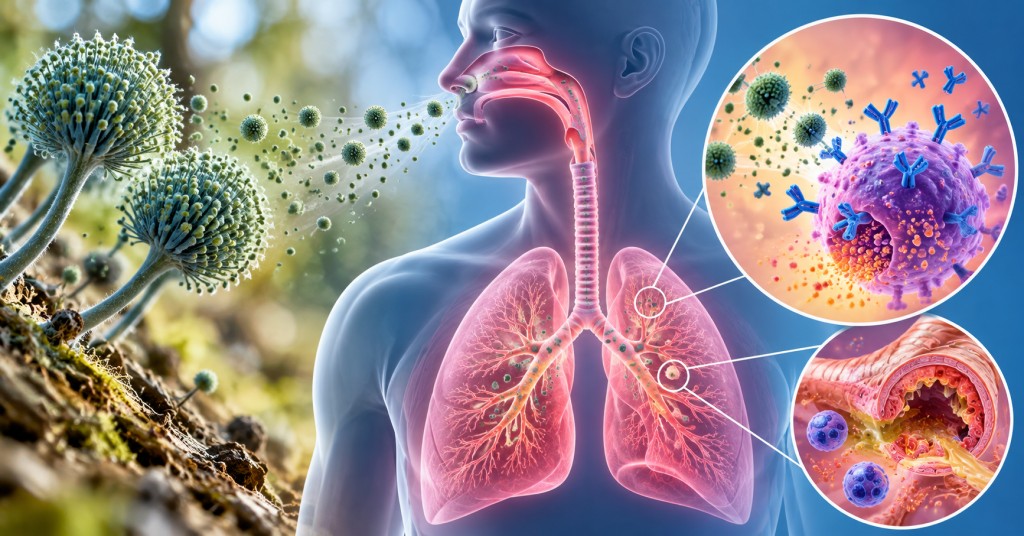
Most people breathe in tiny Aspergillus spores every day without becoming ill. The lining of the airways, mucus clearance and immune system normally stop the spores from causing infection.
Severe influenza or COVID-19 pneumonia can damage the lining of the airways and lungs. In people who are critically unwell, this damage may combine with other factors such as intensive care treatment, mechanical ventilation, prolonged steroid treatment or a weakened immune system. This can create an opportunity for Aspergillus to grow into lung tissue.
This is called invasive pulmonary aspergillosis.
IAPA and CAPA
Doctors sometimes use specific names for invasive aspergillosis linked with severe viral pneumonia:
- IAPA — influenza-associated pulmonary aspergillosis
- CAPA — COVID-19-associated pulmonary aspergillosis
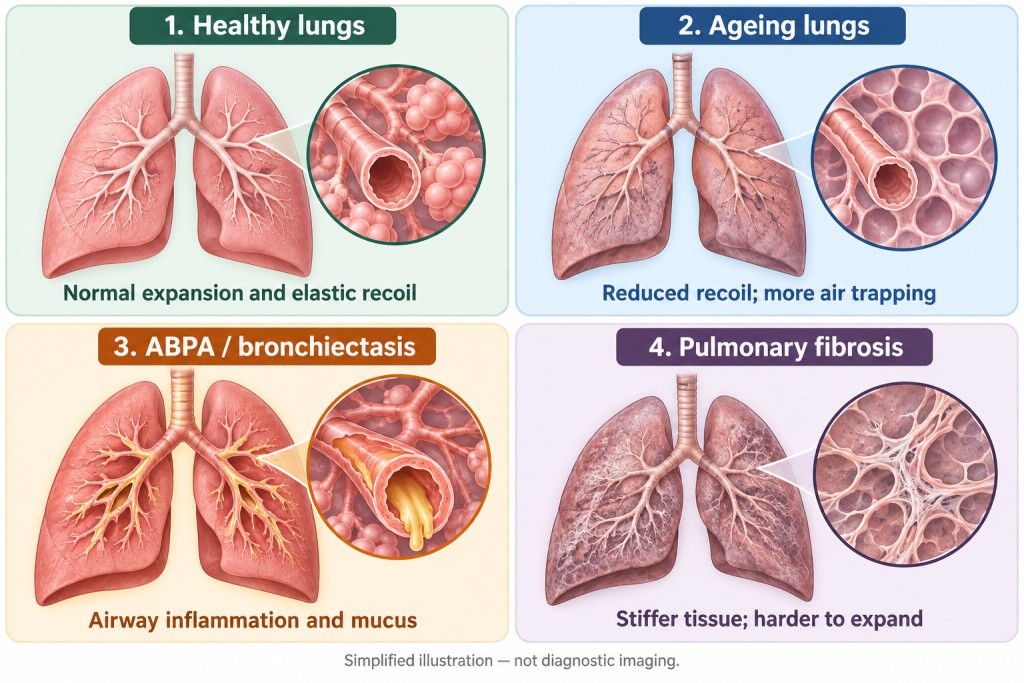
Both conditions are mainly recognised in people admitted to hospital with severe viral pneumonia, especially those needing critical care. They are different from chronic pulmonary aspergillosis (CPA), which develops gradually over months in structurally damaged lungs, and from ABPA, which is an allergic reaction to Aspergillus.
Who is most likely to be affected?
Severe influenza or COVID-19 pneumonia is the main concern. The risk may be higher in people who also have:
- A very weakened immune system, for example because of blood cancer treatment or transplant medicines
- Prolonged or high-dose steroid treatment
- Serious underlying lung disease
- Other severe illness requiring intensive care treatment
However, IAPA has also been reported in some critically ill people with influenza who did not have a previously recognised immune problem. This is why intensive care teams remain alert to the possibility when severe viral pneumonia is not improving as expected.
What symptoms or changes make doctors investigate?
People with severe viral pneumonia are already being closely monitored in hospital. Doctors may consider invasive aspergillosis if there is a persistent or returning fever, worsening breathing, new changes on a chest CT scan, or deterioration despite treatment for the viral infection and possible bacterial infection.
These changes can have many explanations. They do not automatically mean that someone has aspergillosis. Testing is needed because viral pneumonia, bacterial infection, inflammation and invasive aspergillosis can look similar.
How is it investigated?
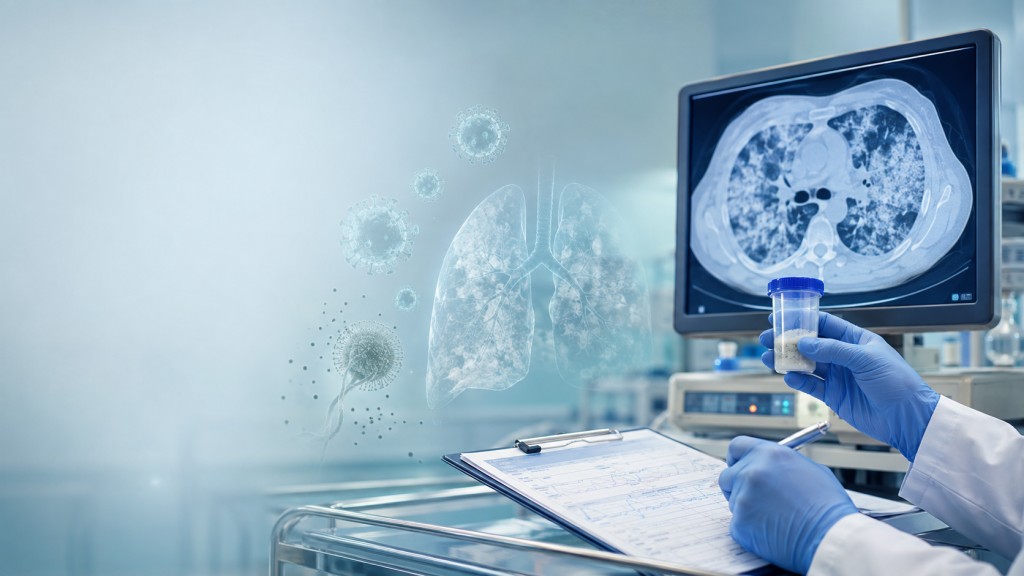
Assessment may include:
- Chest X-ray and CT scanning
- Blood tests for fungal markers, such as galactomannan or beta-D-glucan
- Testing sputum or samples from the airways
- Bronchoscopy, when it is safe and likely to provide useful information
- Review by critical care, respiratory, infectious diseases and microbiology teams
No one test answers every question. Teams interpret the results alongside the severity of illness, scan findings, other infections and any treatments that affect the immune system.
Treatment
When invasive aspergillosis is suspected or confirmed, treatment is coordinated by specialist hospital teams. Antifungal medicines such as voriconazole or isavuconazole are commonly used, with the choice depending on the individual situation, other medicines and kidney and liver function.
Prompt diagnosis and treatment are important, but care also includes treating the viral pneumonia, supporting breathing and managing any other infections or medical problems.
What this means for people living with chronic lung disease or aspergillosis
Flu and COVID-19 can still be significant infections for people with asthma, COPD, bronchiectasis, ABPA or CPA. They may trigger a flare of existing symptoms or lead to a chest infection, so it is sensible to follow your usual action plan and seek medical advice if you are becoming more unwell.
But invasive aspergillosis after flu or COVID-19 is not the expected outcome of an ordinary respiratory virus. The terms IAPA and CAPA mainly describe a rare complication of severe viral pneumonia in hospital.
Prevention
Vaccination is an important way of reducing the chance of severe respiratory infection. Keep up to date with flu and COVID-19 vaccines if they are recommended for you, and ask your GP, pharmacist or specialist team if you are unsure about eligibility.
Vaccines do not treat aspergillosis directly. Their value in this context is that preventing severe influenza or COVID-19 also reduces the chance of the serious complications that can follow severe viral pneumonia.
Related information
- Invasive aspergillosis
- Blood cancer and aspergillosis
- Chronic pulmonary aspergillosis (CPA)
- Allergic bronchopulmonary aspergillosis (ABPA)
- Treatment for aspergillosis
- Common associated conditions
Sources: Review of influenza-associated and COVID-19-associated pulmonary aspergillosis; ECMM/ISHAM guidance on COVID-19-associated pulmonary aspergillosis; NHS COVID-19 vaccination information.

Did this page help you?
Tell us in one minute