Donating Your Body for Medical Research in the UK

Including research that may help conditions such as aspergillosis

This is an uncommon request, but it can be very helpful to researchers. There is no compulsion at all to consider body donation. It is entirely a personal choice. Many people will decide that it is not for them, and that is completely understandable. For those who do wish to explore it, however, body donation can make an important contribution to medical education, training, and research.

What does body donation mean?

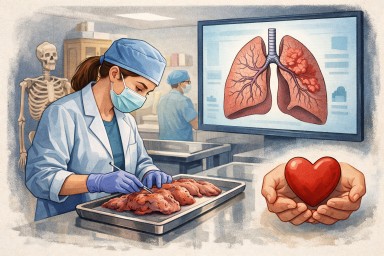
In the UK, donating your body means leaving it after death to a medical school or other appropriately licensed institution for anatomical examination, education, training, or research.

You cannot usually donate your body specifically to “aspergillosis research” alone. However, donation may still support work that is highly relevant to people affected by aspergillosis, including:

  • lung disease
  • infection
  • immune responses
  • medical training in complex respiratory illness

The most important point: consent must be given in advance

Under UK law, body donation must be arranged before death. This means:

  • you must give written consent
  • the consent must usually be witnessed
  • your family cannot normally make this decision for you after you die

How to arrange body donation

  1. Choose a medical school
    You need to contact a medical school directly. Most only accept donations from their local area.
  2. Request an information pack
    The school will explain its process, send consent forms, and set out any restrictions.
  3. Complete the consent forms
    Keep copies with your important papers and let your family know your wishes.
  4. Tell your next of kin or executor
    They will usually need to contact the medical school promptly after death.

Important to understand

  • Not every donation can be accepted. Even if you have registered, a medical school may not be able to accept the body in every circumstance.
  • A backup funeral plan is important.
  • Body donation is separate from organ donation. They are different systems and require separate arrangements.

Can I ask for donation to help lung or aspergillosis-related research?

You can certainly explain that your interest is in supporting research and education relevant to lung disease, infection, or aspergillosis. However, you cannot usually guarantee exactly how a donated body will be used. Even so, donation may still support education and research that benefits future patients with complex respiratory and fungal conditions.

Where to start: Human Tissue Authority

The best first step is the Human Tissue Authority (HTA), which provides UK guidance and a way to identify the correct medical school for your postcode.

Examples of medical school body donation pages

Please note: contact details and catchment arrangements can change, so it is wise to confirm current information directly on each medical school’s website.

Final thought

Donating your body for medical education or research is an unusual and deeply personal decision. There is absolutely no obligation to consider it. But for those who do, it can be a generous and lasting way to support future learning, better care, and research that may help people living with serious conditions, including aspergillosis.

Last reviewed: March 2026


🏥 Good News: New AI “Digital Scribe” Helping Doctors Spend More Time With Patients

We’re pleased to share some exciting developments from Manchester University NHS Foundation Trust that could directly improve your experience at clinic appointments.

A new technology called Ambient Voice Technology (AVT) is gradually being introduced across parts of the Trust. Think of it as a secure “digital scribe” that supports your clinician during your consultation.

What does it do?

With your permission, the system listens to the natural conversation between you and your doctor or nurse. It then:

  • Creates the clinical notes automatically

  • Drafts follow-up actions

  • Updates the electronic patient record (*i.e. another reason to use myMFT)

This means your clinician doesn’t need to spend as much time typing or looking at a screen — and can focus more fully on you.

📊 What Have the Early Results Shown?

Colleagues from Manchester University NHS Foundation Trust recently presented results from the Dragon Copilot trial at the Microsoft AI Tour in London.

The findings are encouraging:

88% of clinicians report saving around 2 minutes per appointment on documentation
88% say it improves quality and increases face-to-face time with patients
✅ Reduced mental workload for clinicians
✅ Significant reduction in after-clinic administrative work

Two minutes may not sound like much — but across a full clinic list, it adds up. Over time, this could help improve efficiency, reduce waiting times, and improve the overall clinic experience.


💻 How Is It Being Used?

The Dragon Copilot system connects directly into the Trust’s Hive Electronic Patient Record system. It is currently being used in:

  • Outpatient clinics

  • Manchester Royal Infirmary’s Emergency Department

Further expansion is planned in the coming weeks.


❤️ Why This Matters for NAC Patients

For patients with chronic conditions such as aspergillosis, consultations are often detailed and complex. Anything that:

  • Frees up clinician time

  • Improves note accuracy

  • Reduces administrative burden

  • Supports more focused, human interaction

…is a positive step forward.

The aim is not to replace clinicians — but to support them, so your appointment time is spent on what matters most: listening, explaining, planning, and answering your questions.


We’ll continue to keep you updated as this technology develops. It’s encouraging to see innovation being used to strengthen patient-centred care.

If you’d like to learn more, a short video featuring Trust leaders and clinicians was showcased at the Microsoft AI Tour and is available via Trust communications channels.


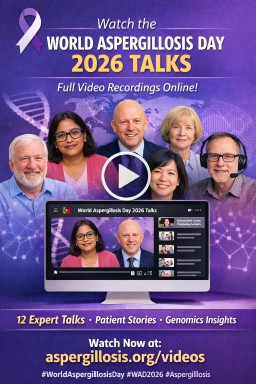
Watch the World Aspergillosis Day 2026 talks

World Aspergillosis Day 2026 brought together patients, carers, clinicians and researchers to explore how new science and better understanding can improve care for aspergillosis.

Below you can watch the full set of 12 recorded talks from the day, including expert presentations and lived-experience perspectives. You can play them in order, or open the playlist menu to jump to any session.

If you find these videos helpful, please share them — it helps more people living with aspergillosis (and those supporting them) access reliable information and support.

Watch the World Aspergillosis Day 2026 talks

World Aspergillosis Day 2026 brought together patients, carers, clinicians and researchers to explore how new science and better
understanding can improve care for aspergillosis.

Below you can watch the full set of 12 recorded talks from the day, including expert presentations and
lived-experience perspectives. You can play them in order, or open the playlist menu to jump to any session.

If you find these videos helpful, please share them — it helps more people living with aspergillosis (and those supporting them)
access reliable information and support.

Prefer a direct link to the playlist on YouTube?
Open the WAD2026 playlist.


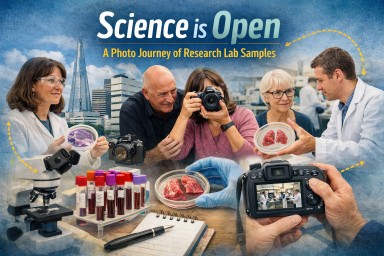
Event: 📸 Science is Open: A Photo Journey of Research Lab Samples

Have you ever wondered what happens to samples used in research?

The KHP Centre for Translational Medicine is inviting people living with a lung condition to take part in a unique behind-the-scenes experience:

Science is Open: A Photo Journey of Research Lab Samples

This is a rare opportunity to:

  • Go inside a working research laboratory

  • Learn how lung samples are processed and studied

  • Capture the experience through photography

  • Help tell the story of research from a patient perspective


📍 When and Where?

Date: Monday 16th February
Time: Afternoon (exact timing provided after registration)
Location: Central London – Lab tour at Guy's Hospital (London Bridge)


🔬 On the Day You Will:

  • Tour a research lab at Guy’s Hospital

  • Hear directly from researchers about how lung tissue samples are handled and studied

  • Take photographs during the visit (you will be provided with a simple, easy-to-use camera)

  • Receive guidance from a professional photographer

  • Help create a visual story to share with other lung health communities

No previous research or photography experience is needed — just bring yourself.


💷 Reimbursement

  • Travel expenses will be covered

  • Payment for your time: £27.50 per hour (NIHR standard rate)


✉ How to Express Interest

To register your interest, please email Emily and include:

  • A few sentences about your experience with lung health

  • Why you would like to be involved

  • Why you feel your perspective is important

Email Emily to express your interest.

Places are limited and events like this do not come around often.


🌍 Other Opportunities

The team are also running similar events for people living with:

  • Cancer

  • Arthritis

  • Cardiovascular conditions

  • Child and maternal health conditions

If any of these areas are of interest to you, your friends, or family members, please contact Emily for further details.


Event organised by the KHP Centre for Translational Medicine
Shared with thanks to Catherine, Senior Research Impact Officer, Asthma + Lung UK.


Connecting patients, carers, clinicians and scientists to improve life with aspergillosis

World Aspergillosis Day (WAD) is an annual global event that brings together people who live with, care for, treat, and research long-term forms of aspergillosis — particularly chronic pulmonary aspergillosis (CPA) and allergic bronchopulmonary aspergillosis (ABPA).

Each year, WAD creates a shared space where:

  • patients and carers can hear directly from specialists,

  • clinicians and scientists can learn from patient experience,

  • and everyone can explore how new research translates into better care.

🎥 Missed previous events?
Recordings from earlier World Aspergillosis Day meetings are available on our YouTube channel.


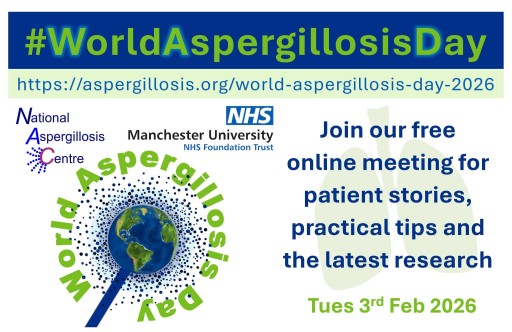
📅 NAC World Aspergillosis Day Meeting 2026

The National Aspergillosis Centre (NAC) will once again host a free online meeting:

🗓 Tuesday 3 February 2026
💻 Online via Microsoft Teams
👥 Open to patients, carers, clinicians, scientists, and anyone who lives or works with aspergillosis

🧬 This year’s theme:

“How can the genomics revolution help patients with chronic aspergillosis?”


Why genomics — and why now?

Modern molecular tests such as PCR and DNA sequencing are becoming faster, cheaper and more accurate. Because of this, the NHS is increasingly exploring how genomic technologies can be used to improve diagnosis, monitoring and treatment across many diseases — including aspergillosis.

This year’s WAD meeting will start an open discussion between patients and professionals about which genomic and molecular tests are likely to matter most for people with aspergillosis in the years ahead.

Topics will include:

  • 🧠 Is there a “gene for aspergillosis”?
    Should people be tested for genetic susceptibility?

  • 💊 Genes and voriconazole dosing
    Can testing the CYP2C19 gene help personalise antifungal treatment?

  • 🦠 Tracking antifungal resistance
    How molecular testing of Aspergillus strains can help hospitals monitor resistance.

  • 🔬 Aspergillus PCR at NAC
    How PCR is already used to diagnose and monitor chronic aspergillosis.


🗣️ Patient voices at the heart of the meeting

As always, patient experience will be central to the day.

This year will include new patient stories, including Alison, who will talk about how her aspergillosis treatment led to the development of adrenal insufficiency, and what that has meant for her care and daily life.


“I don’t know anything about genetics — is this for me?”

Absolutely yes.

You don’t need any background in genetics to take part. Everything will be explained clearly, step by step, with minimal jargon.

Planned discussion topics include:

  • What do my Aspergillus PCR test results actually mean?

  • Is there really a “gene for CPA”?

  • Why do genes matter for antifungal dosing?

In fact, the more questions you ask — especially the “silly” ones — the better. The discussion from the day will be used to create a new patient leaflet, designed to help people better understand their diagnosis and test results.


✅ Registration is now open

🎟 Book your free place via Eventbrite:
👉 www.eventbrite.co.uk/e/world-aspergillosis-day-tickets-1980707139373


💻 Joining via Microsoft Teams

The meeting will be held online using Microsoft Teams, which you can download here:
👉 www.microsoft.com/en-gb/microsoft-teams/group-chat-software

If you haven’t used Teams before, we recommend doing a test call in advance. If you run into any problems setting things up, we’re very happy to help.


We hope you can join us for World Aspergillosis Day 2026 — to learn, to ask questions, and to help shape the future of aspergillosis care together.


Season’s Greeting

As the year draws to a close, we would like to send warm wishes to everyone in the aspergillosis community — patients, families, carers, clinicians, nurses, scientists, and all professionals working to improve care and understanding.

Living with aspergillosis, or supporting those who do, often requires resilience, patience, and compassion. Throughout this year, we have seen remarkable strength from patients, dedication from healthcare teams, and generosity of spirit across our wider community.

At this time of reflection and renewal — whether you mark Christmas, another festival, or simply the turning of the year — we hope you find moments of rest, comfort, and connection. May the days ahead bring steadier health where possible, renewed energy, and continued progress in care, research, and support.
Thank you for being part of this community.

With warmest wishes for peace, kindness, and hope — now and into the New Year.


The Chief Medical Officer’s Annual Report 2025: Infections

What this document is

The Chief Medical Officer’s Annual Report 2025: Infections is a major national review produced by the Chief Medical Officer for England, Professor Chris Whitty. It is a comprehensive, 371-page assessment of:

  • Current infectious disease threats in England

  • How infections are changing (ageing population, travel, globalisation, antimicrobial resistance)

  • What the NHS, public health services, and government need to do to protect the public

  • Key topics including vaccines, fungal infections, infection in older adults, housing, climate change and more

It includes contributions from national experts—including a full chapter dedicated to fungal infections (section 4.2) and others that touch on issues highly relevant to aspergillosis patients (vaccination, antimicrobial resistance, respiratory infections, housing, and vulnerable populations)

cmo-annual-report-2025-infectio…


Why it is published

The report is published each year to:

1. Advise Government

It sets out the CMO’s expert recommendations on how England should prepare for current and future infection threats, including pandemics, AMR, and emerging fungal pathogens.

2. Influence NHS planning and investment

The report highlights weaknesses in the system and proposes reforms.
This year’s report strongly emphasises:

  • Better infection services

  • Stronger surveillance

  • Improving vaccine uptake

  • Protecting older adults (now the group with most infection-related deaths)

  • Expanding superspecialist expertise—including fungal disease expertise

3. Inform clinicians, researchers, and public health professionals

It provides a current consensus on infectious disease trends, evidence, and priorities.
Chapters are written by leading UK experts in each field (e.g., fungal infections, antimicrobial resistance, vaccines, imported infections)

4. Educate the public and third-sector organisations

The report is open-access and intended to help the public understand why infection preparedness matters and why actions like vaccination, stewardship, and early diagnosis are essential.


Who reads it

The report is widely used across:

Government

  • Department of Health and Social Care

  • UKHSA

  • Cabinet Office (emergency planning)

  • Local authorities

NHS and clinical services

  • Infectious disease physicians

  • Respiratory teams

  • Microbiology and virology specialists

  • Primary care networks

  • ICS / ICB teams planning local services

Researchers and academic institutions

It sets the direction for future research and funding priorities, including for fungal disease and AMR.

Charities, patient organisations and advocates

Groups representing people with chronic, infectious, or respiratory illness read the report to understand system-level changes and advocate for patient needs.

Industry and diagnostics developers

They monitor future needs for antifungals, vaccines, and diagnostic tools.


Why this report is important for aspergillosis patients

Several aspects of the 2025 report directly relate to people with ABPA, CPA, SAFS or Aspergillus bronchitis.


1. Fungal infections are recognised as a major emerging threat

The report includes a dedicated chapter on fungal infections (section 4.2), describing:

  • Rising antifungal resistance

  • Expanding fungal threats globally

  • The importance of specialist mycology expertise

  • The risks from agricultural fungicides

  • The need for improved surveillance and diagnostics

This formal recognition strengthens the case for specialised centres like the National Aspergillosis Centre.


2. It highlights the need for superspecialists in rare and imported infections—including fungal disease

The CMO states that England requires:

“superspecialists to provide advice on and management of infections including… rarer [infections] such as fungal infections.”

cmo-annual-report-2025-infectio…

This directly supports the role and expansion of the NHS mycology services, which Aspergillus patients rely on for accurate diagnosis and treatment.


**3. It reinforces the importance of antimicrobial and antifungal stewardship

For people with aspergillosis, this matters because:

  • Resistance to azoles is rising—and the report explicitly mentions agricultural fungicides as part of the problem.

  • Stewardship ensures patients receive appropriate antifungals, monitored carefully and adjusted safely.

  • It argues for more drug development, which is essential because current antifungal options are limited.


4. It emphasises diagnosing infection in older adults

Older adults are increasingly vulnerable to infections and complications, especially respiratory ones.
The report stresses that:

  • Infection in older adults often has more serious consequences

  • Early diagnosis is essential

  • Access to specialist care must improve

Since many aspergillosis patients are older with complex lung disease, this section validates the need for better recognition and earlier referral.


5. Housing and damp are recognised as infection risks

The chapter Housing and Infection (section 7.2) discusses how substandard housing—including damp and mould—drives respiratory illness.
Although not Aspergillus-specific, it gives important public health backing for patients needing remediation and better housing conditions.


6. The report strengthens the case for national fungal surveillance

Key recommendations include:

  • Improving surveillance of antimicrobial and antifungal resistance

  • Better mapping of emerging pathogens

  • More research into fungal diseases

These system-level improvements directly benefit aspergillosis patients by helping earlier detection and better treatment options.


7. It raises awareness of fungal disease at national level

Simply being included in a flagship CMO report is important.
It means:

  • Policymakers can no longer overlook fungal infections

  • Funding for mycology services becomes easier to justify

  • Clinicians across the NHS will become more aware of CPA, ABPA and related diseases

  • It helps reduce the years-long diagnostic delays many patients face


In short — why Aspergillus patients should care

The 2025 CMO Annual Report is one of the most influential documents shaping future infectious disease strategy in England. For aspergillosis patients, it is important because:

✓ Fungal infections are explicitly highlighted as a growing threat

✓ Specialist mycology services are recognised as essential

✓ Antifungal resistance is identified as a major risk requiring action

✓ Better diagnosis and monitoring of at-risk groups is encouraged

✓ Housing, climate, age and vulnerability—all major issues for patients—are addressed

✓ It strengthens the case for investment in NAC and wider mycology networks


This report can be used by patient groups, NAC advocates, and healthcare professionals to press for:

  • More referrals

  • Better awareness among GPs and respiratory teams

  • Expanded mycology diagnostic capacity

  • Greater research funding

  • Better antifungal stewardship

  • National fungal surveillance


🌐 Promoting the NHS National Aspergillosis Centre (NAC)

Nationally Commissioned Service • Specialist Advice • Remote MDT • Patient Support

Chronic and allergic aspergillosis remain significantly under-recognised across the UK — despite their substantial burden on respiratory, infectious disease, and immunology services.

As the NHS England–commissioned National Aspergillosis Centre (NAC), based at Wythenshawe Hospital (Manchester University NHS Foundation Trust), we provide national expertise, remote support, and shared-care pathways for clinicians managing these complex conditions.


📊 Why This Matters

Chronic pulmonary aspergillosis (CPA) affects an estimated 3–4 per 100,000 people in the UK, with far higher rates in those with:

  • Previous tuberculosis

  • COPD

  • Non-tuberculous mycobacterial (NTM) lung disease

  • Sarcoidosis

  • Bronchiectasis

Allergic bronchopulmonary aspergillosis (ABPA) may affect:

  • 2.5% of adult asthmatics

  • Up to 15% of people with cystic fibrosis

Yet both conditions are frequently undiagnosed or misdiagnosed, leading to delayed treatment and avoidable morbidity.


🏥 How NAC Supports Clinicians Across the UK

As the nationally commissioned centre for chronic aspergillosis, we offer:

🩺 Specialist clinical care

Face-to-face and remote clinics with structured long-term follow-up in partnership with local teams.

👥 National Aspergillosis MDT via Teams Remote Communication

A dedicated MDT where clinicians can refer and discuss complex diagnostic or therapeutic cases.

📧 Consultant-led advice & guidance

Available via phone & email, including:

  • Diagnostic support

  • Interpretation of IgE/IgG and fungal microbiology

  • Antifungal prescribing advice

  • Case planning for ABPA, CPA, SAFS and Aspergillus bronchitis

🔬 Access to advanced diagnostics

Including Aspergillus-specific IgE/IgG, culture, imaging, and molecular testing (e.g. antifungal resistance).

💬 Patient support & education (NAC CARES)

Moderated online groups, weekly patient meetings, webinars, and comprehensive educational resources — helping patients understand their condition and remain safely supported close to home.


🤝 We Welcome Collaboration

We’d be pleased to connect with respiratory, ID, immunology, and internal medicine teams to discuss:

  • Shared-care pathways

  • Diagnostic support

  • Service guidance

  • Virtual or in-person educational sessions

  • Case-specific MDT referrals


📄 Further information

Referral pathways, service scope and patient resources:
👉 https://mft.nhs.uk/wythenshawe/services/infectious-diseases/national-aspergillosis-centre/


Dr Chris Kosmidis
Clinical Lead, NHS National Aspergillosis Centre
Manchester University NHS Foundation Trust


❤️ Thinking About Donating Blood After Aspergillosis or Lung Treatment?

A supportive message for people living with ABPA, CPA, SAFS, and related lung conditions

When you live with aspergillosis or a long-term lung condition, you know what it means to go through difficult treatments, long recoveries, and moments of uncertainty.
So when someone says, “Once I’m well, I’d like to donate blood to help others,” it is an incredibly generous and hopeful act.

Many people in our community wonder whether blood donation is possible after lung surgery, long-term inhalers, antifungals, or biologics. The reassuring answer is:

👉 Yes — some aspergillosis patients can donate blood once fully recovered, but it depends on individual treatments and health status.

And even if you can’t donate, the spirit behind the idea is powerful and meaningful.


🌱 1. Recovery comes first — your health is the priority

Whether you’ve had:

  • ABPA flare-ups

  • CPA treatment

  • bronchoscopy

  • long-term antifungals

  • biologics

  • a lobectomy or wedge resection

…the NHS will want you to be:

  • fully healed

  • breathing comfortably

  • stable in your lung condition

  • free from infection

  • strong enough to safely donate

For major surgery like a lobectomy, this often means several months of recovery before you can even be reviewed for donation.

This protects your health, not just the receiver’s.


💊 2. Medications commonly used for aspergillosis can affect eligibility

NHS Blood and Transplant will look closely at what you’re taking.

Here’s a simple guide:

Often NOT permitted

  • Biologics (e.g., mepolizumab, benralizumab, dupilumab)

  • Long-term immunosuppressants

  • Regular systemic steroids

May require a delay after stopping

  • Itraconazole / voriconazole / posaconazole

  • Recent antibiotic courses

  • Short steroid bursts

Usually fine

  • Inhalers

  • Nebulised saline

  • Montelukast

  • Airway clearance treatments

  • Most pain medicines

Every case is assessed individually — there is no automatic “yes” or “no” for all aspergillosis patients.


🫁 3. Your lung condition does not automatically exclude you

Having ABPA, CPA, bronchiectasis, or SAFS does not automatically prevent blood donation.

What matters is:

  • your condition is stable

  • your oxygen levels are good

  • you are not prone to sudden flare-ups

  • you feel well and strong

Many people with asthma or mild-to-moderate bronchiectasis still donate safely.


🩸 4. Your blood type is always valuable

Whether you’re a universal donor type (O-negative) or any other type, your blood can help save lives.

Even wanting to donate is something to be proud of — especially after everything you’ve been through.


🌟 5. The intention to donate speaks volumes about your strength

People living with aspergillosis know:

  • what it means to struggle for breath

  • how it feels to wait for test results

  • the exhaustion of flare-ups

  • the courage needed for surgery

  • the patience required for long-term treatment

So when someone in this community says:

“If I recover well, I want to donate blood to help someone else.”

…it’s a truly inspiring message of recovery and generosity.


🌈 6. Even if you can’t donate — your kindness still matters

Because of medications or long-term conditions, some people with aspergillosis will be told they can’t donate blood. This is completely normal.

You can still help others by:

  • encouraging friends or family to donate

  • sharing your story to raise awareness

  • supporting patient groups, campaigns, and research

  • simply being there for someone newly diagnosed

Your contribution to the world is not measured by a needle — it’s measured by your compassion.


❤️ Takeaway message

If you want to donate blood after aspergillosis treatment or lung surgery, that’s a beautiful intention. When you’re fully recovered, the NHS can review your health and medications. Whether you can donate or not, the willingness to help others already makes a real difference.


Why Join the Aspergillosis Patient Advisory Group (PAG)?

Supported by the European Lung Foundation (ELF), NAC CARES, and the European Respiratory Society (ERS).

Living with aspergillosis — CPA, ABPA, SAFS, Aspergillus bronchitis or sinus disease — can be overwhelming. Many people feel isolated, struggle to find clear information, or feel unsure how to influence the care they receive.
That is exactly why the Aspergillosis Patient Advisory Group (PAG) exists.

The PAG is supported by the European Lung Foundation (ELF) — based in Sheffield — and by NAC CARES, the patient engagement and support team at the UK National Aspergillosis Centre (NAC) in Manchester. Together, ELF, NAC CARES and the PAG work closely with the European Respiratory Society (ERS) to make sure the patient voice shapes research, education, and clinical practice across Europe and the UK.


What ELF Does

ELF brings together patients, carers, researchers and professionals from across Europe including the UK. It:

  • Provides clear, trustworthy patient information

  • Organises and hosts patient advisory groups

  • Ensures patient voices are included in ERS guidelines and research

  • Supports patient–professional workshops, surveys and consultations

  • Helps patients shape respiratory policy and awareness campaigns

Because ELF is UK-based, participation is easy for UK patients.


What NAC CARES Does

NAC CARES is the patient-facing team at the National Aspergillosis Centre in Manchester.
They:

  • Support UK patients to join the PAG

  • Help connect lived experience from UK clinics to the wider European PAG

  • Share updates, resources, and educational material

  • Bring PAG priorities back into NAC’s clinical and research work

  • Ensure UK patients feel included, represented and supported within ELF and ERS structures

NAC CARES acts as a bridge between UK clinical expertise and European patient involvement.


What the Aspergillosis PAG Does

The PAG ensures that people living with aspergillosis have a direct say in:

  • Research design

  • European Respiratory Society guidelines

  • New diagnostic and treatment pathways

  • Patient-friendly information materials

  • Awareness projects and health campaigns

  • Surveys that drive change in policy and clinical practice

Your lived experience is treated as meaningful expertise.


Why Join the PAG? Why Spend Your Energy?

Many people with aspergillosis have limited energy.
Here is why members say it is worth it:

1. You receive clear, reliable information

Updates on research, antifungals, biologics, trials and guidelines — written for patients, not scientists.

2. Your voice shapes real decisions

ERS guideline committees and research teams listen.
Your input changes how care is delivered.

3. You feel less alone

Aspergillosis is rare.
The PAG connects you with people across Europe and the UK who truly understand.

4. You choose how involved you want to be

You can simply receive updates — or you can complete the occasional survey, join a focus group, or help shape a guideline.
No pressure, no obligation.

5. It improves care for everyone — including you

Your experience helps highlight what really matters:

  • Delayed diagnosis

  • Side-effects

  • Treatment access

  • Fatigue and breathlessness

  • Impact on quality of life

This evidence influences clinicians, researchers and policymakers.

6. It is free, inclusive and easy to join

No travel.
No cost.
All online.
Europe includes the UK, and ELF is based in Sheffield.


Who Can Join?

Anyone affected by aspergillosis:

  • Patients with CPA, ABPA, SAFS, Aspergillus bronchitis or sinus disease

  • People with fungal allergy in asthma or bronchiectasis

  • Family members and carers

No medical background needed.


How to Join

You can join in a few minutes:

👉 https://europeanlung.org/en/patient-advisory-groups/
Choose “Aspergillosis”.

You’ll then receive updates and invitations to take part — always at your own pace.


In One Line:

The PAG gives you good information, a real voice in shaping aspergillosis care, and a supportive community — with full backing from ELF, ERS and NAC CARES.