Do You Carry Your Aspergillosis Information With You?

New NHS Plans Could Help in Future – But What About Today?
The UK government is currently debating plans for a new NHS “single patient record” system. The aim is to allow authorised healthcare professionals to access important information from GP surgeries, hospitals, community services and other parts of the NHS more easily.
If implemented successfully, this could reduce the need for patients to repeatedly explain their medical history and could help emergency departments, ambulance crews and other healthcare professionals see important information such as diagnoses, medications, allergies and previous treatment.
For people living with aspergillosis and other long-term respiratory conditions, this could be especially valuable. However, these changes will take time to develop and introduce. For now, patients remain one of the most important links between different parts of the healthcare system.
Why This Matters for Aspergillosis Patients
Many people with aspergillosis receive care from several different services, including:
- General Practitioners (GPs)
- Local respiratory teams
- Specialist nurses
- Hospital clinics
- Emergency departments
- Pharmacists
- Community healthcare teams
- Specialist centres such as the National Aspergillosis Centre
Healthcare records are not always immediately available to every professional involved in your care. This means there may be times when you need to explain:
- What type of aspergillosis you have
- Which medications you take
- Any important allergies or serious drug reactions
- Whether you have adrenal insufficiency or take long-term steroids
- Who your specialist team is
- What previous treatments you have received
Having this information readily available can save time and may help healthcare professionals make decisions more quickly and safely.
What Information Should You Carry?
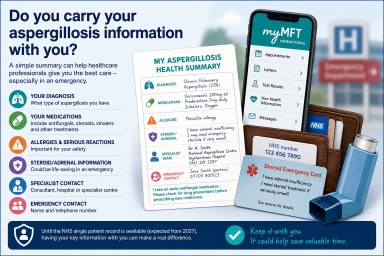
You do not need to carry your entire medical record. A simple one-page health summary is usually enough.
1. Your Diagnosis
List your main diagnoses clearly. Examples include:
- Allergic Bronchopulmonary Aspergillosis (ABPA)
- Chronic Pulmonary Aspergillosis (CPA)
- Severe Asthma with Fungal Sensitisation (SAFS)
- Aspergillus Bronchitis
- Bronchiectasis
- Severe Asthma
- Chronic Obstructive Pulmonary Disease (COPD)
2. Your Current Medications
Include all current treatments, particularly:
- Antifungal medications, such as itraconazole, voriconazole, posaconazole or isavuconazole
- Steroid tablets
- Hydrocortisone replacement therapy
- Biologic therapies
- Inhalers
- Oxygen therapy
- Antibiotics you are currently taking
Try to keep this list up to date.
3. Drug Allergies and Serious Reactions
This is one of the most important sections. Include any known allergies or serious reactions, for example:
- Penicillin allergy
- Prednisolone allergy
- Previous severe drug reactions
- Medicines you have been told to avoid
4. Steroid or Adrenal Information
If you have adrenal insufficiency or are taking long-term steroid treatment, make this very clear.
I have adrenal insufficiency and may require emergency steroid treatment if seriously unwell.
Many patients already carry a steroid emergency card. If you have been advised to carry one, continue to carry it at all times.
5. Specialist Contact Information
Include:
- Consultant name
- Hospital or specialist centre
- Clinic or specialist nurse contact details, if available
6. Emergency Contact
Include:
- Name
- Relationship
- Telephone number
An Important Extra Note for Aspergillosis Patients
Many antifungal medications interact with other medicines. If you take itraconazole, voriconazole, posaconazole or isavuconazole, consider including the following statement on your health summary:
I take an azole antifungal medication. Please check for potential drug interactions before prescribing new medicines.
This simple statement may help avoid medication-related problems.
If You Are a National Aspergillosis Centre Patient: Using myMFT
If you are a patient of the National Aspergillosis Centre (NAC), you may already have access to some of your hospital information through the myMFT patient portal.
myMFT is the patient portal used by Manchester University NHS Foundation Trust (MFT), which includes Wythenshawe Hospital and the National Aspergillosis Centre.
Depending on the services you use, myMFT may allow you to:
- View MFT appointment details
- Access clinic letters
- Keep track of important test results, letters and health information
- Attend online video consultations
- Use proxy access to help manage a family member’s healthcare, with consent
Many patients find it useful to keep copies of important clinic letters on their phone or tablet. This can be particularly helpful if you attend another hospital, visit your GP, travel away from home or need emergency treatment.
myMFT does not replace a future NHS-wide patient record, but it can provide access to important information that may help you and your healthcare professionals manage your care more effectively.
Find out more about myMFT on the Manchester University NHS Foundation Trust website.
For Patients Not Under the National Aspergillosis Centre
If you are not an NAC or MFT patient, your local hospital may have its own patient portal or online record system. Ask your hospital clinic, respiratory team or GP surgery whether you can access clinic letters, appointment information or test results online.
You may also be able to use the NHS App to manage parts of your healthcare, depending on your GP surgery and local NHS services.
Find out more about the NHS App.
You may also find it useful to know your NHS number. You do not need to know your NHS number to receive NHS care, but it can be helpful when contacting services or completing forms.
Where Should You Keep Your Information?
Many patients choose to:
- Save a copy on their mobile phone
- Keep a printed copy in their wallet or handbag
- Store it alongside their steroid emergency card
- Keep a copy with travel documents
- Share a copy with family members or carers
- Keep copies of important clinic letters on their phone or tablet
The best system is the one that is easy to access when needed.
Printable options (Word documents):
Looking Ahead
The proposed NHS single patient record could eventually make it easier for healthcare professionals to access important information quickly and safely.
For patients with rare conditions such as aspergillosis, that could improve continuity of care, reduce delays and reduce the need to repeatedly explain complex medical histories.
Until then, carrying a simple summary of your condition remains one of the easiest and most effective ways to help healthcare professionals understand your health needs and provide appropriate care.
Key Points
- Carry a simple one-page health summary.
- Include diagnoses, medications, allergies and specialist contacts.
- Clearly state if you have adrenal insufficiency or take long-term steroids.
- Mention azole antifungal treatment and potential drug interactions.
- National Aspergillosis Centre patients may be able to access clinic information through myMFT.
- Patients outside MFT should ask whether their own hospital has a patient portal.
- Keep important information on your phone and consider carrying a printed copy.
- A future NHS single patient record may improve information sharing, but patients remain an important source of information today.
Common Questions
Do I need to carry all my clinic letters?
No. A concise one-page summary is usually more useful in an emergency. However, keeping copies of important clinic letters on your phone can be helpful.
What if I am treated at more than one hospital?
This is one of the main reasons to carry a health summary. Different healthcare providers may not always have immediate access to the same information.
Is this only useful in emergencies?
No. It can also help during GP appointments, outpatient visits, travel, planned hospital admissions and when seeing healthcare professionals unfamiliar with aspergillosis.
What if I am a National Aspergillosis Centre patient?
Consider registering for myMFT and keeping important clinic letters available on your phone or tablet for easy access.
What if I am not an NAC patient?
Ask your own hospital or respiratory clinic whether they offer a patient portal. You can also check what information is available through the NHS App.
When to Seek Medical Advice
Seek urgent medical advice if you experience:
- Significant worsening of breathlessness
- Chest pain
- Coughing up significant amounts of blood
- Symptoms of adrenal crisis if you have adrenal insufficiency
- Severe allergic reactions to medications
- Rapid deterioration in your respiratory symptoms
If you need emergency help, call 999. For urgent medical advice in the UK, use NHS 111.
Useful Links
- myMFT patient portal – Manchester University NHS Foundation Trust
- NHS App
- Find your NHS number
- Aspergillosis information and support
Frequently Asked Questions
What information should an aspergillosis patient carry in an emergency?
Patients should consider carrying a summary of their diagnosis, medications, allergies, steroid or adrenal information, specialist contacts and emergency contact details.
Should people with aspergillosis carry a medication list?
Yes. Many aspergillosis patients take antifungal medicines, steroids, biologic therapies and inhalers. An up-to-date medication list can help avoid prescribing errors and drug interactions.
What is myMFT?
myMFT is the patient portal used by Manchester University NHS Foundation Trust. It allows eligible patients to access appointments, clinic letters, test results and other healthcare information.
Can aspergillosis patients access their records online?
Some patients can access records through services such as myMFT, local hospital portals or the NHS App, depending on where they receive care.
What is the NHS single patient record?
The proposed NHS single patient record aims to improve information sharing between healthcare providers so patients do not need to repeatedly explain their medical history.
Author: National Aspergillosis Centre Patient Support Team
Reviewed by: National Aspergillosis Centre
Last reviewed: June 2026
Important: This article is intended for information only and should not replace advice from your healthcare team.
What the UK Infection Workforce Report Means for Aspergillosis Patients and Specialists

Summary: A major new UK infection-specialist workforce report recognises fungal disease expertise as an essential part of modern healthcare. The report has important implications for aspergillosis diagnosis, specialist services, digital care, antifungal stewardship and future workforce planning.
Key points
- Medical mycology is now recognised as part of essential UK infection infrastructure.
- Rising immunosuppression and chronic lung disease are increasing demand for aspergillosis expertise.
- The report supports networked specialist care, closely matching the National Aspergillosis Centre model.
- Advanced fungal diagnostics and specialist interpretation are increasingly important.
- Digital and community-based care could improve access for patients living far from specialist centres.
- Antifungal stewardship and resistance monitoring are likely to become much more prominent.
Why was this report produced?
This report was produced in 2026 by a coalition of the UK’s leading infection societies, including organisations representing infectious diseases physicians, microbiologists, virologists, infection prevention specialists, pharmacists, laboratory scientists and medical mycologists.
It reflects growing concern that the UK infection-specialist workforce is under increasing strain at a time when infectious diseases are becoming more complex, more resistant to treatment and more internationally connected.
The report was produced in response to several major pressures affecting the NHS and wider healthcare system:
- the long-term impact of the COVID-19 pandemic;
- rising antimicrobial resistance (AMR);
- an ageing population with more chronic disease;
- increasing use of immunosuppressive medicines, biologics and transplantation;
- workforce shortages in infection specialties;
- concerns about future pandemics and emerging infections;
- growing demand for complex diagnostics and specialist infection advice;
- the NHS shift toward community and digitally enabled care.
The report also aligns closely with the NHS 10-Year Plan and wider UK health-security planning. It repeatedly refers to the need for three major shifts in healthcare delivery:
- moving care from hospital to community;
- shifting from reacting to illness toward prevention;
- accelerating digital and data-driven healthcare systems.
Importantly for aspergillosis and fungal disease, the report recognises that modern infection medicine now extends far beyond traditional bacterial infections. Infection specialists are increasingly dealing with:
- complex fungal infections;
- drug-resistant organisms;
- infections linked to immunosuppression;
- global travel and climate change;
- high-risk vulnerable patients;
- and emerging pathogens.
The report can therefore be seen as both:
- a warning that infection services are under significant pressure and risk workforce shortages; and
- a strategic argument for greater investment in specialist infection expertise, diagnostics, digital infrastructure and networked care.
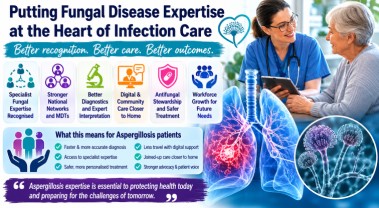
For aspergillosis specialists, one of the most important aspects is that medical mycology and fungal diagnostics are now being recognised as part of essential national infection infrastructure rather than as peripheral specialist services.
In many ways, the report reflects lessons learned during the COVID-19 pandemic. During COVID, the NHS saw how rapidly infection services, diagnostics, surveillance systems and specialist expertise became critical to national resilience. The experience also highlighted how vulnerable immunocompromised patients are to opportunistic infections, including fungal disease such as COVID-associated pulmonary aspergillosis (CAPA).
The report therefore represents a broader move toward building a more resilient, better-connected and more prevention-focused infection system for the future.
1. Fungal disease expertise is recognised as core infection infrastructure
One of the most significant implications is that the report explicitly includes mycologists and fungal diagnostics specialists within the UK infection-specialist workforce.
This matters because fungal disease services have often been under-recognised compared with bacterial and viral infection services. For aspergillosis specialists, the report strengthens the argument that medical mycology is not a niche extra, but a necessary part of safe, modern infection care.
For patients, this recognition may help support better access to specialist fungal expertise, particularly for complex conditions such as chronic pulmonary aspergillosis (CPA), allergic bronchopulmonary aspergillosis (ABPA) and invasive aspergillosis.
2. Aspergillosis is likely to become more important
The report highlights several pressures on infection services, including ageing populations, multi-morbidity and increasing use of immunosuppressive treatments. These are also major risk factors for Aspergillus-related disease.
This means clinicians may see increasing numbers of patients with:
- chronic pulmonary aspergillosis (CPA);
- invasive aspergillosis;
- Aspergillus disease in bronchiectasis;
- Aspergillus complications in people receiving biologics, chemotherapy or transplant medicines;
- azole-resistant Aspergillus infections.
For patients, this could eventually mean better awareness and diagnosis. However, unless the specialist workforce grows, increased recognition may also place more pressure on already stretched fungal services.
3. The report supports networked specialist care
The report strongly supports regional and national specialist networks, shared expertise, multidisciplinary team working and digital advice models.
This is highly relevant to aspergillosis. Many patients are looked after locally by respiratory, microbiology or infectious diseases teams, but need input from specialist fungal centres for diagnosis, treatment decisions and monitoring.
This supports a model where local teams remain involved, but have rapid access to national fungal expertise when needed.
4. Diagnostics are central to better aspergillosis care
Aspergillosis is often difficult to diagnose. Test results need careful interpretation because Aspergillus can represent colonisation, allergy, chronic infection or invasive disease depending on the clinical context.
The report’s focus on rapid diagnostics, molecular testing, genomics, digital laboratory systems and expert interpretation is therefore highly relevant.
For aspergillosis, improved diagnostic pathways could include better access to:
- Aspergillus immunoglobulin G (IgG);
- Aspergillus immunoglobulin E (IgE);
- galactomannan testing;
- fungal polymerase chain reaction (PCR);
- azole resistance testing;
- fungal culture and sequencing;
- specialist radiology review.
For patients, this could mean fewer missed diagnoses, shorter diagnostic delays and more personalised treatment.
5. Community and digital care could help patients
The report supports moving appropriate care closer to home, using outpatient antimicrobial therapy, virtual services and digitally enabled community pathways.
For people with aspergillosis, this could be very beneficial. Many patients have long-term breathlessness, fatigue and mobility limitations, and may live far from specialist centres.
Potential benefits include:
- fewer long-distance hospital visits;
- remote monitoring of symptoms and test results;
- shared-care arrangements with local hospitals;
- virtual multidisciplinary team review;
- faster specialist advice for local clinicians.
However, fungal disease management is complex. Community pathways must still include specialist oversight because antifungal treatment can involve drug interactions, liver toxicity, therapeutic drug monitoring, adrenal suppression and resistance issues.
6. Antifungal stewardship should become more prominent
The report focuses heavily on antimicrobial stewardship. Although much of this is framed around antibiotics, the same principles apply to antifungal medicines.
For aspergillosis care, antifungal stewardship means using the right antifungal, at the right dose, for the right duration, with careful monitoring.
This is especially important because of:
- azole resistance in Aspergillus fumigatus;
- long courses of antifungal treatment;
- drug interactions with steroids, anticoagulants, immunosuppressants and other medicines;
- the need for therapeutic drug monitoring;
- side effects affecting the liver, skin, nerves or adrenal system.
For patients, better antifungal stewardship should mean safer and more effective treatment.
7. Fungal disease has a role in pandemic preparedness
The report includes mycology within pandemic preparedness planning. This is important because fungal complications can emerge during major respiratory outbreaks.
COVID-associated pulmonary aspergillosis (CAPA) showed that fungal disease can become highly relevant during pandemics, especially in intensive care and immunocompromised patients.
Future preparedness should therefore include fungal diagnostics, fungal surveillance, resistance monitoring and specialist mycology input.
8. Workforce expansion is essential
The report warns that the infection-specialist workforce is under pressure. This is particularly important for fungal disease because the UK has a limited number of specialist medical mycologists, fungal pharmacists, laboratory scientists and specialist nurses.
For aspergillosis services, workforce planning should include:
- more medical mycology training opportunities;
- more specialist fungal pharmacists;
- more fungal diagnostics scientists;
- more specialist nurses supporting long-term fungal disease care;
- protected time for multidisciplinary team meetings and advice services.
Without this, diagnostic delays and unequal access to specialist care may persist.
9. What this means for patients
For patients, the report supports several important messages:
- fungal disease expertise matters;
- specialist diagnosis and treatment are important;
- long-term fungal lung disease requires joined-up care;
- access to expert advice should not depend too heavily on postcode;
- digital and shared-care systems could reduce the need for repeated travel;
- patient education should be part of infection service planning.
The report may also be useful for patient advocacy because it provides national-level support for strengthening infection services, including fungal infection expertise.
10. What is still missing?
Although the report is very helpful, aspergillosis itself is not discussed in detail. Areas that would benefit from stronger future emphasis include:
- chronic pulmonary aspergillosis (CPA);
- allergic bronchopulmonary aspergillosis (ABPA);
- severe asthma with fungal sensitisation (SAFS);
- Aspergillus bronchitis;
- azole-resistant Aspergillus;
- environmental mould exposure and health;
- long-term patient support and rehabilitation.
This creates an opportunity for aspergillosis specialists, patient groups and charities to build on the report and make the case for more visible fungal disease planning.
Conclusion
This report is a positive development for aspergillosis. It recognises that fungal disease expertise is part of the UK’s essential infection workforce and supports many of the changes aspergillosis patients need: better diagnostics, stronger specialist networks, digital care, community support, workforce expansion and safer antimicrobial use.
The key challenge is ensuring that fungal disease does not remain only briefly mentioned within broader infection policy. Aspergillosis specialists and patient advocates can use this report to argue that fungal infection services need sustained investment, national planning and equitable access across the UK.
Can overseas patients access specialist centres like NAC? A clear guide for patients and families
Last reviewed: April 2026
Key points
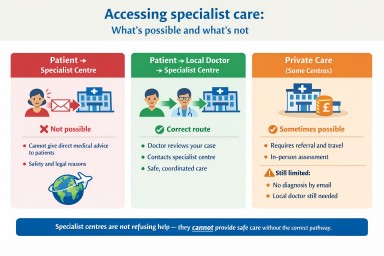
- Specialist centres such as the National Aspergillosis Centre (NAC) cannot provide individual medical advice directly to patients, especially from overseas.
- This is due to safety, legal, and clinical responsibility requirements.
- The correct route is through a local doctor, using a formal referral process.
- A referral does not guarantee that a patient will be seen.
- Even when doctors contact specialist centres, there are limits to what can be offered.
- NAC does not offer private care, although some other centres do.
Table of contents
- Why can’t specialist centres respond directly?
- The correct way to get help
- What does a referral mean?
- Will a referral always be accepted?
- Do personal requests help?
- Limits even when doctors are involved
- What about private care?
- Common myths
- When to seek urgent help
Why can’t specialist centres respond directly to patients?
It is natural to want to contact a specialist centre directly, especially when dealing with a complex condition such as aspergillosis. However, centres like NAC cannot provide individual medical advice directly to patients.
This is not a matter of choice—it is because they cannot safely or legally do so.
Patient safety
- Safe medical advice requires full access to medical records, test results, and examination findings
- Doctors must be able to monitor progress and adjust treatment
- This cannot be done through messages or emails alone
Legal and regulatory requirements
- Doctors must follow strict rules set by regulators such as the General Medical Council (GMC) in the UK
- They cannot take responsibility for a patient without a formal clinical relationship
Responsibility for care
- Any doctor giving advice must be able to take responsibility for outcomes
- This requires recognised clinical pathways and follow-up arrangements
In summary: Specialist centres are not refusing help—they cannot provide care outside safe and regulated systems.
The correct way to get help
The safest and most effective way to access specialist expertise is through your local doctor.
Step 1 – See a local specialist
- Respiratory doctor
- Infectious disease specialist
- Internal medicine specialist
Step 2 – Assessment and initial care
- Your doctor reviews your symptoms and history
- Tests are arranged where needed
- Treatment may be started
Step 3 – Referral or specialist advice
- Your doctor may refer you to a specialist centre
- Or they may contact a centre such as NAC for advice
This approach ensures your care is coordinated, safe, and based on full clinical information.
What does a referral mean?
A referral is when your doctor formally asks another specialist or centre to review your case or consider seeing you.
This is not just a message—it is a structured clinical process.
What does a referral usually include?
- Your medical history
- Details of your symptoms
- Results of tests (such as scans or laboratory results)
- Treatments you have already received
- A clear reason for referral
This allows the specialist centre to understand your situation safely and properly.
What happens next?
After reviewing the referral, the specialist centre may:
- ✔️ Accept the referral and arrange an appointment
- ✔️ Provide advice to your doctor without seeing you
- ✔️ Suggest a more appropriate service
- ❌ Decline the referral
A referral is like a formal handover between doctors—it does not guarantee an appointment.
Will a referral always be accepted?
Even when your doctor makes a referral, it is important to understand that the referral may not always be accepted.
Why might a referral not be accepted?
Eligibility criteria
- Specialist centres often have strict criteria for the patients they can see
- Some services are commissioned only for specific conditions
Geographic and funding rules
- Access may depend on healthcare system or funding arrangements
Clinical suitability
- The centre may decide your care can be managed locally
- They may offer advice instead of accepting the referral
Capacity
- Specialist centres often manage large numbers of complex patients
What happens if it is not accepted?
- Your doctor may still receive expert advice
- You may be directed to another service
- Your care continues locally
This does not mean you are being refused help.
Why specialist centres may not be able to confirm anything to you
Patients and families sometimes ask a specialist centre whether a referral has been received, reviewed, or accepted.
It is important to understand that the centre may not be able to confirm or discuss this with you directly.
Why is this?
Confidentiality and data protection
- Medical information is protected by strict confidentiality rules
- In the UK, this includes laws such as data protection legislation and professional duties of confidentiality
- Centres must be certain they are communicating with the correct person and through approved channels
Communication is usually between doctors
- Referrals are handled as clinician-to-clinician communication
- Responses are normally sent back to the referring doctor, not directly to the patient
No confirmation does not mean no action
- If you do not receive a reply from the centre, it does not necessarily mean your referral has been ignored
- Advice or decisions may already have been communicated to your doctor
What should you do?
- Contact your own doctor for updates
- Ask whether a referral has been sent and if a response has been received
- Discuss next steps with your clinical team
Summary
Specialist centres usually communicate with your doctor, not directly with patients. This is to protect your privacy and ensure safe, appropriate communication.
Do personal requests from patients or families help?
Personal requests are completely understandable, but specialist centres cannot provide individual medical advice directly to patients, even in urgent situations.
This is because they cannot safely or legally do so without a doctor involved.
These requests may still help with general information and guidance, but they do not usually lead to diagnosis or treatment advice.
Limits even when doctors are involved
When your doctor contacts a specialist centre, this is the correct route—but there are still limits.
What specialist centres can offer
- Expert opinion
- Suggestions for diagnosis
- Guidance on tests
- Interpretation of results
What they cannot usually provide
- Direct patient care
- Full responsibility for treatment
- Definitive diagnosis without full assessment
Your local doctor remains responsible for your care.
What about private care?
The National Aspergillosis Centre (NAC) does not offer private care.
- You cannot arrange to be seen there privately
- Access is through NHS referral pathways only
Some other specialist centres may offer private consultations. However:
- A referral and medical records are usually required
- An in-person assessment is typically needed
- Private care does not bypass safety or legal requirements
Common myths
- “I can contact a specialist centre directly for help”
→ Centres cannot provide individual advice directly to patients - “If it’s urgent, they will make an exception”
→ The same safety rules apply to all patients - “A referral guarantees I will be seen”
→ Referrals are reviewed and may not always be accepted - “Private care means I can be seen anywhere”
→ Not all centres offer private care (NAC does not) - “A detailed email is enough for diagnosis”
→ Diagnosis requires full clinical assessment
When to seek urgent medical help
If you or someone you care for has any of the following, seek urgent local medical care:
- Severe breathlessness
- Chest pain
- Coughing up blood
- Confusion or extreme drowsiness
- High fever that is not improving
Do not delay seeking help while trying to contact overseas specialists.
Summary
Specialist centres such as NAC play an important role in supporting complex conditions like aspergillosis. However, they must work within systems designed to keep patients safe.
The most effective way to access their expertise is through your own doctor, using formal referral pathways and specialist advice where needed.
Author & review information
Prepared for patient education purposes.
Aligned with UK specialist centre practice and patient safety guidance.
References & further reading
- General Medical Council (UK) – Good medical practice
- NHS England – Specialist services referral guidance
- European Lung Foundation – Aspergillosis information
- National Aspergillosis Centre – aspergillosis.org
Help shape the future of aspergillosis care across Uk & Europe
“Can patients do more than just cope with this condition?”
The answer is yes.
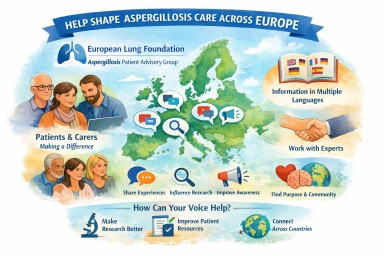
The European Lung Foundation (ELF)
and its
Aspergillosis Patient Advisory Group (PAG)
give patients and carers a chance to contribute to something bigger: better awareness, better information, better research, and better care.
What is ELF?
ELF is a Europe-wide organisation that brings patients, carers, healthcare professionals and researchers together to improve lung health information, treatment and care.
One of ELF’s strongest advantages is that it works across Europe, not just in one country. It also makes key information available in several languages, helping more people access reliable information about lung conditions, including aspergillosis.
You can read ELF’s patient information on aspergillosis here:
Aspergillosis – European Lung Foundation.
What is the Aspergillosis Patient Advisory Group?
The Aspergillosis PAG is part of ELF’s wider network of
Patient Advisory Groups.
These groups bring together people with experience of specific lung conditions, or experience as carers, so that patient views can help improve treatment and healthcare.
The Aspergillosis PAG works to raise awareness of aspergillosis and improve diagnosis, treatment and care. It also works alongside healthcare professionals and researchers involved in the Chronic Pulmonary Aspergillosis Network (CPAnet), helping identify research priorities and information gaps for both patients and professionals.
Why does this matter?
Aspergillosis is still not well understood in many places. Diagnosis can be delayed, information can be hard to find, and patients often feel that few people truly understand what living with the condition is like.
By involving patients and carers directly, ELF helps ensure that real-life experience is not left out of the conversation. This can influence education, awareness work, research priorities and wider discussions about care across Europe.
What is in it for the patient or carer?
This is an important question, because volunteering your time and energy is a big ask, especially when you are already managing illness, fatigue, appointments, uncertainty or caring responsibilities.
So it is only fair to be clear and honest about what people may gain from taking part.
1. A chance to make your experience count
Many people with aspergillosis have learned difficult lessons the hard way. Getting involved gives you a chance to turn that experience into something useful — helping improve information, shape priorities and make life a little easier for future patients.
2. Better understanding and confidence
Being involved can help you better understand how research, awareness work and patient representation operate. Some people find that this gives them more confidence when speaking about their condition and navigating their own care.
3. Connection beyond your local area
Because ELF is Europe-wide, patients are not limited to the perspective of one hospital, one region or one country. For people living with a relatively uncommon condition, that wider connection can feel valuable and reassuring.
4. The opportunity to be heard
Many patients are used to feeling overlooked. PAGs are designed so that patient and carer perspectives are actively included in projects and discussions, rather than being an afterthought.
5. A sense of purpose
Some people find that involvement helps them move from simply living with a difficult condition to doing something constructive with that experience. It will not suit everyone, but for some it can be meaningful.
6. Support and training
ELF says it provides support, guidance and training to help people share their perspective and get involved in projects. It also encourages interested patients and carers to use its free online European Patient Ambassador Programme (EPAP), which introduces the skills and knowledge needed to represent yourself and others effectively.
What it is not
It is also important to be realistic.
- It is not medical care.
- It does not replace your doctor, nurse or specialist team.
- It is not a route to faster treatment.
- It is not a paid role.
ELF states that PAG involvement is voluntary and that it is unable to pay for people’s time.
Who can join?
ELF says most PAGs are open to new members from European countries. In general, people are invited to get involved if they are over 18, have experience as a patient or carer, live in a European country, can communicate in English, are interested in improving healthcare and treatment across Europe, and are willing to share their perspective.
That said, this should not feel like an all-or-nothing commitment. Not everyone can give a lot of time, and health can change. Even modest involvement can still be worthwhile.
Why mention this to our groups?
Many people in aspergillosis support communities have exactly the kind of insight that is valuable here: the reality of diagnosis, treatment, daily management, side effects, uncertainty, isolation, and learning how to cope.
Those experiences matter. They can help improve what is researched, what is explained, and how future patients are supported.
Interested?
You can explore more here:
- ELF information on aspergillosis
- ELF Patient Advisory Groups
- ELF Aspergillosis Patient Advisory Group
You do not need to be an expert. You do not need to be highly confident. You do not need to commit to everything.
But if you have lived with aspergillosis, or cared for someone who has, your experience may be more valuable than you think.
In short: this is a voluntary opportunity to help improve understanding, research and care for aspergillosis across Europe, while connecting with a wider patient community and making sure lived experience is heard.
Why do doctors ask me to repeat my history — and sometimes not read my summary?
Many patients, especially those with long-term or complex health problems, say the same thing: “Why do I always have to repeat everything?” Some also say that even when they bring a short written summary, it is put to one side and does not seem to be read straight away.
This can feel frustrating, tiring, and dismissive. In most cases, though, it is not because the doctor does not care. It is usually because of how medical appointments are structured, how clinicians are trained, and the time pressures built into the healthcare system.
This article explains what may be happening, why doctors often work this way, and what can sometimes help patients get more out of appointments.
Key points
- Doctors are usually not ignoring you or your efforts.
- They are trained to hear the story directly from the patient for safety and accuracy.
- Medical notes can be long, incomplete, hard to access quickly, or spread across different systems.
- A written summary can still be helpful, but it may work best as a support tool rather than a replacement for discussion.
- The system is often particularly difficult for people with complex, long-term conditions.
Contents
- Why do doctors ask patients to repeat information?
- Why might a written summary be set aside?
- What are doctors trying to achieve?
- Why is this harder for people with long-term conditions?
- What can help in appointments?
- Common questions
- When to seek further support
Why do doctors ask patients to repeat information?
Many patients assume that if something is already in the notes, the doctor should simply read it and move on. In practice, clinicians are usually taught not to rely only on previous notes. They are expected to take a current history directly from the patient wherever possible.
1. They need a fresh history
Symptoms can change. A note written last week, last month, or even earlier the same day may no longer fully reflect what is happening now. A doctor needs to understand the present situation, not just the recorded one.
This matters because:
- new symptoms may have appeared
- older symptoms may have improved or worsened
- important details may have been left out of earlier notes
- previous notes can sometimes contain misunderstandings or errors
2. Hearing the story directly is part of diagnosis
Doctors do not just collect facts. They also listen to how symptoms are described, what concerns the patient most, what order things happened in, and whether there are any clues that do not fit the previous record.
For example, hearing a patient say “this is much worse than usual” or “the pain has changed completely” may matter just as much as what is already written down.
3. Each clinician is responsible for their own decisions
Every doctor is professionally responsible for the decisions they make in that consultation. Because of that, they usually need to confirm the key information for themselves rather than relying entirely on another person’s notes or summary.
4. Notes are not always as clear or complete as patients imagine
Patients often assume the notes tell the whole story. Sometimes they do not. They may be brief, scattered across different entries, missing key context, or written in a way that does not quickly explain the current problem.
Why might a written summary be set aside?
Patients who have made the effort to prepare a summary can feel especially upset when a doctor places it to one side. It may look like the document is being ignored. Often, however, the doctor is following a routine approach to consultation rather than rejecting the information.
1. Many consultations follow a familiar structure
Doctors are often trained to work in a rough sequence:
- listen to the patient’s account
- ask follow-up questions
- clarify the current concern
- review supporting information and records
- decide what to do next
So a written summary handed over at the start may be used later, not immediately.
2. They may not want the written summary to shape their thinking too early
Clinicians are often cautious about being overly influenced by somebody else’s wording before they have heard the patient directly. This is part of clinical reasoning and risk management. They may want to form their own understanding first, then compare it with the summary.
3. Reading while listening can be difficult
In a short appointment, a doctor may feel they cannot properly read a document, listen closely, ask questions, and maintain eye contact all at the same time. They may therefore choose to focus first on the conversation.
4. Some summaries are not easy to use quickly
Even a well-meant summary may be hard to absorb if it is too long, too detailed, or does not make the current issue obvious straight away. Doctors are often trying to answer one urgent question first:
What is the main problem today?
If that is not immediately clear from the page, they may return to direct questioning.
What are doctors trying to achieve?
From a patient’s point of view, repeating information can feel inefficient and unnecessary. From a clinician’s point of view, the consultation is often trying to achieve several things at once:
- Accuracy: understanding what is happening now, not just what happened before
- Safety: checking for changes, gaps, or warning signs
- Clarity: identifying the most important issue for that appointment
- Responsibility: making decisions based on information they have personally checked
That does not make the experience any less frustrating for patients, but it can help explain the behaviour.
Why is this harder for people with long-term conditions?
This problem is often worse for people who have:
- complex diagnoses
- multiple health conditions
- long medical histories
- many medications
- appointments with different teams or hospitals
If you live with a chronic condition, you may have repeated the same history many times. You may also already be tired, breathless, in pain, stressed, or worried. In that situation, being asked again to explain everything can feel overwhelming.
This is a real systems problem. It is not a sign that you are failing to explain yourself properly, and it is not unreasonable to find it difficult.
What can help in appointments?
There is no perfect solution, but some approaches can make appointments easier and increase the chance that useful information is taken in.
Start with the main issue today
A helpful opening sentence can be:
“The main issue today is…”
This quickly gives the doctor a focus and may reduce the need to retell everything in full.
Keep written summaries short
A one-page summary is usually easier to use than a longer document. It can include:
- main diagnoses
- current medications
- important recent events
- relevant allergies or major problems
- today’s main concern at the top
Offer the summary rather than relying on it
Instead of assuming it will be read immediately, it may help to say:
“I have brought a short summary in case it is useful.”
or:
“Would it help if I gave you a one-page summary of my background?”
This fits better with how many consultations flow.
Use the summary as a support tool
A written summary often works best as:
- a memory aid for the patient
- a quick reference for the doctor
- a back-up in case important facts are missed
It may be less effective if used as a substitute for the whole conversation.
Say when repetition is difficult
If repeating your history is hard because of pain, fatigue, breathlessness, stress, memory problems, or the complexity of your condition, it is reasonable to say so politely.
“I’m happy to summarise, but I do find repeating the full history difficult.”
That can help the doctor understand the burden on you.
Common questions
Are doctors not reading my notes at all?
Sometimes they have read some of them, but not everything. Sometimes they have skimmed the record for key issues. Sometimes the most relevant information is hard to find quickly. The fact that they ask questions does not always mean they have read nothing.
Why do they not just read my summary instead of asking me?
Because they are usually expected to hear the current story directly, check the important facts for themselves, and understand what matters most right now.
Is there any point bringing a written summary?
Yes. A good summary can still be very helpful. It may save time, improve accuracy, and make it easier to communicate complex information. It is just not always used in the way patients expect.
Does putting my summary to one side mean it has been ignored?
Not necessarily. It may be read later in the appointment, after the consultation, or used as a reference rather than read word for word in front of you.
When to seek further support
You may want more support if:
- you repeatedly feel that important information is not being understood
- your condition is complex and hard to explain in a short appointment
- you feel too unwell or distressed to repeat your history each time
- you think communication problems are affecting your care
Possible options include:
- asking whether a clinic letter or care plan summary can be used
- bringing a relative, friend, or advocate to appointments
- keeping a short up-to-date medical summary with you
- asking whether the main issue for that appointment can be agreed early on
Final thought
It can be upsetting to feel that your effort has been overlooked or that you are being asked to say the same things again and again. Usually, though, what you are seeing is not indifference but the way modern consultations are structured around safety, time pressure, and direct assessment.
Your summary is still worth bringing. The most useful expectation is often not that it will replace the conversation, but that it may support it.
Important note
This article is general educational information. It is not medical advice and cannot explain every individual consultation or healthcare setting.
Author and review information
Prepared as general patient information to help explain common experiences in healthcare appointments.
Real Questions. Clear Answers. Practical Support for People Living with Aspergillosis.
If you live with aspergillosis, or support someone who does, you will know how many questions can come up between appointments. Some are about symptoms. Some are about treatment. Some are about day-to-day life, side effects, monitoring, damp, mould, travel, fatigue, anxiety, or simply trying to understand what is happening.
That is why we have built and continue to expand our Patient Questions & Latest Articles section.
This part of our website brings together detailed answers to the kinds of questions patients and carers actually ask. Many of these articles began as real questions raised in our support meetings and online communities, then developed into fuller explanations so that others could benefit too.
Why this section is useful
Living with aspergillosis often means having to manage a lot of uncertainty. Information can be difficult to find, hard to interpret, or scattered across different places. We wanted to create a space that is easier to use: a place where people can browse practical topics, explore recent articles, and find trustworthy explanations written with patients and carers in mind.
Some people arrive with one urgent question. Others simply want to browse and see whether someone else has already asked the same thing. This section is designed to help with both.
What you will find there
- Answers to common patient and carer questions
- Detailed articles on symptoms, treatments, tests, monitoring, and side effects
- Practical explainers on issues such as damp, mould, air quality, medicines, and coping day to day
- Recent updates and newly published articles in one place
- Links into wider resources across our website
You do not need to read everything from start to finish. You can dip in when a particular question comes up, browse recent topics, or use the search function to look for something specific.
Built around real concerns
One of the strengths of this section is that it is grounded in real experience. The topics are not chosen at random. They reflect the concerns patients and carers bring to us repeatedly: the things people worry about, struggle to understand, or need explained more clearly.
That means the content is often practical, specific, and directly relevant to everyday life with aspergillosis.
Part of a wider knowledge base
If you want to browse recent questions and articles, this section is a very good place to start. If you are looking for more structured background information on aspergillosis, symptoms, tests, treatments, and monitoring, you can also move on from there to our wider Knowledge Hub.
Together, these resources are intended to make it easier for patients, families, and carers to find the information they need, when they need it.
Please use health information safely
As always, our website is here to support understanding, not replace medical advice from your own clinical team. We hope these articles help people feel better informed, better prepared, and better able to ask the right questions, but personal medical decisions should still be made with the professionals looking after your care.
Take a look
Explore the full section here:
Patient Questions & Latest Articles
If you think others may find it helpful, please feel free to share it.
Why Join an Online Support Group if You Have Aspergillosis?
You are not alone with aspergillosis
Join a friendly online support meeting — no pressure, just listen if you prefer.
Many patients find that even attending once helps them feel more reassured, informed, and supported.
Why Join an Online Support Group if You Have Aspergillosis?
Living with aspergillosis can feel isolating. Many people go for years without meeting another person with the same condition. Family and friends may be supportive, but they may not fully understand what it is like to live with breathlessness, fatigue, treatment side effects, uncertainty, or repeated hospital visits.
That is one reason online support groups can be so valuable. They bring people together who understand, often immediately, many of the challenges that aspergillosis can bring.
Key points
- Online support groups reduce isolation and help patients feel understood
- They offer shared experience alongside emotional support
- They improve confidence and understanding of the condition
- They help patients feel better prepared for appointments
- They are flexible — you can simply listen if you prefer
What changes when people join a support group?
Before joining
- Feeling alone with the condition
- Uncertainty about symptoms
- Limited practical advice
- Low confidence at appointments
- Worry about the future
After joining
- Connection with others who understand
- Better understanding of the condition
- Practical day-to-day coping ideas
- More confidence asking questions
- Feeling more supported and reassured
Why aspergillosis can feel so isolating
Aspergillosis is a relatively rare condition, and many patients never meet someone else with the same diagnosis. Online support groups help bridge that gap by creating a shared space for understanding and connection.
1. You realise you are not alone
Hearing others describe similar symptoms and challenges can be immediately reassuring and reduce feelings of isolation.
2. Shared experience can be deeply reassuring
Support groups provide practical, real-world insight into managing fatigue, pacing, work, and daily life.
3. You may understand your condition better
Listening to others and accessing shared resources helps build confidence and understanding.
4. It can help you feel more confident at appointments
Patients often feel better prepared and more able to ask the right questions.
5. Emotional support matters too
These groups provide encouragement, understanding, and a sense of belonging.
What happens in a typical online support session?
- Friendly welcome — no pressure to speak
- Open discussion — share or listen
- Optional topics — such as fatigue or treatment experiences
- Flexible participation — camera and microphone optional
- Safe, moderated space
Many people attend their first session just to listen — and that is completely fine.
What patients often say
“I wish I had joined sooner. Just hearing others talk made a huge difference.”
“I didn’t speak in my first meeting, but it really helped just listening.”
“It helped me understand my condition and feel more confident.”
Thinking of joining?
You can attend once, listen, and decide if it feels helpful. There is no obligation to continue.
View meeting times and book here:
https://aspergillosis.org/support-meetings/
Meetings are held online using Microsoft Teams. You will receive a joining link after booking.
Bottom line
Online support groups offer connection, reassurance, and understanding. They cannot replace medical care, but they can make living with aspergillosis feel more manageable and less lonely.
Please note: These groups are for support and shared experience. They do not replace advice from your own doctor or specialist team.
Donating Your Body for Medical Research in the UK
This is an uncommon request, but it can be very helpful to researchers. There is no compulsion at all to consider body donation. It is entirely a personal choice. Many people will decide that it is not for them, and that is completely understandable. For those who do wish to explore it, however, body donation can make an important contribution to medical education, training, and research.
What does body donation mean?
In the UK, donating your body means leaving it after death to a medical school or other appropriately licensed institution for anatomical examination, education, training, or research.
You cannot usually donate your body specifically to “aspergillosis research” alone. However, donation may still support work that is highly relevant to people affected by aspergillosis, including:
- lung disease
- infection
- immune responses
- medical training in complex respiratory illness
The most important point: consent must be given in advance
Under UK law, body donation must be arranged before death. This means:
- you must give written consent
- the consent must usually be witnessed
- your family cannot normally make this decision for you after you die
How to arrange body donation
- Choose a medical school
You need to contact a medical school directly. Most only accept donations from their local area. - Request an information pack
The school will explain its process, send consent forms, and set out any restrictions. - Complete the consent forms
Keep copies with your important papers and let your family know your wishes. - Tell your next of kin or executor
They will usually need to contact the medical school promptly after death.
Important to understand
- Not every donation can be accepted. Even if you have registered, a medical school may not be able to accept the body in every circumstance.
- A backup funeral plan is important.
- Body donation is separate from organ donation. They are different systems and require separate arrangements.
Can I ask for donation to help lung or aspergillosis-related research?
You can certainly explain that your interest is in supporting research and education relevant to lung disease, infection, or aspergillosis. However, you cannot usually guarantee exactly how a donated body will be used. Even so, donation may still support education and research that benefits future patients with complex respiratory and fungal conditions.
Where to start: Human Tissue Authority
The best first step is the Human Tissue Authority (HTA), which provides UK guidance and a way to identify the correct medical school for your postcode.
Examples of medical school body donation pages
Please note: contact details and catchment arrangements can change, so it is wise to confirm current information directly on each medical school’s website.
- University of Manchester
Body donation / bequeathals information - University of Liverpool
Human Anatomy Resource Centre body donation page
Email: [email protected]
Tel: 0151 794 5442 - University of Leeds
Bequests information
Email: [email protected]
Tel: 0113 343 4297
Final thought
Donating your body for medical education or research is an unusual and deeply personal decision. There is absolutely no obligation to consider it. But for those who do, it can be a generous and lasting way to support future learning, better care, and research that may help people living with serious conditions, including aspergillosis.
Last reviewed: March 2026
🏥 Good News: New AI “Digital Scribe” Helping Doctors Spend More Time With Patients
We’re pleased to share some exciting developments from Manchester University NHS Foundation Trust that could directly improve your experience at clinic appointments.
A new technology called Ambient Voice Technology (AVT) is gradually being introduced across parts of the Trust. Think of it as a secure “digital scribe” that supports your clinician during your consultation.
What does it do?
With your permission, the system listens to the natural conversation between you and your doctor or nurse. It then:
-
Creates the clinical notes automatically
-
Drafts follow-up actions
-
Updates the electronic patient record (*i.e. another reason to use myMFT)
This means your clinician doesn’t need to spend as much time typing or looking at a screen — and can focus more fully on you.
📊 What Have the Early Results Shown?
Colleagues from Manchester University NHS Foundation Trust recently presented results from the Dragon Copilot trial at the Microsoft AI Tour in London.
The findings are encouraging:
✅ 88% of clinicians report saving around 2 minutes per appointment on documentation
✅ 88% say it improves quality and increases face-to-face time with patients
✅ Reduced mental workload for clinicians
✅ Significant reduction in after-clinic administrative work
Two minutes may not sound like much — but across a full clinic list, it adds up. Over time, this could help improve efficiency, reduce waiting times, and improve the overall clinic experience.
💻 How Is It Being Used?
The Dragon Copilot system connects directly into the Trust’s Hive Electronic Patient Record system. It is currently being used in:
-
Outpatient clinics
-
Manchester Royal Infirmary’s Emergency Department
Further expansion is planned in the coming weeks.
❤️ Why This Matters for NAC Patients
For patients with chronic conditions such as aspergillosis, consultations are often detailed and complex. Anything that:
-
Frees up clinician time
-
Improves note accuracy
-
Reduces administrative burden
-
Supports more focused, human interaction
…is a positive step forward.
The aim is not to replace clinicians — but to support them, so your appointment time is spent on what matters most: listening, explaining, planning, and answering your questions.
We’ll continue to keep you updated as this technology develops. It’s encouraging to see innovation being used to strengthen patient-centred care.
If you’d like to learn more, a short video featuring Trust leaders and clinicians was showcased at the Microsoft AI Tour and is available via Trust communications channels.
Watch the World Aspergillosis Day 2026 talks
World Aspergillosis Day 2026 brought together patients, carers, clinicians and researchers to explore how new science and better understanding can improve care for aspergillosis.
Below you can watch the full set of 12 recorded talks from the day, including expert presentations and lived-experience perspectives. You can play them in order, or open the playlist menu to jump to any session.
If you find these videos helpful, please share them — it helps more people living with aspergillosis (and those supporting them) access reliable information and support.
Watch the World Aspergillosis Day 2026 talks
World Aspergillosis Day 2026 brought together patients, carers, clinicians and researchers to explore how new science and better
understanding can improve care for aspergillosis.
Below you can watch the full set of 12 recorded talks from the day, including expert presentations and
lived-experience perspectives. You can play them in order, or open the playlist menu to jump to any session.
If you find these videos helpful, please share them — it helps more people living with aspergillosis (and those supporting them)
access reliable information and support.
Prefer a direct link to the playlist on YouTube?
Open the WAD2026 playlist.