Antifungal Medicines: Dosing, Monitoring, and the Role of Specialist Care

A detailed reference for patients and non-specialist clinicians


1. Why antifungal treatment is different from most medicines

Oral antifungal medicines—especially azole antifungals—are essential for treating long-term fungal diseases such as chronic pulmonary aspergillosis and allergic bronchopulmonary aspergillosis.

They differ from many common medicines because they:

  • Have a narrow margin between effectiveness and toxicity

  • Behave very differently between individuals

  • Are often taken for months or years, not days

  • Interact with many commonly prescribed drugs

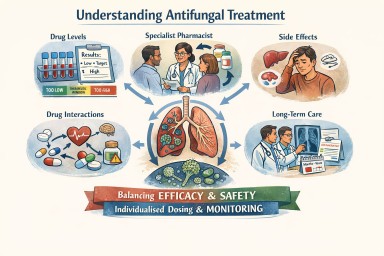
For these reasons, antifungal treatment requires individualised dosing, monitoring, and specialist input, rather than a standard fixed dose.


2. What “pharmacokinetics” means (plain language)

Pharmacokinetics describes what the body does to a drug:

  1. Absorption – how well the drug enters the bloodstream from the gut

  2. Distribution – how effectively it reaches tissues such as the lungs

  3. Metabolism – how quickly the liver breaks it down

  4. Elimination – how the drug leaves the body

Differences at any of these stages explain why the same dose can be ineffective for one person and toxic for another.


3. Different generations of azole antifungals behave differently

Each generation of azole antifungal was designed to improve effectiveness, but chemical changes also altered how the body handles the drug.

First-generation azoles (older drugs)

Examples

  • Ketoconazole

  • Fluconazole (limited activity against Aspergillus)

Key features

  • Variable absorption

  • Shorter half-life

  • Less reliable lung penetration

Clinical relevance

  • Rarely used now for chronic aspergillosis


Second-generation azoles (mainstay treatment)

Examples

  • Itraconazole

  • Voriconazole

  • Posaconazole

Key features

  • Excellent lung and tissue penetration

  • Highly variable metabolism between people

  • Strong interaction with liver enzymes

Clinical relevance

  • Very effective

  • Blood levels vary widely

  • Dose adjustment and monitoring are often essential


Newer azoles

Example

  • Isavuconazole

Key features

  • More predictable absorption

  • Long, stable half-life

  • Fewer extreme peaks and troughs

Clinical relevance

  • Often better tolerated long-term

  • Monitoring still important, but dosing may be more stable


4. Why the “right dose” matters so much

Too little antifungal

  • Infection not adequately controlled

  • Symptoms persist or worsen

  • Risk of antifungal resistance

  • Fewer future treatment options

Too much antifungal

  • Liver irritation or damage

  • Nausea, appetite loss

  • Neurological or visual side effects

  • Drug accumulation, especially with long-term use

The aim is always the lowest dose that effectively controls the fungus.

https://ars.els-cdn.com/content/image/3-s2.0-B9780123868824000189-f18-07-9780123868824.jpg

5. How clinicians know whether the dose is right

No single test determines this. The correct dose is identified when three elements align:

1️⃣ Blood level testing (therapeutic drug monitoring)

  • Measures how much drug is actually in the bloodstream

  • Helps identify:

    • Under-dosing

    • Target-range dosing

    • Toxic levels

2️⃣ Clinical response

  • Symptoms stabilise or improve

  • Fewer flare-ups or complications

  • Better day-to-day function

3️⃣ Safety monitoring

  • Liver and kidney blood tests

  • Review of side effects

  • Ongoing assessment of drug interactions

Only when effectiveness and safety are both acceptable is the dose considered “right”.


6. Why the right dose can change over time

A dose that was correct initially may later need adjustment because of:

  • Weight or body-composition changes

  • Age-related metabolic changes

  • New medications (including antibiotics or steroids)

  • Changes in liver or kidney function

  • Gradual drug accumulation during long-term therapy

Regular review is therefore expected and appropriate.


7. Is it sometimes impossible to find a stable dose?

Yes. For a minority of patients, a perfectly balanced dose cannot be found.

Reasons include:

  • Extremely fast or slow drug metabolism

  • A very narrow safety window

  • Long-term toxicity despite “acceptable” blood levels

  • Unavoidable interacting medications

  • Liver, kidney, or neurological vulnerability

  • Partial or full antifungal resistance

In these cases, the dose that controls the fungus and the dose that causes side effects may overlap.

This reflects biological limits, not treatment failure.


8. What clinicians do when a stable dose cannot be achieved

Options may include:

  • Switching to a different azole with different pharmacokinetics

  • Using modified dosing schedules (split dosing, slower titration)

  • Accepting a lower suppressive dose rather than full eradication

  • Considering non-azole antifungals where appropriate

  • Prioritising symptom control and quality of life

All are intentional, safety-focused decisions.


9. The central role of the specialist pharmacist

Specialist pharmacists are key to safe antifungal care, particularly for long-term azole therapy.

They play a critical role in:

Interpreting drug levels

  • Assessing whether a level is truly low or high

  • Accounting for dose timing and formulation

  • Preventing unnecessary or unsafe dose changes

Managing drug–drug interactions

Azoles interact with many common medicines, including:

  • Steroids and inhalers

  • Heart rhythm drugs

  • Blood thinners

  • Anti-epileptics

  • Pain medications

The specialist pharmacist:

  • Reviews the full medication list

  • Anticipates interactions before harm occurs

  • Advises on adjusting both interacting drugs

Individualising dosing

When standard doses do not work, they help design:

  • Non-standard doses

  • Split dosing schedules

  • Slow titration plans

  • Alternative azoles with different pharmacokinetics

Protecting patients during long-term treatment

They monitor:

  • Trends in liver and kidney tests

  • Signs of cumulative toxicity

  • Whether symptoms may be drug-related rather than disease-related

Coordinating care

They act as a bridge between:

  • Laboratory results

  • Clinical decision-making

  • Patient experience

https://www.omnicare.com/wp-content/uploads/omnicare-services-overview-02-expert-consultant.jpg

Their involvement often changes management, not just fine-tunes it.


10. Where antifungal drug level testing is done in the UK

In the UK, antifungal drug level testing is centralised.

  • Blood samples are taken locally

  • Samples are sent to specialist reference laboratories, most commonly the
    Mycology Reference Centre Manchester

  • Results are returned to the local clinical team for interpretation

Patients managed through specialist services such as the
National Aspergillosis Centre
benefit from integrated expertise in antifungal pharmacology, imaging, and long-term monitoring.

This process is routine and standard for antifungal care.


11. Key reassurance for patients

  • Dose changes are normal and expected

  • Side effects are often biology-driven, not your fault

  • Blood tests make treatment safer, not riskier

  • Switching drugs is a planned strategy, not giving up


12. One-paragraph summary

Antifungal medicines—particularly azole antifungals—have complex and highly variable behaviour in the body, with a narrow balance between effectiveness and toxicity. Safe use requires individualised dosing, therapeutic drug monitoring, symptom review, and long-term safety checks. Specialist pharmacists play a central role in interpreting drug levels, managing interactions, and tailoring treatment. For some patients, a perfectly balanced dose cannot be achieved, and alternative strategies are required. This reflects biological complexity, not failure, and the overarching aim is always effective fungal control with the best possible long-term safety and quality of life.


Airways mucus and aspergillosis

A clear, patient-friendly explainer

People living with aspergillosis often say that mucus is one of the hardest symptoms to manage — thick sputum, coughing fits, plugs that feel “stuck”, and flare-ups that seem to come out of nowhere. This explainer brings everything together in one place: what mucus is for, why aspergillosis causes so much of it, why it becomes abnormal, and what current and future treatments aim to do.


1. What is airway mucus and why do we need it?

Mucus is normal, healthy, and essential. Everyone produces it all the time.

Its main roles are to:

  • Trap inhaled particles (dust, spores, bacteria, pollution)

  • Protect the airway lining from drying and irritation

  • Support the immune system

  • Clear the lungs, using tiny moving hairs (cilia) that sweep mucus upwards so it can be swallowed or coughed out
    (this clearance system is called the mucociliary escalator)

In healthy lungs:

  • Mucus is thin

  • Produced in small amounts

  • Cleared without you noticing it


2. Why aspergillosis causes excessive mucus

In aspergillosis, the lungs are under ongoing stress. Several factors combine:

Persistent immune activation

The immune system keeps reacting to Aspergillus material in the airways. Even when the fungus is controlled, inflammation can persist.

Allergic-type inflammation (especially in ABPA)

Allergic immune responses strongly stimulate mucus-producing cells, leading to:

  • Large volumes of mucus

  • Very sticky or rubbery sputum

Airway damage

Conditions commonly associated with aspergillosis (such as bronchiectasis or long-standing asthma) cause:

  • Widened or damaged airways

  • Poor mucus clearance

  • Pools of mucus that are hard to shift

Slowed clearance

Inflammation and infection impair cilia, so mucus:

  • Moves more slowly

  • Sits in the lungs longer

  • Becomes thicker and harder to clear

➡️ What starts as a protective response becomes a self-perpetuating problem.


3. Why thick mucus causes symptoms

Excess or abnormal mucus can:

  • Block airways → breathlessness and wheeze

  • Trigger coughing → especially overnight or on waking

  • Trap infection → repeated flare-ups

  • Reduce oxygen exchange

  • Increase fatigue and chest discomfort

Many patients describe it as:

“Glue-like”, “stringy”, “rubbery”, or “impossible to move”


4. Mucus plugs and crystals – why some mucus is so hard to clear

Mucus plugs

When mucus becomes very thick, it can:

  • Form plugs that partially or completely block airways

  • Show up on CT scans

  • Worsen breathlessness suddenly

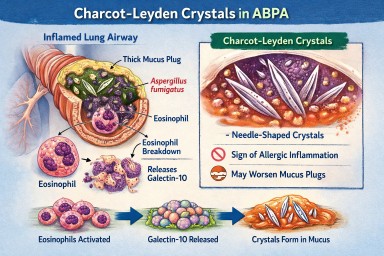
Charcot–Leyden crystals

In allergic and eosinophilic airway disease (including allergic bronchopulmonary aspergillosis):

  • Breakdown products of allergic immune cells can form microscopic crystals

  • These crystals make mucus:

    • Stiffer

    • More irritating

    • Harder to clear

Their presence is a sign of ongoing allergic inflammation, not infection alone.


5. Why managing mucus really matters

Mucus is not just an inconvenience. Poor mucus control can:

  • Increase infection risk

  • Drive repeated exacerbations

  • Worsen lung damage over time

  • Reduce quality of life and sleep

  • Increase hospital admissions

For aspergillosis, mucus management is core treatment, not optional.


6. What helps now (current approaches)

A. Thin the mucus

  • Good hydration

  • Nebulised saline (normal or hypertonic)

  • Selected mucolytic medicines (used carefully)

B. Move it out

  • Regular airway clearance physiotherapy

  • Breathing techniques (e.g. active cycle breathing)

  • Oscillating devices (flutter, Acapella, Aerobika)

  • Gentle, regular physical activity where possible

C. Reduce inflammation

  • Inhaled corticosteroids (when appropriate)

  • Oral steroids (used cautiously)

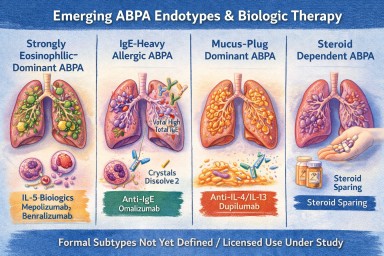
  • Biologic therapies for selected allergic or eosinophilic disease

  • Antifungal treatment when fungal burden is contributing

D. Treat infections early

  • Bacterial infections thicken mucus further

  • Prompt treatment reduces long-term damage


7. What research is doing differently (emerging therapies)

Research is moving beyond simply “loosening mucus”.

1. Reducing mucus production at source

Scientists are developing drugs that aim to:

  • Switch off excessive mucus secretion

  • Preserve normal protective mucus

This targets the mucus-producing cells directly.


2. Blocking the signals that drive over-production

Inflammation sends chemical signals telling airways to make more mucus. New treatments aim to:

  • Calm allergic and immune pathways

  • Prevent expansion of mucus-producing cells

Some current biologic therapies already reduce mucus indirectly; future drugs will be more precise.


3. Changing mucus structure

Instead of thinning everything, researchers are studying ways to:

  • Loosen the internal “mesh” of mucus

  • Prevent dense plugs from forming

  • Restore normal movement by cilia


4. Targeting mucus crystals

In allergic aspergillosis, research is exploring how to:

  • Reduce crystal formation

  • Calm the specific immune responses that create them


5. New inhaled and physical approaches

Early trials are testing:

  • Inhaled therapies designed to mobilise secretions

  • Treatments that improve airflow behind mucus plugs


6. Precision medicine

Future mucus treatments are likely to be:

  • Personalised

  • Based on inflammation type, fungal involvement, airway damage, and immune markers

Two people with aspergillosis may have very different mucus drivers — and need different solutions.


8. What this means for patients today

  • There is no single “anti-mucus cure” yet

  • Promising therapies are in research and early trials

  • Safety and long-term effects must be proven first

For now:

  • Regular airway clearance remains essential

  • Treating inflammation and infection promptly is crucial

  • Understanding why your mucus behaves as it does helps guide treatment


Key messages to remember

  • Mucus is normally protective

  • Aspergillosis turns a helpful system into a problem

  • Thick, sticky mucus reflects ongoing inflammation and airway damage

  • Crystals signal allergic involvement, not just infection

  • Research is moving toward preventing abnormal mucus formation, not just thinning it


Hyper-IgE syndrome

A patient-friendly guide (and why it matters if you have aspergillosis)

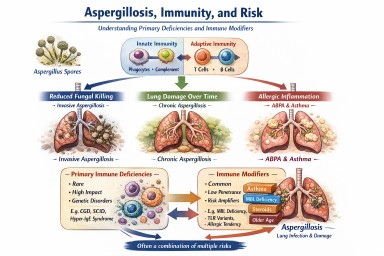
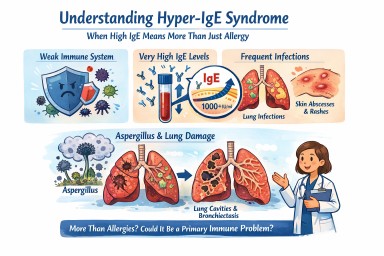
Hyper-IgE syndrome is a rare condition of the immune system. People with it have very high levels of an antibody called Immunoglobulin E (IgE), but their immune system does not work properly at fighting certain infections.

It is not the same as having lots of allergies, even though it can look very similar at first.


What is IgE, and why does it matter?

IgE is usually involved in allergies and asthma.

In Hyper-IgE syndrome:

  • IgE levels are extremely high (often many thousands)

  • But the immune system is unbalanced

  • This makes infections—especially in the lungs and skin—harder to control

So IgE is high, but protection is weak.


How might Hyper-IgE syndrome affect everyday life?

Not everyone has the same symptoms, but common features include:

Lung and chest problems

  • Repeated chest infections (often from a young age)

  • Ongoing cough, breathlessness and mucus

  • Lung damage such as bronchiectasis

  • Lung cavities that can later become infected by moulds such as Aspergillus

Skin and infection problems

  • Long-standing eczema or very sensitive skin

  • Recurrent skin infections or boils

  • Infections that keep coming back or take a long time to clear

Other clues (in some people)

  • Frequent infections in childhood

  • Bone or joint problems

  • Dental issues (for example baby teeth not falling out on time)


Why is this important for people with aspergillosis?

For many people, Aspergillus causes allergy or irritation.

In Hyper-IgE syndrome:

  • The immune system struggles to control moulds

  • Aspergillus can behave more like a true infection, not just an allergy

  • Lung damage can happen more easily and progress faster

This means doctors may need to:

  • Monitor lungs more closely

  • Treat fungal disease earlier and for longer

  • Be cautious with repeated or long-term steroid use

Specialist centres such as the National Aspergillosis Centre are often involved when aspergillosis and immune problems overlap.


Isn’t this just severe allergy or ABPA?

Hyper-IgE syndrome can look similar to:

  • Severe allergic asthma

  • Allergic Bronchopulmonary Aspergillosis (ABPA)

The key difference is that in Hyper-IgE syndrome:

  • The immune system itself is faulty

  • High IgE is part of a wider immune problem

  • Treating allergy alone may not be enough

Some people are treated for asthma or ABPA for years before this possibility is considered.


How is Hyper-IgE syndrome treated?

There is no single cure, but good treatment can make a big difference. The aim is to prevent infections, protect the lungs, and reduce symptoms.

1. Preventing infections (most important)

Because the immune system does not fight germs normally:

  • Some people take regular low-dose antibiotics

  • Others use antibiotics early and promptly when infections start

For people with aspergillosis:

  • Antifungal medicines may be needed

  • Monitoring is usually closer and longer-term


2. Protecting the lungs

Many people develop bronchiectasis or lung damage, so care often includes:

  • Airway clearance physiotherapy

  • Saline nebulisers to help clear mucus

  • Regular sputum tests

  • Early treatment of flare-ups

The goal is to stop the cycle of:

infection → inflammation → permanent lung damage


3. Managing inflammation and allergy (carefully)

People may also have asthma-like symptoms, eczema and multiple allergies.

  • Steroids can help symptoms, but long-term or frequent use can increase infection risk

  • Doctors usually try to keep steroid doses as low as possible

Biologic treatments (such as anti-IgE medicines):

  • May help some people

  • Do not fix the immune problem

  • Are considered on an individual basis, usually in specialist centres


4. Skin care

  • Regular moisturising

  • Prompt treatment of infected eczema

  • Good skin care helps reduce infection risk


How is Hyper-IgE syndrome diagnosed?

Diagnosis usually involves:

  • A detailed review of your medical history (often including childhood infections)

  • Blood tests of immune function

  • Referral to an immunology specialist

  • Sometimes genetic testing


Does having high IgE mean I definitely have this?

No.
Hyper-IgE syndrome is rare.

But it may be worth asking about if:

  • Your IgE has always been extremely high

  • You’ve had repeated infections for many years

  • You have bronchiectasis without a clear cause

  • Aspergillosis seems unusually persistent or severe

  • Standard asthma or allergy treatments don’t fully explain your symptoms


Key message

Very high IgE does not always mean “just allergy.”
In a small number of people, it reflects a deeper immune problem that changes how aspergillosis behaves and how it should be treated.

If your illness doesn’t quite fit the usual labels, it is reasonable to ask whether an immunology review would help.


Indoor Damp, Ventilation & Aspergillosis

What a Major UK Evidence Review Means for Patients and Professionals

Why this paper matters

This large UK Health and Safety Executive (HSE) review examined whether microorganisms inside buildings (homes, offices, workplaces) can harm health — and what actually helps reduce risk.

Although it does not focus on a single disease, its findings are highly relevant to people living with aspergillosis, asthma, bronchiectasis, and other chronic lung conditions, as well as the professionals who support them.

Link to paper


The short answer (for everyone)

Yes — indoor environments can significantly affect lung health.
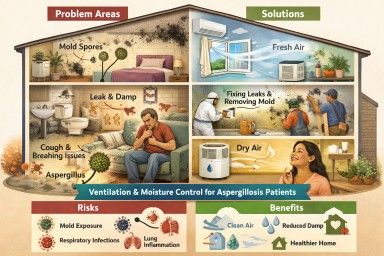
And ventilation and moisture control are central to reducing risk, especially for people vulnerable to fungal exposure.


What the review confirms (in plain language)

1. Indoor fungi are common — and not harmless

High confidence evidence

Many buildings contain airborne and surface fungi, especially when dampness is present.
The fungi most often found indoors include:

  • Aspergillus

  • Penicillium

  • Cladosporium

  • Alternaria

For aspergillosis patients, this matters because:

  • Aspergillus is not just an “outdoor mould”

  • Ongoing exposure can worsen symptoms, trigger inflammation, or complicate recovery

  • Even low levels may be problematic for sensitised or immunocompromised people


2. Dampness is a major driver of fungal exposure

High confidence

Damp buildings — whether due to leaks, condensation, or poor airflow — consistently show:

  • Higher mould growth

  • More fungal spores in the air

  • Stronger links to respiratory symptoms

Important point for patients:

You do not need to see black mould for damp to be affecting your lungs.
Mould smell (“musty odour”) is one of the strongest warning signs.


3. Ventilation is the most important protective factor

High confidence

Ventilation:

  • Dilutes fungal spores, bacteria, and viruses

  • Reduces moisture build-up

  • Lowers exposure for occupants

This applies to:

  • Homes

  • Flats

  • Offices

  • Other non-industrial indoor spaces

⚠️ The review highlights a key modern problem:
Energy-efficient, airtight buildings can unintentionally trap damp and fungi if ventilation is inadequate.

For aspergillosis patients, this means:

  • A “warm” home is not always a “healthy” home

  • Reduced airflow can increase fungal exposure even without visible mould


4. Indoor air also spreads infections

High confidence

Respiratory viruses (e.g. influenza, COVID-19) spread mainly through indoor air, especially when ventilation is poor.

This is relevant for aspergillosis patients because:

  • Viral infections can destabilise lung disease

  • Recovery may be slower

  • Secondary infections are more likely

Ventilation therefore protects against both fungal and viral risks.


5. Surfaces matter too — but air matters more

Medium–high confidence

  • Fungal material and microbes accumulate in dust, carpets, soft furnishings, and damp surfaces

  • Toilets and bathrooms can generate contaminated aerosols

  • Good hygiene helps, but cannot compensate for poor ventilation

For patients:

Cleaning alone will not solve a damp or ventilation problem.


What actually helps (evidence-based)

Strongest evidence

✔️ Adequate ventilation (natural or mechanical)
✔️ Fixing leaks and moisture sources
✔️ Removing mould-damaged materials
✔️ Preventing condensation on cold surfaces

Moderate evidence

✔️ HEPA air filtration (helpful but not a substitute for ventilation)
✔️ UV air disinfection (context-specific)
✔️ Touch-free fittings in shared buildings

⚠️ No single measure works on its own — combined approaches are needed.


Why this matters specifically for aspergillosis patients

This review strongly supports what many patients already experience:

  • Symptoms may persist despite treatment if exposure continues

  • Indoor environments can drive inflammation and relapse

  • “Just take your medication” is not enough if housing conditions are harmful

Importantly, the review recognises that:

  • Health effects vary by individual vulnerability

  • Those with asthma, bronchiectasis, aspergillosis, or immune suppression are more sensitive

  • There are no universally safe mould levels for everyone


What non-specialists should take from this

For GPs and clinicians

  • Damp and poor ventilation are legitimate medical risk factors

  • Persistent respiratory symptoms may be environment-driven

  • Asking about housing conditions is clinically relevant

For housing, environmental health & social care

  • Mould and damp are health hazards, not cosmetic defects

  • Ventilation failures can directly affect chronic disease

  • Energy efficiency must be balanced with respiratory health

For patients and carers

  • You are not “overreacting” if your home affects your breathing

  • Ventilation and moisture control are part of disease management

  • Evidence supports advocating for safer living conditions


Bottom line

This major UK review confirms that indoor dampness and poor ventilation increase exposure to fungi — including Aspergillus — and worsen respiratory health.
For people living with aspergillosis, building conditions are not secondary issues: they are part of the disease environment.


Sinusitis in Patients with ABPA

When to suspect it, when to investigate, and when to refer


Why this matters

Patients with allergic bronchopulmonary aspergillosis (ABPA) are usually managed as having a lung disease. Diagnosis, monitoring, and treatment focus appropriately on the chest, immunology, and asthma control.

However, ABPA occurs within a single continuous airway, extending from the nose and sinuses to the lungs. Disease in the upper airway can coexist with, exacerbate, or complicate lower airway inflammation — yet sinus disease is not routinely assessed in ABPA care pathways.

This article outlines:

  • What is known about sinus disease in this context

  • Which symptoms should raise suspicion

  • When investigation or ENT referral should be considered

  • What GPs and non-specialists can reasonably do


The united airway: a brief reminder

The upper and lower airways share:

  • Type 2 (eosinophilic) inflammation

  • Immunoglobulin E–mediated immune responses

  • Common triggers, including allergens and fungi

Chronic rhinosinusitis is common in asthma and severe asthma, and treatment of sinus disease can improve lower airway outcomes in some patients.
ABPA sits within this same inflammatory spectrum, even though its management is lung-centred.


Sinus disease in ABPA: what is (and isn’t) known

What we know

  • Chronic rhinosinusitis is common in patients with asthma and severe asthma

  • Sinus disease may be symptomatic or relatively silent

  • ABPA guidelines do not mandate routine ENT review or sinus imaging

  • ENT involvement, therefore, varies widely between centres

What we do not know

  • Whether routine ENT assessment improves ABPA outcomes

  • Which ABPA patients benefit most from sinus intervention

  • The optimal timing for ENT referral in ABPA

As a result, clinical judgement remains central.


Symptoms that should prompt consideration of sinus disease

Sinusitis in ABPA patients does not always present with classic “blocked nose and facial pain”.
Key symptoms include:

Common but often overlooked

  • Persistent post-nasal drip

  • Foul, bitter, metallic, or “infected” taste in the mouth

  • Throat clearing, chronic cough

  • Thick or sticky mucus sensation

  • Symptoms are worse on waking or lying flat

More typical sinonasal features

  • Nasal blockage or congestion

  • Facial pressure or fullness

  • Reduced or altered sense of smell

  • Nasal crusting or discharge

Contextual clues

  • Poor durability of response to steroids or antifungals

  • Recurrent “flares” without clear chest triggers

  • Coexisting severe asthma or nasal polyps

  • Symptoms are worse in damp or mould-affected housing

A persistent foul taste in the mouth is a recognised symptom of chronic sinus disease, usually due to post-nasal drainage of inflamed secretions.


Damp homes and sinus disease

Living in damp or mould-affected environments is associated with:

  • Higher rates of chronic rhinosinusitis

  • Upper airway irritation and inflammation

  • Allergic sensitisation to fungal spores

In most cases, this results in inflammatory or allergic sinusitis, not invasive fungal infection.
Fungal involvement may act as an immune trigger, even when not labelled as “fungal sinusitis”.


Fungal sinusitis: rare vs under-recognised

It is important to distinguish between entities:

Type Frequency Key point
Invasive fungal sinusitis Rare Usually immunocompromised; dramatic presentation
Fungal ball (mycetoma) Uncommon Usually obvious on CT
Allergic fungal rhinosinusitis Likely under-recognised Requires active suspicion

Allergic fungal rhinosinusitis overlaps biologically with ABPA:

  • IgE-mediated

  • Eosinophilic inflammation

  • Thick allergic mucin

It is not routinely sought, so it may be under-diagnosed in at-risk groups.


What GPs and non-specialists can reasonably do

1. Take upper airway symptoms seriously

Especially in ABPA or severe asthma patients with:

  • Persistent post-nasal symptoms

  • Foul taste

  • Recurrent unexplained deterioration

2. Examine the nose and throat

  • Look for polyps, discharge, and crusting

  • Note mouth breathing or altered voice quality

  • Check dentition (to exclude dental causes)

3. Consider imaging when symptoms persist

  • CT sinuses (not plain X-ray) is the imaging of choice

  • Particularly appropriate if symptoms last >8–12 weeks or recur

4. Refer to ENT when:

  • Symptoms are persistent or progressive

  • CT shows significant sinus disease

  • There is a poor response to standard medical therapy

  • There is diagnostic uncertainty

Referral does not imply surgery — ENT input may be diagnostic or medical.


What this article is not saying

  • It does not suggest that all ABPA patients need an ENT referral

  • It does not claim that sinus treatment improves ABPA outcomes

  • It does not override existing guidelines

It does suggest that earlier consideration of the upper airway is reasonable in selected patients.


Key take-home points for clinicians

  • The airway functions as a single inflammatory system

  • Sinus disease may be subtle, under-reported, or atypical

  • A foul taste in the mouth is a meaningful symptom

  • Damp or mould exposure increases sinus disease risk

  • ENT referral is appropriate when symptoms persist or recur

  • Evidence gaps remain — but clinical vigilance is justified


In summary

ABPA is managed as a lung disease, but patients live with a whole airway.
Recognising when sinus disease may be contributing can help explain persistent symptoms and guide appropriate referral — without over-investigation or over-treatment.


ABPA and Work: What a Patient Poll Tells Us About Employment, Health, and Real-World Impact

An article for patients, GPs, and non-specialist healthcare professionals

Allergic bronchopulmonary aspergillosis (ABPA) is often discussed in terms of lung function, immunology, and imaging. Far less often do we talk about its impact on everyday life, particularly on a person’s ability to work.

A poll run within the National Aspergillosis Centre patient community asked a simple but powerful question:

Who is still able to work while living with ABPA – and who has had to stop or retire?

The responses provide an important insight into the functional and socioeconomic burden of ABPA.


Key findings from the poll (patient-reported)

  • Working full time: 17%

  • Working part time (days or hours): 18% combined

  • Not working: 30%

  • Retirement age: 21%

  • Retired early for health reasons: 12%

  • Currently on sick leave / full-time carer / pre-diagnosis: small but notable groups

Even allowing for the informal nature of a social media poll, the overall pattern is clear.


What this tells us

1. Sustained full-time work is uncommon in ABPA

Fewer than one in five respondents were able to work full time. Even among those still working, many described reduced hours, flexible arrangements, or fragile employment dependent on day-to-day health.

ABPA is often incompatible with predictable, high-demand working patterns.


2. ABPA frequently leads to work loss or early retirement

A substantial proportion of respondents were either:

  • No longer working at all, or

  • Retired earlier than planned specifically because of health

This is particularly striking given that ABPA often affects people during their working years and may coexist with asthma, bronchiectasis, or long-term steroid use.


3. “Retirement age” can hide health-forced exit

Some respondents selected “retirement age,” but accompanying comments revealed that many:

  • Left work earlier than expected

  • Changed careers or reduced responsibilities years before retirement

  • Worked through ill health until they no longer could

This matters when interpreting employment statistics: health-driven work loss may be underestimated.


4. Unpaid work and instability are often overlooked

The poll also highlighted:

  • People currently on prolonged sick leave

  • Full-time unpaid carers

  • Individuals still awaiting diagnosis but already struggling to work

These groups are frequently invisible in employment data, yet represent significant personal and societal impact.


Why ABPA affects the ability to work

For patients and non-specialists, it is important to understand that work difficulties in ABPA are not simply due to “asthma symptoms.”

Common contributors include:

  • Chronic breathlessness and cough

  • Severe fatigue and post-exertional exhaustion

  • Recurrent chest infections

  • Steroid side-effects (muscle weakness, bone disease, mood changes, diabetes risk)

  • Unpredictable flare-ups requiring rest, antibiotics, or hospital care

  • Cognitive and emotional burden of long-term illness

Together, these make consistent attendance, physical work, and high cognitive load difficult to sustain.


Implications for patients

  • Difficulty working is not a personal failure

  • Many others with ABPA face similar challenges

  • Adjustments, reduced hours, or stopping work altogether may be medically appropriate

  • Asking for support is reasonable and justified


Implications for GPs and non-specialist clinicians

  • Employment status should be considered a key outcome of disease control

  • Fit notes, occupational health input, and benefits documentation are part of holistic care

  • ABPA is a fluctuating condition – patients may cope for periods and then deteriorate

  • Statements such as “lung function is stable” do not always reflect real-world functioning

Understanding the work impact helps clinicians better support patients in consultations, reports, and advocacy.


Implications for systems and policy

This poll reinforces that ABPA carries a significant socioeconomic burden, including:

  • Reduced workforce participation

  • Early retirement

  • Increased reliance on health and social support systems

Any assessment of disability, employment capability, or long-term planning must take into account:

  • Variability over time

  • Treatment burden

  • Side-effects of necessary medications


In summary

This patient poll sends a consistent message:

ABPA commonly limits the ability to work, often leading to reduced hours, unstable employment, or early exit from the workforce.

For patients, this experience is shared and valid.
For clinicians, it is a reminder that ABPA is not just a radiological or immunological diagnosis, but a life-limiting condition with real-world consequences.


Hydrocortisone dosing in adrenal insufficiency

Why adrenal insufficiency can happen in people with aspergillosis

Many people with aspergillosis, particularly those with asthma-related conditions such as allergic bronchopulmonary aspergillosis (ABPA) or more severe chronic lung disease, need treatment with steroid medicines at some point. These treatments — often essential to control inflammation, protect the lungs, and improve breathing — may include repeated or long-term courses of steroids such as prednisolone.

When steroid treatment is used over time, it can reduce the body’s own production of cortisol by the adrenal glands. In some people, the adrenal glands do not fully recover, leading to adrenal insufficiency. Cortisol is a vital hormone that helps the body manage energy, illness, infection, and physical stress. When it cannot be made reliably, hydrocortisone replacement is needed to keep the body safe and functioning.

In this situation, hydrocortisone is prescribed to replace the cortisol your body can no longer make, usually after prednisolone has been reduced or stopped, or when prednisolone is no longer needed to control lung inflammation but adrenal support is still required.

Adrenal insufficiency in people with aspergillosis is not a failure and not something you have caused. It is a recognised consequence of necessary treatment for a serious, long-term condition. With the right information, a personalised dosing plan, and medical support, adrenal insufficiency can be managed safely alongside aspergillosis.

A patient guide to everyday (basal) dosing, higher-dose needs, and short-term stress dosing

If you take hydrocortisone because you have adrenal insufficiency, understanding how your dose works — both day to day and during illness or stress — is essential for your safety and wellbeing.

This guide explains:

  • What your basal (everyday) dose is for

  • Why some people need higher basal doses

  • When and how stress dosing is used — and why it is short term

  • Why some doctors may hesitate — and how to work safely with them

  • Where to find trusted patient and clinician resources


Very important first point ❗

Any changes to your hydrocortisone dose must be agreed in advance with a doctor or specialist nurse who knows your adrenal insufficiency.

This includes:

  • Your usual daily dose

  • Your stress-dosing (“sick day”) plan

  • Emergency injection instructions

This guide does not replace medical advice.
It is designed to help you understand your treatment and communicate clearly with healthcare professionals.


1) Your basal (everyday) hydrocortisone dose

What the basal dose is for

Your basal dose is the hydrocortisone you take on an ordinary day, when you are not ill or under unusual stress. Its purpose is to:

  • Replace the cortisol your body cannot make reliably

  • Support normal daily function (energy, blood pressure, mood)

  • Help your body feel stable and safe

  • Reduce the risk of chronic under-replacement

It is replacement, not treatment for inflammation.


A key point many patients are not told

Being consistently under-replaced does not help adrenal recovery.

Ongoing symptoms such as:

  • Constant exhaustion

  • Dizziness or nausea on standing

  • Brain fog or low mood

  • Poor tolerance of everyday stress

  • Frequent “crashes” or infections

can delay recovery, not speed it. Stability supports healing.


What doctors usually mean by a “physiological” dose

Most adults naturally produce the equivalent of about 15–25 mg of hydrocortisone per day.

Doctors aim for a dose in this range and adjust for:

  • Body size

  • Activity level

  • Other medical conditions

  • Individual response

This is replacement, not “high-dose steroids”.


How basal hydrocortisone is usually taken

To mimic the body’s natural rhythm, doses are often split:

  • A larger dose in the morning

  • Smaller doses later in the day

  • Avoiding late evening doses where possible

This supports:

  • Energy and blood pressure

  • Sleep

  • Mood and concentration


Signs your basal dose may be too low

Tell your doctor if you have persistent:

  • Severe fatigue despite rest

  • “Wired but empty” feeling

  • Dizziness, nausea, or salt craving

  • Poor concentration or memory

  • Low mood or anxiety

  • Frequent need for rescue or stress doses

These symptoms matter even if blood tests look reassuring.


Blood tests are only part of the picture

Cortisol and ACTH tests:

  • Help with diagnosis

  • Are less helpful for adjusting daily dose

  • Do not always reflect how well you function

Doctors experienced with adrenal insufficiency rely heavily on how you feel and cope day to day.


The right balance

Rather than “as low as possible,” a safer aim is:

Low enough to avoid overtreatment, but high enough to live a stable, functional life.

Living in constant deficit is not success.


2) When a higher basal dose may be appropriate

Some people with adrenal insufficiency — particularly those with chronic illness — may genuinely need a higher basal hydrocortisone dose (for example 25–30 mg/day).

This does not automatically mean overtreatment.

Well-recognised examples include:

Chronic inflammatory lung disease (including ABPA)

  • Ongoing airway inflammation and immune activation

  • Recurrent infective or inflammatory flares

  • The body may never be in a true “resting” state

  • Standard doses may leave patients under-replaced

  • A stable higher dose can reduce repeated stress dosing and improve daily function

Frequent infections or slow recovery

  • Repeated illness or prolonged recovery

  • Frequent “temporary” stress dosing just to cope with everyday life

Long-standing steroid-induced adrenal insufficiency

  • Years of prednisolone or similar treatment

  • Deep suppression of the adrenal system

Larger body size or higher metabolic demand

  • Cortisol needs vary with body size and activity

Autonomic symptoms or low blood pressure

  • Postural dizziness or faintness

  • Often benefit from a higher morning dose

Clinical clue:
If someone repeatedly needs stress dosing just to manage ordinary days, their basal dose may be too low for their current physiology.


Important reassurance

  • Higher basal doses can be appropriate, temporary, or longer-term

  • They do not automatically prevent recovery

  • Ongoing inflammation and repeated physiological stress suppress recovery more than adequate replacement

  • Doses should always be prescribed, documented, and reviewed


3) Stress dosing — when your body temporarily needs more

What stress dosing means

A healthy body automatically makes more cortisol during:

  • Illness or infection

  • Fever

  • Vomiting or diarrhoea

  • Injury or trauma

  • Severe pain

  • Surgery or medical procedures

  • Major physical stress

If you have adrenal insufficiency:
➡️ your body cannot do this, so doctors prescribe stress dosing in advance as part of your safety plan.


Stress dosing is essential — but it is short term

Stress dosing is meant to last only as long as the stress lasts.

It covers a temporary increase in need, not your everyday requirements.


What “short term” usually means

Stress dosing may last:

  • 24–48 hours for minor illness or fever

  • Several days for infections or recovery from injury

  • During and immediately after surgery or procedures

Your doctor should advise:

  • When to increase

  • How much to increase

  • When and how to return to your usual dose


Why stress dosing should not continue indefinitely

If higher doses are needed for longer, something usually needs review:

  • Infection or inflammation has not settled

  • The basal dose may be too low

  • Another medical problem is present

If stress dosing is still needed after the original stress has passed, it’s time to talk to your doctor.


Stepping back down safely

  • Doctors usually advise returning to baseline

  • Sometimes a 1–2 day step-down is used

  • You should not remain on stress doses “just in case”


Stress dosing does NOT:

  • Stop adrenal recovery

  • Mean you are “failing”

  • Cause long-term harm when used correctly

Not stress dosing can:

  • Make you seriously unwell

  • Delay recovery

  • Lead to adrenal crisis

https://imgv2-2-f.scribdassets.com/img/document/448471171/original/772be76848/1?v=1
https://www.endocrinology.org/media/3705/nhs-steroid-card-front.jpg?format=webp&quality=20&width=700

4) Why some doctors seem hesitant

Doctors outside endocrinology (GPs, A&E, ward teams):

  • Are trained to minimise steroid use

  • Often think of steroids only as anti-inflammatory drugs

  • May rarely manage adrenal insufficiency

What they may not realise immediately:

Your hydrocortisone is replacing a missing hormone — it is essential, not extra.


5) How to advocate safely (with medical backing)

It is appropriate to say:

“I have adrenal insufficiency. My doctor has advised stress dosing during illness to prevent adrenal crisis.”

If you have them, show:

  • Your Steroid Emergency Card

  • A written stress-dosing plan

  • A clinic letter or summary


6) Trusted resources & further support (with links)

The following organisations provide reliable, clinician-endorsed information on adrenal insufficiency, hydrocortisone replacement, stress dosing, and emergency care.
They are widely recognised by NHS endocrinology teams and safe to share with patients, families, and healthcare professionals.


UK patient and professional resources

Addison’s Disease Self-Help Group (ADSHG)
Website: https://www.addisonsdisease.org.uk

What it offers:

  • Clear explanations of basal vs stress dosing

  • Patient-friendly sick-day rules

  • Emergency hydrocortisone injection guidance

  • Downloadable patient leaflets used in NHS clinics

  • Webinars, helpline, and peer support

Why it’s useful:
ADSHG explicitly supports individualised dosing and crisis prevention.


Society for Endocrinology
Steroid Emergency Card & adrenal crisis guidance:
https://www.endocrinology.org/clinical-practice/steroid-emergency-card/

Why it’s useful:

  • Highly trusted by doctors, A&E, and ward teams

  • Clear professional wording that reassures non-specialists

  • Supports rapid decision-making in emergencies


NHS (England)
Steroid Emergency Card information:
https://www.nhs.uk/conditions/steroid-emergency-card/

Why it’s useful:

  • Official NHS backing

  • Useful for legitimacy in emergency or inpatient settings


International patient resources (useful supplements)

Endocrine Society
Patient information on adrenal insufficiency:
https://www.endocrine.org/patient-engagement/endocrine-library/adrenal-insufficiency

Why it’s useful:

  • Clear explanations of cortisol physiology

  • Conservative, authoritative tone

  • Helpful for patients seeking international consensus


National Adrenal Diseases Foundation (NADF)
Website: https://www.nadf.us

What it offers:

  • Practical sick-day rules

  • Emergency preparedness guidance

  • Injection training resources

Particularly helpful for patients with long-standing adrenal insufficiency or frequent illness.


Resources especially relevant for ABPA & chronic lung disease

National Aspergillosis Centre
Website: https://mft.nhs.uk/wythenshawe/services/infectious-diseases/national-aspergillosis-centre/

Why it’s relevant:

  • Specialist centre where ABPA and adrenal insufficiency often overlap

  • Supports personalised care plans in complex disease


Aspergillosis Trust
Website: https://www.aspergillosistrust.org

Why it’s useful:

  • Patient-focused education and advocacy

  • Helps explain the chronic physiological stress of ABPA

  • Supports conversations about higher basal hydrocortisone needs


Quick-access patient checklist (phone / wallet)

Patients are encouraged to keep:

  • Steroid Emergency Card

  • Sick-day rules (ADSHG)

  • Personal stress-dosing plan (agreed with doctor)

  • Clinic letter or summary

Many patients keep photos of these documents on their phone for emergencies.


Final reassurance

These resources support — not replace — medical advice.
They exist to help patients stay safe, informed, and confident when managing hydrocortisone and communicating with healthcare professionals.


Season’s Greeting

As the year draws to a close, we would like to send warm wishes to everyone in the aspergillosis community — patients, families, carers, clinicians, nurses, scientists, and all professionals working to improve care and understanding.

Living with aspergillosis, or supporting those who do, often requires resilience, patience, and compassion. Throughout this year, we have seen remarkable strength from patients, dedication from healthcare teams, and generosity of spirit across our wider community.

At this time of reflection and renewal — whether you mark Christmas, another festival, or simply the turning of the year — we hope you find moments of rest, comfort, and connection. May the days ahead bring steadier health where possible, renewed energy, and continued progress in care, research, and support.
Thank you for being part of this community.

With warmest wishes for peace, kindness, and hope — now and into the New Year.


The Chief Medical Officer’s Annual Report 2025: Infections

What this document is

The Chief Medical Officer’s Annual Report 2025: Infections is a major national review produced by the Chief Medical Officer for England, Professor Chris Whitty. It is a comprehensive, 371-page assessment of:

  • Current infectious disease threats in England

  • How infections are changing (ageing population, travel, globalisation, antimicrobial resistance)

  • What the NHS, public health services, and government need to do to protect the public

  • Key topics including vaccines, fungal infections, infection in older adults, housing, climate change and more

It includes contributions from national experts—including a full chapter dedicated to fungal infections (section 4.2) and others that touch on issues highly relevant to aspergillosis patients (vaccination, antimicrobial resistance, respiratory infections, housing, and vulnerable populations)

cmo-annual-report-2025-infectio…


Why it is published

The report is published each year to:

1. Advise Government

It sets out the CMO’s expert recommendations on how England should prepare for current and future infection threats, including pandemics, AMR, and emerging fungal pathogens.

2. Influence NHS planning and investment

The report highlights weaknesses in the system and proposes reforms.
This year’s report strongly emphasises:

  • Better infection services

  • Stronger surveillance

  • Improving vaccine uptake

  • Protecting older adults (now the group with most infection-related deaths)

  • Expanding superspecialist expertise—including fungal disease expertise

3. Inform clinicians, researchers, and public health professionals

It provides a current consensus on infectious disease trends, evidence, and priorities.
Chapters are written by leading UK experts in each field (e.g., fungal infections, antimicrobial resistance, vaccines, imported infections)

4. Educate the public and third-sector organisations

The report is open-access and intended to help the public understand why infection preparedness matters and why actions like vaccination, stewardship, and early diagnosis are essential.


Who reads it

The report is widely used across:

Government

  • Department of Health and Social Care

  • UKHSA

  • Cabinet Office (emergency planning)

  • Local authorities

NHS and clinical services

  • Infectious disease physicians

  • Respiratory teams

  • Microbiology and virology specialists

  • Primary care networks

  • ICS / ICB teams planning local services

Researchers and academic institutions

It sets the direction for future research and funding priorities, including for fungal disease and AMR.

Charities, patient organisations and advocates

Groups representing people with chronic, infectious, or respiratory illness read the report to understand system-level changes and advocate for patient needs.

Industry and diagnostics developers

They monitor future needs for antifungals, vaccines, and diagnostic tools.


Why this report is important for aspergillosis patients

Several aspects of the 2025 report directly relate to people with ABPA, CPA, SAFS or Aspergillus bronchitis.


1. Fungal infections are recognised as a major emerging threat

The report includes a dedicated chapter on fungal infections (section 4.2), describing:

  • Rising antifungal resistance

  • Expanding fungal threats globally

  • The importance of specialist mycology expertise

  • The risks from agricultural fungicides

  • The need for improved surveillance and diagnostics

This formal recognition strengthens the case for specialised centres like the National Aspergillosis Centre.


2. It highlights the need for superspecialists in rare and imported infections—including fungal disease

The CMO states that England requires:

“superspecialists to provide advice on and management of infections including… rarer [infections] such as fungal infections.”

cmo-annual-report-2025-infectio…

This directly supports the role and expansion of the NHS mycology services, which Aspergillus patients rely on for accurate diagnosis and treatment.


**3. It reinforces the importance of antimicrobial and antifungal stewardship

For people with aspergillosis, this matters because:

  • Resistance to azoles is rising—and the report explicitly mentions agricultural fungicides as part of the problem.

  • Stewardship ensures patients receive appropriate antifungals, monitored carefully and adjusted safely.

  • It argues for more drug development, which is essential because current antifungal options are limited.


4. It emphasises diagnosing infection in older adults

Older adults are increasingly vulnerable to infections and complications, especially respiratory ones.
The report stresses that:

  • Infection in older adults often has more serious consequences

  • Early diagnosis is essential

  • Access to specialist care must improve

Since many aspergillosis patients are older with complex lung disease, this section validates the need for better recognition and earlier referral.


5. Housing and damp are recognised as infection risks

The chapter Housing and Infection (section 7.2) discusses how substandard housing—including damp and mould—drives respiratory illness.
Although not Aspergillus-specific, it gives important public health backing for patients needing remediation and better housing conditions.


6. The report strengthens the case for national fungal surveillance

Key recommendations include:

  • Improving surveillance of antimicrobial and antifungal resistance

  • Better mapping of emerging pathogens

  • More research into fungal diseases

These system-level improvements directly benefit aspergillosis patients by helping earlier detection and better treatment options.


7. It raises awareness of fungal disease at national level

Simply being included in a flagship CMO report is important.
It means:

  • Policymakers can no longer overlook fungal infections

  • Funding for mycology services becomes easier to justify

  • Clinicians across the NHS will become more aware of CPA, ABPA and related diseases

  • It helps reduce the years-long diagnostic delays many patients face


In short — why Aspergillus patients should care

The 2025 CMO Annual Report is one of the most influential documents shaping future infectious disease strategy in England. For aspergillosis patients, it is important because:

✓ Fungal infections are explicitly highlighted as a growing threat

✓ Specialist mycology services are recognised as essential

✓ Antifungal resistance is identified as a major risk requiring action

✓ Better diagnosis and monitoring of at-risk groups is encouraged

✓ Housing, climate, age and vulnerability—all major issues for patients—are addressed

✓ It strengthens the case for investment in NAC and wider mycology networks


This report can be used by patient groups, NAC advocates, and healthcare professionals to press for:

  • More referrals

  • Better awareness among GPs and respiratory teams

  • Expanded mycology diagnostic capacity

  • Greater research funding

  • Better antifungal stewardship

  • National fungal surveillance


⭐ Severe Asthma with Fungal Sensitisation (SAFS): The Hidden Burden Behind Difficult Asthma

Estimated prevalence: 15–30% of severe asthma patients show fungal sensitisation.

Severe Asthma with Fungal Sensitisation (SAFS) describes a group of patients with severe asthma who show sensitisation (allergy) to Aspergillus or other environmental moulds but do not meet criteria for ABPA. These patients often experience persistent inflammation, breathlessness, mucus production, and exacerbations that are not adequately controlled by standard asthma therapies.

Although SAFS is common in severe asthma clinics, it remains poorly recognised, frequently mislabelled, and rarely discussed in routine practice. Yet identifying SAFS is crucial because it opens the door to specific interventions — including antifungals or targeted biologics — that can improve symptoms and reduce hospital admissions.


How Common Is SAFS?

SAFS is more common than ABPA and CPA combined in asthma services.

Population Estimated prevalence
Moderate asthma ~5%
Severe asthma 15–30%
Patients with frequent exacerbations up to 40%
ABPA-negative patients with mucus plugging high likelihood

Across the UK, this represents tens of thousands of people.


Why SAFS Is Missed

1. The diagnosis is not widely understood

Unlike ABPA or CPA, SAFS lacks:

  • universally agreed diagnostic criteria

  • clear imaging features

  • a single confirmatory test

This leads to variability in thinking and detection.


2. Symptoms mimic uncontrolled asthma

SAFS patients typically experience:

  • severe breathlessness

  • wheeze

  • mucus production

  • airway plugging

  • poor response to inhalers

  • frequent steroid courses

These appear indistinguishable from “difficult” or “type 2–high” asthma.


3. IgE and eosinophils may be normal

Unlike ABPA:

  • total IgE may be modest

  • Aspergillus IgE may be borderline

  • eosinophils may fluctuate, especially with steroids or biologics

Clinicians are often looking for very high IgE levels — but SAFS patients usually don’t show them.


4. Sputum and CT scans appear non-specific

Typical imaging:

  • mucus plugging

  • small-airway thickening

  • variable, patchy inflammation

  • bronchiectasis may or may not be present

Radiologists often report these changes as:

  • “consistent with asthma”

  • “post-infective”

  • “non-specific inflammatory pattern”


5. The fungal link is overlooked

Many clinicians are unfamiliar with:

  • the role of mould exposure

  • sensitisation thresholds

  • the overlap between environmental allergy and airway disease

  • when antifungals are appropriate

This leads to delays in recognising fungal-driven asthma.


Who Is at Highest Risk?

1. Severe asthma patients unresponsive to maximal inhaled treatment

Particularly those with:

  • frequent exacerbations

  • nocturnal symptoms

  • long-term steroid use

  • persistently low lung function

  • mucus plugging events


2. Patients sensitised to Aspergillus or multiple moulds

Positive skin tests or specific IgE indicate airway allergy that can drive symptoms.


3. Patients with damp or mould exposure at home or work

An important environmental factor often overlooked.


4. ABPA-negative asthma patients with mucus plugging

A large proportion of these patients fit the SAFS profile.


5. Those with co-existing bronchiectasis

Bronchiectasis amplifies the inflammatory response to fungal exposure.


Specialties That Need Greater Awareness

  • Severe asthma services & biologics clinics
    (primary diagnostic opportunity)

  • General respiratory clinics

  • Primary care & urgent care
    (patients seen frequently with “persistent asthma symptoms”)

  • Radiology
    (important for identifying mucus plugging)

  • Allergy/Immunology
    (mould sensitisation is central to diagnosis)

  • Environmental health teams
    (exposure to mould and dampness often perpetuates symptoms)

The National Aspergillosis Centre can provide specialist input when diagnosis is unclear or response to treatment is suboptimal.


Red Flags Suggesting SAFS

1. Severe asthma poorly controlled despite maximal inhalers

Including biologics (omalizumab, mepolizumab, benralizumab, dupilumab, tezepelumab).

2. Sensitisation to Aspergillus fumigatus or multiple moulds

3. Repeated mucus plugging episodes

(or “sticky mucus” symptoms)

4. More than 2–3 steroid-treated exacerbations per year

5. Asthma + bronchiectasis

Even mild bronchiectasis increases fungal risk.

6. Symptoms triggered by damp/mould exposure

7. Persistent airway inflammation despite correct inhaler technique


Misdiagnoses That Delay Recognition

  • “Difficult asthma”

  • “Brittle asthma”

  • “Post-viral inflammation”

  • “Poor adherence to inhalers”

  • “Asthma–COPD overlap”

  • “Psychogenic dyspnoea”

  • “Recurrent chest infections”

SAFS is a diagnosis hiding in these labels.


The Cost of Missed SAFS Diagnosis

For patients:

  • persistent symptoms

  • steroid dependence

  • increased risk of ABPA

  • progressive airway damage

  • hospital admissions

  • poor quality of life

  • possible career and lifestyle impact

For healthcare systems:

  • repeated A&E visits

  • asthma admissions

  • high biologic usage without adequate response

  • unnecessary antibiotics

  • escalating steroid toxicity

  • missed environmental interventions


Conclusion

SAFS is one of the most common — yet least recognised — fungal-related lung conditions. Although it lacks the dramatic imaging changes of ABPA or CPA, its impact on patients is profound.

Recognising mould sensitisation in severe asthma, understanding the role of fungal allergens, and considering targeted therapies can transform disease control. For complex cases or when the diagnosis is uncertain, referral to the National Aspergillosis Centre is recommended.

Early identification and appropriate treatment reduce steroid use, exacerbations, and long-term airway damage.