Aspergillosis care is changing. Better tests, new medicines, improved monitoring and more careful use of health data may help clinicians diagnose disease earlier and make care more personal in the years ahead.
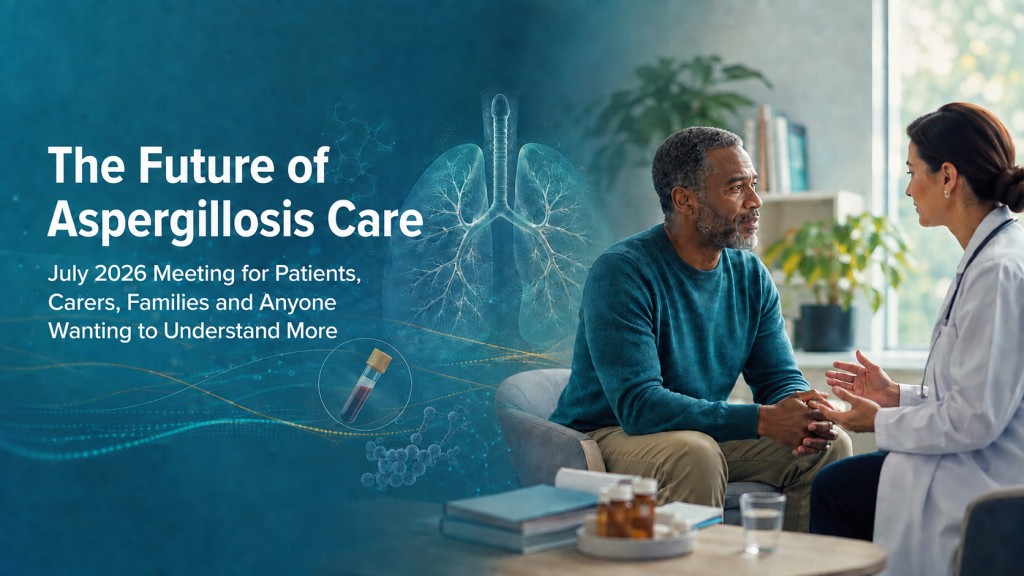
These short clips come from the National Aspergillosis Centre’s July 2026 online meeting. They are designed for people living with aspergillosis, their carers and families, and anyone wanting to understand more about how care may develop.
There are important reasons for optimism, but progress takes time. New tests and treatments need careful research, and decisions about diagnosis and treatment should always be made with an individual’s own clinical team.
The next 10 years: a more personal future for aspergillosis care
Care is increasingly moving away from a one-size-fits-all approach. In future, diagnosis, monitoring and treatment may be better tailored to the type of aspergillosis a person has, their other health conditions, how their illness affects daily life, and what matters most to them.
In this short video, we explore what a more personal future for aspergillosis care could look like.
The future of treating aspergillosis
Current antifungal medicines remain extremely important, but treatment can be difficult because people respond differently and medicines can have side effects or interactions with other drugs. Research is continuing into new antifungal treatments, better ways to monitor treatment safely, and ways of choosing the most suitable option for each person.
Artificial intelligence and other digital tools may also help clinicians bring together complex information and support more personalised decisions. They are not a replacement for clinical expertise or shared decision-making.
In this short video, we look at how future treatments may offer more options and more personalised care.
The future of diagnosing aspergillosis
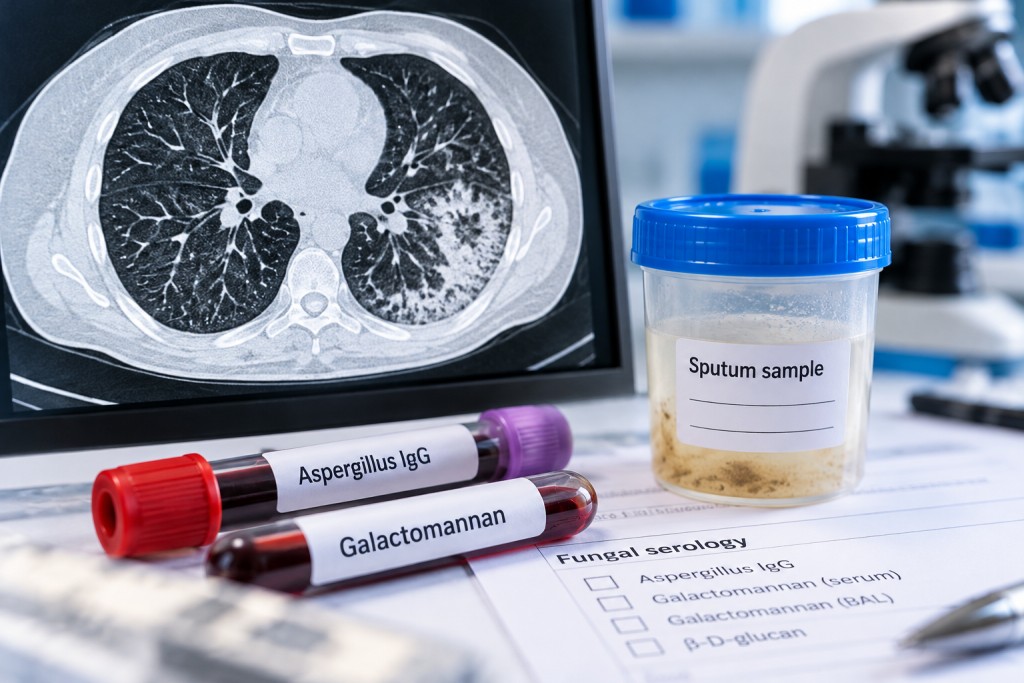
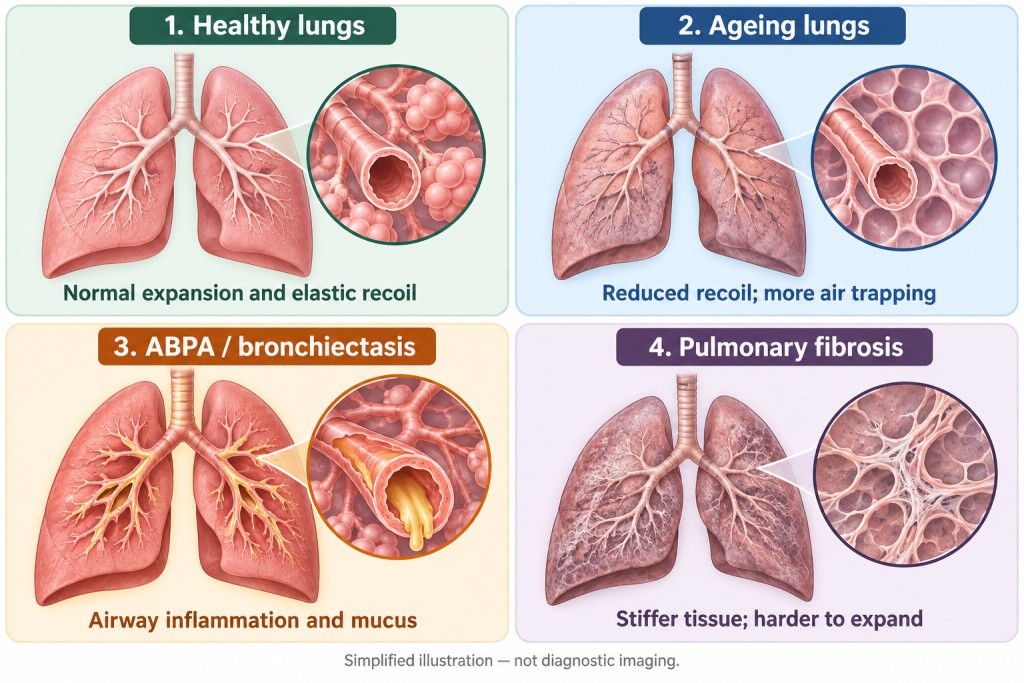
Diagnosing aspergillosis is not always straightforward. Symptoms can overlap with asthma, bronchiectasis, COPD and other lung conditions, while different forms of aspergillosis need different tests and treatments.
Future diagnosis may become earlier and more accurate through improved laboratory tests, better interpretation of imaging and blood results, and a fuller picture of each person’s symptoms, lung health and medical history. Earlier recognition matters because it can help people reach the right specialist support sooner.
In this short video, we explore how diagnosis could become earlier, more accurate and more personal.
What this means for patients
The future of care is not only about technology or new medicines. It is also about listening carefully to patients, recognising the impact of long-term illness, and making sure that diagnosis, treatment and support are shaped around the individual.
If you have questions about your own symptoms, tests or treatment, speak to your respiratory, infectious diseases or specialist clinical team. You can also find more patient information and support at Aspergillosis.org.
Watch more: Explore our series of NAC online meetings for patients, carers and families on YouTube.
These videos provide general information for patients, carers, families and anyone wishing to understand more. They do not replace medical advice from your own clinical team.

Did this page help you?
Tell us in one minute