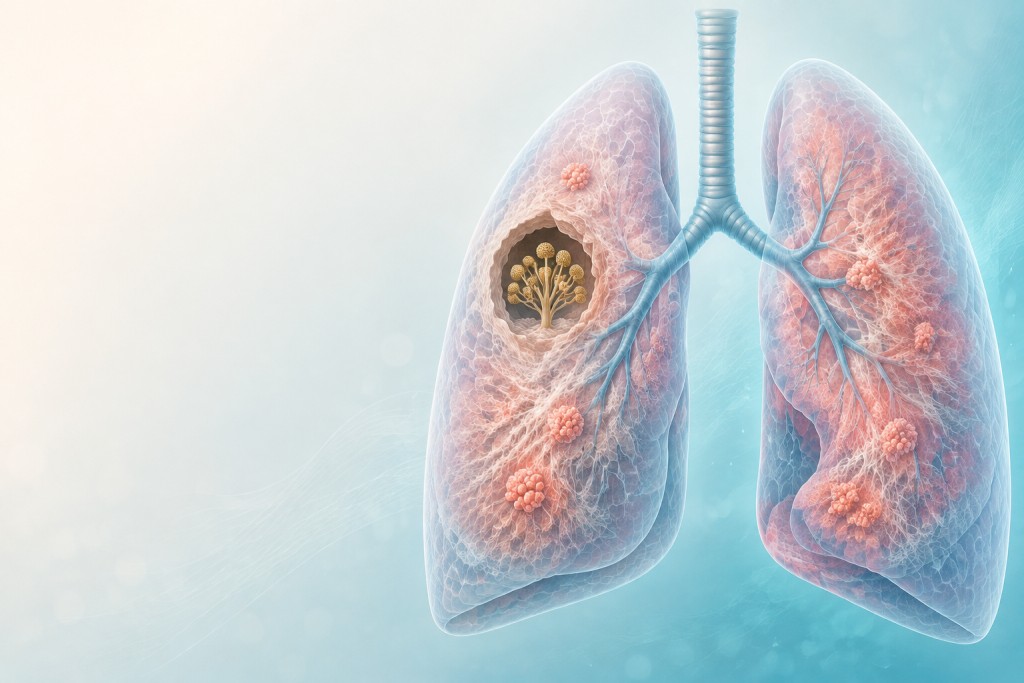
Sarcoidosis and aspergillosis are different conditions, but they can sometimes occur in the same person. The relationship is most important when sarcoidosis has caused lasting damage to the lungs, including scarring, fibrosis or cavities.
This does not mean that everyone with sarcoidosis will develop aspergillosis. Most people with sarcoidosis do not. However, when symptoms or lung changes worsen, it is important not to assume automatically that sarcoidosis is becoming more active.
What is sarcoidosis?
Sarcoidosis is an inflammatory condition in which groups of immune cells form small areas of inflammation called granulomas. It can affect several parts of the body, but the lungs and lymph nodes in the chest are most commonly involved.
Some people have few or no symptoms. Others may experience:
- breathlessness
- a persistent cough
- chest discomfort
- fatigue
- reduced exercise tolerance
- weight loss or a general feeling of being unwell
In some people, inflammation settles without causing permanent damage. In others, long-term inflammation can lead to scarring and changes in the structure of the lungs.
Why can sarcoidosis increase the risk of aspergillosis?
Chronic pulmonary aspergillosis (CPA) is a long-term lung infection caused by Aspergillus, a mould that is commonly found in the environment and is breathed in regularly by most people. You can read more about the different forms of CPA.
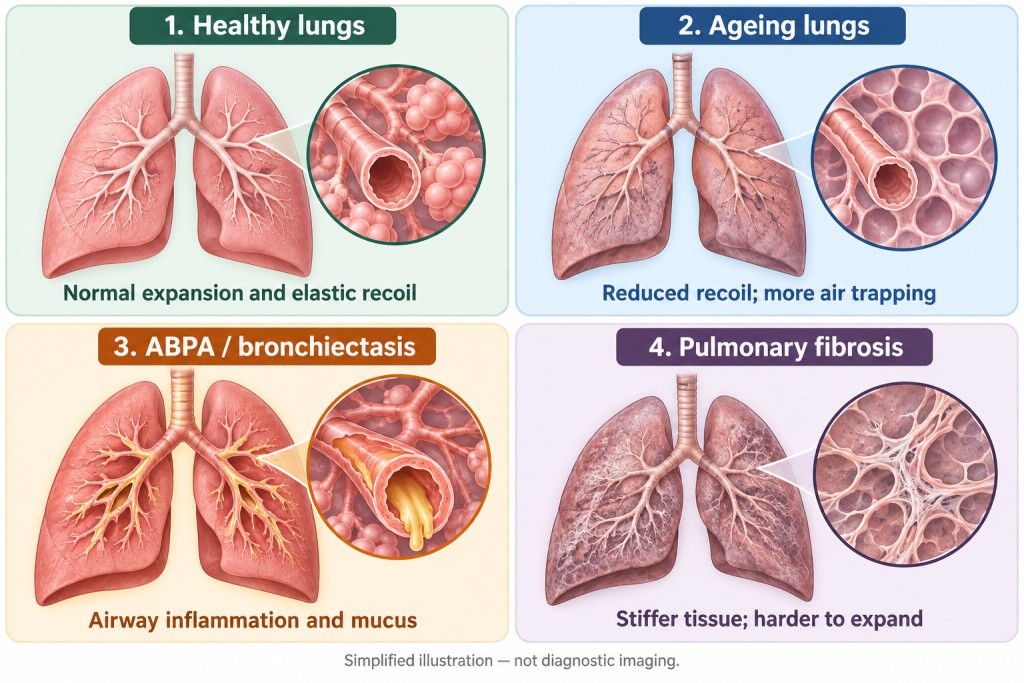
Healthy lungs usually clear inhaled Aspergillus spores without difficulty. However, damaged or scarred lung tissue can make it easier for Aspergillus to persist and grow.
Advanced pulmonary sarcoidosis may cause:
- fibrosis and scarring
- distortion of the airways
- areas of poorly functioning lung
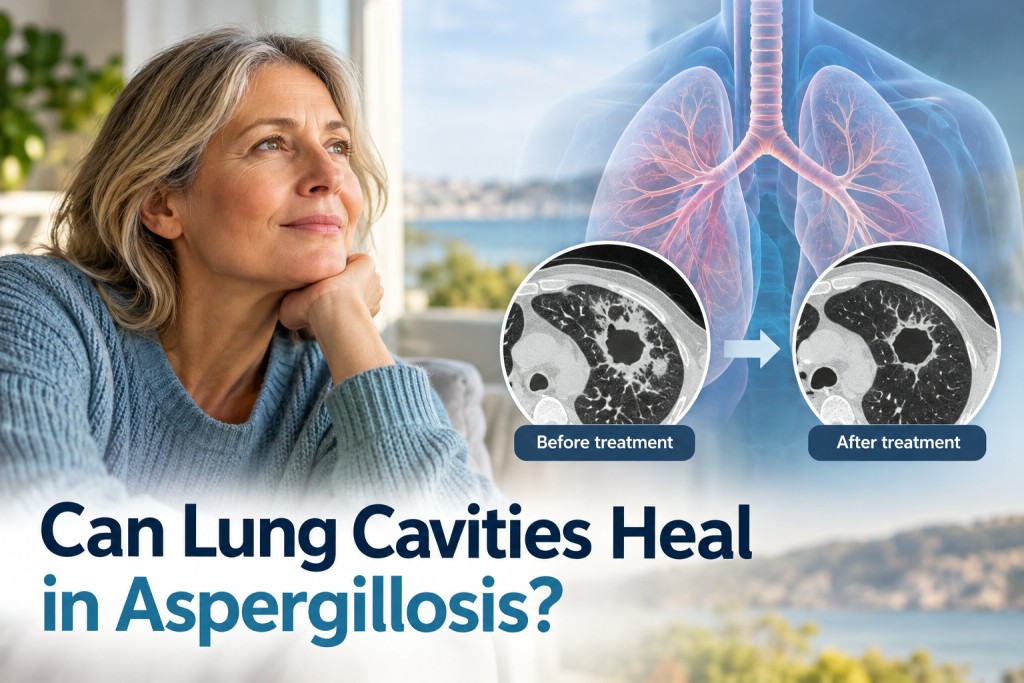
- cavities or spaces within the lungs
These changes may create conditions in which chronic pulmonary aspergillosis or an aspergilloma can develop. An aspergilloma, sometimes called a fungal ball, is a collection of fungal material that grows within an existing lung cavity.
The risk is not caused by sarcoidosis alone. It reflects a combination of factors, including the amount and type of lung damage, the immune response, exposure to Aspergillus and treatments such as corticosteroids or other immunosuppressive medicines.
How common is the association?
The relationship between sarcoidosis and chronic pulmonary aspergillosis is clinically important, but it remains relatively understudied. A 2026 review reported that approximately 2% of people with sarcoidosis developed CPA in some recent tertiary-care cohorts.
Older studies involving people with more advanced fibrocystic sarcoidosis reported higher estimates, between 3% and 12%. These figures are not directly comparable because specialist centres tend to see more people with severe and complicated disease.
The available evidence does not suggest that sarcoidosis commonly or inevitably leads to aspergillosis. Instead, risk appears to result from several factors acting together:
- fibrosis, cavities or other structural lung damage
- changes in local and general immune function
- regular exposure to Aspergillus in the environment
- corticosteroid or other immunosuppressive treatment
Symptoms can overlap
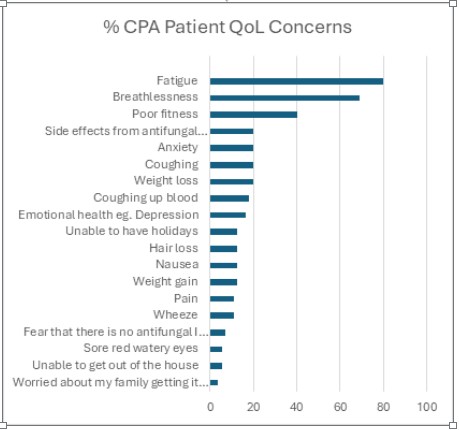
One of the difficulties is that sarcoidosis and chronic pulmonary aspergillosis can cause similar symptoms. These may include:
- increasing breathlessness
- persistent or worsening cough
- fatigue
- weight loss
- reduced lung function
- declining ability to exercise
- changes visible on chest X-rays or CT scans
This overlap can make it difficult to tell whether symptoms are caused by active sarcoidosis, permanent lung damage, chronic infection, or more than one condition at the same time.
Blood in the sputum, known as haemoptysis, can occur with several lung conditions. It may also occur when an aspergilloma or CPA affects blood vessels in damaged lung tissue. Any new or significant haemoptysis should be discussed promptly with a healthcare professional.
Why scans may need careful interpretation
Chest imaging is an important part of assessing both sarcoidosis and aspergillosis. A CT scan may show fibrosis, nodules, cavities, thickening around cavities or changes in existing areas of lung damage.
Some of these findings can be seen in advanced sarcoidosis as well as CPA. A single scan does not always provide the complete answer. Doctors may need to compare scans over time and consider:
- whether existing cavities or scars are changing
- whether new cavities or nodules have appeared
- whether there is thickening around a cavity
- whether a fungal ball is present
- how scan findings relate to symptoms and lung-function results
The overall pattern, and how it changes over time, is often more useful than one isolated scan finding. Read more about why CT scans are used in aspergillosis.
The challenge of steroid treatment
Corticosteroids are often used to control inflammation caused by sarcoidosis. Other immunosuppressive medicines may also be used when sarcoidosis affects the lungs or other organs.
These treatments can be very important and should not be stopped suddenly or changed without medical advice. However, corticosteroids and some other immunosuppressive medicines can reduce the body’s ability to control infection.
If chronic pulmonary aspergillosis is present but not recognised, increasing immunosuppression may allow the infection to become more active. This is one reason why unexpected deterioration, new radiological changes or symptoms that do not respond as expected should be assessed carefully before assuming that sarcoidosis is the only cause.
This does not mean that steroids are always unsafe for people with sarcoidosis. The decision is individual and may involve balancing inflammation, infection risk, lung damage and other health needs. Read more about steroids, aspergillosis and the immune system.
What does recent research show?
A 2026 review concluded that CPA occurs mainly when sarcoidosis has caused substantial structural lung damage, particularly fibrosis or cavities. The authors described the association as clinically important but relatively understudied.
In a study of 65 people with CPA complicating sarcoidosis, almost all had advanced fibrocystic pulmonary disease. Chronic cavitary pulmonary aspergillosis was the most common form of CPA. The factors most strongly associated with outcome were the extent of fibrosis, reduced overall lung function and pulmonary hypertension.
The study also found that poor outcomes were more often related to advanced sarcoidosis and the resulting loss of lung function than to aspergillosis alone. This is important because it shows that CPA is part of a complex picture rather than necessarily being the only cause of deterioration.
These findings help explain why assessment needs to consider the whole clinical picture. A change in symptoms or a scan may reflect active sarcoidosis, permanent lung damage, CPA or a combination of these conditions.
How might doctors investigate aspergillosis?
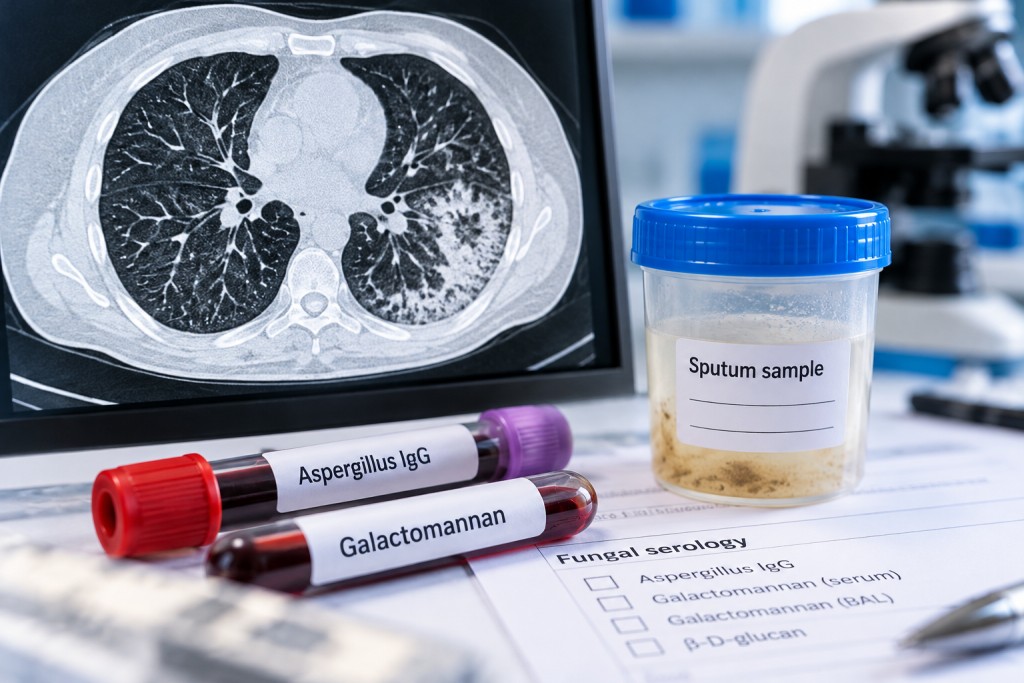
There is no single test that diagnoses every form of aspergillosis. Doctors usually combine several types of information, including:
- symptoms and how they have changed
- previous CT scans and current imaging
- lung-function tests
- blood tests for Aspergillus-specific antibodies, particularly Aspergillus IgG
- sputum testing for Aspergillus and other organisms
- occasionally bronchoscopy or other specialised tests
Blood tests for Aspergillus-specific IgG may support the diagnosis of CPA. However, a positive result does not prove by itself that active infection is present. It must be interpreted alongside symptoms, imaging and other test results.
Doctors may also use sputum testing, lung-function tests and, occasionally, bronchoscopy. Read more about how aspergillosis is diagnosed.
The 2026 review emphasised that diagnosis usually depends on combining imaging, Aspergillus-specific IgG and microbiological evidence with evidence of clinical progression.
Why specialist review may be helpful
Managing sarcoidosis and CPA together can be complicated. Treatment for sarcoidosis may involve corticosteroids or other medicines that suppress inflammation, while CPA may require prolonged antifungal treatment.
These medicines can interact with each other, and antifungal treatment may require monitoring for side effects, liver problems and drug levels. Some patients may need long-term antifungal treatment, particularly if disease is progressive or returns after treatment is stopped.
For this reason, unexpected deterioration, new cavities, progressive changes on CT, persistent systemic symptoms or haemoptysis may require discussion between respiratory, sarcoidosis and fungal-disease specialists.
What does this mean for someone with sarcoidosis?
Having sarcoidosis does not mean that you will develop aspergillosis. The association is most relevant in people with significant structural lung damage, particularly fibrosis or cavities.
It is worth telling your healthcare team if you develop:
- new or worsening breathlessness
- a persistent change in your cough
- unexplained weight loss or worsening fatigue
- repeated chest infections
- new changes on a chest X-ray or CT scan
- coughing up blood
- symptoms that continue despite treatment for sarcoidosis
These symptoms can have many causes, and they do not necessarily mean that you have aspergillosis. They simply deserve appropriate assessment rather than being automatically attributed to sarcoidosis.
Key message: Sarcoidosis and aspergillosis are separate conditions, but advanced sarcoidosis can sometimes cause lung changes in which chronic pulmonary aspergillosis develops. Most people with sarcoidosis will not develop CPA. When symptoms or scans change unexpectedly, considering both inflammation and infection can help doctors choose the safest treatment.
Related information
- Understanding chronic pulmonary aspergillosis
- How aspergillosis is diagnosed
- Understanding Aspergillus blood tests
- Diseases associated with aspergillosis
- Steroids and the immune system
Further reading
Recent review:
Jeny F, Brun S, Tran Ba S, Uzunhan Y.
Chronic pulmonary aspergillosis and sarcoidosis.
Current Opinion in Pulmonary Medicine, 2026.
Read the review on PubMed
.
Clinical study:
Uzunhan Y, Nunes H, Jeny F, et al.
Chronic pulmonary aspergillosis complicating sarcoidosis.
European Respiratory Journal. 2017;49:1602396.
Read the study on the ERS website
.
Earlier cohort and literature review:
Pena TA, Soubani AO, Samavati L.
Aspergillus lung disease in patients with sarcoidosis: a case series and review of the literature.
Lung. 2011;189:167–172.
Read the article information
.
This information is for education and should not replace advice from your own healthcare team.

Did this page help you?
Tell us in one minute