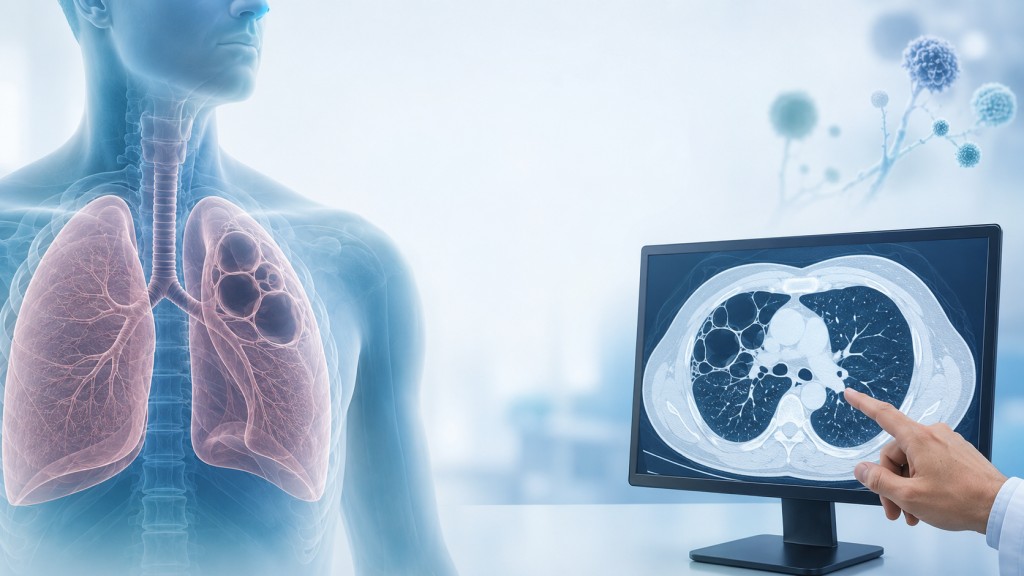
A pneumothorax is a collapsed lung. It happens when air enters the space between the lung and the chest wall, causing part or all of the lung to collapse. A bulla is a large air-filled space within the lung, most often linked with emphysema or other structural lung damage.
Most people who have had a pneumothorax or have bullae will never develop aspergillosis. However, these conditions can be part of the lung history that makes chronic pulmonary aspergillosis (CPA) more likely in a small number of people.
The important issue is not the past event alone. It is whether it has left an area of damaged, scarred or poorly functioning lung in which Aspergillus can persist.
Why lung structure matters
Everyone breathes in tiny Aspergillus spores from the environment. Healthy lungs normally clear them without difficulty.
When airways or lung tissue are already damaged, mucus may be harder to clear and the lung can contain spaces where spores can settle. Over time, Aspergillus may grow in these areas. This can lead to CPA or, in some cases, an aspergilloma—a fungal ball within an existing cavity or air space.
Bullae and cavities are not the same thing. A bulla is an enlarged air space caused by destruction of lung tissue, whereas a cavity usually develops within an area of abnormal lung tissue. But both can be signs that lung structure has changed, and both may be relevant when a doctor is investigating persistent symptoms or unusual scan findings.
Pneumothorax and Aspergillus
A previous pneumothorax does not mean that Aspergillus caused the collapse, or that aspergillosis will develop afterwards. In most cases it will not.
However, pneumothorax can occur alongside bullae, emphysema, previous infection or other lung conditions that have already changed the structure of the lungs. It may also lead to surgery or pleural procedures. This wider lung history is why clinicians may consider CPA if symptoms persist or scans later show a cavity, progressive scarring or a possible fungal ball.
Bullae, emphysema and COPD
Bullae are often associated with emphysema and COPD. They can vary greatly in size and effect on breathing. Some remain stable for years; others are part of more extensive lung damage.
COPD and emphysema are recognised underlying conditions for CPA. This does not mean that a bulla becomes infected simply because it exists. Rather, structural damage, reduced mucus clearance, repeated infection, steroid treatment and other aspects of lung health can combine to create a more favourable environment for Aspergillus.
Symptoms that should be checked
CPA usually develops slowly, over at least several months. Its symptoms can overlap with COPD, emphysema, recovery from pneumothorax or recurrent chest infection.
Speak to your respiratory team if you notice:
- A cough that persists or becomes worse
- Increasing breathlessness beyond your usual level
- Persistent tiredness, low energy or unintentional weight loss
- Recurrent chest infections or symptoms that do not settle as expected
- Chest discomfort
- Coughing up blood (haemoptysis)
A small streak of blood in sputum can have several causes, but should always be reported. Seek urgent medical help for significant, repeated or rapidly increasing bleeding.
How is aspergillosis investigated?
A previous pneumothorax or bulla is only one piece of the picture. Doctors usually need to combine several types of information:
- Symptoms and the history of previous lung problems
- Chest X-ray and, usually, a CT scan
- Blood tests, including Aspergillus IgG antibodies
- Sputum testing, where a sample can be produced
- Comparison with previous scans to see whether a change is stable or progressing
CPA is not diagnosed from one scan finding or a single positive sputum sample alone. Specialists look for consistent evidence of Aspergillus-related disease, usually with symptoms or progressive imaging changes lasting at least three months, while ruling out other causes.
Treatment and monitoring
Some people with bullae or old pneumothorax-related changes only need routine follow-up for their underlying lung condition. A stable bulla or scar is not treated as aspergillosis.
If CPA is diagnosed, treatment may include antifungal medication, often with regular blood tests and scans. Treatment is tailored to the type of aspergillosis, the amount of healthy lung remaining and any other medicines being taken.
If a fungal ball is causing significant bleeding and is single and localised, surgery may sometimes be an option. Where surgery is not suitable, other approaches may include antifungal treatment or bronchial artery embolisation—a procedure that can help control bleeding.
What you can do
Keep attending planned follow-up after a pneumothorax or lung surgery, and make sure your respiratory team knows about any change from your usual symptoms.
A previous collapsed lung or bullae do not mean aspergillosis is inevitable. But if you have persistent symptoms, worsening scans or coughing up blood, mention your full lung history and ask whether Aspergillus needs to be considered.
Related information
- Chronic pulmonary aspergillosis (CPA)
- Aspergilloma (fungal ball)
- COPD and aspergillosis
- Lung surgery and aspergillosis
- How aspergillosis is diagnosed
- Coughing up blood (haemoptysis)
- Common associated conditions

Did this page help you?
Tell us in one minute