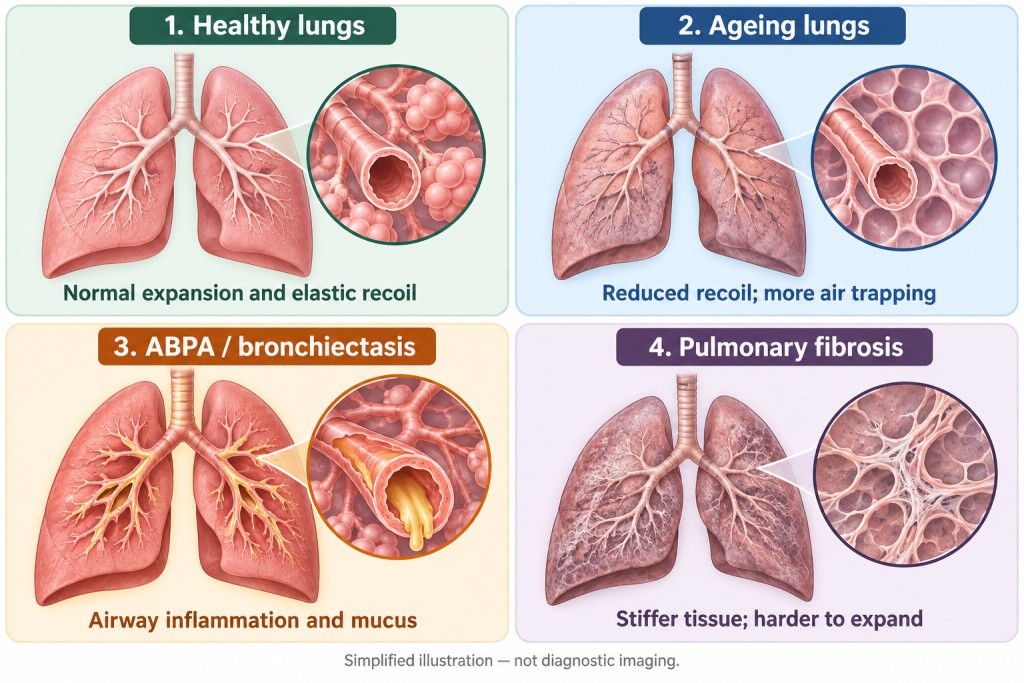

Bronchiectasis and chronic obstructive pulmonary disease (COPD) are different lung conditions, but they can cause many of the same symptoms. Some people also have both conditions at the same time.
This overlap can make diagnosis difficult. It is one reason why doctors may review or refine a diagnosis when symptoms persist, test results change or treatment does not have the expected effect.
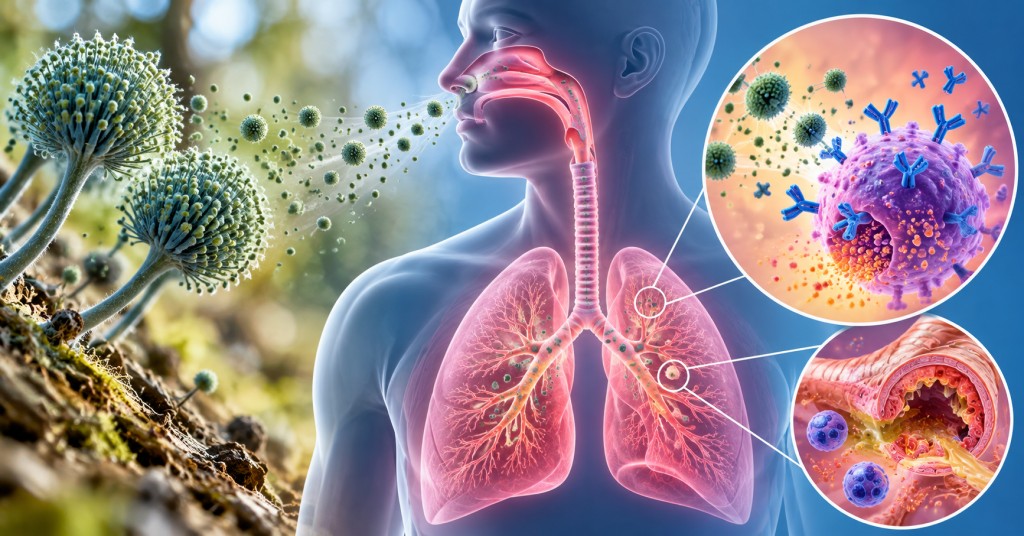
Aspergillosis can add another layer of complexity. COPD and bronchiectasis may create the damaged-lung environment in which chronic pulmonary aspergillosis develops, while Aspergillus can also cause allergic or airway disease such as ABPA and Aspergillus bronchitis.
These conditions may share symptoms such as cough, sputum, breathlessness, fatigue, recurrent infections and changes on CT scans. A person may have one condition, two overlapping conditions or several contributing problems at the same time.
The key difference
The simplest distinction is:
COPD mainly causes persistent airflow obstruction, while bronchiectasis is permanent structural damage and widening of the airways.
However, this is an oversimplification. Both conditions can involve airway inflammation, mucus, infection, reduced lung function and progressive lung damage.
What is COPD?
Chronic obstructive pulmonary disease (COPD) is a long-term condition in which airflow through the lungs becomes restricted.
COPD mainly includes two overlapping types of lung damage:
- Chronic bronchitis: long-term inflammation of the airways, often with increased mucus production and a persistent cough.
- Emphysema: damage to the small air sacs in the lungs, reducing the area available for oxygen to pass into the blood.
COPD can also cause narrowing of the smaller airways, trapping of air and difficulty breathing out fully.
Symptoms may include:
- breathlessness, especially during activity
- a persistent cough
- regular production of sputum
- wheezing or chest tightness
- repeated chest infections
- reduced exercise tolerance
- fatigue
COPD is often associated with smoking, but it can also result from long-term exposure to air pollution, occupational dusts and fumes, previous infections, childhood lung problems or genetic conditions such as alpha-1 antitrypsin deficiency.
What is bronchiectasis?
Bronchiectasis is a long-term condition in which one or more airways become permanently widened, thickened or scarred.
Healthy airways use mucus and tiny hair-like structures called cilia to remove dust, microbes and other particles. In bronchiectasis, damaged airways often clear mucus less effectively. Mucus can collect in widened parts of the airway, allowing bacteria and fungi to remain in the lungs for longer.
Bronchiectasis may develop after:
- severe or repeated chest infections
- tuberculosis or other lung infections
- immune-system problems
- asthma or allergic bronchopulmonary aspergillosis
- cystic fibrosis or primary ciliary dyskinesia
- autoimmune or inflammatory conditions
- airway blockage or inhaled foreign material
Sometimes no clear cause is found.
Common symptoms include:
- a long-term cough
- regular production of sputum
- repeated chest infections
- breathlessness
- wheezing
- fatigue
- coughing up blood
Find out more about mucus clearance and airway-clearance techniques.
Why are widened airways a problem?
It may seem that wider airways should make breathing easier. In bronchiectasis, however, widening is a sign that the airway walls have been damaged and weakened.
The widened airways may become floppy and lose their normal ability to move mucus upwards. Mucus can pool in the enlarged sections, where bacteria and fungi may remain and multiply.
This creates a self-reinforcing cycle:
airway damage → widening → mucus retention → infection and inflammation → further airway damage
So, although COPD is often associated with airways that are too narrow, bronchiectasis involves airways that are too damaged and inefficient to clear mucus properly.
How are the conditions diagnosed?
Respiratory diagnoses are not usually based on symptoms or lung function alone. Doctors combine:
- symptoms and medical history
- spirometry and other lung-function tests
- CT imaging
- sputum and blood tests
- examination findings
- response to treatment
A useful way to think about this is:
Lung function measures what the lungs can do; imaging shows what has happened to their structure.
Diagnosing COPD
COPD is mainly identified by persistent airflow obstruction. Spirometry measures how much air a person can breathe out and how quickly they can do so.
Current COPD guidance uses post-bronchodilator spirometry to confirm persistent airflow obstruction. Other information, including symptoms, smoking history, CT scans and exacerbations, helps assess the wider disease.
Diagnosing bronchiectasis
Bronchiectasis is fundamentally an anatomical diagnosis. A thin-section or high-resolution CT scan is usually needed to show that the airways are permanently widened or distorted.
Lung function in bronchiectasis may be:
- normal
- obstructive
- restrictive
- mixed
A normal spirometry result therefore does not exclude bronchiectasis.
Can someone have both COPD and bronchiectasis?
Yes. COPD and bronchiectasis can coexist, particularly in people with more advanced lung disease, frequent exacerbations or persistent sputum production.
When both conditions are present, a person may have:
- greater breathlessness
- more frequent exacerbations
- greater sputum production
- more persistent airway infection
- more complex treatment needs
The correct conclusion may not be that someone has COPD instead of bronchiectasis. They may have COPD and bronchiectasis, with each condition contributing to their symptoms.
Where does aspergillosis fit?
People with COPD or bronchiectasis may be more vulnerable to Aspergillus-related disease because their lungs or airways are already damaged.
Possible conditions include:
- chronic pulmonary aspergillosis
- Aspergillus bronchitis
- allergic bronchopulmonary aspergillosis
- Aspergillus sensitisation
- Aspergillus colonisation without active disease
These conditions are different. A positive sputum culture or blood test does not automatically mean that active aspergillosis is present.
Assessment may involve:
- symptoms and their pattern over time
- CT imaging
- Aspergillus-specific IgG or IgE
- total IgE and eosinophils
- sputum culture or PCR
- lung-function testing
- occasionally bronchoscopy
Read more about how aspergillosis is diagnosed.
What about asthma and other lung diseases?
Asthma can also cause wheeze, cough and variable airflow obstruction. Some people have features of both asthma and COPD, particularly later in life. Asthma may also coexist with bronchiectasis.
Other conditions can produce similar symptoms, including:
- interstitial lung disease
- previous tuberculosis
- heart failure
- lung cancer
- pulmonary hypertension
- non-tuberculous mycobacterial infection
- chronic pulmonary aspergillosis
This is why a diagnosis may need to be reconsidered when symptoms, scans or test results do not fit the original explanation.
Why might doctors change the diagnosis?
Doctors sometimes appear to switch between diagnoses such as COPD, asthma, bronchiectasis and aspergillosis. This can happen because the conditions share many symptoms, and because more than one condition may be present at the same time.
Early in an assessment, a doctor may use a working diagnosis based on the information available. That diagnosis may be refined when spirometry, CT scans, sputum tests or blood tests provide more evidence.
For example:
- a person initially thought to have COPD may later be found to have bronchiectasis on CT
- someone diagnosed with asthma may later develop persistent airflow obstruction or emphysema
- a person with bronchiectasis may be found to have an underlying immune problem or previous infection
- Aspergillus-related disease may become apparent when symptoms persist despite usual treatment
A changing diagnosis does not necessarily mean that earlier care was misguided. It may mean that the clinical picture has become clearer.
Can poor treatment response suggest another diagnosis?
Sometimes. If symptoms do not improve as expected, doctors may ask:
- Was the original diagnosis correct?
- Is another condition present as well?
- Is there an infection or complication?
- Is the treatment being taken correctly and tolerated?
- Has the disease changed over time?
For example, someone repeatedly treated for COPD exacerbations who continues to produce large amounts of sputum may need assessment for bronchiectasis, chronic infection or Aspergillus-related disease.
However, lack of improvement does not prove that the diagnosis was wrong. Treatment may have been insufficient, difficult to take, affected by another medicine or aimed at only one part of a complex condition.
The most useful response is usually reassessment rather than an automatic change of label.
Why identifying the full picture matters
Different diagnoses lead clinicians to look for different problems and choose different treatments.
- COPD may require bronchodilators, pulmonary rehabilitation and exacerbation prevention.
- Bronchiectasis may require airway clearance, sputum monitoring and investigation of its cause.
- Asthma may require treatment aimed at variable airway inflammation.
- Aspergillus-related disease may require specific blood tests, microbiology or antifungal treatment.
Recognising one diagnosis does not exclude another. The aim is to understand all the factors contributing to a person’s symptoms.
Key message: COPD, bronchiectasis, asthma and aspergillosis can overlap, but they are not interchangeable diagnoses. Lung function shows how well the lungs work, while CT scans show structural damage. When symptoms persist or treatment is not working as expected, reassessing the diagnosis may reveal another condition—or several conditions acting together.
Related information
- COPD and aspergillosis
- Bronchiectasis and aspergillosis
- Understanding chronic pulmonary aspergillosis
- How aspergillosis is diagnosed
- Mucus clearance techniques
- Diseases associated with aspergillosis
Further reading
British Thoracic Society guideline for bronchiectasis in adults
Global Initiative for Chronic Obstructive Lung Disease: 2025 report
European Respiratory Society guideline for the management of adult bronchiectasis
This information is for education and should not replace advice from your own healthcare team.

Did this page help you?
Tell us in one minute