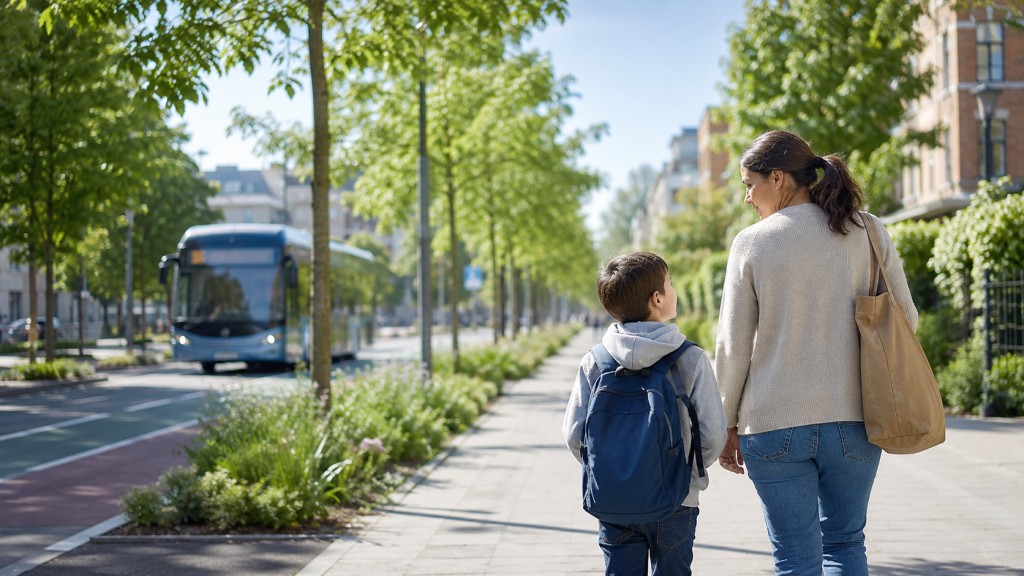
A major new UK study has found that children living in central London experienced faster lung-function growth after traffic-related air pollution fell following the introduction of the Ultra Low Emission Zone (ULEZ).
This does not mean that ULEZ treats aspergillosis, asthma or bronchiectasis. But it is an important reminder that the air around us is part of lung health. For people already living with a respiratory condition, cleaner air can mean one less pressure on lungs that may already be inflamed, damaged or working hard.
What did the study find?
The Children’s Health in London and Luton (CHILL) study followed 3,414 children aged 6–9 years in central London and Luton. The researchers measured lung function each year and estimated exposure to nitrogen dioxide (NO2), a pollutant strongly linked to traffic exhaust.
Before ULEZ was introduced, children in London had greater traffic-pollution exposure and poorer measured lung function than the comparison group in Luton. Over the following years, NO2 exposure fell faster in London and the children’s lung function grew faster too. A key measure, FEV1 (the amount of air someone can blow out in one second), caught up with the Luton group.
This was not a simple before-and-after comparison. Luton was included to help account for wider changes that affected both places, such as the COVID-19 pandemic and general changes in traffic. The study cannot prove that ULEZ alone caused every improvement, but it provides strong evidence that reducing traffic pollution can benefit children’s lung development.
Why does this matter if you already have a lung condition?
Air pollution does not cause every respiratory illness, and it does not cause aspergillosis directly. Aspergillosis is caused by infection or an allergic response to Aspergillus fungi. However, polluted air can irritate and inflame the airways, increase cough and breathlessness, and trigger worsening symptoms in people with asthma, COPD and other lung conditions.
Many people with aspergillosis also have asthma, bronchiectasis, COPD or previous lung damage. For them, a pollution episode may be another trigger alongside infection, allergens, cold air, smoke or exertion. Reducing pollution cannot replace treatment, airway-clearance techniques, inhalers, antifungal medicines or clinical care. It can reduce one avoidable stress on the lungs.
Cleaner air is about the future as well as today
The most striking lesson from this study is that lungs are not entirely fixed in childhood. When traffic pollution fell, the children’s lung-function growth accelerated. This suggests that reducing exposure while lungs are still developing can allow important catch-up.
That matters for every generation. Children who grow up with healthier lungs may enter adult life with more respiratory reserve. In later life, that could mean greater resilience when faced with asthma, infections, smoking, occupational exposures or other lung disease.
For adults with established lung disease, cleaner air is less likely to reverse structural damage. But it can still matter greatly: fewer bad-air days may mean fewer symptom flare-ups, more confidence to be active and less pressure on already vulnerable lungs.
What can individuals do?
Air pollution is a public-health issue, so the main solutions must be collective: cleaner vehicles, cleaner public transport, safer walking and cycling routes, well-insulated homes with clean heating, and action on sources such as traffic and wood burning.
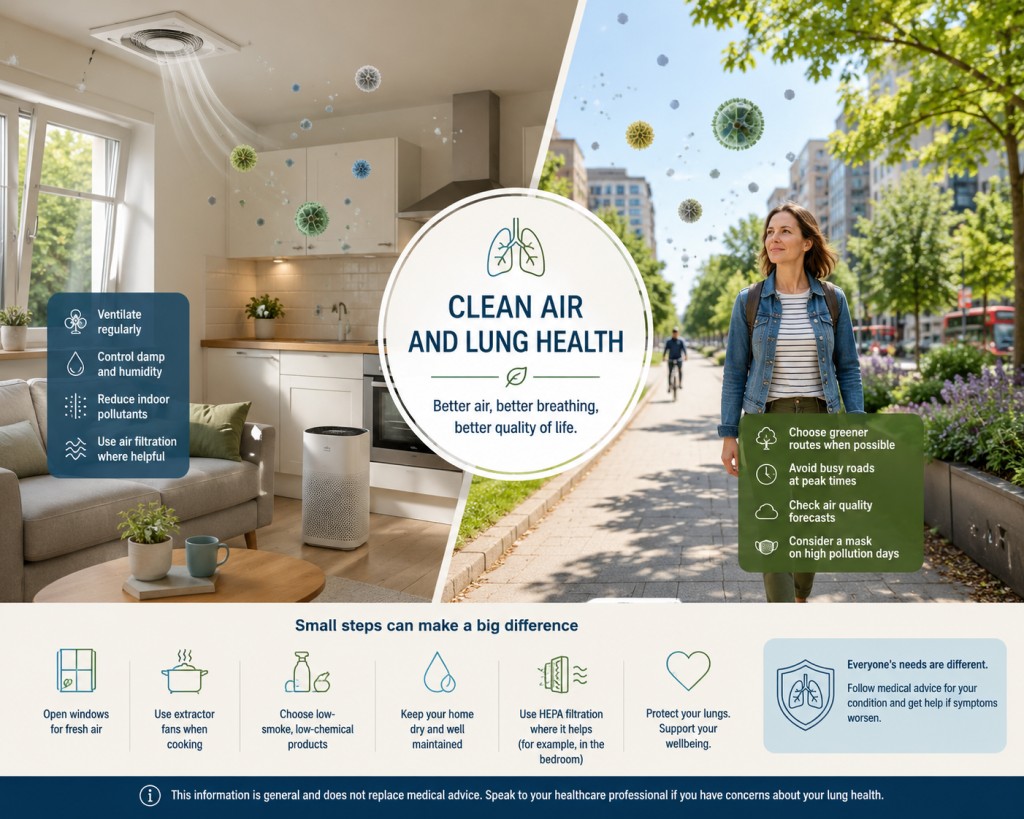
There are also small practical steps that may help on days when air quality is poor:
- Check the local air-quality forecast before planning outdoor activity.
- Where possible, choose quieter routes away from heavy traffic rather than stopping activity altogether.
- Avoid adding to indoor air pollution: do not smoke indoors, and take care with wood or coal burning.
- Continue your prescribed medicines and airway-clearance routine.
- Follow your usual action plan and seek clinical advice if worsening breathlessness, wheeze or chest symptoms are not settling.
For most people, the benefits of staying active remain important. The aim is not to make people fearful of going outside, but to make it easier for everyone to breathe cleaner air while doing so.
A public-health benefit we can now see
Measures such as clean-air zones can be controversial, particularly when the cost of replacing an older vehicle falls on individuals or small businesses. That makes fair transition support essential.
But this study gives the public-health benefit a much clearer human meaning. Cleaner air was associated not only with a lower number on a pollution monitor, but with children’s lungs growing better. For people living with aspergillosis, asthma and bronchiectasis, that is a reminder that clean air is not a luxury or simply an environmental aspiration. It is part of prevention, part of respiratory care, and part of giving future generations a healthier start.
Further information
- Read the CHILL study in The Lancet Public Health
- Plain-language summary from the CHILL research team
- Check the UK air-quality forecast
This article is for general information and is not a substitute for personal medical advice. Contact your clinical team if worsening respiratory symptoms are not responding to your usual management plan.

Did this page help you?
Tell us in one minute