Depemokimab – a new long-acting treatment for severe asthma: what aspergillosis patients need to know

A new medicine called depemokimab is being reviewed by European and UK regulators as a possible treatment for severe eosinophilic (type-2) asthma. Many people with aspergillosis-related conditions – especially allergic bronchopulmonary aspergillosis (ABPA) and severe asthma with fungal sensitisation (SAFS) – also have this type of inflammation, so new options are always important.

⭐ What is depemokimab?

Depemokimab is a biologic treatment, similar to medicines like mepolizumab or benralizumab, but designed to last much longer in the body. It blocks interleukin-5 (IL-5), one of the key signals that drives eosinophils – a type of white blood cell involved in allergy, asthma and ABPA flares.

⭐ What makes it different?

The most important difference is how rarely it needs to be taken.

Current biologics for type-2 asthma are given every 4, 6 or 8 weeks.
Depemokimab is designed to be taken twice a year – only once every six months.

For many people, this could mean:

  • Fewer injections

  • More steady asthma control

  • Less disruption to daily life

  • A treatment that’s easier to stick with over time

In clinical trials, depemokimab also helped to:

  • Reduce asthma attacks

  • Lower the need for oral steroids

  • Improve symptoms in people with chronic sinusitis and nasal polyps, which commonly affects ABPA and SAFS patients

⭐ Is this a treatment for ABPA or CPA?

Not specifically.
Depemokimab is not a treatment for the Aspergillus fungus itself and it does not replace antifungal medicines.

However, for people whose asthma drives their ABPA symptoms, better asthma control can mean:

  • fewer flare-ups

  • better breathing

  • less need for steroids

  • reduced pressure on already damaged airways

So while it is not an antifungal, it may become another option in the toolkit for managing asthma linked to aspergillosis.

⭐ When might this be available in the UK?

Depemokimab is currently under review by European regulators.
In the UK, the NICE appraisal for NHS use is underway, with a decision expected in March 2026.

If approved, it could become available on the NHS sometime in 2026.

⭐ What should patients do now?

At this stage:

  • There is no action needed from patients.

  • Your asthma or ABPA team will be the first to know when new biologics are approved.

  • If you already receive a biologic (e.g., mepolizumab, benralizumab, omalizumab, dupilumab), there is no change to your treatment plan.

  • If you struggle with frequent injections or poor asthma control, your clinician may consider depemokimab in the future once approved.


Why do some people cough up long, tube-shaped pieces of mucus?

In several chronic lung conditions, the airways can become inflamed and produce thick mucus.
When this mucus sits in the bronchial tubes, it can sometimes harden into a cast shaped exactly like the airway.

People often describe these casts as:

  • long, ribbon-like or “snakeskin” pieces

  • rubbery or stretchy

  • white, yellow, or green

  • shaped like the inside of a tube

Coughing one up can feel dramatic but is usually a sign that your lungs are finally able to clear a blockage.


What does it mean if a cast has black flecks or dark spots?

This can look alarming, but several common, mostly harmless explanations exist.

1. Old or dried blood

Tiny amounts of bleeding from irritated airways can dry and turn:

red → brown → black

This often appears as tiny black dots or threads.

2. Inhaled particles

Dust, soot, pollution, or smoke can get trapped in mucus deeper in the lungs and show up as dark specks.

3. Debris from infection or inflammation

Long-standing inflammation can cause:

  • darkened mucus fragments

  • tiny bits of fungal, bacterial or biofilm material

  • oxidised (darkened) mucus layers

These often look like pepper-like flecks and are not dangerous on their own.

4. Oxidation or ageing of thick mucus

When mucus sits for a long time before it is coughed out, it can become darker in spots.


When this is usually not worrying

Black flecks are often harmless when:

  • the amount is small

  • the colour change is occasional

  • you feel better after coughing the cast out

  • there is no new increase in blood, fever, or breathlessness

  • this fits your usual pattern of mucus plugging

Most people with chronic airway disease experience occasional colour changes in mucus.


When to mention it to your doctor

You should let your team know if:

  • black flecks keep appearing repeatedly

  • you cough up more blood than usual

  • your breathing worsens suddenly

  • your sputum smells different

  • you have fever or chest pain

  • casts become bigger, more frequent, or harder to clear

These changes do not always mean something serious, but they are worth checking.


Why do casts form in the first place?

Conditions that can cause airway casts include:

  • Bronchiectasis

  • ABPA (Allergic Bronchopulmonary Aspergillosis)

  • Severe or eosinophilic asthma

  • Chronic infections, including fungal or bacterial

  • COPD with mucus hypersecretion

Inflammation makes mucus thicker, and narrowed airways make it harder to clear.
Over time, mucus can mould itself into the shape of the airway — becoming a cast.


What to do if you cough one up

  1. Stay calm — this often brings relief.

  2. Take note of its colour and size.

  3. Hydrate well to thin mucus.

  4. Continue your usual airway-clearance technique (physio, nebulisers, saline, etc.)

  5. Let your team know if it is unusual for you.


Final reassurance

Coughing up a long, tube-like piece of mucus can feel shocking, but in most cases it simply means your lungs are clearing a blocked area.
Black flecks are usually:

  • old blood

  • trapped dust or soot

  • dried mucus debris

Most of the time, these findings are not dangerous, but they can give useful clues about airway inflammation.


Why can Pseudomonas become resistant even when you haven’t taken antibiotics for years?

For people with aspergillosis, asthma, and bronchiectasis, it’s very common to live with long-term Pseudomonas in the lungs.
Hearing that it has become resistant to ciprofloxacin feels frightening, but this does not mean you’ve done anything wrong — or that you’re running out of options.

Here’s why resistance happens:

1. Bronchiectasis airways allow bacteria to settle long-term

The widened, inflamed airways seen in ABPA and bronchiectasis create places where mucus pools and bacteria survive for months or years.

2. Pseudomonas forms “biofilms”

These are sticky layers that protect the bacteria from antibiotics.
Inside them, Pseudomonas can:

  • swap resistance genes

  • slowly mutate

  • become harder to kill

This can happen even without taking antibiotics recently.

3. Your sputum contains a mixture of different strains

Some strains may have been slightly resistant for years.
One strain can suddenly become dominant — and that’s what shows up on the lab test.

So developing resistance is normal in chronic lung disease and not a sign your lungs have suddenly worsened.


Does ciprofloxacin resistance mean IV antibiotics are the only option now?

No — not automatically.
Your team will look at the full sensitivity report to see what is still effective.

Possible options include:

1. Nebulised antibiotics

These are widely used in people with ABPA + bronchiectasis because they act directly in the lungs with fewer body-wide effects.
Common inhaled antibiotics:

  • Colistin

  • Tobramycin

  • Aztreonam

These often have very little impact on the gut microbiome.

2. Other oral antibiotics (if sensitive)

Sometimes alternatives still work, depending on the report.

3. A “suppression” plan

Some patients use inhaled antibiotics on a regular cycle to keep symptoms down and reduce flare-ups.

IV antibiotics are only needed if:

  • symptoms become severe

  • there are no suitable oral or inhaled options

  • your team wants a stronger “clean-out” of the lungs

Even then, it does not mean hospital admission — many patients receive IVs at home.


If IV treatment is recommended

It’s completely normal to feel nervous — especially if you’ve never had IV therapy before.

But here is the part most people find reassuring:

1. The treatment is closely monitored

Blood tests, kidney checks, and hearing tests are routine.
Your team will adjust the dose if needed.

2. Many people feel significantly better afterwards

Patients often say their lungs feel “lighter,” with:

  • less sputum

  • easier breathing

  • fewer flare-ups

  • more energy

3. Home IV therapy is common

Specialist nurses can support you, and it’s usually temporary.


What about the microbiome?

This is a valid concern, especially for people with long-term lung conditions.

Good news:

  • Nebulised antibiotics hardly affect the gut microbiome at all.

  • IV antibiotics mainly affect it short-term, and most people return to baseline once treatment stops.

  • Your team can help you protect your gut during treatment.


What should you do next?

Here’s a simple plan:

  1. Ask for the full sensitivity report.
    There may be several antibiotics still effective.

  2. Discuss inhaled options.
    Many ABPA/bronchiectasis patients manage very well with nebulised therapy.

  3. Ask whether this resistance result needs repeating.
    Sometimes it reflects one resistant pocket within the biofilm rather than the whole population.

  4. Talk through what an IV plan would look like
    — including home options and support.


Final reassurance

Ciprofloxacin resistance is extremely common in people with aspergillosis, ABPA, and bronchiectasis.
It does not mean:

  • your disease is progressing

  • you caused the resistance

  • you are running out of treatment

  • IV is your only option

It simply reflects how clever Pseudomonas is — and how complex airways behave in chronic aspergillosis.

Your team will still have a range of effective treatments.


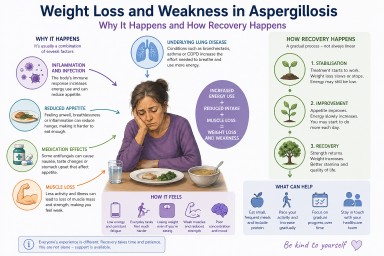
Why do some people with aspergillosis lose weight on the hips and thighs, but gain around the waist?

Many people living with aspergillosis, bronchiectasis or ABPA notice their body shape changing as they get older — especially after 60.
A very common pattern is:

  • Thinner hips and legs

  • More weight around the waist or tummy

This can feel confusing, but there are clear reasons why it happens.


1. Chronic lung conditions make it harder to keep leg and hip muscle

When you live with a long-term lung condition, you often have:

  • Breathlessness

  • Fatigue

  • Repeated chest infections

  • Less ability to walk long distances or climb stairs

Because the legs work harder than any other muscles, they are the first to lose strength and size when activity drops.
This is why many people notice:

  • Slimmer thighs

  • Smaller hips

  • Feeling weaker when getting out of a chair

This is partly due to age, but it happens faster in people with chronic lung disease.


2. Steroids can move weight from the limbs to the waist

Many aspergillosis patients have had:

  • Several courses of prednisolone over the years

  • High-dose inhaled steroids

  • Hydrocortisone replacement for adrenal problems

Even short or occasional courses can cause fat redistribution, where:

  • Fat and muscle reduce in the arms, hips and legs

  • More fat settles around the stomach area

  • The centre of the body becomes rounder even if the overall weight hasn’t changed much

This effect can continue long after stopping steroids.


3. Ageing naturally shifts fat towards the waist

After about age 60, the body changes how it stores fat:

  • Less around the hips and thighs

  • More around the waist

  • More “internal” fat around organs (visceral fat)

This happens to everyone, but can be more noticeable in people with aspergillosis because illness already reduces leg muscle.


4. You can lose muscle even if weight on the scales stays the same

Many patients say,
“I feel thinner and thicker at the same time.”

That’s because:

  • Muscle in the legs may be lost

  • Fat around the waist may increase

  • The total body weight doesn’t always change much

This is a normal pattern in long-term lung disease.


5. Illness, flare-ups, infections and poor appetite add to this

During flare-ups or infections, it’s common to:

  • Eat less

  • Feel exhausted

  • Lose muscle faster

  • Keep or gain tummy fat

The body burns muscle first when unwell, not fat — especially not tummy fat.


Is this dangerous?

Not usually on its own — but it does mean:

  • Legs may feel weaker

  • Balance and stamina can reduce

  • It may be harder to stay active

Strength and gentle exercise (within your limits) can help rebuild some leg muscle.

If weight changes are sudden or unexplained, they should always be discussed with your GP or specialist.


In summary

This body-shape change is very common in people with aspergillosis over 60.
It’s caused by a combination of:

  • Reduced activity due to breathlessness

  • Loss of leg and hip muscle

  • Steroid effects on fat distribution

  • Natural age-related changes

  • Appetite changes during illness

It doesn’t mean you’re doing anything wrong — it’s simply a pattern seen in many people with long-term lung disease.


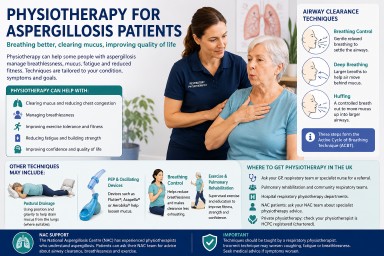
Physiotherapy and Aspergillosis: Why It Matters

Physiotherapy is an important part of care for many people with aspergillosis, including allergic bronchopulmonary aspergillosis (ABPA), chronic pulmonary aspergillosis (CPA), aspergillus bronchitis, and severe asthma with fungal sensitisation (SAFS).
It doesn’t diagnose the disease on its own, but physiotherapists play a key role in detecting symptoms, collecting good sputum samples, and helping patients stay stable.


1. How Physiotherapy Helps With Diagnosis

🔍 A. Spotting patterns of sputum, breathlessness, and airway clearance problems

Respiratory physiotherapists often notice:

  • Thick, sticky mucus that is difficult to clear

  • Recurrent phlegm plugs

  • Wheeze, crackles, or airflow changes

  • Reduced ability to clear secretions after infection
    These patterns can be early clues pointing toward ABPA, aspergillus bronchitis, or bronchiectasis linked to Aspergillus.

🔍 B. Supporting high-quality sputum collection

A good sputum sample is essential for:

  • Fungal culture

  • PCR

  • Galactomannan tests

  • Antibiotic/antifungal susceptibility testing

Techniques like huff coughing, breathing control, postural drainage, or using devices such as Acapella or Aerobika help ensure the sample comes from deep in the lungs, not just saliva.

🔍 C. Identifying airway collapsibility or dysfunctional breathing

Physiotherapists can pick up:

  • Tracheobronchomalacia

  • Inducible laryngeal obstruction

  • Breathing pattern disorder
    These are often overlooked and can mimic or worsen aspergillosis symptoms.

If a physio notices these features, they feed findings back to the medical team, supporting a faster, more accurate diagnosis.


2. How Physiotherapy Helps With Treatment

đŸ« A. Airway clearance

One of the biggest challenges in aspergillosis—especially ABPA, CPA, and bronchiectasis—is mucus.
Physiotherapy helps patients learn techniques to keep the lungs clear:

  • Active Cycle of Breathing Techniques (ACBT)

  • Huffing

  • Directed huff / forced expiration technique

  • Gravity-assisted drainage

  • Oscillating PEP devices (Acapella/Aerobika)

  • Autogenic drainage

  • Saline nebulisers to thin mucus

Keeping the airways clear:

  • Reduces cough and breathlessness

  • Helps antifungal treatment reach affected areas

  • Lowers risk of infection and flare-ups

  • Improves quality of life

💹 B. Managing breathlessness and fatigue

Physiotherapists teach:

  • Breathing control

  • Pacing techniques

  • Positions of ease

  • Diaphragmatic breathing

  • Inspiratory muscle training (if appropriate)

This is especially valuable for patients with:

  • ABPA flare-ups

  • CPA with reduced lung capacity

  • COPD or asthma overlap

  • Deconditioning after illness

🏃 C. Exercise, strength, and rehabilitation

Long-term aspergillosis can reduce fitness due to:

  • Repeated infections

  • Inflammation

  • Steroid side-effects

  • Time spent resting

Physios provide personalised rehab plans to rebuild:

  • Strength

  • Endurance

  • Balance

  • Activity levels

  • Confidence

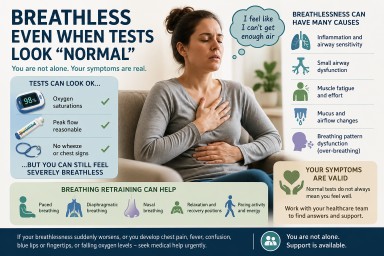
🧠 D. Managing the “vicious cycle” of breathlessness and anxiety

Breathlessness naturally triggers anxiety, which then worsens breathlessness.
Physiotherapists help break this cycle through:

  • Breathing retraining

  • Relaxation strategies

  • Education on pacing and control

This also reduces the number of A&E visits for “flare-ups” that are actually driven by breathlessness-anxiety spirals.


3. Supporting Long-Term Stability

Regular physiotherapy follow-up helps patients:

  • Spot flare-ups early

  • Adjust airway clearance routines

  • Stay active despite chronic illness

  • Prevent hospital admissions

  • Maintain independence

For many patients with aspergillosis, physio becomes a key part of long-term disease management, just like antifungals, inhalers, and specialist review.


4. When Should Patients See a Physiotherapist?

Physiotherapy is particularly helpful if you have:

  • ABPA with repeated mucus plugging

  • CPA with sputum, breathlessness, or reduced activity

  • Bronchiectasis

  • Frequent chest infections

  • Difficulty producing sputum for testing

  • Breathing pattern disorder

  • Muscle weakness from steroids or long illness

  • Unexplained breathlessness

  • Tracheal or airway collapsibility


Summary

Physiotherapy is not just an “add-on” to aspergillosis care—it is a core part of both diagnosis and treatment.
Physiotherapists help:

  • Identify airway issues

  • Support accurate testing

  • Improve breathing control

  • Clear mucus

  • Build strength and stamina

  • Stabilise long-term disease

This combination leads to better outcomes, fewer infections, and a better quality of life.


COVID Vaccines: Yes, There Is Some Risk — But COVID Infection Causes Far More Harm

People living with aspergillosis, CPA, ABPA, bronchiectasis, asthma or sarcoidosis often feel understandably anxious about vaccination.
Concerns about myocarditis, side effects, and frightening stories online are completely normal.

But when you compare the risks of the vaccine with the risks of COVID infection, a clear picture emerges:

⚠ The vaccine carries some risk

🚹 COVID infection carries far, far more risk — and affects almost everyone

This article explains that difference clearly and honestly.


1. COVID vaccines can cause harm — but this is rare

No medical treatment is risk-free.
A very small number of people experience:

  • Fever

  • Fatigue

  • Headache

  • Swollen glands

  • Sore arm

  • Mild myocarditis (usually short-lived, rare, and mostly in young men)

Serious reactions such as hospitalisation or anaphylaxis are extremely rare — roughly 1–2 cases per million doses.

We should acknowledge this openly.


2. Almost everyone has had COVID in the last five years

Across the UK and most of the world, over 90% of adults now show antibodies from a past COVID infection, even if they didn’t realise they had it.

Many infections felt like a cold or passed unnoticed, but the body still experienced real risks:

  • heart inflammation

  • blood clots

  • lung inflammation

  • long-term fatigue

  • worsening of existing lung disease

Many people have had COVID more than once, and the risks increase with repeated infections.

So when we compare vaccine risk with infection risk, we’re not discussing a rare scenario — we are talking about something nearly everyone has already experienced, often multiple times.


3. COVID vaccines have prevented millions of hospitalisations and deaths

Global studies estimate that:

  • In the first year alone, COVID vaccines prevented around 19 million deaths worldwide.

  • WHO Europe reports more than 1.4 million lives saved in Europe alone.

  • A wider analysis suggests vaccines prevented over half of all potential hospitalisations and severe outcomes across many countries.

A simple way to think about it:

For every serious vaccine reaction, the vaccine prevents tens of thousands of hospitalisations and deaths.

This benefit is especially important for people with:

  • chronic lung disease

  • aspergillosis

  • bronchiectasis

  • asthma

  • immune suppression

  • long-term steroid use

For these groups, the protective effect of vaccination is greater than average, because COVID complications are more dangerous.


4. COVID infection causes far more harm than the vaccine

This is the crucial point.

COVID infection is 30–100 times more likely to cause myocarditis than the vaccine.

And infection-related myocarditis is:

  • more severe

  • more likely to require hospital care

  • more likely to leave long-term effects

COVID infection also increases the risk of:

  • blood clots

  • heart attacks

  • strokes

  • lung scarring

  • long COVID

  • ICU admission

  • worsening of asthma, ABPA, CPA and bronchiectasis

And the risk of death from infection is hundreds of times higher than the risk from vaccination.


5. Why scare stories feel louder than scientific facts

Scary individual stories spread quickly online.
But they are rare.

What we don’t see in the same dramatic way:

  • “Thousands of vulnerable patients avoided severe illness because they were vaccinated.”

  • “Vaccination prevented hospital admissions this week.”

  • “Most myocarditis cases after vaccination recover fully within days.”

Positive outcomes never go viral — but they happen constantly.


6. What this means for people with aspergillosis

COVID infection can:

  • trigger ABPA flares

  • worsen CPA cavities

  • increase mucus blockage

  • increase breathlessness

  • raise the risk of secondary fungal infections

  • accelerate lung damage

  • lead to hospitalisation

Vaccination significantly reduces all of these risks.

For most people with aspergillosis, vaccination is far safer than repeated COVID infections.


7. A supportive message for anyone still unsure

“It's true the vaccine carries some risk — all medicines do.
But COVID infection carries far, far more risk, and nearly everyone has had it at least once already.
Vaccination is the option that best protects your heart, your lungs, and your long-term health.”


Fungal Vaccines: What New Research Could Mean for Aspergillosis Patients

Based on the 2025 Journal of Clinical Investigation commentary on emerging fungal vaccine science

jci-135-199451


Why fungal vaccines matter

Fungal infections remain a major global health problem, causing an estimated 3.8 million deaths per year. Yet despite this huge burden, there are currently no licensed vaccines to prevent or treat fungal disease.

For people living with aspergillosis—including chronic pulmonary aspergillosis (CPA), allergic bronchopulmonary aspergillosis (ABPA), severe asthma with fungal sensitisation (SAFS), and Aspergillus bronchitis—this gap is very real.
Treatments often involve long-term antifungal medications, steroids, or biologics, and symptoms may recur despite therapy.

A new scientific commentary in the Journal of Clinical Investigation highlights major progress in fungal vaccine research and suggests that vaccines may become important tools for both prevention and treatment in the future.


A new breakthrough: the Eng2 fungal antigen

Researchers studying serious fungal infections in North and South America have identified an enzyme called endoglucanase-2 (Eng2) that triggers a strong immune response:

  • It protected mice from Blastomyces, Histoplasma, and Coccidioides infections.

  • People recovering from these infections show memory CD4 T-cell responses to Eng2.

This suggests two important possibilities:

1. A preventive vaccine

A future vaccine could reduce the risk of developing serious fungal infections—especially in people with weakened immune systems or chronic lung disease.

2. A therapeutic vaccine

Unlike most vaccines, a therapeutic vaccine would be given after infection to support the immune system and help clearance—similar to how post-exposure rabies or hepatitis A vaccines work.

This second application is particularly relevant to aspergillosis.


Why fungal vaccines may be especially useful in Aspergillus disease

Although the study did not focus on Aspergillus specifically, the commentary highlights several reasons why Aspergillus vaccines are scientifically realistic.

1. Fungi are surprisingly easy to vaccinate against in animal studies

Many fungal antigens have already shown strong protective effects in experimental models.

Unlike viruses such as HIV or tuberculosis—where vaccines are extremely difficult—fungal pathogens often respond well to:

  • Antibody-based immunity

  • T-cell immunity

Both would be valuable in Aspergillus-related disease.

2. Aspergillosis mainly affects people with weakened or inflamed lungs

This makes it exactly the kind of disease where a vaccine could:

  • Reduce fungal burden in the airways

  • Decrease inflammation

  • Support existing treatments

  • Reduce flare-ups and symptoms

3. A therapeutic vaccine may arrive before a preventive vaccine

Chronic fungal diseases (especially CPA and Aspergillus bronchitis) develop slowly and persist for months or years.
This gives time for a vaccine to stimulate the immune system during ongoing treatment.

A therapeutic vaccine could:

  • Enhance the effect of antifungal drugs

  • Reduce the amount of fungus growing in cavities or bronchiectatic airways

  • Lower inflammation and antibody levels

  • Potentially reduce the need for long-term steroids or biologics in ABPA

4. A combination (“multivalent”) vaccine is possible

The Eng2 research shows that one antigen may not protect against all fungal species.
However, a “cocktail” vaccine—using several fungal proteins—could cover multiple fungi, including Aspergillus.


What this could mean for different aspergillosis conditions

For CPA (Chronic Pulmonary Aspergillosis)

A therapeutic vaccine might help:

  • Reduce fungal load in cavities

  • Improve long-term control

  • Support patients who can’t tolerate antifungals

  • Reduce reliance on prolonged azole therapy

For ABPA (Allergic Bronchopulmonary Aspergillosis)

ABPA is an allergic reaction rather than a true infection.
But reducing the amount of Aspergillus in the airways could:

  • Decrease IgE levels

  • Reduce flare frequency

  • Lower the need for steroids

  • Improve asthma control

For SAFS and Aspergillus bronchitis

A vaccine could potentially:

  • Reduce airway colonisation

  • Improve symptom control

  • Reduce the cycle of infection → inflammation → airway damage


What this means for patients today

It is important to be clear:

There is no Aspergillus vaccine available yet.

However, the science is moving faster than ever.
The commentary highlights:

  • Multiple experimental vaccines have already worked in animals

  • Some fungal vaccines have reached early human trials

  • mRNA technology (used for COVID vaccines) could accelerate development

  • High-risk groups—including people with chronic lung disease—would be early candidates

For the aspergillosis community, this research is a major step forward, offering hope for safer and more effective long-term management.


For clinicians: why this matters now

Non-specialist clinicians may want to be aware that:

  • Vaccine-based immunotherapy may become part of fungal disease management

  • Therapeutic vaccines could work alongside antifungals, rather than replacing them

  • Advances in antigen identification (e.g., Eng2) create realistic pathways for Aspergillus-specific research

  • Patient groups with chronic fungal or allergic disease may benefit significantly from immunological boosting

As fungal disease continues to rise worldwide, vaccination represents a promising future tool in managing both invasive and chronic fungal illnesses.


Looking ahead

While fungal vaccines are “so needed, so feasible, and yet still far off,” the momentum is building.
For people living with aspergillosis—often for many years—the possibility of vaccines offers genuine hope for:

  • Better control

  • Improved quality of life

  • Reduced treatment burden

  • Less risk of long-term complications

This new research marks an important step on that journey.


đŸŒĄïž Understanding Body Temperature in Aspergillosis: Why Your Fever May Look Different

Many people living with aspergillosis—including allergic bronchopulmonary aspergillosis (ABPA), chronic pulmonary aspergillosis (CPA), severe asthma with fungal sensitisation (SAFS) and Aspergillus bronchitis—notice that their body temperature behaves differently from what doctors call “normal.”

This is especially common in people who are:

  • On long-term steroids

  • Tapering steroids

  • Living with adrenal insufficiency

  • Older adults

  • On biologics

  • Managing chronic lung disease

This guide explains why your temperature may run lower, why fevers can appear smaller or absent, and how to safely manage this.


đŸ”¶ 1. Many aspergillosis patients have a lower baseline temperature

Although “37.0°C” is often quoted, most patients actually sit anywhere between 35.5–36.5°C.
Reasons include:

✔ Long-term steroids

Prednisolone, methylprednisolone, hydrocortisone, and even high-dose inhaled steroids can blunt the immune response and lower your resting temperature.

✔ Adrenal insufficiency

If your adrenal glands are suppressed, your body’s ability to raise temperature is reduced.
You may get no fever at all, even with infections.

✔ Chronic lung disease

Living with ABPA, CPA or bronchiectasis can change how your body regulates heat.

✔ Biologic treatments

Some biologics influence inflammatory signalling and may soften fever responses.

✔ Age

Older adults naturally have:

  • Lower metabolism

  • Lower baseline temperature

  • Reduced ability to generate fever (“immune senescence”)

Many older aspergillosis patients sit around 35.7–36.2°C when completely well.


đŸ”¶ 2. Fever is a rise from your normal — not a single number

For someone with a naturally low temperature, a fever may look very different.

A useful rule:

A fever = a rise of 1°C above your personal baseline,
even if the thermometer is below 38°C.

Example

  • Your baseline = 35.8°C

  • Your fever may begin at 36.8–37.0°C

You may feel shivery, hot, exhausted or “flu-ish” long before hitting 38°C.


đŸ”¶ 3. Why fevers are often “muted” in aspergillosis

✔ Steroids

Reduce the body’s ability to trigger a strong fever.

✔ Adrenal insufficiency

Greatly reduces your ability to raise temperature; infections may show as fatigue, dizziness, nausea or sudden weakness instead.

✔ Age

Older adults may have:

  • No fever

  • A tiny rise

  • Confusion or breathlessness as the only sign of infection

✔ Chronic disease

Your temperature regulation system may simply behave differently because of long-term inflammation.


đŸ”¶ 4. What YOU can do to manage this safely

✔ Know your personal baseline

Measure your temperature twice daily for 5–7 days when well.
Record the average — this is your true normal.

✔ Treat a 1°C rise as your own fever

Don’t wait for the thermometer to reach 38°C.

✔ Watch symptoms more than the number

Seek medical advice if you notice:

  • Feeling feverish or shivery

  • Breathing worsening

  • New chest or flank pain

  • Sudden exhaustion

  • Increased heart rate

  • Confusion, dizziness or “not right”

  • New cough or change in sputum

These can indicate infection even without a high temperature.

✔ Keep a symptom + temperature chart

Especially if you:

  • Are on steroids

  • Have adrenal insufficiency

  • Are tapering

  • Are on biologics

  • Have recurrent infections

Even simple notes help clinicians hugely.

✔ Tell every clinician your temperature baseline

Not all doctors will know your usual pattern, so tell them:

“My normal temperature is around X°C.
I don’t get high fevers because of chronic illness/steroids/adrenal suppression.
A small rise is significant for me.”

This is important in GP appointments, A&E, respiratory clinics and hospital admissions.


đŸ”¶ 5. Extra precautions if you have adrenal insufficiency

People with steroid-induced adrenal suppression must be especially careful:

  • A small temperature rise + feeling unwell may mean you need stress-dose steroids

  • Vomiting, dizziness, intense fatigue or confusion are warning signs

  • Always follow your adrenal emergency plan

  • Always carry your Steroid Emergency Card and hydrocortisone emergency injection if prescribed


đŸ”¶ 6. Do doctors understand this?

Most clinicians understand the general rules:

  • Older adults often do not mount high fevers

  • Steroids blunt fever

  • Adrenal insufficiency changes the febrile response

  • Infection may present atypically

However, few clinicians know your personal baseline unless you tell them.

Sharing your own numbers helps them interpret your symptoms safely and accurately.


đŸŸ© Summary for Aspergillosis Patients

  • Many people with aspergillosis have a naturally lower temperature.

  • Steroids, adrenal insufficiency and age can all reduce your ability to produce a fever.

  • A rise of 1°C above YOUR normal may be your fever.

  • Focus on overall symptoms, not just the thermometer.

  • Tell every clinician your baseline temperature.

  • Take extra care if you have adrenal insufficiency.


⭐ Recent Aspergillosis Research Updates (Week 48)

24 Nov 2025 — Collated new articles (curated highlights)

Top takeaways (clinician focus)

  • Burden & mortality: US death‑certificate analysis reinforces substantial aspergillosis‑attributable mortality; IA codes dominate—useful for advocacy and service planning (Walsh et al., CID 2025; PMID 41284728).
  • Diagnostics (CPA/ABPA & TB‑survivors): Senegalese post‑TB cohort preprint compares ELISA vs rapid serology for chronic Aspergillus infection—signals for programmatic screening but peer review pending (medRxiv PPR1125158).
  • Therapeutics & TDM: Multiple papers underscore voriconazole therapeutic drug monitoring nuances (beyond‑therapeutic levels; contribution of N‑oxide metabolite); anticipate practice pearls for ICU and complex cases.
  • Immunology & host‑directed therapy: IL‑37 review summarises antifungal‑modulating effects (↓NLRP3 signalling in murine aspergillosis). Casadevall editorial argues fungal vaccines are feasible (incl. aspirational protection for transplant recipients).
  • Comorbidity interfaces: Case data link ABPA with pleuro‑parenchymal Aspergillus infection; ECMO after heart transplant carries notable IA risk; A. niger conidia seen intracellularly in lung‑Tx cytology—diagnostic clue.
  • Antifungal susceptibility: Eastern India cohort provides local susceptibility mapping across ABPA/CPA/aspergilloma/IPA phenotypes—supports regional stewardship.
  • Policy/consensus: Asia Fungal Working Group Delphi consensus for mold pneumonia in resource‑limited settings—helpful for regional protocols.

Organised evidence table (with copy‑ready links)

  1. Aspergillosis‑attributable mortality (USA) — administrative/death‑certificate study
    Clin Infect Dis (2025) — Walsh TJ et al.
    PMID: 41284728
    https://pubmed.ncbi.nlm.nih.gov/41284728/
  2. Post‑TB cohort screening for chronic Aspergillus infection (ELISA vs RDT) — preprint
    medRxiv (2025) — Mariama T et al.
    PPR: PPR1125158
    https://www.medrxiv.org/ (search PPR1125158)
  3. Voriconazole TDM — beyond‑therapeutic levels in ICU IFI
    BMC Infect Dis (2025) — Lee YC et al.
    PMID: 41275081
    https://pubmed.ncbi.nlm.nih.gov/41275081/
  4. Voriconazole N‑oxide metabolite in TDM (case)
    Farm Hosp (2025) — Orozco Cifuentes I et al.
    PMID: 41274859
    https://pubmed.ncbi.nlm.nih.gov/41274859/
  5. Antifungal susceptibility of respiratory Aspergillus isolates (Eastern India)
    MicrobiologyOpen (2025) — Nikhil A et al.
    PMID: 41250899; PMCID: PMC12624224
    https://pubmed.ncbi.nlm.nih.gov/41250899/
    https://europepmc.org/article/PMC/12624224
  6. IL‑37 in respiratory disease (incl. aspergillosis models) — review
    Front Immunol (2025)
    PMCID: PMC12640846
    https://europepmc.org/article/PMC/12640846
  7. Fungal vaccines — feasibility editorial (aspergillosis included)
    J Clin Invest (2025) — Casadevall A
    PMID: 41243962; PMCID: PMC12618062
    https://pubmed.ncbi.nlm.nih.gov/41243962/
    https://europepmc.org/article/PMC/12618062
  8. Expert consensus: off‑label/novel antimicrobials (aspergillosis contexts cited)
    JAC Antimicrob Resist (2025)
    PMCID: PMC12641089
    https://europepmc.org/article/PMC/12641089
  9. ABPA with pleuro‑parenchymal aspergillus infection — case
    J Postgrad Med (2025) — Spalgais S et al.
    PMID: 41277380
    https://pubmed.ncbi.nlm.nih.gov/41277380/
  10. Aspergillus endophthalmitis post‑phaco — failed salvage — case
    Int Ophthalmol (2025) — Huang Z
    PMID: 41247646
    https://pubmed.ncbi.nlm.nih.gov/41247646/
  11. Heart Tx on ECMO — infections incl. IA — cohort
    Transplant Direct (2025) — Swiss Transplant Cohort
    PMID: 41268061; PMCID: PMC12629377
    https://pubmed.ncbi.nlm.nih.gov/41268061/
    https://europepmc.org/article/PMC/12629377
  12. Mold pneumonia in resource‑limited Asia — Delphi consensus
    Med Mycol (2025) — Asia Fungal Working Group
    PMID: 41251327
    https://pubmed.ncbi.nlm.nih.gov/41251327/
  13. A. niger conidia intracellular in AMs — lung Tx cytology clue — case
    Acta Microbiol Immunol Hung (2025)
    PMID: 41269231
    https://pubmed.ncbi.nlm.nih.gov/41269231/
  14. Out‑of‑pocket expenditure & QoL in CPA vs PTLD — comparative study
    J Infect Chemother (2025) — Titiyal R et al.
    PMID: 41274342
    https://pubmed.ncbi.nlm.nih.gov/41274342/
  15. Destroyed lung pneumonectomy — complications; CPA/haemoptysis associations
    J Surg Res (2025) — Yu L et al.
    PMID: 41270587
    https://pubmed.ncbi.nlm.nih.gov/41270587/
  16. Severe asthma immunity — activation signature independent of fungal sensitisation
    Mucosal Immunol (2025) — Plumpton EL et al.
    PMID: 41270906
    https://pubmed.ncbi.nlm.nih.gov/41270906/
  17. COVID‑19 & aspergillosis context — perspective linking co‑infection to chronicity risks
    Elife (2025) — Henrich TJ et al.
    PMID: 41247781; PMCID: PMC12622966
    https://pubmed.ncbi.nlm.nih.gov/41247781/
    https://europepmc.org/article/PMC/12622966
  18. NTM lung disease outcomes (Italian tertiary centre) — comorbidity context
    Sci Rep (2025) — Carli SM et al.
    PMID: 41249256; PMCID: PMC12623857
    https://pubmed.ncbi.nlm.nih.gov/41249256/
    https://europepmc.org/article/PMC/12623857
  19. Mixed mucor + IA coinfection in aplastic anaemia — fatal case
    J Med Case Rep (2025) — Javaherchian P et al.
    PMID: 41272805; PMCID: PMC12639702
    https://pubmed.ncbi.nlm.nih.gov/41272805/
    https://europepmc.org/article/PMC/12639702
  20. Sporotrichosis host genes; IA incidence observation — methods paper
    Sci Rep (2025) — Tang Z et al.
    PMID: 41272147; PMCID: PMC12638995
    https://pubmed.ncbi.nlm.nih.gov/41272147/
    https://europepmc.org/article/PMC/12638995
  21. SFTS complicated by IPA — prediction nomogram
    BMC Infect Dis (2025) — Yan R et al.
    PMID: 41275152
    https://pubmed.ncbi.nlm.nih.gov/41275152/
  22. Data resources landscape incl. Aspergillosis datasets — review
    J Med Syst (2025) — Pokutnaya D et al.
    PMID: 41273456; PMCID: PMC12640313
    https://pubmed.ncbi.nlm.nih.gov/41273456/
    https://europepmc.org/article/PMC/12640313
  23. Cell metabolism study using CAPA cohort as comparator
    Cell Mol Life Sci (2025) — Vasilogiannakopoulou T et al.
    PMID: 41258438; PMCID: PMC12630439
    https://pubmed.ncbi.nlm.nih.gov/41258438/
    https://europepmc.org/article/PMC/12630439
  24. Preprint: antibiotics → impaired neutrophil anti‑Aspergillus immunity (mouse)
    BioRxiv (2025) — Aufiero MA & Hohl TM
    PPR: PPR1122060
    https://www.biorxiv.org/ (search PPR1122060)
  25. Preprint: HosA HDAC in A. fumigatus virulence
    BioRxiv (2025) — Liu H et al.
    PPR: PPR1121973
    https://www.biorxiv.org/ (search PPR1121973)
  26. Pulmonary mucormycosis with necrotising pneumonia — differential includes aspergillosis
    BMC Pulm Med (2025) — Duong‑Minh N et al.
    PMID: 41254633; PMCID: PMC12625637
    https://pubmed.ncbi.nlm.nih.gov/41254633/
    https://europepmc.org/article/PMC/12625637
  27. Clove (S. aromaticum) essential oil in rabbit aspergillosis — preclinical
    Research Square (2025) — Shokrpoor S et al.
    PPR: PPR1121622
    https://www.researchsquare.com/ (search PPR1121622)
  28. Cross‑country multimodal evidence: Aspergillus & biliary atresia — hypothesis‑generating
    Gut Pathog (2025) — Huang SW et al.
    PMID: 41250124; PMCID: PMC12621361
    https://pubmed.ncbi.nlm.nih.gov/41250124/
    https://europepmc.org/article/PMC/12621361

🌿 Biologics when ABPA and CPA overlap: What Patients Need to Know

Understanding how they work, when they’re helpful, and when extra care is needed

Biologic medicines (such as omalizumab, mepolizumab, benralizumab, dupilumab and newer options like tezepelumab) are increasingly used to treat Allergic Bronchopulmonary Aspergillosis (ABPA) and severe asthma. They can be life-changing for some people.

However, their place in Chronic Pulmonary Aspergillosis (CPA) — especially in people who have both ABPA and CPA together — is more complicated and needs careful specialist supervision.

This article explains what we know so far.


🌟 1. ABPA and CPA are different conditions — but some people have both

  • ABPA is mainly an allergic reaction to Aspergillus in the airways.

  • CPA is a chronic fungal infection that causes cavities, scarring, and long-term lung damage.

  • Some people start with ABPA and later develop CPA, or the two conditions overlap.

  • The 2024 international ABPA guidelines now recognise this overlap as real and important.

Because biologics target allergy pathways rather than fungal infection, treatment decisions must look at both sides of the disease.


🌿 2. Biologics in ABPA: the evidence is strong and growing

Biologics can help patients with ABPA or severe asthma by:

  • reducing steroid use

  • improving breathing

  • decreasing mucus plugging

  • lowering flare-ups

  • improving quality of life

Biologics most commonly used in ABPA include:

Biologic Target Notes
Omalizumab IgE Well established, helps many ABPA patients
Mepolizumab IL-5 Helps eosinophilic inflammation
Benralizumab IL-5Rα Similar to mepolizumab; long-acting
Dupilumab IL-4Rα Very promising for allergic disease; growing evidence for ABPA
Tezepelumab TSLP Very new; limited ABPA data so far

For many people with ABPA, biologics are safe and effective when monitored.


⚠ 3. Biologics and CPA: much less evidence

  • CPA is caused by persistent fungal infection and structural lung damage.

  • Biologics do not treat fungal infection, and they do not prevent cavities.

  • In CPA, the mainstay of treatment is still:

    • antifungal medication (usually itraconazole, voriconazole or posaconazole)

    • careful imaging (CT scans)

    • airway clearance

    • sometimes surgery or bronchoscopy

There is no strong evidence that biologics help CPA itself.


🔄 4. What about patients who have both ABPA and CPA?

This is where things become more complex.

Biologics may help the allergic part (ABPA), but:

  • they do not treat fungal infection

  • they do not stop fungal cavities from progressing

  • they may reduce inflammation that normally helps the body contain infection

If antifungal treatment is interrupted or not strong enough, fungal activity may increase while the allergic symptoms improve — so regular monitoring is essential.

Specialist centres (like the NAC) now emphasise:

✔ Continue antifungals if CPA is active
✔ Watch cavities with regular CT scans
✔ Monitor Aspergillus IgG/IgE and fungal cultures
✔ Check whether symptoms are from allergy, infection, or both
✔ Make joint plans between asthma/airway doctors and mycology specialists


❓ 5. Are some biologics better than others for ABPA/CPA overlap?

There is no official guidance yet, but early observations suggest:

⭐ Most promising for ABPA:

  • Dupilumab seems particularly effective for allergic disease (IgE, mucus, airflow), though still off-label for ABPA.

⭐ Increasing interest:

  • Tezepelumab works outside the eosinophil pathway and may be useful in some asthma types, but research in ABPA is only just starting.

⭐ Useful in selected cases:

  • Anti-IL-5 biologics (mepolizumab, benralizumab) help airway eosinophils but may not help every ABPA patient.

⚠ Uncertain in CPA:

  • None of the biologics treat fungal infection or cavities directly.

  • Their role in active CPA remains unclear and requires careful oversight.


🧭 6. What this means for patients

If you have ABPA only, biologics may be an excellent option — especially if:

  • steroids cause side-effects

  • your asthma is uncontrolled

  • you have frequent flare-ups

  • your IgE levels are very high

  • mucus plugging or wheezing continues despite treatment

If you have CPA or cavities, treatment needs to be more cautious:

  • antifungal medication usually needs to continue

  • biologics may still help if the allergic component is significant

  • CT scans must be repeated to make sure cavities are not progressing

  • specialists must weigh benefits vs. risk for each patient individually


💬 7. Summary

  • Biologics can be extremely helpful for ABPA.

  • They do not treat CPA, and cannot replace antifungal medicines.

  • In patients with both ABPA and CPA, the approach must be personalised.

  • Dupilumab and (possibly) tezepelumab are emerging biologics with promise, but evidence is still developing.

  • Decisions should always be made with a specialist centre such as the National Aspergillosis Centre (NAC).