Antifungal Medicines: Dosing, Monitoring, and the Role of Specialist Care
A detailed reference for patients and non-specialist clinicians
1. Why antifungal treatment is different from most medicines
Oral antifungal medicines—especially azole antifungals—are essential for treating long-term fungal diseases such as chronic pulmonary aspergillosis and allergic bronchopulmonary aspergillosis.
They differ from many common medicines because they:
-
Have a narrow margin between effectiveness and toxicity
-
Behave very differently between individuals
-
Are often taken for months or years, not days
-
Interact with many commonly prescribed drugs
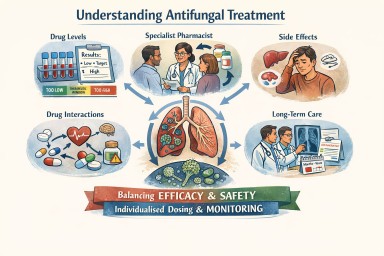
For these reasons, antifungal treatment requires individualised dosing, monitoring, and specialist input, rather than a standard fixed dose.
2. What “pharmacokinetics” means (plain language)
Pharmacokinetics describes what the body does to a drug:
-
Absorption – how well the drug enters the bloodstream from the gut
-
Distribution – how effectively it reaches tissues such as the lungs
-
Metabolism – how quickly the liver breaks it down
-
Elimination – how the drug leaves the body
Differences at any of these stages explain why the same dose can be ineffective for one person and toxic for another.
3. Different generations of azole antifungals behave differently
Each generation of azole antifungal was designed to improve effectiveness, but chemical changes also altered how the body handles the drug.
First-generation azoles (older drugs)
Examples
-
Ketoconazole
-
Fluconazole (limited activity against Aspergillus)
Key features
-
Variable absorption
-
Shorter half-life
-
Less reliable lung penetration
Clinical relevance
-
Rarely used now for chronic aspergillosis
Second-generation azoles (mainstay treatment)
Examples
-
Itraconazole
-
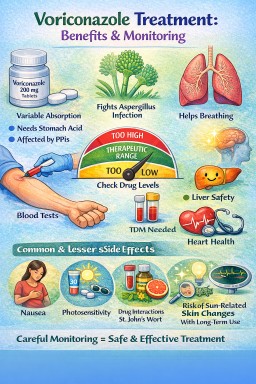
Voriconazole
-
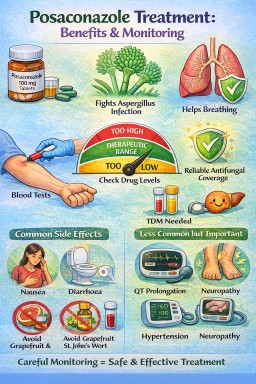
Posaconazole
Key features
-
Excellent lung and tissue penetration
-
Highly variable metabolism between people
-
Strong interaction with liver enzymes
Clinical relevance
-
Very effective
-
Blood levels vary widely
-
Dose adjustment and monitoring are often essential
Newer azoles
Example
-
Isavuconazole
Key features
-
More predictable absorption
-
Long, stable half-life
-
Fewer extreme peaks and troughs
Clinical relevance
-
Often better tolerated long-term
-
Monitoring still important, but dosing may be more stable
4. Why the “right dose” matters so much
Too little antifungal
-
Infection not adequately controlled
-
Symptoms persist or worsen
-
Risk of antifungal resistance
-
Fewer future treatment options
Too much antifungal
-
Liver irritation or damage
-
Nausea, appetite loss
-
Neurological or visual side effects
-
Drug accumulation, especially with long-term use
The aim is always the lowest dose that effectively controls the fungus.

5. How clinicians know whether the dose is right
No single test determines this. The correct dose is identified when three elements align:
1️⃣ Blood level testing (therapeutic drug monitoring)
-
Measures how much drug is actually in the bloodstream
-
Helps identify:
-
Under-dosing
-
Target-range dosing
-
Toxic levels
-
2️⃣ Clinical response
-
Symptoms stabilise or improve
-
Fewer flare-ups or complications
-
Better day-to-day function
3️⃣ Safety monitoring
-
Liver and kidney blood tests
-
Review of side effects
-
Ongoing assessment of drug interactions
Only when effectiveness and safety are both acceptable is the dose considered “right”.
6. Why the right dose can change over time
A dose that was correct initially may later need adjustment because of:
-
Weight or body-composition changes
-
Age-related metabolic changes
-
New medications (including antibiotics or steroids)
-
Changes in liver or kidney function
-
Gradual drug accumulation during long-term therapy
Regular review is therefore expected and appropriate.
7. Is it sometimes impossible to find a stable dose?
Yes. For a minority of patients, a perfectly balanced dose cannot be found.
Reasons include:
-
Extremely fast or slow drug metabolism
-
A very narrow safety window
-
Long-term toxicity despite “acceptable” blood levels
-
Unavoidable interacting medications
-
Liver, kidney, or neurological vulnerability
-
Partial or full antifungal resistance
In these cases, the dose that controls the fungus and the dose that causes side effects may overlap.
This reflects biological limits, not treatment failure.
8. What clinicians do when a stable dose cannot be achieved
Options may include:
-
Switching to a different azole with different pharmacokinetics
-
Using modified dosing schedules (split dosing, slower titration)
-
Accepting a lower suppressive dose rather than full eradication
-
Considering non-azole antifungals where appropriate
-
Prioritising symptom control and quality of life
All are intentional, safety-focused decisions.
9. The central role of the specialist pharmacist
Specialist pharmacists are key to safe antifungal care, particularly for long-term azole therapy.
They play a critical role in:
Interpreting drug levels
-
Assessing whether a level is truly low or high
-
Accounting for dose timing and formulation
-
Preventing unnecessary or unsafe dose changes
Managing drug–drug interactions
Azoles interact with many common medicines, including:
-
Steroids and inhalers
-
Heart rhythm drugs
-
Blood thinners
-
Anti-epileptics
-
Pain medications
The specialist pharmacist:
-
Reviews the full medication list
-
Anticipates interactions before harm occurs
-
Advises on adjusting both interacting drugs
Individualising dosing
When standard doses do not work, they help design:
-
Non-standard doses
-
Split dosing schedules
-
Slow titration plans
-
Alternative azoles with different pharmacokinetics
Protecting patients during long-term treatment
They monitor:
-
Trends in liver and kidney tests
-
Signs of cumulative toxicity
-
Whether symptoms may be drug-related rather than disease-related
Coordinating care
They act as a bridge between:
-
Laboratory results
-
Clinical decision-making
-
Patient experience
Their involvement often changes management, not just fine-tunes it.
10. Where antifungal drug level testing is done in the UK
In the UK, antifungal drug level testing is centralised.
-
Blood samples are taken locally
-
Samples are sent to specialist reference laboratories, most commonly the
Mycology Reference Centre Manchester -
Results are returned to the local clinical team for interpretation
Patients managed through specialist services such as the
National Aspergillosis Centre
benefit from integrated expertise in antifungal pharmacology, imaging, and long-term monitoring.
This process is routine and standard for antifungal care.
11. Key reassurance for patients
-
Dose changes are normal and expected
-
Side effects are often biology-driven, not your fault
-
Blood tests make treatment safer, not riskier
-
Switching drugs is a planned strategy, not giving up
12. One-paragraph summary
Antifungal medicines—particularly azole antifungals—have complex and highly variable behaviour in the body, with a narrow balance between effectiveness and toxicity. Safe use requires individualised dosing, therapeutic drug monitoring, symptom review, and long-term safety checks. Specialist pharmacists play a central role in interpreting drug levels, managing interactions, and tailoring treatment. For some patients, a perfectly balanced dose cannot be achieved, and alternative strategies are required. This reflects biological complexity, not failure, and the overarching aim is always effective fungal control with the best possible long-term safety and quality of life.
Hydrocortisone dosing in adrenal insufficiency
Why adrenal insufficiency can happen in people with aspergillosis
Many people with aspergillosis, particularly those with asthma-related conditions such as allergic bronchopulmonary aspergillosis (ABPA) or more severe chronic lung disease, need treatment with steroid medicines at some point. These treatments — often essential to control inflammation, protect the lungs, and improve breathing — may include repeated or long-term courses of steroids such as prednisolone.
When steroid treatment is used over time, it can reduce the body’s own production of cortisol by the adrenal glands. In some people, the adrenal glands do not fully recover, leading to adrenal insufficiency. Cortisol is a vital hormone that helps the body manage energy, illness, infection, and physical stress. When it cannot be made reliably, hydrocortisone replacement is needed to keep the body safe and functioning.
In this situation, hydrocortisone is prescribed to replace the cortisol your body can no longer make, usually after prednisolone has been reduced or stopped, or when prednisolone is no longer needed to control lung inflammation but adrenal support is still required.
Adrenal insufficiency in people with aspergillosis is not a failure and not something you have caused. It is a recognised consequence of necessary treatment for a serious, long-term condition. With the right information, a personalised dosing plan, and medical support, adrenal insufficiency can be managed safely alongside aspergillosis.
A patient guide to everyday (basal) dosing, higher-dose needs, and short-term stress dosing
If you take hydrocortisone because you have adrenal insufficiency, understanding how your dose works — both day to day and during illness or stress — is essential for your safety and wellbeing.
This guide explains:
-
What your basal (everyday) dose is for
-
Why some people need higher basal doses
-
When and how stress dosing is used — and why it is short term
-
Why some doctors may hesitate — and how to work safely with them
-
Where to find trusted patient and clinician resources
Very important first point ❗
Any changes to your hydrocortisone dose must be agreed in advance with a doctor or specialist nurse who knows your adrenal insufficiency.
This includes:
-
Your usual daily dose
-
Your stress-dosing (“sick day”) plan
-
Emergency injection instructions
This guide does not replace medical advice.
It is designed to help you understand your treatment and communicate clearly with healthcare professionals.
1) Your basal (everyday) hydrocortisone dose
What the basal dose is for
Your basal dose is the hydrocortisone you take on an ordinary day, when you are not ill or under unusual stress. Its purpose is to:
-
Replace the cortisol your body cannot make reliably
-
Support normal daily function (energy, blood pressure, mood)
-
Help your body feel stable and safe
-
Reduce the risk of chronic under-replacement
It is replacement, not treatment for inflammation.
A key point many patients are not told
Being consistently under-replaced does not help adrenal recovery.
Ongoing symptoms such as:
-
Constant exhaustion
-
Dizziness or nausea on standing
-
Brain fog or low mood
-
Poor tolerance of everyday stress
-
Frequent “crashes” or infections
can delay recovery, not speed it. Stability supports healing.
What doctors usually mean by a “physiological” dose
Most adults naturally produce the equivalent of about 15–25 mg of hydrocortisone per day.
Doctors aim for a dose in this range and adjust for:
-
Body size
-
Activity level
-
Other medical conditions
-
Individual response
This is replacement, not “high-dose steroids”.
How basal hydrocortisone is usually taken
To mimic the body’s natural rhythm, doses are often split:
-
A larger dose in the morning
-
Smaller doses later in the day
-
Avoiding late evening doses where possible
This supports:
-
Energy and blood pressure
-
Sleep
-
Mood and concentration
Signs your basal dose may be too low
Tell your doctor if you have persistent:
-
Severe fatigue despite rest
-
“Wired but empty” feeling
-
Dizziness, nausea, or salt craving
-
Poor concentration or memory
-
Low mood or anxiety
-
Frequent need for rescue or stress doses
These symptoms matter even if blood tests look reassuring.
Blood tests are only part of the picture
Cortisol and ACTH tests:
-
Help with diagnosis
-
Are less helpful for adjusting daily dose
-
Do not always reflect how well you function
Doctors experienced with adrenal insufficiency rely heavily on how you feel and cope day to day.
The right balance
Rather than “as low as possible,” a safer aim is:
Low enough to avoid overtreatment, but high enough to live a stable, functional life.
Living in constant deficit is not success.
2) When a higher basal dose may be appropriate
Some people with adrenal insufficiency — particularly those with chronic illness — may genuinely need a higher basal hydrocortisone dose (for example 25–30 mg/day).
This does not automatically mean overtreatment.
Well-recognised examples include:
Chronic inflammatory lung disease (including ABPA)
-
Ongoing airway inflammation and immune activation
-
Recurrent infective or inflammatory flares
-
The body may never be in a true “resting” state
-
Standard doses may leave patients under-replaced
-
A stable higher dose can reduce repeated stress dosing and improve daily function
Frequent infections or slow recovery
-
Repeated illness or prolonged recovery
-
Frequent “temporary” stress dosing just to cope with everyday life
Long-standing steroid-induced adrenal insufficiency
-
Years of prednisolone or similar treatment
-
Deep suppression of the adrenal system
Larger body size or higher metabolic demand
-
Cortisol needs vary with body size and activity
Autonomic symptoms or low blood pressure
-
Postural dizziness or faintness
-
Often benefit from a higher morning dose
Clinical clue:
If someone repeatedly needs stress dosing just to manage ordinary days, their basal dose may be too low for their current physiology.
Important reassurance
-
Higher basal doses can be appropriate, temporary, or longer-term
-
They do not automatically prevent recovery
-
Ongoing inflammation and repeated physiological stress suppress recovery more than adequate replacement
-
Doses should always be prescribed, documented, and reviewed
3) Stress dosing — when your body temporarily needs more
What stress dosing means
A healthy body automatically makes more cortisol during:
-
Illness or infection
-
Fever
-
Vomiting or diarrhoea
-
Injury or trauma
-
Severe pain
-
Surgery or medical procedures
-
Major physical stress
If you have adrenal insufficiency:
➡️ your body cannot do this, so doctors prescribe stress dosing in advance as part of your safety plan.
Stress dosing is essential — but it is short term
Stress dosing is meant to last only as long as the stress lasts.
It covers a temporary increase in need, not your everyday requirements.
What “short term” usually means
Stress dosing may last:
-
24–48 hours for minor illness or fever
-
Several days for infections or recovery from injury
-
During and immediately after surgery or procedures
Your doctor should advise:
-
When to increase
-
How much to increase
-
When and how to return to your usual dose
Why stress dosing should not continue indefinitely
If higher doses are needed for longer, something usually needs review:
-
Infection or inflammation has not settled
-
The basal dose may be too low
-
Another medical problem is present
If stress dosing is still needed after the original stress has passed, it’s time to talk to your doctor.
Stepping back down safely
-
Doctors usually advise returning to baseline
-
Sometimes a 1–2 day step-down is used
-
You should not remain on stress doses “just in case”
Stress dosing does NOT:
-
Stop adrenal recovery
-
Mean you are “failing”
-
Cause long-term harm when used correctly
Not stress dosing can:
-
Make you seriously unwell
-
Delay recovery
-
Lead to adrenal crisis

4) Why some doctors seem hesitant
Doctors outside endocrinology (GPs, A&E, ward teams):
-
Are trained to minimise steroid use
-
Often think of steroids only as anti-inflammatory drugs
-
May rarely manage adrenal insufficiency
What they may not realise immediately:
Your hydrocortisone is replacing a missing hormone — it is essential, not extra.
5) How to advocate safely (with medical backing)
It is appropriate to say:
“I have adrenal insufficiency. My doctor has advised stress dosing during illness to prevent adrenal crisis.”
If you have them, show:
-
Your Steroid Emergency Card
-
A written stress-dosing plan
-
A clinic letter or summary
6) Trusted resources & further support (with links)
The following organisations provide reliable, clinician-endorsed information on adrenal insufficiency, hydrocortisone replacement, stress dosing, and emergency care.
They are widely recognised by NHS endocrinology teams and safe to share with patients, families, and healthcare professionals.
UK patient and professional resources
Addison’s Disease Self-Help Group (ADSHG)
Website: https://www.addisonsdisease.org.uk
What it offers:
-
Clear explanations of basal vs stress dosing
-
Patient-friendly sick-day rules
-
Emergency hydrocortisone injection guidance
-
Downloadable patient leaflets used in NHS clinics
-
Webinars, helpline, and peer support
Why it’s useful:
ADSHG explicitly supports individualised dosing and crisis prevention.
Society for Endocrinology
Steroid Emergency Card & adrenal crisis guidance:
https://www.endocrinology.org/clinical-practice/steroid-emergency-card/
Why it’s useful:
-
Highly trusted by doctors, A&E, and ward teams
-
Clear professional wording that reassures non-specialists
-
Supports rapid decision-making in emergencies
NHS (England)
Steroid Emergency Card information:
https://www.nhs.uk/conditions/steroid-emergency-card/
Why it’s useful:
-
Official NHS backing
-
Useful for legitimacy in emergency or inpatient settings
International patient resources (useful supplements)
Endocrine Society
Patient information on adrenal insufficiency:
https://www.endocrine.org/patient-engagement/endocrine-library/adrenal-insufficiency
Why it’s useful:
-
Clear explanations of cortisol physiology
-
Conservative, authoritative tone
-
Helpful for patients seeking international consensus
National Adrenal Diseases Foundation (NADF)
Website: https://www.nadf.us
What it offers:
-
Practical sick-day rules
-
Emergency preparedness guidance
-
Injection training resources
Particularly helpful for patients with long-standing adrenal insufficiency or frequent illness.
Resources especially relevant for ABPA & chronic lung disease
National Aspergillosis Centre
Website: https://mft.nhs.uk/wythenshawe/services/infectious-diseases/national-aspergillosis-centre/
Why it’s relevant:
-
Specialist centre where ABPA and adrenal insufficiency often overlap
-
Supports personalised care plans in complex disease
Aspergillosis Trust
Website: https://www.aspergillosistrust.org
Why it’s useful:
-
Patient-focused education and advocacy
-
Helps explain the chronic physiological stress of ABPA
-
Supports conversations about higher basal hydrocortisone needs
Quick-access patient checklist (phone / wallet)
Patients are encouraged to keep:
-
Steroid Emergency Card
-
Sick-day rules (ADSHG)
-
Personal stress-dosing plan (agreed with doctor)
-
Clinic letter or summary
Many patients keep photos of these documents on their phone for emergencies.
Final reassurance
These resources support — not replace — medical advice.
They exist to help patients stay safe, informed, and confident when managing hydrocortisone and communicating with healthcare professionals.
When treatment itself causes harm: an important message for people with aspergillosis
For most people, following medical advice is the safest and most appropriate course of action. However, for some people living with aspergillosis or other long-term lung conditions, treatment itself can occasionally cause harm — particularly when adverse drug reactions are not recognised early.
Aspergillosis often requires long-term or repeated courses of medication, sometimes alongside treatment for co-existing infections or other conditions. Because symptoms of aspergillosis can overlap with medication side effects, new or worsening problems may be assumed to be part of the illness rather than a reaction to treatment.
Why this can be difficult to recognise
People with aspergillosis may:
-
already experience fatigue, breathlessness, pain, or neurological symptoms
-
take multiple medicines at the same time
-
have fluctuating symptoms due to infection, inflammation, or treatment response
This makes it harder to distinguish disease activity from drug-related effects.
The importance of recognising adverse drug reactions
Some medicines commonly used in people with lung disease can, in a small number of individuals, cause serious or long-lasting side effects. These reactions may develop gradually or worsen with continued use.
Examples (not exhaustive) include:
-
Antibiotics – tendon, nerve, gastrointestinal, cardiac or immune-related effects
-
Antifungal medicines – liver toxicity, neurological symptoms, skin reactions, drug interactions
-
Steroids – bone loss, adrenal suppression, mood changes, infection risk
-
Immunosuppressive or biologic therapies – infection risk, immune dysregulation, inflammatory reactions
Not everyone experiences these effects, and many people take these medicines safely. However, when significant new symptoms appear after starting or changing treatment, they should be actively reassessed.
Why knowledge of medication side effects matters
Patients are not expected to diagnose themselves. However, having a basic awareness of known serious side effects can help patients recognise when something may not be right.
In the UK, trusted sources such as the British National Formulary (BNF) list both common and rare but serious adverse effects for prescribed medicines, and drug:drug interactions which are particularly significant for antifungal medications. Reviewing this information can support informed discussions with healthcare professionals, particularly if symptoms worsen rather than improve.
Checking authoritative sources is not about challenging clinical expertise or stopping treatment independently. It is about ensuring that potential drug reactions are considered alongside disease progression.
A balanced message for patients and clinicians
Safe care depends on partnership. This means:
-
patients feeling able to report side effects clearly and repeatedly if needed
-
clinicians remaining alert to drug reactions, especially when symptoms are atypical or progressive
-
being willing to pause, review, and reconsider treatment when outcomes are not as expected
Early recognition of adverse drug reactions can reduce the risk of long-term or permanent harm.
Take-home message
If treatment is making you feel significantly worse, and the symptoms do not feel right for you, it is reasonable to ask for reassessment — even if the treatment is commonly used or usually well tolerated.
Being informed, listened to, and reviewed promptly helps ensure safer care for people living with aspergillosis.
Why do some people with aspergillosis lose weight on the hips and thighs, but gain around the waist?
Many people living with aspergillosis, bronchiectasis or ABPA notice their body shape changing as they get older — especially after 60.
A very common pattern is:
-
Thinner hips and legs
-
More weight around the waist or tummy
This can feel confusing, but there are clear reasons why it happens.
1. Chronic lung conditions make it harder to keep leg and hip muscle
When you live with a long-term lung condition, you often have:
-
Breathlessness
-
Fatigue
-
Repeated chest infections
-
Less ability to walk long distances or climb stairs
Because the legs work harder than any other muscles, they are the first to lose strength and size when activity drops.
This is why many people notice:
-
Slimmer thighs
-
Smaller hips
-
Feeling weaker when getting out of a chair
This is partly due to age, but it happens faster in people with chronic lung disease.
2. Steroids can move weight from the limbs to the waist
Many aspergillosis patients have had:
-
Several courses of prednisolone over the years
-
High-dose inhaled steroids
-
Hydrocortisone replacement for adrenal problems
Even short or occasional courses can cause fat redistribution, where:
-
Fat and muscle reduce in the arms, hips and legs
-
More fat settles around the stomach area
-
The centre of the body becomes rounder even if the overall weight hasn’t changed much
This effect can continue long after stopping steroids.
3. Ageing naturally shifts fat towards the waist
After about age 60, the body changes how it stores fat:
-
Less around the hips and thighs
-
More around the waist
-
More “internal” fat around organs (visceral fat)
This happens to everyone, but can be more noticeable in people with aspergillosis because illness already reduces leg muscle.
4. You can lose muscle even if weight on the scales stays the same
Many patients say,
“I feel thinner and thicker at the same time.”
That’s because:
-
Muscle in the legs may be lost
-
Fat around the waist may increase
-
The total body weight doesn’t always change much
This is a normal pattern in long-term lung disease.
5. Illness, flare-ups, infections and poor appetite add to this
During flare-ups or infections, it’s common to:
-
Eat less
-
Feel exhausted
-
Lose muscle faster
-
Keep or gain tummy fat
The body burns muscle first when unwell, not fat — especially not tummy fat.
Is this dangerous?
Not usually on its own — but it does mean:
-
Legs may feel weaker
-
Balance and stamina can reduce
-
It may be harder to stay active
Strength and gentle exercise (within your limits) can help rebuild some leg muscle.
If weight changes are sudden or unexplained, they should always be discussed with your GP or specialist.
In summary
This body-shape change is very common in people with aspergillosis over 60.
It’s caused by a combination of:
-
Reduced activity due to breathlessness
-
Loss of leg and hip muscle
-
Steroid effects on fat distribution
-
Natural age-related changes
-
Appetite changes during illness
It doesn’t mean you’re doing anything wrong — it’s simply a pattern seen in many people with long-term lung disease.
COVID Vaccines: Yes, There Is Some Risk — But COVID Infection Causes Far More Harm
People living with aspergillosis, CPA, ABPA, bronchiectasis, asthma or sarcoidosis often feel understandably anxious about vaccination.
Concerns about myocarditis, side effects, and frightening stories online are completely normal.
But when you compare the risks of the vaccine with the risks of COVID infection, a clear picture emerges:
⚠️ The vaccine carries some risk
🚨 COVID infection carries far, far more risk — and affects almost everyone
This article explains that difference clearly and honestly.
1. COVID vaccines can cause harm — but this is rare
No medical treatment is risk-free.
A very small number of people experience:
-
Fever
-
Fatigue
-
Headache
-
Swollen glands
-
Sore arm
-
Mild myocarditis (usually short-lived, rare, and mostly in young men)
Serious reactions such as hospitalisation or anaphylaxis are extremely rare — roughly 1–2 cases per million doses.
We should acknowledge this openly.
2. Almost everyone has had COVID in the last five years
Across the UK and most of the world, over 90% of adults now show antibodies from a past COVID infection, even if they didn’t realise they had it.
Many infections felt like a cold or passed unnoticed, but the body still experienced real risks:
-
heart inflammation
-
blood clots
-
lung inflammation
-
long-term fatigue
-
worsening of existing lung disease
Many people have had COVID more than once, and the risks increase with repeated infections.
So when we compare vaccine risk with infection risk, we’re not discussing a rare scenario — we are talking about something nearly everyone has already experienced, often multiple times.
3. COVID vaccines have prevented millions of hospitalisations and deaths
Global studies estimate that:
-
In the first year alone, COVID vaccines prevented around 19 million deaths worldwide.
-
WHO Europe reports more than 1.4 million lives saved in Europe alone.
-
A wider analysis suggests vaccines prevented over half of all potential hospitalisations and severe outcomes across many countries.
A simple way to think about it:
For every serious vaccine reaction, the vaccine prevents tens of thousands of hospitalisations and deaths.
This benefit is especially important for people with:
-
chronic lung disease
-
aspergillosis
-
bronchiectasis
-
asthma
-
immune suppression
-
long-term steroid use
For these groups, the protective effect of vaccination is greater than average, because COVID complications are more dangerous.
4. COVID infection causes far more harm than the vaccine
This is the crucial point.
COVID infection is 30–100 times more likely to cause myocarditis than the vaccine.
And infection-related myocarditis is:
-
more severe
-
more likely to require hospital care
-
more likely to leave long-term effects
COVID infection also increases the risk of:
-
blood clots
-
heart attacks
-
strokes
-
lung scarring
-
long COVID
-
ICU admission
-
worsening of asthma, ABPA, CPA and bronchiectasis
And the risk of death from infection is hundreds of times higher than the risk from vaccination.
5. Why scare stories feel louder than scientific facts
Scary individual stories spread quickly online.
But they are rare.
What we don’t see in the same dramatic way:
-
“Thousands of vulnerable patients avoided severe illness because they were vaccinated.”
-
“Vaccination prevented hospital admissions this week.”
-
“Most myocarditis cases after vaccination recover fully within days.”
Positive outcomes never go viral — but they happen constantly.
6. What this means for people with aspergillosis
COVID infection can:
-
trigger ABPA flares
-
worsen CPA cavities
-
increase mucus blockage
-
increase breathlessness
-
raise the risk of secondary fungal infections
-
accelerate lung damage
-
lead to hospitalisation
Vaccination significantly reduces all of these risks.
For most people with aspergillosis, vaccination is far safer than repeated COVID infections.
7. A supportive message for anyone still unsure
“It's true the vaccine carries some risk — all medicines do.
But COVID infection carries far, far more risk, and nearly everyone has had it at least once already.
Vaccination is the option that best protects your heart, your lungs, and your long-term health.”
🌡️ Understanding Body Temperature in Aspergillosis: Why Your Fever May Look Different
Many people living with aspergillosis—including allergic bronchopulmonary aspergillosis (ABPA), chronic pulmonary aspergillosis (CPA), severe asthma with fungal sensitisation (SAFS) and Aspergillus bronchitis—notice that their body temperature behaves differently from what doctors call “normal.”
This is especially common in people who are:
-
On long-term steroids
-
Tapering steroids
-
Living with adrenal insufficiency
-
Older adults
-
On biologics
-
Managing chronic lung disease
This guide explains why your temperature may run lower, why fevers can appear smaller or absent, and how to safely manage this.
🔶 1. Many aspergillosis patients have a lower baseline temperature
Although “37.0°C” is often quoted, most patients actually sit anywhere between 35.5–36.5°C.
Reasons include:
✔ Long-term steroids
Prednisolone, methylprednisolone, hydrocortisone, and even high-dose inhaled steroids can blunt the immune response and lower your resting temperature.
✔ Adrenal insufficiency
If your adrenal glands are suppressed, your body’s ability to raise temperature is reduced.
You may get no fever at all, even with infections.
✔ Chronic lung disease
Living with ABPA, CPA or bronchiectasis can change how your body regulates heat.
✔ Biologic treatments
Some biologics influence inflammatory signalling and may soften fever responses.
✔ Age
Older adults naturally have:
-
Lower metabolism
-
Lower baseline temperature
-
Reduced ability to generate fever (“immune senescence”)
Many older aspergillosis patients sit around 35.7–36.2°C when completely well.
🔶 2. Fever is a rise from your normal — not a single number
For someone with a naturally low temperature, a fever may look very different.
A useful rule:
A fever = a rise of 1°C above your personal baseline,
even if the thermometer is below 38°C.
Example
-
Your baseline = 35.8°C
-
Your fever may begin at 36.8–37.0°C
You may feel shivery, hot, exhausted or “flu-ish” long before hitting 38°C.
🔶 3. Why fevers are often “muted” in aspergillosis
✔ Steroids
Reduce the body’s ability to trigger a strong fever.
✔ Adrenal insufficiency
Greatly reduces your ability to raise temperature; infections may show as fatigue, dizziness, nausea or sudden weakness instead.
✔ Age
Older adults may have:
-
No fever
-
A tiny rise
-
Confusion or breathlessness as the only sign of infection
✔ Chronic disease
Your temperature regulation system may simply behave differently because of long-term inflammation.
🔶 4. What YOU can do to manage this safely
✔ Know your personal baseline
Measure your temperature twice daily for 5–7 days when well.
Record the average — this is your true normal.
✔ Treat a 1°C rise as your own fever
Don’t wait for the thermometer to reach 38°C.
✔ Watch symptoms more than the number
Seek medical advice if you notice:
-
Feeling feverish or shivery
-
Breathing worsening
-
New chest or flank pain
-
Sudden exhaustion
-
Increased heart rate
-
Confusion, dizziness or “not right”
-
New cough or change in sputum
These can indicate infection even without a high temperature.
✔ Keep a symptom + temperature chart
Especially if you:
-
Are on steroids
-
Have adrenal insufficiency
-
Are tapering
-
Are on biologics
-
Have recurrent infections
Even simple notes help clinicians hugely.
✔ Tell every clinician your temperature baseline
Not all doctors will know your usual pattern, so tell them:
“My normal temperature is around X°C.
I don’t get high fevers because of chronic illness/steroids/adrenal suppression.
A small rise is significant for me.”
This is important in GP appointments, A&E, respiratory clinics and hospital admissions.
🔶 5. Extra precautions if you have adrenal insufficiency
People with steroid-induced adrenal suppression must be especially careful:
-
A small temperature rise + feeling unwell may mean you need stress-dose steroids
-
Vomiting, dizziness, intense fatigue or confusion are warning signs
-
Always follow your adrenal emergency plan
-
Always carry your Steroid Emergency Card and hydrocortisone emergency injection if prescribed
🔶 6. Do doctors understand this?
Most clinicians understand the general rules:
-
Older adults often do not mount high fevers
-
Steroids blunt fever
-
Adrenal insufficiency changes the febrile response
-
Infection may present atypically
However, few clinicians know your personal baseline unless you tell them.
Sharing your own numbers helps them interpret your symptoms safely and accurately.
🟩 Summary for Aspergillosis Patients
-
Many people with aspergillosis have a naturally lower temperature.
-
Steroids, adrenal insufficiency and age can all reduce your ability to produce a fever.
-
A rise of 1°C above YOUR normal may be your fever.
-
Focus on overall symptoms, not just the thermometer.
-
Tell every clinician your baseline temperature.
-
Take extra care if you have adrenal insufficiency.
Side effects from Biologic Medication
It’s completely understandable to feel unsure before starting a biologic — especially when you’ve heard different experiences from different people.
Most patients with ABPA or severe Aspergillus-related asthma do very well on biologics. Side effects can happen, but they’re usually mild and settle quickly.
🌟 Most people report very few problems
Patients often say:
-
The injections are straightforward
-
They feel the same or better within days or weeks
-
There’s little or no impact on daily life
🌟 Common, mild side effects
These are the ones we hear most often across omalizumab, benralizumab, dupilumab and tezepelumab:
📌 Injection-site reactions
-
Redness
-
Itching
-
A small tender lump
-
Bruising
These usually disappear within 24–48 hours.
📌 Mild tiredness
Some people feel slightly “wiped out” after the first few doses.
📌 Headache
Very common with the first injection. Less so afterwards.
📌 Minor joint or muscle aches
A bit like the feeling after a flu jab.
📌 Nasal or sinus changes
Occasional mild dryness or congestion, especially with dupilumab.
🌟 Less common (still mild)
-
Mild tummy upset
-
Sore throat
-
A brief “flu-ish” feeling
-
Temporary increase in eczema (mainly with dupilumab)
-
Slight mood dip for a day or two (rare)
🌟 Rare but important
These are very uncommon, and your team will explain what to look out for:
-
Allergic reaction shortly after an injection
(This is why your first dose is supervised.) -
Eye inflammation — mostly linked to dupilumab, usually mild and treatable
Your team will give you clear advice on what to do if anything unusual happens.
🌟 What ABPA patients often notice
People with ABPA frequently describe:
👉 Fewer allergic symptoms
👉 Clearer breathing
👉 Much less mucus
👉 Fewer flare-ups and fewer steroids
But biologics don’t help everyone — which is why the first few months are monitored closely.
🌟 Final reassurance
For many aspergillosis patients, biologics are far easier than long-term steroids or antifungals. Most say the benefits outweigh the side effects — but every person’s experience is individual.
**Adrenal Insufficiency & Steroid Tapering:
A Complete Patient Guide**
People taking long-term steroids (prednisolone, methylprednisolone, hydrocortisone, dexamethasone) can develop adrenal insufficiency because their adrenal glands “go to sleep” and stop making cortisol.
During tapering, the body must slowly “wake up” again — and this needs careful monitoring.
This guide explains the symptoms, tests, warning signs, and emergency precautions to keep you safe.
⭐ 1. Why adrenal insufficiency happens
Long-term steroid use suppresses the HPA axis (hypothalamus–pituitary–adrenal system).
When daily steroid doses are reduced, your body must produce more of its own cortisol. This takes time.
If the steroid reduction is too quick, or the body is under stress, low cortisol symptoms appear.
⭐ 2. Symptoms to watch for during steroid tapering
These are early signs that your body may not be keeping up with the reduction.
✔ Early, mild symptoms
-
Fatigue / sudden exhaustion
-
Muscle weakness
-
Dizziness when standing
-
Nausea or reduced appetite
-
Flu-like aching
-
Low mood, anxiety, irritability
-
Brain fog
-
Feeling unusually cold
-
Worsening joint or muscle pain
These often improve if the taper is slowed or paused.
⭐ 3. More serious symptoms of low cortisol
These symptoms suggest steroid levels are too low and the taper needs urgent review:
-
Vomiting
-
Persistent dizziness
-
Very low blood pressure
-
Severe fatigue (unable to function normally)
-
Salt cravings
-
Ongoing nausea preventing eating
-
Faintness or near-collapse
These require medical advice (same day).
⭐ 4. Emergency symptoms — possible adrenal crisis
Call 999 or go to A&E immediately if you develop:
-
Severe vomiting or diarrhoea
-
Collapse or inability to stand
-
Severe dehydration
-
Confusion
-
Sudden severe abdominal or back pain
-
Pale, clammy skin
-
Rapid breathing
-
Loss of consciousness
This is a medical emergency.
Patients normally receive 100 mg hydrocortisone IM/IV, but patients allergic to hydrocortisone require a pre-agreed emergency alternative — your endocrinologist must document this clearly.
⭐ 5. Symptoms that mean you may need a temporary “stress dose” of steroids
Your cortisol requirement increases during physical stress.
If you have adrenal suppression, your body cannot produce this extra cortisol.
You may need a temporary increase in dose if you have:
✔ Illness
-
Fever
-
Chest infection
-
Flu-like illness
-
COVID
-
Urinary infection
-
Gastroenteritis
-
Diarrhoea
-
Persistent nausea
✔ Physical stress
-
Injury
-
Significant fall
-
Severe pain
-
Dental surgery
-
Medical or surgical procedures
✔ Emotional stress
-
Bereavement
-
Panic attacks
-
Trauma
If vomiting prevents taking steroids → seek emergency help immediately.
⭐ 6. Tests used to monitor adrenal function during tapering
Doctors rely on a combination of symptoms and laboratory tests.
✔ Morning cortisol (8–9 am)
A key test to assess recovery.
Typical interpretation:
-
> 400–500 nmol/L → likely normal function
-
150–350 nmol/L → recovering / borderline
-
< 100 nmol/L → adrenal insufficiency
(Exact thresholds vary.)
✔ ACTH level
Shows whether the pituitary is trying to stimulate the adrenals.
-
Low ACTH → still suppressed
-
High ACTH → trying to wake adrenals
-
Normal ACTH + low cortisol → gland slow to respond
✔ Short Synacthen Test (SST)
Gold standard.
A small ACTH injection tests whether your adrenal glands can produce cortisol.
Used when:
-
taper reaches low doses
-
symptoms appear
-
deciding if steroids can be stopped
✔ Electrolytes (U&Es)
Low cortisol may cause:
-
Low sodium
-
High potassium (less common in steroid-induced insufficiency)
✔ Blood pressure monitoring
Low cortisol → low BP, dizziness, faintness.
✔ Glucose levels
Low-normal glucose and shakiness may occur during withdrawal.
✔ Clinical symptom review
Symptoms are sometimes more sensitive than tests.
Doctors track:
-
fatigue
-
appetite
-
dizziness
-
illness triggers
-
salt cravings
-
mental state
-
recovery after small dose increases
⭐ 7. How tapering decisions are made
Tapering depends on:
-
how long steroids have been taken
-
current dose
-
symptoms
-
test results
-
presence of illness
-
rate at which symptoms develop
-
allergy restrictions (pred/hydrocortisone allergy requires specialist handling)
General principles (not schedules):
-
Higher doses can reduce more quickly.
-
Taper slows dramatically near physiological levels
(~4–6 mg pred-equivalent). -
If symptoms appear → pause, slightly increase, or slow taper.
-
SST is used near the end to confirm recovery.
⭐ 8. When to contact your medical team
Same day advice needed
-
worsening dizziness
-
persistent nausea
-
new vomiting
-
symptoms appear with each taper step
-
fainting
-
new severe fatigue
-
any infection (urinary, chest, flu)
Urgent / A&E
-
collapse
-
severe vomiting/diarrhoea
-
confusion
-
severe abdominal pain
-
unable to take oral steroids
-
suspected adrenal crisis
⭐ 9. What patients should do to stay safe
-
Carry a Steroid Emergency Card at all times
-
Keep emergency instructions from your endocrinologist
-
Know your Sick Day Rules
-
Ensure A&E or ambulance crews know about corticosteroid allergy
-
Keep a written record of tapering plan
-
Never stop steroids suddenly
-
Be cautious during illness
-
Know your emergency steroid plan (alternative if allergic to hydrocortisone)
⭐ Final reassurance
Adrenal insufficiency during tapering is common, manageable, and often reversible.
By monitoring symptoms, using regular blood tests, and following specialist guidance, tapering can be done safely.
You are not alone — your endocrine team will guide every step, especially if allergies (to prednisolone or hydrocortisone) make your case more complex.
With careful observation and a clear emergency plan, serious complications are rare and preventable.
🌿 Your Immune System, Biologics, and Steroids: What’s Suppressed — and What Stays Strong
A clear, reassuring guide for people living with ABPA, CPA, asthma, SAFS, or bronchiectasis
Treatments for aspergillosis-related conditions often involve steroids, and more recently, biologics.
Many patients understandably wonder:
-
What do these medicines suppress?
-
Do they affect my ability to fight infection?
-
Why are biologics considered safer than long-term steroids?
-
Which parts of my immune system stay strong?
This guide explains the full picture in simple terms.
🧬 1. Understanding Your Immune System: The Three Layers
Your immune system has three major lines of defence.
⭐ A. Barriers — the first line
These stop pathogens entering in the first place:
-
Skin
-
Mucus in airways
-
Cilia sweeping mucus out
-
Tears, saliva, stomach acid
-
Healthy bacteria (microbiome)
👉 Biologics do NOT affect barriers.
👉 Steroids can weaken skin and airway lining if used long-term.
⭐ B. Innate immunity — fast responders
These act within minutes or hours.
Key cells:
-
Neutrophils → main killers of Aspergillus
-
Macrophages → engulf spores
-
Dendritic cells → show pathogens to T-cells
-
NK cells → kill virus-infected cells
Sensors:
-
Dectin-1 → recognises fungal walls
-
TLRs
-
Complement proteins
👉 Biologics do NOT weaken these.
👉 Steroids weaken several key functions, especially neutrophils and macrophages.
⭐ C. Adaptive immunity — targeted, long-term defence
Slower but specialised.
T-cells:
-
Th1 → fight bacteria/viruses
-
Th17 → major antifungal fighters
-
Th2 → allergic pathways (IgE, eosinophils)
-
Tregs → calm inflammation
B-cells & antibodies:
-
IgG / IgA / IgM → normal infection defence
-
IgE → allergy and ABPA pathway
👉 Biologics only suppress Th2/IgE pathways.
👉 Steroids suppress many T-cell and B-cell functions, not just allergy.
🎯 2. What Biologics Suppress (Targeted & Selective)
Biologics used in ABPA and difficult asthma (omalizumab, mepolizumab, benralizumab, dupilumab, tezepelumab) only turn down allergic inflammation, not infection-fighting immunity.
🔻 A. They suppress:
-
IgE
-
Eosinophils
-
IL-4 / IL-5 / IL-13
-
Type-2 allergic inflammation
-
Mucus hypersecretion (IL-13)
-
TSLP airway alarm signalling
🛡️ B. They do NOT suppress:
-
Neutrophils
-
Macrophages
-
Th1 immunity
-
Th17 antifungal pathways
-
T-cell killing function
-
Antibiotic/cell-mediated defences
-
Complement
-
Dectin-1 fungal recognition
This is why biologics do NOT increase fungal infection risk.
🔥 3. What Oral Steroids Suppress (Broad & Non-Specific)
Oral steroids like prednisolone reduce inflammation everywhere — including places you need for infection defence.
❌ A. They suppress key immune cells
-
Neutrophils → move slower, kill less effectively
-
Macrophages → reduced pathogen killing
-
T-cells → weaker antiviral/antifungal defence
-
B-cells → reduced antibody production
❌ B. They suppress important cytokines
-
IL-1, IL-2, IL-6
-
TNF-α
-
Interferons
-
IL-12, IL-23 (Th1/Th17 pathways)
These are essential for fighting viruses, bacteria, and fungi.
❌ C. They weaken antigen presentation
Dendritic cells and macrophages become less effective at “showing” pathogens to T-cells.
❌ D. They weaken barriers
-
Thinner skin
-
Thinner airway lining
-
Slower wound healing
This increases infection risk.
❌ E. They reduce eosinophils and IgE (similar to biologics)
But they do this alongside suppressing many healthy parts of your immune system.
🛡️ 4. What Remains Intact on Each Treatment
✔ On biologics (strongest preserved immunity):
-
Neutrophil antifungal killing
-
Macrophage function
-
Th1 & Th17 immunity
-
Antibodies (IgG, IgA, IgM)
-
Complement
-
Mucus & cilia defences
-
NK cell antiviral defence
-
Fever & inflammation responses
⚠️ On steroids (weaker preserved immunity):
-
Complement
-
Some antibody production
-
Basic barrier function (though thinner)
Many infection-fighting cells work less effectively.
🫁 5. Why Biologics Are Safer Long-Term for ABPA/SAFS
Because biologics:
-
target only a tiny portion of immunity
-
do not increase fungal growth
-
do not raise infection risk
-
reduce inflammation without broad suppression
-
help avoid long-term steroid complications
Steroids:
-
increase infection risk
-
can worsen fungal colonisation
-
damage lung structure over time
-
cause weight gain, bone thinning, adrenal issues
-
must be used short-term only when essential
🌈 6. Summary Table
| Immune Feature | Biologics | Steroids |
|---|---|---|
| IgE suppression | ✔ | ✔ |
| Eosinophil suppression | ✔ | ✔ |
| Neutrophils | Unaffected | Suppressed |
| Macrophages | Unaffected | Suppressed |
| Th1/Th17 antifungal pathways | Unaffected | Suppressed |
| Viral defence | Unaffected | Suppressed |
| Barrier integrity | Unaffected | Weakened |
| Infection risk | No increase | Increased |
| Long-term safety | High | Low |
🌟 7. One-Sentence Takeaway
Biologics turn down the allergic part of immunity (IgE, IL-4, IL-5, IL-13, eosinophils), while steroids suppress many of the infection-fighting parts as well — which is why biologics are much safer long-term.
Inhaled Steroids and ABPA: Do They Help or Should They Be Avoided?
Many people living with allergic bronchopulmonary aspergillosis (ABPA) also use inhaled steroid inhalers such as Symbicort, Fostair, Seretide or Clenil. It’s common to feel confused about whether these inhalers help, whether they should be continued, or whether they could cause harm.
This guide explains what inhaled steroids do, what they don’t do, and how they fit into the treatment of ABPA, asthma, and bronchiectasis.
1. Understanding the basics
What are inhaled steroids?
Inhaled corticosteroids (ICS) are medications breathed directly into the lungs to reduce airway inflammation, especially in asthma. Combination inhalers (e.g., Symbicort, Fostair) contain a steroid + a long-acting bronchodilator.
What they don’t do
Inhaled steroids do not treat ABPA itself.
ABPA is caused by an immune over-reaction to Aspergillus in the lungs. This reaction sits too deep in the airways for inhaled steroids to reach, and the inflammation is too strong for inhaled doses to control.
This is why ABPA flares are treated with:
-
Oral steroids, or
-
Biologics, such as mepolizumab, benralizumab, dupilumab or omalizumab.
2. Why inhaled steroids are still useful for many ABPA patients
Although inhaled steroids don’t treat ABPA directly, most people with ABPA also have asthma.
In asthma:
-
the airways are twitchy
-
inflamed
-
narrow easily
-
and respond well to inhaled steroids
If your symptoms include wheeze, chest tightness, breathlessness that varies from day to day, or a good response to your reliever inhaler, there is a strong chance that asthma is part of your condition.
In those cases, inhaled steroids can be very helpful in keeping the asthma component under control.
3. When inhaled steroids may offer little benefit
Some patients with ABPA have:
-
minimal asthma
-
mainly bronchiectasis
-
or are fully controlled on a biologic
In these situations, inhaled steroids might not provide much additional benefit and occasionally can increase the risk of airway infections, especially in people with significant bronchiectasis.
This is why doctors sometimes sound vague: the answer genuinely depends on your individual mix of ABPA, asthma, and bronchiectasis.
4. How biologics change the picture
Biologics used for ABPA and asthma (e.g., benralizumab, mepolizumab, dupilumab) reduce airway inflammation far more effectively than inhaled steroids. Once a patient is stable on a biologic, many specialists will slowly reduce the inhaled steroid dose if asthma symptoms remain well-controlled.
This does not happen quickly — it is done gradually and only if your breathing tests and symptoms stay stable.
5. Why there is no simple “yes” or “no” answer
Doctors often hesitate to give a straight answer because inhaled steroids can be:
-
Essential for asthma
-
Optional for mild asthma
-
Less useful if ABPA is the main issue
-
Potentially overused in some bronchiectasis patients
-
Safely reduced in people doing well on biologics
Your treatment has to sit in the right place on that spectrum.
6. Questions that can help you get a clear answer from your own team
Many patients say they receive vague responses. These direct questions can help:
✔ “Am I using this inhaler for my asthma, or for my ABPA?”
(If it’s for ABPA, that usually signals a misunderstanding.)
✔ “Do you think my asthma is active, and is the dose of inhaled steroid still appropriate?”
This invites your clinician to be specific.
✔ “If I stay stable on my biologic, could we review the inhaled steroid dose in the future?”
This aligns with typical specialist practice.
7. The bottom line
-
Inhaled steroids do not treat ABPA itself.
-
They are helpful if you also have asthma — which many ABPA patients do.
-
They may be less useful if asthma is mild or absent, especially in pure bronchiectasis.
-
When patients stabilise on biologics, inhaled steroid doses are often reviewed and sometimes reduced.
-
The best approach is individual: the right treatment mix varies from patient to patient.
If you’re unsure what role your inhaler is playing, it’s absolutely reasonable to ask your specialist to explain exactly why you’re on it and whether the dose is still right for you.