Hyper-IgE syndromes (HIES) are rare inherited conditions that affect how the immune system works. People with HIES often have very high levels of immunoglobulin E (IgE), but high IgE does not mean that the immune system is working more effectively.
HIES is not the same as having allergies, asthma or ABPA, although there can be overlap. It is a primary immunodeficiency: a problem with the immune system itself that can make certain infections harder to prevent and treat.
What are the signs of hyper-IgE syndrome?
Symptoms vary between people and between the different forms of HIES. They often begin in childhood and may include:
- long-standing eczema or very sensitive skin
- recurrent skin infections or boils
- repeated chest, sinus or ear infections
- very high IgE and raised eosinophils on blood tests
- bronchiectasis or other lung damage after repeated infections
- in some forms, dental, bone, joint or connective-tissue problems.
Several different genetic changes can cause HIES. The two better-known forms involve the STAT3 and DOCK8 genes, but this is a group of related conditions rather than one single disease.
Why does it matter in aspergillosis?
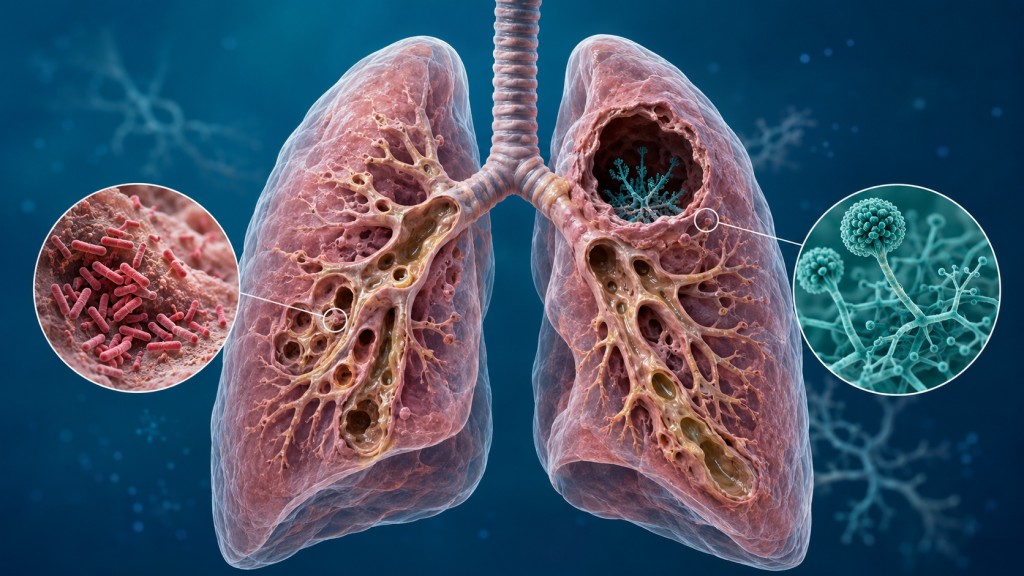
Repeated lung infections can lead to bronchiectasis, scarring or cavities in the lungs. These changes can make it easier for Aspergillus to cause problems.
People with HIES may develop different forms of aspergillosis, including allergic disease or more persistent fungal infection in damaged areas of lung. Their treatment and monitoring often need to be planned jointly by immunology, respiratory and infectious-disease or fungal-infection specialists.
High IgE alone does not diagnose HIES. Many people with asthma, eczema, ABPA or other allergic conditions have raised IgE without having a primary immunodeficiency.
How is HIES diagnosed?
Diagnosis is based on the overall pattern of infections, skin and lung problems, blood tests, family history and, where appropriate, genetic testing. A clinical immunology team will usually lead this assessment.
If you have recurrent or unusual infections, severe eczema, markedly raised IgE, or a family history of immune problems, ask your doctor whether an immunology opinion would be helpful.
How is it managed?
There is no single treatment that suits everyone. The aim is to prevent infections where possible, treat them promptly, protect the lungs and support day-to-day health. Depending on the type of HIES and the person’s needs, care may include:
- regular review by an immunology team
- prompt investigation and treatment of infections
- antibiotics or antifungal medicines when clinically needed
- immunoglobulin replacement for some people
- airway-clearance physiotherapy and treatment for bronchiectasis
- monitoring of lung health, medicines and possible drug interactions.
Your own team will advise on vaccinations, infection prevention and medicines. Do not make changes to antibiotics, antifungals or steroids without discussing them with the clinician who prescribes them.
Further information
Immunodeficiency UK: Hyper-IgE syndromes
This page provides general information and does not replace advice from your own specialist team.

Did this page help you?
Tell us in one minute