People living with aspergillosis have knowledge that cannot be found in a scan, blood test or textbook: what it is really like to seek a diagnosis, manage treatment, cope with uncertainty and keep living life. The European Aspergillosis Patient Advisory Group (PAG) is making sure that experience helps shape the future.
From patient to partner
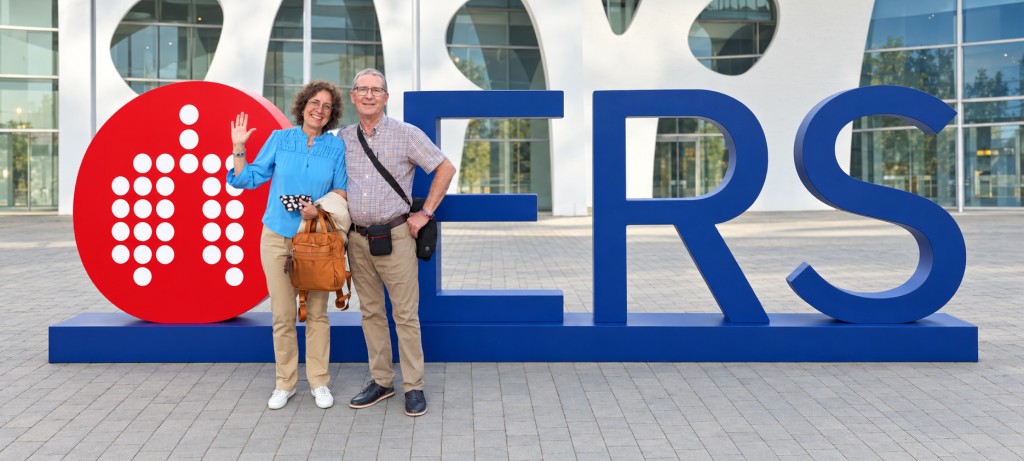
At the 2026 European Respiratory Society (ERS) Congress, the PAG presented a poster describing how a small European patient network has grown over two years—from people receiving information and support to partners helping shape education, research and awareness.
Its message was simple: involving people with lived experience early helps projects ask better questions, use clearer language and reflect the realities of day-to-day life with aspergillosis.
What is the European Aspergillosis PAG?
The European Aspergillosis PAG was established within the European Lung Foundation to bring patient perspectives into CPAnet, the ERS Clinical Research Collaboration for chronic pulmonary aspergillosis. It has developed in collaboration with the National Aspergillosis Centre and Aspergillosis Trust.
Its active members bring experience from six European countries: the United Kingdom, Belgium, Denmark, the Netherlands, Portugal and Ireland. Together, they are building a bridge between patients, clinicians, researchers and patient organisations.
What has the group been doing?
The PAG’s contribution is practical, not tokenistic. Members have helped to:
- identify priorities and shape research questions;
- review study plans, participant information and recruitment materials;
- co-produce leaflets, webinars, presentations and other patient education;
- make research findings clearer and more useful for patients;
- share lived experience at meetings, conferences and awareness events; and
- help build a more connected international aspergillosis community.
Over the past two years, this has included patient meetings, World Aspergillosis Day activity, an online event with participants from 49 countries, and resources made available in nine languages.
Why it matters: a research project or information resource may be scientifically excellent, but it will work better if it also makes sense in real life—when someone is tired, worried, managing several medicines or trying to explain a rare disease to family, friends or an employer.
ERS: taking patient involvement into the respiratory community
ERS is one of the world’s major meetings for respiratory medicine. It brings together clinicians, researchers, allied health professionals and patient organisations to share new evidence, develop collaborations and discuss the future of lung health. For a rare disease such as aspergillosis, it is an important place to be seen and heard.
Presenting at ERS made the PAG’s work visible to the wider respiratory community. It helped show that people affected by a rare fungal lung disease can contribute to better research, better information and better care—not simply as participants, but as collaborators. Being in the room also helps ensure that patient priorities are considered early, while studies, resources and services are still being designed.
It also helps connect aspergillosis with the broader respiratory community. Many people with aspergillosis are cared for alongside asthma, bronchiectasis, COPD, tuberculosis or other lung conditions. Raising awareness at ERS can help more professionals recognise the disease, understand its impact and know where specialist expertise and patient support can be found.
The poster followed the journey from lived experience, through connection and support, to confidence to contribute, collaboration and patient partnership and leadership.
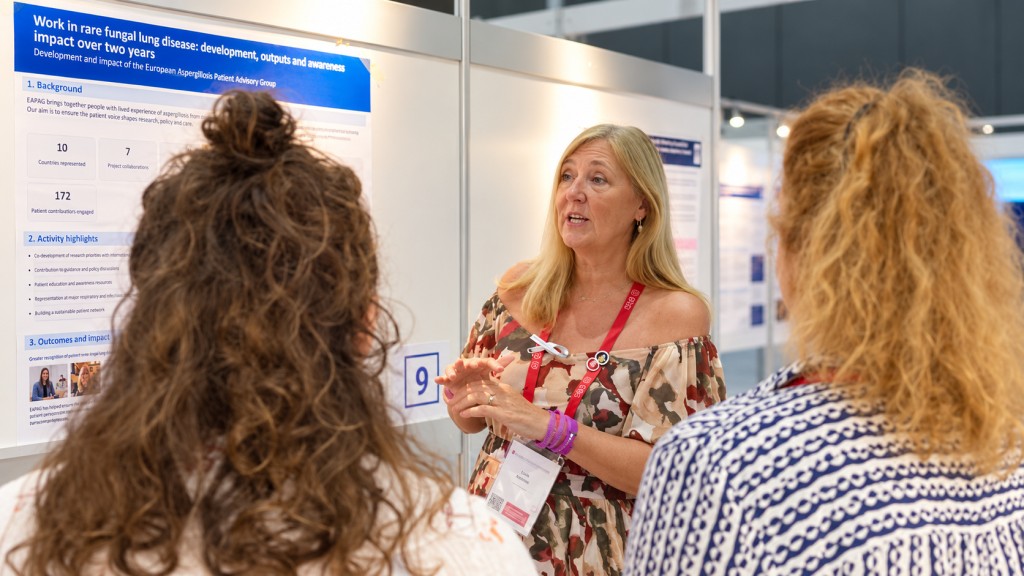
“It was a really proud moment standing there and sharing what we have achieved together over the last two years. What started as a small group of patients has grown into a European network, and it’s wonderful to see the work we are doing being shared in this setting with delegates, clinicians and researchers from across Europe and beyond.
But most importantly, this is our story. Every one of you has contributed to it through your experiences, ideas, time and willingness to get involved.
For me, seeing patients represented in this arena and being able to talk about what we are achieving together means a huge amount.
So I just wanted to say thank you and how incredibly proud I am of our PAG and everything we have achieved so far. And I think we can be proud that this is only the beginning.”
Lisa McNeil, European Aspergillosis Patient Advisory Group
Could you get involved?
You do not need to be an expert, to speak at conferences or to have all the answers. The most valuable starting point is your experience of living with aspergillosis.
There are different ways to contribute. Some people may want to review a leaflet or survey; others may join an online discussion, share views on a research question, help improve patient information or simply hear about opportunities as they arise. Participation should fit around your health, energy and confidence.
If you would like to hear more about the European Aspergillosis PAG and future opportunities to get involved, please register your interest here.
Working together, with clear boundaries
The PAG works with ERS projects, ERS-funded activities and non-commercial research. It does not work directly with commercial organisations or industry-sponsored projects. This helps ensure that patient involvement remains independent, respectful and focused on what matters to people living with aspergillosis.
Every contribution matters. By sharing experience, patients can help make the next leaflet clearer, the next study more relevant and the next step in care more responsive to real life.

Did this page help you?
Tell us in one minute