Why Do My “Histamine” Headaches Improve on Itraconazole?

Last reviewed: March 2026

Key Points

  • Itraconazole is an antifungal medicine. It is not an antihistamine.
  • Some people notice that symptoms such as headaches, flushing, or a “histamine-type” feeling become shorter or less intense after starting treatment.
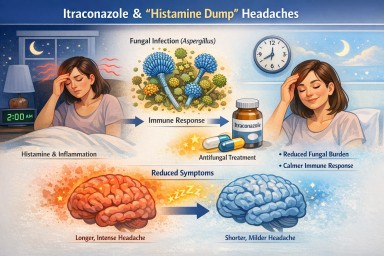
  • This is most likely because itraconazole reduces the fungal burden and the immune response it triggers, rather than blocking histamine directly.
  • Symptoms that happen in the early hours of the morning may also be influenced by the body’s natural day-night rhythm.
  • Changes in symptoms can be helpful clues, but headaches can have more than one cause.

Table of Contents

Overview

Some people taking itraconazole for non-lung or lung forms of aspergillosis notice that symptoms they describe as “histamine-type” symptoms, such as headaches, flushing, pressure, or a general sense of inflammatory overload, become shorter or less severe.

A typical pattern might be:

  • Symptoms start overnight, for example, around 2 am
  • Symptoms previously lasted most of the day
  • Symptoms are now settling much earlier after starting treatment

This can be confusing, especially when the symptoms feel similar to a histamine reaction. The important point is that itraconazole does not work like an antihistamine, but it can reduce symptoms indirectly if a fungal process is contributing to them.

What is itraconazole and how does it work?

Itraconazole is an antifungal medicine used to treat infections caused by fungi such as Aspergillus.

It works by interfering with the production of ergosterol, an essential part of the fungal cell membrane. This weakens the fungus and helps reduce fungal growth and survival in the body.

As the fungal burden falls, the immune system may be less strongly stimulated, and that can lead to a reduction in inflammation-related symptoms.

So although itraconazole does not block histamine directly, it may reduce the underlying trigger that is causing the body to react.

What do people mean by “histamine dump” headaches?

“Histamine dump” is not a formal medical diagnosis, but some patients use it as a practical way of describing symptoms such as:

  • sudden headaches, especially overnight or early in the morning
  • flushing or a feeling of heat
  • pressure in the head or sinuses
  • a sense of being “wired”, agitated, or unwell

These symptoms may involve histamine, but they can also reflect broader inflammation, immune activation, mast cell activity, or other signalling chemicals in the body.

Why might symptoms improve on itraconazole?

If itraconazole is helping, it is most likely doing so indirectly. There are several possible reasons for this.

1. Reduced fungal burden

If fungal material in the body is reduced, there may be less for the immune system to react to. That can mean less inflammatory signalling overall.

2. Reduced immune activation

Fungi can stimulate the immune system in ways that lead to inflammation and, in some people, histamine-related symptoms. If antifungal treatment lowers that stimulus, symptoms may become less intense or settle more quickly.

3. Shorter inflammatory response

Some people find that the symptom still begins, but does not “run on” for as long. For example, a headache that used to last from 2am until late afternoon may now settle by 5am.

Why do symptoms often happen at night?

The body has a natural circadian rhythm, a 24-hour cycle that affects hormones, inflammation, sleep, and immune activity.

  • Some inflammatory signals can be more noticeable overnight
  • Cortisol rises in the early morning, and helps suppress inflammation

Does this mean histamine is the main problem?

Not necessarily. Symptoms may involve multiple pathways, including immune response to fungi, general inflammation, mast cell activity, and sinus pressure.

Common questions

Does itraconazole act like an antihistamine?

No. It does not block histamine receptors.

Why are my symptoms improving but not gone?

This is common and may reflect partial control of the underlying trigger.

Does this prove Aspergillus is the cause?

No. It suggests a possible link but does not confirm causation.

Will symptoms continue to improve?

Possibly, but responses vary between individuals.

When to seek medical advice

  • new or severe headaches
  • neurological symptoms (vision, speech, balance)
  • worsening or persistent symptoms
  • concerns about medication side effects

Summary

Itraconazole does not directly affect histamine but may reduce symptoms by lowering fungal burden and immune activation.

Author and review

Prepared for: aspergillosis.org

Audience: Patients and non-specialist readers

Important: This does not replace individual medical advice.

References

  1. Patterson TF, Thompson GR 3rd, Denning DW, et al. (2016).
    Practice Guidelines for the Diagnosis and Management of Aspergillosis.
    View on PubMed (PMID: 27365388)
  2. Denning DW et al. (2016).
    Chronic pulmonary aspergillosis guidelines.
    View on PubMed (PMID: 26699723)
  3. Barnes PJ, Adcock IM (2009).
    Circadian rhythm in airway disease.
    View on PubMed (PMID: 19336589)
  4. Stone KD et al. (2010).
    IgE, mast cells, and eosinophils.
    View on PubMed (PMID: 20176269)

A Drop of Blood, Real-Time Answers

Last reviewed: 20 March 2026
Audience: Patients, carers, families, and non-specialists
Topic: Point-of-care monitoring of antifungal drug levels

New bedside testing for antifungal drugs — and why patients welcome it

For many people taking antifungal medicines, blood tests are an important part of care. These tests help doctors check whether the amount of medicine in the body is too low, too high, or about right.

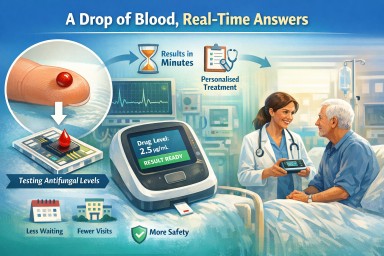
A new type of technology is being developed to do this much more quickly, using just a single drop of blood placed onto a specialised chip. Instead of sending blood away to a laboratory and waiting days for a result, this kind of test may be able to provide an answer much more quickly, sometimes during the clinic visit itself.

Patients in a recent focus group responded very positively to this idea. They welcomed not only the technology itself, but also what it could mean for their care: less waiting, less uncertainty, fewer trips to hospital, and more personalised treatment.

Key points

  • A new test can measure antifungal drug levels from a drop of blood.
  • The blood is placed on a specialised chip containing tiny sensors.
  • Results may be available much faster than standard laboratory testing.
  • This could help doctors adjust treatment more quickly and more precisely.
  • Patients in a focus group strongly welcomed the technology.
  • Reported benefits included less anxiety, fewer hospital visits, and more confidence in treatment decisions.

What is this new test?

This is a type of point-of-care test. That means it is designed to be used close to the patient, such as in a clinic or at the bedside, rather than sending the sample away to a central laboratory.

In this case, the aim is to measure the level of an antifungal drug in the blood from a very small sample, sometimes just a finger-prick drop. The drop of blood is placed onto a specialised chip. That chip contains tiny channels and sensors that can detect the amount of drug present.

People sometimes describe this type of system as a “lab on a chip” because it performs some of the work of a laboratory in a very small device.

How does the technology work?

The exact science varies between devices, but the general idea is similar.

  1. A small blood sample is taken.
    This may be from a finger prick rather than a larger blood draw.
  2. The blood is placed onto a specialised chip.
    The chip is designed to handle a tiny volume of blood.
  3. The blood moves through microscopic channels.
    These channels guide the sample to the parts of the chip that do the measurement.
  4. Sensors on the chip detect the antifungal drug.
    These sensors are designed to recognise the drug or react to it in a measurable way.
  5. A reader produces a result.
    A connected device reads the signal from the chip and estimates the drug level.

Some systems use electrical signals, some use light, and some use chemical reactions. Patients do not need to understand all the engineering details to understand the main point: the chip is acting like a mini laboratory.

A simple way to think about it is this:

Instead of sending your blood sample to a distant laboratory, this technology brings part of the laboratory to your fingertip.

Why do antifungal drug levels matter?

Some antifungal medicines need careful monitoring because the “right” level can be quite important.

If the drug level is too low, the medicine may not work well enough. If the drug level is too high, side effects may become more likely.

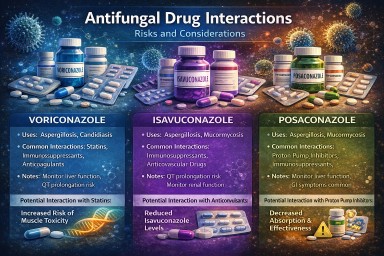
This can be especially relevant for antifungal drugs such as:

  • itraconazole
  • voriconazole
  • posaconazole

Drug levels can vary from person to person for many reasons, including:

  • how well the body absorbs the medicine
  • interactions with other medicines
  • differences in liver function and metabolism
  • changes in health over time

At present, monitoring usually involves sending blood to a laboratory. That works, but it can mean delays. Results may not come back quickly enough to guide decisions during the clinic appointment itself.

A faster bedside test could help clinicians make treatment decisions more quickly and could support more personalised care.

What did patients say about it?

In the patient focus group, this technology was widely welcomed. Patients were not only interested in the novelty of the test. They also recognised several practical benefits that could make day-to-day care easier and safer.

1. Faster results could reduce anxiety

Many patients described the stress of waiting for test results. Waiting can create a sense of uncertainty: Is the treatment working? Is the dose correct? Are side effects more likely?

A test that gives much quicker results was seen as reassuring. Instead of waiting days, patients liked the idea of getting answers much sooner, possibly while still in clinic.

2. Fewer visits could reduce the burden of care

For many people with chronic lung conditions or long-term illness, going to hospital is not a small task. Travel, parking, breathlessness, fatigue, mobility problems, and long waits can make even a short appointment exhausting.

Patients felt that a faster and simpler test could reduce some of this burden, especially if it could be built into a normal appointment or eventually be offered closer to home.

3. More personalised dosing felt important

Patients often understand from experience that medicines do not affect everyone in the same way. One person may tolerate a treatment well, while another may have side effects or absorb the medicine differently.

Because of this, patients valued the idea that treatment could be adjusted based on their own measured drug level, rather than relying only on standard dosing. This gave a stronger sense that care was being tailored to the individual.

4. Closer monitoring gave reassurance about safety

Antifungal drugs can be very helpful, but patients also know that some of them can have side effects and interactions. That can make treatment feel worrying, especially over longer periods.

Patients said that being able to check drug levels more quickly and more easily could help them feel safer. It suggested that treatment was being watched closely rather than left unchecked between appointments.

5. Immediate results could help patients feel more involved

Another important theme was involvement. Patients often feel that blood is taken, results disappear into the system, and decisions come later without much real-time discussion.

By contrast, a bedside result creates the possibility of discussing the number there and then. Patients felt this could help them better understand their treatment and feel more involved in decisions about dose changes and ongoing care.

6. It seemed to fit better with real life

Patients repeatedly emphasised that long-term treatment has to fit around real lives, not just clinic systems. Many welcomed the idea of a test that was quicker, simpler, and potentially more convenient.

In that sense, what patients welcomed was not just a chip or a machine, but a model of care that felt more responsive and more human-centred.

What could this mean for future care?

If this technology proves accurate, reliable, and affordable, it could support a different way of monitoring antifungal treatment.

Possible future benefits could include:

  • drug level testing during the clinic appointment itself
  • faster dose adjustment when levels are too high or too low
  • closer monitoring when starting or changing treatment
  • fewer repeat visits just to check blood levels
  • potential future use in community settings or, one day, at home

It is important to be realistic. New technologies must be carefully tested before they become routine. They need to be shown to be accurate, dependable, and practical in real healthcare settings.

Even so, patients clearly recognised the potential. For them, this is not just about speed. It is about moving toward care that is:

  • more responsive
  • more personalised
  • more convenient
  • less anxiety-provoking

Common questions

Is this available now?

Usually not as a routine test in most healthcare settings. It is still being developed and studied, although interest in this type of monitoring is growing.

Will this replace ordinary blood tests?

Not immediately. Standard laboratory testing is still important. New bedside systems may first be used alongside existing methods while they are being evaluated and introduced.

Would this work for every antifungal drug?

Not necessarily. Some devices may be designed for specific drugs first. Wider use would depend on the technology and the evidence supporting it.

Could this be used at home?

Possibly one day, but that is likely to depend on how reliable, affordable, and easy to use the technology becomes. For now, clinic or bedside use is the more immediate possibility.

Why is a drop-of-blood test appealing to patients?

Because it may mean quicker answers, less uncertainty, fewer hospital trips, and more confidence that treatment decisions are based on what is happening in their own body.

When to seek medical advice

You should contact your healthcare team if you:

  • develop new or worsening side effects from your antifungal medicine
  • feel your treatment is not helping
  • have concerns about drug interactions with other medicines
  • are unsure whether to continue, stop, or change your medication

A new bedside test could support treatment decisions, but it would not replace medical advice. Symptoms, scans, blood tests, and clinical review would still matter.

Final thoughts

This new chip-based bedside technology may sound futuristic, but the reason patients welcomed it is very straightforward.

They saw the possibility of care that is faster, clearer, safer, and better adapted to real life.

In other words, this is about more than measuring a drug level from a drop of blood. It is about moving away from delayed, one-size-fits-all monitoring and toward real-time, personalised, patient-centred care.

In one sentence

A tiny chip and a drop of blood could help doctors adjust antifungal treatment more quickly — and patients believe that could make care less stressful, less burdensome, and more personal.


Author: Graham Atherton and ChatGPT draft support

For review by: National Aspergillosis Centre / relevant clinical or research reviewer

Note: This article is for general information and should not be used as a substitute for medical advice.


National Aspergillosis Centre, Antifungal Therapeutic Drug Monitoring (TDM), Molecular Resistance Testing & Antimicrobial Stewardship

How the National Aspergillosis Centre Supports UK Clinicians

Long-term antifungal therapy in aspergillosis presents a distinct antimicrobial stewardship (AMS) challenge. Treatment is often prolonged, drug exposure is highly variable, and resistance may emerge during therapy.

The National Aspergillosis Centre (NAC), working closely with the Mycology Reference Centre Manchester (Manchester UK"], provides national expertise through:

  • Therapeutic drug monitoring (TDM)

  • Molecular resistance testing

  • Specialist Advice & Guidance

  • Remote multidisciplinary team (MDT) review

  • Standardised laboratory processes

Together, these services enable UK clinicians to optimise antifungal therapy while aligning with national AMS strategy and antimicrobial resistance (AMR) policy.


The National AMS Framework: Why This Matters

Antifungal stewardship sits within the wider UK antimicrobial resistance strategy.

Key national resources include:

1️⃣ NHS England – Digital Vision for Antimicrobial Stewardship

https://www.england.nhs.uk/long-read/digital-vision-for-antimicrobial-stewardship-in-england/

Emphasises:

  • Data-driven optimisation

  • Decision support

  • Clear documentation

  • Measurable stewardship interventions


2️⃣ Antimicrobial Prescribing & Stewardship Competency Framework

https://www.gov.uk/government/publications/antimicrobial-prescribing-and-stewardship-competencies

Defines clinician responsibilities including:

  • Right drug

  • Right dose

  • Right duration

  • Monitoring for toxicity

  • Review and stop decisions


3️⃣ English Surveillance Programme for Antimicrobial Utilisation and Resistance (ESPAUR)

https://www.gov.uk/government/publications/english-surveillance-programme-for-antimicrobial-utilisation-and-resistance-espaur-report

Supports:

  • National resistance monitoring

  • Stewardship benchmarking

  • Reduction of inappropriate antimicrobial exposure


4️⃣ Chronic Pulmonary Aspergillosis (CPA) Service Specification

https://www.england.nhs.uk/publication/chronic-pulmonary-aspergillosis-service-adults/

This specialised service model explicitly includes:

  • Optimisation of antifungal therapy

  • Toxicity monitoring

  • Therapeutic drug monitoring

Antifungal stewardship is embedded within the commissioned service design.


Why Aspergillosis Requires Enhanced Stewardship

Unlike short-course antibacterial therapy, aspergillosis often involves:

  • Long-term triazole therapy

  • Structural lung disease

  • High interaction burden

  • Emerging environmental resistance

  • Potential for treatment failure despite adequate adherence

Effective stewardship therefore requires both:

  1. Assurance of adequate drug exposure (TDM)

  2. Assurance of organism susceptibility (molecular testing)


1️⃣ Therapeutic Drug Monitoring (TDM)

Triazole antifungals demonstrate:

  • High pharmacokinetic variability

  • Concentration-dependent toxicity

  • Reduced efficacy if under-dosed

TDM enables:

✔ Early detection of subtherapeutic exposure
✔ Prevention of toxicity
✔ Dose optimisation
✔ Reduction of avoidable escalation

This directly fulfils AMS competency expectations.


2️⃣ Molecular Resistance Testing

Azole resistance in Aspergillus fumigatus is increasingly recognised in the UK.

Through MRCM, NAC supports:

CYP51A Mutation Analysis

Common mutations include:

  • TR34/L98H

  • TR46/Y121F/T289A

These may arise:

  • Environmentally (azole fungicide pressure)

  • During long-term therapy


Phenotypic Susceptibility Testing

Where viable isolates are available:

  • Minimum inhibitory concentration (MIC) testing

  • Clinical interpretation to guide therapy


Why Resistance Testing Is Essential for AMS

If a patient deteriorates despite adequate serum levels:

  • Continuing the same azole is not stewardship

  • Escalating empirically without evidence increases antimicrobial pressure

Molecular confirmation ensures:

✔ Rational switching
✔ Avoidance of ineffective therapy
✔ Contribution to national resistance surveillance

This aligns with ESPAUR and national AMR objectives.


3️⃣ Remote Advice & Guidance & MDT Review

The NAC provides structured national clinician support.

This strengthens stewardship by:

✔ Refining diagnosis
✔ Preventing indication drift
✔ Setting defined review points
✔ Supporting stop decisions
✔ Reducing empirical prolonged therapy

Early specialist review is one of the most effective stewardship interventions.


Integrated Stewardship Model

Clinical Situation TDM Molecular Testing
Initiation of azole Yes Not routine
Poor response + low level Adjust dose Not primary
Poor response + adequate level Confirm exposure Essential
Long-term therapy Periodic monitoring Consider if progression
Relapse on therapy Check level Strongly consider

Exposure optimisation + susceptibility confirmation = complete antifungal stewardship.


Practical Workflow for UK Teams

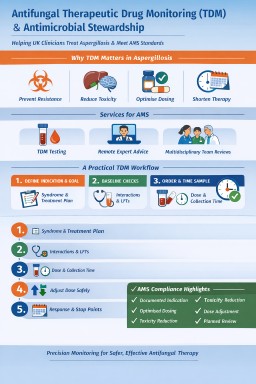
Step 1 – Define Indication

  • Syndrome

  • Treatment objective

  • Planned review date

Step 2 – Baseline Safety Checks

  • Interaction review

  • Liver function tests

  • ECG where appropriate

Step 3 – Perform TDM

Include:

  • Drug

  • Dose

  • Time of last dose

  • Time of sampling

Step 4 – If Clinical Failure Occurs

  • Confirm adequate drug exposure

  • Consider molecular resistance testing

Step 5 – Define Stop/Review Criteria

Avoid open-ended therapy without documented reassessment.


Demonstrating AMS Compliance in Practice

Using NAC-supported services allows Trusts to evidence:

✔ Documented indication
✔ Dose optimisation
✔ Toxicity mitigation
✔ Rational escalation
✔ Defined review intervals
✔ Resistance surveillance contribution
✔ Specialist consultation

This is measurable, defensible antimicrobial stewardship.


Conclusion

Antifungal stewardship in aspergillosis cannot rely on restriction alone.

It requires:

  • Precision dosing

  • Genetic resistance detection

  • Structured specialist review

  • Alignment with national AMS frameworks

Through integrated therapeutic drug monitoring, molecular resistance testing, and national clinical support, the National Aspergillosis Centre provides a UK model for precision antifungal stewardship aligned with national antimicrobial resistance strategy.


Isavuconazole in Aspergillosis

A balanced guide for patients and clinicians

Isavuconazole (given as the prodrug isavuconazonium sulfate) is a newer broad-spectrum triazole antifungal used in:

  • Chronic pulmonary aspergillosis (CPA)

  • Invasive aspergillosis

  • Patients who cannot tolerate other azoles

  • Selected refractory Allergic bronchopulmonary aspergillosis (ABPA) cases

It is available as oral capsules and intravenous (IV) formulation and is often chosen for its favourable tolerability profile.


1️⃣ What Isavuconazole Does

Like other azoles, isavuconazole inhibits fungal CYP51 (14-α-demethylase), blocking ergosterol synthesis and impairing fungal cell membrane formation.

It:

  • Suppresses Aspergillus growth

  • Reduces fungal burden

  • Helps stabilise lung disease

  • Provides systemic antifungal coverage

Clinical improvement is gradual over weeks.


2️⃣ How Long Is Treatment?

In CPA

  • Often 6–12 months or longer

  • May be used when other azoles cause side effects

  • Sometimes used as long-term suppressive therapy

In Invasive Aspergillosis

  • Duration depends on immune recovery and response

  • Often several months

In ABPA

  • Used selectively when other azoles are not tolerated

As with all azoles, stopping too early may lead to relapse.


3️⃣ Pharmacokinetics – Why It’s Different

Isavuconazole has more predictable pharmacokinetics than itraconazole or voriconazole.

Key features:

  • High oral bioavailability

  • Not dependent on gastric acidity

  • Food has minimal impact

  • Linear pharmacokinetics (dose–level relationship more predictable)

  • Long half-life (~100–130 hours)

Importantly:

It shortens the QT interval (unlike other azoles, which may prolong it).

This can make it preferable in patients with QT prolongation risk.


4️⃣ Do We Need Blood Level Monitoring?

Therapeutic Drug Monitoring (TDM) is not routinely required in all patients.

However, levels may be considered in:

  • Treatment failure

  • Drug interactions

  • Extreme body weight

  • Severe liver disease

  • Long-term therapy

This is a practical advantage compared with voriconazole.


5️⃣ Common Side Effects (Usually Mild)

  • Nausea

  • Vomiting

  • Diarrhoea

  • Headache

Generally fewer visual or skin-related effects compared with voriconazole.


6️⃣ Less Common but Important Effects

Liver Abnormalities

Routine liver monitoring is recommended.

Most abnormalities are mild and reversible.


Gastrointestinal Upset

Can occur early in therapy but often settles.


Infusion Reactions (IV Form)

Occasional mild reactions with IV administration.


Cardiac Effects

Unlike other azoles:

  • Isavuconazole may shorten QT interval

  • It is not associated with QT prolongation

This makes it attractive in patients with:

  • Existing QT prolongation

  • Multiple QT-prolonging drugs

However, ECG review may still be prudent in complex cardiac patients.


7️⃣ Drug Interactions

Isavuconazole:

  • Moderately inhibits CYP3A4

  • Has fewer interactions than some other azoles

Still review carefully, especially with:

  • Immunosuppressants

  • Statins

  • Certain anticoagulants

Avoid:

  • St John’s Wort

  • Strong enzyme inducers

Grapefruit has less impact than with other azoles but is generally avoided as a precaution.


8️⃣ Comparison Snapshot

Feature Itraconazole Voriconazole Posaconazole Isavuconazole
Acid-dependent absorption Yes (capsules) No No (tablet) No
Genetic metabolism impact Low High (CYP2C19) Low Low
QT prolongation Minimal Possible Possible No (shortens QT)
Visual side effects Rare Common Rare Rare
TDM required Yes Essential Recommended Usually not
Long-term tolerability Moderate Sometimes limited Often good Often very good

Balanced Summary for Patients

Isavuconazole is a newer antifungal that is often easier to tolerate and has more predictable levels in the body. Blood tests and monitoring help ensure treatment remains safe and effective.


Clinician Checklist

  • Confirm indication and prior azole exposure

  • Baseline liver function tests

  • Review interacting medications

  • Consider ECG if complex cardiac history

  • Consider TDM only if clinically indicated


Posaconazole in Aspergillosis

A balanced guide for patients and clinicians

Posaconazole is a broad-spectrum triazole antifungal used in:
  • Chronic pulmonary aspergillosis (CPA)

  • Allergic bronchopulmonary aspergillosis (ABPA) (selected or refractory cases)

  • Invasive aspergillosis

  • Patients intolerant of itraconazole or voriconazole

  • Antifungal prophylaxis in high-risk immunocompromised patients

It is generally well tolerated and often used when other azoles cause side effects.


1️⃣ What Posaconazole Does

Like other azoles, posaconazole blocks fungal ergosterol synthesis (CYP51 inhibition), preventing fungal growth.

It:

  • Suppresses Aspergillus replication

  • Reduces fungal burden

  • Helps stabilise lung disease in CPA

  • Can reduce steroid need in some ABPA cases

It works gradually over weeks.


2️⃣ How Long Is Treatment?

In CPA

  • Often 6–12 months or longer

  • Sometimes long-term suppressive therapy

  • Used if other azoles are ineffective or not tolerated

In ABPA

  • Used in refractory or steroid-dependent disease

In prophylaxis

  • Duration depends on immune suppression status

As with other azoles, premature discontinuation may lead to relapse.


3️⃣ Formulations Matter

Posaconazole comes in:

  • Delayed-release tablets

  • Oral suspension

  • Intravenous formulation

Tablets (preferred)

  • Good, reliable absorption

  • Less affected by food

  • More predictable levels

Oral suspension

  • Absorption highly dependent on food (especially fatty meals)

  • Greater variability

In most CPA practice, tablets are preferred.


4️⃣ Why Blood Level Monitoring Is Still Important

Posaconazole has more predictable pharmacokinetics than itraconazole or voriconazole, but monitoring is still recommended.

Reasons:

  • Interpatient variability

  • Drug interactions

  • Severe infection requires adequate exposure

  • Toxicity avoidance


If Levels Are Too Low

  • Inadequate fungal suppression

  • Ongoing disease activity

  • Risk of resistance


If Levels Are Too High

  • Liver abnormalities

  • Gastrointestinal symptoms

  • Rare cardiac effects


Typical Target (Trough)

  • 1 mg/L for treatment

  • 0.7 mg/L often sufficient for prophylaxis

(Laboratory guidance varies.)

Levels are typically checked:

  • After 5–7 days

  • After dose adjustments

  • If response is suboptimal

  • If toxicity suspected


5️⃣ Common Side Effects (Usually Mild)

  • Nausea

  • Diarrhoea

  • Abdominal discomfort

  • Headache

These are often less troublesome than with voriconazole.


6️⃣ Less Common but Important Effects

Liver Abnormalities

Routine monitoring required.

Most are mild and reversible.


QT Interval Prolongation

Posaconazole can prolong QT interval.

Caution in patients with:

  • Known arrhythmias

  • Electrolyte imbalance

  • Other QT-prolonging drugs

ECG monitoring may be appropriate in higher-risk individuals.


Hypertension & Mineralocorticoid Effect (Rare)

High levels can rarely cause:

  • Elevated blood pressure

  • Low potassium

More common with long-term or high exposure.


Neuropathy

Much less commonly reported than with other azoles, but peripheral symptoms should still be assessed carefully if they occur.


7️⃣ Food & Drug Advice

  • Tablets: can be taken with or without food (follow prescribing guidance)

  • Suspension: take with food (preferably fatty meal)

Avoid:

  • Grapefruit

  • St John’s Wort

Posaconazole inhibits CYP3A4 and interacts with:

  • Statins

  • Certain immunosuppressants

  • Some anticoagulants

Medication review is essential.


8️⃣ Comparison Snapshot

Feature Itraconazole Voriconazole Posaconazole
Absorption variability High Moderate Low–Moderate (tablet)
Visual side effects Rare Common Rare
Photosensitivity Rare Common Rare
QT prolongation Minimal Possible Possible
TDM needed Yes Essential Recommended
Long-term tolerability Moderate Sometimes limited Often good

Balanced Summary for Patients

Posaconazole is a newer azole that is often well tolerated and provides reliable antifungal coverage. Blood tests help ensure the level is effective and safe. Most patients complete treatment without major difficulties.


Clinician Checklist

  • Confirm formulation (tablet preferred in CPA)

  • Baseline LFTs

  • Review ECG if cardiac risk present

  • Check electrolytes (especially potassium)

  • Arrange trough level after initiation

  • Review full medication list


Voriconazole in Aspergillosis

A balanced guide for patients and clinicians

Voriconazole is a broad-spectrum triazole antifungal used in:
  • Chronic pulmonary aspergillosis (CPA)

  • Allergic bronchopulmonary aspergillosis (ABPA) (selected cases)

  • Invasive aspergillosis

  • Azole-resistant or itraconazole-intolerant cases

It is available orally and intravenously and is often used when a stronger or more reliably absorbed azole is required.


1️⃣ What Voriconazole Does

Voriconazole works by blocking fungal ergosterol synthesis (CYP51 inhibition), which disrupts the fungal cell membrane.

Compared with itraconazole:

  • More potent against Aspergillus

  • More predictable oral absorption

  • More central nervous system penetration

It often produces symptom improvement over weeks, though some effects (e.g. visual symptoms) may occur quickly.


2️⃣ How Long Is Treatment?

In CPA

  • Often 6–12 months or longer

  • Sometimes used as second-line or after intolerance to itraconazole

  • Long-term suppressive therapy may be required

In ABPA

  • Used in selected steroid-dependent or refractory cases

In invasive disease

  • Typically several months depending on response and immune status


3️⃣ Why Blood Level Monitoring Is Essential

Voriconazole has non-linear pharmacokinetics.

Small dose changes can cause large blood level shifts.

Two patients on the same dose may have very different levels due to:

  • Liver metabolism (CYP2C19 genetic variation is important)

  • Drug interactions

  • Age

  • Weight

  • Liver function


If Levels Are Too Low

  • Treatment failure

  • Persistent fungal activity

  • Risk of resistance


If Levels Are Too High

  • Liver toxicity

  • Neurological side effects

  • Visual disturbances

  • Increased interaction risk


Typical Target (Trough)

  • Generally 1–5.5 mg/L (lab dependent)

  • Toxicity risk increases >5–6 mg/L

Levels are usually checked:

  • 5–7 days after starting

  • After dose adjustments

  • If side effects occur

  • If clinical response is inadequate


4️⃣ Common Side Effects (Often Mild & Reversible)

Visual Disturbances (Very Common but Usually Harmless)

  • Blurred vision

  • Altered colour perception

  • Light sensitivity

  • “Wavy” vision

These typically:

  • Occur within 30–60 minutes of dosing

  • Last less than an hour

  • Reduce over time

Patients should avoid night driving initially until they understand their response.


Photosensitivity

  • Increased sensitivity to sunlight

  • Sunburn risk

  • Long-term risk of skin damage with prolonged therapy

Sun protection is important.


Gastrointestinal

  • Nausea

  • Abdominal discomfort


5️⃣ Less Common but Important Effects

Neurological

  • Headache

  • Vivid dreams

  • Hallucinations (usually at high levels)

  • Confusion (dose-related)

These are generally reversible with dose adjustment.


Liver Abnormalities

Routine liver function monitoring is required.

Most abnormalities are mild and resolve with dose modification.


Cardiac Effects

Voriconazole can prolong the QT interval.

Caution in patients with:

  • Known arrhythmias

  • Electrolyte imbalance

  • Other QT-prolonging drugs

ECG monitoring may be appropriate in higher-risk patients.


Skin Cancer Risk (Long-Term Use)

With prolonged use (especially >1–2 years):

  • Increased risk of skin squamous cell carcinoma

  • Particularly in transplant recipients

Sun protection and dermatology review are advised for long-term therapy.


6️⃣ Food & Drug Advice

  • Avoid grapefruit

  • Avoid St John’s Wort

  • Take tablets at least 1 hour before or after meals (food reduces absorption)

Voriconazole has many CYP-mediated interactions and requires careful medication review.


7️⃣ Comparison With Itraconazole (Simple Overview)

Feature Itraconazole Voriconazole
Absorption variability High More predictable
Visual side effects Rare Common but mild
Photosensitivity Rare More common
QT prolongation Minimal Possible
TDM needed Yes Yes (essential)

Balanced Summary for Patients

Voriconazole is a strong antifungal used when more reliable or potent treatment is needed. Most side effects are manageable and reversible, and blood monitoring keeps treatment safe.


Clinician Checklist

  • Confirm indication and prior azole exposure

  • Check baseline LFTs

  • Review ECG if cardiac risk present

  • Assess drug interactions (CYP2C19, 2C9, 3A4)

  • Arrange trough level at day 5–7

  • Counsel regarding visual symptoms and sun protection


How the Body Handles Chemicals, Medicines, and Antifungals

Why metabolism differs between people — and why this matters in aspergillosis


The big idea (in one sentence)

Your body uses an ancient liver detox system to handle chemicals from food, air, and medicines — and differences in that system explain why people with aspergillosis respond so differently to antifungal drugs.


What is metabolism?

Every day, your body is exposed to chemicals from many sources:

  • Food and drink

  • Air pollution and moulds

  • Natural plant chemicals

  • Hormones your body makes itself

  • Medicines, including antifungals and steroids

Many of these chemicals cannot be safely removed in their original form.
They first need to be chemically modified so they can be excreted in urine or bile.

This process is called metabolism, and it happens mainly in the liver.


The liver’s chemical processing system

The liver contains a large family of enzymes called cytochrome P450, often shortened to CYP.

Important clarification

  • CPA = Chronic Pulmonary Aspergillosis (a lung disease)

  • CYP = Cytochrome P450 (liver enzymes)

They sound similar but are completely different things.


What CYP enzymes really do

CYP enzymes did not evolve to deal with medicines.
They evolved to protect us from chemicals in the environment.

They help process:

  • Plant toxins and food chemicals

  • Smoke and air pollution

  • Mould and fungal by-products

  • Alcohol and caffeine

  • Hormones such as cortisol and sex hormones

  • Medicines (which are treated as “foreign chemicals”)

Medicines simply use a system that already existed.


How CYP enzymes “recognise” chemicals

CYP enzymes do not recognise chemicals like the immune system recognises germs.

Instead, they recognise chemical patterns, such as:

  • Fat-solubility (hard to excrete)

  • Size and shape

  • Reactive chemical groups

If a molecule:

  • Fits into the enzyme’s binding pocket, and

  • Can be chemically modified,

then CYP will act on it.

This makes CYP enzymes:

  • Broad (they work on many substances)

  • Flexible

  • Imperfect by design


The two main stages of metabolism (simplified)

Stage 1 – Modification

  • Mainly done by CYP enzymes

  • The chemical is altered (often oxidised)

  • This may:

    • Reduce activity

    • Prepare it for removal

    • Occasionally create a more toxic intermediate

Stage 2 – Packaging for removal

  • The altered chemical is “tagged”

  • It becomes water-soluble

  • It can now leave the body safely


Why metabolism differs between people

This is especially important for aspergillosis patients.

1. Genetics (the biggest factor)

People inherit different versions of CYP enzymes.

Some people:

  • Break drugs down slowly → higher levels → side effects

  • Break drugs down quickly → low levels → reduced effectiveness

Two people on the same antifungal dose can have very different blood levels.


2. Other medicines

Some medicines:

  • Block CYP enzymes (slowing breakdown)

  • Speed up CYP enzymes (lowering drug levels)

Antifungals, steroids, antibiotics, antidepressants, and heart drugs often interact.


3. Inflammation and chronic illness

During infection or chronic inflammation:

  • CYP activity is often reduced

  • Drug levels may rise unexpectedly

This matters in:

  • Chronic Pulmonary Aspergillosis (CPA)

  • Allergic Bronchopulmonary Aspergillosis (ABPA)

  • Bronchiectasis

  • Severe asthma

Drug handling can change during disease flares.


4. Liver health and age

  • Liver disease can slow metabolism

  • Older adults often process drugs differently


Why something can become a “poison”

A substance can cause harm if it:

  • Escapes CYP processing

  • Is metabolised too slowly

  • Overwhelms the system at high dose

  • Blocks CYP so other substances build up

  • Is converted into a toxic by-product

This explains:

  • Why some foods are toxic to dogs but safe for humans

  • Why “natural” substances are not automatically safe

  • Why dose really matters


A key question:

Why not design medicines that CYP can’t break down?

This is a real goal in drug development, and your instinct is correct.

If a drug:

  • Is broken down very slowly, or

  • Avoids CYP metabolism altogether,

then:

  • It stays in the body longer

  • Blood levels are steadier

  • Fewer doses are needed

This is why some medicines are once-daily, once-weekly, or long-acting injections.


But there is a trade-off

CYP metabolism is not just an inconvenience — it is also a safety system.

If a drug:

  • Cannot be metabolised, and

  • Cannot be excreted easily,

then:

  • It may accumulate

  • Side effects last much longer

  • Toxicity is harder to reverse

  • Stopping the drug does not stop the problem quickly

So completely avoiding CYP can increase long-term risk, especially when medicines are taken for months or years.


How drug designers manage this balance

Most modern drugs aim for a middle ground:

  • Broken down slowly, not zero

  • More predictable metabolism

  • Fewer interactions with major CYP enzymes

  • Alternative clearance routes where possible

  • Long-acting formulations (slow release, depots) rather than permanent persistence

In other words:

Long enough to work — but short enough to stay safe


Why this is especially relevant in aspergillosis

Antifungal drugs are particularly challenging because:

  • Fungi are biologically similar to humans

  • Drugs often interact with human CYP enzymes

  • Treatment is long-term

  • Patients often take multiple other medicines

Because of this:

  • Blood level monitoring is common

  • Dose adjustments are expected

  • Side effects do not mean failure

  • Low levels do not mean non-compliance

This variability reflects normal biology, not poor care.


A simple way to think about it

  • Your liver is a chemical processing plant

  • CYP enzymes are general-purpose machines

  • Everyone’s machines run at slightly different speeds

  • Illness and other drugs change how they behave

  • Antifungals depend on these machines being “just right”


Key take-home messages for patients

  • CYP enzymes are part of your body’s everyday detox system

  • They evolved to handle food chemicals, pollution, moulds, and hormones

  • Medicines use the same system

  • People differ because of genetics, illness, and other drugs

  • In aspergillosis, variable drug levels are expected

  • Monitoring and dose adjustment are signs of good specialist care

  • Drugs are not designed to avoid metabolism completely — safety matters as much as convenience


Antifungal Medicines: Dosing, Monitoring, and the Role of Specialist Care

A detailed reference for patients and non-specialist clinicians


1. Why antifungal treatment is different from most medicines

Oral antifungal medicines—especially azole antifungals—are essential for treating long-term fungal diseases such as chronic pulmonary aspergillosis and allergic bronchopulmonary aspergillosis.

They differ from many common medicines because they:

  • Have a narrow margin between effectiveness and toxicity

  • Behave very differently between individuals

  • Are often taken for months or years, not days

  • Interact with many commonly prescribed drugs

For these reasons, antifungal treatment requires individualised dosing, monitoring, and specialist input, rather than a standard fixed dose.


2. What “pharmacokinetics” means (plain language)

Pharmacokinetics describes what the body does to a drug:

  1. Absorption – how well the drug enters the bloodstream from the gut

  2. Distribution – how effectively it reaches tissues such as the lungs

  3. Metabolism – how quickly the liver breaks it down

  4. Elimination – how the drug leaves the body

Differences at any of these stages explain why the same dose can be ineffective for one person and toxic for another.


3. Different generations of azole antifungals behave differently

Each generation of azole antifungal was designed to improve effectiveness, but chemical changes also altered how the body handles the drug.

First-generation azoles (older drugs)

Examples

  • Ketoconazole

  • Fluconazole (limited activity against Aspergillus)

Key features

  • Variable absorption

  • Shorter half-life

  • Less reliable lung penetration

Clinical relevance

  • Rarely used now for chronic aspergillosis


Second-generation azoles (mainstay treatment)

Examples

  • Itraconazole

  • Voriconazole

  • Posaconazole

Key features

  • Excellent lung and tissue penetration

  • Highly variable metabolism between people

  • Strong interaction with liver enzymes

Clinical relevance

  • Very effective

  • Blood levels vary widely

  • Dose adjustment and monitoring are often essential


Newer azoles

Example

  • Isavuconazole

Key features

  • More predictable absorption

  • Long, stable half-life

  • Fewer extreme peaks and troughs

Clinical relevance

  • Often better tolerated long-term

  • Monitoring still important, but dosing may be more stable


4. Why the “right dose” matters so much

Too little antifungal

  • Infection not adequately controlled

  • Symptoms persist or worsen

  • Risk of antifungal resistance

  • Fewer future treatment options

Too much antifungal

  • Liver irritation or damage

  • Nausea, appetite loss

  • Neurological or visual side effects

  • Drug accumulation, especially with long-term use

The aim is always the lowest dose that effectively controls the fungus.

https://ars.els-cdn.com/content/image/3-s2.0-B9780123868824000189-f18-07-9780123868824.jpg

5. How clinicians know whether the dose is right

No single test determines this. The correct dose is identified when three elements align:

1️⃣ Blood level testing (therapeutic drug monitoring)

  • Measures how much drug is actually in the bloodstream

  • Helps identify:

    • Under-dosing

    • Target-range dosing

    • Toxic levels

2️⃣ Clinical response

  • Symptoms stabilise or improve

  • Fewer flare-ups or complications

  • Better day-to-day function

3️⃣ Safety monitoring

  • Liver and kidney blood tests

  • Review of side effects

  • Ongoing assessment of drug interactions

Only when effectiveness and safety are both acceptable is the dose considered “right”.


6. Why the right dose can change over time

A dose that was correct initially may later need adjustment because of:

  • Weight or body-composition changes

  • Age-related metabolic changes

  • New medications (including antibiotics or steroids)

  • Changes in liver or kidney function

  • Gradual drug accumulation during long-term therapy

Regular review is therefore expected and appropriate.


7. Is it sometimes impossible to find a stable dose?

Yes. For a minority of patients, a perfectly balanced dose cannot be found.

Reasons include:

  • Extremely fast or slow drug metabolism

  • A very narrow safety window

  • Long-term toxicity despite “acceptable” blood levels

  • Unavoidable interacting medications

  • Liver, kidney, or neurological vulnerability

  • Partial or full antifungal resistance

In these cases, the dose that controls the fungus and the dose that causes side effects may overlap.

This reflects biological limits, not treatment failure.


8. What clinicians do when a stable dose cannot be achieved

Options may include:

  • Switching to a different azole with different pharmacokinetics

  • Using modified dosing schedules (split dosing, slower titration)

  • Accepting a lower suppressive dose rather than full eradication

  • Considering non-azole antifungals where appropriate

  • Prioritising symptom control and quality of life

All are intentional, safety-focused decisions.


9. The central role of the specialist pharmacist

Specialist pharmacists are key to safe antifungal care, particularly for long-term azole therapy.

They play a critical role in:

Interpreting drug levels

  • Assessing whether a level is truly low or high

  • Accounting for dose timing and formulation

  • Preventing unnecessary or unsafe dose changes

Managing drug–drug interactions

Azoles interact with many common medicines, including:

  • Steroids and inhalers

  • Heart rhythm drugs

  • Blood thinners

  • Anti-epileptics

  • Pain medications

The specialist pharmacist:

  • Reviews the full medication list

  • Anticipates interactions before harm occurs

  • Advises on adjusting both interacting drugs

Individualising dosing

When standard doses do not work, they help design:

  • Non-standard doses

  • Split dosing schedules

  • Slow titration plans

  • Alternative azoles with different pharmacokinetics

Protecting patients during long-term treatment

They monitor:

  • Trends in liver and kidney tests

  • Signs of cumulative toxicity

  • Whether symptoms may be drug-related rather than disease-related

Coordinating care

They act as a bridge between:

  • Laboratory results

  • Clinical decision-making

  • Patient experience

https://www.omnicare.com/wp-content/uploads/omnicare-services-overview-02-expert-consultant.jpg

Their involvement often changes management, not just fine-tunes it.


10. Where antifungal drug level testing is done in the UK

In the UK, antifungal drug level testing is centralised.

  • Blood samples are taken locally

  • Samples are sent to specialist reference laboratories, most commonly the
    Mycology Reference Centre Manchester

  • Results are returned to the local clinical team for interpretation

Patients managed through specialist services such as the
National Aspergillosis Centre
benefit from integrated expertise in antifungal pharmacology, imaging, and long-term monitoring.

This process is routine and standard for antifungal care.


11. Key reassurance for patients

  • Dose changes are normal and expected

  • Side effects are often biology-driven, not your fault

  • Blood tests make treatment safer, not riskier

  • Switching drugs is a planned strategy, not giving up


12. One-paragraph summary

Antifungal medicines—particularly azole antifungals—have complex and highly variable behaviour in the body, with a narrow balance between effectiveness and toxicity. Safe use requires individualised dosing, therapeutic drug monitoring, symptom review, and long-term safety checks. Specialist pharmacists play a central role in interpreting drug levels, managing interactions, and tailoring treatment. For some patients, a perfectly balanced dose cannot be achieved, and alternative strategies are required. This reflects biological complexity, not failure, and the overarching aim is always effective fungal control with the best possible long-term safety and quality of life.


ECFG 2025: Key Aspergillus and Antifungal Insights for Patients and Clinicians

The European Conference on Fungal Genetics (ECFG 2025) gathered the leading fungal biology teams from across the world. Although primarily a genetics meeting, several abstracts offered direct clinical relevance for people living with aspergillosis or those working in the field.

The research covered here focuses on:

  • Aspergillus fumigatus

  • mechanisms of disease

  • resistance to antifungals

  • emerging antifungal treatments

  • environmental drivers of disease

  • insights relevant to CPA, ABPA, SAFS, bronchiectasis and invasive aspergillosis


Summary of Key Themes

1. Aspergillus genetic diversity is much greater than assumed

Pangenome work showed A. fumigatus strains possess different virulence genes and resistance traits. This may explain differences in how patients respond to infection and medication.

2. Environmental azole resistance continues to rise

Multiple abstracts confirmed that resistant strips often originate outdoors, shaped by climate, fungicides, soil chemistry, and climate change.

3. Promising new antifungals are advancing

Manogepix shows excellent activity against resistant strains, while several early-stage compounds (such as G-quadruplex ligands) represent brand-new modes of action.

4. Insights into virulence, persistence and treatment failure

Studies on hyphal fusion, echinocandin tolerance, and hypoxia adaptation shed light on chronic and resistant infections.

5. Improved tools accelerate antifungal discovery

CRISPR and genus-wide sequencing speed up the search for new drug targets and better diagnostics.


ECFG 2025 — Table of All Aspergillus / Aspergillosis / Antifungal-Relevant Abstracts

ID Title Lead Author / Presenter Institution Category Why It Matters
WS1.19 Reference pangenomes for A. fumigatus Marion Perrier Friedrich Schiller University, Jena Genomics / Evolution Reveals hidden genetic diversity linked to virulence and resistance.
WS1.20 Antifungal modes of action of G-quadruplex ligands Isabelle Storer University of East Anglia New antifungal mechanisms Suggests a brand-new antifungal class targeting fungal DNA structures.
WP1.2 NL1 as anti-virulence compound Jorge Amich ISCIII, Spain Virulence / Therapeutics May reduce disease severity without relying on killing the fungus.
WP1.6 Ace2 and RAM pathway regulation Devi N. J. Bale Pathogenesis Controls tissue invasion, morphology and possibly drug sensitivity.
WP1.8 Hyphal fusion and multi-drug resistant heterokaryons Michael Bottery University of Manchester Resistance mechanisms Shows resistance traits may spread between strains via fusion.
WP1.10 Manogepix activity against A. fumigatus Sean Brazil Trinity College Dublin New antifungals Strong activity including against resistant strains and biofilms.
WP1.14 ZfpA and echinocandin tolerance Dante Calise University of Wisconsin Echinocandin tolerance Explains how fungi sometimes survive caspofungin and related drugs.
WP1.16 Genetic background of azole-resistant A. fumigatus Saioa Cendón-Sánchez University of the Basque Country Environmental resistance Confirms resistant genotypes circulate between the environment and patients.
WP1.18 Genus-wide sequencing of Aspergillus Ronald P. de Vries Westerdijk Institute Evolution / Pathogenicity Identifies traits making some species pathogenic to humans.
WP1.22 Climate, soil & fungicide impacts on Aspergillus Thomas Easter University of Manchester Environmental epidemiology Links climate change and fungicides to rising azole resistance.
WP1.32 Multiplex CRISPR to accelerate antifungal research Fabio Gsaller Research tools Speeds identification of resistance pathways and drug targets.
WP1.42 Hypoxia-driven adaptations in A. fumigatus Olaf Kniemeyer Pathogenesis Explains persistence of A. fumigatus in low-oxygen lung cavities (CPA).

Detailed Clinical Relevance of the Findings

1. Rising environmental resistance

Azole-resistant A. fumigatus continues to emerge in agricultural and urban settings. Resistant spores are carried in air and soil, meaning people inhale them in daily life. This is especially relevant to those with CPA, ABPA, bronchiectasis and immunosuppression, who are more vulnerable.

Why it matters:
Resistant strains are a growing cause of treatment failure.


2. New antifungal treatments are progressing

Manogepix shows potent activity against resistant Aspergillus and biofilms, key in difficult-to-treat CPA and invasive aspergillosis.

G-quadruplex ligands and NL1 represent early steps toward new antifungal classes, extremely important after two decades of limited drug options.


3. Virulence and survival mechanisms explain persistent disease

Hypoxia adaptation (low-oxygen survival) helps explain why Aspergillus persists in lung cavities.
Hyphal fusion may allow rapid spread of resistance traits.
Echinocandin tolerance mechanisms (ZfpA) reveal why some invasive cases fail to respond.

Why it matters:
These insights help clinicians anticipate treatment difficulties and inform research for new therapies.


4. Better genomic tools support faster discovery

Multiplex CRISPR and pangenomic databases allow scientists to uncover gene functions much faster. This shortens the path to new antifungal development and improves understanding of how resistance evolves.


Conclusion

ECFG 2025 provides important clues about why Aspergillus disease is so persistent, why azole resistance is increasing, and how new antifungal drugs may overcome today’s challenges. It also reinforces that environmental drivers — including fungicide use and climate factors — are a major part of the problem.

For patients, clinicians, and researchers, these findings highlight a rapidly evolving landscape in aspergillosis research, with promising signs of future treatment improvements.


🧪 Why New Antifungal Trials Start with Invasive Aspergillosis

When you hear about promising new antifungal medicines such as Olorofim or Fosmanogepix, you may wonder why the first studies always seem to involve people with invasive aspergillosis — not those with chronic pulmonary aspergillosis (CPA) or allergic bronchopulmonary aspergillosis (ABPA).

It might seem unfair, especially when chronic forms of aspergillosis are so common and long-lasting.
But there are good reasons why research has to begin with invasive disease.

Here’s how it works — and why it’s still good news for everyone living with aspergillosis.


⚠️ 1. Invasive Aspergillosis Is the Most Dangerous Form

Invasive aspergillosis happens when Aspergillus spreads deep into the lungs or bloodstream, usually in people with a very weak immune system — for example, after chemotherapy, transplant, or high-dose steroid use.

Without prompt treatment, it can be fatal within days or weeks.
Because it is so serious, regulators such as the MHRA (UK), EMA (Europe) and FDA (USA) allow new drugs for invasive infections to be tested and reviewed much faster than they would for less urgent diseases.

This approach means that if a new antifungal proves helpful and safe, it can reach patients in greatest need more quickly — often saving lives while also building the data needed for later studies in other conditions.


📈 2. It’s Easier to Measure Whether the Drug Works

For invasive disease, the goal is very clear:

The infection either clears up, or it doesn’t.

That makes the results of a study straightforward to interpret.

With chronic or allergic aspergillosis, improvement takes much longer to measure:

  • Scans may take months to show change,

  • Symptoms can fluctuate naturally, and

  • Other lung problems (like COPD or bronchiectasis) can confuse the results.

So trials in chronic disease need larger patient numbers and longer follow-up, which are expensive and take years. Starting with invasive aspergillosis lets researchers get the essential safety and efficacy answers first.


🧾 3. The Regulatory Framework Focuses on Invasive Disease

Drug-approval rules for antifungals were originally designed for the most life-threatening infections.
Official guidance documents — from the EMA, FDA and others — describe exactly how to test new drugs for invasive fungal infections, but there are no formal international standards yet for chronic or allergic aspergillosis.

That means developers start where the rules are clear — and then adapt once regulators, researchers, and clinicians agree on what a “successful outcome” looks like for chronic disease.


⚖️ 4. Safety and Ethics Come First

When a new antifungal is in early testing, doctors don’t yet know all its side-effects or how it behaves during long-term use.
For ethical reasons, it’s safer to begin in patients with very few other treatment options, where the potential benefit outweighs the risk.

As safety data builds up — including how the medicine interacts with other drugs — it becomes safer to test in people with more stable chronic conditions such as CPA.


🩺 5. Once Proven Safe, Use Can Expand

Once a drug like Olorofim or Fosmanogepix:

  • works well in invasive aspergillosis,

  • has solid safety data, and

  • earns its first licence,

the manufacturer and research partners (such as the National Aspergillosis Centre) can propose new studies in CPA or other forms of aspergillosis.

By then, regulators already know the drug’s risk profile, dosing, and monitoring needs — so further approvals for chronic disease can move faster.


🧩 In Summary

Reason Why invasive aspergillosis comes first
Urgency It’s the most life-threatening form, so ethics allow faster testing
Clear results Success or failure can be measured more easily
Existing standards Regulatory guidance already written for invasive disease
Safety first Starts with people who have no other treatment
Builds the base Data from invasive disease supports later CPA/ABPA trials

🌱 Looking Ahead

Starting with invasive aspergillosis is a gateway, not a dead-end.
Every study adds vital knowledge about how these new antifungals work, how safe they are, and which patients might benefit most.

Once enough evidence exists, clinical trials can — and almost certainly will — expand to include chronic pulmonary aspergillosis (CPA) and possibly even allergic forms of the disease.

So while the research focus may begin with the most critical cases, the progress made there ultimately helps everyone living with aspergillosis.