A Breath of Fresh Air: Repairing COPD Damage with Patients' Own Lung Cells
[et_pb_section fb_built="1" _builder_version="4.23" _module_preset="default" global_colors_info="{}" theme_builder_area="post_content"][et_pb_row _builder_version="4.23" _module_preset="default" global_colors_info="{}" theme_builder_area="post_content"][et_pb_column type="4_4" _builder_version="4.23" _module_preset="default" global_colors_info="{}" theme_builder_area="post_content"][et_pb_text _builder_version="4.23.1" _module_preset="default" hover_enabled="0" global_colors_info="{}" theme_builder_area="post_content" sticky_enabled="0"]
In a remarkable advancement towards treating Chronic Obstructive Pulmonary Disease (COPD), scientists have, for the first time, demonstrated the potential of repairing damaged lung tissue using patients' own lung cells. The breakthrough was unveiled at this year's European Respiratory Society International Congress in Milan, Italy, where results from a pioneering phase I clinical trial were shared.
COPD, which is common in those with chronic pulmonary aspergillosis (CPA), causes progressive damage to lung tissue, significantly impacting the quality of life for patients through the obstruction of airflow out of the lungs. The disease, claiming the lives of roughly 30,000 people in the UK each year, has been historically challenging to treat. Current treatments mainly focus on alleviating symptoms through bronchodilators such as salbutamol, which widen the airways to enhance airflow but do not repair the damaged tissue.
The search for a more definitive treatment led researchers to explore the realms of stem cell and progenitor cell-based regenerative medicine. Stem cells are known for their ability to morph into any cell type. Unlike stem cells, progenitor cells can only turn into certain types of cells related to a specific area or tissue. For example, a progenitor cell in the lung can turn into different types of lung cells but not into heart cells or liver cells. Among the researchers is Professor Wei Zuo from Tongji University, Shanghai and chief scientist at Regend Therapeutics. Professor Zuo and his team at Regend have been investigating a specific type of progenitor cell known as P63+ lung progenitor cells.
20 COPD patients were enrolled in the trial, 17 of whom received the cell treatment, while three served as the control group. The results were encouraging; the treatment was well tolerated, and patients exhibited improved lung function, could walk further, and reported a better quality of life following the treatment.
After 12 weeks of this new treatment, patients experienced a significant improvement in their lung function. Specifically, the lungs' ability to transfer oxygen and carbon dioxide to and from the bloodstream became more efficient. Additionally, patients could walk further during a standard six-minute walking test. The median (the middle number when all numbers are arranged from smallest to largest) distance increased from 410 meters to 447 meters - a good sign of improved aerobic capacity and endurance. Moreover, there was a notable decrease in the scores from the St George’s Respiratory Questionnaire (SGRQ), a tool used to measure the impact of respiratory diseases on overall quality of life. A lower score indicates that patients felt their quality of life had improved, with fewer symptoms and better daily functioning. Overall, this suggests that the treatment improved lung function and positively impacted patients' day-to-day lives.
The groundbreaking results also highlighted the potential of this treatment in repairing lung damage in patients with mild emphysema (a type of lung damage that occurs in COPD), a condition generally considered irreversible and progressive. Two patients enrolled on the trial with the condition showed resolution of the lesions at 24 weeks by CT imaging.
Endorsed by China's National Medical Products Administration (NMPA), which is the equivalent of the UK Medicines and Healthcare products Regulatory Agency (MHRA), a phase II clinical trial is in the pipeline to test further the use of P63+ progenitor cell transplantation in a larger group of COPD patients.
This innovation could significantly alter the course of treatment in COPD. Professor Omar Usmani of Imperial College London and Head of the European Respiratory Society group on airway disease, asthma, COPD and chronic cough provided his thoughts on the trial's significance, underscoring the urgent need for more effective treatments for COPD. He noted that if these results are confirmed in subsequent trials, it would be a major breakthrough in COPD treatment.
The road ahead appears promising, with the potential to not only alleviate the debilitating symptoms of COPD but to repair the damage it inflicts on the lungs, offering hope to millions suffering from this chronic respiratory disease.
You can read in more detail about the trial here: https://www.ersnet.org/news-and-features/news/transplanting-patients-own-lung-cells-offers-hope-of-cure-for-copd/
[/et_pb_text][/et_pb_column][/et_pb_row][/et_pb_section]
Unblocking Airways: New approaches to preventing mucus plugs
[et_pb_section fb_built="1" _builder_version="4.20.4" _module_preset="default" custom_padding="5px||5px||true|false" global_colors_info="{}" theme_builder_area="post_content"][et_pb_row _builder_version="4.20.4" _module_preset="default" global_colors_info="{}" theme_builder_area="post_content"][et_pb_column type="4_4" _builder_version="4.20.4" _module_preset="default" global_colors_info="{}" theme_builder_area="post_content"][et_pb_text _builder_version="4.20.4" _module_preset="default" custom_padding="|13px||9px||" global_colors_info="{}" theme_builder_area="post_content"]
Excess mucus production is a common problem in people with Allergic Bronchopulmonary Aspergillosis (ABPA), and chronic pulmonary aspergillosis (CPA). Mucus is a thick mixture of water, cellular debris, salt, lipids, and proteins. It lines our airways, trapping and removing foreign particles from the lungs. The gel-like thickness of mucus is caused by a family of proteins called mucins. In individuals with asthma, genetic changes to these mucin proteins can thicken the mucus, making it more difficult to clear from the lungs. This thick and dense mucous builds up and can lead to mucus plugs, blocking the airways and causing breathing difficulties, wheezing, coughing, and other respiratory symptoms.
Doctors usually treat these symptoms with inhalable medications such as bronchodilators and corticosteroids to open the airways and reduce inflammation. Mucolytics can also be used to break down mucus plugs, but the only available medication, N-Acetylcysteine (NAC), is not very effective and can cause unwanted side effects. While current treatments can help manage symptoms, there is a need for effective and safe treatments to directly address the issue of mucus plugs.
To address this issue, 3 approaches are being explored:
[/et_pb_text][et_pb_text _builder_version="4.21.0" _module_preset="default" custom_padding="20px|30px|20px|30px|true|true" box_shadow_style="preset1" global_colors_info="{}" theme_builder_area="post_content"]
- Mucolytics to dissolve mucus plugs
Researchers at the University of Colorado are testing new mucolytics such as tris (2-carboxyethyl) phosphine. They gave this mucolytic to a group of asthmatic mice experiencing inflammation and excess mucus production. After treatment, mucus flow improved, and the asthmatic mice could clear mucus just as effectively as the non-asthmatic mice.
However, mucolytics work by breaking the bonds which hold mucins together, and these bonds are found in other proteins in the body. If the bonds are broken in these proteins, it could lead to unwanted side effects. Therefore, further research is needed to discover a drug that will only target the bonds in mucins, reducing the risk of side effects.
[/et_pb_text][et_pb_text _builder_version="4.21.0" _module_preset="default" custom_padding="20px|30px|20px|30px|true|true" box_shadow_style="preset1" global_colors_info="{}" theme_builder_area="post_content"]
2. Clearing crystals
In another approach, Helen Aegerter and her team at the University of Belgium are studying protein crystals which they believe drive mucus overproduction in asthma. These crystals, known as Charcot-Leyden crystals (CLC’s) cause mucus to become thicker, therefore harder to clear from the airways.
To address the crystals directly, the team developed antibodies that attack the proteins in the crystals. They tested the antibodies on mucus samples collected from individuals with asthma. They found that the antibodies effectively dissolved the crystals by attaching themselves to the specific regions of the CLC proteins that hold them together. In addition, the antibodies dampened inflammatory reactions in mice. Based on these findings, the researchers are now working on a drug that could have the same effect in humans. Aegerter believes that this approach could be used to treat a variety of inflammatory diseases that involve excessive mucus production, including sinus inflammation and certain allergic reactions to fungal pathogens (such as ABPA).
[/et_pb_text][et_pb_text _builder_version="4.21.0" _module_preset="default" custom_margin="||30px|||" custom_padding="20px|30px|20px|30px|true|true" box_shadow_style="preset1" global_colors_info="{}" theme_builder_area="post_content"]
- Preventing excess secretion of mucus
In a third approach, pulmonologist Burton Dickey of the University of Texas is working to prevent mucus plugs by reducing the overproduction of mucus. Dickey's team identified a specific gene, Syt2, that is only involved in excessive mucus production and not in normal mucus production. To inhibit excess mucus production, they developed a drug called PEN-SP9-Cy that blocks Syt2's action. This approach is particularly promising as it targets mucus overproduction without interfering with the vital functions of normal mucus. Normal mucus production plays a critical role in protecting and maintaining the health of the respiratory and digestive systems. Although the initial results are promising, further research is necessary to evaluate the efficacy and safety of these drugs in clinical trials.
[/et_pb_text][et_pb_text _builder_version="4.21.0" _module_preset="default" global_colors_info="{}" theme_builder_area="post_content"]
In summary, mucus plugs present uncomfortable symptoms in ABPA, CPA and asthma. Current treatments focus on symptom management rather than directly addressing reduction or removal of mucus plugs. However, researchers are exploring 3 potential approaches, involving mucolytics, clearing crystals, and preventing excess mucus secretion. Additional research is required to confirm their effectiveness and safety, but approaches have shown promising results and may in future be one way we can prevent mucus plugs.
Further information:
Phlegm, mucus and asthma | Asthma + Lung UK
How to loosen and clear mucus
[/et_pb_text][/et_pb_column][/et_pb_row][/et_pb_section]
Fungal vaccine developments
[et_pb_section fb_built="1" _builder_version="4.20.2" _module_preset="default" global_colors_info="{}" theme_builder_area="post_content"][et_pb_row _builder_version="4.20.2" _module_preset="default" custom_margin="3px|auto|3px|auto|true|false" global_colors_info="{}" theme_builder_area="post_content"][et_pb_column type="4_4" _builder_version="4.20.2" _module_preset="default" global_colors_info="{}" theme_builder_area="post_content"][et_pb_text _builder_version="4.20.2" _module_preset="default" global_colors_info="{}" theme_builder_area="post_content"]
The numbers of people at risk of fungal infections are increasing due to an aging population, increased use of immunosuppressive medications, pre-existing medical conditions, environmental changes, and lifestyle factors. Therefore, there is a growing need for new treatments or preventative options.
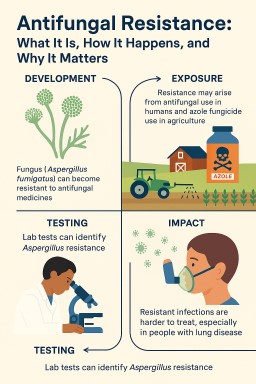
Current treatment options for fungal infections often involve the use of antifungal medications, such as azoles, echinocandins, and polyenes. These medications are generally effective in treating fungal infections, but they can have drawbacks. For example, some antifungal drugs can interact with other medications, leading to potentially harmful side effects. Additionally, overuse of antifungal drugs can contribute to the development of antifungal drug resistance, which can make treatment more challenging.
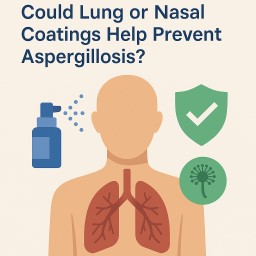
There has been a growing interest in the development of fungal vaccines as an alternative treatment. A fungal vaccine works by stimulating the immune system to produce a specific response against the fungus, which can provide long-term protection against infection. The vaccine could be given to at-risk individuals before exposure to the fungus, preventing infection from occurring in the first place.
[/et_pb_text][et_pb_text _builder_version="4.22.2" _module_preset="624b8eae-e2e0-40f4-a48e-83d57e3006b6" theme_builder_area="post_content" hover_enabled="0" sticky_enabled="0"]
A recent study by researchers from the University of Georgia demonstrated the potential for a pan-fungal vaccine to protect against multiple fungal pathogens, including those that cause aspergillosis, candidiasis, and pneumocystosis. The vaccine, called NXT-2, was designed to stimulate the immune system to recognize and fight against several types of fungi.
The study found that the vaccine was able to induce a strong immune response in mice and additionally protect them from infection with several different fungal pathogens, including Aspergillus fumigatus, which is the main cause of aspergillosis. The vaccine was found to be safe and well-tolerated in the mice, with no adverse effects reported.
This study demonstrates the potential for a pan-fungal vaccine to protect against multiple fungal pathogens. While the study did not specifically address the use of the vaccine in patients with pre-existing aspergillosis infections, the findings suggest that the vaccine has potential to prevent aspergillosis infection in high-risk individuals.
[/et_pb_text][et_pb_text _builder_version="4.22.2" _module_preset="default" theme_builder_area="post_content" hover_enabled="0" sticky_enabled="0"]
In summary, while the development of antifungal vaccines offers a promising potential alternative to the challenges posed by current treatment options for fungal infections, further research is needed to determine the safety and efficacy of the vaccine in humans, including those with aspergillosis, before it can be considered as a treatment option.
Original paper: https://academic.oup.com/pnasnexus/article/1/5/pgac248/6798391?login=false
[/et_pb_text][/et_pb_column][/et_pb_row][/et_pb_section]
Developments in Biologic and Inhaled Antifungal medications for ABPA
[et_pb_section fb_built="1" _builder_version="4.20.2" _module_preset="default" custom_padding="5px||5px||true|false" global_colors_info="{}" theme_builder_area="post_content"][et_pb_row _builder_version="4.20.2" _module_preset="default" global_colors_info="{}" theme_builder_area="post_content"][et_pb_column type="4_4" _builder_version="4.20.2" _module_preset="default" global_colors_info="{}" theme_builder_area="post_content"][et_pb_text _builder_version="4.21.0" _module_preset="default" custom_padding="|10px||10px|false|true" global_colors_info="{}" theme_builder_area="post_content"]
ABPA (Allergic Bronchopulmonary Aspergillosis) is a serious allergic disease caused by a fungal infection of the airways. People with ABPA usually have severe asthma and frequent flare-ups that often require long-term use of oral steroids and antibiotics to treat secondary bacterial infections.
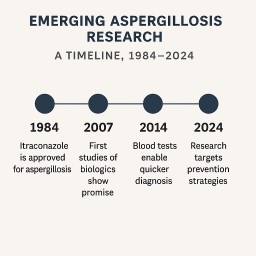
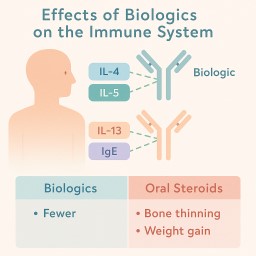
The two main treatments for ABPA are antifungal medication and oral steroids. Antifungal medication work by targeting the fungi causing the infection, limiting its growth and spread. This can help reduce the frequency of flare-ups and stabilize the condition but may also cause side effects such as nausea and, more rarely, liver damage. Oral steroids work by reducing inflammation and suppressing the immune system's response to the allergen, which can help control the symptoms of ABPA. However, long-term use can cause significant side effects, including weight gain, mood swings, and adrenal insufficiency.
These side effects can greatly impact quality of life, but both treatments may be necessary to prevent the disease from worsening. Therefore, new or improved treatments are needed.
[/et_pb_text][et_pb_text _builder_version="4.22.2" _module_preset="624b8eae-e2e0-40f4-a48e-83d57e3006b6" global_colors_info="{}" theme_builder_area="post_content"]
Fortunately, there have been recent developments in managing ABPA, and a review by Richard Moss (2023) highlights two promising types of treatment:
- Inhaled antifungal medication treat fungal lung infections by delivering the drug directly to the site of infection. This allows for a higher concentration of the drug to be delivered to the affected area while limiting the exposure of the rest of the body and therefore reduces side effects. For instance, inhaled itraconazole has been shown to reach concentrations high enough to kill or inhibit fungus growth. Further trials will be completed this year (2023) to assess its safety and effectiveness. Although still in development, these drugs offer hope for more effective and better-tolerated treatment options for patients with ABPA.
- Biologic medication is a completely new type of treatment that uses synthetic antibodies to target specific cells or proteins of our immune system instead of using a chemical compound. Omalizumab, a type of biologic, binds to immunoglobulin IgE and deactivates it. IgE is involved in the allergic response our bodies launch against foreign invaders and plays a big role in ABPA symptoms. Deactivation of IgE has been shown to reduce allergic symptoms. In clinical trials omalizumab has been shown to significantly (a) reduced the number of flare-ups compared to pre-treatment, (b) reduced the need for oral steroid use and lowered its necessary dose, (c) increased wean off steroids, (d) improved lung function and (e) improved asthma control. Additionally, other Monoclonal antibodies (Mabs) such as mepolizumab, benralizumab, and dupilumab have shown a reduction in flare-ups, total IgE and a steroid-sparing effect.
[/et_pb_text][et_pb_text _builder_version="4.22.2" _module_preset="default" global_colors_info="{}" theme_builder_area="post_content"]
According to Moss (2023), these new treatment approaches are highly effective in reducing hospital visits. Biologics seem highly effective, with up to a 90% reduction in flare-ups for ABPA patients and up to 98% efficacy in reducing the amount of oral steroid needed by the patient. If these new treatments continue to work well, it could potentially offer a new, higher quality of life for individuals with ABPA . Overall, these findings are promising, but further research is needed to confirm the effectiveness of these treatments specifically for ABPA.
Original paper: https://www.ncbi.nlm.nih.gov/pmc/articles/PMC9861760/
[/et_pb_text][/et_pb_column][/et_pb_row][/et_pb_section]
Training an immune system to recognise & help eliminate invasive aspergillosis
[et_pb_section fb_built="1" admin_label="section" _builder_version="4.16" global_colors_info="{}" theme_builder_area="post_content"][et_pb_row admin_label="row" _builder_version="4.16" background_size="initial" background_position="top_left" background_repeat="repeat" global_colors_info="{}" theme_builder_area="post_content" custom_margin="8px|auto|8px|auto|true|false"][et_pb_column type="4_4" _builder_version="4.16" custom_padding="|||" global_colors_info="{}" custom_padding__hover="|||" theme_builder_area="post_content"][et_pb_text admin_label="Text" _builder_version="4.16" background_size="initial" background_position="top_left" background_repeat="repeat" global_colors_info="{}" theme_builder_area="post_content"]Treating aspergillosis, in this case, acute invasive aspergillosis, with antifungal medication has its limitations. They tend to be quite toxic and have to be used carefully by experienced medical practitioners. When treating a severely immunocompromised person infected with Aspergillus (which is the main group of people that get the acute invasive form of this disease) mortality rates can exceed 50% in patient groups being treated for leukemia. It is easy to see that we need to develop better treatments and different treatment strategies.

A German research group at the University of Wurtzburg, led by Jurgan Loffler and Michael Hudacek has adopted a completely different approach to treating aspergillosis, instead of developing antifungal medication they have opted to 'train' the immune system of immunocompromised patients to recognise and attack the infection better in the hope that this will improve mortality.
This technology has been copied from cancer research, where we know that some cancers escape attack from the host's immune system and this allows cancer to grow. Researchers are successfully 'retraining' the host's immune system to attack the cancer cells more effectively.
The group took cells from a mouse's immune system (T-cells) that normally attack infecting microbes in order to eliminate infections and boosted their ability to find Aspergillus fumigatus, which is the main pathogen that causes aspergillosis. These cells were then given to mice infected with Aspergillus a mouse model system intended to simulate acute invasive aspergillosis in human patients.
The result was that of those mice that had invasive pulmonary aspergillosis and had no treatment, 33% remained alive whereas for those mice that were treated with the booster T-cells (CAR-T) 80% survived.
This result shows much promise for the treatment of aspergillosis. These experimental results need to be repeated in a human host but it is clear that this approach could form the basis for an entirely new way to treat aspergillosis, including the chronic forms of aspergillosis such as chronic pulmonary aspergillosis (CPA) and maybe even allergic bronchopulmonary aspergillosis (ABPA).
Full paper published here[/et_pb_text][/et_pb_column][/et_pb_row][/et_pb_section]
ISHAM Award for Prof Malcolm Richardson
[et_pb_section fb_built="1" admin_label="section" _builder_version="4.16" global_colors_info="{}" theme_builder_area="post_content" custom_padding="0px||0px||true|false"][et_pb_row admin_label="row" _builder_version="4.16" background_size="initial" background_position="top_left" background_repeat="repeat" global_colors_info="{}" theme_builder_area="post_content"][et_pb_column type="4_4" _builder_version="4.16" custom_padding="|||" global_colors_info="{}" custom_padding__hover="|||" theme_builder_area="post_content"][et_pb_text admin_label="Text" _builder_version="4.16" background_size="initial" background_position="top_left" background_repeat="repeat" global_colors_info="{}" theme_builder_area="post_content"]
Founded in 1954, the International Society for Human and Animal Mycology (ISHAM) is a large worldwide organisation that represents and supports all doctors and researchers that have an interest in Medical Mycology - which includes aspergillosis as well as all fungal disease.
Fungal diseases are generally not given the attention that they deserve from medical authorities so it is vital that diagnostics and research are supported internationally, especially where health services, so the work of ISHAM is particularly valuable.
The immense contribution of medical mycology diagnostics specialist and former Director of the Mycology Reference Centre Manchester Prof Malcolm Richardson to the work of ISHAM has been recognised at the recent ISHAM conference in New Delhi, September 2022.[/et_pb_text][/et_pb_column][/et_pb_row][/et_pb_section]
Monkeypox outbreak
[et_pb_section fb_built="1" admin_label="section" _builder_version="4.16" global_colors_info="{}" theme_builder_area="post_content"][et_pb_row admin_label="row" _builder_version="4.16" background_size="initial" background_position="top_left" background_repeat="repeat" global_colors_info="{}" theme_builder_area="post_content" custom_margin="11px|auto|11px|auto|true|false"][et_pb_column type="4_4" _builder_version="4.16" custom_padding="|||" global_colors_info="{}" custom_padding__hover="|||" theme_builder_area="post_content"][et_pb_text admin_label="Text" _builder_version="4.16" background_size="initial" background_position="top_left" background_repeat="repeat" global_colors_info="{}" theme_builder_area="post_content"]
What is Monkeypox?
How is monkeypox spread?
Symptoms
- fever
- headache
- muscle aches
- backache
- swollen lymph nodes
- shivering
- exhaustion
[/et_pb_text][/et_pb_column][/et_pb_row][/et_pb_section]
NAC Physio Mairead runs the Manchester Marathon for the Fungal Infection Trust
[et_pb_section fb_built="1" admin_label="section" _builder_version="4.16" global_colors_info="{}" theme_builder_area="post_content" custom_padding="3px||3px||true|false"][et_pb_row admin_label="row" _builder_version="4.16" background_size="initial" background_position="top_left" background_repeat="repeat" global_colors_info="{}" theme_builder_area="post_content"][et_pb_column type="4_4" _builder_version="4.16" custom_padding="|||" global_colors_info="{}" custom_padding__hover="|||" theme_builder_area="post_content"][et_pb_text admin_label="Text" _builder_version="4.16" background_size="initial" background_position="top_left" background_repeat="repeat" global_colors_info="{}" theme_builder_area="post_content"]
[/et_pb_text][/et_pb_column][/et_pb_row][/et_pb_section]
Facemask Anxiety
[et_pb_section fb_built="1" admin_label="section" _builder_version="4.16" global_colors_info="{}" theme_builder_area="post_content" custom_padding="4px||4px||true|false"][et_pb_row admin_label="row" _builder_version="4.16" background_size="initial" background_position="top_left" background_repeat="repeat" global_colors_info="{}" theme_builder_area="post_content"][et_pb_column type="4_4" _builder_version="4.16" custom_padding="|||" global_colors_info="{}" custom_padding__hover="|||" theme_builder_area="post_content"][et_pb_text admin_label="Text" _builder_version="4.16" background_size="initial" background_position="top_left" background_repeat="repeat" global_colors_info="{}" theme_builder_area="post_content"]Facemask wearing is still an important part of how we protect ourselves and others from COVID-19 infection and will continue to be so for some time yet. Wearing facemasks in public is something government regulations currently require us to do. For most people that doesn't cause a problem, but for some groups, it is a difficult thing to comply with.
For some, there are medical reasons for their inability to wear a facemask and for that reason, they are granted exemptions from government guidance (Exemptions in England, Exemptions in Wales, Exemptions in Scotland, Exemptions in NI).
The mental health charity MIND has considered the difficulties faced by people who are prone to suffering from anxiety that is difficult to control and in particular the anxieties associated with facemasks. This may be anxiety when attempting to wear a facemask, but it can also include anxiety caused when not wearing a facemask in situations where many other people will be wearing one. MIND has written a useful information page that addresses all of these difficulties and offers tips on how to manage those emotions - even those who are wearing a facemask and who feel anxious about being around others not wearing one.
We can all suffer from anxiety when placed in unfamiliar, unusual or uncomfortable situations - none more so than in a global pandemic - so there is something to learn for most of us in this article
Click here to go to the MIND website page on facemask anxiety.
[/et_pb_text][/et_pb_column][/et_pb_row][/et_pb_section]
Grieving for the life you once had
[et_pb_section fb_built="1" admin_label="section" _builder_version="4.16" global_colors_info="{}" theme_builder_area="post_content" custom_padding="11px||11px||true|false"][et_pb_row admin_label="row" _builder_version="4.16" background_size="initial" background_position="top_left" background_repeat="repeat" global_colors_info="{}" theme_builder_area="post_content"][et_pb_column type="4_4" _builder_version="4.16" custom_padding="|||" global_colors_info="{}" custom_padding__hover="|||" theme_builder_area="post_content"][et_pb_text admin_label="Text" _builder_version="4.16" background_size="initial" background_position="top_left" background_repeat="repeat" global_colors_info="{}" theme_builder_area="post_content"]This article was published by the Cystic Fibrosis Foundation and is a personal account of a young woman with CF and trying to come to terms with the limitations that loss of lung function has placed on her young life. There is a grief for her lost life, the one where she was fitter and stronger and could do so much more,
Grieving the life I once had
Just like any grief, it has a process that we all go through, and has a new life at the other end. The article is well worth a read.
NB Aspergillosis Support Groups run by the National Aspergillosis Centre in the UK can be found on Facebook.
Also, see NHS advice for the grieving.[/et_pb_text][/et_pb_column][/et_pb_row][/et_pb_section]