Could You Help Transform the Future of CPA Treatment?

Join the INCAS Trial at the National Aspergillosis Centre

If you’ve recently been diagnosed with chronic pulmonary aspergillosis (CPA) and are starting antifungal treatment, you may be eligible to take part in a pioneering clinical trial that could shape the future of care. If that is the case we will approach you to ask if you would like to join.

CPA is a long-term lung infection caused by the fungus Aspergillus, often in people with conditions like COPD or previous tuberculosis. It leads to progressive lung damage, frequent infections, and significant impact on quality of life. Current antifungal treatments help only about 60% of patients, and many face relapses, side effects, and long-term medication use.

The INCAS trial is testing whether adding a naturally occurring immune protein called interferon-gamma to standard antifungal therapy can lead to better outcomes — fewer infections, less lung damage, and improved day-to-day wellbeing. Interferon-gamma is already used safely in the NHS for other conditions, and early research at the National Aspergillosis Centre (NAC) has shown promising results for CPA.


What Is Involved?

If you choose to take part:

  • You’ll continue with standard antifungal treatment

  • You may be randomly assigned to receive interferon-gamma injections for 12 weeks (3 injections per week)

  • You’ll receive regular follow-up with chest scans, symptom tracking, and support from our expert team

All patients are closely monitored to ensure safety and comfort throughout the trial.


What Have Previous Participants Said?

Patients who took part in earlier studies shared their experiences with honesty and encouragement:

“They are missing a great opportunity… I certainly didn’t want to inject, but I need to be well, and this was a good chance at fewer infections and damping down the Aspergillus.”

“I only had one bad day — I phoned the NAC nurses, who reassured me it was expected and to carry on. Now, side effects are mild and usually gone by lunchtime. They don’t stop me like the chest problems used to.”

“I would really encourage patients to seize this chance of having gamma interferon.”

Others mentioned they were concerned at first about injections or travel, but found ways to manage:

“It doesn’t always hurt — yellow paediatric needles are the key, and a bit of tummy fat helps. Legs rarely hurt.”
“Travel’s harder now that my husband has trouble with his sight… but I understand the issue and can empathise.”


Is It Safe? What About Side Effects?

In our previous study, interferon-gamma was generally well tolerated. Some patients had mild flu-like symptoms after the injection, but these usually faded with time and were far less disruptive than a flare of CPA itself. Your care team will work closely with you and adjust support as needed.

This trial is all about learning more — not only about effectiveness, but also how easy and acceptable the treatment is for patients. The insights we gain will help shape a larger trial and may eventually transform the standard of care for CPA.


Why Take Part?

CPA affects around 3,600 people in the UK, with mortality as high as 40% within five years. If interferon-gamma proves successful, it could:

  • Shorten treatment durations

  • Reduce relapses

  • Improve quality of life for you and others

  • Open the door for better treatments in other chronic lung diseases too

You won’t just receive expert support from the UK’s leading CPA centre — you’ll help build the future of care.

“I wouldn’t be influenced by being paid. I’d be more concerned about safety and careful monitoring – which I got.”

🔗 Learn more at clinicaltrials.gov/NCT05653193 or speak to your team at the National Aspergillosis Centre.

You could be part of something that changes CPA care for good.


Understanding How Our Lungs Fight Fungus

Airway epithelial cells (AECs) are a key component of the human respiratory system: The first line of defence against airborne pathogens such as Aspergillus fumigatus (Af), AECs play a crucial role in initiating host defence and controlling immune responses and are important in maintaining respiratory health and preventing infections that can lead to conditions such as aspergillosis. Research by the University of Manchester’s Dr Margherita Bertuzzi and her team sought to understand how AECs combat Af and what leads to vulnerabilities in these defences, particularly in individuals with underlying health conditions. 

Previous work by Dr Bertuzzi and her team demonstrated that AECs are effective in stopping the fungus from causing harm when they are functioning well. However, in people who are at higher risk, like those with weakened immune systems or existing lung conditions, if these cells are not working correctly, the fungus can take advantage of this situation.

This new research by Dr Bertuzzi and her team aimed to explore how AECs stop the fungus in healthy people and what goes wrong in people who get sick. The team looked closely at the interaction between the fungus and lung cells from both healthy individuals and those with certain diseases. Using advanced scientific methods, the team was able to observe the interactions between the lung cells and the fungus at a very detailed level.

What They Found 

Experiments showed that the stage of fungal growth was important and a surface carbohydrate – mannose (a sugar) also had a role in the process.

Specifically, they discovered that the fungus is more likely to be taken up by lung cells when it has been growing for a few hours compared to when it’s just a fresh spore. Swollen fungal spores that were locked at 3 and 6 hours of germination were 2-fold more readily internalised than those locked at 0 hours. They also identified that a sugar molecule called mannose on the surface of the fungus plays a big role in this process. 

Mannose is a type of sugar molecule that can be found on the surface of various cells, including those of pathogens like Aspergillus fumigatus. This sugar plays an important role in the interactions between the fungus and the host’s cells, particularly the AECs lining the lungs. In a healthy immune response, mannose on the surface of pathogens can be recognised by mannose receptors on immune cells, triggering a series of immune responses aimed at eliminating the pathogen. However, Aspergillus fumigatus has evolved to exploit this interaction, allowing it to adhere to and invade lung cells more effectively. The presence of mannose on the fungus’ surface facilitates its binding to mannose-binding lectins (MBLs) (proteins that bind specifically to mannose) on the surface of lung cells. This binding can promote the internalisation of the fungus into the lung cells, where it can reside and potentially cause infection.

The research highlighted the possibility of manipulating this interaction as a means to combat fungal infections. By adding mannose or mannose-binding lectins like Concanavalin A, researchers could significantly reduce the fungus’s ability to invade lung cells. This reduction was accomplished by essentially “competing” with the fungus for the binding sites on the lung cells or by directly blocking the fungal mannose, thereby inhibiting the interaction that facilitates fungal infection.

Why does it matter?

Understanding these interactions gives us important insights into how our lungs protect us from fungal infections and what goes wrong in people who are vulnerable to such infections. This knowledge could help in creating new treatments against pathogens like Aspergillus fumigatus.

You can read the full abstract here. 


Patient Reflection on Research: The Bronchiectasis Exacerbation Diary

[et_pb_section fb_built="1" theme_builder_area="post_content" _builder_version="4.24.2" _module_preset="default"][et_pb_row _builder_version="4.24.2" _module_preset="default" theme_builder_area="post_content"][et_pb_column _builder_version="4.24.2" _module_preset="default" type="4_4" theme_builder_area="post_content"][et_pb_text _builder_version="4.24.2" _module_preset="default" theme_builder_area="post_content" hover_enabled="0" sticky_enabled="0"]
Navigating the rollercoaster of chronic illness is a unique and often isolating experience. It is a journey that can be filled with uncertainties, regular hospital appointments, and a never-ending quest for a return to normal. This is so often the reality for individuals with chronic respiratory diseases, such as aspergillosis. 

In this post,  Evelyn embarks on a reflective journey, chronicling the evolution of her illness from childhood diagnosis to the present day, a timeline characterised by bilateral severe cystic bronchiectasis complicated by the colonisation of aspergillus and the less common scedosporium. For Evelyn, keeping a diary, noting symptoms, infections, and treatment strategies has been a way to make sense of the unpredictability of her health. This habit, instilled years ago by a forward-thinking consultant, transcends its practical utility, evolving into a critical tool for patient empowerment and self-advocacy.

When searching the web for help refining her symptom diary, Evelyn came across a paper titled: The Bronchiectasis Exacerbation Diary. This paper  was a revelation of sorts. It cast light on often-overlooked aspects of the patient-experience and validated the often inexplicable symptoms that Evelyn experiences. It is evidence as to the power of patient-centered research and the impact of seeing lived experience  acknowledged in scientific literature. 

Evelyn's below reflection is a reminder of the broader implications of chronic illness on daily life and the need to adapt to navigate daily life. 

As a result of a conversation with Lauren recently concerning the use of a symptom diary/journal, I came across a paper published on the internet, ‘The Bronchiectasis Exacerbation Diary’. Diagnosed in childhood with a chronic respiratory disease which has progressed throughout my life, I have bilateral severe cystic bronchiectasis with colonisation of aspergillus and the rarer fungi, scedosporium.

I have long been accustomed to keeping notes of symptoms/infections/treatment, having been encouraged to do so, many years ago, by a consultant for ease of reference at appointments.  He emphasised treating infections should be dependent on the result of a sputum culture and sensitivity and not on a “Russian roulette” approach, as he called broad spectrum antibiotics; without knowing what type of infection was involved.  Thankfully, my GP was co-operative, as at that time cultures were not routine.  (I had dreaded acquiring a reputation as a bolshie patient!)

Reading the above mentioned paper was a revelation.  It brought together the range of symptoms I experience daily, even some symptoms I felt were not appropriate to mention at clinic consultations.  Moreover, I felt validated.

There have been occasions, albeit rarely, when I have doubted myself, none more so than when one clinician inferred I was psychosomatic.  This was my lowest point.  Thankfully, following this I was referred to a respiratory physician at Wythenshawe Hospital who, when a culture showed aspergillus, transferred me to Professor Denning’s care; as they say “every cloud has a silver lining”.  Aspergillus had previously been found in a culture at another hospital in 1995/6, but not treated in the way it was at Wythenshawe.

Not only everyday symptoms were considered in the article, but also the immediate impact patients’ experience with daily living.  Also, in a wider sense, the general impacts on our lives and the adjustments we all face in coping – all of which I can so easily identify with in my own life.

I felt so encouraged reading the paper as despite all of the various types of patient information leaflets I have read through the years, none were so comprehensive.  


[/et_pb_text][/et_pb_column][/et_pb_row][/et_pb_section]


Do you have asthma and Allergic Bronchopulmonary Aspergillosis?

[et_pb_section fb_built="1" theme_builder_area="post_content" _builder_version="4.23" _module_preset="default"][et_pb_row _builder_version="4.23" _module_preset="default" theme_builder_area="post_content" width="91.8%"][et_pb_column _builder_version="4.23" _module_preset="default" type="4_4" theme_builder_area="post_content"][et_pb_text _builder_version="4.23" _module_preset="default" theme_builder_area="post_content" hover_enabled="0" sticky_enabled="0"]

We're excited to share that there's a new clinical study that's looking into an innovative treatment specifically for individuals dealing with both asthma and ABPA. This treatment comes in the form of an inhaler called PUR1900.

What is PUR1900?

PUR1900 is an inhaled medication that's being tested for its effectiveness against the symptoms of ABPA in asthma patients. It’s designed to deliver an antifungal medication directly to the lungs, where it can work right at the source of the problem.

The Study at a Glance

The study spans several months and is divided into three key phases:

  1. Screening Period (28 days): Researchers will do some tests to make sure this study is the right fit for you.
  2. Treatment Period (112 days): If you're eligible, you'll use the inhaler for about 16 weeks. You could receive either a higher dose, a lower dose of PUR1900, or a placebo (which doesn't contain the actual medication).
  3. Observation Period (56 days): After the treatment, researchers will keep an eye on your health for another 8 weeks.

What Will Participants Do?

  • Daily Routines: You'll use the inhaler daily as directed and keep track of your experience in an electronic diary (eDiary).
  • At-Home Checks: You'll measure your breathing strength daily using a simple device.
  • Clinic Visits: Approximately once a month, you'll visit the clinic for check-ups and tests.

Why Participate?

By joining this study, you're not only potentially finding a new way to manage your asthma and ABPA, but you're also contributing to medical research that could help countless others in the future.

Safety and Benefits

Your safety is the top priority. You'll be closely monitored throughout the study, and all treatments will be provided at no cost to you. Plus, if you successfully complete the study, there may be an opportunity to continue receiving PUR1900 in a follow-up study.

Taking the Next Step

Researchers are looking for adults with asthma and ABPA who are interested in exploring this new treatment option. If you're ready to take the next step, eligibility and contact details on how you can participate in this groundbreaking study can be found by clicking here.


[/et_pb_text][/et_pb_column][/et_pb_row][/et_pb_section]


A Breath of Fresh Air: Repairing COPD Damage with Patients' Own Lung Cells

[et_pb_section fb_built="1" _builder_version="4.23" _module_preset="default" global_colors_info="{}" theme_builder_area="post_content"][et_pb_row _builder_version="4.23" _module_preset="default" global_colors_info="{}" theme_builder_area="post_content"][et_pb_column type="4_4" _builder_version="4.23" _module_preset="default" global_colors_info="{}" theme_builder_area="post_content"][et_pb_text _builder_version="4.23.1" _module_preset="default" hover_enabled="0" global_colors_info="{}" theme_builder_area="post_content" sticky_enabled="0"]
In a remarkable advancement towards treating Chronic Obstructive Pulmonary Disease (COPD), scientists have, for the first time, demonstrated the potential of repairing damaged lung tissue using patients' own lung cells. The breakthrough was unveiled at this year's European Respiratory Society International Congress in Milan, Italy, where results from a pioneering phase I clinical trial were shared.

COPD, which is common in those with chronic pulmonary aspergillosis (CPA), causes progressive damage to lung tissue, significantly impacting the quality of life for patients through the obstruction of airflow out of the lungs. The disease, claiming the lives of roughly 30,000 people in the UK each year, has been historically challenging to treat. Current treatments mainly focus on alleviating symptoms through bronchodilators such as salbutamol, which widen the airways to enhance airflow but do not repair the damaged tissue.

The search for a more definitive treatment led researchers to explore the realms of stem cell and progenitor cell-based regenerative medicine. Stem cells are known for their ability to morph into any cell type. Unlike stem cells, progenitor cells can only turn into certain types of cells related to a specific area or tissue. For example, a progenitor cell in the lung can turn into different types of lung cells but not into heart cells or liver cells. Among the researchers is Professor Wei Zuo from Tongji University, Shanghai and chief scientist at Regend Therapeutics. Professor Zuo and his team at Regend have been investigating a specific type of progenitor cell known as P63+ lung progenitor cells.

The phase I clinical trial initiated by Professor Zuo and his colleagues aimed to assess the safety and efficacy of removing P63+ progenitor cells from patients' lungs, then multiplying them in their millions in a laboratory before transplanting them back into their lungs.

20 COPD patients were enrolled in the trial, 17 of whom received the cell treatment, while three served as the control group. The results were encouraging; the treatment was well tolerated, and patients exhibited improved lung function, could walk further, and reported a better quality of life following the treatment.

After 12 weeks of this new treatment, patients experienced a significant improvement in their lung function. Specifically, the lungs' ability to transfer oxygen and carbon dioxide to and from the bloodstream became more efficient.  Additionally, patients could walk further during a standard six-minute walking test. The median (the middle number when all numbers are arranged from smallest to largest)  distance increased from 410 meters to 447 meters -  a good sign of improved aerobic capacity and endurance. Moreover, there was a notable decrease in the scores from the St George’s Respiratory Questionnaire (SGRQ), a tool used to measure the impact of respiratory diseases on overall quality of life. A lower score indicates that patients felt their quality of life had improved, with fewer symptoms and better daily functioning. Overall, this suggests that the treatment improved lung function and positively impacted patients' day-to-day lives.

The groundbreaking results also highlighted the potential of this treatment in repairing lung damage in patients with mild emphysema (a type of lung damage that occurs in COPD), a condition generally considered irreversible and progressive. Two patients enrolled on the trial with the condition showed resolution of the lesions at 24 weeks by CT imaging. 

Endorsed by China's National Medical Products Administration (NMPA), which is the equivalent of the UK Medicines and Healthcare products Regulatory Agency (MHRA), a phase II clinical trial is in the pipeline to test further the use of P63+ progenitor cell transplantation in a larger group of COPD patients. 

This innovation could significantly alter the course of treatment in COPD. Professor Omar Usmani of Imperial College London and Head of the European Respiratory Society group on airway disease, asthma, COPD and chronic cough provided his thoughts on the trial's significance, underscoring the urgent need for more effective treatments for COPD. He noted that if these results are confirmed in subsequent trials, it would be a major breakthrough in COPD treatment.

The road ahead appears promising, with the potential to not only alleviate the debilitating symptoms of COPD but to repair the damage it inflicts on the lungs, offering hope to millions suffering from this chronic respiratory disease.

You can read in more detail about the trial here: https://www.ersnet.org/news-and-features/news/transplanting-patients-own-lung-cells-offers-hope-of-cure-for-copd/

 
[/et_pb_text][/et_pb_column][/et_pb_row][/et_pb_section]


Unblocking Airways: New approaches to preventing mucus plugs

[et_pb_section fb_built="1" _builder_version="4.20.4" _module_preset="default" custom_padding="5px||5px||true|false" global_colors_info="{}" theme_builder_area="post_content"][et_pb_row _builder_version="4.20.4" _module_preset="default" global_colors_info="{}" theme_builder_area="post_content"][et_pb_column type="4_4" _builder_version="4.20.4" _module_preset="default" global_colors_info="{}" theme_builder_area="post_content"][et_pb_text _builder_version="4.20.4" _module_preset="default" custom_padding="|13px||9px||" global_colors_info="{}" theme_builder_area="post_content"]
Excess mucus production is a common problem in people with Allergic Bronchopulmonary Aspergillosis (ABPA), and chronic pulmonary aspergillosis (CPA). Mucus is a thick mixture of water, cellular debris, salt, lipids, and proteins. It lines our airways, trapping and removing foreign particles from the lungs. The gel-like thickness of mucus is caused by a family of proteins called mucins. In individuals with asthma, genetic changes to these mucin proteins can thicken the mucus, making it more difficult to clear from the lungs. This thick and dense mucous builds up and can lead to mucus plugs, blocking the airways and causing breathing difficulties, wheezing, coughing, and other respiratory symptoms.

Doctors usually treat these symptoms with inhalable medications such as bronchodilators and corticosteroids to open the airways and reduce inflammation. Mucolytics can also be used to break down mucus plugs, but the only available medication, N-Acetylcysteine (NAC), is not very effective and can cause unwanted side effects. While current treatments can help manage symptoms, there is a need for effective and safe treatments to directly address the issue of mucus plugs.


To address this issue, 3 approaches are being explored:
[/et_pb_text][et_pb_text _builder_version="4.21.0" _module_preset="default" custom_padding="20px|30px|20px|30px|true|true" box_shadow_style="preset1" global_colors_info="{}" theme_builder_area="post_content"]

  1. Mucolytics to dissolve mucus plugs

Researchers at the University of Colorado are testing new mucolytics such as tris (2-carboxyethyl) phosphine. They gave this mucolytic to a group of asthmatic mice experiencing inflammation and excess mucus production. After treatment, mucus flow improved, and the asthmatic mice could clear mucus just as effectively as the non-asthmatic mice.

However, mucolytics work by breaking the bonds which hold mucins together, and these bonds are found in other proteins in the body. If the bonds are broken in these proteins, it could lead to unwanted side effects. Therefore, further research is needed to discover a drug that will only target the bonds in mucins, reducing the risk of side effects.
[/et_pb_text][et_pb_text _builder_version="4.21.0" _module_preset="default" custom_padding="20px|30px|20px|30px|true|true" box_shadow_style="preset1" global_colors_info="{}" theme_builder_area="post_content"]
2. Clearing crystals

In another approach, Helen Aegerter and her team at the University of Belgium are studying protein crystals which they believe drive mucus overproduction in asthma. These crystals, known as Charcot-Leyden crystals (CLC’s) cause mucus to become thicker, therefore harder to clear from the airways.

To address the crystals directly, the team developed antibodies that attack the proteins in the crystals. They tested the antibodies on mucus samples collected from individuals with asthma.  They found that the antibodies effectively dissolved the crystals by attaching themselves to the specific regions of the CLC proteins that hold them together. In addition, the antibodies dampened inflammatory reactions in mice. Based on these findings, the researchers are now working on a drug that could have the same effect in humans. Aegerter believes that this approach could be used to treat a variety of inflammatory diseases that involve excessive mucus production, including sinus inflammation and certain allergic reactions to fungal pathogens (such as ABPA).
[/et_pb_text][et_pb_text _builder_version="4.21.0" _module_preset="default" custom_margin="||30px|||" custom_padding="20px|30px|20px|30px|true|true" box_shadow_style="preset1" global_colors_info="{}" theme_builder_area="post_content"]

  1. Preventing excess secretion of mucus

In a third approach, pulmonologist Burton Dickey of the University of Texas is working to prevent mucus plugs by reducing the overproduction of mucus. Dickey's team identified a specific gene, Syt2, that is only involved in excessive mucus production and not in normal mucus production. To inhibit excess mucus production, they developed a drug called PEN-SP9-Cy that blocks Syt2's action. This approach is particularly promising as it targets mucus overproduction without interfering with the vital functions of normal mucus. Normal mucus production plays a critical role in protecting and maintaining the health of the respiratory and digestive systems. Although the initial results are promising, further research is necessary to evaluate the efficacy and safety of these drugs in clinical trials.
[/et_pb_text][et_pb_text _builder_version="4.21.0" _module_preset="default" global_colors_info="{}" theme_builder_area="post_content"]
In summary, mucus plugs present uncomfortable symptoms in ABPA, CPA and asthma. Current treatments focus on symptom management rather than directly addressing reduction or removal of mucus plugs. However, researchers are exploring 3 potential approaches, involving mucolytics, clearing crystals, and preventing excess mucus secretion. Additional research is required to confirm their effectiveness and safety, but approaches have shown promising results and may in future be one way we can prevent mucus plugs.


Further information:

Phlegm, mucus and asthma | Asthma + Lung UK

How to loosen and clear mucus 
[/et_pb_text][/et_pb_column][/et_pb_row][/et_pb_section]


Fungal vaccine developments

[et_pb_section fb_built="1" _builder_version="4.20.2" _module_preset="default" global_colors_info="{}" theme_builder_area="post_content"][et_pb_row _builder_version="4.20.2" _module_preset="default" custom_margin="3px|auto|3px|auto|true|false" global_colors_info="{}" theme_builder_area="post_content"][et_pb_column type="4_4" _builder_version="4.20.2" _module_preset="default" global_colors_info="{}" theme_builder_area="post_content"][et_pb_text _builder_version="4.20.2" _module_preset="default" global_colors_info="{}" theme_builder_area="post_content"]
The numbers of people at risk of fungal infections are increasing due to an aging population, increased use of immunosuppressive medications, pre-existing medical conditions, environmental changes, and lifestyle factors. Therefore, there is a growing need for new treatments or preventative options.

Current treatment options for fungal infections often involve the use of antifungal medications, such as azoles, echinocandins, and polyenes. These medications are generally effective in treating fungal infections, but they can have drawbacks. For example, some antifungal drugs can interact with other medications, leading to potentially harmful side effects. Additionally, overuse of antifungal drugs can contribute to the development of antifungal drug resistance, which can make treatment more challenging.

There has been a growing interest in the development of fungal vaccines as an alternative treatment. A fungal vaccine works by stimulating the immune system to produce a specific response against the fungus, which can provide long-term protection against infection. The vaccine could be given to at-risk individuals before exposure to the fungus, preventing infection from occurring in the first place.
[/et_pb_text][et_pb_text _builder_version="4.22.2" _module_preset="624b8eae-e2e0-40f4-a48e-83d57e3006b6" theme_builder_area="post_content" hover_enabled="0" sticky_enabled="0"]
A recent study by researchers from the University of Georgia demonstrated the potential for a pan-fungal vaccine to protect against multiple fungal pathogens, including those that cause aspergillosis, candidiasis, and pneumocystosis. The vaccine, called NXT-2, was designed to stimulate the immune system to recognize and fight against several types of fungi.

The study found that the vaccine was able to induce a strong immune response in mice and additionally protect them from infection with several different fungal pathogens, including Aspergillus fumigatus, which is the main cause of aspergillosis. The vaccine was found to be safe and well-tolerated in the mice, with no adverse effects reported.

This study demonstrates the potential for a pan-fungal vaccine to protect against multiple fungal pathogens. While the study did not specifically address the use of the vaccine in patients with pre-existing aspergillosis infections, the findings suggest that the vaccine has potential to prevent aspergillosis infection in high-risk individuals.
[/et_pb_text][et_pb_text _builder_version="4.22.2" _module_preset="default" theme_builder_area="post_content" hover_enabled="0" sticky_enabled="0"]
In summary, while the development of antifungal vaccines offers a promising potential alternative to the challenges posed by current treatment options for fungal infections, further research is needed to determine the safety and efficacy of the vaccine in humans, including those with aspergillosis, before it can be considered as a treatment option.

Original paper: https://academic.oup.com/pnasnexus/article/1/5/pgac248/6798391?login=false 
[/et_pb_text][/et_pb_column][/et_pb_row][/et_pb_section]


Developments in Biologic and Inhaled Antifungal medications for ABPA

[et_pb_section fb_built="1" _builder_version="4.20.2" _module_preset="default" custom_padding="5px||5px||true|false" global_colors_info="{}" theme_builder_area="post_content"][et_pb_row _builder_version="4.20.2" _module_preset="default" global_colors_info="{}" theme_builder_area="post_content"][et_pb_column type="4_4" _builder_version="4.20.2" _module_preset="default" global_colors_info="{}" theme_builder_area="post_content"][et_pb_text _builder_version="4.21.0" _module_preset="default" custom_padding="|10px||10px|false|true" global_colors_info="{}" theme_builder_area="post_content"]
ABPA (Allergic Bronchopulmonary Aspergillosis) is a serious allergic disease caused by a fungal infection of the airways. People with ABPA usually have severe asthma and frequent flare-ups that often require long-term use of oral steroids and antibiotics to treat secondary bacterial infections.

The two main treatments for ABPA are antifungal medication and oral steroids. Antifungal medication work by targeting the fungi causing the infection, limiting its growth and spread. This can help reduce the frequency of flare-ups and stabilize the condition but may also cause side effects such as nausea and, more rarely, liver damage. Oral steroids work by reducing inflammation and suppressing the immune system's response to the allergen, which can help control the symptoms of ABPA. However, long-term use can cause significant side effects, including weight gain, mood swings, and adrenal insufficiency.

These side effects can greatly impact quality of life, but both treatments may be necessary to prevent the disease from worsening. Therefore, new or improved treatments are needed.
[/et_pb_text][et_pb_text _builder_version="4.22.2" _module_preset="624b8eae-e2e0-40f4-a48e-83d57e3006b6" global_colors_info="{}" theme_builder_area="post_content"]
Fortunately, there have been recent developments in managing ABPA, and a review by Richard Moss (2023) highlights two promising types of treatment:


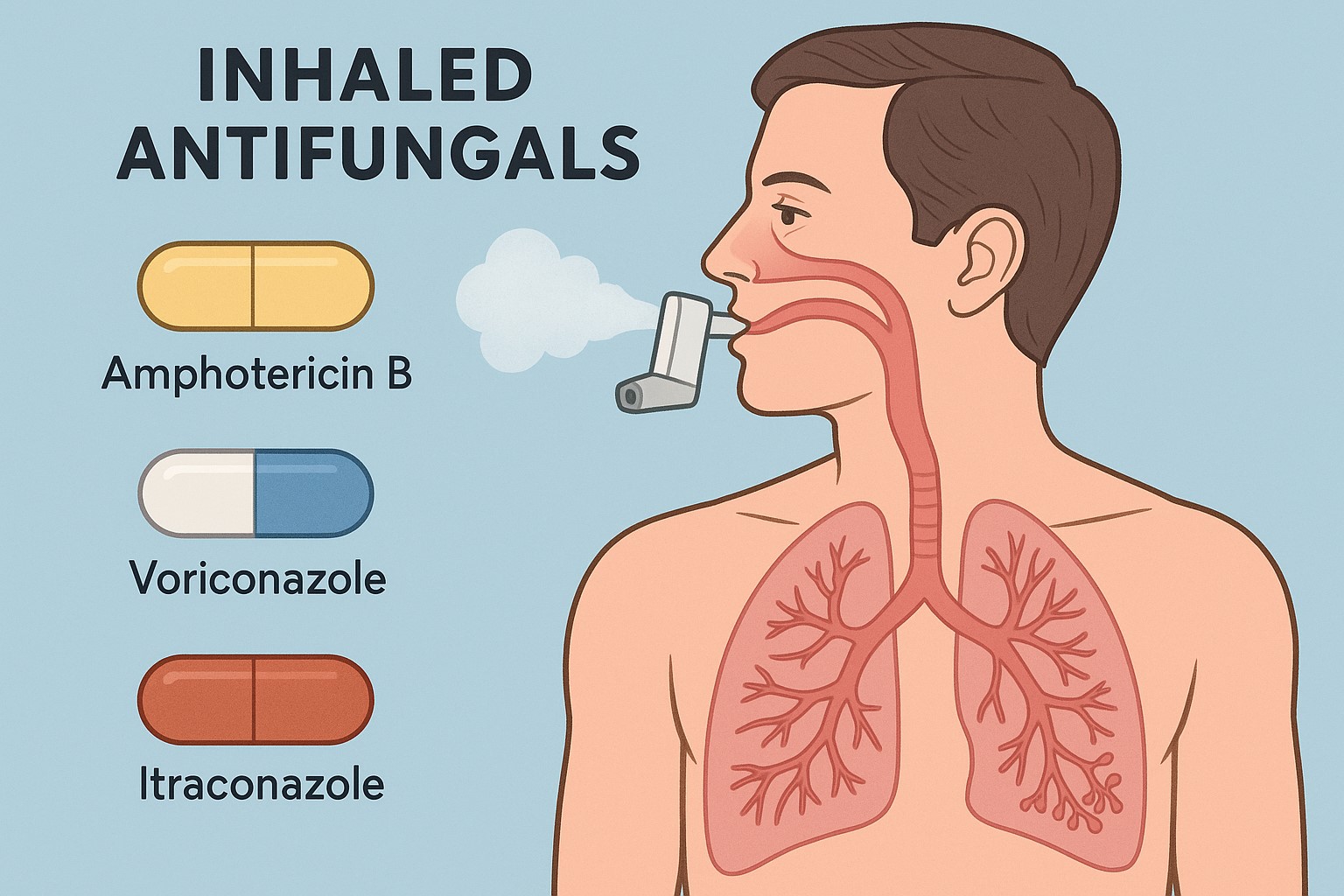
  1. Inhaled antifungal medication treat fungal lung infections by delivering the drug directly to the site of infection. This allows for a higher concentration of the drug to be delivered to the affected area while limiting the exposure of the rest of the body and therefore reduces side effects. For instance, inhaled itraconazole has been shown to reach concentrations high enough to kill or inhibit fungus growth. Further trials will be completed this year (2023) to assess its safety and effectiveness. Although still in development, these drugs offer hope for more effective and better-tolerated treatment options for patients with ABPA.
  1. Biologic medication is a completely new type of treatment that uses synthetic antibodies to target specific cells or proteins of our immune system instead of using a chemical compound. Omalizumab, a type of biologic, binds to immunoglobulin IgE and deactivates it. IgE is involved in the allergic response our bodies launch against foreign invaders and plays a big role in ABPA symptoms. Deactivation of IgE has been shown to reduce allergic symptoms. In clinical trials omalizumab has been shown to significantly (a) reduced the number of flare-ups compared to pre-treatment, (b) reduced the need for oral steroid use and lowered its necessary dose, (c) increased wean off steroids, (d) improved lung function and (e) improved asthma control. Additionally, other Monoclonal antibodies (Mabs) such as mepolizumab, benralizumab, and dupilumab have shown a reduction in flare-ups, total IgE and a steroid-sparing effect.

[/et_pb_text][et_pb_text _builder_version="4.22.2" _module_preset="default" global_colors_info="{}" theme_builder_area="post_content"]
According to Moss (2023), these new treatment approaches are highly effective in reducing hospital visits. Biologics seem highly effective, with up to a 90% reduction in flare-ups for ABPA patients and up to 98% efficacy in reducing the amount of oral steroid needed by the patient. If these new treatments continue to work well, it could potentially offer a new, higher quality of life for individuals with ABPA . Overall, these findings are promising, but further research is needed to confirm the effectiveness of these treatments specifically for ABPA.

Original paper: https://www.ncbi.nlm.nih.gov/pmc/articles/PMC9861760/ 

 
[/et_pb_text][/et_pb_column][/et_pb_row][/et_pb_section]


Training an immune system to recognise & help eliminate invasive aspergillosis

[et_pb_section fb_built="1" admin_label="section" _builder_version="4.16" global_colors_info="{}" theme_builder_area="post_content"][et_pb_row admin_label="row" _builder_version="4.16" background_size="initial" background_position="top_left" background_repeat="repeat" global_colors_info="{}" theme_builder_area="post_content" custom_margin="8px|auto|8px|auto|true|false"][et_pb_column type="4_4" _builder_version="4.16" custom_padding="|||" global_colors_info="{}" custom_padding__hover="|||" theme_builder_area="post_content"][et_pb_text admin_label="Text" _builder_version="4.16" background_size="initial" background_position="top_left" background_repeat="repeat" global_colors_info="{}" theme_builder_area="post_content"]Treating aspergillosis, in this case, acute invasive aspergillosis, with antifungal medication has its limitations. They tend to be quite toxic and have to be used carefully by experienced medical practitioners. When treating a severely immunocompromised person infected with Aspergillus (which is the main group of people that get the acute invasive form of this disease) mortality rates can exceed 50% in patient groups being treated for leukemia. It is easy to see that we need to develop better treatments and different treatment strategies.

Anti-Afumigatus mab recognises A. fumigatus hyphae

A German research group at the University of Wurtzburg, led by Jurgan Loffler and Michael Hudacek has adopted a completely different approach to treating aspergillosis, instead of developing antifungal medication they have opted to 'train' the immune system of immunocompromised patients to recognise and attack the infection better in the hope that this will improve mortality.

This technology has been copied from cancer research, where we know that some cancers escape attack from the host's immune system and this allows cancer to grow. Researchers are successfully 'retraining' the host's immune system to attack the cancer cells more effectively.

The group took cells from a mouse's immune system (T-cells) that normally attack infecting microbes in order to eliminate infections and boosted their ability to find Aspergillus fumigatus, which is the main pathogen that causes aspergillosis. These cells were then given to mice infected with Aspergillus a mouse model system intended to simulate acute invasive aspergillosis in human patients.

The result was that of those mice that had invasive pulmonary aspergillosis and had no treatment, 33% remained alive whereas for those mice that were treated with the booster T-cells (CAR-T) 80% survived.

This result shows much promise for the treatment of aspergillosis. These experimental results need to be repeated in a human host but it is clear that this approach could form the basis for an entirely new way to treat aspergillosis, including the chronic forms of aspergillosis such as chronic pulmonary aspergillosis (CPA) and maybe even allergic bronchopulmonary aspergillosis (ABPA).

Full paper published here[/et_pb_text][/et_pb_column][/et_pb_row][/et_pb_section]


ISHAM Award for Prof Malcolm Richardson

[et_pb_section fb_built="1" admin_label="section" _builder_version="4.16" global_colors_info="{}" theme_builder_area="post_content" custom_padding="0px||0px||true|false"][et_pb_row admin_label="row" _builder_version="4.16" background_size="initial" background_position="top_left" background_repeat="repeat" global_colors_info="{}" theme_builder_area="post_content"][et_pb_column type="4_4" _builder_version="4.16" custom_padding="|||" global_colors_info="{}" custom_padding__hover="|||" theme_builder_area="post_content"][et_pb_text admin_label="Text" _builder_version="4.16" background_size="initial" background_position="top_left" background_repeat="repeat" global_colors_info="{}" theme_builder_area="post_content"]Founded in 1954, the International Society for Human and Animal Mycology (ISHAM) is a large worldwide organisation that represents and supports all doctors and researchers that have an interest in Medical Mycology - which includes aspergillosis as well as all fungal disease.

Fungal diseases are generally not given the attention that they deserve from medical authorities so it is vital that diagnostics and research are supported internationally, especially where health services, so the work of ISHAM is particularly valuable.


The immense contribution of medical mycology diagnostics specialist and former Director of the Mycology Reference Centre Manchester Prof Malcolm Richardson to the work of ISHAM has been recognised at the recent ISHAM conference in New Delhi, September 2022.[/et_pb_text][/et_pb_column][/et_pb_row][/et_pb_section]