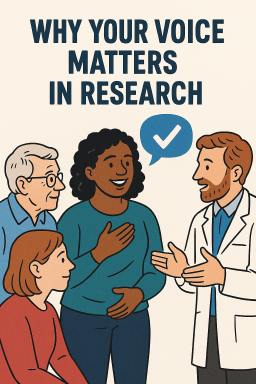
🫁 Why Your Voice Matters in Research

How Patients Help Shape Better, Fairer Medical Trials


💬 Why Are Patients Being Asked to Help with Research?

If you're living with a health condition — especially one that’s under-researched or misunderstood — your experience is vital.

Today, researchers, funders, and charities are working hard to involve patients and carers in medical research. Your insights help ensure:

  • The right questions are asked

  • Outcomes that matter to patients are measured

  • Studies are practical and inclusive

  • Public funds are used fairly and effectively


💷 Why Pharmaceutical Companies Are Involved — And Why We Still Need Them

Pharmaceutical companies develop and test most new medicines. Their funding, staff, and infrastructure are essential — especially for:

  • Rare or complex diseases

  • Treatments that require large, international trials

  • Speeding up the path from discovery to clinic

But as for-profit organisations, pharma companies also have business goals — such as:

  • Making a return on investment

  • Releasing new drugs before competitors

  • Promoting products over alternatives

This can create conflicts of interest — even unintentionally — which is why we need strong checks and balances.


⚖️ What Can Go Wrong: Risks to Impartiality

Because of commercial influence, research funded by the pharmaceutical industry can sometimes include bias, such as:

🧪 Risk 💬 What It Means
Sponsorship bias Results may be more positive for a company's own product.
Selective publication Negative or neutral results might not be published.
Design bias Studies may be designed in ways that favour one outcome.
Ghostwriting A company may write a scientific article but publish it under an academic’s name.
Unclear side effects Real-world harms may be underreported or downplayed.

This is why independent safeguards — and your involvement — are so important.


🛡️ What Keeps Research Honest?

Impartiality is protected through a shared responsibility between:

👥 Patients & Public

  • Help ensure that research reflects real experiences

  • Ask important questions researchers may miss

  • Keep science grounded in real-world needs

🧪 Independent Scientists

  • Analyse and critique study methods and findings

  • Conduct publicly funded or non-commercial research

  • Publish systematic reviews (e.g. Cochrane) to assess all evidence

🏛️ Regulators & Ethics Committees

  • Agencies like MHRA (UK), EMA (Europe), and FDA (USA) review trial designs, monitor safety, and can demand extra data

  • Research Ethics Committees (RECs) review every trial in advance to check for fairness, patient safety, and scientific value

📚 Journal Editors & Reviewers

  • Scientific journals require researchers to disclose conflicts of interest

  • Peer reviewers (often unpaid experts) critically assess studies before publication

Together, these layers help reduce bias, protect patients, and promote better science.


👩‍🔬 How Patients Improve Research — Step by Step

🧩 Stage 👥 Your Role as a Patient
Choosing the research question Help identify what matters most — not just what’s easiest to measure
Designing the trial Suggest realistic visit schedules, help choose fair inclusion criteria, review consent forms
Helping people take part Improve how studies are advertised and explained, especially for underserved groups
Monitoring the trial Sit on trial oversight committees, flag practical or ethical concerns
Sharing the results Help write plain-English summaries and guide where and how results are shared

🔍 Why Patient Involvement Helps Reduce Bias

You're not tied to commercial goals
You speak from lived experience
You help researchers stay grounded
You ask different — often better — questions

Your involvement increases trust, relevance, and fairness in research. It also complements the role of scientists, ethics reviewers, and regulators who are working behind the scenes to protect public interest.


🫶 Could You Help?

You don’t need a science degree — just your experience and willingness to contribute.

You might:

  • Join a patient advisory group

  • Help review research proposals for funding

  • Take part in a clinical trial (as a participant or advisor)

  • Share your experience with researchers, charities, or the NHS

  • Help write or test patient information materials


🚀 How to Get Started

  • Explore Be Part of Research (UK-wide clinical research opportunities)

  • Ask your GP or specialist if any research is happening near you

  • Join patient groups connected to your condition — many are research partners

  • Contact a university or NHS trust involved in research — most have PPI (Patient and Public Involvement) teams


Research works best when it’s done with patients — not just about them.
Your voice helps keep science honest, relevant, and focused on real lives.


🧠 Understanding Health Evidence: A Guide for Patients

This guide helps patients and the public understand how to judge the quality of health information, especially around treatments, supplements, and medical claims.


📚 Menu

  1. How Science Works
  2. Assessing the Strength of Evidence
  3. Trusting Online Medical Information
  4. Scientific Journal Quality and Bias
  5. Herbal Remedies and Industry Influence
  6. Unrecognised Syndromes and Clinics
  7. Predatory Journals and Peer Review

🔬 How Science Works

Medical advice and treatments are ideally based on well-tested science. Here’s how that process usually works:

  1. Research is done by scientists who ask questions and collect data.
  2. Peer review: Experts examine the study to ensure it’s fair and thorough.
  3. Publication: If it passes peer review, it's published.
  4. Replication: Other researchers try to repeat it. If they can't, confidence in the findings drops.

One study rarely proves something on its own. Medical certainty comes when multiple high-quality studies agree.


📊 Assessing the Strength of Evidence

🔎 Use these steps to check whether a claim is solid or uncertain:

  • Is it based on one study or a pattern of studies?
  • Has the result been replicated by others?
  • Is it a randomised controlled trial, or a weaker type (like a case report)?
  • Does it appear in a systematic review or meta-analysis?
  • Was it published in a known, peer-reviewed journal?

Always check with a trusted clinician if unsure.


🌐 Trusting Online Medical Information

Look out for:

✅ NHS, NICE, university, or respected charity sources ✅ References to studies or expert guidelines ✅ Recently published or reviewed content ❌ Claims that sound too good to be true ❌ Articles trying to sell you something

Good places to check information:


🧾 Scientific Journal Quality and Bias

Even good journals may publish studies with industry funding. That’s not wrong by itself, but look out for signs of bias:

  • Conflict of interest statements (often near the beginning or end)
  • Funding sources: Drug companies vs. independent organisations
  • How results are framed: Are benefits overstated? Risks ignored?
  • Compare with other studies: Are the results too good to be true?

The strongest evidence comes from independent replication.


🌿 Herbal Remedies and Industry Influence

Some believe herbal treatments are suppressed by drug companies. In truth:

  • Most herbal products haven’t had large, well-run trials.
  • Companies don’t fund them because they can’t be patented.
  • It’s not suppression — it’s a lack of commercial incentive.

Even if early research looks good, we need repeatable, well-controlled studies to ensure safety and effectiveness.

Doctors can’t recommend unproven treatments — not because they don’t work, but because we don’t yet know enough.


⚠️ Unrecognised Syndromes and Clinics

Some private clinics promote treatments for self-defined syndromes. They often:

  • Rely on a few early or small studies
  • Use unrecognised diagnostic tools
  • Sell unproven or expensive treatments

Mainstream medicine needs strong, repeated evidence before accepting a new condition or treatment. It’s about safety and evidence, not disbelief or conspiracy.

⚖️ Is It Legal — and Ethical?

In many countries, including the UK, it is legal for clinics to offer non-mainstream treatments if they do not break safety, advertising, or professional conduct laws. However, legality does not always mean ethical acceptability.

Offering treatments that are unsupported by high-quality evidence may be seen by many as amoral or unethical, especially when:

  • Patients are vulnerable or desperate
  • Treatments are expensive
  • Claims are overstated or misleading
  • Alternatives with better evidence are not discussed

Healthcare professionals are expected to put patient welfare before profit, be transparent about evidence limitations, and avoid offering false hope. Patients should always ask questions, seek second opinions, and verify claims with trusted sources.

Some private clinics promote treatments for self-defined syndromes.

They often:

  • Rely on a few early or small studies
  • Use unrecognised diagnostic tools
  • Sell unproven or expensive treatments

Mainstream medicine needs strong, repeated evidence before accepting a new condition or treatment. It’s about safety and evidence, not disbelief or conspiracy.

Other examples of self-defined or poorly validated syndromes promoted by certain clinics include:

  • Adrenal fatigue (not the same as adrenal insufficiency)
  • Leaky gut syndrome (distinct from recognised intestinal permeability disorders)
  • Multiple chemical sensitivity (MCS)
  • Chronic Lyme disease (as distinct from recognised post-treatment Lyme syndrome)
  • Sick building syndrome (& similar relating to treating those in a damp home)

These conditions are often treated with:

  • Specialised tests with unclear scientific validity
  • Supplements, detox regimes, or off-label drug use
  • Expensive personalised programmes with limited oversight

📉 Predatory Journals and Peer Review

Some journals publish low-quality or unreviewed research for money. Warning signs:

❌ Generic names, vague editorial boards, fast publication ✅ Indexed in PubMed, Web of Science, or Scopus ✅ Member of COPE or listed in DOAJ

Peer-reviewed journals differ in quality. Just because something is published doesn’t mean it’s reliable.


🦠 Early Microbial Exposure May Reduce Lung Infection Risk

A recent study has found that exposure to a specific beneficial microbe shortly after birth can significantly lower the risk of developing lung infections later in life. This discovery highlights the crucial role that early microbial exposure plays in shaping our immune system and protecting against respiratory illnesses.

Key Takeaways:

  • Early exposure matters: Introducing certain microbes in the first hours of life can strengthen the immune system.

  • Long-term benefits: Such exposure may reduce the likelihood of lung infections by up to 50%.

  • Microbial balance is vital: Maintaining a healthy community of microbes (microbiome) is essential for overall health.

What This Means for You:

  • Support your microbiome: Engage in practices that promote a healthy balance of microbes, such as consuming a balanced diet rich in fiber and fermented foods.

  • Be cautious with antibiotics: Use antibiotics only when prescribed, as they can disrupt the natural microbial balance.

  • Stay informed: Ongoing research continues to shed light on the importance of microbes in our health.

Understanding and nurturing our relationship with beneficial microbes can be a key step in preventing lung infections and promoting long-term respiratory health.


💊 How Medicines Are Approved — and What “Off-Label” Means

🔹 1. What Is “Licensed” or “Approved” Medication Use?

Before a medicine can be prescribed in the UK (or any country), it goes through a formal approval process:

Step What Happens
Clinical trials The medicine is tested for safety, effectiveness, and quality.
Regulatory review In the UK, the Medicines and Healthcare products Regulatory Agency (MHRA) or the European Medicines Agency (EMA) reviews trial data.
Marketing authorisation If approved, the medicine is “licensed” for specific conditions, doses, age groups, and methods of use.

🟢 A licensed use means the drug has been judged safe and effective for that specific use, based on strong clinical evidence.


🔹 2. What Is “Off-Label” Use?

Off-label use means a doctor prescribes a medicine in a way that is not covered by its official license.

This could include:

  • Using a medicine for a different condition

  • Giving it at a different dose or frequency

  • Using a different route (e.g. inhaled instead of injected)

  • Giving it to a different age group (e.g. in children)

This is legal, but it means the prescriber is using their clinical judgement outside the official licensing terms.


🔹 3. Why Might a Doctor Use a Medicine Off-Label?

Reason Example
There is no licensed treatment for a rare condition e.g. inhaled amphotericin B for CPA or ABPA
The licensed treatment doesn’t work or causes side effects e.g. switching antifungal drugs
New evidence supports another use, but the company hasn’t applied for a new licence e.g. old drugs used in new ways based on research
Medicines used in children or elderly often lack specific licensing data

🔹 4. Is Off-Label Use Safe?

It can be, but it requires:

  • Good clinical judgement

  • Use of the best available evidence

  • Often, discussion with a multidisciplinary team

  • Informed consent from the patient (especially important in high-risk cases)

The prescriber takes more responsibility, because the use hasn’t been formally approved by regulators.


🔹 5. Who Oversees This in the UK?

  • The MHRA licenses medicines.

  • The General Medical Council (GMC) and NHS allow doctors to prescribe off-label when it’s in the patient’s best interest.

  • NICE guidelines sometimes include off-label use if evidence supports it.


🔹 6. Real-World Example: Inhaled Amphotericin

  • Licensed: Amphotericin B is approved for injection to treat fungal infections.

  • Off-label: Nebulised (inhaled) use is not officially licensed, but it is used in some centres to treat or prevent fungal lung disease (e.g. CPA, ABPA) where evidence and specialist experience supports it.


🔹 Summary: Key Points

Term Meaning
Licensed use The use of a medicine that has been approved for a specific purpose by a regulator.
Off-label use Prescribing a medicine in a different way than officially licensed — legal, but used with clinical caution.
Who decides? Ultimately, the prescribing clinician, supported by evidence, guidance, and the needs of the individual patient.

🫁 Inhaled Amphotericin: What You Need to Know

For patients with CPA, ABPA, and other lung-based fungal conditions


What is Amphotericin B?

Amphotericin B is a powerful antifungal medicine used to treat serious fungal infections, including those affecting the lungs. It is most often given by intravenous (IV) infusion, but in some cases, it can be given through inhalation (nebulisation) to target the lungs more directly.

It may be considered in conditions such as:

  • Chronic Pulmonary Aspergillosis (CPA) – a long-term infection of the lungs caused by Aspergillus fungi

  • Allergic Bronchopulmonary Aspergillosis (ABPA) – an allergic lung reaction to Aspergillus, common in people with asthma or bronchiectasis

  • Fungal infections after lung transplants or in people with severely weakened immune systems


Why Use It Inhaled?

Inhaled amphotericin may be used to:

  • Treat lung-based fungal infections, especially in CPA

  • Help reduce the fungal burden in the lungs of patients with ABPA, when other treatments are not enough

  • Prevent fungal infections in at-risk patients (e.g. those undergoing chemotherapy or organ transplantation)

  • Lower the risk of systemic side effects compared to IV treatment


What Makes Inhaled Amphotericin Challenging?

Amphotericin B can be difficult to inhale because:

  • It doesn’t dissolve easily in water, making it hard to turn into a fine mist.

  • It can irritate the lungs, causing coughing, wheezing, or chest tightness — which is particularly concerning for people with ABPA or asthma.

  • It may not reach all parts of the lung evenly, especially in patients with cavities or damaged lung tissue seen in CPA.

  • There is no licensed, standard inhaled product — it is often used “off-label” under specialist care.


What is Liposomal Amphotericin (Ambisome)?

Ambisome® is a special formulation of amphotericin B. It uses tiny liposomes to deliver the drug.

What is a Liposome?

A liposome is a microscopic, fat-based bubble. It:

  • Protects the medicine until it reaches the right part of the body

  • Reduces irritation and side effects

  • Helps deliver amphotericin more gently to the lungs

You can think of liposomes like tiny protective vans, carrying the medicine where it’s needed most — often areas affected by CPA or ABPA.


Benefits of Inhaled Liposomal Amphotericin

  • Better tolerated than older versions (especially important for people with sensitive airways)

  • Safer for the lungs and kidneys

  • Can be used to target Aspergillus in the lungs directly

  • Suitable for people with CPA or difficult-to-control ABPA

  • May be used alongside antifungal tablets or corticosteroids


What to Expect During Treatment

  • You’ll use a nebuliser, a machine that turns liquid medicine into a fine mist.

  • Treatment usually takes around 15–30 minutes.

  • You may be asked to use a bronchodilator inhaler first (e.g. salbutamol) to open up your airways.

  • Your first treatment may be supervised to check for any side effects.


Common Side Effects

Most people tolerate liposomal amphotericin well, but possible side effects include:

  • Mild coughing or throat irritation

  • Chest tightness or wheezing (more likely with non-liposomal versions)

  • Unpleasant taste or dry mouth

People with ABPA may be more sensitive to these effects due to their underlying allergic response. If you have CPA, it’s important to report any new or worsening symptoms like increased coughing or breathlessness.


Inhalable Antifungals

Inhalable antifungal medication for Aspergillosis

Inhalable Antifungals

Inhaled antifungals are an area of active development, especially for targeting fungal lung infections like aspergillosis and candidiasis. This approach allows for high local drug concentrations in the lungs while minimizing systemic side effects. Here’s a summary of current and emerging inhaled antifungals:


Currently Available or in Clinical Use (select cases or trials)

Antifungal Formulation Indication / Use Notes
Amphotericin B (liposomal) Inhaled (off-label) Prophylaxis in immunocompromised patients (e.g. post-transplant) Used for inhaled prophylaxis against invasive aspergillosis; available in some UK centres
Voriconazole Inhaled (compounded) Limited use in chronic fungal lung disease Very limited data; some use in compassionate settings
Itraconazole Inhaled (experimental) Chronic pulmonary aspergillosis Inhalable versions have been studied (e.g. PUR1900/Pulmazole)
Nystatin Inhaled (rare/off-label) Oropharyngeal candidiasis or tracheobronchial use Sometimes nebulized in ICU; limited absorption

🧪 In Development / Clinical Trials

Antifungal Developer / Status Target Use Notes
Opelconazole (PC945) Pulmocide Ltd – in Phase 3 trials Inhaled for chronic aspergillosis, prophylaxis Designed specifically for inhalation; long lung retention, minimal systemic exposure
Pulmazole (PUR1900) Pulmatrix (partnering with Cipla) – early trials ABPA, CPA in asthma/bronchiectasis Inhaled itraconazole dry powder; promising lung targeting
Inhaled amphotericin B lipid complex Aridis / others Invasive fungal prophylaxis Advanced animal and some early human data
Encochleated Amphotericin B Matinas BioPharma (oral/inhaled being explored) Aspergillosis, mucormycosis Cochleate delivery protects drug; inhaled route under study

🔬 Preclinical / Exploratory

Antifungal Class Notes
Echinocandins (e.g. caspofungin) Not yet available in inhaled form, but being explored for nebulization
Azole reformulations Research ongoing into nebulized posaconazole or isavuconazole for direct lung delivery
Novel agents (e.g. olorofim) Olorofim is oral/IV only currently, but inhaled versions could emerge in future studies

🧩 Potential Advantages of Inhaled Antifungals

  • High concentration directly at the site of infection (lungs)

  • Reduced systemic toxicity

  • Less interaction with hepatic CYP450 pathways (important for azoles)

  • Better for long-term suppression in CPA, ABPA, SAFS


🚧 Challenges

  • Delivery devices and patient technique (e.g. DPI vs nebuliser)

  • Ensuring adequate deposition in damaged or obstructed airways

  • Regulatory hurdles due to novel delivery routes

  • Limited real-world data so far


Climate Change: What it Means for People with Aspergillosis.

The recent study here in Manchester and elsewhere suggested that as the climate warms, there is evidence that fungal pathogens will be able to set up home in new areas of the world, increasing the risk of, eg, aspergillosis. Naturally, there has been some alarm at this news from current aspergillosis patients. Are they more at risk and what can be done to protect them?

🌍 Climate Change and Fungal Risk in the UK: What You Need to Know

The study looked at how fungal pathogens like Aspergillus fumigatus may spread over the next 70 years due to climate change. While this sounds alarming, let’s break it down — especially in terms of what it means for those of us in the UK with ABPA, asthma, CPA, or bronchiectasis.

Key Facts

  • Aspergillus fumigatus is already widespread in the UK — in compost, garden soil, air, and dust.

  • The study doesn’t mean the UK will suddenly become “at risk” — rather, the risk may increase due to warmer, drier weather allowing spores to thrive for more of the year.

  • It’s about slow change over decades, not sudden danger.

🌦️ What Might Happen in the UK?

  • More months per year with high airborne spore levels

  • Higher overall concentrations of spores during dry, hot periods

  • Wider spread of antifungal resistance, already being found in urban soil and compost

💚 What We’re Already Doing to Stay Safe

Many in our community are already taking excellent steps to reduce risk, and these are even more important going forward:

🛡️ Wear an FFP2/FFP3 mask when gardening, composting, or in dusty environments
🌬️ Use HEPA air purifiers indoors
🚿 Shower and change clothes after outdoor work
🌡️ Track weather conditions – avoid dusty or windy days when spores are highest
🧪 Ask your doctor about resistance testing if symptoms flare up


🌱 We Can Also Make a Difference

While these changes are long-term, they remind us how connected our health is to our environment. By supporting efforts to cut emissions and reduce global warming, we can help limit the spread of harmful fungi for ourselves and future generations.

If you're seeking reliable resources on current UK efforts to combat climate change, here are some key organisations and initiatives:


🇬🇧 UK Government Initiatives

  • Net Zero by 2050: The UK has a legally binding commitment to achieve net-zero greenhouse gas emissions by 2050. Interim targets include a 68% reduction by 2030 and an 81% reduction by 2035, compared to 1990 levels. Le Monde.fr

  • Department for Energy Security and Net Zero (DESNZ): This department oversees the UK's energy policy and climate change initiatives, including the implementation of the Net Zero Strategy. Wikipedia

  • Public Building Energy Upgrades: The UK government has announced a £630 million investment to improve energy efficiency in public buildings, such as schools and hospitals, by installing solar panels and heat pumps. Reuters


🧭 Independent Oversight and Analysis

  • Climate Change Committee (CCC): An independent body that advises the UK government on emissions targets and reports on progress. The CCC monitors the UK's adaptation to climate change and provides policy recommendations. London.gov.uk

  • UK Parliament Research Briefings: Provides detailed analyses of the UK's climate policies, progress towards net-zero, and sector-specific strategies. House of Commons Library


🌿 Non-Governmental Organizations

  • Greenpeace UK: Offers insights into the UK's climate actions and advocates for stronger environmental policies.

  • Energy Saving Trust: Provides advice and support for individuals and organizations to reduce energy consumption and carbon emissions, including information on grants and energy-saving technologies. Wikipedia

  • UK Green Building Council (UKGBC): Focuses on reducing carbon emissions in the built environment and promotes sustainable construction practices. UKGBC


🏙️ Local and Regional Initiatives

  • Greater London Authority's Climate Action Plan: Outlines strategies for London to become a zero-carbon city, including measures across energy, transport, and waste sectors. London.gov.uk

  • Zero Carbon Manchester Manchester.gov.uk

These resources offer comprehensive information on the UK's multifaceted approach to addressing climate change.


Warning that Climate Change is helping Fungal Pathogens to Spread

A recent study, led by Dr. Norman van Rhijn of the University of Manchester, warns that climate change is accelerating the spread of dangerous fungi, particularly Aspergillus species, across Europe and beyond. The research, funded by the Wellcome Trust, highlights how rising temperatures and environmental changes are enabling these fungi to thrive in new regions, posing significant health and food security risks. The Times

🔬 Key Findings:

  • Aspergillus fumigatus: Projected to expand its range by 77% by 2100, potentially exposing an additional 9 million people in Europe to infection.

  • Aspergillus flavus: Expected to increase its territory by 16%, affecting around 1 million more individuals. This species produces aflatoxins, toxins that can contaminate crops and are linked to liver cancer.

🧠 Health Implications:

Inhalation of Aspergillus spores can lead to aspergillosis, a serious lung infection that may spread to other organs. While healthy individuals are often unaffected, those with compromised immune systems, asthma, or cystic fibrosis are at heightened risk. The World Health Organisation has identified Aspergillus fumigatus as one of the top four dangerous fungal pathogens. The Irish Sun

🌍 Environmental and Agricultural Impact:

Aspergillus flavus poses a threat to global food supplies by producing aflatoxins that contaminate crops. Higher temperatures and CO₂ levels can boost the toxin's production, exacerbating the risk to food security. The Irish Sun

🧪 Call to Action:

Experts emphasise the urgent need for increased research, improved diagnostics, and the development of effective antifungal treatments to mitigate the growing threat posed by these fungi. The Wellcome Trust is allocating over £50 million to fungal research in the coming year to better prepare for future challenges. The Times

This study underscores the broader impact of climate change on public health and food security, highlighting the urgency for global mitigation efforts.


🌿 Tezepelumab (Tezspire) and ABPA: What You Need to Know

If you’ve been living with ABPA and find your symptoms keep coming back despite steroids and antifungal treatment, your consultant may suggest a biologic (monoclonal antibody). One of the newer options being offered to some patients in the UK is Tezepelumab, brand name Tezspire.


💡 What is Tezepelumab?

Tezepelumab is a biologic injection that targets a molecule called TSLP (thymic stromal lymphopoietin). TSLP is an early trigger in the chain reaction that leads to inflammation in the lungs. By blocking it, Tezepelumab can calm multiple allergic and eosinophilic pathways, which makes it different from most other biologics that only block one type of inflammation.


✅ Who Might Be Offered Tezepelumab?

Tezepelumab is approved by NICE for use in the NHS in people aged 12+ with severe asthma, especially those who:

  • Are on high-dose inhaled steroids and still struggling

  • Have had 3+ asthma flare-ups in the last year, or

  • Need to take regular oral steroids

If you have both ABPA and severe asthma, you might be offered Tezepelumab—even though it isn’t specifically licensed for ABPA.


🔍 How Does It Compare to Other Biologics?

Here’s a quick comparison:

Biologic Name Target NHS Use Needs High IgE or Eosinophils?
Omalizumab IgE Severe allergic asthma ✅ Yes – High IgE needed
Mepolizumab IL-5 Eosinophilic asthma ✅ Yes – High eosinophils needed
Benralizumab IL-5 receptor Eosinophilic asthma ✅ Yes
Dupilumab IL-4/13 Allergic asthma ❌ No, but usually allergy-type
Tezepelumab TSLP (upstream) Severe asthma (NICE-approved) ❌ No – works across all types

🧠 Why this matters: If your IgE or eosinophil levels aren’t high, Tezepelumab may still work for you—even when other biologics aren't suitable.


💷 Is Tezepelumab Expensive?

Yes—but it's funded on the NHS for patients who meet NICE criteria.

  • List price: ~£1,265 per injection (monthly)

  • NHS pays less through a confidential discount agreement

  • It’s not necessarily cheaper than other biologics, but it offers wider eligibility and broad activity


⚖️ Is It Better Than Other Biologics?

It depends. Some patients respond well to older biologics like omalizumab or mepolizumab, especially if their ABPA overlaps with allergy or eosinophilic asthma. But Tezepelumab may be a better fit if:

  • You don’t qualify for the others (e.g. your IgE is too low)

  • You’ve tried other biologics and they didn’t help enough

  • Your ABPA overlaps with hard-to-control asthma

While Tezepelumab isn’t licensed specifically for ABPA, its upstream targeting may help reduce flare-ups in those with overlapping conditions.


💉 Side Effects

Most people tolerate Tezepelumab well. Possible side effects include:

  • Injection site reactions (redness, swelling)

  • Headache or sore throat

  • Allergic reaction (rare)

It's given by subcutaneous injection once a month, often at hospital initially, but home administration may be an option later on.


👩‍⚕️ What to Ask Your Consultant

  • Why are you recommending this biologic for me?

  • Will it help with both my ABPA and asthma?

  • How soon should I expect results?

  • Can I stop steroids if this works?

Keeping a symptom diary and reporting back is really useful to your team.


🧾 Summary

Question Tezepelumab (Tezspire) Answer
Licensed for ABPA? ❌ No, but used off-label when asthma overlaps
Approved for NHS use? ✅ Yes – via NICE for severe asthma
IgE or eosinophils needed? ❌ No
Dose/frequency Monthly injection
Broad anti-inflammatory effect? ✅ Yes – acts early in the pathway

Tezepelumab is opening new doors for people with ABPA and severe asthma who’ve struggled with flare-ups, steroid side effects, or biologics that didn’t work. It’s not for everyone, but it’s worth a conversation with your specialist.


🧬 Biologic Treatments for ABPA (Allergic Bronchopulmonary Aspergillosis)

Many people with ABPA who continue to experience flare-ups despite steroids and antifungals are now being offered biological therapies—also known as monoclonal antibodies.

These treatments target specific parts of the immune system involved in allergic inflammation. They're often used when:

  • Steroids are needed frequently or at high doses

  • Antifungals alone aren’t enough

  • ABPA keeps recurring and affecting quality of life


💉 Biologics Currently Used in ABPA

The following biologics are being used in the UK, particularly in specialist centres and often in patients with ABPA plus severe asthma or eosinophilic disease:

Biologic Name Target Brand Name Notes
Omalizumab IgE Xolair Most commonly used; good for high IgE and allergic asthma
Mepolizumab IL-5 Nucala For eosinophilic inflammation; steroid-sparing
Benralizumab IL-5 receptor (IL-5Rα) Fasenra Rapidly reduces eosinophils; monthly or 8-weekly injection
Dupilumab IL-4 and IL-13 Dupixent Used in allergic-type asthma and some ABPA patients
Reslizumab IL-5 Cinqaero IV infusion; less commonly used in ABPA
Tezepelumab TSLP (upstream cytokine) Tezspire Newest option; blocks multiple inflammatory pathways; doesn’t require high IgE or eosinophils

👉 Note: No biologic is officially licensed specifically for ABPA, but many are used off-label in patients with overlapping severe asthma or allergic disease.


✅ What Do Patients Say?

Many people treated with biologics report:

  • Fewer flare-ups or “chest infections”

  • Less need for oral steroids

  • Clearer breathing, less coughing, and better energy

Not everyone responds, but many see significant improvement in control and quality of life.


⚠️ Side Effects

Biologics are generally well-tolerated. Possible side effects include:

  • Mild injection site reactions (redness, swelling)

  • Headaches or fatigue

  • Allergic reactions (rare)

They’re usually given every 2–8 weeks as an injection under the skin, sometimes in hospital at first and then possibly at home.


🩺 What to Ask Your Consultant

  • Why have you chosen this biologic for me?

  • Will it help my asthma as well as ABPA?

  • How soon will I know if it’s working?

  • Will I still need antifungals or steroids?

  • Are there any alternatives if this one doesn’t work?


📌 Summary

Key Point Biologics in ABPA
Used when Steroids aren’t enough or cause side effects
Most used Omalizumab, Mepolizumab, Tezepelumab
Goals Reduce flares, improve breathing, lower steroid use
Licensed for ABPA? ❌ No – but used off-label in many UK centres
NHS funding? ✅ Yes – when criteria for severe asthma are met