🏥 Can a GP Refer You Directly to the National Aspergillosis Centre (UK)?
❌ Unfortunately, no — not directly.
The NAC is a tertiary referral centre, meaning that:
-
Referrals must come from a hospital consultant (usually a respiratory or infectious diseases specialist)
-
The NAC cannot accept direct referrals from GPs or from patients themselves
This is due to NHS policy and service structure — not because they don’t want to help.
✅ What Your GP Can Do:
Even though they can’t refer you directly, your GP can advocate on your behalf and help move things forward by:
-
Writing to your current hospital consultant to request:
-
A second opinion from NAC
-
Transfer of care or joint management with NAC
-
Review of your images, sputum results, and previous history
-
-
If your current hospital won’t cooperate, your GP can:
-
Refer you to a different respiratory consultant (at another hospital if needed)
-
Ask that this new consultant considers NAC referral
-
-
If your case involves rare, persistent, or poorly controlled lung disease with suspected Aspergillus involvement, the NAC is usually happy to review — but only after that consultant request is made.
📂 What to Send (via the consultant)
Your hospital team (at your GP’s request) should ideally send:
-
Latest CT scans and chest X-rays
-
Sputum culture results
-
Total and specific IgE / Aspergillus IgG
-
A clear clinical history summary
-
Any previous diagnosis letters or clinic notes
🗣️ If You’re Still Not Getting Help
If your current consultants won’t help and your GP is willing, you might also:
-
Ask your GP to refer you to a private respiratory specialist (for one appointment only) who may agree to refer you to NAC from there.
-
Or contact your local Patient Advice and Liaison Service (PALS) to escalate the block in access.
💬 Suggested Wording for Your GP:
“I’ve had long-standing respiratory symptoms with suspected Aspergillus involvement and limited progress under my current hospital team. I understand referral to the National Aspergillosis Centre requires a hospital consultant, but would you be willing to request that my current team (or an alternative respiratory consultant) considers this referral on my behalf?”
💡 Summary:
-
❌ GPs cannot refer you directly to NAC
-
✅ Your GP can request your hospital consultant do it — and advocate for you
-
🛑 If you're being blocked, ask to be referred to another consultant who may be more open to referring to NAC
🕵️♀️ Protecting Your Privacy as a Member of National Aspergillosis Centre Support (UK)
A guide for staying anonymous outside the group while still taking part inside
The National Aspergillosis Centre Support (UK) Facebook group is a private but visible group. That means:
-
Only members can see your posts, comments, and activity inside the group
-
But anyone on Facebook can find the group name, description, and see how many members it has
-
And people who visit the group page (such as your friends or the public) may see your name and profile photo in the member list
This is a safe, supportive space — but we understand that some members prefer to keep their involvement private from friends, family, employers, or the wider Facebook community.
Here’s how you can protect your privacy and remain as anonymous as you wish outside the group.
🔐 What Is Visible to Non-Members?
Non-members (including your Facebook friends) cannot see:
-
Any posts, comments, photos, or questions you share in the group
-
Who you’re interacting with in the group
-
What you react to or how often you post
But they can see:
-
That you are a member of the group (if they visit the group page)
-
Your name and profile picture in the group member list
-
That the group is titled “National Aspergillosis Centre Support (UK)” — which some people prefer to keep private
✅ How to Protect Your Identity Outside the Group
1. 🧑💻 Use a Privacy-Conscious Name
You can use a shortened or modified version of your real name, such as:
-
First name + middle name
-
A shortened surname (e.g. Jane S. or Jo Samuel)
-
A pseudonym that still sounds plausible
⚠️ Avoid completely fake names (e.g. “Invisible Fungus”) — Facebook may flag them.
2. 🖼️ Choose a Neutral Profile Picture
Instead of a facial photo, consider using:
-
A photo of nature
-
A quote or piece of artwork
-
A blurred or abstract image
This helps maintain your privacy if someone visits the group member list.
3. 🔧 Adjust Your Facebook Privacy Settings
Go to Settings & Privacy > Settings > Privacy and update the following:
| Setting | Recommended |
|---|---|
| Who can see your friends list? | Only Me |
| Who can look you up using email/phone? | Only Me |
| Do you want search engines to link to your profile? | No |
| Who can see what others post on your timeline? | Only Me |
| Who can see posts you’re tagged in? | Only Me |
4. 👤 Hide the Group from Your Profile
Even though this is a private group, Facebook may show it on your profile under "Groups."
To remove it:
-
Go to your profile
-
Scroll to the Groups section
-
Click the three dots (…) next to “National Aspergillosis Centre Support (UK)”
-
Select “Hide from profile”
5. 🙈 Use Anonymous Posting for Sensitive Questions (If Enabled)
We are exploring whether anonymous posting can be enabled in the group. When switched on:
-
Other members see your post as “Anonymous Member”
-
Admins and moderators can still see who posted for safety reasons
Let an admin know if this feature would be helpful for you.
6. 📱 Avoid Linking Your Activity to Outside Apps or Pages
-
Don’t share group posts on your timeline (they won’t be visible, but it may confuse others)
-
Avoid linking group activity to external apps (like Instagram or other health platforms)
-
Use caution when interacting with group members on your public profile
🧾 Summary: Stay Anonymous Outside the Group
| Tip | Why It Helps |
|---|---|
| Use a modified or shortened name | Reduces traceability outside the group |
| Use a neutral profile image | Makes you harder to identify in the group list |
| Change privacy settings | Stops Facebook from exposing your activity or connections |
| Hide group from your profile | Prevents others from seeing your group involvement |
| Use anonymous posting (if available) | Keeps your name hidden in sensitive discussions |
💬 Final Note from the Admin Team
We understand that aspergillosis is a sensitive condition, and you have every right to protect your identity while still seeking support. This group exists to help — safely, kindly, and confidentially. If you’re ever unsure about how your name or photo appears, or you need support to adjust your settings, please message one of the admin team privately. We’ll help however we can.
Understanding the Different Types of Chronic Pulmonary Aspergillosis (CPA)
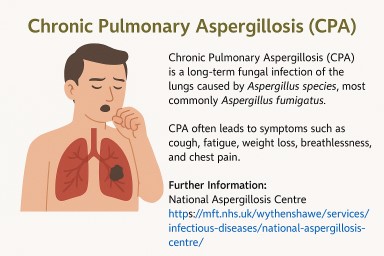
CPA is a long-term lung condition caused by a common fungus called Aspergillus. It usually affects people who already have lung damage — from infections like tuberculosis (TB), conditions like COPD or asthma, or diseases such as sarcoidosis.
There are five main types of CPA. Knowing which one you have can help guide your treatment and follow-up.
🟠 1. Chronic Cavitary Pulmonary Aspergillosis (CCPA)
Most common form
-
Caused by Aspergillus growing in one or more cavities in the lungs
-
Cavities may slowly get larger or thicker
-
Often develops in people with previous lung disease
Symptoms:
-
Long-term cough
-
Fatigue and weight loss
-
Breathlessness
-
Sometimes mild or moderate coughing up blood
Treatment: Long-term antifungal tablets (e.g. itraconazole or voriconazole)
⚠️ 2. Chronic Fibrosing Pulmonary Aspergillosis (CFPA)
Advanced stage of CPA
-
Happens when long-term infection causes lung scarring (fibrosis)
-
Lungs become stiff, making breathing harder
Symptoms:
-
Worsening breathlessness
-
Low oxygen levels
-
Severe fatigue
Treatment: Focuses on antifungals, symptom relief, and oxygen if needed
🟢 3. Simple Aspergilloma
A single fungal ball in a lung cavity
-
A round ball of fungus (aspergilloma) forms in an existing lung cavity
-
Often found during scans done for other reasons
-
Some people have no symptoms at all
Main risk: Coughing up blood (sometimes serious)
Treatment:
-
Monitoring if mild
-
Surgery or embolisation if bleeding occurs
🔴 4. Subacute Invasive Aspergillosis (SAIA or CNPA)
Faster-moving form of CPA
-
Occurs over weeks to months
-
Often seen in people with weaker immune systems (e.g. due to diabetes, steroids, or alcohol dependence)
-
Infection starts to invade deeper lung tissue
Symptoms:
-
Fever
-
Worsening breathlessness
-
Severe weight loss
Treatment: Prompt antifungal treatment and close medical monitoring
🟡 5. Aspergillus Nodules
Small lumps caused by Aspergillus
-
These are solid nodules in the lungs, often found by chance on a CT scan
-
They may be mistaken for cancer at first
-
Often cause no symptoms
Treatment:
-
Usually watch and wait
-
Sometimes surgery or biopsy if uncertain
🩺 Why Knowing Your CPA Type Matters
Understanding your CPA type helps your medical team:
-
Choose the best treatment for you
-
Monitor for bleeding or lung damage
-
Decide when to repeat scans or adjust medication
💬 Questions to Ask Your Doctor
-
Which type of CPA do I have?
-
Will I need long-term antifungal treatment?
-
How often should I have scans or blood tests?
-
What should I do if I cough up blood?
🧘 Final Note
CPA is a chronic condition, but many people manage it well with the right treatment and regular check-ups. You are not alone — support and information are available.
🏥 Surgery in Patients with ABPA or CPA: Can It Worsen Symptoms, and Should It Proceed?
Patients with Aspergillus-related lung diseases, such as Allergic Bronchopulmonary Aspergillosis (ABPA) and Chronic Pulmonary Aspergillosis (CPA), sometimes report worsened symptoms after undergoing surgery under general anaesthetic. While this is a recognised clinical pattern, it does not mean surgery should be avoided. Instead, it requires preparation and close perioperative management to reduce risk.
🔍 Can Surgery Worsen Aspergillosis Symptoms?
Yes — and here's why:
✳️ 1. Airway Irritation from Intubation
-
Endotracheal tubes can irritate airways already inflamed by ABPA or structurally altered by CPA.
-
Mechanical ventilation can impair mucus clearance and exacerbate cough or infection.
✳️ 2. Postoperative Immunosuppression
-
Surgery temporarily suppresses immune function.
-
Perioperative corticosteroids or stress-induced immune suppression can permit fungal flare-ups or reactivation.
✳️ 3. Impaired Mucus Clearance
-
Pain, immobility, and sedation reduce the patient’s ability to cough and clear secretions.
-
In CPA or ABPA, this can lead to plugging, fungal regrowth, or secondary bacterial infection.
✳️ 4. Drug Interactions
-
Azole antifungals (e.g. itraconazole, posaconazole) interact with many anaesthetics, opioids, and steroids.
-
These interactions can alter drug levels, reduce antifungal efficacy, or increase toxicity risk.
✳️ 5. Stress and Inflammation
-
Surgical stress may worsen the inflammatory or allergic component of ABPA.
-
CPA-related cavities may bleed or become re-infected post-op.
✅ Should Surgery Still Go Ahead?
Yes — surgery can and often should proceed when it is medically indicated.
Delaying needed procedures (e.g. for cancer, fractures, or pain relief) can lead to worse outcomes than the potential risks related to aspergillosis.
🛡️ Recommended Precautions
🔷 Pre-Operative Planning
-
Ensure all care teams are aware of the diagnosis.
-
Review lung imaging, baseline oxygenation, and current antifungal/steroid regimens.
-
Arrange for pre-op airway clearance if sputum is a concern.
🔷 Antifungal Management
-
Continue antifungal therapy through the perioperative period.
-
Use IV formulations if oral administration isn’t possible.
-
Check for drug interactions with anaesthetic or post-op medications.
🔷 Steroid Cover (ABPA and CPA on steroids)
-
Patients on chronic steroids may need perioperative hydrocortisone supplementation (adrenal cover).
-
Apply “sick day rules” or use the patient’s adrenal insufficiency plan, if applicable.
🔷 Post-Op Monitoring
Watch for:
-
Worsening cough, breathlessness, or sputum
-
Fever or signs of secondary infection
-
Raised IgE (in ABPA) or haemoptysis (in CPA)
-
Any signs of antifungal failure or drug toxicity
⚠️ When Might Surgery Be Delayed?
Consider postponing non-urgent surgery if:
-
There is active haemoptysis
-
The patient has uncontrolled inflammation or fungal burden
-
A recent scan shows expanding cavities or new infiltrates
-
Antifungal resistance is suspected or not yet managed
💬 Key Message for Patients
“Having ABPA or CPA doesn’t mean you can’t have surgery — but we do need to take extra care around your airways, your antifungal treatment, and your recovery. With the right team and planning, we can safely support you through your procedure.”
Allergic Bronchopulmonary Aspergillosis (ABPA) Without Asthma: A Hidden Reality
Most people – including many doctors – associate Allergic Bronchopulmonary Aspergillosis (ABPA) almost exclusively with asthma or cystic fibrosis. In fact, the current diagnostic criteria for ABPA often assume the presence of asthma as a prerequisite. But what happens when a patient has all the features of ABPA… without ever having had asthma?
This article explores the possibility – and growing recognition – of ABPA without asthma.
🔍 What Is ABPA?
ABPA is an allergic (hypersensitivity) reaction to the fungus Aspergillus fumigatus, which can colonise the lungs and cause:
-
Severe allergic inflammation
-
Damage to lung tissue (bronchiectasis)
-
High levels of IgE (often >1000 IU/mL)
-
Positive skin tests or blood tests for Aspergillus
Traditionally, ABPA is diagnosed in people with asthma or cystic fibrosis, where the airways are already vulnerable.
❗But Can ABPA Occur Without Asthma?
Yes. Though uncommon, there are confirmed cases where ABPA occurs in people who:
-
Do not have asthma
-
Have no wheeze, breathlessness or variability in symptoms
-
Show no reversibility on a bronchodilator test
-
May not respond to inhaled corticosteroids
This presentation is now increasingly recognised – particularly:
-
After viral infections like COVID-19
-
In people exposed to environmental moulds
-
In those with no personal or family history of asthma
🧪 Diagnostic Clues
Patients with ABPA but no asthma typically still show:
-
Very high total IgE levels
-
Positive Aspergillus-specific IgE and IgG
-
Radiological changes like central bronchiectasis
-
Sometimes eosinophilia in blood
But they do not show:
-
Classic asthma symptoms (e.g. wheeze, reversible breathlessness)
-
Improvement with bronchodilators
-
Variable peak flow readings
🧬 How Might This Happen?
There are a few theories:
-
Some people have a strong allergic immune response (IgE-driven) to Aspergillus alone, even without underlying asthma
-
COVID-19 and other infections may prime the immune system or damage airways enough to allow fungal colonisation
-
Not all bronchial hypersensitivity is asthma — the airway inflammation in ABPA is unique and not always “asthmatic” in pattern
✅ What Tests Can Help Confirm or Rule Out Asthma?
For patients who have ABPA but no clear asthma symptoms:
-
Bronchodilator reversibility test → May be negative
-
Methacholine or histamine challenge test → Gold standard for confirming asthma
-
FeNO test → Measures eosinophilic airway inflammation (may be high in both ABPA and asthma)
-
Peak flow monitoring → Often stable in ABPA without asthma
These tests can help clarify the diagnosis and prevent mislabeling patients as asthmatic when they are not.
🧭 Why Does It Matter?
Correct diagnosis matters because:
-
Not all ABPA patients benefit from inhaled corticosteroids or asthma drugs
-
Treatment should be tailored — e.g. antifungals and oral steroids for ABPA, but not unnecessary asthma medications
-
Misdiagnosis may delay the right treatment and overburden patients
🩺 A Call to Clinicians
If a patient has high IgE, bronchiectasis, and strong Aspergillus sensitisation — but no clinical asthma — consider ABPA without asthma.
Request confirmatory tests before labeling someone asthmatic for life. In these rare cases, asthma criteria do not fully apply — but the patient still needs support for ABPA.
🧾 Summary
| Feature | ABPA With Asthma | ABPA Without Asthma |
|---|---|---|
| Wheeze/breathlessness | Common | May be absent |
| Bronchodilator response | Often positive | Usually negative |
| Total IgE | High | High |
| Aspergillus IgE/IgG | Positive | Positive |
| Imaging (HRCT) | Bronchiectasis | Bronchiectasis |
🙋 What Can Patients Do?
If you’ve been diagnosed with ABPA but don’t believe you have asthma:
-
Ask your doctor about further testing to confirm or rule out asthma
-
Keep a record of your symptoms, peak flow (if used), and medication response
-
Discuss your IgE levels, CT scan results, and whether other diagnoses (e.g. chronic pulmonary aspergillosis) might apply
Adrenal Insufficiency in Aspergillosis: Important Risks for Patients and GPs

🫁 Who is at Risk?
People with aspergillosis — especially ABPA (Allergic Bronchopulmonary Aspergillosis) and CPA (Chronic Pulmonary Aspergillosis) — are often treated with:
- Steroids (inhaled or oral, such as fluticasone or prednisolone)
- Azole antifungal medications (like itraconazole, voriconazole, posaconazole)
Both of these can affect the adrenal glands, though azole antifungals only do so indirectly in combination with a steroid medication. When used together, or when steroids are used on their own for long periods of time at a high dose, they can significantly increase the risk of a serious condition called adrenal insufficiency (AI) — when the body can’t produce enough cortisol to respond to stress or illness.
💊 Why Azole Antifungals Make This Worse
Azoles (itraconazole, voriconazole, posaconazole) block liver enzymes (CYP3A4) that normally break down inhaled or oral steroids. As a result:
- Even inhaled steroids (like fluticasone or budesonide) can build up in the body
This can lead to systemic steroid effects, including:
- Adrenal suppression
- Cushing’s-like symptoms (weight gain, moon face, skin thinning)
- Higher risk of adrenal crisis if steroids are stopped too fast or during illness
This is especially well documented with fluticasone + itraconazole — a known high-risk combination.
🚨 What is Adrenal Insufficiency?
Adrenal insufficiency means your adrenal glands cannot produce enough cortisol, the hormone your body needs to:
- Regulate blood pressure and sugar
- Respond to infections and illness
- Maintain energy, mood, and salt balance
Without cortisol, even a minor illness can become life-threatening — this is called an adrenal crisis.
🔍 Warning Signs of Adrenal Suppression
- Fatigue and muscle weakness
- Low mood or confusion
- Weight loss or loss of appetite
- Dizziness when standing (low blood pressure)
- Nausea, abdominal pain
- Skin changes (e.g. thin skin, stretch marks, bruising)
- Cushingoid appearance (round face, fat on upper back)
- During stress (infection, surgery, trauma), people may:
- Vomit or collapse
- Become drowsy or disoriented
- Experience dangerously low blood pressure or blood sugar
🛡️ What GPs and Patients Should Do
For GPs:
- Be alert to the interaction between inhaled corticosteroids and azoles
- If a patient is using inhaled fluticasone or budesonide and starts azoles:
- Consider switching to a non-CYP3A4-metabolised inhaler (e.g. beclometasone)
- Monitor for signs of adrenal suppression or Cushing’s
- If adrenal insufficiency is suspected:
- Arrange morning cortisol testing
- Consider Short Synacthen Test (SST)
- Educate patients on sick day rules and ensure:
- A steroid emergency card is provided
- An adrenal crisis plan is in place
- Emergency hydrocortisone is prescribed if needed
For Patients:
Tell your GP or specialist if you are on:
-
- Azoles (like itraconazole, posaconazole)
- Any form of steroids (inhaled, nasal, oral, injected)
- Never stop steroids suddenly — they may need to be reduced slowly
- Report symptoms like fatigue, nausea, or dizziness
- Ask about a sick day plan — you may need to double your steroid dose during illness
- If you become very unwell, tell emergency services you are at risk of adrenal crisis
💬 Summary
Adrenal insufficiency is a real and under-recognised risk in aspergillosis — especially when azole antifungals are used alongside inhaled or oral steroids. Patients and GPs should work together to prevent and manage this serious complication.
⚠️ Summer 2025 Travel Warning: Fungal Lung Infections a Hidden Risk

Important information for UK travellers, GPs and patients with chronic lung conditions
As more UK residents prepare to travel this summer — whether for holidays, charity work, military duty, or visiting family abroad — it’s important to raise awareness of a growing health risk that is often overlooked: fungal lung infections.
These conditions can be serious, persistent, and easily mistaken for other illnesses — including long COVID, TB, or bacterial pneumonia.
🌍 Fungal Infections Can Be Acquired Abroad — and Not Just in the Tropics
Fungal spores live in soil, compost, dust, and decaying organic matter. In many parts of the world, especially dry or tropical climates, travellers can unknowingly inhale spores that can cause long-term lung disease — often weeks or months after returning to the UK.
🧳 Key Risk Regions and Infections
🇺🇸 Valley Fever (Coccidioidomycosis)
-
Endemic to the southwestern United States — including Arizona, California, Nevada, Texas, and New Mexico
-
Caused by inhaling Coccidioides spores from dry, dusty soil
-
Affects travellers, farm workers, and military personnel
-
Can cause chronic cough, fatigue, joint pain, and lung nodules
❗ UK patients with unexplained lung symptoms should be asked about travel to these areas — Valley Fever can mimic CPA or even lung cancer.
🌎 Other Endemic Fungal Risks for Travellers
| Disease | Region(s) | Typical Exposure |
|---|---|---|
| Histoplasmosis | Central/South America, Africa, Asia | Caves, bird/bat droppings, demolition sites |
| Blastomycosis | Central USA (Great Lakes, Mississippi) | Soil, wood, riverside areas |
| Paracoccidioidomycosis | Brazil, Colombia | Rural farming dust |
| Talaromycosis | SE Asia, Southern China, India | Dusty environments (esp. in immunocompromised) |
| Sporotrichosis | Latin America, Africa, Japan | Plant thorns, soil, cat scratches |
| Cryptococcosis | Worldwide | Bird droppings, tree bark |
🌾 UK Risks Still Apply at Home
Even without travel, UK residents can develop Aspergillus-related conditions (CPA, ABPA) through:
-
Gardening (esp. with compost)
-
Farming or stables
-
Building or renovation work
-
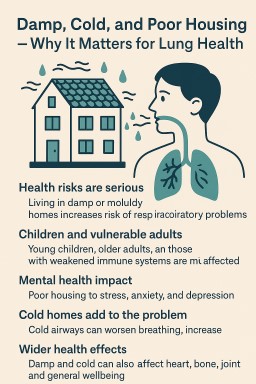
Damp housing
Drug-resistant Aspergillus fumigatus is also rising in the UK — partly due to the use of agricultural fungicides.
🩺 Advice for GPs and Respiratory Teams
Ask:
-
Have you travelled to dry, dusty regions or tropical countries this year?
-
Have you been exposed to soil, caves, animals, compost, or renovation dust?
-
Do you have underlying lung disease (e.g. asthma, COPD, bronchiectasis)?
Consider:
-
Fungal testing (Aspergillus IgG/IgE, fungal cultures)
-
CT imaging for persistent nodules or cavitations
-
Early referral to respiratory or infectious disease specialists
-
Contacting the National Aspergillosis Centre for persistent or complex cases
✅ What Travellers Can Do
-
Wear a dust mask when gardening, hiking, or working around soil
-
Avoid enclosed spaces with bird or bat droppings
-
Seek help if you return from travel and develop:
-
A cough that won’t go away
-
Fatigue, fever, or weight loss
-
Chest tightness or unexplained breathlessness
-
📌 Final Reminder
Fungal infections are not rare — they’re under-recognised.
This summer, think fungal if you or your patient return from travel with persistent lung symptoms. Early diagnosis can make all the difference.
🫁 Why Is CPA Called a Long-Term Condition — Not a Lifelong One?

Chronic Pulmonary Aspergillosis (CPA) is often described as a long-term condition, but people sometimes wonder why it isn’t called a “lifelong” disease — especially since many people need antifungal treatment and regular monitoring for years.
Here’s what we know:
🩺 CPA Affects Everyone Differently
CPA is a complex condition that includes several forms — some people have a single fungal ball (aspergilloma), while others have more widespread or progressive disease. For many, CPA needs long-term treatment, such as antifungal tablets, oxygen, physiotherapy, or hospital care.
But not everyone has the same experience:
-
Some people are stable for years
-
Some respond well to treatment and no longer need antifungals
-
Others may live with occasional flare-ups or long-term health problems
🔁 Why It’s Not Always Called Lifelong
CPA is called a “long-term condition” because:
-
It typically lasts at least a year, often longer
-
It may come and go in phases
-
It needs regular follow-up and may affect daily life
But not everyone will have it for the rest of their life — and that’s why we don’t use the word “lifelong” for everyone.
🔬 We Don’t Yet Know Who is Truly ‘Cured’
To say whether CPA is curable, we would need to:
-
Follow a large group of patients
-
For many decades
-
To see who stays well and never relapses
That kind of long-term research is still ongoing — so at the moment, doctors can’t say for sure when or if someone is permanently cured.
Some people stay well for years after stopping treatment — but it’s too early to know if the infection is truly gone, or just sleeping.
💬 What This Means for You
-
CPA is a condition that can be managed — sometimes very successfully
-
You might not need treatment forever — but regular check-ups help catch any changes early
-
Your team will work with you to find the right balance of treatment and independence
-
If you feel well, that's a good sign — but it's still important to keep an eye on things
📍In short: CPA is a serious, long-term condition, but it’s not always lifelong. We still have more to learn, and long-term studies are helping us understand it better every year.
💊 How Medicines Are Approved — and What “Off-Label” Means
🔹 1. What Is “Licensed” or “Approved” Medication Use?
Before a medicine can be prescribed in the UK (or any country), it goes through a formal approval process:
| Step | What Happens |
|---|---|
| Clinical trials | The medicine is tested for safety, effectiveness, and quality. |
| Regulatory review | In the UK, the Medicines and Healthcare products Regulatory Agency (MHRA) or the European Medicines Agency (EMA) reviews trial data. |
| Marketing authorisation | If approved, the medicine is “licensed” for specific conditions, doses, age groups, and methods of use. |
🟢 A licensed use means the drug has been judged safe and effective for that specific use, based on strong clinical evidence.
🔹 2. What Is “Off-Label” Use?
Off-label use means a doctor prescribes a medicine in a way that is not covered by its official license.
This could include:
-
Using a medicine for a different condition
-
Giving it at a different dose or frequency
-
Using a different route (e.g. inhaled instead of injected)
-
Giving it to a different age group (e.g. in children)
This is legal, but it means the prescriber is using their clinical judgement outside the official licensing terms.
🔹 3. Why Might a Doctor Use a Medicine Off-Label?
| Reason | Example |
|---|---|
| There is no licensed treatment for a rare condition | e.g. inhaled amphotericin B for CPA or ABPA |
| The licensed treatment doesn’t work or causes side effects | e.g. switching antifungal drugs |
| New evidence supports another use, but the company hasn’t applied for a new licence | e.g. old drugs used in new ways based on research |
| Medicines used in children or elderly often lack specific licensing data |
🔹 4. Is Off-Label Use Safe?
It can be, but it requires:
-
Good clinical judgement
-
Use of the best available evidence
-
Often, discussion with a multidisciplinary team
-
Informed consent from the patient (especially important in high-risk cases)
The prescriber takes more responsibility, because the use hasn’t been formally approved by regulators.
🔹 5. Who Oversees This in the UK?
-
The MHRA licenses medicines.
-
The General Medical Council (GMC) and NHS allow doctors to prescribe off-label when it’s in the patient’s best interest.
-
NICE guidelines sometimes include off-label use if evidence supports it.
🔹 6. Real-World Example: Inhaled Amphotericin
-
Licensed: Amphotericin B is approved for injection to treat fungal infections.
-
Off-label: Nebulised (inhaled) use is not officially licensed, but it is used in some centres to treat or prevent fungal lung disease (e.g. CPA, ABPA) where evidence and specialist experience supports it.
🔹 Summary: Key Points
| Term | Meaning |
|---|---|
| Licensed use | The use of a medicine that has been approved for a specific purpose by a regulator. |
| Off-label use | Prescribing a medicine in a different way than officially licensed — legal, but used with clinical caution. |
| Who decides? | Ultimately, the prescribing clinician, supported by evidence, guidance, and the needs of the individual patient. |
🧠 Why Some Medications Can't Be Prescribed by GPs

In the UK, the NHS uses a tiered prescribing system that sometimes prevents GPs from prescribing certain medications, even if those medicines are available elsewhere in the NHS.
Here’s a clear explanation of how and why this happens:
🔒 1. Shared Care or Specialist-Only Medications
Some medicines are designated as “specialist-only” or “shared care” treatments. This means:
-
GPs are not authorised to initiate them.
-
In some cases, they can continue a prescription once a specialist starts it — but only if a formal shared care agreement is in place.
Examples include:
-
Biologics for asthma, ABPA, or autoimmune disease
-
High-risk antifungals like voriconazole or posaconazole
-
Certain cancer, transplant, or hormone drugs
This system ensures that:
-
The medication is closely monitored by someone with specialist knowledge
-
Risks like interactions, side effects, and required blood tests are safely managed
📜 2. Local Prescribing Formularies
Each NHS Integrated Care Board (ICB) or local NHS Trust maintains a formulary — a list of medicines approved for use in that area.
-
If a medicine isn't on the local formulary, the GP may be unable to prescribe it, even if NICE (the National Institute for Health and Care Excellence) says it's effective.
-
These decisions are based on local budget priorities, agreements with hospitals, and clinical capacity.
💷 3. Cost Controls and Prior Approvals
Some medications are expensive or highly specialised, and require:
-
Prior approval by a funding panel
-
A hospital-based consultant to apply for and justify the treatment
GPs usually cannot access these approval pathways directly.
⚠️ 4. Liability and Risk
Even if a GP understands the condition, they may not have:
-
Access to monitoring protocols
-
Up-to-date knowledge of rare drug interactions or side effects
-
The ability to interpret complex blood results needed for safe prescribing
For legal and safety reasons, GPs must follow guidance from their local ICB or NHS England on what they can and can’t prescribe.
✅ What Patients Can Do
-
Ask the hospital team if the medication can be prescribed under shared care, and whether your GP has agreed to it.
-
Ask your GP to request guidance from the local medicines management team.
-
Request a hospital prescription if urgent — but note this often requires collection from hospital pharmacies.