


🛡️ Understanding Your Risk: Aspergillosis, Steroids, and the Immune System
If you’ve been diagnosed with an Aspergillus-related condition, such as chronic pulmonary aspergillosis (CPA), ABPA, or a fungal ball (aspergilloma), you might wonder:
“Am I immunocompromised? And do steroids or biologics put me at more risk?”
The answers depend on your underlying health, medications, and how your body responds to Aspergillus.
🌍 Aspergillus is Common — But Not Harmless
Aspergillus is a type of mould found everywhere — in soil, air, and dust. Most people breathe it in daily without problems. But in some people, it can:
-
Trigger an allergic reaction (ABPA or fungal sinusitis)
-
Cause infection in damaged lungs (CPA or aspergilloma)
-
Spread aggressively in those with very weak immune systems (invasive aspergillosis)
Understanding your level of immune defence helps explain your risk and how your treatment should be managed.
🧬 Levels of Immunocompromise: What They Mean
Immunosuppression isn't black-and-white — it's a spectrum. Here's how it applies to people with or at risk of aspergillosis:
🔴 High-Level Immunosuppression (High Risk)
-
Recent chemotherapy or bone marrow transplant
-
Stem cell or organ transplant
-
Severe neutropenia (very low white blood cell count)
-
High-dose steroids (e.g. ≥20 mg prednisolone daily for weeks)
-
Uncontrolled HIV/AIDS
-
Intensive care or mechanical ventilation
🧠 These people are at risk of serious, fast-spreading infections — including invasive aspergillosis (IA), which is rare but life-threatening.
🟠 Moderate Immunosuppression (Common in Aspergillosis Patients)
-
Long-term low-to-moderate steroids (e.g. <10–15 mg prednisolone)
-
Biologics for asthma (e.g. omalizumab, benralizumab)
-
Chronic lung disease (COPD, bronchiectasis, asthma)
-
Diabetes, malnutrition, or genetic immune traits
-
Previous TB, sarcoidosis, or other lung damage
🧠 This group is at greater risk of chronic forms of aspergillosis — especially CPA, ABPA, and aspergillus bronchitis.
🟢 Low or No Immunosuppression (Low Risk)
-
People with well-controlled asthma or sinusitis
-
Those on occasional short courses of steroids
-
No major lung or immune conditions
🧠 This group is unlikely to develop aspergillosis.
💊 What if You Already Have Aspergillosis?
If you’ve been diagnosed with CPA, ABPA, aspergilloma, or sinus disease caused by Aspergillus, some treatments may still increase your vulnerability if not carefully managed.
❗ Steroids (e.g. Prednisolone)
-
Help control inflammation (especially in ABPA)
-
But also suppress immunity, making it easier for Aspergillus to grow
-
Can worsen CPA or increase risk of bleeding in aspergilloma
-
Risk rises with higher doses and longer courses
🟠 If steroids are needed, they should usually be combined with antifungal medication (like itraconazole or voriconazole) to keep fungal growth in check.
❗ Biologics for Asthma (e.g. Omalizumab, Mepolizumab)
-
Target allergic inflammation without broadly suppressing the immune system
-
Don’t usually increase the risk of invasive fungal infections
-
May slightly alter how your immune system responds to Aspergillus
🟠 Biologics can be helpful in ABPA and severe asthma, but regular monitoring is still important.
🔍 Summary Table: Common Risk Factors and What They Mean
| Factor | What It Does | What to Watch For |
|---|---|---|
| Long-term steroids | Suppress immune cells, reduce inflammation | Use with antifungals; monitor closely |
| Biologics for asthma | Modulate immune pathways (e.g. IgE, IL-5) | Safe in most; watch for subtle effects |
| TB, sarcoid, or other lung scarring | Leaves cavities that allow fungal growth | Regular scans and blood tests |
| Diabetes or malnutrition | Affects immune function and tissue repair | Keep well-managed |
| Low white blood cells (neutropenia) | Limits ability to fight fungal infection | Urgent action needed if fever or unwell |
| Lung diseases (COPD, asthma, bronchiectasis) | Reduce local lung defences | Increases risk of CPA, ABPA, or colonisation |
✅ What Can You Do to Stay Safe?
-
Take antifungals as prescribed, especially if you're on steroids or biologics
-
Avoid unnecessary long-term steroid use — use the lowest dose for the shortest time
-
Report new or worsening symptoms early — especially breathlessness, coughing blood, fatigue, or sinus pain
-
Have regular follow-ups with your respiratory or infectious diseases team
-
Don’t stop any medication suddenly — especially steroids — without medical advice
💬 Final Reassurance
Having aspergillosis doesn’t mean you’re severely immunocompromised — but some treatments can increase your risk if not managed carefully. With the right balance of antifungals, asthma treatments, and medical support, many people live well with ABPA, CPA, and related conditions.
Other forms of Aspergillosis
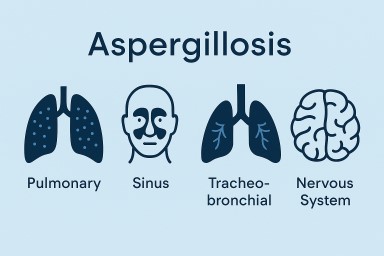
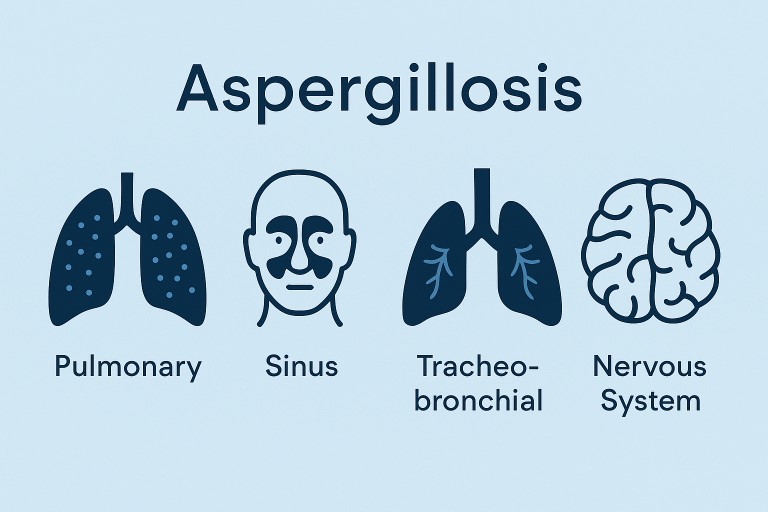
The majority of patients with aspergillosis will have forms that affect their lungs, as of course, that is where most exposure to Aspergillus occurs when we inhale the spores. There are, however, many more areas of our bodies that can be infected with Aspergillus. The sites of infection are much more difficult for spores to reach, so these forms of aspergillosis are much rarer compared with pulmonary forms, but they do occasionally happen, and as this is a website concerned with all forms of aspergillosis, we will try to summarise each form in this series of articles.
If you have been diagnosed with one of these rarer forms of aspergillosis you are welcome to join our support groups on Facebook, but be sure to explain which form you have, in any questions that you may ask, to avoid confusion. Different forms of aspergillosis can be treated in very different ways so be sure that the information you read is relevant to your aspergillosis.
There has long been a listing of other forms of aspergillosis in the treatment section of the Aspergillus & Aspergillosis website. These articles are intended for medical specialists so we will attempt to interpret them here for patients & non-specialists and also provide updated information where appropriate.
- Acute Invasive Aspergillus Sinusitis (AIAFS)
- Airways (tracheobronchial)
- Aspergillus Empyema
- Aspergillus Endocarditis
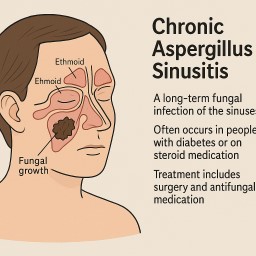
Other forms of Aspergillosis: 🔬 Acute Invasive Aspergillus Sinusitis (AIAFS)
⚠️ A rare and severe fungal sinus infection — seen almost exclusively in people with severely weakened immune systems
🧾 What is it?
Acute Invasive Aspergillus Sinusitis (AIAFS) is a rapidly progressing fungal infection of the sinuses, caused by Aspergillus species (typically A. fumigatus). It leads to tissue invasion, destruction, and potentially fatal complications if not treated urgently.
🛡️ Who is at Risk of Acute Invasive Aspergillus Sinusitis?
Acute Invasive Aspergillus Sinusitis (AIAFS) is very rare, and affects people who are significantly immunocompromised — meaning their immune systems are unable to control even common environmental fungi.
However, “immunocompromised” is not always black-and-white. There are different degrees of vulnerability, and it's important to understand who is at greatest risk.
🔴 High-risk (severe immunosuppression)
These individuals are at the greatest risk for AIAFS:
-
Profound neutropenia (especially <500 neutrophils/μL for >10 days)
-
Acute leukaemia or stem cell transplantation
-
Solid organ transplant recipients on strong immunosuppressive regimens
-
High-dose corticosteroids (e.g. ≥20 mg prednisolone/day for ≥2 weeks)
-
Uncontrolled HIV/AIDS with low CD4 counts (<200)
-
Diabetic ketoacidosis or severe metabolic acidosis
🟠 Intermediate-risk (chronic or moderate immunosuppression)
Patients in this category may not be at risk of AIAFS, but may still be more vulnerable to chronic or allergic forms of aspergillosis or other infections:
-
Long-term oral corticosteroids at lower doses (e.g. <10 mg/day)
-
Biologic therapies for asthma (e.g. anti-IL-5, anti-IgE), which may subtly modulate immunity
-
Genetic susceptibility (e.g. subtle immune pathway deficiencies identified in CPA or ABPA)
-
COPD, bronchiectasis or severe asthma with impaired local defence
-
Malnutrition or poorly controlled diabetes
These patients are not typically at risk of invasive sinus aspergillosis, but may experience worsening of fungal conditions or atypical presentations of infection.
🟢 Low-risk (normal immune function)
People with normal immune function — even those with:
-
Allergic rhinitis
-
Chronic rhinosinusitis
-
Mild asthma or occasional infections
…are not at risk of developing AIAFS. Everyday exposure to Aspergillus spores is harmless to most people.
💬 Key Clarification:
Having aspergillosis does not automatically mean you are at risk of invasive sinus infection.
Many patients with CPA, ABPA, or SAFS are immunologically “fragile,” but not severely immunocompromised.
AIAFS typically only occurs in people with a combination of immune suppression and a very specific set of risks — especially when white blood cell function is severely impaired.
📋 Symptoms and Signs (typically <4 weeks onset)
-
Fever that does not respond to antibiotics
-
Facial pain or pressure, often severe and one-sided
-
Nasal congestion, discharge (often bloody or blackish)
-
Dark scabs (eschar) on the nasal mucosa or palate
-
Eye swelling, visual changes, or cranial nerve symptoms (if spread to the orbit or brain)
-
Altered mental state, seizures (in advanced cases)
🧪 Diagnosis
AIAFS is diagnosed based on:
-
Clinical suspicion in a high-risk patient
-
Endoscopic examination with biopsy and histology (showing hyphal invasion of tissue)
-
CT/MRI imaging to assess spread (bone, orbit, brain)
-
Culture and molecular testing of sinus material
-
Aspergillus PCR or galactomannan testing may help, but are not definitive alone
💊 Treatment Approach
Treatment must begin urgently, ideally within hours of suspicion.
1. Systemic antifungal therapy
-
First-line: Voriconazole or Isavuconazole
-
Alternatives: Liposomal Amphotericin B
-
Combination therapy may be considered in some cases
-
Therapeutic drug monitoring is essential (especially for voriconazole)
2. Surgical debridement
-
Prompt and aggressive endoscopic surgery is critical
-
Repeat procedures may be needed to remove necrotic tissue
3. Immunological support
-
Reversal of neutropenia if possible (e.g. G-CSF)
-
Reduction or withdrawal of immunosuppressive drugs
-
Management of underlying condition (e.g. glycaemic control in diabetes)
📈 Prognosis
-
Mortality is high (>50%) if not recognised and treated early
-
With rapid antifungal therapy and surgery, survival improves significantly
-
Regular monitoring, follow-up imaging, and immune recovery are crucial to long-term outcomes
🧠 Key Points to Remember
✅ This is a medical emergency, but
✅ It is extremely rare, and
✅ Almost exclusively affects those with profound immune suppression
✅ Not a risk to the general public or people with typical sinus infections
📣 Summary for Patient Awareness
Acute Invasive Aspergillus Sinusitis is very rare.
It is a fast-moving sinus infection caused by a fungus called Aspergillus, but it only happens in people with very weak immune systems, like those having chemotherapy or organ transplants.
It needs urgent treatment with antifungal medicine and sometimes surgery.
If your immune system is normal, this infection is not a risk to you.
🟣 Aspergillus Bronchitis: A Patient Guide
If you've been diagnosed with bronchiectasis, COPD, or other chronic lung problems, and keep getting infections or mucus that tests positive for Aspergillus, you might be told you have Aspergillus bronchitis. But what does that mean? And how is it different from ABPA (Allergic Bronchopulmonary Aspergillosis)?
This guide explains what Aspergillus bronchitis is, how it’s diagnosed, how common it is, and how it differs from ABPA.
🌬️ What Is Aspergillus Bronchitis?
Aspergillus bronchitis is a chronic fungal infection of the airways caused by Aspergillus fumigatus. It happens in people with damaged or scarred airways, such as:
-
Bronchiectasis
-
COPD
-
Cystic fibrosis
-
Occasionally asthma (if structural damage exists)
It’s a low-grade infection, not an allergy and not an invasive disease. The fungus lives in the mucus lining the airways, causing persistent inflammation, infection, and symptoms.
🔍 What Are the Symptoms?
| Common symptoms | What to know |
|---|---|
| Persistent cough | Often brings up sticky or brown mucus |
| Worsening breathlessness | Not always explained by asthma or infection alone |
| Fatigue or low energy | Common in chronic fungal infections |
| Frequent infections | May keep returning despite antibiotics |
| Wheeze | Sometimes, especially in asthma or ABPA overlap |
| Weight loss or low-grade fever | Possible in long-standing infection |
📊 How Common Is It?
Aspergillus bronchitis is underdiagnosed but increasingly recognised — especially in patients referred to specialist centres.
Estimated frequency in different conditions:
| Underlying condition | Estimated rate of Aspergillus bronchitis |
|---|---|
| Bronchiectasis | ~5–15%, higher in referral centres |
| COPD | ~1–5%, especially with steroid use |
| Cystic fibrosis | 5–10% (non-allergic cases) |
| Asthma (alone) | Rare unless bronchiectasis is also present |
It may be mistaken for a flare-up or chronic bacterial infection. Many people are told it’s “just colonisation” — but if symptoms persist and Aspergillus keeps growing in sputum, Aspergillus bronchitis should be considered.
🧪 How Is It Diagnosed?
There’s no single test. Diagnosis is based on clinical features plus evidence of fungal growth and a non-allergic immune pattern.
| Test | What it shows |
|---|---|
| Sputum culture / PCR | Repeated detection of Aspergillus |
| Aspergillus IgG (blood) | Often raised, shows chronic exposure |
| Aspergillus IgE & eosinophils | Usually normal — helps exclude ABPA |
| CT scan | Shows bronchiectasis, mucus plugging, but no cavitation |
| Response to antifungals | Clinical improvement supports diagnosis |
🔄 How Is It Different from ABPA?
ABPA is an allergic reaction to Aspergillus that mainly affects people with asthma or cystic fibrosis.
Aspergillus bronchitis, on the other hand, is a fungal infection in damaged airways, not an allergy.
| Feature | Aspergillus Bronchitis | ABPA |
|---|---|---|
| Type of disease | Chronic fungal infection | Allergic lung disease |
| Immune markers | High IgG, normal IgE | High IgE and eosinophils |
| Sputum | Repeated growth of Aspergillus | May or may not grow |
| CT findings | Bronchiectasis, mucus | Central bronchiectasis, mucus plugs |
| Treatment | Antifungals only | Steroids ± antifungals |
| Typical patient | Bronchiectasis, COPD | Asthma (often severe), sometimes CF |
Some patients can have both conditions at once, especially those with asthma and bronchiectasis — so testing is important.
💊 Treatment Options
| Treatment | Purpose |
|---|---|
| Oral antifungals (itraconazole, voriconazole) | Main treatment — often for several months |
| Inhaled antifungals (e.g. nebulised amphotericin) | Alternative if oral drugs not tolerated |
| Airway clearance physiotherapy | Helps remove mucus and fungal load |
| Regular sputum testing | To monitor treatment response |
| Steroids | Not used unless there’s overlapping ABPA or asthma |
🧠 Summary
| Question | Answer |
|---|---|
| Is it an infection? | ✅ Yes — fungal infection in the airways |
| Is it an allergy? | ❌ No — that’s ABPA |
| Can it coexist with ABPA? | ✅ Yes, in some cases |
| How is it diagnosed? | Repeated Aspergillus in sputum + high IgG + symptoms |
| How is it treated? | Antifungal medication (oral or nebulised) |
| Will it go away? | Often improves with treatment, but monitoring is essential |
💬 What to Ask Your Doctor
-
Could my symptoms be from Aspergillus bronchitis?
-
Have I had sputum cultures and Aspergillus blood tests (IgG, IgE)?
-
Would antifungal treatment help me?
-
Should I be referred to a specialist centre (e.g. for CPA, ABPA, bronchiectasis)?
-
Am I on the best airway clearance and physiotherapy plan?
Biologics and Long Term Side Effects
✅ What Are Biologics?
Biologics are targeted treatments made from living cells. They work by blocking parts of the immune system that cause inflammation — for example:
-
IL-4, IL-5, IL-13: linked to eosinophilic inflammation
-
IgE: linked to allergies and ABPA
They are not immunosuppressants like steroids or chemotherapy, but rather immune modulators.
💊 Long-Term Side Effects – What Do We Know?
👨⚕️ What research and experience show:
| Biologic | Used for | Long-term safety known? | Side effects most reported |
|---|---|---|---|
| Omalizumab (Xolair) | Allergic asthma, ABPA | 20+ years of use | Injection site reactions, headache, very rare anaphylaxis |
| Mepolizumab (Nucala) | Eosinophilic asthma, CPA | 10+ years | Fatigue, headache, shingles (rare), mild infections |
| Benralizumab (Fasenra) | Severe asthma, CPA | ~6–7 years | Headache, pharyngitis, injection site issues |
| Dupilumab (Dupixent) | Asthma, eczema, nasal polyps | 6–8 years | Eye dryness/redness, cold sores, joint pain (rare) |
| Tezepelumab (Tezspire) | Severe asthma | ~2 years | Sore throat, joint pain, injection site reactions |
⚠️ Possible Long-Term Concerns (but rare)
-
Infections: Some concern about slightly increased risk of herpes zoster (shingles) or respiratory viruses, but overall risk is very low compared to steroids.
-
Immunogenicity: Your body might develop antibodies to the drug over time, reducing its effect — this is more a loss of benefit, not a dangerous side effect.
-
Cancer risk: No consistent evidence linking asthma/ABPA biologics to cancer.
-
Unknowns: Because some biologics are new (e.g. tezepelumab), we don't yet have 20-year data — but so far the safety profile is reassuring.
🩺 Compared to Oral Steroids
| Treatment | Side Effects Over Time |
|---|---|
| Steroids (e.g. prednisolone) | Weight gain, diabetes, infections, bone thinning, cataracts, adrenal suppression |
| Biologics | Mostly minor – injection site pain, headache, mild infection risk, rare allergic reaction |
So in most cases, biologics reduce the need for steroids and therefore reduce long-term harm.
💬 Patient Experience
Most patients report:
-
Improved quality of life
-
Reduced asthma/ABPA attacks
-
Fewer hospital visits
-
Very few stop due to side effects
✅ Summary
| Question | Answer |
|---|---|
| Do biologics have long-term side effects? | Usually mild and rare; mostly injection reactions or mild infections |
| Are they safer than long-term steroids? | Yes, especially over years |
| Should I be worried? | Not usually — but always monitor with your team |
| How long have they been used? | 6–20+ years, depending on the biologic, with very good safety data |
😷 Coping With Masks: Advice for People With Aspergillosis Who Struggle to Wear One
For people living with aspergillosis, asthma, or other lung conditions, wearing a facemask can sometimes feel uncomfortable — even frightening. You may feel like you can’t breathe properly, become hot or anxious, or feel claustrophobic. Some patients avoid masks altogether, even when they want to wear one to protect themselves from spores, pollution, or infection.
This guide is here to reassure you: you are not alone, and there are ways to make mask-wearing safer and more comfortable.
🫁 "I Can’t Breathe in a Mask" – Is This Normal?
Yes — many people with respiratory conditions feel this way. But here’s what the science tells us:
✅ For most people, even those with chronic lung disease, oxygen levels are not reduced by wearing a mask
❌ The feeling of not getting enough air is often caused by:
-
Anxiety or shallow breathing
-
The heat and humidity under the mask
-
The sensation of restricted airflow, not actual oxygen deprivation
💡 Helpful Tips If You Find Masks Difficult to Wear
1. Practise in a calm setting
Start wearing your mask for short periods at home, where you feel safe. Use calming breathing (slow in through the nose, out through the mouth). This helps your brain and lungs get used to the sensation.
2. Choose a mask that suits your needs
Different types of masks feel very different to wear.
| Problem | Suggested Mask |
|---|---|
| Feels suffocating or hot | Structured FFP2 or duckbill-style masks (keep shape off your face) |
| Claustrophobic | Surgical masks (lighter and looser fitting) |
| Strong reactions to smells or pollution | FFP2/FFP3 masks or Vogmask with carbon filter |
| Sweat or overheating | Lightweight cotton or disposable masks with cooling fabric or filter inserts |
3. Use your inhaler beforehand (if prescribed)
Some people with asthma or ABPA find wearing a mask easier after using their reliever inhaler (blue) 10–15 minutes beforehand.
4. Take breaks when needed
If you’re in a safe place (like outdoors, away from people), it’s okay to briefly lift your mask and take a few calm breaths — especially if you're struggling. You don't need to wear it all the time to benefit.
5. Try alternatives in low-risk settings
If you genuinely can’t tolerate a mask:
-
Wear one only in crowded indoor areas (shops, clinics, transport)
-
Consider using a face shield over a mask or in short exposures (note: shields protect others less)
-
Maintain distance and ventilation in mask-free spaces
🔁 Don’t Let One Bad Experience Stop You
Struggling to wear a mask doesn’t mean you’ve failed — it just means you need to try something different. Many patients find that with the right mask and some breathing strategies, they can use one when it matters most.
Remember, even wearing a mask for short periods (e.g. clinic waiting room, pharmacy queue) offers valuable protection.
🧠 Why It Matters for Aspergillosis
People with aspergillosis often need to avoid airborne risks like:
-
Fungal spores (especially Aspergillus fumigatus)
-
Pollution and chemicals
-
Viral infections that could worsen lung damage
Wearing a well-fitting FFP2 or FFP3 mask, especially in higher-risk situations, is one of the best ways to reduce exposure.
🤝 You're Not Alone
If you feel overwhelmed, isolated, or panicked when wearing a mask — you are not alone. Many others in the aspergillosis community feel the same way. With time, support, and the right mask, it often gets easier.
📝 Summary: What You Can Try
-
✅ Practise wearing a mask at home for short periods
-
✅ Try structured masks (like FFP2 duckbill) for better airflow
-
✅ Use a reliever inhaler beforehand if needed
-
✅ Take short breaks if it becomes too uncomfortable
-
✅ Don’t wear a mask all the time — just when it matters most
🛡️ FFP2/FFP3 Mask Use in Aspergillosis: Summary
| Mask Type | Who Might Use It | When It's Used |
|---|---|---|
| FFP2 (95% filtration) | Some patients with CPA, ABPA, or SAFS, especially during flares or hospital visits | During travel on public transport, clinic waiting rooms, visiting building sites, or dust exposure |
| FFP3 (99% filtration) | Patients who are severely immunocompromised (e.g. post-transplant, on chemotherapy, or high-dose steroids) | In high-risk environments: hospital construction, building work nearby, or heavy dust/mould exposure |
✅ When Masks Might Be Advisable
-
During hospital visits, particularly in winter or during flu/COVID waves
-
If you're immunosuppressed, e.g. taking long-term steroids or biologics
-
When exposed to mouldy buildings, compost, building work, or flood damage
-
In crowded indoor environments where infection risk is high
❌ When They’re Usually Not Needed
-
Day-to-day life in a clean, dry home environment
-
Low-risk outdoor activity (e.g. walking in the park)
-
If your asthma/ABPA/CPA is stable and you're not immunocompromised
🗣️ What the National Aspergillosis Centre Recommends
-
Use FFP2 masks when entering environments likely to have airborne fungal spores
-
FFP3 masks may be offered for high-risk medical procedures or when severely immunocompromised
-
Masks are one part of a broader protection strategy, which includes:
-
Good indoor air quality (HEPA filters, ventilation)
-
Avoidance of dusty environments
-
Prompt treatment of fungal infections
-
🌬️ Living with Asthma and Aspergillosis: Understanding the Overlap, the Immune System, and the Right Treatment
If you live with asthma and have been told you also have aspergillosis, such as ABPA (Allergic Bronchopulmonary Aspergillosis) or SAFS (Severe Asthma with Fungal Sensitisation), your situation is more complex than most people realise.
This guide explains:
-
The different types of asthma
-
How aspergillosis complicates asthma
-
The role of eosinophils, IgE, and the immune system
-
Why some people don’t have “typical” symptoms (like wheeze)
-
What treatments are available — and how to personalise your care
🧠 Asthma Isn’t One Disease
Asthma is a condition where the airways (breathing tubes) become:
-
Inflamed (swollen and irritated)
-
Overreactive to certain triggers (allergens, cold air, infection, etc.)
-
Narrowed and often filled with mucus, making breathing difficult
But not everyone with asthma has the same cause, symptoms, or treatment response. Asthma actually includes many subtypes — and understanding your type is key to getting the right care.
🧬 Common Asthma Types in Aspergillosis
| Asthma Type | Cause / Trigger | Key Features |
|---|---|---|
| Allergic asthma | IgE-driven allergy to pollen, dust, pets, fungi | Common in early-life asthma |
| Eosinophilic asthma | High levels of eosinophils (a white blood cell) | Often adult-onset and hard to control |
| SAFS | Allergy to fungi (especially Aspergillus) | Severe, steroid-resistant asthma |
| ABPA | Allergic reaction to Aspergillus growing in lungs | Very high IgE, eosinophils, mucus, lung damage |
| Cough-variant asthma | Inflammation without wheeze | Dry cough as the only symptom |
| “Silent” asthma | Reduced or absent warning signs | No wheeze, may present with fatigue, cough or breathlessness only |
🫢 New Section: What Is “Silent Asthma”?
“Silent asthma” is not an official medical term, but it’s used to describe:
-
Asthma without the classic wheeze (often just cough or tightness)
-
Or where asthma attacks happen suddenly, without clear warning
This is important because:
-
People may not realise they have asthma
-
Diagnosis may be delayed or missed
-
Flare-ups can be severe or even life-threatening
-
It may occur in people with fungal asthma, ABPA, or airway damage
Silent asthma is especially relevant in:
-
Older adults
-
People with ABPA or SAFS
-
People with cough-variant asthma
-
Anyone whose asthma doesn’t “sound” typical
🧪 Tests like FeNO, spirometry, and blood eosinophil counts are vital for confirming what’s really happening inside the lungs — even if symptoms are subtle.
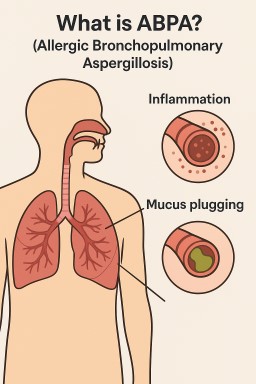
🔬 Why ABPA Adds Complexity
If you have ABPA, the asthma symptoms are made worse by:
-
A hypersensitive immune reaction to Aspergillus fumigatus
-
Mucus plugging and blocked airways
-
Lung damage (bronchiectasis) that doesn’t improve with inhalers alone
-
A mix of allergic and eosinophilic inflammation
Key signs include:
-
Extremely high IgE levels
-
Raised eosinophils
-
Positive blood tests for Aspergillus
-
Lung CT scan changes
💊 Treatment Options Based on Asthma Type
| Treatment | Used For |
|---|---|
| Inhaled corticosteroids (ICS) | All types, first-line |
| Antifungal medications | ABPA, SAFS |
| Oral steroids (e.g. prednisolone) | ABPA flares, severe asthma |
| Biologics (e.g. mepolizumab, omalizumab) | Severe allergic or eosinophilic asthma |
| Chest physiotherapy | Mucus clearance in ABPA or bronchiectasis |
Each treatment is tailored based on whether your asthma is driven by:
-
IgE (allergy)
-
Eosinophils (inflammation)
-
Fungal exposure or colonisation
📍 What to Discuss with Your Healthcare Team
If you:
-
Have asthma that isn’t well controlled
-
Need frequent steroids
-
Have a chronic cough, thick mucus, or lung damage
-
Have high IgE or eosinophils
-
Or don’t wheeze, but still get breathless or fatigued…
… it’s important to ask your doctor:
-
Could I have ABPA or SAFS?
-
Is there a fungal or eosinophilic component to my asthma?
-
Should I be tested for Aspergillus allergy or IgE?
-
Am I a candidate for biologics or antifungals?
✅ Final Takeaway
Asthma with aspergillosis is more than just “bad asthma” — it’s a complex condition involving allergy, inflammation, fungal exposure, and in some cases, permanent airway changes. Some patients don’t experience wheeze — this is called “silent asthma,” and it deserves just as much attention.
You don’t have to manage this alone — and there are now targeted treatments that can help reduce symptoms, prevent damage, and improve quality of life.
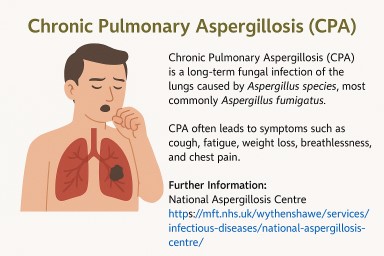
🌿 Living with Chronic Pulmonary Aspergillosis (CPA):
Hope, Setbacks, and What “Cure” Really Means
Being diagnosed with chronic pulmonary aspergillosis (CPA) is often overwhelming. You may be on treatment with antifungals like itraconazole (Sporanox) and have already gone through ups and downs — early improvement, then a period of stagnation, and now you're facing a new CT scan with anxiety.
You’re not alone — and this guide brings together the key questions patients often ask, along with helpful real-life insights.
✅ “I Felt Better at First — Then It Stalled. Why?”
This is very common in CPA. In the first few months:
-
Symptoms like cough, breathlessness, and fatigue may improve.
-
CT scans may show fungal balls shrinking or disappearing.
But then: -
Symptoms return or stay the same.
-
Scans show little change.
-
Anxiety grows.
This doesn’t mean treatment has failed.
It may just mean you've reached a slower phase of healing. Here's why:
| Reason | What’s Happening |
|---|---|
| Antifungal success at first | Fungal load drops, but scarring and inflammation remain. |
| Itraconazole is working | But drug levels may be too low — monitoring is essential. |
| Other lung conditions coexist | Like bronchiectasis or NTM, which antifungals don’t treat. |
| Ongoing exposure to mould | Especially from damp buildings, compost, or dust. |
| Immune response adapts | Symptoms may persist even if fungus is under control. |
🔁 “Can Things Improve Again?”
Yes — many people improve again after a plateau or setback.
What helps:
-
✅ Check your itraconazole blood level — low levels = poor response.
-
✅ Consider a switch to another antifungal, like voriconazole or posaconazole.
-
✅ Ask your team about co-infections, inhaled therapies, or lung physiotherapy.
-
✅ Monitor your vitamin D, weight, and steroid use (to rule out other causes of symptoms).
-
✅ Keep going — many people improve again with time, adjustments, and support.
🗣️ “I had a dip after three months. We checked my drug levels — they were low. After a small dose change, I felt better again.” — Patient story
💬 “Can CPA Be Cured?”
🩺 What Do We Mean by “Cure”?
In medicine, a cure usually means:
-
The disease is gone,
-
Treatment is no longer needed,
-
There’s no sign of the illness coming back.
But in CPA, a full cure is rare — because the conditions that allowed it to take hold usually remain.
⚠️ Why CPA Is Rarely “Cured” in the Traditional Sense
-
CPA often happens in lungs already damaged by:
-
Tuberculosis (TB)
-
COPD or emphysema
-
Bronchiectasis
-
Allergic bronchopulmonary aspergillosis (ABPA)
These conditions are chronic and don’t disappear, even if the fungus is controlled.
-
-
Scars, cavities, and weakened lung tissue remain, and symptoms can return if antifungal treatment is stopped too soon or if reinfection occurs.
✅ So What’s a More Accurate Way to Think About It?
Instead of talking about a cure, specialists use words like:
| Term | What It Means |
|---|---|
| Clinical improvement | You feel better, symptoms reduce, scans look more stable. |
| Stability | The disease is under control — not progressing. |
| Remission | The infection is quiet or inactive — with or without treatment. |
| Disease control | Long-term treatment is helping manage the condition safely. |
📌 Think of CPA like asthma or diabetes — not "gone," but often well controlled.
🟢 Sometimes — CPA can be cured
In a small number of people:
-
The fungus is cleared completely,
-
Symptoms resolve,
-
Antifungals are stopped and not needed again.
This is more likely when:
-
CPA is caught early,
-
The disease is limited to one area,
-
The person has otherwise healthy lungs.
🟡 For Most — CPA is treatable but long-term
You may not fully “get rid of it” — but you can:
-
Live well with it,
-
Keep symptoms under control,
-
Avoid major complications.
🔴 If untreated, CPA can progress
-
Damage spreads,
-
Bleeding may worsen,
-
General health may decline.
That’s why staying on treatment and having regular check-ups is so important.
🔪 What About Surgery?
Surgery can help in some cases — but it depends on your specific situation.
🟢 Surgery may help if:
-
You have a single aspergilloma (fungal ball).
-
You're experiencing repeated bleeding (haemoptysis).
-
The lesion is growing or pressing on nearby structures.
-
Antifungals haven’t worked, or aren’t tolerated.
In these cases, removing part of the lung may stop bleeding, reduce symptoms, and improve quality of life.
🔴 Surgery may not be suitable if:
-
Disease affects both lungs or multiple areas.
-
Your lung function is too low.
-
The lesion is too close to vital structures.
-
You have underlying conditions like COPD, bronchiectasis, or ABPA that wouldn’t improve after surgery.
🩺 If surgery isn’t an option:
You may still benefit from:
-
Bronchial artery embolisation (BAE) — a non-surgical way to stop bleeding.
-
Ongoing antifungal therapy.
-
Symptom management through breathing support and physiotherapy.
💬 What Other Patients Say
| Patient Story | Outcome |
|---|---|
| “My fungal ball vanished after 6 months. I’m still on meds but doing well.” | Stable with long-term itraconazole |
| “I plateaued, then improved again after switching drugs.” | Switched to posaconazole |
| “I had surgery after coughing up blood for months. It made a huge difference.” | Surgery successful |
| “I live with scarring, but I’m off meds now and stable.” | Clinical remission |
🧾 What You Can Do
-
✅ Ask your doctor to check your itraconazole level if not already done.
-
✅ Record weekly symptoms — cough, fatigue, breathlessness.
-
✅ Ask about sputum tests for fungi or bacteria.
-
✅ Discuss surgery or embolisation if you’re coughing up blood.
-
✅ Stay hopeful — CPA is manageable, and some people do recover.
❤️ Final Thoughts
CPA is rarely curable in the strictest sense, but that doesn’t mean it’s hopeless.
Many people live full lives with the disease under control. Even if CT scans show lasting changes, what really matters is:
How you feel. How well you breathe. How stable your condition stays.
With antifungal therapy, expert care, and the right support, you are not alone — and you can feel better again.
🛡️ Choosing the Best Air Filter for Aspergillosis – Day & Night
Living with aspergillosis (such as ABPA, CPA, aspergillus bronchitis, or SAFS) means taking extra care to avoid airborne Aspergillus spores, which can be found both outdoors and indoors. One of the most effective ways to protect yourself at home is by using a high-quality air purifier.
This guide will help you choose a purifier that works for you — especially for bedroom use at night, where quiet operation is just as important as clean air.
🎯 Why Use an Air Filter?
-
Aspergillus spores are tiny (2–3 microns), invisible to the eye, and can remain airborne for long periods.
-
Indoor sources include dust, damp areas, stored food, compost, or even indoor plants.
-
A HEPA air purifier can trap these particles, helping reduce airway irritation, infections, or allergic reactions.
✅ What to Look For
| Feature | Why It Matters |
|---|---|
| True HEPA Filter | Captures ≥99.97% of particles ≥0.3 microns — includes Aspergillus spores |
| Activated Carbon Filter | Helps remove odours, gases, VOCs (optional bonus) |
| Room Size & CADR | Clean Air Delivery Rate (CADR) should match or exceed your room’s size |
| Quiet Operation | For night-time use, look for ≤25–30 dB (whisper-quiet) |
| Sleep Mode / Dim Lights | Prevents disturbance from lights or fan noise overnight |
| Filter Replacement | Easy to change, ideally with indicator for when to replace |
| No Ozone or Ionisers | Avoids irritation to sensitive lungs — stick with mechanical HEPA filtration |
🌙 Night-Time Friendly Options
| Model | Noise (dB) | Room Size | Notes |
|---|---|---|---|
| Blueair Blue Pure 411 Auto | 17 dB | Up to 35 m² | Super-quiet, ideal for small bedrooms |
| Levoit Core 300S | 24 dB | Up to 40 m² | Quiet, smart controls, affordable |
| Philips 3000i AC3033 | 25 dB | Up to 104 m² | Excellent for larger spaces, smart app |
| IQAir Atem Desk | <22 dB | Personal zone | Ultra-quiet, high-quality for desks/bedsides |
| Dyson Purifier Cool | ~24–32 dB | Medium–large | Stylish, also a fan, more expensive |
Tip: Choose a unit slightly larger than your room size for best effect.
💡 Extra Tips for Aspergillosis Patients
-
✅ Vacuum with a HEPA filter weekly
-
✅ Keep humidity below 50% (use a dehumidifier if needed)
-
✅ Avoid ionizers or ozone generators — these can irritate your lungs
-
✅ Close windows at night during high pollen or spore seasons
-
✅ Clean or change filters regularly (check manufacturer’s guide)
🛏 Night Setup Checklist
-
Place the purifier 1–2 metres from your bed (not right next to your face)
-
Use “Sleep Mode” or low fan for silent overnight cleaning
-
Turn off indicator lights (if bright)
-
Close doors and windows to keep clean air contained
-
Replace filters every 6–12 months or as prompted
📌 Summary
| Must-Have Features | Optional but Useful |
|---|---|
| ✅ True HEPA filtration | 🌫 Activated carbon filter |
| ✅ Quiet night mode (<25 dB) | 📱 Smart controls or auto mode |
| ✅ Right room size / CADR rating | 🌡 Monitor for humidity or air quality |
| ✅ No ozone, no ionizers | 🔁 Filter change indicator |
🗨️ Final Thought
For aspergillosis patients, an air purifier is a worthwhile investment in long-term lung health — especially in sleeping areas where your body is most vulnerable. Choosing the right device helps reduce exposure to fungal spores and improves quality of life, one breath at a time.