Last reviewed: 21 October 2026
Next review: 21 October 2028
Audience: People living with aspergillosis, their families and carers
Part of our series: The Questions We Don’t Always Ask
Perhaps you have aspergillosis and still smoke. You may have tried to stop several times, or you may feel that stopping now would make little difference because your lungs are already damaged.
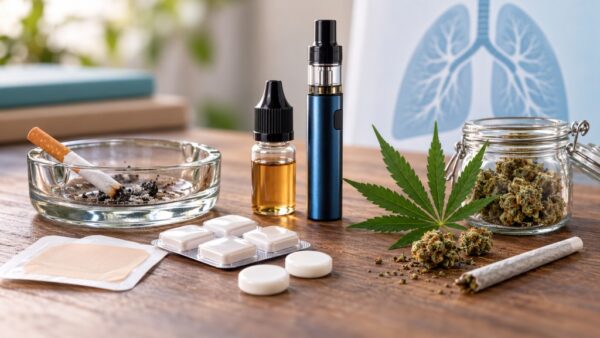
Perhaps you have switched to vaping, occasionally smoke cannabis, or use another substance that you have never mentioned to your respiratory team.
You may be worried about being judged, blamed for your illness or told yet again to stop doing something you already know carries risks.
These are reasonable concerns to want to discuss.
Smoking and inhaling other substances can affect your lungs, but you deserve good healthcare, accurate information and practical support regardless of what you currently smoke or vape.
This article looks at the risks, the uncertainties and the options available, without assuming that changing an established habit is easy.
Key points
- Smoking does not directly cause aspergillosis, but it can damage the lungs and worsen existing respiratory disease.
- Smoking is a major cause of COPD and can aggravate asthma, bronchiectasis and other lung conditions.
- Stopping smoking is beneficial even after many years, including when some lung damage is permanent.
- Switching completely from cigarettes to nicotine vaping substantially reduces exposure to many harmful chemicals, but vaping is not risk-free.
- Cannabis smoke can irritate the lungs, and cannabis plant material can sometimes contain Aspergillus spores. The evidence linking cannabis use to aspergillosis is limited, but the concern is particularly relevant to people with weakened immune systems.
- Other smoked or inhaled substances can also cause serious lung injury.
- Nicotine dependence can be treated. Support is available even if you are not ready to stop.
- You can ask questions about smoking, vaping or recreational substances without needing to disclose personal details in a public discussion.
Does smoking cause aspergillosis?
Aspergillosis is caused by infection with, or an immune response to, Aspergillus fungi. Smoking is not itself a direct cause of aspergillosis.
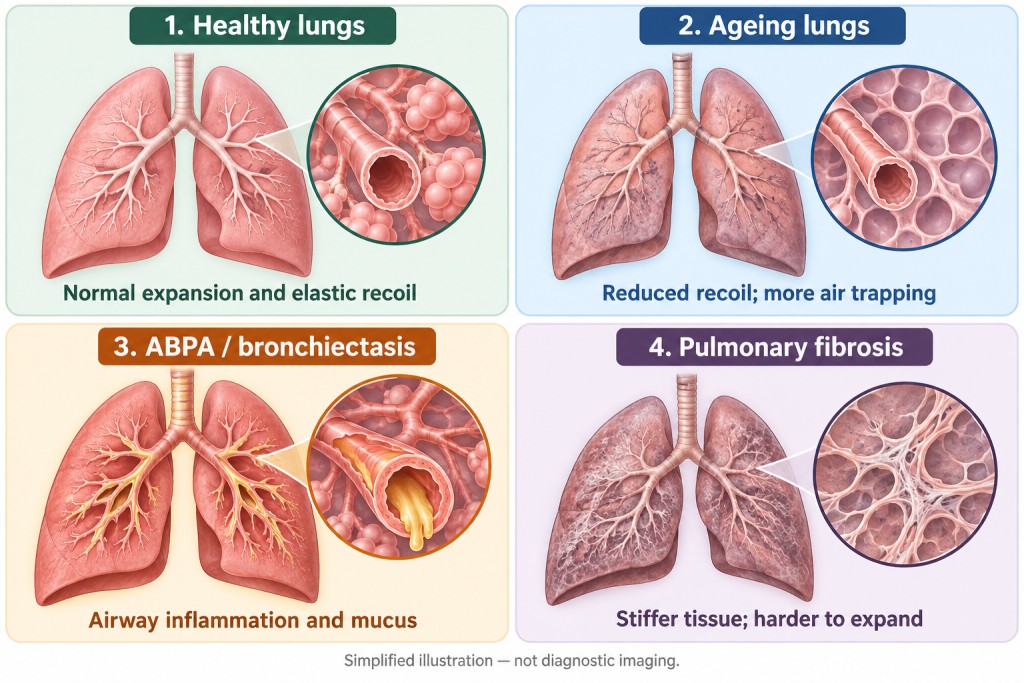
However, tobacco smoke can damage the airways, interfere with mucus clearance and contribute to long-term inflammation. Some forms of aspergillosis occur more readily in people whose lungs are already damaged.
For example, chronic pulmonary aspergillosis (CPA) can develop in people with pre-existing structural lung disease, including COPD and previous tuberculosis.
This means smoking may contribute indirectly to some of the circumstances in which aspergillosis develops. It does not mean that smoking caused an individual person’s aspergillosis.
Many people with aspergillosis have never smoked.
What if I also have COPD, bronchiectasis or asthma?
Several respiratory conditions can overlap with aspergillosis. Smoking may make their symptoms more difficult to manage, but the relationships differ between conditions.
COPD
Smoking is the leading cause of chronic obstructive pulmonary disease (COPD), although not everyone with COPD has smoked.
COPD can cause persistent breathlessness, cough, sputum production and repeated exacerbations. Some people with COPD also develop Aspergillus-related disease, including CPA.
Stopping smoking is one of the most important ways to reduce further smoking-related damage, even when COPD is advanced.
For a fuller explanation, read COPD and Aspergillosis: Understanding the Connection.
Bronchiectasis
Bronchiectasis involves permanent widening and damage to parts of the airways, making mucus more difficult to clear.
It has many possible causes and should not automatically be described as a smoking-related illness. Nevertheless, smoking can add further irritation and interfere with normal airway defences.
People with bronchiectasis and aspergillosis may also need specialist advice about airway clearance and managing repeated infections.
Read Bronchiectasis and Aspergillosis for more information.
Asthma and ABPA
Smoking can make asthma harder to control and may reduce the effectiveness of some treatments.
Allergic bronchopulmonary aspergillosis (ABPA) is an allergic inflammatory condition involving Aspergillus, commonly affecting people with asthma or cystic fibrosis.
Smoking does not cause ABPA, but smoke exposure can add to airway irritation, wheezing and breathlessness.
If you have several respiratory diagnoses, it is important that new symptoms are assessed rather than automatically attributed to smoking or your existing aspergillosis.
Is it worth stopping after 30 or 40 years?
Yes.
Some lung damage, such as established emphysema or scarring, cannot be reversed simply by stopping smoking. However, stopping prevents further exposure to tobacco smoke and can slow the progression of smoking-related lung disease.
It also reduces the risks of cardiovascular disease, stroke and several cancers.
Some people notice less coughing or improved breathing after stopping. Others, particularly those with severe chronic lung disease, may experience less obvious changes.
The benefits are not limited to people who still have relatively healthy lungs.
Stopping smoking cannot guarantee that aspergillosis will improve, and it does not replace antifungal treatment or other respiratory care. It is one way of reducing additional harm.
Why can’t I just stop?
Nicotine dependence is not simply a matter of willpower.
Nicotine affects reward pathways in the brain. When nicotine levels fall, withdrawal can cause cravings, irritability, restlessness, anxiety, difficulty concentrating and disturbed sleep.
Smoking also becomes linked to routines and emotions. A cigarette may be associated with a cup of tea, a break from work, an opportunity to sit down, or a way of coping with pain, stress or loneliness.
For someone living with chronic illness, these routines can become especially important.
It may help to identify what smoking provides beyond nicotine. For example, if a cigarette gives you permission to take a break, you may need to preserve that break even when you stop smoking.
Many people need several attempts before stopping permanently. Starting again after a period without cigarettes does not erase what you learned or mean that another attempt is pointless.
What help is available if I want to stop?
There are effective treatments for nicotine dependence, and you do not have to manage withdrawal symptoms alone.
Nicotine replacement therapy
Nicotine replacement therapy (NRT) includes patches, gum, lozenges, mouth sprays and inhalators.
These products provide nicotine without exposing your lungs to tobacco smoke. Using a patch alongside a faster-acting product for cravings is often more effective than relying on one product alone.
For people with significant lung disease, patches, gum and lozenges have the additional advantage of avoiding inhaled smoke or vaping aerosol.
Stop-smoking medicines
Prescription or pharmacy-supplied treatments may include varenicline, cytisine (cytisinicline) and, in appropriate circumstances, bupropion.
Availability and suitability vary. Your prescriber or pharmacist should consider your other health conditions and medicines before recommending treatment.
If you take antifungal medicines, corticosteroids or other long-term treatments, ask for an individual medication review. Do not assume that every stop-smoking treatment has the same interactions or precautions.
Behavioural support
Local NHS stop-smoking services can help you manage cravings, plan for difficult situations and choose appropriate treatments.
Support may be available through your GP practice, community pharmacy, local stop-smoking service or respiratory team.
See NHS Better Health – Quit Smoking.
What if I’ve switched from cigarettes to vaping?
This is an important distinction.
For adults who smoke, switching completely from tobacco cigarettes to nicotine vaping substantially reduces exposure to many harmful substances produced by burning tobacco.
Vaping is therefore not equivalent to smoking in terms of known health risks.
However, vaping is not harmless. The aerosol can contain substances that irritate the respiratory tract, and the long-term effects of vaping are not fully understood.
There is also relatively little direct research examining vaping specifically in people with CPA, ABPA, Aspergillus bronchitis or significant bronchiectasis.
If your lungs are already vulnerable, it is reasonable to ask whether inhaling any additional aerosol is desirable.
For someone who currently smokes, switching completely to nicotine vaping is generally less harmful than continuing to smoke cigarettes. For someone who does not smoke, starting to vape offers no health benefit.
If you have stopped smoking by switching to vaping, that is a meaningful reduction in tobacco-smoke exposure. You can discuss whether and when to reduce nicotine use further, without feeling pressured to make every change at once.
What if I both smoke and vape?
Some people use a vape in places where they cannot smoke but continue smoking cigarettes at other times.
This is often called dual use.
Although vaping may help some people move towards stopping cigarettes, continuing to smoke maintains substantial tobacco-related health risks.
Simply adding vaping to smoking is not equivalent to switching completely.
If your aim is to stop smoking, a stop-smoking adviser can help you develop a plan that addresses the cigarettes you find hardest to give up.
Nicotine replacement therapy is another option, particularly if you would prefer not to inhale vaping aerosol.
What about smoking cannabis?
Cannabis deserves particular attention because it raises two separate questions: the effects of inhaling cannabis smoke and the possibility of fungal contamination.
Some people use cannabis recreationally. Others use it in an attempt to manage pain, anxiety, poor sleep, appetite problems or the emotional burden of chronic illness.
Whatever the reason, it is important to understand the potential risks.
Cannabis smoke and damaged lungs
Smoking cannabis exposes the airways to smoke, fine particles and irritants.
Regular cannabis smoking is associated with symptoms such as cough, sputum production and bronchitic irritation. These effects may be particularly troublesome in people who already have asthma, COPD, bronchiectasis or aspergillosis.
Smoking cannabis mixed with tobacco also exposes the lungs to tobacco smoke and may contribute to nicotine dependence.
Evidence about the longer-term respiratory effects of cannabis is less complete than the evidence for tobacco. That uncertainty should not be interpreted as proof of safety.
Can cannabis contain Aspergillus?
Yes. Cannabis is plant material, and fungal contamination can occur during cultivation, drying, storage or handling.
Aspergillus species have been detected in cannabis products, and rare cases of serious fungal infection have been reported in association with cannabis use, particularly among people with substantially weakened immune systems.
However, these reports do not establish that cannabis commonly causes aspergillosis or that a particular person’s infection came from cannabis.
The concern is especially relevant for people who are severely immunocompromised, including some transplant recipients and people receiving intensive immunosuppressive treatment.
Smoking or heating potentially contaminated plant material should not be assumed to eliminate fungal exposure.
For people with aspergillosis or significant lung disease, avoiding inhaled cannabis smoke is the safer respiratory choice.
Is vaping cannabis safer?
Cannabis vaping is not the same as using a regulated nicotine vape to stop smoking.
Cannabis oils, concentrates and vaping cartridges vary considerably in composition and quality. Some products may contain harmful additives, contaminants or solvents.
Serious acute lung injury has been associated with certain THC-containing vaping products, particularly illicit or informally sourced products containing vitamin E acetate.
Heating cannabis flower or concentrates also does not guarantee the absence of airway irritants or microbiological risks.
We do not have sufficient evidence to describe cannabis vaping as safe for people with aspergillosis, bronchiectasis or other significant respiratory disease.
Medicinal cannabis prescribed through a specialist service is a separate issue from unregulated products, but prescribed status does not automatically make an inhaled preparation appropriate for someone with damaged lungs. Discuss the route of administration and potential medicine interactions with the prescribing specialist.
What about smoking or inhaling other drugs?
Other recreational substances may also be smoked, heated or inhaled. Examples include crack cocaine and methamphetamine.
Depending on the substance and how it is used, risks can include airway irritation, acute lung injury, cardiovascular complications and serious breathing problems.
Some substances can also affect the heart, blood pressure, mental health or the way prescribed medicines are handled by the body.
For someone with existing lung damage, these additional risks can be particularly important.
There is no reliable basis for assuming that an inhaled recreational substance is safe simply because it does not contain tobacco.
If you use a substance regularly, or find it difficult to stop, confidential help is available through your GP or local drug and alcohol service.
For information and support, visit FRANK.
Could cannabis or other substances interact with my antifungal medicines?
Potential interactions deserve attention, particularly if you take medicines such as itraconazole, voriconazole, posaconazole or isavuconazole.
These antifungal medicines can affect liver enzymes involved in processing other substances. Some cannabis constituents, including THC and CBD, also use metabolic pathways that may be affected by medicines.
However, the size and clinical importance of a particular interaction depend on the product, dose, route of administration and the individual’s other treatments.
We should not assume that all cannabis products interact in the same way or that a theoretical interaction will necessarily cause harm.
If you use cannabis, CBD products or other recreational substances, tell your pharmacist or prescribing clinician so that they can assess your individual medicines and circumstances.
You can also check the patient information leaflet for your prescribed medicine through the electronic Medicines Compendium.
Do not stop antifungal treatment or change doses yourself because of a suspected interaction.
What if I’m not ready to stop?
You can still take steps to protect your health.
Not everyone is ready to make a major change immediately, especially while managing breathlessness, fatigue, financial pressures or other difficult circumstances.
Possible first steps include:
- Asking a pharmacist or stop-smoking adviser about treatment for nicotine cravings
- Keeping your home and car free from tobacco smoke
- Identifying situations that make you more likely to smoke
- Discussing ways to stop using tobacco alongside cannabis
- Avoiding shared smoking or vaping equipment
- Avoiding unregulated vaping liquids or cartridges
- Asking for support with drug or alcohol use without committing to an immediate change
- Being open with your clinical team about what you inhale, particularly if symptoms have changed
Reducing smoking can be a step towards stopping, but smoking fewer cigarettes does not reliably remove the risks. The greatest health benefit comes from stopping tobacco smoking completely.
If you are dependent on another substance, professional support can help you consider safer ways forward.
What if I am worried about telling my doctor?
People sometimes avoid mentioning smoking, cannabis or other substances because they fear being blamed for their illness, refused treatment or reported to someone else.
Healthcare professionals need accurate information to understand symptoms, identify possible interactions and recommend appropriate care.
Medical information is normally treated confidentially, subject to limited legal and safeguarding exceptions. You can ask a clinician to explain confidentiality before discussing something sensitive.
You do not need to justify why you started using a substance or why you have found it difficult to stop.
You might say:
“There is something I use that might affect my lungs or medicines, but I’ve been reluctant to mention it. Could we talk about it privately?”
Or:
“I’m not ready to stop at the moment, but I’d like to understand the risks and what I can do to reduce them.”
These are entirely reasonable questions to bring to a healthcare appointment.
When should I seek medical help?
Do not assume that a new respiratory symptom is simply caused by smoking, vaping or your existing aspergillosis.
Seek medical assessment if you develop a persistent change in cough, worsening breathlessness, increased sputum, fever, unexplained weight loss or persistent chest discomfort.
Coughing up blood requires particular care. Even a small amount of new blood should be assessed urgently. Call 999 if you cough up more than a few streaks or spots of blood, or if bleeding occurs with breathlessness, chest pain or feeling faint.
Sudden severe breathlessness, collapse, confusion or severe chest pain also requires emergency assessment.
Have a question you’ve been reluctant to ask?
Smoking, vaping, cannabis and recreational substances can be difficult subjects to discuss. You may have questions that were not answered during a hospital appointment, or you may want to hear how other people have approached similar difficulties.
Our Aspergillosis Discussion Community provides a place for patients and carers to ask questions, share experiences and continue conversations about living with aspergillosis.
Join the discussion: Smoking, Vaping and Aspergillosis →
You can ask a general question without identifying yourself or describing your own substance use.
Remember: Discourse is a community discussion space, not a confidential medical consultation. Posts may be visible to others. Avoid sharing personal medical details or information you would not want publicly associated with you.
For private advice about your own health, medicines or substance use, speak to your GP, respiratory team, pharmacist or a specialist support service.
The important thing to remember
Smoking and inhaling other substances can affect respiratory health, particularly when the lungs are already damaged.
But knowing something carries risks does not automatically make changing it easy.
Nicotine dependence, habits, stress, chronic pain and the challenges of living with a long-term condition can all make stopping difficult.
Whether you have already stopped smoking, switched to vaping, are thinking about making a change or are not ready yet, you deserve accurate information and appropriate healthcare.
You should be able to ask difficult questions without being judged for asking them.
Further information and support
- NHS Better Health – Quit Smoking
- NHS – Vaping to Quit Smoking
- NICE – Tobacco: Preventing Uptake, Promoting Quitting and Treating Dependence
- FRANK – Drug Information and Support
- Electronic Medicines Compendium – Patient Information Leaflets
More from The Questions We Don’t Always Ask
- Alcohol and Aspergillosis: Can I Still Drink?
- Weight and Aspergillosis: Why Is Losing Weight So Hard?
- Too Breathless or Exhausted to Cook? Eating Well with Aspergillosis
This article provides general patient information and does not replace individual medical advice. Risks and treatment options depend on your medical history, respiratory condition and medicines. Seek advice from an appropriate healthcare professional before making changes to prescribed treatment.

Did this page help you?
Tell us in one minute