
Severe viral infections can occasionally be complicated by invasive pulmonary aspergillosis. This is mainly a concern for people who are seriously ill in hospital, particularly intensive care.
The strongest evidence concerns severe influenza and severe COVID-19. Other severe viral pneumonias can also leave the lungs vulnerable, but catching an ordinary cold, flu or COVID-19 at home does not usually lead to Aspergillus infection.
Key points
- Severe influenza and COVID-19 can occasionally be complicated by invasive Aspergillus infection.
- This is mainly relevant in hospital and intensive-care settings.
- It is not a usual consequence of routine seasonal flu, COVID-19 or other viral infections managed at home.
- Doctors consider Aspergillus when someone with severe viral pneumonia is not improving as expected or develops new lung changes.
- Chronic aspergillosis does not mean that a person will automatically develop invasive infection when they catch a virus.
Why can severe viral illness increase risk?
A severe respiratory virus can damage the lining of the airways and lungs, disrupt normal immune defences and lead to critical illness. In that setting, Aspergillus may sometimes cause a serious lung infection.
This is different from chronic forms of aspergillosis. It develops rapidly during severe acute illness and requires hospital diagnosis and treatment.
Influenza-associated pulmonary aspergillosis
Influenza-associated pulmonary aspergillosis is most often considered in people admitted to hospital with severe flu, especially if they need intensive-care treatment. Doctors may investigate when fever, breathing problems or scan changes persist or worsen despite treatment.
It is not a reason for most people with flu to assume they have a fungal infection.
COVID-19-associated pulmonary aspergillosis
COVID-19-associated pulmonary aspergillosis can occur in some people with severe COVID-19, particularly those who are critically unwell and need intensive-care support. The illness itself, treatment used in severe disease and other health problems can all affect risk.
Most people with COVID-19, including those recovering at home, do not develop Aspergillus infection.
Other viral infections
Other viruses can sometimes cause severe viral pneumonia. When a person is critically unwell, has major immune suppression or has significant lung damage, hospital teams may consider a range of possible infections, including Aspergillus.
The important point is the severity of illness and the person’s overall risks — not simply the name of the virus.
Who may be at higher risk?
Doctors are particularly alert when severe viral pneumonia occurs alongside factors such as:
- Intensive-care admission or severe respiratory failure
- Major immune suppression
- Intensive chemotherapy, transplant treatment or prolonged neutropenia
- High-dose steroids or other strong immune-suppressing medicines
- Substantial underlying lung disease
How is it diagnosed?
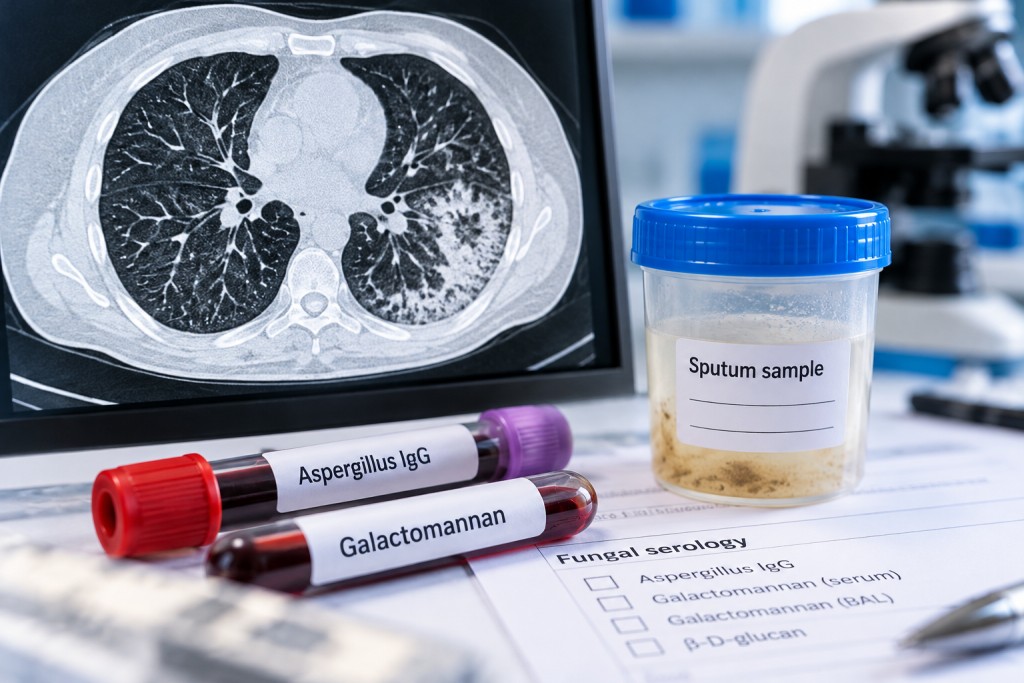
No single test confirms every case. Hospital teams combine symptoms, CT scans, respiratory samples and laboratory tests such as fungal culture, PCR or galactomannan testing.
Finding Aspergillus in a sample does not automatically mean invasive infection. Results need to be interpreted alongside the person’s scans, symptoms and level of immune suppression.
What does this mean for people with chronic aspergillosis?
People with CPA, ABPA, Aspergillus bronchitis, SAFS or an aspergilloma should take viral infections seriously in the same way as other people with long-term lung conditions. However, these chronic conditions do not mean that Aspergillus infection will automatically become invasive after flu or COVID-19.
Vaccination, prompt medical advice when symptoms are severe or worsening, and following your usual respiratory care plan remain the most useful precautions.
Related information
Visit the Invasive & Acute Aspergillosis Hub
Learn about invasive aspergillosis
Visit the Vaccines Hub
References
- Koehler P, et al. Defining and managing COVID-19-associated pulmonary aspergillosis. Lancet Infectious Diseases. 2021;21:e149–e162.
- Feys S, et al. Influenza-associated and COVID-19-associated pulmonary aspergillosis. Lancet Respiratory Medicine. 2024.

Did this page help you?
Tell us in one minute