Invasive aspergillosis usually starts in the lungs. Rarely, particularly when a person is severely immunocompromised or critically unwell, infection can affect other parts of the body.
This is very different from chronic pulmonary aspergillosis (CPA), ABPA, Aspergillus bronchitis or an aspergilloma. Having one of those long-term conditions does not mean that infection will spread through the body.
Key points
- Rare invasive Aspergillus infections can involve organs outside the lungs.
- They mainly occur in people with major immune suppression, severe illness or particular medical risk factors.
- They are diagnosed and treated by specialist hospital teams.
- Antifungal medicines are central to treatment, but scans, biopsies, drainage or surgery may sometimes be needed.
- These rare infections are not the expected outcome for people with chronic forms of aspergillosis.
Who is most at risk?
Infection outside the lungs is most likely to be considered when a person has invasive aspergillosis and is very unwell, or when their immune system is severely weakened.
This can include some people who are:
- Having intensive chemotherapy for blood cancer
- Experiencing prolonged severe neutropenia
- Receiving a stem-cell, bone-marrow or organ transplant
- Taking high-dose steroids or other strong immune-suppressing medicines
- Critically unwell in hospital, including after severe influenza or another serious viral illness
Rare local infections can also occasionally follow an injury, surgery or a medical procedure. The circumstances are very individual, which is why specialist assessment matters.
Which parts of the body can be affected?
When invasive infection spreads beyond the lungs, it can rarely involve other organs. The symptoms depend on the affected area and on the person’s underlying illness.
Brain and central nervous system
Infection involving the brain or central nervous system is rare and serious. Possible symptoms can include severe or unusual headache, confusion, seizures, weakness, changes in speech, balance problems or visual symptoms. These symptoms have many possible causes, but they need urgent medical assessment in someone known to be at high risk.
Heart and blood vessels
Very rarely, Aspergillus can affect the heart valves or blood vessels. This is usually considered in highly specific hospital situations, such as after major surgery or in someone with substantial immune suppression. It requires specialist infectious-disease, cardiology and surgical input.
Kidneys, bones, joints and skin
Kidney, bone, joint and skin involvement is uncommon. It may occur as part of more widespread invasive infection or, in some cases, after direct injury or a procedure. Symptoms vary widely, so doctors use scans, laboratory tests and sometimes a tissue sample to establish the cause.
Eye and ear infections
Aspergillus can also cause local infections of the ear or eye. These are usually separate local conditions rather than evidence that chronic lung aspergillosis is spreading. Eye symptoms such as pain, redness, sensitivity to light or reduced vision need urgent assessment.
How are these infections diagnosed?
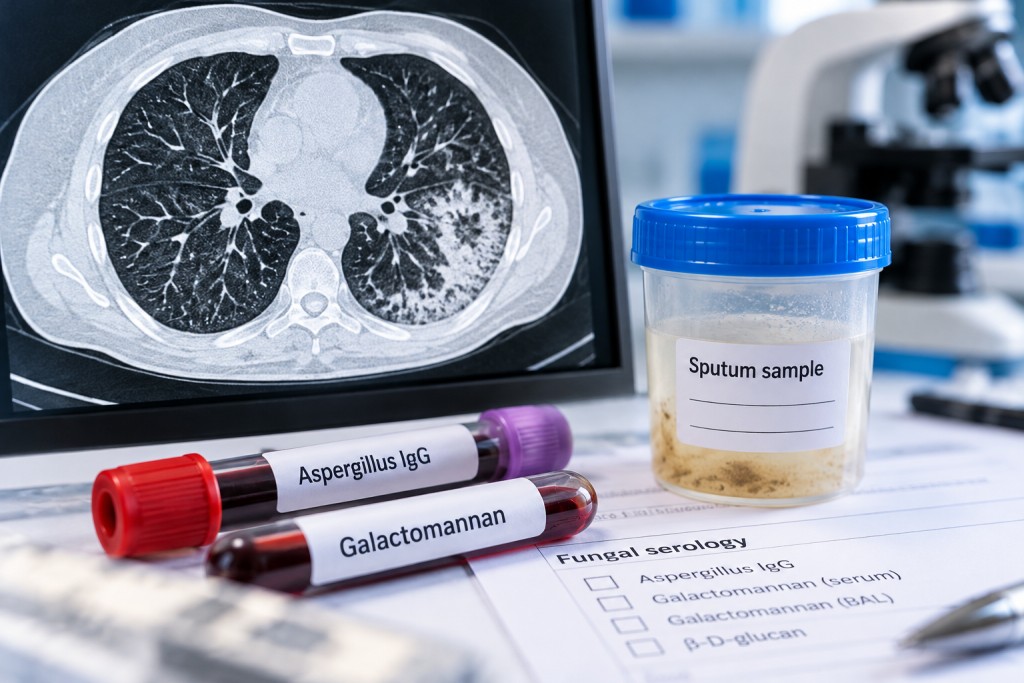
No single test provides every answer. Hospital teams may combine:
- Symptoms and medical history
- CT, MRI or other scans
- Blood tests and fungal markers
- Samples from the lungs, blood, skin or another affected site
- A biopsy or surgical sample when this is needed and safe
Finding Aspergillus in a sample does not automatically prove invasive infection. Results are interpreted alongside scans, symptoms and the person’s immune status.
Treatment and specialist procedures
Invasive Aspergillus infections are treated in hospital by specialist teams. Antifungal medicines are usually the main treatment, chosen according to the site of infection, other medicines, kidney and liver function, possible resistance and the person’s overall condition.
Sometimes a procedure is also needed. This may involve:
- Taking a biopsy or other sample to confirm the diagnosis
- Draining an infected collection of fluid
- Removing damaged or infected tissue where it is safe and helpful to do so
- Specialist surgery for a localised infection, such as one affecting the sinuses, heart or another accessible site
These decisions are made individually. Surgery is not automatically required, and it is never a simple decision when someone is already seriously unwell.
A reassuring distinction
It is understandable to feel worried after reading about rare Aspergillus infections online. However, case reports and medical articles often describe people with very different risks from those of someone living with CPA, ABPA, SAFS or Aspergillus bronchitis.
Chronic forms of aspergillosis need proper monitoring and treatment, but they do not usually develop into infection of the brain, kidneys, heart or other organs. If you are worried about a new symptom, discussing it with your own healthcare team is more useful than trying to compare your situation with an internet story.
When should I seek urgent help?
Seek urgent medical help for severe or rapidly worsening symptoms, including major breathing difficulty, confusion, a severe headache with neurological symptoms, significant change in vision, or a rapid deterioration in how you feel.
If you are having cancer treatment, have had a transplant, are taking strong immune-suppressing medicines, or have recently been seriously ill in hospital, contact your treating team promptly about new or worsening symptoms.
Related information
Visit the Invasive & Acute Aspergillosis Hub
Learn about invasive aspergillosis
Aspergillus infections of the ear, eye and nails
References
- Patterson TF, Thompson GR, Denning DW, et al. Practice guidelines for the diagnosis and management of aspergillosis. Clinical Infectious Diseases. 2016;63:e1–e60.
- Brown JS, Armstrong-James D, Ayling-Smith J, et al. British Thoracic Society Clinical Statement on Aspergillus-related chronic lung disease. Thorax. 2025;80(Suppl 1):3–21.

Did this page help you?
Tell us in one minute