🫁 Understanding Chronic Cough in Aspergillosis
What the latest British Thoracic Society statement means for you
🌬️ Why This Matters
If you live with aspergillosis, Allergic Bronchopulmonary Aspergillosis (ABPA), or bronchiectasis, coughing can dominate your life. It’s tiring, painful, and socially awkward — especially when people assume it means infection.
Doctors used to see cough as just a symptom of another problem, but the British Thoracic Society (BTS) Clinical Statement on Chronic Cough in Adults (2023) recognises something new:
For many people, a cough can become a condition in its own right — caused by airway and nerve hypersensitivity, not just infection.
This matters for aspergillosis patients because fungal allergy and inflammation make the airways especially sensitive.
💡 What Is “Chronic Cough”?
A chronic cough is one lasting eight weeks or more.
It may be:
-
Dry – little or no mucus
-
Productive – thick sputum (common in bronchiectasis or chronic aspergillosis)
-
Triggered by dust, cold air, perfume, or strong scents
For people with aspergillosis, several overlapping causes may exist:
-
Fungal colonisation or infection
-
Allergic inflammation (ABPA)
-
Bronchiectasis and mucus retention
-
Reflux or post-nasal drip
-
Nerve hypersensitivity
This is why one treatment rarely fixes everything — different “treatable traits” must be addressed together.
🧬 Why It Happens
1️⃣ The Hypersensitive Cough Reflex
People with aspergillosis often develop overactive airway nerves — so normal irritants like dust, scent, or cold air trigger coughing fits.
This “cough reflex hypersensitivity” happens because:
-
Ongoing inflammation damages the airway lining.
-
Nerve endings in the throat and lungs become over-responsive.
-
Even mild triggers set off powerful reflexes.
This is a real physiological process, not psychological.
It’s why cough can continue even when infection is under control.
2️⃣ Treatable Traits – Finding the Real Drivers
| Treatable Trait | What It Means | What Helps |
|---|---|---|
| Airway infection or colonisation | Persistent fungi or bacteria | Antifungal or antibiotic therapy, sputum tests |
| Allergic inflammation | ABPA or asthma-type airway swelling | Corticosteroids, biologics (e.g., mepolizumab, benralizumab) |
| Cough reflex hypersensitivity | Overactive airway nerves | Speech therapy, nerve-modulating medication |
| Airway clearance problems | Mucus that’s hard to shift | Physiotherapy, saline or mucolytic therapy |
| Reflux or postnasal drip | Acid or sinus drainage irritation | Reflux management, ENT care |
Identifying these traits helps your clinician personalise treatment.
💊 Medications That Can Cause or Worsen Cough
The BTS statement highlights that some medicines can trigger or amplify chronic cough — especially in people with already-sensitive lungs.
🔹 ACE Inhibitors (Blood pressure or heart disease)
Examples: Ramipril, Lisinopril, Enalapril, Perindopril
-
Can cause a dry, tickly cough due to bradykinin build-up.
-
Happens in ~1 in 5 users, sometimes months after starting.
-
GP can switch to a similar drug (ARB – e.g., losartan) that doesn’t cause cough.
🔹 Beta Blockers (Heart or migraine medicines)
Examples: Atenolol, Propranolol, Bisoprolol
-
May tighten airways, worsening wheeze or cough.
-
Safer “lung-selective” versions exist but should still be monitored.
🔹 Inhalers
Examples: Fluticasone, Budesonide, Salbutamol
-
Can irritate the throat if used without a spacer or if technique is poor.
-
Always rinse or gargle after use, and ask your pharmacist to review inhaler technique.
🔹 Antifungal or Reflux Medicines
-
Antifungals (itraconazole, voriconazole) don’t directly cause cough, but reflux or nausea can trigger coughing indirectly.
-
PPIs (omeprazole, lansoprazole) usually help reflux-related cough, but long-term use should be reviewed regularly.
🔹 Other Drugs
-
Amiodarone, methotrexate, and some biologics can rarely cause cough due to lung inflammation.
-
Nasal sprays or lozenges with menthol/alcohol may irritate already-sensitive airways.
💬 If you suspect a medicine is contributing, don’t stop it suddenly — speak to your doctor or pharmacist first.
They can review interactions using the
👉 BNF Interactions Checker – NICE Medicines Guidance.
🔍 How Doctors Assess Chronic Cough
BTS recommends a structured pathway:
-
Basic tests: chest X-ray, spirometry, bloods (eosinophils, IgE), FeNO if available.
-
Further tests: CT scan, allergy or sputum studies if initial tests are abnormal.
-
Trait-based review: identifying overlapping issues — fungal, allergic, nerve-related, or reflux-related.
-
Specialist referral: to a Cough Clinic or Aspergillosis Centre if symptoms persist.
🧴 Pharmacists: Your Safety Specialists
Pharmacists — hospital or community — are crucial for managing long-term cough and medication safety:
-
Check for cough-inducing drugs or interactions.
-
Advise on best timing for antifungal and steroid doses.
-
Help switch to fragrance-free personal or cleaning products.
-
Liaise with your GP and consultant to fine-tune treatment.
🧭 Regular medication reviews every few months can prevent small problems becoming major triggers.
💬 How It Feels — and Why It’s Misunderstood
People with aspergillosis often describe:
“A tickle that turns into a spasm I can’t stop.”
“People think I’m ill, but it’s just the air or perfume.”
This happens because your airway nerves and immune cells are already primed.
Coughing doesn’t mean you’re infectious — it’s your body’s protective reflex in overdrive.
🩺 What Helps Most
-
Optimise your aspergillosis and ABPA treatment.
-
Cough-control physiotherapy or speech therapy for nerve-related cough.
-
Airway clearance techniques for mucus.
-
Identify and avoid irritants: perfume, smoke, strong detergents, cold air.
-
Ask about biologics if inflammation remains active despite steroids.
-
Use nerve-modulating medicines only under specialist advice.
🧘 Emotional Health Matters Too
Living with a chronic cough can cause anxiety, embarrassment, and isolation.
Support from counsellors, CBT therapists, or patient groups helps manage this stress — and can actually reduce cough frequency through better relaxation and breathing control.
🌱 Key Takeaway
Chronic cough in aspergillosis isn’t “just a symptom” — it’s often a mix of airway inflammation, fungal allergy, nerve hypersensitivity, and sometimes side effects of medicines.
The good news is that every contributing factor is treatable once identified — and cough can improve significantly with the right combination of medical, physical, and environmental care.
🔗 Trusted Resources
🧩 NAC Aspergillosis Research Digest Aspergillosis (October 2025: week 44)
Highlights
-
Pulmonary aspergillosis in chronic lung disease can be severe and life-threatening, especially in patients with underlying interstitial lung conditions. Prompt diagnosis and subtype-targeted treatment are crucial for better outcomes (7).
-
Advanced sinus imaging in dogs improves veterinary precision for diagnosing and treating fungal infections such as aspergillosis (1).
-
Poultry farms in Turkey are best protected against aspergillosis outbreaks through consistent hygiene and environment management (3).
-
Pediatric liver transplant patients remain at high risk of deadly fungal infections, so ongoing immune and drug monitoring is vital (2).
-
New antifungal agents such as isavuconazole are yielding positive results in children, adults, and drug-resistant cases (10).
-
Agricultural fungicide use is driving azole resistance in Aspergillus, prompting urgent "One Health" responses across medicine and farming (8).
-
Research is underway to determine the best antifungal prophylaxis for heart transplant recipients (6).
-
Case studies show severe treatment challenges for aspergillosis in post-tuberculosis and cancer patients (5), (9).
Pulmonary Aspergillosis in Lung Disease
Recent research examined the prevalence and outcomes of aspergillosis among patients with interstitial lung disease (ILD) and chronic respiratory disorders. The study highlights three major forms:
-
Invasive Pulmonary Aspergillosis (IPA): Occurs in roughly 2% of hospitalised ILD patients, presenting with symptoms such as fever, persistent cough, and rapid decline in lung function. Those prescribed steroids or immunosuppressants and showing certain lung scan features are at greater risk. Estimated 3-month mortality can reach 50%.
-
Chronic Cavitary Pulmonary Aspergillosis (CPA): Represents about 0.6% of cases in target populations, with slower onset but significant respiratory impairment over time. Mortality is lower than IPA but remains notable.
-
Allergic Bronchopulmonary Aspergillosis (ABPA): Occurs in about 3% of studied patients, typically with a better prognosis, though delayed care can worsen outcomes.
Diagnostic strategies involve serology, antigen testing, and imaging to distinguish subtypes and select appropriate antifungal therapy. The study urges multidisciplinary care and more effective protocols for immunosuppressed patients (7).
Veterinary and Animal Health
Advanced radiological mapping now allows veterinarians to better diagnose and treat sinus aspergillosis across various breeds. This enhances surgical accuracy and supports targeted case management (1).
Poultry studies highlight aspergillosis as a leading fungal threat, with hygiene as the most effective control tactic (3).
Human Health: Transplant, Immunosuppression, and Infection
Children undergoing liver transplants require ongoing immune suppression, which increases susceptibility to severe fungal infections like aspergillosis. This underscores the value of rigorous therapeutic monitoring (2).
Current protocols are evaluating which antifungal drugs work best in heart transplant recipients to prevent invasive fungal infections (6)
Clinical Complications and Case Reports
Case studies spotlight life-threatening adrenal crisis and aspergillosis in children recovered from TB and adults with leukaemia. Timely diagnosis and combined therapies are essential for recovery (5), (9)
Transplant patients are vulnerable to bacterial and fungal sinus infections, presenting significant diagnostic challenges (4).
Drug Resistance and Novel Treatments
The rise of azole-resistant Aspergillus, driven by agricultural fungicide use, is making some forms of aspergillosis harder to treat. Integrated medical and environmental interventions are needed to slow resistance (8)
New medications, such as isavuconazole, are being adopted for severe and resistant cases in paediatric and adult populations with positive early results (10).
Reference List
- Cross-Sectional Radiological and Reconstructive Anatomy of the Paranasal Sinuses in Normal Mesaticephalic Dogs
- Pharmacokinetic Monitoring of JAK Inhibitor and Tacrolimus for Safe and Effective Management of Graft-Versus-Host Disease After Pediatric Liver Transplantation
- A Review on Aspergillosis in Turkey: As a Main Fungal Disease in Poultry
- Necrotizing Pseudomonal Sinusitis in a Transplant Patient
- Post‐Tuberculosis Adrenal Crisis in a Young Boy: A Case Report
- Antifungal prophylaxis against invasive Candida and Aspergillus infection in adult heart transplant recipients: protocol for a systematic review and meta-analysis
- Clinical characteristics and prognosis of pulmonary aspergillosis complicating interstitial lung diseases
- Azole fungicides and Aspergillus resistance, five EU agency report highlights the problem for the first time using a One Health approach
- Blinatumomab Along With Combined Antifungal Agents for Refractory Adult Acute Lymphoblastic Leukemia With Invasive Aspergillosis: A Case Report
- Real-life use of isavuconazole in Spanish children and adolescents
🧬 The Story of Brensocatib: A New Way to Calm Lung Inflammation
What Is Brensocatib?
Brensocatib is a new type of anti-inflammatory medicine being developed to protect the lungs from long-term damage caused by overactive immune cells, especially neutrophils.
It is being tested by the company Insmed in people with bronchiectasis, but it may also help those with aspergillosis and other chronic lung diseases where inflammation is a major problem.
Brensocatib is taken as a once-daily tablet—not an injection.
Why Was It Developed?
In conditions like ABPA (Allergic Bronchopulmonary Aspergillosis) and CPA (Chronic Pulmonary Aspergillosis), inflammation is often persistent.
The lungs attract neutrophils, which are immune cells that normally destroy germs.
However, when too many neutrophils gather, they release enzymes that damage healthy lung tissue, thicken mucus, and make infection easier for fungi and bacteria.
Researchers realised that if they could turn down the destructive part of neutrophil activity—without turning off the immune system completely—they might be able to break the cycle of inflammation and infection.
How Brensocatib Works
Brensocatib blocks a switch inside the bone marrow called DPP1 (dipeptidyl peptidase-1).
DPP1’s job is to “activate” enzymes inside newly formed neutrophils before they enter the bloodstream.
By blocking DPP1, brensocatib stops neutrophils from producing harmful enzymes such as neutrophil elastase.
These neutrophils can still travel to the lungs and fight infection, but they cause less collateral damage.
👉 In short: brensocatib reduces lung injury caused by over-active immune cells, not by suppressing immunity itself.
Not a Biologic – A Different Type of Treatment
It’s important to understand that brensocatib is not a biologic.
| Feature | Biologic drugs (e.g. mepolizumab, dupilumab) | Brensocatib |
|---|---|---|
| Made from | Complex proteins or antibodies | Small chemical molecule |
| How it’s given | Injection or infusion | Oral tablet |
| What it targets | Specific immune pathways (e.g. IL-5, IL-4) | Enzyme activation in neutrophils |
| Purpose | Block inflammatory signals | Reduce tissue-damaging enzymes |
| Typical use | Severe asthma, ABPA, autoimmune diseases | Bronchiectasis, chronic airway inflammation |
So, while biologics act by targeting immune messengers in the bloodstream, brensocatib works deeper—at the level of neutrophil development.
The two approaches are different but potentially complementary.
Some people in future may benefit from a combination, depending on their pattern of inflammation.
The Development Story
-
Early research (2010s): Scientists found that blocking DPP1 prevented lung injury in animal studies.
-
Insmed’s discovery: Brensocatib was developed as an oral, selective DPP1 inhibitor.
-
Phase 2 WILLOW trial (2020): In people with bronchiectasis, brensocatib significantly reduced flare-ups and lowered airway inflammation.
-
Phase 3 ASPEN trial (2022–2025): A large international study now nearing completion; results are expected soon.
If successful, brensocatib could become the first approved DPP1 inhibitor for long-term inflammatory lung disease.
Why This Matters for Aspergillosis Patients
People living with aspergillosis often also have bronchiectasis, where inflammation causes persistent mucus, infection, and breathlessness.
Current treatments such as steroids, antifungals, and biologics can help, but each has limits.
Brensocatib could:
-
Reduce airway inflammation without steroid side-effects
-
Protect lung tissue from further damage
-
Possibly lower the number of flare-ups or infections
-
Work safely alongside antifungals or biologics
It represents a new way of calming inflammation—by modifying neutrophil behaviour rather than blocking the immune system.
What Happens Next
The ASPEN Phase 3 results are expected soon. If positive, Insmed plans to apply for approval in the UK, EU, and USA.
Researchers are also studying brensocatib in:
-
COPD (Chronic Obstructive Pulmonary Disease)
-
Cystic fibrosis
-
Nontuberculous mycobacterial (NTM) infections
If licensed, it could mark the first new oral anti-inflammatory class for chronic lung disease in decades.
Key Take-Home Messages
-
Brensocatib reduces harmful lung inflammation by blocking the enzyme DPP1.
-
It is a small-molecule tablet, not a biologic injection.
-
It aims to protect the lungs by preventing damage from overactive neutrophils.
-
It may offer a steroid-sparing option for chronic airway diseases like bronchiectasis and aspergillosis.
-
It’s currently in final clinical trials, with results expected soon.
💬 Find Out More
🧩 NAC Aspergillosis Research Digest — Focus: Chronic Aspergillosis (October 2025: week 42)
🧬 Focus Review — Chronic Aspergillosis (October 2025)
Here are peer-reviewed papers on chronic aspergillosis published in the last month:
1. Improving Diagnostic Sensitivity Using Species-Specific IgG (Sep 2025)
-
This study investigated better blood tests to diagnose CPA by measuring IgG antibodies not just to Aspergillus fumigatus but also to other common Aspergillus species.
-
They found adding antibodies against non-fumigatus species identified more CPA cases that would have been missed by the standard A. fumigatus test alone.
-
The treatment results were similar regardless of which Aspergillus species was involved.
-
This means broader antibody testing improves diagnosis without changing expected outcomes.
- Read full paper on PubMed
2. Prevalence and Impact of Bacterial Co-infections in CPA (April 2025)
-
This study looked at how often bacterial infections occur alongside CPA and their effect on patients.
-
About 21% of CPA patients had bacterial co-infections.
-
However, having a bacterial co-infection did not significantly change mortality rates compared to those without.
-
This highlights the need to assess for bacteria but suggests it may not worsen long-term outcomes.
- Read full paper on PMC
3. Non-invasive Monitoring Using Serology and HRCT Imaging (June 2025)
-
Researchers combined blood antibody tests and high-resolution chest CT scans to identify active Aspergillus infections in chronic lung disease patients.
-
This method distinguished active infections from colonization without invasive procedures.
-
It supports using combined non-invasive tests to decide who needs further invasive diagnostics or antifungal treatment.
-
This approach helps avoid unnecessary treatments and invasive tests.
- Read full paper on Frontiers
In short: these studies improve how doctors diagnose and monitor CPA — by expanding antibody testing beyond classic targets, recognizing the role but limited impact of bacterial co-infections, and using combined non-invasive testing strategies to guide management safely and effectively.
🧠 Understanding Regulatory T Cells (Tregs) in Aspergillosis
How our immune system’s “brakes” help balance allergy and infection
🏅 2025 Nobel Prize in Medicine: Celebrating a Breakthrough in Immune Regulation
On 6 October 2025, the Nobel Prize in Physiology or Medicine was awarded to Mary E. Brunkow, Fred Ramsdell, and Shimon Sakaguchi for discovering regulatory T cells (Tregs) and the FOXP3 gene — the master switch that controls immune tolerance.
Their work revealed how the immune system prevents itself from attacking the body’s own tissues. This discovery has since guided the development of immune-modulating therapies now used in cancer, autoimmune, and allergic diseases.
This Nobel recognition highlights how understanding Tregs can lead to smarter, safer therapies — including future immune-based treatments for Allergic Bronchopulmonary Aspergillosis (ABPA) and Chronic Pulmonary Aspergillosis (CPA), where immune balance is disrupted.
🔍 What Are Regulatory T Cells?
Regulatory T cells (Tregs) are a specialised group of white blood cells (lymphocytes) that act as the “brakes” of the immune system.
They prevent excessive inflammation and protect the body from overreacting to harmless particles such as dust, pollen, or Aspergillus spores.
Tregs work by releasing interleukin-10 (IL-10) and transforming growth factor-beta (TGF-β), two powerful calming signals that suppress over-active helper T cells (Th2 and Th17) and reduce allergic or inflammatory damage.
🦠 Aspergillus and the Immune System
Everyone inhales Aspergillus spores daily.
In healthy people, the immune system quickly clears them. But in individuals with asthma, allergies, or lung damage, the immune response can become unbalanced:
| Form of Aspergillosis | Main Immune Problem | Treg Function |
|---|---|---|
| Allergic Bronchopulmonary Aspergillosis (ABPA) / Severe Asthma with Fungal Sensitisation (SAFS) | The immune system over-reacts to Aspergillus allergens, causing inflammation, mucus plugging, and airway obstruction | Too few or weak Tregs → loss of immune control |
| Chronic Pulmonary Aspergillosis (CPA) | Ongoing fungal growth with persistent inflammation and fibrosis | Excess local Treg activity may dampen antifungal defence |
| Invasive Aspergillosis (IA) | Profound immune weakness (e.g., after chemotherapy, corticosteroids, or organ transplant) | Tregs can further suppress protective antifungal responses |
⚖️ The Delicate Balance
The immune system must balance acceleration and braking:
-
Too little Treg control → allergic inflammation and tissue damage.
-
Too much Treg control → poor antifungal clearance and chronic infection.
The ideal is immune equilibrium — strong enough to fight Aspergillus, but calm enough to prevent lung injury.

💊 Treatments That Influence Regulatory T Cells
Several therapies already used for aspergillosis or severe asthma may influence Treg activity:
| Therapy | Possible Effect on Tregs |
|---|---|
| Corticosteroids (e.g., prednisolone) | Reduce inflammation and may increase IL-10-producing Tregs |
| Biologic therapies (omalizumab, mepolizumab, dupilumab) | Indirectly restore Treg–Th2 balance by blocking overactive allergy pathways |
| Vitamin D supplementation | Promotes stable and functional Tregs; deficiency linked with severe ABPA |
| Healthy gut microbiome (dietary fibre, probiotics) | Gut–lung axis supports Treg generation via short-chain fatty acids |
| Low-dose interleukin-2 (IL-2) therapy (research stage) | Expands Tregs selectively — now in early clinical trials for allergic and autoimmune disease |
🔬 Current Research Directions
Researchers are studying:
-
Differences in Treg profiles between ABPA, SAFS, CPA, and healthy lungs
-
How biologic therapies and antifungal drugs affect the Treg–Th2–Th17 balance
-
Whether IL-2-based immune modulation could calm allergic flares without immunosuppression
-
The influence of the airway microbiome on lung Treg activity
These studies aim for personalised immune therapy, tailoring treatment to each patient’s immune pattern.
💬 Take-Home Message
Regulatory T cells are the peacekeepers of the immune system.
Their discovery — now honoured by the 2025 Nobel Prize — transformed our understanding of allergy, infection, and autoimmunity.
In aspergillosis, restoring Treg balance could one day:
-
Calm allergic inflammation in Allergic Bronchopulmonary Aspergillosis (ABPA)
-
Limit lung scarring and fibrosis in Chronic Pulmonary Aspergillosis (CPA)
-
Support better fungal control without harmful over-suppression
By understanding these immune “brakes,” researchers hope to keep both Aspergillus and the immune system under control — balanced, not overactive.
🔍 Aspergillosis: Recent Highlights & Key Publications October 2025 (Week 41)
Revised ISHAM-ABPA working group guidelines (2024)
-
Scope & criteria: Codifies ABPA diagnosis around mandatory Aspergillus sensitisation (specific IgE or SPT) plus total IgE ≥ 500 IU/mL, with supporting features (Aspergillus-specific IgG/precipitins, eosinophilia, imaging with central bronchiectasis/mucus plugging). Distinguishes ABPA vs. ABPM (other fungi) and sets clinical states (acute, response, exacerbation, remission).
-
Treatment pathways: For acute ABPA, permits oral corticosteroids or itraconazole as first-line; combination is reasonable in severe disease or frequent relapsers. Provides steroid-sparing strategies (itraconazole/voriconazole/posaconazole) and practical taper schedules.
-
Biologics & monitoring: Positions omalizumab/mepolizumab/dupilumab for recurrent/exacerbation-prone ABPA. Recommends multidimensional response criteria (symptoms, exacerbations, lung function, IgE kinetics, radiology) rather than IgE alone.
- Paper (Eur Respir J) · PubMed · OA summary (PMC).
BTS Clinical Statement on Aspergillus-Related Chronic Lung Disease (2025)
-
Who it’s for: UK-focused guidance to help respiratory teams manage CPA, aspergilloma, chronic airway disease with Aspergillus, and allergic phenotypes in secondary care.
-
CPA approach: Emphasises radiology over time (HRCT), microbiology/Aspergillus-IgG, and exclusion of mimics (NTM, malignancy). Advises long-term azoles (with TDM & LFTs), and when to consider surgery (haemoptysis/aspergilloma).
-
Service model: Encourages early referral/MDT (radiology, mycology, thoracic surgery, interventional radiology), signposts NAC pathways, and sets pragmatic follow-up intervals (clinical, radiology, serology).
- BTS page · News item · (access via Thorax from BTS page).
Consensus guidelines for invasive aspergillosis (ECMM/ISHAM CAPA; 2021)
-
Definitions: Introduces proven/probable/possible CAPA using clinical + mycological evidence (BAL/TA culture or PCR, GM thresholds, imaging).
-
ICU nuance: Acknowledges non-neutropenic ICU patients (COVID/influenza) can develop IA with atypical imaging and lower fungal burdens; endorses combined biomarker strategies (BAL GM/PCR ± serum GM).
-
Therapy: Positions voriconazole/isavuconazole as first-line; L-AmB where resistance or intolerance suspected. Flags early initiation on high suspicion to improve outcomes.
- Paper (Lancet Infect Dis) · PubMed · ECMM guideline hub.
Epidemiology & Clinical Cohorts
Marseille 2-year retrospective cohort — CPA & ABPA insights (2025)
-
Design: Single-centre retrospective study applying ESCMID CPA criteria and modified ISHAM ABPA criteria to consecutive referrals.
-
Findings: High rate of diagnostic overlap (allergy + chronic infection features). Delays to diagnosis common, especially where IgG negative/indeterminate but GM/BAL/PCR positive.
-
Implication: Supports multimodal testing (serology, GM/PCR, serial imaging) and repeat sampling in indeterminate cases; highlights value of centre-based MDT.
- PubMed · (preprint/alt copies if needed: SSRN/other listing, ResearchGate record).
Invasive aspergillosis in ICU settings (2025 review)
-
Epidemiology: IA increasingly reported in severe viral pneumonias (COVID, influenza); mortality ~40–50% depending on definition and antifungal timing.
-
Diagnostics: BAL GM outperforms serum GM in non-neutropenic ICU; PCR adds sensitivity but needs pre-test probability framing to avoid over-calling colonisation.
-
Care points: Advocate protocolised screening (e.g., twice-weekly BAL GM/PCR in high-risk ventilated patients) and earlier empiric therapy when criteria met.
- Open access review (Frontiers, 2025) · (alt listing: ResearchGate record).
Review: Invasive aspergillosis — scope & new species (2024)
-
Landscape: Expands on non-fumigatus Aspergillus species, cryptic species with distinct susceptibility patterns, and emerging hosts (advanced COPD, cirrhosis, ICU).
-
Resistance: Summarises azole resistance mechanisms (cyp51A variants, TR34/L98H, TR46/Y121F/T289A) and notes environmental selection via triazole fungicides.
-
Practice: Reinforces susceptibility testing and situational use of L-AmB or isavuconazole where resistance is likely.
- Review (ScienceDirect).
Diagnostics: Biomarkers, Molecular, Imaging & Novel Methods
GM antigen & Aspergillus IgG negative “escape” cases
-
Problem: In suspected CPA/airway disease, Aspergillus-IgG can be false-negative early or in immunomodulated hosts.
-
Finding: High GM titres (especially BAL) can help “rescue” such cases, prompting treatment or further invasive sampling.
-
Clinical use: In IgG-negative but high-suspicion scenarios, pair BAL GM + PCR and repeat serology; avoid reliance on single negative IgG.
- OA study (2025) · PubMed. (See also general GM/BDG performance review: Medicine 2024).
Molecular diagnosis, qPCR & NGS advances (2025 review)
-
Performance: qPCR improves sensitivity vs culture/microscopy; specificity hinges on contamination control and clinical context.
-
Best practice: Combine qPCR with GM/BDG in high-risk patients; consider cycle thresholds and duplicate positivity to support true infection.
-
NGS: Useful for broad pathogen screens or resistant/cryptic species; needs standardisation and careful interpretation.
- OA review (Front Cell Infect Microbiol, 2025). British Thoracic Society
Microscopy, GM, PCR comparative pilot (2025)
-
Design: Head-to-head assay comparison across serum/BAL/sputum against a composite clinical reference.
-
Takeaway: No single test is definitive; dual-modality (e.g., BAL GM + PCR) yields best balance. Microscopy remains specific but insensitive.
- Study (ScienceDirect). ERS Publications
Emerging spectroscopy / imaging techniques (TERS)
-
What it is: Tip-enhanced Raman spectroscopy mapping conidial wall components (melanin, polysaccharides, proteins) at nanoscale.
-
Why it matters: Potential to differentiate strains or track resistance-linked wall changes; currently preclinical, not diagnostic.
- AIP Applied Physics Letters (2025) · arXiv preprint.
Therapeutics, Resistance & New Drugs
Olorofim (F901318) — Phase IIb results (2025)
-
Population: Refractory invasive mould disease (including azole-resistant Aspergillus), many salvage scenarios.
-
Efficacy: Global response ~29% (D42) and ~27% (D84); when counting stable disease, success rises to ~75% (D42) and ~63% (D84).
-
Safety: Transaminase elevations ~10%, mostly reversible with dose interruption/adjustment; no treatment-related deaths reported.
-
Use case: Salvage/compassionate therapy where standard options fail or resistance limits choices; monitor LFTs and DDIs.
- PubMed · Lancet Infect Dis abstract. (Trial record: NCT03583164).
Review of olorofim in aspergillosis
-
MoA: Inhibits dihydroorotate dehydrogenase (DHODH), blocking de novo pyrimidine synthesis (novel class, no cross-resistance with azoles/echnocandins/AmB).
-
Signals: Case series in azole-resistant disease (incl. CGD) report clinical/radiologic remission; combination strategies under study.
-
Caveats: Access via trials/managed access; need phase III data and resistance surveillance under use pressure.
- epocrates.com
Pipeline and alternative antifungals
-
Fosmanogepix (Gwt1 inhibitor): Oral/IV; activity against Candida/Aspergillus; CNS penetration promising; phase II positive signals.
-
Rezafungin (long-acting echinocandin): Weekly IV dosing enables OPAT; emerging real-world data in invasive disease and step-down.
-
Ibrexafungerp (tricohalose class/β-glucan): Oral; Aspergillus data limited (better for Candida), but combinations explored.
-
New azoles (isavuconazole real-world/TDM): Use where voriconazole intolerance or QT issues exist.
- (See contemporary reviews; real-world rezafungin data below.)
Rezafungin (real-world, 2025) — OPAT-friendly weekly echinocandin; emerging safety/utility data.
Azole resistance & clinical implications
-
Drivers: Agricultural triazoles select environmental cyp51A mutations; patients can acquire primary resistant strains.
-
Practice changes: Where resistance prevalence is ≥10%, consider empiric L-AmB or isavuconazole until susceptibility known; always request AFST when feasible.
- Nature Communications 2024 · Review PubMed.
Therapeutic drug monitoring & combination strategies
-
TDM: Essential for voriconazole/posaconazole (target troughs, avoid toxicity). Isavuconazole TDM less routine, but consider in extremes.
-
Combinations: Azole + echinocandin in refractory disease or high burden IA; AmB-based combos when resistance suspected. Evidence heterogeneous—use in expert-guided salvage.
- (Covered within recent IA/therapy reviews above.)
Immunology, Host Responses & Biologics
Immunopathogenesis review (2023)
-
Pathways: Th2-skewed responses drive ABPA/SAFS (IgE/eosinophilia); defects in phagocyte function (neutropenia, CGD, high-dose steroids) predispose to invasive disease.
-
Mediators: Roles for IFN-γ, IL-5/IL-13, mucus hypersecretion, and airway remodelling; supports biologic targeting in allergic phenotypes.
- OA review (Front Immunol 2023).
Biologics in ABPA / severe asthma
-
When to use: Relapsing ABPA, frequent steroid bursts, or steroid toxicity despite azole therapy.
-
Agents & effects: Omalizumab (anti-IgE) reduces exacerbations/steroid need; mepolizumab/benralizumab (anti-IL-5/IL-5R) tackle eosinophilia; dupilumab (anti-IL-4Rα) addresses Th2 axis and mucus/plugging.
-
Integration: Keep antifungal therapy for fungal burden; use biologics to control inflammation/exacerbations and spare steroids; monitor IgE dynamics and radiology.
- ISHAM ABPA paper · PubMed.
🌟 Biologics and the Future: A Toolkit for Severe Asthma, ABPA & Beyond
Many people with severe asthma or Allergic Bronchopulmonary Aspergillosis (ABPA) now have access to biologic medicines — treatments that block very specific signals in the immune system. For some, the results can feel miraculous. For others, the effect may fade or never fully take hold. But the exciting news is that science is building a toolkit of biologics that can be matched more closely to each person.
✨ Why biologics sometimes stop working
-
Biologics like tezepelumab (which blocks TSLP) can give dramatic improvements, but in some people the benefit doesn’t last.
-
That may be because the immune system “switches pathways” — other signals (like IL-5 or IL-13) start to dominate.
-
It doesn’t mean treatment is over — it means we need to try a different tool in the kit.
🧰 The current toolkit
Each biologic blocks a different “messenger” (called cytokines) in the immune system:
-
IgE blocker (omalizumab): helps in allergy-driven asthma/ABPA.
-
IL-5 / IL-5R blockers (mepolizumab, benralizumab, reslizumab, and soon depemokimab): reduce eosinophils (a type of white blood cell) that cause inflammation.
-
IL-4 / IL-13 blocker (dupilumab): controls type-2 inflammation, also helpful in eczema and nasal polyps.
-
TSLP blocker (tezepelumab): targets an “alarmin” high up in the pathway, useful across many asthma types.
-
IL-33 blockers (in development): another upstream “alarmin” that could help in the future.
🚀 What’s new and coming soon
-
Depemokimab: a long-acting IL-5 treatment, given only twice a year.
-
Inhaled anti-TSLP: same target as tezepelumab, but in inhaler form.
-
IL-33 blockers: still experimental, but promising because IL-33 is involved in fungal allergy and ABPA.
💡 What this means for ABPA
-
ABPA involves allergy (IgE), eosinophils (IL-5), and other signals like IL-33.
-
That’s why some patients respond to omalizumab, others to mepolizumab/benralizumab, others to dupilumab, and some to tezepelumab.
-
In the future, doctors may be able to choose the exact biologic (or even combination) that best matches your immune profile — just like targeted cancer treatments today.
🧩 The Biologic Toolkit (summary table)
| Target Signal | Biologics | How it Helps | Relevance to ABPA |
|---|---|---|---|
| IgE (allergy antibody) | Omalizumab | Calms allergic reactions | Useful when IgE is high and fungus/allergy is a trigger |
| IL-5 / IL-5R (eosinophils) | Mepolizumab, Benralizumab, Reslizumab, Depemokimab (6-monthly) | Reduces eosinophils that damage lungs | Helpful in many ABPA patients with high eosinophils |
| IL-4 / IL-13 (type-2 inflammation) | Dupilumab | Reduces mucus, inflammation, and steroid need | Good in patients with eczema or nasal polyps alongside ABPA |
| TSLP (alarmin, upstream trigger) | Tezepelumab, Inhaled anti-TSLP (in trials) | Blocks an “early alarm” that activates many asthma pathways | Early evidence: big improvements in some ABPA patients |
| IL-33 / ST2 (alarmin) | Itepekimab, Astegolimab (in development) | Switches off another early “danger signal” | IL-33 is strongly linked to fungal allergy → promising for ABPA |
🫁 COPD, Bronchiectasis & Mucus Plugging
-
COPD: Some biologics (like anti-IL-5) show benefit in patients with high eosinophils, and IL-33 blockers are being tested. Not yet routine NHS use.
-
Bronchiectasis: Biologics mainly help when asthma/ABPA overlap is present. Airway infections remain the bigger challenge.
-
Mucus plugging: Dupilumab can reduce mucus production. Other biologics may help indirectly, but airway clearance techniques remain essential.
💷 Why new medicines are expensive
-
Developing a new drug takes 10–15 years and can cost over £1 billion.
-
Most drugs fail — profits from a few successes must cover all the failures.
-
Patents give companies a period of exclusivity to recover costs, after which cheaper copies (generics or biosimilars) appear.
📊 Open market vs NHS
-
In the US (open market), companies set prices, and insurers or patients decide if they can pay → faster access, but very high costs and inequality.
-
In the UK (NHS), the system is funded by taxpayers. NICE weighs up cost vs benefit before approving drugs → slower access sometimes, but once approved, everyone gets it fairly.
🧬 Rare diseases and fungal infections
-
For rare diseases like ABPA and CPA, the market is too small to attract big pharma on profit alone.
-
Organisations like GAFFI (Global Action for Fungal Infections) and DNDi (Drugs for Neglected Diseases initiative) work with universities, charities, and governments to develop antifungals.
-
Examples:
-
Olorofim (F2G, UK biotech): a brand-new antifungal class, developed with public and charity support.
-
Rezafungin: a long-acting antifungal supported by government and public funding.
-
-
Without these partnership models, fungal drugs for ABPA/CPA would likely not exist.
🌈 The takeaway
-
Biologics are transforming treatment for asthma and ABPA — and new ones are coming.
-
If one biologic doesn’t work, others may.
-
COPD, bronchiectasis, and mucus plugging may also benefit in future.
-
New drugs are costly to develop, but the NHS negotiates to keep access fair.
-
For rare diseases like ABPA/CPA, partnerships and advocacy are crucial to get new drugs developed at all.
📖 Glossary of Acronyms
ABPA – Allergic Bronchopulmonary Aspergillosis
A lung condition caused by allergy to Aspergillus fungus, leading to inflammation, mucus plugging, and lung damage.
CPA – Chronic Pulmonary Aspergillosis
A long-term lung infection with Aspergillus fungus, usually in people with existing lung disease.
COPD – Chronic Obstructive Pulmonary Disease
A group of lung conditions (like chronic bronchitis and emphysema) that cause breathing difficulties.
NHS – National Health Service
The publicly funded healthcare system in the UK.
NICE – National Institute for Health and Care Excellence
The body that decides which treatments the NHS should fund, based on cost and benefit.
QALY – Quality-Adjusted Life Year
A way of measuring the benefit of a treatment: how much it improves both the length and quality of life.
IL – Interleukin
A type of messenger protein (cytokine) used by the immune system to trigger inflammation. Different ILs have numbers (IL-4, IL-5, IL-13, IL-33).
IgE – Immunoglobulin E
An antibody linked to allergies. Very high IgE levels are common in asthma and ABPA.
TSLP – Thymic Stromal Lymphopoietin
An “alarmin” (early danger signal) that tells the immune system to start reacting. Blocked by tezepelumab.
ST2 – Suppression of Tumorigenicity 2
The receptor for IL-33. Drugs like astegolimab block this pathway.
GAFFI – Global Action For Fungal Infections
A non-profit organisation pushing for better care, awareness, and research into fungal disease.
DNDi – Drugs for Neglected Diseases initiative
An international group that develops treatments for rare or overlooked diseases (including fungal infections).
EAMS – Early Access to Medicines Scheme
A UK programme that allows patients to use promising medicines before full approval.
FDA / EMA / MHRA – Food and Drug Administration (US) / European Medicines Agency (EU) / Medicines and Healthcare products Regulatory Agency (UK)
The agencies that approve and regulate medicines.
💡 Dupilumab for ABPA: What You Need to Know Now the Trial Is Complete
A large Phase III trial—called LIBERTY‑ABPA AIRED—has recently completed studying dupilumab in people with ABPA and asthma who frequently exacerbate despite other treatments. Let’s break down what that means and what’s still missing 📌
🗓️ Trial Timeline & Scope
-
Trial completed: Primary data collection finished in July 2023, study closed in February 2024. It enrolled around 170 patients from over 30 sites across several countries including the UK, EU, US, Canada, Japan, and more Wikipedia+15trialsummaries.com+15Clinical Trials Register+15.
-
Design: Randomized, double‑blind, placebo‑controlled over 52 weeks, followed by 12 weeks safety follow‑up trialsummaries.comClinical Trials Register.
📋 What Was Measured?
The trial assessed:
-
Severe respiratory exacerbations (requiring steroids or hospital admission)
-
Lung function changes (e.g. FEV₁)
-
ABPA-related symptoms, quality of life, asthma control
-
Biomarkers including IgE and FeNO
-
Safety and tolerability, including antibody formation to dupilumab Wikipedia+15Clinical Trials+15trialsummaries.com+15
🧬 Why Results Matter
Dupilumab blocks both IL‑4 and IL‑13 pathways, which drive inflammation, mucus, and elevated IgE in ABPA. Early case reports and small series have shown promising benefits, especially in reducing exacerbations and steroid use, but until now, no large randomized trial data were available ScienceDirect+1PMC+1.
❓ What’s Available Now?
-
✅ The trial has finished, but official results have not yet been published or released publicly.
-
🕒 Regulators and sponsors previously estimated publication around late 2023, with actual report likely still under review or preparation ctv.veeva.com+3ScienceDirect+3Clinical Trials+3.
-
📡 Until these results are public, dupilumab remains not officially approved for ABPA, though individual clinicians may consider off‑label use in select cases.
🧾 Summary Table: Where Things Stand
| Status | Current Position |
|---|---|
| Trial status | Completed Feb 2024 |
| Official results | Pending publication |
| Based on early data | Case reports show improvement in exacerbations and steroid reduction |
| Regulatory status | Not yet licensed for ABPA treatment |
| Clinical use now | Only as part of research or off‑label under specialist review |
💬 What Should Patients Do Now?
If you’re managing ABPA and considering biologic options:
-
✅ Ask if longstanding biologics like dupilumab are being considered for your individual case.
-
💬 Be clear that formal approval for ABPA is still pending, pending public release of the trial results.
-
🩺 Consult with your specialist or asthma/respiratory team about possible off‑label use—they can explain access options, benefits, and risks.
🧭 Final Thoughts
The LIBERTY‑ABPA AIRED trial has now completed, marking a major milestone for potential new treatment in ABPA. But until results are published and reviewed, dupilumab remains off-label for this condition.
You may still hear about its use in ABPA from case reports showing positive outcomes—but wider clinical acceptance awaits published study data. If it becomes available, it could offer meaningful benefits—but only if confirmed in research.
🔬 Emerging Research for Aspergillosis
Aspergillosis is a complex group of diseases caused by the Aspergillus fungus. Ongoing research is uncovering new ways to diagnose, treat, and prevent these conditions—offering hope for improved care and long-term outcomes. This page outlines current areas of promising research relevant to patients, carers, and healthcare professionals.
⏱️ Has Research Accelerated Over Time?
Yes. Over the last 40 years, research into aspergillosis and fungal infections has significantly accelerated due to:
- Rising awareness of fungal diseases in immunocompromised patients
- Improved diagnostic technology (e.g. PCR, lateral flow tests, next-gen sequencing)
- New drug development in response to growing azole resistance
- Greater investment from both academic institutions and industry
- Dedicated centres like the UK National Aspergillosis Centre driving specialist research
- Fungal infections gaining WHO recognition as emerging public health threats
In the 1980s and 1990s, progress was relatively slow. Since the early 2000s—and especially after the COVID-19 pandemic revealed the risks of fungal co-infection—momentum has increased markedly.
1. 🧪 Antifungal Drug Development
Resistance to azole antifungals is a growing concern. Several new antifungal agents are in development:
🔸 Olorofim (F2G)
- First-in-class orotomide antifungal
- Shows activity against Aspergillus, including azole-resistant strains
- Currently in phase III trials for invasive and chronic pulmonary aspergillosis
🔸 Ibrexafungerp and Fosmanogepix
- New antifungals with different mechanisms of action
- Potentially effective in combination or for resistant cases
🔸 Inhaled Antifungals
- Trials of inhaled itraconazole, posaconazole, and PC945 (opelconazole) for direct delivery to the lungs
- Aim: higher local drug concentrations with fewer side effects
2. 🧬 Biologics and Immune Modulation
🧭 What's Next in Biologic Therapies for Severe Asthma?
Several next-generation biologics are under development, aiming to:
- Broaden coverage for patients who don't respond to existing biologics
- Target upstream pathways (beyond IL‑5, IL‑4/13, or IgE)
- Offer once-yearly dosing or dual-target activity
Examples include:
- Depemokimab: A long-acting anti-IL‑5 antibody in phase 3 trials (GSK)
- CSJ117: An inhaled anti-TSLP monoclonal antibody fragment (Novartis)
- RG6354: Targeting IL-33 pathway, an upstream trigger in type 2 and non-type 2 asthma
- Dual Biologics: Exploratory research combining two targets (e.g., IL‑5 + IL‑4 or TSLP + IL‑13)
These developments may also benefit subsets of aspergillosis patients with severe asthma or ABPA who have not fully responded to current biologics. Research is exploring biologic therapies that reduce allergic inflammation or modulate immune response, particularly for ABPA (Allergic Bronchopulmonary Aspergillosis) and overlapping asthma subtypes.
✅ Biologics Currently in Use for ABPA
Omalizumab (Xolair) – Anti-IgE
- Target: IgE antibody—blocks allergic immune response to Aspergillus antigens.
- Evidence: Studies show significant reductions in exacerbations, IgE, steroid use, and improved lung function.
- Clinical Use: Widely used off-label in ABPA patients with raised IgE and asthma features.
Mepolizumab (Nucala) – Anti–IL‑5
- Target: IL‑5 cytokine—reduces eosinophil inflammation.
- Use: Steroid-sparing and symptom control in eosinophilic ABPA.
Benralizumab (Fasenra) – Anti–IL‑5 Receptor
- Target: IL‑5Rα—causes rapid eosinophil depletion.
- Use: Clearing mucus plugs and reducing flares; often used after mepolizumab failure.
Dupilumab (Dupixent) – Anti–IL‑4Ra
- Target: IL‑4/IL‑13 pathway—type 2 inflammation.
- Use: Shown to reduce IgE levels and ABPA exacerbations.
Tezepelumab (Tezspire) – Anti‑TSLP
- Target: TSLP—broadly suppresses upstream allergic inflammation.
- Evidence: Early reports suggest benefit in ABPA patients, though data are limited.
📊 Real-World Effectiveness
UK-based retrospective study (2014–2022):
- 74 ABPA patients treated with biologics
- 65% showed ≥50% reduction in steroid use after 12 months
- 35% switched due to lack of effect or side effects
📌 Summary Table of Biologics
| Biologic | Target | Use in Aspergillosis | Key Benefits |
|---|---|---|---|
| Omalizumab | IgE | ABPA with raised IgE | ↓ Exacerbations, ↓ steroids, ↑ FEV₁ |
| Mepolizumab | IL‑5 | Eosinophilic ABPA | Steroid-sparing, symptom control |
| Benralizumab | IL‑5Rα | Refractory cases | Mucus clearance, eosinophil depletion |
| Dupilumab | IL‑4/IL‑13 | Mixed allergic/eosinophilic ABPA | ↓ IgE, ↓ flares |
| Tezepelumab | TSLP | Emerging, broad asthma-ABPA | Broad inflammation control |
3. 🧫 Diagnostic Advances
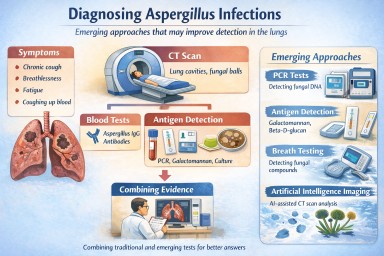
Improved diagnostics aim to detect disease earlier and more accurately:
- Lateral flow tests (e.g., Aspergillus-specific LFD) for rapid diagnosis
- PCR testing and galactomannan assays in blood, sputum, or BAL
- Aspergillus-specific IgG and IgE testing to distinguish CPA, ABPA, and colonisation
- Next-generation sequencing (NGS) for strain typing and resistance detection
4. 🌡️ Non-Pharmacological Research
🌀 Airway Clearance and Physiotherapy
- Trials assessing flutter devices, oscillating PEP, and manual physiotherapy in chronic aspergillosis and bronchiectasis
🥦 Nutrition and Gut-Lung Health
- Increasing interest in the role of dietary fibre, gut microbiome, and short-chain fatty acids in immune defence and lung inflammation
💨 Air Quality and Exposure
- Home-based studies evaluating the impact of HEPA filters, spore counts, and environmental remediation
5. 🛡️ Preventative Strategies
🫁 Lung/Nasal Coatings (Experimental)
- Early research into coating the lungs or nasal passages to prevent infection
- Not yet in human trials for aspergillosis, but promising in animals for viral and bacterial prevention
💉 Vaccines
- No approved vaccines yet, but exploratory work is underway for high-risk populations
6. 🧫 Clinical Trials in Aspergillosis
A wide range of clinical trials are currently underway or recently completed, focusing on new antifungals, biologics, and non-pharmacological interventions:
🧪 Antifungal Trials
- Rezafungin – A long-acting echinocandin administered once weekly, currently in trials for prevention and treatment of invasive fungal infections, including those caused by Aspergillus species
- Olorofim (F2G) – Phase III trials for CPA and invasive aspergillosis
- PC945 (Opelconazole) – Inhaled triazole for CPA and prophylaxis in immunocompromised patients
- Fosmanogepix and Ibrexafungerp – Investigated in resistant and invasive fungal disease
🧬 Biologic Trials
- Tezepelumab and Dupilumab – Trials involving patients with ABPA and severe asthma
- Depemokimab (GSK) – Phase III trials for long-acting IL‑5 blockade
🌡️ Other Trials
- Airway clearance studies – Use of physiotherapy and flutter/PEP devices in chronic pulmonary aspergillosis
- Gut microbiome and fibre supplementation – Exploring anti-inflammatory potential in lung disease
These trials often recruit patients from UK centres including the National Aspergillosis Centre, and are registered on databases such as ClinicalTrials.gov.
7. 🤝 Patient Support and Outcomes Research
📊 Real-World Evidence
- Registries and observational studies (e.g., LIFE, FungiScope) gathering long-term data on patients with CPA, ABPA, SAFS, and invasive disease
👥 Quality of Life and Patient-Reported Outcomes
- Surveys and tools to measure impact of fatigue, breathlessness, mental health, and medication side effects
- Aim: improve personalised care and support services
🧭 Where to Find Updates
- ClinicalTrials.gov – searchable by "aspergillosis"
- Aspergillosis.org – for patient-friendly research summaries
- National Aspergillosis Centre (UK) – involved in many UK-based studies
- Journal of Fungi, Medical Mycology, Clinical Infectious Diseases – leading sources of peer-reviewed studies
📢 Final Word
Research into aspergillosis is accelerating across drug development, diagnostics, prevention, and patient support. While not all options are available yet, many are in trials or early clinical use. Staying informed and involved—whether through trial participation or feedback—helps shape better care for all.
Updated July 2025 – suitable for patients, clinicians, and advocacy groups.
🫁 Could Lung or Nasal Coatings Help Prevent Aspergillosis?
As research into new ways of preventing lung infections advances, some patients with aspergillosis are asking whether coating the lungs or airways—with a protective spray, gel, or surfactant—might one day protect them from fungal disease.
Here’s what the science says so far.
🔬 What Is Being Researched?
Scientists are currently studying ways to coat the lungs or nasal passages with a protective substance designed to:
- Trap or neutralise viruses, bacteria, or fungal spores
- Stabilise the lung or airway lining
- Prevent inflammation or infection from taking hold
These coatings may come in the form of:
- Dry powder aerosols (inhaled)
- Drug-free nasal gels or sprays
Importantly, these are being developed as preventative measures, not as treatments for people already ill.
🧪 Current Research: Early-Stage, Not Yet for Aspergillosis
1. Dry Powder Lung Surfactants
- These are based on natural surfactants that coat the lungs and keep the air sacs (alveoli) open.
- Tested in animals (e.g., lambs, rabbits) with good results in preventing respiratory distress or injury.
- Used mostly in neonatal care for premature babies.
- Not yet tested for fungal infections or chronic diseases like aspergillosis.
2. Nasal Gel-Coating Sprays
- These sprays form a temporary coating in the nose and upper airways, shown in mice to block viruses like flu or COVID-19.
- Protective effect may last several hours.
- Still in animal testing—no human trials or approvals yet.
- No evidence yet that they can prevent fungal infections like Aspergillus.
📌 Are These Coatings Available Yet?
No. As of now:
- There are no licensed lung or nasal sprays designed to prevent aspergillosis or other fungal lung infections.
- Most studies are in pre-clinical stages (animal research only).
- It may be several years before any human trials begin.
🛡️ Who Might Receive These Preventatives in the Future?
If future research proves these coatings are safe and effective, likely priority groups would include:
🎯 High-risk populations:
- People with chronic aspergillosis (CPA) or ABPA
- Patients on long-term steroids or immunosuppressants
- Individuals with bronchiectasis, COPD, or cystic fibrosis
- Transplant recipients or those with cancer or immune deficiencies
- Elderly people, especially in care homes
- Healthcare or construction workers exposed to dust, spores, or mould
- Hospitalised or ventilated patients (e.g. risk of CAPA in ICU)
❗ What Aspergillosis Patients Should Know
- These technologies are not available yet and remain in the research phase.
- They are being explored as preventative tools, not as treatment for existing fungal infections.
- There is no evidence yet they can prevent Aspergillus infections—but the research is promising.
✅ What You Can Do Now
Until better preventatives are developed, people with aspergillosis can reduce risk by:
- Avoiding high-risk environments (e.g., compost, renovation dust, decaying vegetation)
- Using prescribed antifungals or steroids correctly
- Supporting immune health (e.g., good nutrition, rest, fibre-rich diet)
- Asking doctors about biologics or ongoing research trials if relevant
📘 Final Word
While the idea of coating the lungs or nose to stop infections sounds futuristic, it’s grounded in real science. For people vulnerable to fungal lung disease, this kind of innovation may one day offer protection—especially for those on immunosuppressive treatments or with fragile lungs.
But for now, the best defence remains personalised treatment, avoidance strategies, and good communication between specialists and GPs. We’ll keep watching this space closely as research develops.