How Inflammation in One Part of the Body Can Affect the Rest of the Body
Last reviewed: 24 March 2026
Audience: Patients, families, and non-specialist clinicians
Author: Aspergillosis.org editorial team
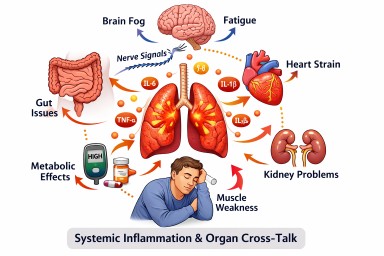
Many people think of inflammation as something that stays in one place: a painful joint, an inflamed lung, an irritated sinus, or a bowel flare. In reality, inflammation is often a whole-body process. Signals released at one site can travel through the blood, nervous system, and immune system, influencing other organs and changing how the body feels and functions overall.
This helps explain why a local health problem can sometimes lead to symptoms that seem much broader, such as fatigue, poor concentration, low mood, loss of appetite, aches, disturbed sleep, or worsening of other long-term conditions.
Key points
- Inflammation is not always confined to one organ or body part.
- Inflamed tissues release chemical messengers that can circulate throughout the body.
- The brain, heart, kidneys, liver, gut, lungs, and immune system all communicate with one another.
- This “cross-talk” can be helpful in short-term illness, but harmful when inflammation becomes prolonged.
- Ongoing inflammation is linked with fatigue, brain fog, low mood, cardiovascular strain, and worsening of other chronic diseases.
Table of contents
- What is inflammation?
- Why inflammation does not always stay local
- How the body communicates during inflammation
- Common whole-body effects of inflammation
- Why this matters in lung disease and aspergillosis
- Acute inflammation versus chronic inflammation
- What can help?
- When to seek medical advice
- Common questions
- References
What is inflammation?
Inflammation is part of the body’s defence system. It is one of the ways the immune system responds to infection, injury, irritation, allergens, or tissue damage. In the short term, inflammation is often helpful. It can help the body fight infection, clear damaged tissue, and begin repair.
But inflammation can also become too strong, too prolonged, or poorly controlled. When that happens, the effects may no longer stay limited to the original problem area.
Why inflammation does not always stay local
When tissue becomes inflamed, immune cells release small signalling proteins called cytokines and other inflammatory mediators. These act like chemical messages. Some stay nearby, but many enter the bloodstream and influence distant organs.
This is why inflammation in one part of the body can sometimes cause:
- tiredness or exhaustion
- feeling unwell or “washed out”
- poor concentration or “brain fog”
- worsening appetite
- sleep disruption
- higher strain on the heart or kidneys
- worsening of other inflammatory conditions
Researchers increasingly describe this as systemic inflammation or organ cross-talk. In other words, organs do not operate in isolation. They are part of an interconnected network.
How the body communicates during inflammation
1. Chemical messengers in the blood
Inflamed tissues can release cytokines such as interleukin-6 (IL-6), interleukin-1 beta (IL-1β), and tumour necrosis factor alpha (TNF-α). These may affect blood vessels, metabolism, the brain, the heart, and other immune cells.
These signals are useful during short-term illness, but if they remain elevated they may contribute to chronic symptoms and long-term health effects.
2. Organ-to-organ immune cross-talk
Modern immunology shows that the gut, liver, lungs, brain, heart, kidneys, and bone marrow can influence one another through immune signalling. A problem in one organ may therefore alter immune behaviour somewhere else.
This can be protective, but it can also become part of a vicious circle, especially in chronic disease.
3. Nerve signalling between the body and brain
Inflammation is not communicated only by blood. The nervous system also plays a role. Signals from inflamed tissues can travel through nerves, including the vagus nerve, to the brain. The brain then responds by adjusting immune activity and body-wide stress responses.
This helps explain why inflammation can affect fatigue, mood, motivation, sleep, and mental clarity.
4. Stress, hormones, and metabolism
Inflammation also interacts with the body’s hormonal and metabolic systems. This can influence energy use, blood sugar regulation, muscle strength, and appetite. Over time, chronic inflammation may put extra strain on the cardiovascular and kidney systems.
Common whole-body effects of inflammation
Fatigue
One of the most common effects of inflammation is fatigue. This is not simply feeling sleepy. It can be a profound lack of physical and mental energy. Many chronic inflammatory illnesses are associated with this kind of exhaustion.
Brain fog and mood changes
Inflammatory signals can affect the brain, contributing to reduced concentration, slowed thinking, low motivation, anxiety, or low mood. This does not mean symptoms are “all in the mind”. It means that immune activity can influence brain function.
Heart and blood vessel effects
Inflammation can make blood vessels less healthy over time and may contribute to a higher cardiovascular risk. This is one reason why long-standing inflammatory diseases are often linked to heart and circulatory problems.
Kidney effects
The kidneys are sensitive to inflammatory stress. In some conditions, long-term systemic inflammation can contribute to kidney damage or worsen existing kidney disease. Kidney disease itself can also increase inflammation, creating a two-way relationship.
Muscle weakness and reduced stamina
Ongoing inflammation can alter how muscles use energy and recover after activity. This may contribute to weakness, reduced exercise tolerance, and slower recovery after exertion.
Why this matters in lung disease and aspergillosis
For people with chronic lung conditions, including some forms of aspergillosis, inflammation in the airways or lungs may have effects beyond breathing alone. The lungs are not separate from the rest of the body.
Inflammation in the lungs may contribute to:
- general fatigue
- poor stamina
- sleep disruption
- brain fog
- loss of appetite
- worsening of other conditions
This can be especially relevant for people living with long-term inflammatory lung disease, repeated infections, allergic inflammation, or complex treatment burdens.
It is also one reason why patients sometimes feel that their symptoms are “bigger” than what would be expected from the lungs alone. Often, that experience is real and biologically plausible.
Acute inflammation versus chronic inflammation
Acute inflammation
This is the short-term response seen with infection, injury, or a sudden flare. It may cause fever, pain, swelling, and marked tiredness. Usually, it settles when the trigger is controlled.
Chronic inflammation
This is lower-grade or persistent inflammation that continues over time. It may be driven by chronic infection, immune dysregulation, ongoing tissue damage, obesity, autoimmune disease, long-term lung disease, or other medical problems. Chronic inflammation is often less dramatic but may have broader long-term effects.
What can help?
The right approach depends on the underlying cause. Broadly, management focuses on:
- identifying and treating the cause of inflammation where possible
- controlling infections or allergic triggers
- optimising treatment of the underlying disease
- supporting sleep, nutrition, and pacing of activity
- monitoring the effects on other organs when relevant
There is rarely a single quick fix for chronic inflammation. Good management usually means looking at the whole person, not just the inflamed organ.
When to seek medical advice
Please seek medical advice if inflammation-related symptoms are worsening or if you develop:
- new or severe breathlessness
- chest pain
- confusion or marked drowsiness
- new swelling, reduced urine output, or signs of dehydration
- persistent fevers
- rapid decline in energy, mobility, or daily functioning
If symptoms are sudden, severe, or alarming, seek urgent medical help.
Common questions
Does inflammation always damage the whole body?
No. Short-term, controlled inflammation is a normal and useful response. Problems are more likely when inflammation is severe, repeated, or persistent.
Can one inflamed organ affect another?
Yes. There is now strong evidence that organs influence one another through immune, vascular, metabolic, and nerve-based pathways.
Can inflammation cause fatigue even if blood tests are not dramatically abnormal?
Yes. Symptoms and blood markers do not always match perfectly. Some people experience substantial fatigue and other systemic symptoms even when routine blood tests are only mildly abnormal or intermittently raised.
Is this relevant to chronic lung disease?
Yes. Lung inflammation can have effects that go beyond breathing, including fatigue, reduced stamina, and wider body effects.
References
- Dou J, et al. The Interplay of Cross-Organ Immune Regulation in Inflammation and Cancer. MedComm. 2025.
- Jin H, Li M, et al. A body–brain circuit that regulates body inflammatory responses. Nature. 2024.
- Katkenov N, et al. Systematic Review on the Role of IL-6 and IL-1β in Cardiovascular Diseases. Journal of Cardiovascular Development and Disease. 2024.
- Nowak KL, et al. Targeting Inflammation in CKD. Current Opinion in Nephrology and Hypertension. 2025.
- Paganin W, et al. Inflammatory biomarkers in depression: a scoping review. 2024.
- Mehta NN, et al. IL-6 and Cardiovascular Risk: A Narrative Review. 2024.
- Che H, et al. Organ cross-talk: molecular mechanisms, biological functions and therapeutic opportunities. 2026.
Disclaimer: This article is for general information and education. It is not a substitute for personalised medical advice. If you are worried about worsening symptoms, new symptoms, or the effect of inflammation on your health, speak to your clinical team.
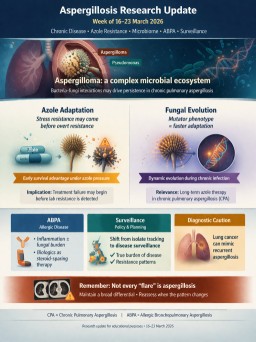
Aspergillosis Research Update (Week of 16–23 March 2026)
This week’s aspergillosis literature includes important new work on chronic pulmonary aspergillosis (CPA), aspergilloma microbiology, azole resistance evolution, biomarkers, allergic bronchopulmonary aspergillosis (ABPA), and surveillance. As usual, the most clinically useful papers for long-term aspergillosis care are prioritised.
Key points summary
- New evidence suggests that azole persistence and stress tolerance may develop before overt antifungal resistance becomes detectable.
- An aspergilloma appears to be more than a simple fungal ball: it may function as a complex microbial ecosystem involving bacterial adaptation and persistence.
- A new surveillance paper argues for moving beyond Aspergillus fumigatus strain surveillance toward clinical disease surveillance.
- ABPA review literature continues to reflect growing interest in biologic therapies as steroid-sparing treatment.
- A case report reminds clinicians that lung cancer can mimic recurrent aspergillosis, with potential for diagnostic delay.
- Biomarker studies in invasive pulmonary aspergillosis (IPA) are continuing, although most are not yet ready for routine clinical use.
Contents
- Chronic and structural disease
- Antifungal resistance and fungal evolution
- Diagnosis and biomarkers
- ABPA and allergic disease
- Surveillance, epidemiology and environment
- Case reports and diagnostic challenges
- Other relevant papers
1. Chronic and structural disease
Pseudomonas aeruginosa adaptation and persistence in the aspergilloma microbiome revealed by integrated multi-omics
Ribeiro MM, Liu C, Xu JF, Liang S, Goldman GH
G3 (Bethesda), 17 March 2026
PMID: 41843749
This is one of the most interesting papers this week for those focused on CPA and aspergilloma. The authors examine the microbial ecology of aspergilloma and show that Pseudomonas aeruginosa can adapt and persist within this environment. That matters because aspergilloma has often been thought of mainly as a fungal structure, whereas this paper supports the idea that it may be a more complex polymicrobial niche.
The study strengthens the view that chronic pulmonary aspergillosis may involve not only fungal persistence, but also bacterial-fungal interactions, biofilm-like behaviour, and long-term microbial adaptation. This may help explain why some patients remain symptomatic despite antifungal therapy, and why structural lung disease can be so difficult to stabilise.
Why it matters:
- Highly relevant to aspergilloma and CPA.
- Supports growing interest in the lung microbiome and mixed microbial communities.
- May eventually influence how we think about treatment failure, chronic symptoms, and combined antimicrobial strategies.
2. Antifungal resistance and fungal evolution
Evidence that increased azole persistence and stress resistance precede the in vivo evolution of azole resistance in Aspergillus fumigatus
Delbaje E, Pontes L, Savoldi M, Sedik S, Dichtl K, Hoenigl M, Lass-Flörl C, Silva Pereira C, Schreiber AZ, Rokas A, Lu L, Barbosa JCJ, Fill T, Dos Reis TF, Goldman GH
Microbiology Spectrum, 16 March 2026
PMID: 41837673
This is an important resistance paper. The authors provide evidence that azole persistence and stress resistance may emerge before formal azole resistance becomes established in vivo. In other words, the fungus may first become better at surviving azole exposure before developing the classical resistance patterns that laboratories can detect more easily.
That finding is highly relevant to patients with chronic aspergillosis receiving prolonged azole therapy. It suggests that the road to treatment failure may begin earlier than clinicians currently realise, and that traditional susceptibility testing may capture resistance only after important adaptive changes are already underway.
Why it matters:
- Very important for CPA management and long-term triazole treatment.
- Suggests that “susceptible” isolates may still show clinically relevant survival advantages.
- May help explain some cases of gradual loss of treatment response before overt resistance is identified.
Accelerated mutator phenotype in a clinical Aspergillus fumigatus isolate contributes to adaptive evolution
Song Y, Hokken MWJ, Zoll J, Venselaar H, Verweij PE, Melchers WJG, Rhodes J
Emerging Microbes & Infections, 16 March 2026
PMID: 41838943 |
PMCID: PMC12997362
This paper complements the study above. It describes a clinical Aspergillus fumigatus isolate with an accelerated mutator phenotype, meaning it acquires mutations more readily and can therefore adapt more quickly under selective pressure.
For chronic disease, especially where patients receive long courses of azole therapy, this is a concerning but important concept. Some fungal strains may be inherently more capable of adapting during treatment, which could contribute to the emergence of resistance, persistence, or other survival advantages.
Why it matters:
- Relevant to CPA, azole resistance, and treatment monitoring.
- Supports the idea that fungal evolution during chronic infection may be dynamic and patient-specific.
- May eventually help explain why some patients develop resistance more rapidly than others.
3. Diagnosis and biomarkers
Synergistic effects of S100 calcium-binding protein A12 combined with Pentraxin 3 in invasive pulmonary aspergillosis and their clinical application prospects
Zhou X, Hu X, Liu H
Frontiers in Cellular and Infection Microbiology, 20 March 2026
PMCID: PMC12999553
This paper focuses on invasive pulmonary aspergillosis rather than chronic disease. It explores whether combining host biomarkers such as S100A12 and Pentraxin 3 could improve diagnosis and perhaps risk stratification.
As with many biomarker studies, the concept is promising, but the clinical pathway remains uncertain. Biomarkers that reflect the host inflammatory response may ultimately complement fungal biomarkers and imaging, particularly in intensive care or immunocompromised settings.
Why it matters:
- More relevant to IPA than CPA or ABPA.
- Illustrates continued interest in host-response biomarkers.
- Potentially useful in the future, but not immediately practice-changing for routine aspergillosis care.
Diagnostic and prognostic value of serum miR-155 in chronic obstructive pulmonary disease
Wu Y, Zhang K, Zhong R, Wang W, Luo Z, Ma Z, Liang R, Wu X, Zou X
Scientific Reports, 20 March 2026
PMID: 41857172
This is not primarily an aspergillosis paper, but it includes findings relevant to invasive pulmonary aspergillosis in patients with chronic obstructive pulmonary disease (COPD). The authors report that serum miR-155 levels were lower in IPA than non-IPA patients within their study population.
That is potentially interesting because COPD is a major risk factor for IPA, and there is growing need for better tools to identify invasive fungal disease in such patients. However, this remains exploratory and should be viewed as an early biomarker signal rather than something ready for clinical use.
Why it matters:
- Relevant mainly for COPD-associated IPA risk.
- Adds to the biomarker literature, but is not yet directly applicable in routine practice.
- Limited immediate relevance for CPA and ABPA.
4. ABPA and allergic disease
Allergic bronchopulmonary aspergillosis in internal medicine
Chedal-Anglay C, Martin de Frémont G, Dupin C
Revue de Médecine Interne, 18 March 2026
PMID: 41856838
This review provides an overview of allergic bronchopulmonary aspergillosis, its diagnosis, and treatment. It reiterates that ABPA is a complex and often under-recognised inflammatory lung disease in which treatment may target inflammation, fungal burden, or both.
Importantly, the review reflects current momentum behind biotherapies (biologics) as a growing part of management. This is particularly relevant for patients in whom long-term corticosteroid exposure is problematic, ineffective, or poorly tolerated.
Why it matters:
- A useful review paper for ABPA education and clinical context.
- Supports the continuing move toward steroid-sparing treatment approaches.
- Relevant to current discussions about personalised management pathways in ABPA.
5. Surveillance, epidemiology and environment
From Aspergillus fumigatus pathogen surveillance to Aspergillus disease surveillance
van Grootveld R, van der Beek MT, Buil JB, Schoffelen AF, de Greeff SC, Bosch T, de Boer MGJ, Kuijper EJ, Verweij PE
Journal of Hospital Infection, 18 March 2026
PMID: 41862136
This is an important conceptual paper. Rather than focusing solely on surveillance of Aspergillus fumigatus as an organism, the authors argue for broader Aspergillus disease surveillance. That is a significant distinction: public health and healthcare systems may gain more by tracking actual disease burden, clinical phenotypes, antifungal resistance patterns, and outcomes than by looking only at isolates.
For services interested in national strategy, referral equity, or long-term burden of disease, this paper points toward a more mature surveillance model. It has particular relevance to discussions about CPA burden, referral pathways, registry development, and national service planning.
Why it matters:
- Important for policy, national strategy, and service development.
- Supports the case for stronger data systems around aspergillosis burden and outcomes.
- Potentially relevant to UK service planning and inequity mapping work.
A deep dive into the diversity of the Aspergillus community in the lakes of northern Iran
Kor M, Hedayati M, Abastabar M, Haghani I, Nabili M, Saravani A, Javidnia J, Brandão J, Moazeni M
Frontiers in Public Health, 20 March 2026
PMCID: PMC12999566
This environmental study analyses the diversity of Aspergillus species in lake environments and identifies potentially pathogenic species in water and sediment samples. It is not a clinical paper, but it adds to the wider evidence base showing that environmental reservoirs of Aspergillus are varied and widespread.
Such work contributes to broader understanding of exposure pathways and may be relevant to discussions around damp environments, environmental fungal burden, and risk in vulnerable individuals.
Why it matters:
- Mainly relevant as background epidemiology and environmental context.
- Useful for the bigger public-health picture of Aspergillus exposure.
- Limited immediate clinical impact for patient management.
6. Case reports and diagnostic challenges
Case Report: Lung squamous cell carcinoma mimicking recurrent aspergillosis in systemic lupus erythematosus
Yu J, Tang Y, Tian S, Zhu W, Dai Q
Frontiers in Medicine, 22 March 2026
PMCID: PMC13002587
This case report is particularly valuable because it highlights a major diagnostic pitfall: lung squamous cell carcinoma presenting as recurrent aspergillosis. In patients with complex lung disease or immunological disease, it can be tempting to interpret recurring pulmonary abnormalities through the lens of known infection, inflammation, or prior fungal disease. This paper is a reminder that alternative diagnoses, including malignancy, must remain in view.
For patients with chronic pulmonary abnormalities, repeated “flare” narratives can sometimes delay the recognition of another process. This has strong relevance for clinical vigilance in CPA and related diagnostic pathways.
Why it matters:
- Important reminder that not everything that looks like recurrent aspergillosis is aspergillosis.
- Relevant to diagnostic delay, differential diagnosis, and the overlap between fungal disease and cancer.
- Useful for clinician education and patient-facing discussion about why diagnosis can sometimes take time.
7. Other relevant papers
Genetic background and immune response in paracoccidioidomycosis: A systematic review and meta-analysis of single nucleotide variants
Coelho SDS, Fava WS, Burger E, Pereira-Latini AC, Pontillo A, Venturini J
PLoS Neglected Tropical Diseases, 19 March 2026
PMID: 41855184 |
PMCID: PMC13001940
This paper is not focused on aspergillosis, but it is relevant to the wider theme of host genetic susceptibility to fungal infection. It adds to the growing literature suggesting that inherited immune variation may partly shape vulnerability to invasive mycoses.
A Case of Disseminated Trichophytosis With Vascular Invasion and Multiple Ulcers: Case Report and Literature Review
Fujino K, Umemoto N, Kakurai M, Yabe H, Maekawa T, Harada K, Makimura K, Shibuya K, Demitsu T
Journal of Dermatology, 19 March 2026
PMID: 41853986
This case is relevant mainly because invasive aspergillosis was initially suspected. It is a useful reminder that other invasive fungal infections may enter the differential diagnosis in immunocompromised patients.
IFUCISTRATEGY: A Spanish Survey on the Management of Invasive Fungal Infection (IFI) in Critically Ill Patients
Zaragoza R, Estella Á, Nuvials X, Robles-Plaza M, Casado-Gómez A
Preprints.org, 17 March 2026
Preprint: PPR1166594
This preprint surveys management practices for invasive fungal infection in critically ill patients. It includes references to pulmonary aspergillosis and reflects continuing emphasis on early testing, bronchoalveolar lavage galactomannan, and timely treatment. As a preprint, it should be interpreted cautiously until peer review is complete.
TET2 germline mutation in a patient with sequential lymphoid malignancies: a novel case report
Mao X, Shen K, Wang J, Wang Z, Ao Q, Wang C, Xiao M
Annals of Hematology, 17 March 2026
PMID: 41843166 |
PMCID: PMC12995931
This paper is included as contextual evidence of aspergillosis occurring in a severely immunocompromised setting. Its relevance is mainly in reinforcing the ongoing burden of pulmonary aspergillosis in haematology patients.
Post-transplant Cyclophosphamide Reduces Bronchiolitis Obliterans Syndrome Risk Through Chronic Graft-versus-Host Disease Prevention: A Multicenter Cohort Study
Eggleston RH, Alkhateeb H, Pennington KM, Zhang Z, Torghabeh MH, Hogan WJ, Khera N, Roy V, Durani U, Yadav H
Chest, 16 March 2026
PMID: 41850483
This paper is not principally about aspergillosis, but may be of indirect relevance to post-transplant lung complications and immunosuppressed populations in whom fungal disease risk remains important.
Overall interpretation
This week’s literature is strongest in three areas: chronic disease ecology, fungal adaptation under azole pressure, and diagnostic complexity. For chronic pulmonary aspergillosis in particular, the most notable message is that disease behaviour may be shaped by more than the fungus alone. The aspergilloma paper supports a richer ecological model involving bacterial adaptation, while the resistance papers suggest that fungal survival under treatment may begin to change before classical resistance becomes obvious.
Together, these studies strengthen the case for thinking about chronic aspergillosis as a dynamic long-term host-microbe-environment problem, rather than a static fungal infection. At the same time, the lung cancer case report is an important reminder that persistent or recurrent disease patterns must still be reviewed critically, especially if the clinical course changes.
What seems most relevant this week?
- Most important for CPA: the aspergilloma microbiome paper and the two azole adaptation/resistance papers.
- Most important for ABPA: the ABPA review summarising diagnosis and evolving treatment approaches.
- Most important for service planning: the surveillance paper arguing for disease-level rather than pathogen-only monitoring.
- Most important diagnostic caution: lung cancer masquerading as recurrent aspergillosis.
References
- Ribeiro MM et al. PMID: 41843749
- Delbaje E et al. PMID: 41837673
- Song Y et al. PMID: 41838943
- Zhou X et al. PMCID: PMC12999553
- Wu Y et al. PMID: 41857172
- Chedal-Anglay C et al. PMID: 41856838
- van Grootveld R et al. PMID: 41862136
- Kor M et al. PMCID: PMC12999566
- Yu J et al. PMCID: PMC13002587
- Coelho SDS et al. PMID: 41855184
- Fujino K et al. PMID: 41853986
- Zaragoza R et al. Preprint: PPR1166594
- Mao X et al. PMID: 41843166
- Eggleston RH et al. PMID: 41850483
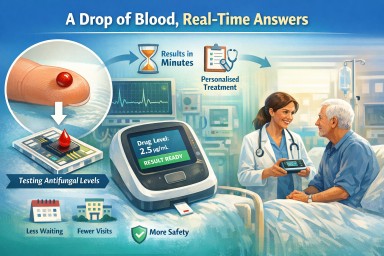
A Drop of Blood, Real-Time Answers
Last reviewed: 20 March 2026
Audience: Patients, carers, families, and non-specialists
Topic: Point-of-care monitoring of antifungal drug levels
New bedside testing for antifungal drugs — and why patients welcome it
For many people taking antifungal medicines, blood tests are an important part of care. These tests help doctors check whether the amount of medicine in the body is too low, too high, or about right.
A new type of technology is being developed to do this much more quickly, using just a single drop of blood placed onto a specialised chip. Instead of sending blood away to a laboratory and waiting days for a result, this kind of test may be able to provide an answer much more quickly, sometimes during the clinic visit itself.
Patients in a recent focus group responded very positively to this idea. They welcomed not only the technology itself, but also what it could mean for their care: less waiting, less uncertainty, fewer trips to hospital, and more personalised treatment.
Key points
- A new test can measure antifungal drug levels from a drop of blood.
- The blood is placed on a specialised chip containing tiny sensors.
- Results may be available much faster than standard laboratory testing.
- This could help doctors adjust treatment more quickly and more precisely.
- Patients in a focus group strongly welcomed the technology.
- Reported benefits included less anxiety, fewer hospital visits, and more confidence in treatment decisions.
What is this new test?
This is a type of point-of-care test. That means it is designed to be used close to the patient, such as in a clinic or at the bedside, rather than sending the sample away to a central laboratory.
In this case, the aim is to measure the level of an antifungal drug in the blood from a very small sample, sometimes just a finger-prick drop. The drop of blood is placed onto a specialised chip. That chip contains tiny channels and sensors that can detect the amount of drug present.
People sometimes describe this type of system as a “lab on a chip” because it performs some of the work of a laboratory in a very small device.
How does the technology work?
The exact science varies between devices, but the general idea is similar.
- A small blood sample is taken.
This may be from a finger prick rather than a larger blood draw. - The blood is placed onto a specialised chip.
The chip is designed to handle a tiny volume of blood. - The blood moves through microscopic channels.
These channels guide the sample to the parts of the chip that do the measurement. - Sensors on the chip detect the antifungal drug.
These sensors are designed to recognise the drug or react to it in a measurable way. - A reader produces a result.
A connected device reads the signal from the chip and estimates the drug level.
Some systems use electrical signals, some use light, and some use chemical reactions. Patients do not need to understand all the engineering details to understand the main point: the chip is acting like a mini laboratory.
A simple way to think about it is this:
Instead of sending your blood sample to a distant laboratory, this technology brings part of the laboratory to your fingertip.
Why do antifungal drug levels matter?
Some antifungal medicines need careful monitoring because the “right” level can be quite important.
If the drug level is too low, the medicine may not work well enough. If the drug level is too high, side effects may become more likely.
This can be especially relevant for antifungal drugs such as:
- itraconazole
- voriconazole
- posaconazole
Drug levels can vary from person to person for many reasons, including:
- how well the body absorbs the medicine
- interactions with other medicines
- differences in liver function and metabolism
- changes in health over time
At present, monitoring usually involves sending blood to a laboratory. That works, but it can mean delays. Results may not come back quickly enough to guide decisions during the clinic appointment itself.
A faster bedside test could help clinicians make treatment decisions more quickly and could support more personalised care.
What did patients say about it?
In the patient focus group, this technology was widely welcomed. Patients were not only interested in the novelty of the test. They also recognised several practical benefits that could make day-to-day care easier and safer.
1. Faster results could reduce anxiety
Many patients described the stress of waiting for test results. Waiting can create a sense of uncertainty: Is the treatment working? Is the dose correct? Are side effects more likely?
A test that gives much quicker results was seen as reassuring. Instead of waiting days, patients liked the idea of getting answers much sooner, possibly while still in clinic.
2. Fewer visits could reduce the burden of care
For many people with chronic lung conditions or long-term illness, going to hospital is not a small task. Travel, parking, breathlessness, fatigue, mobility problems, and long waits can make even a short appointment exhausting.
Patients felt that a faster and simpler test could reduce some of this burden, especially if it could be built into a normal appointment or eventually be offered closer to home.
3. More personalised dosing felt important
Patients often understand from experience that medicines do not affect everyone in the same way. One person may tolerate a treatment well, while another may have side effects or absorb the medicine differently.
Because of this, patients valued the idea that treatment could be adjusted based on their own measured drug level, rather than relying only on standard dosing. This gave a stronger sense that care was being tailored to the individual.
4. Closer monitoring gave reassurance about safety
Antifungal drugs can be very helpful, but patients also know that some of them can have side effects and interactions. That can make treatment feel worrying, especially over longer periods.
Patients said that being able to check drug levels more quickly and more easily could help them feel safer. It suggested that treatment was being watched closely rather than left unchecked between appointments.
5. Immediate results could help patients feel more involved
Another important theme was involvement. Patients often feel that blood is taken, results disappear into the system, and decisions come later without much real-time discussion.
By contrast, a bedside result creates the possibility of discussing the number there and then. Patients felt this could help them better understand their treatment and feel more involved in decisions about dose changes and ongoing care.
6. It seemed to fit better with real life
Patients repeatedly emphasised that long-term treatment has to fit around real lives, not just clinic systems. Many welcomed the idea of a test that was quicker, simpler, and potentially more convenient.
In that sense, what patients welcomed was not just a chip or a machine, but a model of care that felt more responsive and more human-centred.
What could this mean for future care?
If this technology proves accurate, reliable, and affordable, it could support a different way of monitoring antifungal treatment.
Possible future benefits could include:
- drug level testing during the clinic appointment itself
- faster dose adjustment when levels are too high or too low
- closer monitoring when starting or changing treatment
- fewer repeat visits just to check blood levels
- potential future use in community settings or, one day, at home
It is important to be realistic. New technologies must be carefully tested before they become routine. They need to be shown to be accurate, dependable, and practical in real healthcare settings.
Even so, patients clearly recognised the potential. For them, this is not just about speed. It is about moving toward care that is:
- more responsive
- more personalised
- more convenient
- less anxiety-provoking
Common questions
Is this available now?
Usually not as a routine test in most healthcare settings. It is still being developed and studied, although interest in this type of monitoring is growing.
Will this replace ordinary blood tests?
Not immediately. Standard laboratory testing is still important. New bedside systems may first be used alongside existing methods while they are being evaluated and introduced.
Would this work for every antifungal drug?
Not necessarily. Some devices may be designed for specific drugs first. Wider use would depend on the technology and the evidence supporting it.
Could this be used at home?
Possibly one day, but that is likely to depend on how reliable, affordable, and easy to use the technology becomes. For now, clinic or bedside use is the more immediate possibility.
Why is a drop-of-blood test appealing to patients?
Because it may mean quicker answers, less uncertainty, fewer hospital trips, and more confidence that treatment decisions are based on what is happening in their own body.
When to seek medical advice
You should contact your healthcare team if you:
- develop new or worsening side effects from your antifungal medicine
- feel your treatment is not helping
- have concerns about drug interactions with other medicines
- are unsure whether to continue, stop, or change your medication
A new bedside test could support treatment decisions, but it would not replace medical advice. Symptoms, scans, blood tests, and clinical review would still matter.
Final thoughts
This new chip-based bedside technology may sound futuristic, but the reason patients welcomed it is very straightforward.
They saw the possibility of care that is faster, clearer, safer, and better adapted to real life.
In other words, this is about more than measuring a drug level from a drop of blood. It is about moving away from delayed, one-size-fits-all monitoring and toward real-time, personalised, patient-centred care.
In one sentence
A tiny chip and a drop of blood could help doctors adjust antifungal treatment more quickly — and patients believe that could make care less stressful, less burdensome, and more personal.
Author: Graham Atherton and ChatGPT draft support
For review by: National Aspergillosis Centre / relevant clinical or research reviewer
Note: This article is for general information and should not be used as a substitute for medical advice.
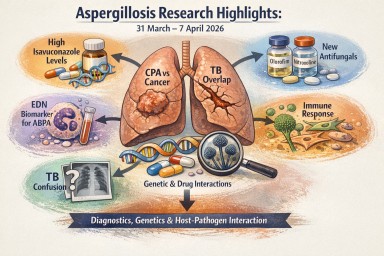
Aspergillosis Research Highlights - Week 11
Mid-March 2026 Literature Update
This update summarises notable recent publications mentioning aspergillosis, prioritising studies relevant to chronic pulmonary aspergillosis (CPA), allergic bronchopulmonary aspergillosis (ABPA), diagnostics, epidemiology and management.
Table of Contents
Key Highlights
- Pulmonary aspergilloma review published in CHEST: a substantial review summarises modern understanding of pulmonary aspergilloma, including diagnosis, haemoptysis risk and management.
- Rapid diagnostic technologies emerging: new CRISPR-based and LAMP molecular approaches show promise for faster identification of Aspergillus fumigatus and antifungal resistance.
- Nebulised antifungal therapy explored for ABPA: a case report describes inhaled antifungal therapy in a patient with treatment-limiting comorbidities.
- Microbiome disruption may increase susceptibility to Aspergillus infection: experimental data suggest antibiotics can impair neutrophil-mediated antifungal immunity.
- Global burden continues to emerge: recent studies again show Aspergillus infection in patients initially suspected of tuberculosis or pneumonia.
Clinical and Review Papers
Pulmonary Aspergilloma: Comprehensive Clinical Review
Seo C, Dumoulin E, Thornton CS.
Spore Wars: A Comprehensive Review of Pulmonary Aspergilloma and Its Clinical Management.
CHEST, 12 Mar 2026.
PubMed: https://pubmed.ncbi.nlm.nih.gov/41831523/
This review provides an updated overview of pulmonary aspergilloma, covering pathogenesis, imaging findings, haemoptysis risk and current management strategies.
- Aspergilloma develops in pre-existing lung cavities, often related to previous tuberculosis or other structural lung disease.
- The major complication is haemoptysis, which can be severe or life-threatening.
- Management may include monitoring, antifungal therapy, bronchial artery embolisation or surgical resection in selected patients.
Systematic Review Planned on ABPA Therapies
Nwankwo L, Maidment I, Periselneris J, Jackson DJ, Agarwal R, Asano K, Nuh A, Ni M, Shah A, Armstrong-James D.
Protocol for a systematic literature review and network meta-analysis of the evidence for therapies in allergic bronchopulmonary aspergillosis (ABPA).
Systematic Reviews, 11 Mar 2026.
PubMed: https://pubmed.ncbi.nlm.nih.gov/41814377/
This protocol sets out a planned network meta-analysis comparing therapies used in ABPA.
- Will assess the evidence for oral corticosteroids, antifungal therapy, biologics and combination approaches.
- Aims to address the continuing lack of strong comparative evidence between treatment strategies.
Diagnostics and Detection Advances
Rapid Antifungal Susceptibility Testing for Aspergillus fumigatus
Nozue S, Furuhashi K, Toguchi A, Ishikawa J, Nagura O, Yamashita K, Maekawa M, Iwaizumi M.
Rapid antifungal susceptibility testing for Aspergillus fumigatus using a loop-mediated isothermal amplification method.
Journal of Microbiological Methods, 12 Mar 2026.
PubMed: https://pubmed.ncbi.nlm.nih.gov/41831694/
This study describes a loop-mediated isothermal amplification (LAMP) method for rapid antifungal susceptibility testing.
- Designed to identify antifungal resistance more quickly than conventional culture-based testing.
- Potentially useful for early recognition of azole resistance.
CRISPR-Based Detection of Aspergillus fumigatus
Jiang Q, Zeng X, Zhang Q, Yang F, Lv T, Zhang Y, Wang J, Li F, Xu D.
Development and application of a rapid detection system for Aspergillus fumigatus based on ERA/CRISPR-Cas12a.
BMC Microbiology, 9 Mar 2026.
PubMed: https://pubmed.ncbi.nlm.nih.gov/41803678/
This paper reports a rapid molecular detection platform combining ERA amplification with CRISPR-Cas12a.
- Aims to detect A. fumigatus DNA rapidly and accurately.
- Represents the wider move toward faster molecular fungal diagnostics.
Sputum Galactomannan for Diagnosing IPA in COPD
Lan Y, Li H, Su D, Liao X, Zhang Q, Ma Q.
Clinical value of sputum galactomannan testing in the diagnosis of invasive pulmonary aspergillosis among chronic obstructive pulmonary disease patients.
European Journal of Medical Research, 9 Mar 2026.
PubMed: https://pubmed.ncbi.nlm.nih.gov/41803989/
This study evaluates sputum galactomannan as a less invasive diagnostic tool for invasive pulmonary aspergillosis in patients with COPD.
- Could provide useful diagnostic information when bronchoscopy is not feasible.
- May complement serum or bronchoalveolar lavage-based testing.
Immunology and Pathogenesis
Antibiotics and Susceptibility to Aspergillus Infection
Aufiero MA, Hohl TM.
Antibiotic-induced microbiota disruption impairs neutrophil-mediated immunity to respiratory Aspergillus fumigatus infection in mice.
mBio, 11 Mar 2026.
PubMed: https://pubmed.ncbi.nlm.nih.gov/41810941/
This experimental paper suggests that antibiotic-driven microbiome disruption can impair neutrophil responses and increase vulnerability to Aspergillus infection.
- Antibiotics altered microbial communities in ways that weakened antifungal immunity.
- The findings support a protective role for the microbiome in respiratory host defence.
Therapeutic Developments
Nebulised Antifungal Therapy in ABPA
Carrasco Sánchez M, Llopis Pastor E, García-Salmones Martín M.
Nebulised antifungal therapy in allergic bronchopulmonary aspergillosis in a patient with treatment-limiting comorbidities.
Medicina Clínica (Barcelona), 12 Mar 2026.
PubMed: https://pubmed.ncbi.nlm.nih.gov/41832814/
This case report describes use of nebulised antifungal therapy in ABPA where standard systemic treatment was limited by comorbidities.
- Suggests inhaled delivery may occasionally offer a practical workaround in selected patients.
- Evidence remains limited and this should still be viewed as a niche or exploratory approach.
Epidemiology and Public Health
Aspergillus Positivity in Patients With Tuberculosis-Like Symptoms
Ebong SMA, Kengne VN, Ayong MNA, Foko LPK, Ambono JLN, Ndzana GM, Baïdam MT, Youguitcha O, Abah OZA, Ayangma C, Koro FK.
Positivity rate of Aspergillus spp. in patients with tuberculosis-like symptoms in Yaoundé, Cameroon and antifungal resistance profile.
BMC Infectious Diseases, 9 Mar 2026.
PubMed: https://pubmed.ncbi.nlm.nih.gov/41803790/
This study found Aspergillus positivity in patients initially presenting with tuberculosis-like symptoms.
- Shows again how pulmonary aspergillosis can be confused with TB.
- Also assessed antifungal resistance patterns.
Pulmonary Fungal Infection in Pneumonia
Shokohi R, Mehraban Z, Darvishi F, Fatahinia M, Kiasat N.
Epidemiology and Clinical Features of Pulmonary Fungal Infections in Patients with Pneumonia: A Single-Center Study from Southwestern Iran.
Research Square preprint, 11 Mar 2026.
Preprint: https://www.researchsquare.com/article/rs-1164127
This preprint reports that aspergillosis was a significant component of pulmonary fungal infection among patients with pneumonia.
- Suggests fungal infection may be more common in severe respiratory disease than often recognised.
- As a preprint, findings should be interpreted cautiously until peer reviewed.
Aspergillosis in Complex Clinical Settings
Brain Abscess With Tuberculosis and Aspergillosis
Mirg S, Parihar J, Vibha D, Garg A, Singh G, Singh U, Sharma MC, Tripathi M.
Brain abscess with concurrent infection: tuberculosis and aspergillosis.
Practical Neurology, 13 Mar 2026.
PubMed: https://pubmed.ncbi.nlm.nih.gov/40784749/
This case report describes a rare brain abscess caused by concurrent tuberculosis and aspergillosis.
- Illustrates the complexity of diagnosis when multiple serious infections coexist.
- Highlights the need to keep fungal infection in the differential diagnosis.
Nosocomial Aspergillus calidoustus Infection in CAR-T Cell Therapy
Aubry A, Joris M, Choquet M, Kemp H, Bigot J, Braule B, Lemonnier D, Merlin-Brochart J, Lebon D, Maizel J, Guitard J, Chouaki T.
Nosocomial invasive Aspergillus calidoustus infection in a CAR-T cell-treated patient with concomitant Aspergillus fumigatus respiratory infection.
European Journal of Clinical Microbiology & Infectious Diseases, 12 Mar 2026.
PubMed: https://pubmed.ncbi.nlm.nih.gov/41817606/
This case highlights invasive infection by the rarer species Aspergillus calidoustus in a highly immunocompromised patient.
- Occurred alongside respiratory infection with A. fumigatus.
- Emphasises the diverse Aspergillus species that may affect profoundly immunosuppressed patients.
Additional Papers Mentioning Aspergillosis
These papers mention aspergillosis but are not primarily focused on it.
- Seffar L et al. Beyond Classification: An Antineutrophil Cytoplasmic Antibody-Associated Vasculitis Overlap Case. Cureus, 14 Mar 2026. PMC: https://www.ncbi.nlm.nih.gov/pmc/articles/PMC12983185/
- Jandric M et al. Continuous Renal Replacement Therapy for Patients With Sepsis in a Low-Resource Medical Intensive Care Unit (MICU): Incidence, Risk Factors, and Outcomes. Cureus, 14 Mar 2026. PMC: https://www.ncbi.nlm.nih.gov/pmc/articles/PMC12979951/
- Koh M et al. Understanding disease burden, challenges in current treatment strategies and call for action for management of severe asthma in Asia: a position statement from Asian respiratory experts. Frontiers in Allergy, 14 Mar 2026. PMC: https://www.ncbi.nlm.nih.gov/pmc/articles/PMC12979456/
- Mustafa J et al. Phytochemical profiling of Vitex negundo seeds via UHPLC-QTOF-MS/MS analyses with antimicrobial evaluation and in silico targeting of DNA Gyrase B and Secreted Aspartic Proteinase 2 (SAP2). PLoS One, 13 Mar 2026. PubMed: https://pubmed.ncbi.nlm.nih.gov/41824429/
- Mitchelmore P, Duggan S. Candida in the lung: Fact, fiction, friend or foe? PLoS Pathogens, 10 Mar 2026. PubMed: https://pubmed.ncbi.nlm.nih.gov/41805870/
- Xie Y, Zhang A, Wang Y, Wang R. Community-Acquired Pneumonia in Patients With Diabetes: Narrative Review. JMIR Diabetes, 10 Mar 2026. PubMed: https://pubmed.ncbi.nlm.nih.gov/41805689/
- Long MB et al. Design and rationale of the AIR-NET trial: a randomised, open-label, multifactorial, multicentre, adaptive platform trial using a range of repurposed anti-inflammatory treatments to improve outcomes in patients with bronchiectasis within the EMBARC clinical research network. ERJ Open Research, 9 Mar 2026. PubMed: https://pubmed.ncbi.nlm.nih.gov/41809869/
- Zablonski KG et al. Successful allogeneic stem cell transplant in a patient with a left ventricular assist device: a novel case report. Annals of Hematology, 11 Mar 2026. PubMed: https://pubmed.ncbi.nlm.nih.gov/41807548/
- He D et al. Amphotericin B promotes respiratory viral entry by enhancing late endosomal maturation and fusion via glucocerebrosidase-mediated ceramide remodeling. Nature Communications, 9 Mar 2026. PubMed: https://pubmed.ncbi.nlm.nih.gov/41803143/
Overall Trends
- Rapid molecular diagnostics for Aspergillus detection and resistance testing continue to advance.
- Global awareness of fungal lung disease is improving, especially in patients initially thought to have tuberculosis or bacterial pneumonia.
- Host immunity and microbiome research is expanding understanding of why some patients become vulnerable to Aspergillus disease.
- Alternative treatment approaches, such as inhaled antifungal therapy, are being explored in selected difficult cases.
Clinical Trials and Emerging Treatments for Chronic Aspergillosis
Last reviewed: 12 March 2026
Key points
- Only a small number of antifungal drug classes are currently available to treat aspergillosis.
- New treatments are needed because of drug resistance, side effects, drug interactions and the long-term burden of chronic disease.
- Research is now exploring not only new antifungal drugs, but also inhaled therapies, biologics, immune-modulating treatments and combination approaches.
- Most new drugs are first tested in invasive aspergillosis before being studied in chronic pulmonary aspergillosis (CPA) or allergic bronchopulmonary aspergillosis (ABPA).
- Clinical trials are essential for showing whether new treatments are safe and effective.
Table of contents
- Overview
- Why new treatments are needed
- How new treatments are developed
- Clinical trial phases
- Regulatory approval and NHS use
- New antifungal drugs in development
- Other emerging treatments for chronic aspergillosis
- Why new treatments are often tested in invasive aspergillosis first
- How to find clinical trials
- Common questions
- Further information
- Author and review information
Overview
Treatment options for aspergillosis have improved over time, but there are still important limitations. Only a small number of antifungal drug classes are available, some fungi develop resistance to existing medicines, and some patients cannot tolerate treatment because of side effects or drug interactions.
This is particularly important in chronic aspergillosis, where treatment may need to continue for months or years. Research is therefore focused not only on new antifungal drugs, but also on better drug delivery systems, immune-based treatments, biologic therapies and combinations of treatments.
Clinical trials are the main way that researchers test whether these new approaches are safe and effective.

Why new treatments are needed
New treatments for chronic aspergillosis are needed for several reasons:
- the number of available antifungal drug classes is limited,
- Aspergillus can develop resistance to azole antifungals,
- some patients experience significant side effects or important drug interactions,
- long-term treatment can be difficult to sustain,
- chronic disease may continue to affect symptoms, lung function and quality of life even when treatment is helping.
Because chronic pulmonary aspergillosis (CPA), allergic bronchopulmonary aspergillosis (ABPA) and related conditions can behave differently, researchers are exploring a wider range of therapies than in the past.
How new treatments are developed
Before a new treatment can be used routinely, it must pass through several stages of development.
| Stage | Description |
|---|---|
| Basic research | Scientists study the disease and identify targets that could be affected by a new drug or treatment approach. |
| Drug discovery | Researchers screen chemical compounds or modify promising molecules to find potential treatments. |
| Pre-clinical studies | Potential treatments are tested in laboratory systems and sometimes animal models to assess activity and safety. |
| Application to begin human trials | Researchers apply to regulators and ethics committees for permission to test the treatment in people. |
Clinical trial phases
Clinical trials are usually carried out in phases.
| Phase | Purpose |
|---|---|
| Phase 0 / Phase I | Small studies, often in healthy volunteers, to understand how the treatment behaves in the body, including absorption, distribution and safe dose ranges. |
| Phase II | Studies in patients with the disease to identify useful doses and gather early information on effectiveness and side effects. |
| Phase III | Larger studies comparing the new treatment with existing care to assess effectiveness and safety more accurately. |
| Phase IV | Post-marketing studies that monitor how the treatment performs in real-world use after approval. |
Regulatory approval and NHS use
If a treatment performs well in trials, the manufacturer can apply for approval from a medicines regulator such as the European Medicines Agency (EMA) or the U.S. Food and Drug Administration (FDA).
In the United Kingdom, a treatment may also be assessed by the National Institute for Health and Care Excellence (NICE) to determine whether it should be funded for routine use in the NHS.
Even when a drug is not recommended for routine NHS use, doctors may sometimes apply for individual funding if they believe it could benefit a particular patient.
New antifungal drugs in development
Many new antifungal drugs are first developed for severe invasive fungal infections and may later be studied in chronic conditions such as CPA or ABPA.
Olorofim
Olorofim is a novel antifungal from a completely new class called the orotomides. It targets fungal pyrimidine synthesis, a pathway not affected by current azole, echinocandin or polyene antifungals.
Rezafungin
Rezafungin is an echinocandin designed to have a longer duration of action and improved pharmacokinetic properties compared with older drugs in the same class.
Ibrexafungerp
Ibrexafungerp belongs to a new group of antifungals called triterpenoids. It acts on fungal cell wall synthesis in a way that is similar to echinocandins, but its structure is different and it can be given orally.
Fosmanogepix
Fosmanogepix is a first-in-class antifungal that blocks production of a molecule needed for fungal cell wall construction and self-regulation.
Oteseconazole
Oteseconazole is one of the newer tetrazole agents designed to improve selectivity and reduce side effects compared with traditional azoles.
Encochleated Amphotericin B
This is a reformulated version of amphotericin B designed to improve delivery and reduce toxicity.
ATI-2307
ATI-2307 is an arylamidine antifungal that interferes with mitochondrial function in fungal cells.
Other emerging treatments for chronic aspergillosis
Although new antifungal drugs are an important area of research, scientists are also exploring other ways to treat chronic forms of aspergillosis such as chronic pulmonary aspergillosis (CPA) and allergic bronchopulmonary aspergillosis (ABPA). These approaches aim to improve treatment effectiveness, reduce side effects, or target the immune response to the fungus.
Inhaled antifungal treatments
One area of research is the development of antifungal medicines that can be delivered directly to the lungs using inhalers or nebulisers. Delivering medication directly to the lungs may allow higher drug concentrations at the site of disease while reducing side effects elsewhere in the body.
Examples being explored include inhaled or nebulised formulations of amphotericin B, itraconazole and voriconazole.
Immune-modulating therapies
In some patients with aspergillosis, the immune response to the fungus plays an important role in how the disease develops or persists. Researchers are studying treatments that help modify the immune response rather than directly killing the fungus.
Examples include therapies that may enhance antifungal immunity or reduce harmful inflammation.
Biologic therapies
Biologic drugs that target specific immune pathways are already used to treat severe asthma and allergic disease. Some of these medicines are now being studied or used in fungal-related airway disease.
Examples include drugs targeting immunoglobulin E (IgE) or eosinophilic inflammation, such as omalizumab, mepolizumab, benralizumab, dupilumab and tezepelumab. These may be particularly relevant in ABPA or severe asthma with fungal sensitisation (SAFS).
Combination therapies
Future treatment strategies may combine different approaches, for example antifungal medication together with biologic therapy, inhaled therapy or immune-modulating treatment. Combination treatment may improve outcomes in patients whose disease does not respond fully to a single treatment alone.
Research is ongoing to determine which combinations are most effective and safest for patients with chronic aspergillosis.
Why new treatments are often tested in invasive aspergillosis first
Many new antifungal drugs are first tested in patients with invasive aspergillosis before being studied in chronic forms of the disease such as chronic pulmonary aspergillosis (CPA) or allergic bronchopulmonary aspergillosis (ABPA).
There are several reasons for this:
- Disease progression is faster. In invasive infections the illness progresses quickly, so researchers can more easily measure whether a new treatment is working.
- Clearer treatment outcomes. Invasive infections often have well-defined clinical outcomes such as survival or clearance of infection.
- Smaller studies can provide useful results. Because invasive infections are severe, treatment effects may be detected in smaller numbers of patients.
Chronic forms of aspergillosis usually progress more slowly. This means clinical trials often need to run for longer periods and include larger numbers of patients to demonstrate whether a treatment is effective.
Once a new antifungal drug has shown benefit in invasive disease, researchers may then study how it performs in chronic conditions such as CPA or ABPA.
Specialist centres such as the National Aspergillosis Centre contribute to research that helps evaluate new treatments for chronic forms of aspergillosis and improve care for patients living with these conditions.
How to find clinical trials
Clinical trials involving human participants must be registered publicly for ethical and regulatory reasons.
You can search for ongoing or completed studies at:
This database allows you to search for studies by disease, location, treatment or trial status.
Not all studies test new drugs. Some trials investigate diagnostics, biomarkers, new ways of using existing medicines, or observational registries that help researchers understand disease patterns over time.
If you are interested in taking part in a clinical trial, discuss this with your specialist respiratory team.
Common questions
Why are new treatments needed if antifungal drugs already exist?
Current antifungal drugs help many patients, but they do not work for everyone. Some fungi develop resistance, some patients experience side effects or interactions, and chronic disease can remain difficult to control.
Are all new treatments new antifungal drugs?
No. Research now includes new antifungal drugs, inhaled treatments, biologics, immune-modulating therapies and combination approaches.
Why are there more trials in invasive aspergillosis than CPA?
Invasive aspergillosis progresses more quickly, so trial results can often be measured sooner and with fewer patients. CPA usually changes more slowly, which makes trials longer and more difficult to run.
Can patients with chronic aspergillosis join clinical trials?
Sometimes, yes. Eligibility depends on the trial design, the type of aspergillosis, previous treatment and other health factors. Your specialist team can advise whether there may be suitable studies.
Do clinical trials always involve testing a completely new drug?
No. Some studies test new doses, new combinations, new formulations such as inhaled treatment, or new diagnostic approaches.
Further information
You may find these pages helpful:
- Antifungal medicines for aspergillosis
- Biologics and eosinophilic asthma
- Inhalers and nebulisers
- Chronic pulmonary aspergillosis (CPA)
- Allergic bronchopulmonary aspergillosis (ABPA)
More information about the medicine development process can be found through major medicines regulators, clinical trial registries, and specialist respiratory teams.
Author and review information
Author: Aspergillosis Website Editorial Team
Audience: Patients, carers, GPs and non-specialists
Last reviewed: 12 March 2026
Clinical Trials and Emerging Diagnostics for Aspergillus Infections
How new diagnostic technologies may improve detection of Aspergillus lung infections
Last reviewed: March 2026
Author: Graham Atherton
Key points
- Diagnosing Aspergillus lung infections can be challenging because symptoms often resemble other lung diseases.
- Doctors usually combine CT scans, blood tests and microbiology tests to make a diagnosis.
- Researchers are developing new diagnostics that detect fungal DNA, fungal molecules, or drug-resistant strains.
- Emerging tools include PCR tests, antigen detection, rapid tests, sequencing technologies and artificial intelligence imaging.
- This page focuses on Aspergillus infections rather than allergic conditions such as Allergic Bronchopulmonary Aspergillosis, Severe Asthma with Fungal Sensitisation, or Aspergillus bronchitis.
- Many of these newer technologies are being studied in clinical trials and research programmes worldwide.
Table of contents
- 1. Important note: infection vs allergy
- 2. Why better diagnostics are needed
- 3. How Aspergillus infections are diagnosed today
- 4. Detecting the immune response vs detecting the fungus
- 5. Simple diagram: two ways of looking for Aspergillus disease
- 6. DNA testing (PCR diagnostics)
- 7. Fungal antigen detection
- 8. Rapid diagnostic tests
- 9. Breath diagnostics
- 10. Sequencing technologies and the lung microbiome
- 11. Detecting antifungal resistance
- 12. Artificial intelligence and CT imaging
- 13. Flowchart: how doctors diagnose chronic Aspergillus infection
- 14. The future diagnostic pathway
- 15. Common questions patients ask
- 16. When to seek medical advice
- 17. References
1. Important note: infection vs allergy
This article focuses on diagnosing Aspergillus infections of the lungs, particularly:
- Chronic Pulmonary Aspergillosis
- Aspergillus nodules
- Aspergilloma (fungal ball)
- Subacute invasive aspergillosis
These conditions involve the fungus growing in lung tissue or in pre-existing lung cavities.
This is different from allergic Aspergillus disease, such as:
- Allergic Bronchopulmonary Aspergillosis (ABPA)
- Severe Asthma with Fungal Sensitisation (SAFS)
- Aspergillus bronchitis (which overlaps with airway disease rather than the classic cavity-forming infections discussed here)
In allergic disease, diagnosis focuses more on immune reactions, such as IgE antibodies, eosinophils, allergy testing and markers of Type 2 inflammation.
This page therefore focuses mainly on diagnostics for Aspergillus infection rather than allergy. A separate article can cover immune diagnostics in allergic Aspergillus disease.
2. Why better diagnostics are needed
Chronic Pulmonary Aspergillosis often develops in people who already have damaged lungs, for example from:
- tuberculosis
- Chronic Obstructive Pulmonary Disease
- bronchiectasis
- sarcoidosis
- previous severe lung infections
- lung surgery
Symptoms may include:
- chronic cough
- breathlessness
- fatigue
- weight loss
- coughing up blood
- chest discomfort
These symptoms are not specific, meaning they can occur in many other lung diseases.
Aspergillus is also very common in the environment, so detecting it in sputum does not always mean it is causing disease. Sometimes it may simply be present without invading tissue or causing progressive damage.
For these reasons, diagnosing chronic aspergillosis usually requires multiple tests interpreted together, rather than relying on one result alone.
3. How Aspergillus infections are diagnosed today
Doctors usually combine three main types of evidence.
| Diagnostic method | What it shows |
|---|---|
| CT scan | Structural lung changes such as cavities, nodules or fungal balls |
| Blood tests | The body's immune response to Aspergillus |
| Microbiology tests | Evidence of the fungus itself |
The most important blood test for many patients with Chronic Pulmonary Aspergillosis is Aspergillus IgG antibodies.
CT scans are also critical because they can reveal features such as:
- lung cavities
- fungal balls
- nodules
- thickened cavity walls
- progressive lung destruction or scarring
Microbiology may include sputum culture, bronchoscopy samples, microscopy, molecular testing and antigen detection.
No single test is perfect. Doctors usually look at the whole picture: symptoms, scan findings, blood tests, microbiology, and how things change over time.
4. Detecting the immune response vs detecting the fungus
Some diagnostic tests detect how the body reacts to Aspergillus, while others try to detect the fungus itself.
Immune response tests
Examples include:
- Aspergillus IgG antibodies
- general inflammatory markers
These tests show that the immune system has encountered Aspergillus, but they do not always prove that the fungus is currently active, growing, or causing ongoing damage.
Direct fungal detection
Other tests look for components of the fungus itself.
| Test | What it detects |
|---|---|
| PCR | Aspergillus DNA |
| Galactomannan | Fungal cell wall molecules |
| Beta-D-glucan | Fungal structural components |
| Culture | Growth of the fungus in the laboratory |
These tests can sometimes provide more direct evidence that fungal material is present.
Why not rely only on the immune response?
Immune-response tests are extremely useful, but they are indirect. They tell us what the body is doing, not necessarily what the fungus is doing at that moment.
Antibodies may remain raised for quite a long time, may change only slowly, and may vary from person to person. Some patients also produce weaker immune responses than others.
By contrast, tests that detect fungal DNA or fungal cell wall components may sometimes give a better sense that fungal material is actually present in the lungs.
The footprints analogy
A useful way to understand this difference is:
- Immune response tests are like seeing footprints in the snow – they show that someone has been there.
- Direct fungal tests are like seeing the person themselves – they show that the organism is present.
In practice, doctors usually combine both kinds of evidence to make the diagnosis more reliable.
5. Simple diagram: two ways of looking for Aspergillus disease
Two broad diagnostic approaches
| Approach | Examples | Main question |
|---|---|---|
| Looking for the body's response | Aspergillus IgG, inflammation markers | Has the immune system reacted to Aspergillus? |
| Looking for the fungus itself | PCR, galactomannan, Beta-D-glucan, culture | Is fungal material present? |
| Looking for damage caused in the lungs | CT scan | Has Aspergillus or another disease caused structural lung change? |
This is why diagnosis is usually based on a combination of evidence rather than any single test.
6. DNA testing (PCR diagnostics)
Polymerase Chain Reaction, usually shortened to PCR, detects the DNA of Aspergillus fungi.
These tests can be performed on samples such as:
- sputum
- bronchoscopy samples
- lung tissue
Advantages of PCR include:
- faster results than fungal culture
- detection of very small amounts of fungus
- possible detection even when cultures are negative
However, PCR also has challenges. It may detect fungal material even when it is not clearly causing disease, and methods are not yet fully standardised across all laboratories.
Even so, PCR is one of the most important emerging tools in fungal diagnostics and is increasingly used in specialist centres.
7. Fungal antigen detection
Some tests look for molecules released by fungal cells. These are often called antigen tests.
Galactomannan
Galactomannan is a molecule found in the cell wall of Aspergillus.
It is already widely used in diagnosing invasive aspergillosis and is being studied more closely in chronic forms of disease as well.
Beta-D-glucan
Beta-D-glucan is a structural component found in the cell walls of many fungi.
Raised levels can suggest fungal infection somewhere in the body, although it is not specific for Aspergillus alone.
Researchers are interested in how these markers might be used alongside CT, antibody testing and PCR to improve accuracy.
8. Rapid diagnostic tests
Researchers are also developing rapid antigen tests that can detect fungal molecules within minutes.
These tests work in a similar way to a simple strip test and may offer:
- quick results
- minimal laboratory equipment
- possible use in clinics with fewer resources
These tests are promising, but they still need careful evaluation to show how accurate and reliable they are in real patients with chronic Aspergillus disease.
9. Breath diagnostics
Fungi release small chemicals called volatile organic compounds. Some experimental devices aim to detect these compounds in exhaled breath.
If successful, breath testing could provide:
- completely non-invasive testing
- rapid screening
- repeat testing over time without invasive procedures
This remains an early and experimental field, but it is attractive because it could make testing much easier for patients.
10. Sequencing technologies and the lung microbiome
Modern sequencing technologies can analyse all microbial DNA in a sample.
This means they may identify:
- fungi
- bacteria
- viruses
These approaches may help doctors understand mixed infections and the broader lung microbiome, especially in people with bronchiectasis or complex chronic lung disease.
In the future, sequencing may help explain why some patients have persistent symptoms or repeated flares involving more than one organism.
11. Detecting antifungal resistance
Some strains of Aspergillus fumigatus have developed resistance to azole antifungal drugs.
Newer diagnostic tests can detect genetic mutations linked to drug resistance, especially in the CYP51A gene.
Earlier detection of resistance could help doctors:
- choose effective antifungal drugs sooner
- avoid ineffective treatment
- improve long-term outcomes
This is an important area of research because antifungal resistance is a growing international concern.
12. Artificial intelligence and CT imaging
Artificial intelligence is increasingly being explored as a way to analyse CT scans more precisely.
These systems may eventually help doctors:
- detect subtle lung changes earlier
- measure cavity size or progression more consistently
- monitor disease over time
- compare scans more accurately
Artificial intelligence is unlikely to replace expert radiologists or specialist teams, but it may become a useful support tool.
13. Flowchart: how doctors diagnose chronic Aspergillus infection
Typical diagnostic pathway
Symptoms
persistent cough, breathlessness, fatigue, weight loss, coughing up blood
↓
CT scan
looking for cavities, fungal balls, nodules, scarring or progressive damage
↓
Blood tests
especially Aspergillus IgG and general inflammatory markers
↓
Microbiology
sputum, bronchoscopy, culture, PCR, antigen tests
↓
Clinical interpretation
combining symptoms, imaging, blood tests and microbiology
↓
Diagnosis and follow-up
deciding whether this is infection, colonisation, another lung condition, or mixed disease
This flowchart is simplified, but it shows the basic principle: diagnosis depends on combining evidence.
14. The future diagnostic pathway
In the future, diagnosing Aspergillus infection may involve several rapid tests used together.
A possible pathway could look like this:
Symptoms → CT scan → fungal antigen test → PCR confirmation → resistance testing
This approach could allow:
- faster diagnosis
- more personalised treatment
- earlier detection of complications
- better treatment monitoring
The aim is not necessarily to replace older tests, but to make the whole diagnostic process earlier, clearer and more precise.
15. Common questions patients ask
Why can Aspergillus infection take time to diagnose?
Because no single test can confirm the disease on its own. Doctors usually need to combine scan findings, blood tests, microbiology and the clinical history.
Why do some tests detect antibodies while others detect the fungus?
Antibody tests show how the immune system has reacted. Molecular and antigen tests try to show whether fungal material is present. Both are useful, but they answer slightly different questions.
Why is a CT scan so important?
A CT scan shows whether there is structural lung damage such as cavities, nodules or fungal balls. This helps doctors judge whether Aspergillus is likely to be causing disease rather than simply being present.
Are these new diagnostics available now?
Some are already used in specialist centres, but many are still being evaluated in clinical trials and research studies.
Will these newer tests replace existing blood tests?
Probably not completely. More likely, they will be used alongside existing tests to improve accuracy and speed.
16. When to seek medical advice
You should seek medical advice if you have symptoms such as:
- persistent cough
- worsening breathlessness
- unexplained fatigue
- weight loss
- coughing up blood
- new or worsening chest pain
These symptoms can have many causes, but they should be assessed properly, especially if you already have underlying lung disease.
17. References
- Denning DW, Cadranel J, Beigelman-Aubry C, Ader F, Chakrabarti A, Blot S, Ullmann AJ, Dimopoulos G, Lange C; European Society for Clinical Microbiology and Infectious Diseases and European Respiratory Society. Chronic pulmonary aspergillosis: rationale and clinical guidelines for diagnosis and management. Eur Respir J. 2016 Jan;47(1):45-68. doi: 10.1183/13993003.00583-2015. PMID: 26699723.
- Kosmidis C, Denning DW. The clinical spectrum of pulmonary aspergillosis. Thorax. 2015 Mar;70(3):270-7. doi: 10.1136/thoraxjnl-2014-206291. Epub 2014 Oct 29. PMID: 25354514.
- Takazono T, Izumikawa K. Recent Advances in Diagnosing Chronic Pulmonary Aspergillosis. Front Microbiol. 2018 Aug 17;9:1810. doi: 10.3389/fmicb.2018.01810. PMID: 30174658; PMCID: PMC6107790.
Author and review information
This page is intended for patients, carers, and non-specialist clinicians. It provides general educational information and should not replace individual medical advice.
Weekly Aspergillosis Research Update – Week 10, 2026
Focus: chronic aspergillosis, allergic Aspergillus disease, and long-term lung damage
This week’s papers are especially relevant to people living with Allergic Bronchopulmonary Aspergillosis (ABPA), allergic bronchopulmonary mycosis, and Chronic Pulmonary Aspergillosis (CPA). The strongest themes are the potential value of Immunoglobulin E (IgE) as a marker of future lung decline, the growing role of biologic therapies in steroid-sparing care, and improved tools for diagnosing CPA in people with previous tuberculosis.
Acute invasive aspergillosis papers are included lower down for context, but this update prioritises chronic and longer-term disease.
Chronic and allergic Aspergillus disease
High total serum IgE level at diagnosis was associated with a progressive decline in lung function in asthmatic patients with allergic bronchopulmonary mycosis
Kodama Y, Takaoka S, Nakashima T, Matsunaga K, Terada K, Yamashita Y, Masumitsu H, Miyasaka A, Muraoka T, Masumoto N, Kaneko T, Watanabe M, Tsurikisawa N.
Allergy Asthma Clin Immunol. 2026 Mar 8. doi: 10.1186/s13223-026-01024-2.
PMID: https://pubmed.ncbi.nlm.nih.gov/41796390/
Why this matters
This is one of the most important chronic-disease papers in this batch. It suggests that very high total IgE at diagnosis may not just reflect current disease activity, but may also predict future lung damage.
Key points
Patients with allergic bronchopulmonary mycosis (ABPM), including many with Allergic Bronchopulmonary Aspergillosis (ABPA), who had higher IgE levels at diagnosis showed a more progressive decline in lung function over time.
This raises the possibility that baseline IgE could help identify patients at higher risk of long-term airway damage.
It supports the idea that some patients may need closer monitoring and earlier treatment escalation rather than waiting for repeated flare-ups.
Relevance
For patients and clinicians, this paper reinforces that IgE is not just a number to follow during treatment. A very high starting IgE may signal the need for more careful long-term planning, especially in people with asthma, mucus plugging, recurrent exacerbations or bronchiectasis.
Biologics Use in Eosinophilic Lung Disease: Controversies and Consensus
Pérez de Llano L, Rivas DD, Pavord I, Aslam MMS, Lugogo N.
J Allergy Clin Immunol Pract. 2026 Mar;14(3):583-596.e12. doi: 10.1016/j.jaip.2026.01.022.
PMID: https://pubmed.ncbi.nlm.nih.gov/41786384/
Why this matters
This review is highly relevant to current ABPA care because biologics are increasingly being used to reduce reliance on oral corticosteroids, especially in people with severe asthma and recurrent eosinophilic inflammation.
Key points
The review discusses biologics including omalizumab, mepolizumab, benralizumab, dupilumab and tezepelumab.
It highlights growing evidence that biologics may help some patients with ABPA by reducing steroid burden, improving asthma control and lowering exacerbation frequency.
The authors also stress that evidence in ABPA is still developing and remains less robust than in severe eosinophilic asthma.
Relevance
This is a useful overview of where the field is heading. For many patients with ABPA, the major clinical problem is not only fungal sensitisation but the long-term harm caused by repeated steroid courses. Biologics are becoming an increasingly important part of steroid-sparing strategy, though patient selection remains crucial.
Differential Diagnosis of Eosinophilic Lung Diseases
Emmi G, Bass J, Baratella E, Akuthota P, Loscocco GG.
J Allergy Clin Immunol Pract. 2026 Mar;14(3):542-557. doi: 10.1016/j.jaip.2026.01.027.
PMID: https://pubmed.ncbi.nlm.nih.gov/41786383/
Why this matters
ABPA is still often missed, mislabelled or diagnosed late. This review is useful because it places ABPA in the wider context of eosinophilic lung disease, where several conditions can look similar.
Key points
The paper compares ABPA with other eosinophilic lung diseases such as chronic eosinophilic pneumonia, eosinophilic granulomatosis with polyangiitis, and drug-related eosinophilic lung disease.
It emphasises the importance of combining history, imaging, blood eosinophils, total IgE, fungal sensitisation and radiology.
The review underlines how easily overlap can occur, especially in people with severe asthma.
Relevance
For patients, this matters because getting the diagnosis right affects treatment. Not every eosinophilic lung disease is ABPA, and not every worsening in an asthma patient with high eosinophils is due to fungus. For clinicians, it is a helpful reminder to keep a broad differential diagnosis.
Chronic Pulmonary Aspergillosis
Performance of the LDBio Aspergillus ICT lateral flow assay and western blot for diagnosing chronic pulmonary aspergillosis in post-tuberculosis patients: a prospective study from South India
Samaddar A, Pramanik P, Voleti H, Akshata JS, Nagarathna S, Thennarasu K, Nagraja C.
Microbiol Spectr. 2026 Mar 6:e0384725. doi: 10.1128/spectrum.03847-25.
PMID: https://pubmed.ncbi.nlm.nih.gov/41789940/
Why this matters
This is the key CPA paper in this week’s list. It focuses on a major real-world problem: how to diagnose CPA more effectively in people left with lung damage after tuberculosis.
Key points
The study found that the LDBio Aspergillus immunochromatographic test (ICT) performed well in diagnosing CPA in post-tuberculosis patients.
Western blot also performed strongly, and combining the tests improved diagnostic confidence.
The results support the use of simpler, more accessible serology in settings where advanced imaging or specialist fungal laboratories may be limited.
Relevance
CPA after tuberculosis remains underdiagnosed worldwide. This paper is especially important because it supports the use of practical, lower-complexity diagnostics that may help identify patients earlier. That has implications far beyond India, particularly in regions where post-tuberculosis lung disease is common.
Host susceptibility and chronic disease risk
Oncostatin M receptor deficiency as a novel candidate genetic cause of autosomal recessive hyper-IgE syndrome
Andersen S, Assing K, Jensen J, Rasmussen LD, Laursen CB, Dellgren CD, Hinke DM, Degn SE, Mogensen TH.
J Hum Immun. 2026 Mar 3;2(3):e20250119. doi: 10.70962/jhi.20250119.
PMID: https://pubmed.ncbi.nlm.nih.gov/41783139/
Why this matters
Some patients develop chronic or severe Aspergillus disease because of an underlying immune problem that may not be obvious at first. This paper adds a possible new genetic explanation.
Key points
The authors describe a patient with very high IgE, eczema, bone fractures and Chronic Pulmonary Aspergillosis (CPA).
They identified a rare variant in the oncostatin M receptor (OSMR) gene.
The paper proposes OSMR deficiency as a possible new cause of autosomal recessive hyper-IgE syndrome.
Relevance
Although rare, studies like this help explain why a small number of people develop unusual susceptibility to chronic fungal disease. Over time, this kind of work may improve genetic diagnosis, immune work-up and personalised management in patients with recurrent or unexplained Aspergillus disease.
Important diagnostic lesson
Peripheral T-cell lymphoma-NOS presenting with cavitary lung lesions mimicking invasive aspergillosis
Lopez Ventosa J, Rodriguez A, Garcia N, Tirado M, Nieves Rivera J.
BMJ Case Rep. 2026 Mar 4;19(3):e268805. doi: 10.1136/bcr-2025-268805.
PMID: https://pubmed.ncbi.nlm.nih.gov/41781006/
Why this matters
Although this is not a chronic aspergillosis paper, it is worth noting because it highlights a key problem in lung medicine: cavities and positive biomarkers do not always equal Aspergillus infection.
Key points
A patient with cavitary lung lesions and a positive serum galactomannan was initially treated for presumed aspergillosis.
Tissue biopsy did not support fungal infection.
The final diagnosis was peripheral T-cell lymphoma.
Relevance
This is a valuable reminder that malignancy, tuberculosis and other diseases can mimic CPA or invasive aspergillosis, and that tissue diagnosis remains important when the picture does not fit cleanly.
Acute invasive aspergillosis: important context papers
How to safely discontinue antifungal treatment in invasive pulmonary aspergillosis? - Clinical considerations in haematology
Stemler J, Sprute R, Koehler P, Cornely OA.
Clin Microbiol Infect. 2026 Mar 6:S1198-743X(26)00106-0. doi: 10.1016/j.cmi.2026.03.001.
PMID: https://pubmed.ncbi.nlm.nih.gov/41796963/
25 years of improvement in mortality in invasive aspergillosis in haematology patients: will it be sustained or is it under threat?
Maertens JA, Vanbiervliet Y, Mercier T, Aerts R, Lagrou K, Slavin MA.
J Antimicrob Chemother. 2026 Mar 4;81(4):dkag077. doi: 10.1093/jac/dkag077.
PMID: https://pubmed.ncbi.nlm.nih.gov/41790511/
Invasive aspergillosis in liver transplant recipients in France (2007-21): a nationwide, retrospective, matched case-control study
Le Hyaric C, Melenotte C, Lefebvre F, Saliba F, Botterel F, El-Domiaty N, Dumortier J, Persat F, Do R, Pasquier G, Camus C, Gangneux JP, Kamar N, Iriart X, Monsel A, Fekkar A, Conti F, Vuotto F, Loridant S, Durand F, Bonnal C, Barbaz M, Chesnay A, Vignals C, Lefranc M, Guerin R, Moniot M, Weil D, Bellanger AP, Decaens T, Maubon D, Lebossé F, Artzner T, Morel G, Letscher-Bru V, Herbrecht R, Ader F, Lortholary O, Lefort A, Guichon C, Danion F.
Lancet Microbe. 2026 Mar 2:101272. doi: 10.1016/j.lanmic.2025.101272.
PMID: https://pubmed.ncbi.nlm.nih.gov/41785881/
Treatment Monitoring and Outcome Prediction in Invasive Aspergillosis using Immunologic Markers
Pereira A, Scott J, Sarlea A, Sprute R, Aerts R, Lass-Flörl C, Mikulska M, Sedik S, Garcia-Vidal C, Gangneux JP, Giacobbe DR, Prattes J, Grothe J, Biswas S, Monzo-Gallo P, Bassetti M, Maertens J, Kumar V, Koehler P, Cunha C, Netea MG, Carvalho A, Hoenigl M.
J Infect Dis. 2026 Mar 4:jiag140. doi: 10.1093/infdis/jiag140.
PMID: https://pubmed.ncbi.nlm.nih.gov/41778487/
Using AI Safely When You Have Aspergillosis
Artificial intelligence (AI) tools (for example, ChatGPT and other “medical chatbots”) can help people living with aspergillosis understand information, prepare for appointments, and feel more confident asking questions.
Used well, AI can be like a helpful explainer.
Used badly, it can be misleading — especially for conditions like aspergillosis where treatment decisions are complex.
This page explains what is safe, what is not safe, and how to use AI in a way that supports (not replaces) your clinical team.
Who is this page for?
This guidance is for people affected by:
-
Chronic Pulmonary Aspergillosis (CPA)
-
Allergic Bronchopulmonary Aspergillosis (ABPA)
-
Severe Asthma with Fungal Sensitisation (SAFS)
-
Aspergillus bronchitis
-
Other long-term Aspergillus-related lung problems
A simple rule that keeps you safe
AI should improve your understanding — it should not change your treatment.
If an AI tool suggests starting, stopping, or changing medication, do not act on it without speaking to your clinician.
What AI is good for
AI tools are usually helpful for:
Explaining medical words in plain language
Examples:
-
“What is Aspergillus Immunoglobulin G (IgG)?”
-
“What does ‘eosinophils’ mean?”
-
“What is a CT scan finding such as ‘cavity’ or ‘bronchiectasis’?”
Understanding medicines (general information)
AI can explain:
-
What a medicine is for
-
How it works in the body
-
Common side effects (in general terms)
-
Why monitoring is needed
This can be helpful for antifungal medicines such as itraconazole, voriconazole, posaconazole, and isavuconazole.
Preparing for appointments
AI can help you create a list of questions, for example:
-
“What monitoring do I need while on antifungals?”
-
“What symptoms should prompt urgent review?”
-
“How do we judge whether treatment is working?”
Summarising research articles
If you paste a paragraph from a paper (or describe it), AI can often translate it into patient-friendly language.
(Always remember: AI can sometimes get details wrong — see below.)
Organising your story
Many people find it useful to ask AI to format:
-
A timeline of symptoms
-
A list of medicines and dates
-
A short “what I want from this appointment” summary
This can make consultations more productive.
What AI is NOT safe for
AI should not be used for:
Diagnosis
Aspergillosis diagnosis usually depends on a careful combination of:
-
Symptoms and clinical history
-
Imaging (often computed tomography, CT)
-
Blood tests
-
Sputum tests / microbiology
-
Sometimes bronchoscopy results
AI cannot reliably “diagnose” from symptoms or a single test result.
Treatment decisions
Do not use AI to decide:
-
Whether you should start or stop antifungals
-
Steroid doses or tapering plans
-
Whether you “should” try biologics (for example, omalizumab)
-
Whether a side effect is safe to ignore
These decisions must be individualised and clinician-led.
Urgent situations
If you have worsening breathlessness, fever, chest pain, or coughing blood (haemoptysis), seek medical advice urgently.
AI is not an emergency service.
Why aspergillosis needs extra caution
Aspergillosis care can be complicated because:
-
Some antifungal medicines have important drug interactions
-
Blood levels may need monitoring (therapeutic drug monitoring)
-
Side effects can overlap with symptoms of lung disease
-
Different Aspergillus-related conditions can look similar but need different management
AI tools can also:
-
Over-generalise from asthma guidance
-
Confuse chronic disease with invasive disease
-
“Hallucinate” (invent) facts, references, or confident-sounding explanations
-
Be out of date
Privacy and confidentiality: what not to share with AI
To protect your privacy, avoid typing in:
-
Your full name
-
Date of birth
-
NHS number
-
Home address
-
Phone number
-
Identifiable clinic letters or reports (unless anonymised)
A safer way to write questions
Instead of pasting an entire letter, use a summary like:
“Adult with chronic lung disease, on itraconazole 200 mg daily, recent CT shows cavities, asking about monitoring and side effects.”
That’s usually enough for education and planning questions.
A safe “4-step” way to use AI
-
Ask AI to explain (terms, tests, general concepts)
-
Ask AI to help you prepare questions
-
Discuss those questions with your clinician
-
Only change treatment after clinical advice
A quick safety checklist
Before trusting an AI answer, ask:
-
Is this general education, or is it telling me what I should do?
-
Does it recommend changing my medicine or dose?
-
Does it mention checking interactions or monitoring?
-
Does it conflict with my current plan?
-
Is this situation urgent?
If any answer worries you: pause and ask your care team.
Example prompts patients can use safely
You can copy/paste these into an AI tool:
-
“Explain Chronic Pulmonary Aspergillosis (CPA) in plain language.”
-
“What questions should I ask about long-term itraconazole treatment?”
-
“What monitoring is commonly recommended for antifungal medicines?”
-
“Can you help me write a one-page symptom and medication summary for my clinic appointment?”
-
“Here is a paragraph from a research paper — can you summarise it in patient-friendly language and list any uncertainties?”
Tip: If you want a more cautious response, add:
“Please be conservative and tell me what you’re unsure about.”
Signs an AI answer may be unreliable
Be cautious if the AI:
-
Sounds very confident but gives no clear reasoning
-
Gives exact doses or taper schedules
-
Claims “this is definitely ABPA/CPA” from limited information
-
Provides references you cannot find elsewhere
-
Dismisses side effects, interactions, or monitoring
-
Encourages you to delay medical care
Final reminder
AI can be a helpful tool for understanding and preparing — but it is not a substitute for a specialist team.
If you are unsure, or something feels wrong, it is always reasonable to contact your clinician, specialist nurse, or GP.
Medical disclaimer
This page is for general information only and is not medical advice. Always follow the guidance of your healthcare team, especially regarding diagnosis, medicines, and urgent symptoms.
Why Can Aspergillus Infection Be Hard to Clear — Even When Tests Say It’s “Sensitive”?
Many patients ask:
“If my lab report says the fungus is sensitive to the antifungal drug, why is my condition not improving quickly?”
This is a very reasonable question.
The short answer is: fungi are biologically adaptable, and we are still learning how they adjust inside the lung.
Recent research involving scientists working with the National Aspergillosis Centre (NAC), including work led by Dr. Weaver and colleagues, is helping us understand this better.
You can read the scientific abstract here:
🔗 https://pubmed.ncbi.nlm.nih.gov/41673015/
1️⃣ What Does “Sensitive” Mean in the Lab?
When Aspergillus is tested against a drug (such as itraconazole or voriconazole), laboratories measure the minimum inhibitory concentration (MIC).
This tells us the drug level needed to stop fungal growth in a controlled lab setting.
If the MIC is low, the fungus is labelled “sensitive.”
But the laboratory environment is very different from a lung cavity.
2️⃣ The Lung Is Not a Uniform Environment
In chronic pulmonary aspergillosis (CPA), the fungus often lives inside:
-
Cavities
-
Scarred lung tissue
-
Fungal balls
-
Thick mucus
Within these areas there can be:
-
Low oxygen
-
Variable iron levels
-
Uneven drug penetration
-
Different levels of immune activity
This means that different parts of the same infection can behave differently at the same time.
3️⃣ New Research: Fungi Have Fine-Tuned Control Systems
Recent work from researchers collaborating with NAC, including Prof. Bowyer’s group, has shown that Aspergillus contains additional regulatory elements in its genome called long non-coding RNAs (lncRNAs).
These do not make proteins.
Instead, they help fine-tune how nearby genes behave under stress.
In laboratory studies, some of these regulatory elements appear to influence how the fungus responds to antifungal drugs — even when there is no classic resistance mutation.
This suggests:
-
Aspergillus can adjust how strongly certain pathways (like ergosterol production) are activated.
-
These adjustments may help the fungus survive stressful conditions.
-
This survival does not always show up as “resistance” in standard lab testing.
This does not mean the drug does not work.
It means the biological response can be more subtle and layered than we previously understood.
4️⃣ Resistance vs Tolerance — An Important Difference
Resistance
-
Caused by stable genetic mutations.
-
The drug becomes much less effective.
-
MIC levels rise clearly.
Tolerance
-
The fungus survives but grows slowly.
-
MIC may still appear “sensitive.”
-
The fungus adapts temporarily to stress conditions.
The new regulatory findings may help explain tolerance — not necessarily resistance.
5️⃣ Why This Matters for CPA
CPA is a chronic condition.
Inside lung cavities:
-
Drug levels may vary.
-
Oxygen levels fluctuate.
-
Stress signals are ongoing.
This environment encourages survival strategies.
Research like the Weaver study helps us understand why:
-
Treatment response may be gradual.
-
Cultures can be intermittently positive.
-
Stability may be the goal rather than rapid clearance.
6️⃣ How Could This Research Help in the Future?
It is important to be realistic: this research is still at an early stage.
However, understanding these regulatory systems opens new possibilities.
Instead of thinking only about killing the fungus directly, future approaches might aim to:
-
Weaken its survival responses.
-
Reduce its ability to enter protective stress states.
-
Make existing antifungal drugs work more effectively.
For example, research in fungal biology has already shown that interfering with certain stress-buffering pathways can increase azole effectiveness in laboratory models.
In the longer term, this type of work could lead to:
🔹 Better Diagnostics
Tests that detect not only resistance mutations, but also stress-adapted or tolerance states.
🔹 More Personalised Treatment
Identifying strains that rely heavily on stress adaptation and adjusting therapy accordingly.
🔹 Combination Strategies
Using antifungal drugs together with agents that reduce fungal stress tolerance, helping prevent persistence.
These ideas are still under investigation, and no lncRNA-based treatments exist yet.
But this research expands the way scientists think about fungal treatment.
7️⃣ Encouraging News
The important message is this:
NAC is actively involved in research that improves our understanding of how Aspergillus behaves under treatment.
This work:
-
Does not suggest current treatments are ineffective.
-
Does not mean patients are resistant.
-
Does highlight why long-term management can be complex.
-
Represents steady progress in understanding fungal biology.
Understanding these regulatory systems is a step toward:
-
Better diagnostics
-
More personalised treatment strategies
-
Improved long-term outcomes
A Reassuring Perspective
If progress feels slow, it is not because you or your clinicians have failed.
It reflects the adaptable survival biology of a fungus living in a complex lung environment.
And importantly, NAC and its research partners — including groups such as Dr. Weaver’s — are working to understand this biology in order to improve care.
Looking further into the future - could we control lung damage, preserve healthy lung tissue better?
Can Lungs Repair Themselves?
What New Research Means for People with CPA (and Other Aspergillosis)
A recent scientific discovery has helped researchers understand how certain lung cells decide whether to focus on repairing damage or defending against infection. The work, highlighted by the Mayo Clinic and published in Nature Communications, describes a molecular “switch” inside specialised lung cells that influences this balance.
For people living with Chronic Pulmonary Aspergillosis (CPA) — and also those with Allergic Bronchopulmonary Aspergillosis (ABPA) — this kind of research is relevant. But it needs careful explanation.
This is not about rebuilding destroyed lungs.
It is about understanding how to better protect and preserve the lung tissue that remains.
The Discovery: A “Repair vs Defence” Switch
Researchers identified a regulatory circuit in alveolar type II (AT2) cells — specialised cells that:
-
Produce surfactant (which keeps air sacs open)
-
Act as a reserve “repair” population in the lung
-
Can regenerate other essential lung cells after injury
The study showed that these cells operate under tight control. When infection is present, they prioritise defence. When injury needs healing, they can switch into repair mode.
The key insight is that this switch is biologically regulated. It is not random. That means, in theory, it may one day be possible to influence it.
What “Repair” Means — and What It Does Not Mean
When we talk about lung repair in this context, we must be very clear.
It does not mean:
-
Lung cavities caused by CPA will close in the foreseeable future
-
Established fibrosis will melt away
-
Bronchiectasis will reverse
-
Severely distorted lung architecture will rebuild
CPA cavities represent major structural remodelling — destruction of alveoli, scarring, altered blood supply, and thickened pleura. Reconstructing that complex architecture is biologically extremely challenging and not currently realistic within the next decade.
What repair does realistically mean
In chronic lung disease, “repair” is more likely to mean:
-
Supporting survival of remaining alveoli
-
Preventing excessive fibrotic signalling
-
Helping lung lining cells recover more efficiently after inflammation
-
Reducing cumulative injury from repeated infection
-
Slowing progression of structural change
In other words:
Not rebuilding what is gone — but better protecting what remains.
For many people with CPA, this is a crucial distinction.
Why Preservation Is a Major Goal in CPA
CPA usually develops in lungs already weakened by conditions such as tuberculosis, non-tuberculous mycobacteria, chronic obstructive pulmonary disease, or severe pneumonia.
Over time, CPA can lead to:
-
Expanding cavities
-
Progressive scarring
-
Reduced gas exchange
-
Reduced exercise tolerance
Many patients have limited lung reserve. Even small additional losses of functioning lung tissue can significantly increase breathlessness or fatigue.
If future therapies could slow the rate of progression — even modestly — that would meaningfully affect long-term outcomes.
Flattening the decline curve is not trivial. It changes quality of life.
Why This Also Matters in ABPA
In ABPA, repeated inflammatory episodes can lead to:
-
Airway remodelling
-
Mucus plugging
-
Development or progression of bronchiectasis
Better control of inflammatory signalling — combined with improved epithelial recovery — could reduce long-term airway damage.
Again, this is about preservation rather than reversal.
Where Development Has Reached
The current research is still laboratory-based. It used advanced techniques such as:
-
Single-cell sequencing
-
Imaging of lung tissue
-
Preclinical models of injury
No human treatments based on this discovery are yet available.
However, the significance lies in identifying:
-
A defined molecular pathway
-
A controllable regulatory mechanism
-
A clearer understanding of why repair fails in chronic inflammation
That foundational knowledge is what eventually allows targeted drug development.
The Balance Challenge in Aspergillosis
There is an additional complexity in fungal lung disease.
Any attempt to promote repair must not weaken antifungal defence.
The immune system must:
-
Control Aspergillus
-
Avoid causing excessive inflammatory damage
Future therapies would need to strike that balance carefully.
What This Means for Patients Now
This discovery does not change current treatment.
The most effective preservation strategies today remain:
-
Consistent antifungal therapy when indicated
-
Careful inflammatory control
-
Biologic therapies where appropriate
-
Airway clearance
-
Vaccination and infection prevention
-
Avoiding damp and mould exposure
-
Pulmonary rehabilitation
These measures are already forms of lung preservation.
A Realistic and Hopeful Perspective
It is unlikely that cavities from CPA will be repaired in the near future.
It is realistic that within the next 5–10 years we may see improved strategies aimed at:
-
Slowing structural progression
-
Supporting endogenous repair cells
-
Reducing fibrotic signalling
-
Improving recovery after exacerbations
For people living long-term with CPA or ABPA, even incremental preservation could significantly affect independence and quality of life.
The science is still early — but understanding how the lung decides to repair itself is an important step forward.
Reference
Sawhney, A.S., Deskin, B.J., Cai, J. et al. A molecular circuit regulates fate plasticity in emerging and adult AT2 cells. Nat Commun 16, 8924 (2025). https://doi.org/10.1038/s41467-025-64224-1