📢 Patient Speaker Opportunity – Breathe Clean Air Patient Conference 2026

The European Lung Foundation’s Breathe Clean Air Patient Conference is taking place online on 19 February 2026. This free event brings together patients, advocates, and experts to explore the impact of indoor air quality — including mould, moisture, and everyday environments — on lung health.

The organisers are looking for one patient speaker to share their lived experience in a 10-minute talk, either live or as a pre-recorded video. The theme is personal experience of mould, moisture or indoor air triggers affecting respiratory health — what it’s like day-to-day, how it’s impacted your life, and what advice you’d give others.

✨ This is a great chance to:

  • bring the patient voice to an international audience,

  • help raise awareness of how indoor air quality affects people with lung conditions,

  • and connect with others affected by similar issues.

The ELF team will provide support and a detailed brief ahead of the talk or video recording, so you won’t be doing it alone.

If you or someone you know might be interested, please let me know in the comments — happy to put you in touch with the organisers 🤍


Potential respiratory hazards of fungal exposure in the residential indoor environment: a systematic review (2025)

Summary of the 2025 Systematic Review for Non-Specialists & Patients

Read full paper here: Potential respiratory hazards of fungal exposure in the residential indoor environment: a systematic review - ScienceDirect

What was this review about?

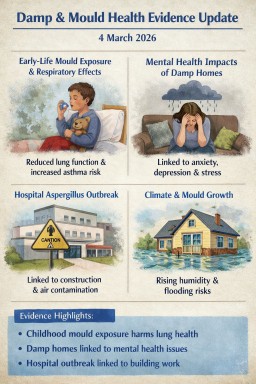
This review looked at all the scientific evidence from 1990–2025 on how indoor fungi (moulds) in homes affect people’s breathing and general respiratory health. It examined 94 studies, mapping out where fungi come from, which species appear most often, and how they affect the lungs, nose, throat, and immune system.


Key Findings in Plain Language

1. The biggest sources of indoor mould are dampness and building damage

Homes with water leaks, damp walls, damaged materials and poor ventilation are the most common sources of fungi—especially Aspergillus and Penicillium. These thrive in wet building materials, bathrooms, kitchens, drains, air-conditioning systems and even water dispensers.

2. Indoor fungi are strongly linked to a wide range of respiratory symptoms

Across many countries, indoor fungal exposure was associated with:

  • Asthma and asthma flare-ups

  • Allergic rhinitis (blocked or runny nose)

  • Chronic cough and throat irritation

  • Adenoid enlargement in children

  • Hypersensitivity pneumonitis (allergic inflammation of the lungs)

  • Reduced lung function

  • Even pulmonary haemorrhage in rare cases

The review shows that even everyday exposure—not just visibly mouldy homes—can worsen respiratory health.

3. Some fungi are more strongly associated with illness

Important associations include:

  • Aspergillus → asthma symptoms, COPD exacerbations, throat irritation, hypersensitivity reactions

  • Penicillium → asthma, allergic rhinitis, hypersensitivity pneumonitis

  • Alternaria → childhood asthma risk

  • Candida & Fusarium → present in wet areas such as bathrooms and may affect vulnerable individuals

4. The geographic picture is uneven

Most research comes from high-income, temperate countries. There are major evidence gaps in tropical and subtropical regions, where humidity is high and fungal exposure is likely worse. This limits current global understanding of risk.

5. Prevention works — but public awareness is low

Simple actions (cleaning, improved ventilation, addressing leaks, correct humidity ranges) can radically reduce fungal burden. One study showed 80–90% reduction in airborne mould counts after residents were given basic remediation advice.


What’s New or Important in This 2025 Review?

1. A fully integrated “source → species → disease → location” map

The review is the first to link fungal sources, the exact fungi found, the diseases they cause, and where the evidence comes from, creating a multi-layered evidence map. This helps identify:

  • Which household features pose the highest risk

  • Which fungi are clinically most important

  • Where research gaps exist

2. Highlights the major global research imbalance

It emphasises that very little evidence exists from low-income and tropical areas—where exposure may be far more severe. This is a call for equity and better global surveillance.

3. Shows that fungi may affect more than the lungs

The review notes new evidence that fungal exposure may also influence neurological and immune-mediated symptoms, suggesting mould exposure could have broader health effects than traditionally recognised.

4. Identifies major gaps in identifying which fungal species cause harm

Many studies only measure “mould level” without identifying the fungus. The review argues for better fungal detection technologies, such as:

  • Portable real-time samplers

  • Multi-omics (DNA, RNA, metabolites)

  • Long-term cohort studies

These tools could finally clarify which fungi cause which illnesses.

5. Strong emphasis on emerging technologies for prevention

Including:

  • UV and photocatalytic TiO₂ devices

  • Improved antifungal cleaning agents

  • Building materials designed to resist mould growth

  • Volcanic minerals and clays that absorb harmful compounds


Why This Review Matters (for Patients, Carers, and Clinicians)

1. It shows mould is not “just an allergy problem”

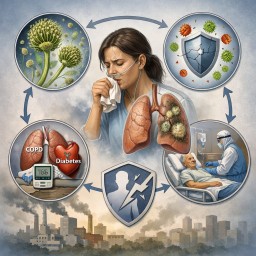
Indoor fungi can worsen or trigger asthma, COPD, hypersensitivity pneumonitis, chronic sinus issues, and may even influence immune and neurological health. This validates patient experiences where damp homes worsen symptoms.

2. It provides strong evidence for housing-related health advocacy

Patients can use this to:

  • Request landlord repairs

  • Support home assessments

  • Advocate for rehousing if severe mould is present

  • Justify humidifier/dehumidifier use, and ventilation improvements

3. It highlights the importance of early remediation

Even simple cleaning and remediation steps can dramatically reduce mould burden and symptoms—important for families, vulnerable groups, and those with chronic lung disease.

4. It gives clinicians a clearer evidence base

Respiratory teams can use this to:

  • Recognise when housing contributes to disease flare-ups

  • Understand which conditions are most strongly linked to indoor fungi

  • Make better-informed referrals for environmental health assessments

5. It builds a scientific foundation for future guidelines

The authors point out that national building codes, indoor air quality policies, and public health guidance lag behind the evidence—and this review is intended to inform future regulation.


Who Does This Help Most?

Patients with:

  • Asthma

  • Allergic bronchopulmonary aspergillosis (ABPA)

  • Aspergillus bronchitis

  • COPD (especially those with fungal-associated exacerbations)

  • Hypersensitivity pneumonitis

  • Children with recurrent respiratory infections

  • Anyone living in damp, mouldy, water-damaged, or poorly ventilated homes

Clinicians:

Respiratory physicians, GPs, ENT specialists, allergists, immunologists.

Policy & Housing Professionals:

Public health teams, environmental health officers, social landlords, housing associations.

Researchers:

Those developing diagnostics, fungal exposure studies, indoor air quality monitoring, or patient-centred environmental interventions.


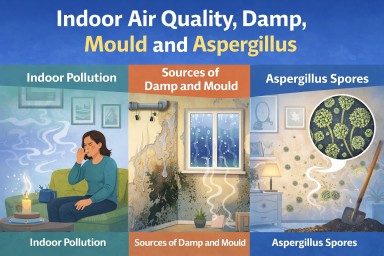
Why Exposure to Aspergillus (e.g., in a Damp Home) Does Not Usually Mean You Have Aspergillosis

Many people worry that finding mould in a home means they are at serious risk of aspergillosis. This fear is understandable, especially when you have respiratory symptoms. But the truth is:

Exposure to Aspergillus is extremely common, and aspergillosis is rare.

Here’s why most people who encounter Aspergillus never develop disease — and what to look out for if you are at risk.


1. Aspergillus Is Everywhere — Even in Healthy Homes

Aspergillus spores are naturally present in the environment. We breathe them in every day from:

  • Soil, leaves, compost

  • Outdoor air

  • Dust and ventilation systems

  • Older or damp buildings

These spores are so widespread that avoiding them completely is impossible.
The good news is:

For most people, breathing in Aspergillus spores does not cause illness.

The airways and immune system are excellent at clearing them quickly and safely.


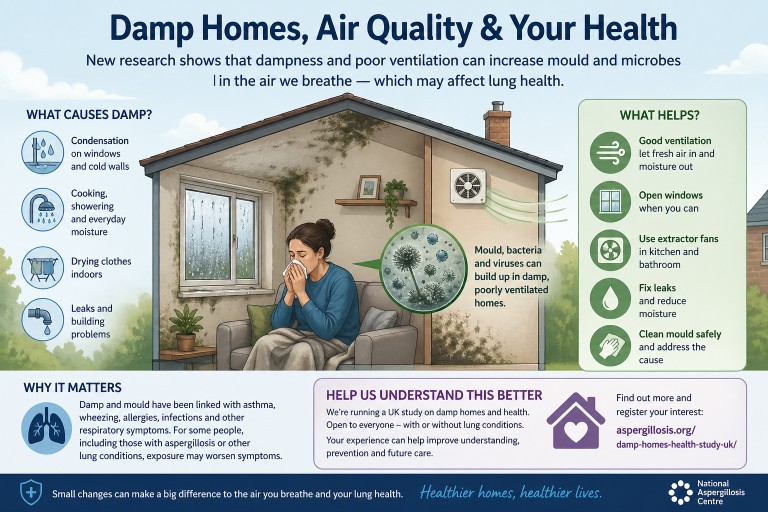
2. Damp Homes Increase Exposure — Not Disease

A damp or mouldy home may contain higher levels of spores, but this generally causes:

  • Irritation of the airways

  • Worsening of asthma or allergies

  • Coughing or wheezing

  • Musty smells and reduced air quality

These symptoms can feel unpleasant, but damp housing does not usually cause aspergillosis.

Most health effects of damp homes are related to allergens and irritants, not fungal disease.


3. Aspergillosis Develops Only in Vulnerable People

To develop aspergillosis, a person usually needs underlying risk factors such as:

  • Asthma, bronchiectasis, COPD, or previous TB

  • Weakened immune system
    (e.g., due to chemotherapy, high-dose steroids, immunosuppressants)

  • A strong allergic tendency (as in Allergic Bronchopulmonary Aspergillosis — ABPA)

Even among these groups, only a minority develop disease.
Exposure alone is not enough.


4. Why Some People Think Exposure “Caused” Their Illness

For people who later develop ABPA or chronic aspergillosis, a first major flare often follows:

  • Living in a damp home

  • Decorating or renovating

  • Gardening or composting

  • Clearing mould or dust

This can give the impression the exposure caused the disease.

In reality:

Exposure usually triggers or reveals an underlying condition — it does not create it.

Underlying immune or lung problems were already present long before the flare.


5. When to Seek Medical Review

See a doctor if you have:

  • A chronic wet cough

  • Mucus plugging

  • Breathlessness that gets worse over months

  • Coughing up blood

  • Repeated chest infections

  • Worsening asthma control

  • Unexplained weight loss

These may indicate ABPA, chronic pulmonary aspergillosis (CPA), or other lung disease.


6. Environmental Improvements Can Still Help

If you have ABPA, CPA, or asthma, improving home conditions can reduce flare-ups:

  • Lower humidity (40–60%)

  • Improve ventilation

  • Repair damp or leaks

  • Use HEPA air filtration

  • Clean or replace old soft furnishings if heavily contaminated

These steps reduce asthma triggers and airway irritation — not because they “remove Aspergillus entirely”, but because they create a healthier breathing environment.


Key Message

Exposure to Aspergillus is normal.
Disease is uncommon and depends on underlying health — not on exposure alone.

Damp homes can trigger symptoms but rarely cause aspergillosis.

Path: Start » Environment » Page 3

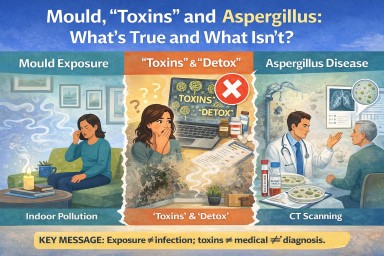
Mycotoxins in Damp Homes: Are They a Hidden Cause of Chronic Illness?

The internet is full of claims that “toxic mould” and “mycotoxins” in damp homes cause chronic fatigue, brain fog, immune disorders, or long-term poisoning.
These stories are frightening — but they are also misleading.

This article explains what mycotoxins are, what risks are real, and why blaming them can delay proper diagnosis and treatment.


1. What Are Mycotoxins?

Mycotoxins are chemicals produced by some fungi. Certain mycotoxins can be harmful — but usually in situations completely different from normal household mould.

Examples include:

  • Aflatoxin in contaminated food crops (mainly in tropical regions)

  • Ochratoxin A in poorly stored grains

  • Trichothecenes from water-damaged materials in rare extreme cases

In UK homes, airborne mycotoxin levels are generally extremely low.


2. Can Mycotoxins in Homes Cause Chronic Illness?

The scientific consensus from WHO, UKHSA, CDC, and NICE is:

No — not at the levels found in typical damp or mouldy houses.

Mycotoxins mainly cause illness by eating contaminated food, not by breathing small amounts in the air.

Symptoms linked to damp homes — fatigue, cough, wheeze, headaches — are usually caused by:

  • Allergens (dust mites, spores)

  • Irritants

  • Cold, damp air

  • Bacteria

  • Volatile organic compounds (VOCs)

  • Poor ventilation

  • Existing asthma or lung disease

These symptoms are real, but they are not mycotoxin poisoning.


3. Why the Myth Persists

Online sources often promote the idea of “mould toxicity” because:

  • It offers a simple explanation for complex symptoms

  • Private companies sell expensive testing kits

  • Influencers share personal stories

  • It feels empowering to “identify” a hidden cause

But most testing marketed as “mycotoxin screening” is not medically valid and often gives false positives.


4. The Real Harm: Misdiagnosis and Delayed Treatment

This is crucial.

People who believe they have “mycotoxin illness” may delay getting proper medical assessment for:

  • ABPA (Allergic Bronchopulmonary Aspergillosis)

  • CPA (Chronic Pulmonary Aspergillosis)

  • SAFS (Severe Asthma with Fungal Sensitisation)

  • Bronchiectasis

  • NTM lung disease

  • Adrenal insufficiency

  • Asthma deterioration

Some conditions worsen without correct treatment, and the delay can be significant.

People may also spend large amounts of money on:

  • Detox supplements

  • “Mould inspections”

  • Repeated home fogging or ozone treatments

  • House moves

  • Throwing away belongings

  • Private “mycotoxin tests”

These rarely help — and often worsen stress and isolation.


5. When Should Someone Be Concerned About Mycotoxins? (Very Rare Cases)

Significant mycotoxin exposure is possible only in:

  • Buildings with severe, long-term water damage

  • Homes where black mould covers large areas and ventilation is extremely poor

  • Certain workplaces (grain stores, composting facilities)

Even then, the main health effects involve irritation and asthma, not systemic poisoning.


6. If You Do Have ABPA, CPA, or Asthma — Home Improvements Can Help

Not because they remove toxins, but because they improve air quality:

  • Lower humidity (40–60%)

  • Fix damp problems

  • Improve ventilation

  • Use HEPA air filters

  • Reduce dust and allergens

  • Clean or replace heavily contaminated soft furnishings

These steps support better respiratory control, particularly in people already living with lung disease.


Key Message

Mycotoxins in UK homes are not a hidden cause of chronic illness.
Believing otherwise can delay diagnosis and treatment of real, treatable conditions such as ABPA, CPA, asthma, and bronchiectasis.
Improving your home environment helps — but it supports lung health, it does not “detox” mycotoxins.


Verified UK Resources for Damp, Mould & Health

Here is a short, reliable, UK-verified list of resources for people worried about damp, mould and health. Each link is trustworthy, evidence-based, and not influenced by companies selling testing or “mycotoxin cleanses”.


1. NICE – Damp and Mould Guidelines

This guideline covers indoor air quality in residential buildings. It aims to raise awareness of the importance of good air quality in people's homes and how to achieve this.
🔗 https://www.nice.org.uk/guidance/NG149


2. UK Health Security Agency (UKHSA) – Damp & Mould Health Guidance

The most authoritative public health guidance used by councils, housing providers, and clinicians.
Includes:


3. Shelter – Tenant Rights on Damp and Mould

For renters needing practical, legal steps to get repairs done.
🔗Damp and mould in private rented homes
🔗Damp and mould in council and housing association homes


4. Citizens Advice – Step-by-Step Action for Damp Problems

Simple language, includes letter templates for landlords.
🔗 https://www.citizensadvice.org.uk/housing/repairs-and-housing/repairs-and-housing-conditions/whos-responsible-for-repairs/repairs-damp/


5. Housing Ombudsman – Damp & Mould Guidance for Social Housing

Very helpful for council and housing association tenants dealing with delays or poor responses.
🔗 https://www.housing-ombudsman.org.uk/damp-and-mould/


6. Awaab’s Law Information (Housing Ombudsman)

Sets strict deadlines for social landlords to investigate and fix reported damp/mould.
🔗 https://www.housing-ombudsman.org.uk/centre-for-learning/key-topics/awaabs-law/


7. Asthma + Lung UK – Mould and Breathing Problems

Good for people with asthma, COPD, ABPA or bronchiectasis.
Practical tips and when to seek medical help.
🔗 https://www.asthmaandlung.org.uk/blog/advice-support/know-your-rights-what-do-if-you-have-damp-mould-rented-home


8. London Fire Brigade – Safe Use of Dehumidifiers & Ventilation Advice

Useful because many people misuse heaters or dehumidifiers while trying to “dry out” a home.
🔗https://www.london-fire.gov.uk/safety/


9. Royal Institution of Chartered Surveyors

The Royal Institution of Chartered Surveyors (RICS) is the global professional body setting standards for land, property, construction and the built environment. Its members help ensure that buildings and infrastructure are safe, well-managed and sustainable, providing trusted expertise for governments, industry and the public.

https://www.rics.org/consumer-guides/damp-and-mould


Optional extras (carefully chosen):

World Health Organization – Indoor Dampness & Health Review

A global evidence assessment → helps debunk myths about “toxic mould” testing.
🔗 https://www.who.int/publications/i/item/9789289041683


Important reassurance you can give people

These sources are aligned on three key points:

✔ Mould exposure can worsen asthma, allergies and respiratory illness.

Especially in children, older adults, and people with chronic lung conditions (like ABPA, CPA, bronchiectasis).

✔ Mycotoxins in UK homes are not a common cause of chronic, systemic illness.

Reputable agencies (NHS, UKHSA, WHO) do not support “mycotoxin testing” or expensive “detox” treatments.

✔ Fixing the building is the most important treatment.

Ventilation, reducing humidity, removing contaminated soft furnishings, and remediation are the real interventions.


🌍 Does where you live affect aspergillosis or ABPA?

UK-focused guidance, with additional advice on overseas locations

People with ABPA, CPA, fungal allergy, SAFS or bronchiectasis often wonder whether certain regions — in the UK or abroad — are better or worse for their lungs. The truth is:

Aspergillus is everywhere worldwide

No country, region or climate is fungus-free.
What matters most is:
the quality of the home + humidity + air quality + healthcare access.

Below is a clear guide.


🇬🇧 UK Locations (summary)

The property matters more than the postcode.
But here is the quick UK overview:

👍 Often easier for lung conditions:

  • South West England (cleaner air, milder climate)

  • Rural East Anglia

  • Parts of Northumberland

  • Coastal areas with modern, well-insulated homes

👀 More challenging for some patients:

  • Older stone houses in wet regions (Scotland west coast, Wales)

  • Inner-city pollution corridors (London, Birmingham, Manchester)

  • Homes near major roads (M25, M6, M1)


✈️ Overseas Locations Potentially Better for Aspergillosis or ABPA

The goal is lower humidity, good air quality, dry housing, and strong healthcare access.

🌞 1. Dry Mediterranean climates (often helpful)

Examples:

  • Southern Spain (Andalusia, Murcia)

  • Portugal (Algarve, Alentejo inland)

  • Southern Italy (Puglia, Sicily in the drier months)

  • Greece (many islands have low humidity outside peak summer)

  • Cyprus (very dry outside Jan–Feb)

Why beneficial:

  • Lower humidity → less indoor mould growth

  • Plenty of ventilation and sunlight

  • Good modern building standards (if choosing newer homes)

Watch out for:

  • Very high summer temperatures

  • Saharan dust events (e.g., in Spain, Cyprus, Greece)

  • Avoid older damp stone buildings


🏜️ 2. Dry, warm desert or semi-desert climates (excellent for humidity control)

Examples:

  • Arizona (USA)

  • New Mexico (USA)

  • Utah (USA)

  • Certain parts of Australia (inland areas with low humidity)

Why beneficial:

  • Very low humidity (mould struggles to grow indoors)

  • Strong sunlight

  • Good ventilation

Watch out for:

  • Wildfire smoke in some regions

  • Dust storms (mainly in the US Southwest)

  • Healthcare insurance considerations (especially in the US)


🌊 3. Mild coastal regions with good air quality

Examples:

  • New Zealand (South Island especially)

  • Canada’s west coast (Vancouver Island outside wildfire season)

  • Northern Spain / Basque Coast (clean air, moderate climate)

Benefits:

  • Clean air

  • Access to high-quality healthcare

  • Good housing standards

Watch out:

  • Wildfire season in Canada

  • Damp winters in some coastal climates

  • Avoid older wooden properties with poor ventilation


🔥 Overseas Locations That May Be More Challenging

🌧️ 1. Extremely humid tropical climates

Examples:

  • Singapore

  • Malaysia

  • Indonesia

  • Thailand

  • Caribbean islands

  • Florida (USA)

  • Queensland (Australia’s tropical belt)

Why problematic:

  • High humidity all year → indoor mould grows very easily

  • Air conditioning constantly needed

  • Outdoor fungal levels very high

  • More airborne allergens overall


🌲 2. Areas with frequent wildfires or smoke seasons

Examples:

  • California

  • British Columbia

  • Eastern Australia

  • Mediterranean wildfire zones (Greece, Spain, Italy in summer)

Smoke exposure is a major trigger for asthma, ABPA and bronchiectasis.


🍃 3. Locations with heavy pollution

Examples:

  • India (Delhi, Kolkata)

  • China (some industrial regions)

  • Eastern Europe (coal-heavy areas)

  • Middle East cities with dust + pollution

Pollution is often a bigger trigger than Aspergillus.


❤️ What matters most: Your home + your lifestyle, not the country

A “safe” home for aspergillosis or ABPA is:

✔️ dry
✔️ modern or well-renovated
✔️ free from mould
✔️ with mechanical ventilation or good airflow
✔️ away from busy roads
✔️ in a low-pollution area
✔️ without damp basements, cellars, old timber, or overgrown foliage touching the house

Regardless of UK or overseas, these matter 10× more than the region.


📌 Summary for Aspergillosis Patients

  • Aspergillus exists everywhere — no location is completely safe or dangerous.

  • Low humidity, good air quality and dry modern housing are the key factors.

  • Mediterranean climates, dry inland regions, and moderate coastal areas can be good choices.

  • Very humid tropical climates are the most challenging.

  • Pollution and wildfires are often bigger risks than fungal spores.


🎄 Why Christmas Decorations Can Trigger Symptoms

An explainer for people living with aspergillosis, asthma, ABPA, CPA and bronchiectasis

Many people with aspergillosis notice a sudden increase in sneezing, coughing, wheezing or chest tightness when unpacking Christmas decorations. This is extremely common and usually caused by environmental triggers, not new infection.

✅ What’s on decorations after a year in storage?

When decorations, artificial trees, or boxes have been stored for months, they often collect:

  • Dust

  • Fungal spores, including Aspergillus

  • Dampness or musty smells

  • Particles from cardboard

  • Fibres from artificial branches

For people with allergic aspergillosis (ABPA), severe asthma or sensitive airways, this sudden exposure can cause an allergic flare or airway irritation.

🎄 Why this affects aspergillosis patients more

  • Airways may already be inflamed or mucus-filled, so irritants cause quicker reactions.

  • People with ABPA or SAFS react strongly to environmental allergens.

  • People with chronic pulmonary aspergillosis (CPA) or bronchiectasis may have reduced clearance, so spores or dust linger longer in the lungs.

This does not usually indicate infection — it’s most often an irritation flare.

🛡️ How to protect yourself next time

A few simple steps make a big difference:

  • Wear a mask (FFP2) when opening boxes or shaking dust off.

  • Take boxes outside, or open near an open window.

  • Wipe decorations with a damp cloth rather than brushing them.

  • Rinse or wipe artificial trees, especially branches.

  • Use sealed plastic containers rather than cardboard for storage.

  • Avoid shaking items indoors, as this scatters spores.

🌬️ If you’ve already had a flare

Most people settle within hours to a few days. You can try:

  • Your usual inhalers (especially preventers).

  • Airway clearance if you normally use it.

  • Saline nebulisers/inhalers, which can soothe irritated airways.

  • Rest, fluids, and avoiding further triggers for a short while.

Seek medical advice if symptoms are unusual for you, don’t settle, or you are already unwell.

💬 The key message

Decorations don’t cause new aspergillus infection — but they can release a burst of irritants and spores that your lungs react to. Taking a few precautions can help you enjoy the season without a flare.


🌲 Why Rough-Cut Wood Arrives Mouldy — and How to Reduce the Risk (Important for Aspergillosis Patients)

For anyone living with aspergillosis, ABPA, bronchiectasis or asthma, mould exposure can trigger symptoms or flares. Recently, several patients have reported that rough-cut timber is arriving mouldy from DIY suppliers, sawmills, or timber merchants.

Here’s why this happens — and what suppliers should be doing to prevent it.


Why rough-cut wood gets mouldy (especially in the UK)

Mould grows on timber whenever three conditions are present:

  1. Moisture

  2. Poor airflow

  3. Warm or humid air

Rough-cut timber is especially vulnerable because:

  • its uneven surface holds moisture,

  • it is often stacked tightly,

  • it may not be dried properly,

  • and UK weather (rain + high humidity) encourages mould.

Many suppliers wrap wood in plastic, which traps condensation during transport. This can create a humid “greenhouse” around the timber — perfect for mould growth in only 24–48 hours.


What UK suppliers should be doing (even for low-cost timber)

These are standard industry practices in UK timber yards and sawmills. None of them require wood to be kiln-dried (which is more expensive).

✔ 1. Air-dry properly (“sticker stacking”)

Boards must be stacked with spacers (“stickers”) between them so air can circulate.
No airflow = mould.

✔ 2. Store under cover, not outside in the rain

A simple open-sided shelter is enough.
Rain-soaked timber nearly always grows mould in transit.

✔ 3. Use breathable wrapping — NOT plastic sheeting

Plastic traps moisture.
Breathable paper wrap or perforated cover prevents condensation build-up.

✔ 4. Apply anti-fungal dip (borate)

Most UK sawmills use anti-mould dips to prevent blue-stain and mould during storage.
This costs pennies per board.

✔ 5. Moisture-test before delivery

A good supplier will check wood is below 20–22% moisture before dispatch.
Wet wood + UK weather = guaranteed mould.


Kiln drying is not essential

Kiln-dried timber is more expensive because it uses energy, equipment, and time to force-dry the wood.

But you do not need kiln-dried timber to avoid mould.

You simply need a supplier who:

  • stores the timber properly,

  • allows airflow,

  • avoids plastic,

  • and checks moisture before delivery.

If rough-cut wood is arriving mouldy, it usually means these steps were not followed.


What you can do to protect yourself (aspergillosis patients)

If you receive wood that:

  • smells musty,

  • has surface mould,

  • or shows green/black spots,

…it is best not to bring it indoors until cleaned.

✔ Immediately unwrap outdoors

Plastic wrapping traps mould spores.

✔ Keep well away from ventilation intakes, windows, or living areas

This avoids airborne spores entering the home.

✔ If mould is visible — return it

You have the right to reject mouldy timber.

✔ If keeping it, clean outdoors with PPE

Use:

  • gloves

  • FFP3 mask

  • borax solution (borax + hot water)
    to remove early surface mould.

Never sand mould indoors — sanding releases spores.


Simple Diagram: Correct Way to Store Wood to Prevent Mould

Correct storage includes:

  • boards stacked with spacers between them (“sticker stacked”),

  • raised on bearers above the ground,

  • stored under a roof with airflow on all sides,

  • NEVER wrapped in sealed plastic,

  • ends exposed to allow moisture to escape.

This method is cheap, simple, and prevents mould without needing expensive kiln drying.


Summary for Aspergillosis Patients

Rough-cut wood should not arrive mouldy.
Mould growth usually means it was:

  • stacked badly,

  • stored wet,

  • wrapped in plastic,

  • or shipped before drying.

For people with aspergillosis, ABPA, bronchiectasis or severe asthma, mould spores can trigger symptoms — so it’s completely reasonable to:

  • refuse mouldy timber,

  • request proper handling,

  • or ask the supplier to follow UK best practice.


🌬️ Breathing Easier: Keeping Your Air Clean at Home, Work and When Travelling

People with lung conditions such as aspergillosis, asthma, or bronchiectasis often find their symptoms worsen in certain environments — especially where the air feels dusty, damp, or polluted.
The good news is that there are simple, practical steps you can take to control your surroundings, reduce flare-ups, and make your home a safer, healthier place to breathe.


🏠 At Home

Keep It Dry and Well-Ventilated

  • Tackle damp and leaks early. Mould thrives in moist places — even hidden behind furniture or under wallpaper.

  • Trust your nose. If something smells damp, it probably is. A musty smell means moisture is trapped somewhere — investigate and dry it before mould can grow.

  • Ventilate daily. Open windows when outdoor air is clean, or use extractor fans in kitchens and bathrooms.

  • Prevent moisture spreading. When showering, cooking, or drying laundry, close doors to other rooms so steam and humidity don’t spread through the house.

    • Run the extractor fan during and for at least 15–20 minutes afterwards, or until humidity drops.

    • Short humidity spikes are normal. It’s common for relative humidity (RH) to rise above 60% during cooking, showering, or drying clothes — what matters is that it returns below 60% quickly once fans or windows are open.

    • If condensation lingers or humidity stays high for more than 30–40 minutes, increase ventilation or use a dehumidifier.

  • Use humidity-sensing extractor fans. These switch on automatically when humidity rises and off when it falls.

    • Choose one with a humidistat and timer, vented directly outdoors (not into a loft or wall cavity).

    • Clean the fan cover and check filters every few months.

  • Dry laundry safely. Use a vented or condenser tumble dryer and empty or clean filters and tanks regularly.

    • Avoid drying clothes on radiators unless you’re using a dehumidifier or have good airflow.

  • Monitor humidity. Use a small digital hygrometer to track RH in different rooms.

    • Aim for 40–60% most of the time — this discourages mould and keeps air comfortable.

    • Above 60% for long periods encourages condensation and spores; below 35% can dry and irritate airways.

  • Use the right size dehumidifier.

    • Check the model’s rated room area (m²) or litres per day extraction rate.

    • A compact unit may cope with a small bedroom or bathroom but not a whole flat or open-plan area.

    • Keep doors closed while it’s running for best results, and empty and clean the water tank regularly to prevent bacterial build-up.


Control Dust and Irritants

  • Vacuum regularly with a HEPA-filtered vacuum cleaner.

  • Use microfibre cloths for dusting rather than dry dusters that stir particles into the air.

  • Avoid strongly fragranced cleaning products, candles, incense, and air fresheners — they release fine particles and chemicals that irritate sensitive lungs.

  • Choose low-VOC (low-odour) paints and furnishings when redecorating.


Keep Air Clean

  • If you live near traffic or building work, keep windows closed during busy times and ventilate later.

  • A room air purifier with a true HEPA filter can remove dust, pollen, and fungal spores effectively.

  • Choose the right size for your room.

    • Check the purifier’s Clean Air Delivery Rate (CADR) or maximum room coverage and ensure it matches or slightly exceeds your room size.

    • A small desktop purifier won’t clean a large living room or bedroom effectively.

    • For open-plan or high-ceiling spaces, you may need more than one unit.

  • Maintain it properly:

    • Replace or clean filters exactly as the manufacturer recommends (usually every 6–12 months).

    • Never wash or vacuum a disposable HEPA filter unless the manual allows it.

    • A clogged or undersized filter won’t clean air effectively and may re-release particles.


🌤️ Knowing When the Outside Air Is Clean — and How to Filter It Indoors

1. Check Air Quality Before Ventilating

It isn’t always obvious when outdoor air is safe to bring inside.
Modern air-quality data helps you choose the best times to open windows or run fans.

How to check:

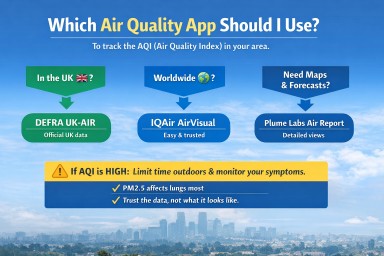
  • Use free apps such as Air Quality Index (AQI) UK, Breezometer, Plume Labs, or AirVisual.

  • Visit DEFRA’s UK Air Information or check BBC Weather → Air Quality.

  • Look for PM2.5 (fine particles) and NO₂ (traffic pollution) levels — these are key irritants for sensitive lungs.

  • “Good” or “Low” readings mean it’s a good time to ventilate or air rooms.

  • Avoid opening windows near busy roads during rush hour or when pollution alerts are issued.

💡 Tip: Air quality is often better early in the morning or late in the evening when traffic and heat are lower.


2. Filter the Air as It Comes In

If you live near roads, building work, or farmland, you can reduce what enters while keeping ventilation safe:

🪟 Window Vent Filters

  • Many modern trickle vents can take fine mesh or electrostatic filters to trap pollen, dust, and spores.

  • Replace or wash filters regularly — clogged filters restrict airflow.

🌀 Filtered Ventilation Systems

  • MVHR systems (Mechanical Ventilation with Heat Recovery) pull in outdoor air, filter it, and expel stale indoor air — great for energy-efficient or damp-prone homes.

    • They help control humidity and filter pollutants.

    • Filters must be cleaned or replaced every few months.

  • Positive Input Ventilation (PIV) systems bring in filtered air gently from a roof or external vent, improving airflow and reducing condensation.

🧺 DIY Improvements

  • Clip-on intake filters can fit over some wall vents or fan inlets.

  • Use a portable HEPA purifier placed near an open window to “clean” incoming air as it circulates.

  • Keep window ledges, vent grilles, and trickle vents dust-free — they collect spores over time.


3. Balance Fresh Air and Safety

It’s important not to seal up a home completely — stale, humid air encourages mould.
The goal is controlled ventilation:

  • Ventilate when outdoor air is cleanest and driest.

  • Keep extractor fans running during steamy activities.

  • When outdoor air quality is poor, use purifiers and dehumidifiers indoors until it improves.


4. Low-Cost Monitoring at Home

You can buy small indoor/outdoor air-quality monitors that track PM2.5, temperature, and humidity.
These help you:

  • Spot pollution drifting indoors (from traffic, wood smoke, etc.).

  • Choose the best times to ventilate.

  • See how quickly humidity or particles fall after cooking or cleaning.


🌱 Summary

What to Do Why It Helps
Check local air-quality apps before opening windows Avoids letting polluted air inside
Ventilate during low-pollution hours Brings in cleaner, fresher air
Fit filters to vents or use MVHR/PIV systems Reduces dust and spores from incoming air
Clean vents, trickle filters, and window frames regularly Prevents build-up of trapped dust
Use a portable HEPA purifier near open windows Cleans incoming air in real time

🧽 Dealing with Mould and Dust Safely

Even in well-kept homes, mould and dust can build up in damp weather or hidden corners. If you see black or green patches, or notice a musty smell, act promptly — but take care to protect your lungs.

⚠️ Before You Start

  • Protect yourself: wear a well-fitted FFP2 or N95 mask, gloves, and, if possible, eye protection.

  • Avoid dry brushing or vacuuming visible mould — this can spread spores into the air.

  • Keep the area well ventilated but close doors to other rooms so spores don’t travel.

  • If the mould covers more than 1 square metre, keeps returning, or is linked to a leak, ask your landlord or council for professional help.

🧴 Cleaning Small Areas of Mould

  1. Wipe gently — don’t scrape.
    Use disposable cloths or ones you can boil-wash later. Avoid wire brushes.

  2. Use mild cleaning solutions:

    • Mix a few drops of washing-up liquid in warm water, or

    • Use a dilute bleach solution (1 part thin bleach to 9 parts water) on tiles or uPVC — ventilate well and never mix bleach with other cleaners, or

    • Try a specialist anti-fungal cleaner for painted or porous surfaces.

  3. Dry the area thoroughly.
    Use ventilation or a dehumidifier; mould will return if the surface stays damp.

  4. Dispose of cloths and gloves in a sealed bag. Wash hands well afterwards.

🧹 Managing Dust and Allergens

  • Vacuum at least twice weekly with a HEPA-filtered cleaner.

  • Dust with a damp microfibre cloth, not a feather duster.

  • Wash bedding and soft furnishings regularly at 60 °C if the fabric allows.

  • Avoid clutter that collects dust (papers, books, soft toys).

  • Keep humidity within 40–60% and fix damp quickly.

🌱 Preventing Mould and Dust Returning

Action Why It Helps
Find and fix leaks or condensation sources Mould needs moisture to grow
Ventilate kitchens, bathrooms, and drying areas Removes steam before it spreads
Use humidity-sensing fans or dehumidifiers Keeps humidity in a safe range
Maintain a steady indoor temperature Reduces cold surfaces and condensation
Close doors during steamy activities Stops damp air moving into other rooms
Replace or clean HEPA filters regularly Maintains air-cleaning performance
Check behind furniture and on windowsills Finds hidden damp early
Repaint cleaned areas with mould-resistant paint Discourages regrowth

🚫 What Not to Do

  • Don’t paint over mould — it will grow back.

  • Don’t use strong chemicals or foggers in small spaces — they can irritate lungs.

  • Don’t use steam cleaners on large mould patches — they can spread spores.

  • Don’t ignore damp smells — they always mean hidden moisture somewhere.


💼 At Work

  • Ask about ventilation and report any damp, leaks, or condensation.

  • Keep your workspace tidy and free of dust-collecting clutter.

  • If cleaning sprays or perfumes cause coughing, discuss adjustments with your manager or occupational health team.


✈️ When Travelling

  • Check air-quality forecasts before travelling and avoid outdoor activity on high-pollution or pollen days.

  • Choose clean, dry accommodation — avoid musty or damp-smelling rooms.

  • Pack a small hygrometer or travel dehumidifier for longer stays.

  • Use a well-fitted FFP2 or N95 mask in crowded or polluted environments.

  • Stay hydrated and pace activities in humid or hot weather.


🩺 Listen to Your Body

Keep a short diary of when and where your symptoms flare up, along with temperature, humidity, or smells you notice. Patterns often reveal your personal triggers.


🌱 Key Points

Good Practice Why It Matters
Keep home dry, clean, and ventilated Reduces mould and spore exposure
If it smells damp, it probably is Early warning of hidden moisture
Humidity above 60% after showering or cooking is normal — keep it short Prevents condensation and mould
Close doors while cooking, showering, or drying laundry Stops moisture spreading
Use humidity-sensing extractor fans Clears steam automatically
Monitor humidity (40–60%) Keeps air comfortable and discourages spores
Match HEPA filters and dehumidifiers to room size Ensures real air-cleaning and drying effect
Maintain and replace filters regularly Keeps air safe and fresh
Check outside air quality before opening windows Avoids bringing pollution indoors
Filter incoming air with vents or MVHR/PIV systems Keeps dust and spores out
Clean small mould patches safely with mild detergent Removes spores without irritation
Fix leaks, repaint with mould-resistant paint Prevents regrowth
Avoid strong scents and aerosols Reduces airway irritation
Plan travel around clean-air days Lowers risk of flares and infections

💬 Final Thought

You can’t control every environment — but small, steady habits make a big difference.
If something smells damp, it probably is. Deal with it early, clean gently, dry thoroughly, and keep air moving.
Short humidity spikes after showering or cooking are normal — just make sure they don’t linger.
Choose purifiers and dehumidifiers that are the right size for your rooms, and maintain them well.
Check outdoor air quality before airing your home, and use filters to keep what’s good while blocking what’s not.
A dry, clean, well-ventilated home gives your lungs the best chance to stay healthy every day — wherever you are.


🧬 What IgE Is and Why It Matters

IgE is a type of antibody your immune system makes when it reacts to something it sees as harmful — such as pollen, mould, pet dander, or certain foods.
In people with allergic or fungal lung disease, IgE can rise sharply because the body’s immune system is over-reacting.

High IgE isn’t dangerous on its own, but it shows that your immune system is “switched on” and inflamed. The goal is to calm that inflammation and reduce exposure to what’s triggering it — not simply to force the number down.


✅ Best Practices for Reducing IgE Levels

1️⃣ Identify and Avoid Triggers

Reducing exposure is the first and most effective step.

  • Allergens: dust mites, moulds (especially Aspergillus), pollens, pets.

  • Environmental irritants: cigarette smoke, air pollution, strong odours, damp housing.

  • Use HEPA filters, good ventilation, and address damp or mould at home.

  • In ABPA, avoiding heavy exposure to fungal spores (e.g. gardening compost, rotting leaves, renovation dust) is particularly important.


2️⃣ Control Inflammation and Allergic Response

Because IgE is a marker of allergic inflammation, treatment focuses on calming the immune system:

  • Corticosteroids (oral or inhaled) can suppress inflammation and lower IgE over time.

  • Biologic therapies such as:

    • Omalizumab (Xolair) – directly targets IgE and lowers levels in allergic asthma or ABPA.

    • Mepolizumab, Benralizumab, or Dupilumab – reduce eosinophil-driven inflammation and may indirectly lower IgE.

    • Choice depends on your disease type and blood test results.

  • Antifungal therapy (e.g. itraconazole, voriconazole, posaconazole) can help reduce fungal load in ABPA and often leads to gradual IgE reduction as the reaction settles.


3️⃣ Manage Asthma or Lung Disease Well

Stable lungs mean fewer immune flares and less IgE activity:

  • Use prescribed inhalers regularly (preventers, not just relievers).

  • Follow your asthma or CPA action plan.

  • Attend regular reviews with your respiratory team.

  • Report any new symptoms such as increased cough, wheeze, or mucus plugs early.


4️⃣ Support Overall Immune Balance

Simple lifestyle steps can also help keep inflammation low:

  • Eat a balanced diet rich in fruit, vegetables, and omega-3 fats.

  • Sleep well and manage stress (both can worsen inflammation).

  • Avoid smoking or vaping.

  • Keep vaccinations (e.g. flu, COVID, pneumococcal) up to date.


📊 Interpreting IgE Levels

  • IgE levels naturally fluctuate and may take weeks or months to fall after treatment.

  • Doctors often look at the trend (rising or falling) rather than one number.

  • In ABPA, a fall of 35–50 % from baseline after treatment usually shows improvement.

  • It’s also possible to feel better while IgE remains high — so the result must always be interpreted alongside symptoms and scans.


🚫 What Not to Do

  • Don’t chase a “perfect” IgE number — focus on feeling better and reducing inflammation.

  • Don’t stop steroids or antifungals suddenly unless advised by medical doctor, as this can cause a rebound flare.

  • Don’t rely on supplements or “immune boosters” that claim to lower IgE — none are proven to help and some may worsen allergies.


🩺 In Summary

Goal Best Approach
Reduce IgE triggers Avoid mould, dust, smoke, allergens
Calm inflammation Steroids or biologics under medical supervision
Treat underlying disease Antifungals for ABPA/CPA, good asthma control
Support immune balance Healthy lifestyle, good sleep, stress reduction

🌱 Key Message

You can’t “switch off” IgE completely — it’s part of your immune defence.
The aim is to reduce unnecessary immune activation, keep symptoms stable, and prevent lung damage.
With the right mix of trigger avoidance, anti-inflammatory treatment, and regular monitoring, IgE levels usually fall gradually as the condition improves.