Bronchiectasis in Aspergillosis Patients

Many people with aspergillosis also develop bronchiectasis, a condition in which some of the airways in the lungs become permanently widened and damaged. Understanding bronchiectasis can help explain many symptoms experienced by patients with Allergic Bronchopulmonary Aspergillosis (ABPA – Allergic Bronchopulmonary Aspergillosis) and Chronic Pulmonary Aspergillosis (CPA – Chronic Pulmonary Aspergillosis).

Although bronchiectasis cannot usually be reversed, it can often be managed effectively, and understanding how it works helps patients recognise symptoms and flare-ups early.


The airways of the lungs

Your lungs contain a branching network of tubes called bronchi and bronchioles that carry air in and out of the lungs.

Air travels through the trachea (windpipe) into the bronchi, which then divide repeatedly into smaller and smaller tubes called bronchioles. At the ends of the bronchioles are millions of tiny air sacs called alveoli, where oxygen moves into the bloodstream.

The lining of the airways produces a thin layer of mucus that traps dust, bacteria and fungal spores that we breathe in every day.

Tiny hair-like structures called cilia move this mucus upward toward the throat, where it can be swallowed or coughed out. This system acts like a self-cleaning escalator, helping keep the lungs clear.


What is bronchiectasis?

In bronchiectasis, some of the airways become permanently widened and damaged.

When this happens:

  • the airway walls become inflamed and weakened

  • the tubes widen and lose their normal shape

  • mucus becomes harder to clear

  • bacteria and fungi can grow in trapped mucus

Over time, this leads to repeated infections and inflammation.

Doctors often describe bronchiectasis as a vicious cycle:

  1. Infection or inflammation damages the airway

  2. The airway widens and mucus clearance becomes poor

  3. Mucus builds up in the airway

  4. Bacteria and fungi grow in the mucus

  5. Infection and inflammation occur again

Without treatment, this cycle can gradually worsen airway damage.


Why bronchiectasis is common in aspergillosis

Bronchiectasis is particularly common in patients with aspergillosis, especially in ABPA.

In ABPA, the immune system reacts strongly to Aspergillus spores in the airways. This causes:

  • allergic inflammation in the bronchi

  • thick mucus plugs

  • repeated airway irritation

Over time, this inflammation can damage the airway walls and lead to bronchiectasis, often affecting the central airways of the lungs.

Once bronchiectasis develops, mucus becomes harder to clear, which can allow bacteria and fungi such as Aspergillus to persist in the lungs.


Symptoms of bronchiectasis

Many symptoms of bronchiectasis overlap with those of aspergillosis.

Common symptoms include:

  • persistent cough

  • regular sputum (phlegm) production

  • breathlessness

  • fatigue

  • frequent chest infections

Sputum may be:

  • clear

  • yellow or green

  • occasionally blood-streaked

In people with ABPA, patients sometimes cough up thick mucus plugs, which may appear brown or rubbery.


How bronchiectasis is diagnosed

Bronchiectasis is usually diagnosed using a High Resolution CT (HRCT) scan of the lungs.

On a CT scan, doctors may see:

  • widened airways

  • thickened airway walls

  • mucus plugs

  • airways extending closer to the edge of the lung than normal

Radiologists sometimes describe a typical appearance called the signet ring sign, where the widened airway appears larger than the nearby blood vessel.


Bronchiectasis and aspergillosis flare-ups

Because bronchiectasis and aspergillosis affect the same airways, it can sometimes be difficult for patients to recognise whether worsening symptoms are caused by:

  • a bronchiectasis infection, or

  • an aspergillosis flare-up.

Understanding the differences can help patients recognise when to seek medical advice.


Bronchiectasis exacerbations

Bronchiectasis flare-ups are usually caused by bacterial infection in trapped mucus.

Patients may notice:

  • increased sputum production

  • sputum becoming yellow or green

  • increased coughing

  • fever or feeling unwell

  • breathlessness

Many patients describe bronchiectasis exacerbations as feeling like a chest infection.

Treatment usually involves:

  • antibiotics

  • airway clearance physiotherapy

  • increased mucus clearance


Aspergillosis flare-ups

Aspergillosis flare-ups are usually caused by fungal activity or immune reactions to Aspergillus.

Patients may notice:

  • worsening wheezing

  • chest tightness

  • increased breathlessness

  • thick mucus plugs

Some patients cough up:

  • brown mucus

  • rubbery mucus plugs

  • mucus shaped like small airway casts

In Chronic Pulmonary Aspergillosis, patients may also experience:

  • persistent cough

  • fatigue

  • weight loss

  • occasionally coughing blood

Treatment may involve:

  • steroid treatment

  • antifungal medication

  • biologic therapies in ABPA


Key differences patients often notice

Feature Bronchiectasis flare-up Aspergillosis flare-up
Main cause Bacterial infection in trapped mucus Fungal activity or immune reaction to Aspergillus
Sputum colour Yellow or green Brown mucus plugs or thick sticky mucus
Fever More common Less common
Wheezing Sometimes present Often worse
Feeling like a chest infection Common Less typical
Response to antibiotics Usually improves Usually little improvement
Mucus plugs Less common More common in ABPA
Blood tests Usually unchanged IgE may rise in ABPA

Both conditions can occur together

In reality, bronchiectasis and aspergillosis often interact with each other.

For example:

  • ABPA can cause bronchiectasis

  • bronchiectasis allows fungi and bacteria to remain in mucus

  • infection and fungal inflammation can occur at the same time

Doctors may investigate flare-ups using:

  • sputum cultures

  • blood tests (for example IgE levels in ABPA)

  • CT scans

  • inflammatory markers


Why airway clearance is important

Because bronchiectasis makes mucus harder to clear, airway clearance physiotherapy becomes a key part of treatment.

Common techniques include:

  • Active Cycle of Breathing Technique (ACBT)

  • Autogenic drainage

  • oscillating devices such as Flutter or Acapella

Regular airway clearance helps:

  • remove mucus from the lungs

  • reduce infections

  • improve breathing

  • reduce cough

For patients with aspergillosis, clearing mucus may also help remove fungal material from the airways.


When patients should seek medical advice

Patients should contact their healthcare team if they notice:

  • rapidly increasing sputum

  • fever or feeling unwell

  • coughing blood

  • severe breathlessness

  • large mucus plugs

Early treatment can often prevent a mild flare-up from becoming a more serious infection.


The key message

Bronchiectasis means that some airways in the lungs have become permanently widened, making mucus harder to clear.

However, many people with aspergillosis and bronchiectasis live active lives with stable lung function.

With good treatment, airway clearance, and early management of infections, bronchiectasis can often be well controlled for many years.


Looking further into the future - could we control lung damage, preserve healthy lung tissue better?

Can Lungs Repair Themselves?

What New Research Means for People with CPA (and Other Aspergillosis)

A recent scientific discovery has helped researchers understand how certain lung cells decide whether to focus on repairing damage or defending against infection. The work, highlighted by the Mayo Clinic and published in Nature Communications, describes a molecular “switch” inside specialised lung cells that influences this balance.

For people living with Chronic Pulmonary Aspergillosis (CPA) — and also those with Allergic Bronchopulmonary Aspergillosis (ABPA) — this kind of research is relevant. But it needs careful explanation.

This is not about rebuilding destroyed lungs.
It is about understanding how to better protect and preserve the lung tissue that remains.


The Discovery: A “Repair vs Defence” Switch

Researchers identified a regulatory circuit in alveolar type II (AT2) cells — specialised cells that:

  • Produce surfactant (which keeps air sacs open)

  • Act as a reserve “repair” population in the lung

  • Can regenerate other essential lung cells after injury

The study showed that these cells operate under tight control. When infection is present, they prioritise defence. When injury needs healing, they can switch into repair mode.

The key insight is that this switch is biologically regulated. It is not random. That means, in theory, it may one day be possible to influence it.


What “Repair” Means — and What It Does Not Mean

When we talk about lung repair in this context, we must be very clear.

It does not mean:

  • Lung cavities caused by CPA will close in the foreseeable future

  • Established fibrosis will melt away

  • Bronchiectasis will reverse

  • Severely distorted lung architecture will rebuild

CPA cavities represent major structural remodelling — destruction of alveoli, scarring, altered blood supply, and thickened pleura. Reconstructing that complex architecture is biologically extremely challenging and not currently realistic within the next decade.


What repair does realistically mean

In chronic lung disease, “repair” is more likely to mean:

  • Supporting survival of remaining alveoli

  • Preventing excessive fibrotic signalling

  • Helping lung lining cells recover more efficiently after inflammation

  • Reducing cumulative injury from repeated infection

  • Slowing progression of structural change

In other words:

Not rebuilding what is gone — but better protecting what remains.

For many people with CPA, this is a crucial distinction.


Why Preservation Is a Major Goal in CPA

CPA usually develops in lungs already weakened by conditions such as tuberculosis, non-tuberculous mycobacteria, chronic obstructive pulmonary disease, or severe pneumonia.

Over time, CPA can lead to:

  • Expanding cavities

  • Progressive scarring

  • Reduced gas exchange

  • Reduced exercise tolerance

Many patients have limited lung reserve. Even small additional losses of functioning lung tissue can significantly increase breathlessness or fatigue.

If future therapies could slow the rate of progression — even modestly — that would meaningfully affect long-term outcomes.

Flattening the decline curve is not trivial. It changes quality of life.


Why This Also Matters in ABPA

In ABPA, repeated inflammatory episodes can lead to:

  • Airway remodelling

  • Mucus plugging

  • Development or progression of bronchiectasis

Better control of inflammatory signalling — combined with improved epithelial recovery — could reduce long-term airway damage.

Again, this is about preservation rather than reversal.


Where Development Has Reached

The current research is still laboratory-based. It used advanced techniques such as:

  • Single-cell sequencing

  • Imaging of lung tissue

  • Preclinical models of injury

No human treatments based on this discovery are yet available.

However, the significance lies in identifying:

  • A defined molecular pathway

  • A controllable regulatory mechanism

  • A clearer understanding of why repair fails in chronic inflammation

That foundational knowledge is what eventually allows targeted drug development.


The Balance Challenge in Aspergillosis

There is an additional complexity in fungal lung disease.

Any attempt to promote repair must not weaken antifungal defence.

The immune system must:

  • Control Aspergillus

  • Avoid causing excessive inflammatory damage

Future therapies would need to strike that balance carefully.


What This Means for Patients Now

This discovery does not change current treatment.

The most effective preservation strategies today remain:

  • Consistent antifungal therapy when indicated

  • Careful inflammatory control

  • Biologic therapies where appropriate

  • Airway clearance

  • Vaccination and infection prevention

  • Avoiding damp and mould exposure

  • Pulmonary rehabilitation

These measures are already forms of lung preservation.


A Realistic and Hopeful Perspective

It is unlikely that cavities from CPA will be repaired in the near future.

It is realistic that within the next 5–10 years we may see improved strategies aimed at:

  • Slowing structural progression

  • Supporting endogenous repair cells

  • Reducing fibrotic signalling

  • Improving recovery after exacerbations

For people living long-term with CPA or ABPA, even incremental preservation could significantly affect independence and quality of life.

The science is still early — but understanding how the lung decides to repair itself is an important step forward.


Reference

Sawhney, A.S., Deskin, B.J., Cai, J. et al. A molecular circuit regulates fate plasticity in emerging and adult AT2 cells. Nat Commun 16, 8924 (2025). https://doi.org/10.1038/s41467-025-64224-1


🧬 How Biologics Are Reshaping Our Understanding of ABPA Subtypes

For many years, Allergic Bronchopulmonary Aspergillosis (ABPA) was viewed as a single condition:

An allergic reaction to Aspergillus fumigatus in the lungs, treated primarily with steroids and sometimes antifungal medication.

Biologic therapies are changing that picture.

They are not just new treatments — they are helping us understand that ABPA may not be one uniform disease, but a spectrum of related inflammatory patterns.


🧠 The Traditional View of ABPA

Historically, ABPA has been defined by:

  • Asthma (or cystic fibrosis)

  • High total IgE

  • Sensitisation to Aspergillus

  • Raised eosinophils

  • Characteristic CT changes (e.g. bronchiectasis, mucus plugging)

The dominant biological explanation was:

A Type 2 (allergic) immune overreaction driven by eosinophils and IgE.

Steroids were used to suppress this immune response.

This model assumed that most patients had broadly similar immune drivers.


💊 What Are Biologics?

Biologics are targeted antibody therapies designed to block specific immune pathways.

In asthma and ABPA, the main targets are:

  • IL-5 (drives eosinophils)

  • IL-5 receptor

  • IL-4 / IL-13 (drive allergic inflammation)

  • IgE

Examples include:

  • Anti–IL-5 therapies (e.g. mepolizumab, benralizumab)

  • Anti–IL-4/IL-13 therapy (e.g. dupilumab)

  • Anti-IgE therapy (e.g. omalizumab)

Instead of broadly suppressing immunity like steroids, they selectively block parts of the allergic pathway.


🔍 What Biologics Are Teaching Us

As biologics have been used in ABPA (often off-label or in specialist centres), an interesting pattern has emerged:

Not all ABPA behaves the same way.

Some patients respond dramatically to anti–IL-5 therapy.
Others respond better to anti–IL-4/IL-13 therapy.
Some show strong IgE-driven disease.
Others appear more mucus-dominant.

This suggests that ABPA may include different inflammatory endotypes (biological subtypes), even if outward symptoms look similar.


🧩 Possible Emerging ABPA Subtypes

While research is ongoing, clinicians are beginning to recognise patterns such as:

1️⃣ Strongly Eosinophilic-Dominant ABPA

  • Very high eosinophils

  • Frequent exacerbations

  • Often responds well to IL-5 blockade

2️⃣ IgE-Heavy Allergic ABPA

  • Extremely high total IgE

  • Prominent allergic features

  • May respond to anti-IgE therapy

3️⃣ Mucus-Plug Dominant ABPA

  • Recurrent thick mucus impaction

  • Radiological plugging

  • May involve additional inflammatory drivers

4️⃣ Steroid-Dependent ABPA

  • Relapses when steroids reduced

  • Biologics may allow steroid-sparing strategies

These patterns are not yet formal categories, but biologics are revealing that ABPA is biologically more complex than once thought.


🧪 Blood Eosinophils vs Airway Inflammation

Biologics have also highlighted another key insight:

Blood eosinophil levels do not always perfectly reflect what is happening in the lungs.

Some patients:

  • Have modest blood eosinophils

  • But still show eosinophilic airway activity

Biologic response patterns are helping refine how we interpret these markers.


🧠 Moving From “Diagnosis” to “Endotype”

Traditionally, medicine focused on:

Diagnosis (ABPA vs not ABPA)

Biologics are pushing us toward:

Endotype (which immune pathway is dominant in this patient?)

This matters because targeted therapy works best when matched to the dominant pathway.

In future, ABPA may be classified not just by clinical features, but by molecular drivers.


🫁 What This Means for Patients

Biologics offer:

  • Reduced steroid dependence

  • Fewer exacerbations

  • Improved lung function in selected patients

  • Potential improvement in mucus burden

But they also help answer deeper questions:

  • Why do some patients relapse frequently?

  • Why do some have extreme eosinophilia?

  • Why do others have more mucus plugging than inflammation?

They are helping personalise ABPA care.


⚖ Important Caveats

  • Biologics are not currently licensed specifically for ABPA in many countries.

  • Evidence is growing but still developing.

  • They are usually considered in specialist centres.

  • They are not appropriate for every patient.

Steroids and antifungals remain core treatments.


🔭 The Future

Over the next decade, we may see:

  • Better classification of ABPA subtypes

  • Biomarker-guided treatment selection

  • Reduced long-term steroid exposure

  • Improved understanding of mucus plug biology

  • Trials specifically designed for ABPA (rather than extrapolated from asthma)

Biologics are not just new drugs.

They are acting as scientific tools that are reshaping how we think about ABPA itself.


🧠 Key Takeaway

ABPA is no longer seen as one single uniform allergic condition.

Biologic therapies are revealing that:

ABPA is likely a spectrum of related inflammatory patterns — and treatment may increasingly be tailored to the dominant pathway in each individual.


References

Agarwal R, Sehgal IS, Muthu V, Denning DW, Chakrabarti A, Soundappan K, Garg M, Rudramurthy SM, Dhooria S, Armstrong-James D, Asano K, Gangneux JP, Chotirmall SH, Salzer HJF, Chalmers JD, Godet C, Joest M, Page I, Nair P, Arjun P, Dhar R, Jat KR, Joe G, Krishnaswamy UM, Mathew JL, Maturu VN, Mohan A, Nath A, Patel D, Savio J, Saxena P, Soman R, Thangakunam B, Baxter CG, Bongomin F, Calhoun WJ, Cornely OA, Douglass JA, Kosmidis C, Meis JF, Moss R, Pasqualotto AC, Seidel D, Sprute R, Prasad KT, Aggarwal AN. Revised ISHAM-ABPA working group clinical practice guidelines for diagnosing, classifying and treating allergic bronchopulmonary aspergillosis/mycoses. Eur Respir J. 2024 Apr 4;63(4):2400061. doi: 10.1183/13993003.00061-2024. PMID: 38423624; PMCID: PMC10991853.


🧬 Could Antibody-Driven Dissolving of Charcot–Leyden Crystals Help ABPA?

Researchers have recently discovered that Charcot–Leyden crystals (CLCs) — the needle-shaped structures formed from the eosinophil protein galectin-10 — are not just debris.

In laboratory studies, specially designed antibodies can dissolve these crystals.

This has raised two important questions:

  1. Could dissolving the crystals reduce airway inflammation?

  2. Could dissolving them make mucus plugs easier to clear?

Here is what we currently know.


1️⃣ Could dissolving crystals reduce airway inflammation?

What we know

Laboratory and animal studies have shown:

  • Charcot–Leyden crystals can activate immune cells (especially macrophages).

  • They can stimulate inflammatory pathways (including inflammasome signalling).

  • In mouse models, antibodies targeting galectin-10 dissolved the crystals.

  • When crystals were dissolved, airway inflammation decreased.

This suggests that the crystals themselves may amplify inflammation, rather than simply mark it.

What this means biologically

In ABPA and eosinophilic asthma:

  • Eosinophils release galectin-10.

  • Galectin-10 crystallises.

  • Crystals may trigger further immune activation.

  • That leads to more inflammation → more eosinophils → more crystals.

Dissolving the crystals could theoretically interrupt this feedback loop.

How likely is this to help inflammation in humans?

Moderately plausible, but not yet proven.

The biological mechanism is strong.
The animal data are encouraging.
But no human clinical trials have yet shown reduced inflammation through crystal dissolution.

If developed successfully, this approach could:

  • Reduce airway immune activation

  • Lower exacerbation risk

  • Potentially reduce steroid dependence

But at present, it remains investigational.


2️⃣ Could dissolving crystals make mucus plugs easier to cough up?

This is more speculative — but still biologically reasonable.

Why mucus plugs are so thick in ABPA

ABPA mucus plugs contain:

  • Gel-forming mucins

  • DNA from inflammatory cells

  • Dead cells

  • Fungal fragments

  • Eosinophil proteins

  • Charcot–Leyden crystals

The crystals are:

  • Rigid

  • Needle-shaped

  • Structurally stable

When embedded in mucus, they likely increase:

  • Mechanical stiffness

  • Plug density

  • Resistance to deformation

From a physics perspective:

Removing rigid crystalline structures from a gel should reduce stiffness and improve flow.

Do we have direct evidence?

No.

There are currently:

  • No human studies measuring mucus clearance after crystal dissolution

  • No trials showing improved plug expectoration from crystal-targeting therapy

So while it is plausible that dissolving crystals could soften plugs, this has not yet been demonstrated in patients.


3️⃣ How strong is the overall case?

Outcome Evidence strength Likelihood
Reduced inflammation Strong biological rationale + animal data Moderately promising
Easier mucus clearance Biophysical plausibility only Possible but unproven

Inflammation reduction is the more evidence-supported target.
Improved plug clearance is plausible but currently theoretical.


4️⃣ How does this compare to existing treatments?

Current therapies (e.g., anti-IL-5 biologics) reduce eosinophils upstream.

That leads to:

  • Less galectin-10 release

  • Fewer crystals forming

  • Reduced inflammation

  • Often improved mucus plugging

So biologics already indirectly reduce crystal burden.

A crystal-dissolving antibody would act downstream, targeting the structural product directly.

This could theoretically:

  • Accelerate resolution of existing plugs

  • Reduce residual inflammatory signalling

But again, this remains in early research stages.


5️⃣ Practical take-home message

At present:

  • Dissolving Charcot–Leyden crystals reduces inflammation in animal models.

  • It is biologically plausible that this could also soften mucus plugs.

  • There is no human clinical proof yet.

  • No approved therapy currently targets the crystals directly.

The concept is scientifically credible — but still under development.


🔭 The Bigger Picture

ABPA is increasingly understood as a condition driven by:

  • Eosinophils

  • Allergic immune signalling

  • Abnormal mucus biology

  • Structural plug formation

Crystal-targeting therapies may eventually become part of a more precise approach to treating eosinophilic airway disease.

But for now, they remain a promising research direction rather than a clinical option.


🔬 Charcot–Leyden Crystals in ABPA and Asthma

What are they? Why do they form? Do they matter?

If you live with Allergic Bronchopulmonary Aspergillosis (ABPA) or severe asthma, you may see the term Charcot–Leyden crystals in a sputum or pathology report.

They can sound worrying.

They are:

  • Not fungus

  • Not infection

  • Not cancer

They are a sign of a particular type of allergic inflammation in the airways.


🧬 What Are Charcot–Leyden Crystals?

Charcot–Leyden crystals are microscopic, needle-shaped structures found in mucus.

They are made from a protein called galectin-10, which is stored inside a type of white blood cell called an eosinophil.

Eosinophils are immune cells involved in:

  • Allergic asthma

  • ABPA

  • Severe asthma with fungal sensitisation

  • Parasitic infections

When eosinophils are activated and break down, they release galectin-10.
If enough of this protein accumulates in thick airway mucus, it crystallises into visible crystals.

So the crystals are made from your immune cells, not from Aspergillus.


🫁 Why Do They Appear in ABPA?

In ABPA:

  1. The immune system overreacts to Aspergillus fumigatus.

  2. This triggers a strong allergic (Type 2) immune response.

  3. Large numbers of eosinophils move into the airways.

  4. Eosinophils break down and release galectin-10.

  5. The protein crystallises inside mucus plugs.

The crystals are therefore a footprint of intense allergic inflammation, not fungal invasion.


🌡 Is Most ABPA Eosinophilic?

Yes — almost all classical ABPA is eosinophilic.

ABPA is fundamentally a Type 2 allergic condition, driven by immune pathways involving:

  • IL-4

  • IL-5

  • IL-13

  • IgE

  • Eosinophils

IL-5 in particular stimulates eosinophil production and survival.
Because of this, eosinophils are central to the disease process.

Historically, raised blood eosinophils have been part of diagnostic criteria.

However:

  • Eosinophil counts can fluctuate

  • Steroids can suppress blood levels

  • Eosinophils may still be present in airway mucus even if blood counts appear normal

So ABPA is biologically eosinophilic — even if a single blood test does not show a high count.

True non-eosinophilic ABPA would be unusual and would prompt clinicians to reconsider the diagnosis.


❓ Are Crystals Caused by Aspergillus Infection?

No.

They are caused by the immune reaction to Aspergillus — not by the fungus itself.

They can also be seen in:

  • Severe eosinophilic asthma

  • Parasitic infections

  • Other allergic lung conditions

They reflect eosinophil activity, not fungal growth.


🧠 Why Don’t All People with Asthma Develop These Crystals?

Asthma is not one single disease. It has different inflammatory patterns.

Type 2 (Eosinophilic) Asthma

This involves high eosinophils and allergic pathways.

Common in:

  • Allergic asthma

  • ABPA

  • Severe eosinophilic asthma

These patients can develop Charcot–Leyden crystals.


Non–Type 2 (Non-Eosinophilic) Asthma

This includes:

Neutrophilic asthma

Driven by neutrophils rather than eosinophils.

Paucigranulocytic asthma

Very few inflammatory cells present.

In these forms:

  • Eosinophils are low

  • Galectin-10 is not released in large amounts

  • Crystals are unlikely to form


🧱 Do Charcot–Leyden Crystals Make Mucus Plugs Worse?

Possibly.

Research suggests they may:

  • Increase mucus thickness

  • Contribute mechanically to airway blockage

  • Stimulate further inflammation

For many years they were thought to be harmless debris.
Modern studies suggest they may actively amplify inflammation when present in large amounts.


🎯 Do They Have a Purpose?

Eosinophils evolved mainly to help fight parasitic infections.

Galectin-10 probably has immune signalling roles inside cells.

However, when large amounts are released into thick airway mucus, crystallisation appears to be a by-product of excessive immune activity rather than a useful defence.

In ABPA and allergic asthma, they are more likely part of the problem than part of the solution.


💧 Can Their Formation Be Reduced?

Hydration alone does not stop them forming.

Drinking fluids helps:

  • Keep mucus less sticky

  • Support airway clearance

But it does not prevent eosinophils releasing galectin-10.

What reduces crystal formation?

Reducing eosinophilic inflammation:

  • Corticosteroids

  • Anti-IL-5 biologics

  • Anti-IL-4/IL-13 biologics

When eosinophil numbers fall:

→ Less galectin-10 is released
→ Fewer crystals form

Antifungal treatment in ABPA may indirectly help by reducing allergic stimulation, but the main driver is the immune response.


📊 Do They Change Treatment?

Not directly.

Doctors base treatment on:

  • Symptoms

  • Blood eosinophils

  • Total IgE

  • Imaging

  • Lung function

  • Exacerbation history

Crystals support the diagnosis of eosinophilic inflammation but do not determine treatment alone.


🔎 What Do They Tell Us?

Charcot–Leyden crystals tell us:

  • The airway inflammation is eosinophilic.

  • The immune response is strongly allergic.

  • Mucus plugging risk may be higher.

They are a marker of immune overreaction, not infection severity.


🧠 Key Points to Remember

  • They are made from proteins released by eosinophils.

  • They are not Aspergillus.

  • They do not mean invasive fungal infection.

  • Most classical ABPA is eosinophilic.

  • They are unlikely in non-eosinophilic asthma.

  • Reducing eosinophils reduces their formation.

  • Hydration helps clearance but does not prevent formation.

In simple terms:

Charcot–Leyden crystals are microscopic signs that the immune system is working too hard in the airways.


Invitation: Patient & Carer Discussion on Living with ABPA. New type of treatment.

🕙 10:00am, Thursday 12th

Get details on how to join us by clicking on the link below and choosing Thursday 12th Patients Support Meeting - you will be sent a link to the meeting via email.

https://outlook.office.com/book/[email protected]/

We are inviting people living with Allergic Bronchopulmonary Aspergillosis (ABPA), and those who care for them, to take part in an open, informal online discussion with argenx, a research-focused biotechnology company.

argenx would like to listen directly to patients and carers to better understand what day-to-day life with ABPA is really like. There is no need to prepare anything in advance — you are welcome simply to listen, or to share as much or as little as you feel comfortable.

They are particularly interested in hearing about:

  • Patients’ and carers’ journeys living with ABPA

  • Which symptoms are most burdensome in everyday life (for example breathlessness, cough, fatigue, thick mucus or mucus plugs)

  • Where current treatments fall short from a patient or carer perspective

  • What would make patients or carers feel motivated or reassured about taking part in a future clinical trial of a new ABPA therapy

The purpose of this conversation is to help researchers design future studies that reflect what matters most to patients, including which outcomes are meaningful and how trials can be made more patient-friendly.

📅 Date: Thursday 12th
🕙 Time: 10:00am
💬 Format: Open, informal discussion
📝 Preparation: None required

If you are living with ABPA, or care for someone who is, and would be interested in attending, please let us know.


A short explainer: what is ARGX-118?

argenx is developing an investigational (research-stage) treatment called ARGX-118. It is not yet a licensed medicine and is not currently available outside of research studies.

Case study

In ABPA, many people experience very thick, sticky mucus and mucus plugs that block airways and contribute to breathlessness, cough, and flare-ups. Research has shown that this mucus can sometimes contain microscopic crystals formed from proteins released by certain white blood cells involved in allergic inflammation. These crystals can make mucus denser and harder to clear.

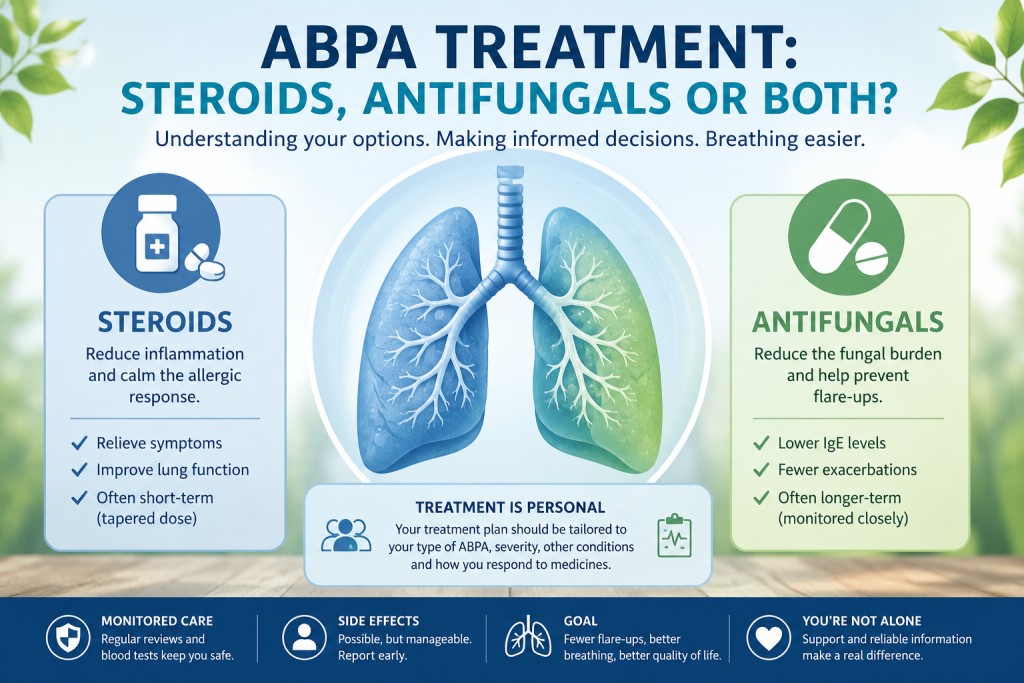
ARGX-118 is designed to target and break down these crystals, with the aim of making mucus less thick and easier to clear from the lungs. This is a different approach from current treatments, which mainly focus on suppressing inflammation (such as steroids or biologics) or reducing fungal burden (antifungal medicines).

Because ARGX-118 is still in early development, we do not yet know how effective it will be, who might benefit most, or how it would fit alongside existing treatments. That is exactly why argenx wants to hear from patients and carers now — to understand real-world symptoms, treatment gaps, and what would genuinely matter if a future clinical trial were developed.

👉 Attending this meeting does not commit you to any trial and will not affect your care. It is simply an opportunity to share experiences and help shape future research, if you wish.


Can blood tests help predict if chronic pulmonary aspergillosis will come back?

This study from the National Aspergillosis Centre (NAC) looked at people with chronic pulmonary aspergillosis (CPA) who had completed antifungal treatment and asked a simple question:

Can blood tests tell us who is more likely to relapse after treatment stops?


What the researchers did

Doctors reviewed patients with CPA who had:

  • Taken antifungal treatment for at least 6 months

  • Stopped treatment because they were clinically stable

They then followed these patients to see who stayed well and who relapsed, and compared this with their blood test results at the time treatment stopped.


What they found

  • About 1 in 4 patients had a relapse after stopping treatment

  • People whose Aspergillus IgG blood test was still high at the end of treatment were much more likely to relapse

  • Patients whose IgG level had fallen to a lower level did not relapse in this study

  • Signs of Aspergillus allergy or sensitisation also increased relapse risk

  • CT scan appearances and treatment length alone were not reliable predictors


Why this matters for patients

This means that:

  • Blood tests may help doctors decide when it is safe to stop treatment

  • Some people may need closer follow-up or longer treatment

  • Follow-up can be more personalised, rather than “one size fits all”

Importantly, a relapse does not mean treatment failed — it reflects how persistent this infection can be in damaged lungs.


Key takeaway

A simple blood test at the end of treatment may help predict who needs closer monitoring for CPA relapse.

This research supports a more individualised approach to long-term CPA care.


Airways mucus and aspergillosis

A clear, patient-friendly explainer

People living with aspergillosis often say that mucus is one of the hardest symptoms to manage — thick sputum, coughing fits, plugs that feel “stuck”, and flare-ups that seem to come out of nowhere. This explainer brings everything together in one place: what mucus is for, why aspergillosis causes so much of it, why it becomes abnormal, and what current and future treatments aim to do.


1. What is airway mucus and why do we need it?

Mucus is normal, healthy, and essential. Everyone produces it all the time.

Its main roles are to:

  • Trap inhaled particles (dust, spores, bacteria, pollution)

  • Protect the airway lining from drying and irritation

  • Support the immune system

  • Clear the lungs, using tiny moving hairs (cilia) that sweep mucus upwards so it can be swallowed or coughed out
    (this clearance system is called the mucociliary escalator)

In healthy lungs:

  • Mucus is thin

  • Produced in small amounts

  • Cleared without you noticing it


2. Why aspergillosis causes excessive mucus

In aspergillosis, the lungs are under ongoing stress. Several factors combine:

Persistent immune activation

The immune system keeps reacting to Aspergillus material in the airways. Even when the fungus is controlled, inflammation can persist.

Allergic-type inflammation (especially in ABPA)

Allergic immune responses strongly stimulate mucus-producing cells, leading to:

  • Large volumes of mucus

  • Very sticky or rubbery sputum

Airway damage

Conditions commonly associated with aspergillosis (such as bronchiectasis or long-standing asthma) cause:

  • Widened or damaged airways

  • Poor mucus clearance

  • Pools of mucus that are hard to shift

Slowed clearance

Inflammation and infection impair cilia, so mucus:

  • Moves more slowly

  • Sits in the lungs longer

  • Becomes thicker and harder to clear

➡️ What starts as a protective response becomes a self-perpetuating problem.


3. Why thick mucus causes symptoms

Excess or abnormal mucus can:

  • Block airways → breathlessness and wheeze

  • Trigger coughing → especially overnight or on waking

  • Trap infection → repeated flare-ups

  • Reduce oxygen exchange

  • Increase fatigue and chest discomfort

Many patients describe it as:

“Glue-like”, “stringy”, “rubbery”, or “impossible to move”


4. Mucus plugs and crystals – why some mucus is so hard to clear

Mucus plugs

When mucus becomes very thick, it can:

  • Form plugs that partially or completely block airways

  • Show up on CT scans

  • Worsen breathlessness suddenly

Charcot–Leyden crystals

In allergic and eosinophilic airway disease (including allergic bronchopulmonary aspergillosis):

  • Breakdown products of allergic immune cells can form microscopic crystals

  • These crystals make mucus:

    • Stiffer

    • More irritating

    • Harder to clear

Their presence is a sign of ongoing allergic inflammation, not infection alone.


5. Why managing mucus really matters

Mucus is not just an inconvenience. Poor mucus control can:

  • Increase infection risk

  • Drive repeated exacerbations

  • Worsen lung damage over time

  • Reduce quality of life and sleep

  • Increase hospital admissions

For aspergillosis, mucus management is core treatment, not optional.


6. What helps now (current approaches)

A. Thin the mucus

  • Good hydration

  • Nebulised saline (normal or hypertonic)

  • Selected mucolytic medicines (used carefully)

B. Move it out

  • Regular airway clearance physiotherapy

  • Breathing techniques (e.g. active cycle breathing)

  • Oscillating devices (flutter, Acapella, Aerobika)

  • Gentle, regular physical activity where possible

C. Reduce inflammation

  • Inhaled corticosteroids (when appropriate)

  • Oral steroids (used cautiously)

  • Biologic therapies for selected allergic or eosinophilic disease

  • Antifungal treatment when fungal burden is contributing

D. Treat infections early

  • Bacterial infections thicken mucus further

  • Prompt treatment reduces long-term damage


7. What research is doing differently (emerging therapies)

Research is moving beyond simply “loosening mucus”.

1. Reducing mucus production at source

Scientists are developing drugs that aim to:

  • Switch off excessive mucus secretion

  • Preserve normal protective mucus

This targets the mucus-producing cells directly.


2. Blocking the signals that drive over-production

Inflammation sends chemical signals telling airways to make more mucus. New treatments aim to:

  • Calm allergic and immune pathways

  • Prevent expansion of mucus-producing cells

Some current biologic therapies already reduce mucus indirectly; future drugs will be more precise.


3. Changing mucus structure

Instead of thinning everything, researchers are studying ways to:

  • Loosen the internal “mesh” of mucus

  • Prevent dense plugs from forming

  • Restore normal movement by cilia


4. Targeting mucus crystals

In allergic aspergillosis, research is exploring how to:

  • Reduce crystal formation

  • Calm the specific immune responses that create them


5. New inhaled and physical approaches

Early trials are testing:

  • Inhaled therapies designed to mobilise secretions

  • Treatments that improve airflow behind mucus plugs


6. Precision medicine

Future mucus treatments are likely to be:

  • Personalised

  • Based on inflammation type, fungal involvement, airway damage, and immune markers

Two people with aspergillosis may have very different mucus drivers — and need different solutions.


8. What this means for patients today

  • There is no single “anti-mucus cure” yet

  • Promising therapies are in research and early trials

  • Safety and long-term effects must be proven first

For now:

  • Regular airway clearance remains essential

  • Treating inflammation and infection promptly is crucial

  • Understanding why your mucus behaves as it does helps guide treatment


Key messages to remember

  • Mucus is normally protective

  • Aspergillosis turns a helpful system into a problem

  • Thick, sticky mucus reflects ongoing inflammation and airway damage

  • Crystals signal allergic involvement, not just infection

  • Research is moving toward preventing abnormal mucus formation, not just thinning it


Surgery for Chronic Pulmonary Aspergillosis (CPA): why it is sometimes considered – and often not

For people living with chronic pulmonary aspergillosis (CPA), the idea of surgery can raise difficult questions. Some patients are told surgery might offer a chance of cure; others are advised very firmly against it. Both positions can be correct, depending on the individual situation.

This article explains when surgery may be considered, why it is often avoided, and what “success” or “cure” really means in CPA.


Why is surgery even considered in CPA

CPA usually develops in lungs that are already damaged (for example, by tuberculosis, chronic obstructive pulmonary disease, bronchiectasis, sarcoidosis, or prior infections). Antifungal medicines are therefore the mainstay of treatment.

However, surgery may be considered in a small and carefully selected group of patients, most commonly when:

1. Disease is localised to one area of the lung

If the aspergillus infection is confined to a single cavity or one lobe, and the rest of the lungs are relatively healthy, it may be technically possible to remove the affected area.

2. Recurrent or life-threatening haemoptysis (coughing up blood)

Large-volume or repeated bleeding is one of the strongest reasons surgery is considered. In some cases, surgery is viewed as a way to prevent catastrophic bleeding, rather than to eradicate infection.

3. A simple aspergilloma

Patients with a simple aspergilloma (a single fungal ball in a cavity, minimal surrounding disease, and preserved lung function) are the group most likely to benefit.

4. Failure or intolerance of antifungal therapy

If antifungal drugs cannot be taken long term due to side effects, drug resistance, or lack of response—and the disease remains localised—surgery may be discussed.


Why surgery is often not recommended

Although surgery can sound appealing, CPA surgery is high-risk and not suitable for most patients.

1. CPA is often widespread

Many patients have a disease affecting both lungs or multiple lobes. Removing one area does not treat the remaining infection.

2. Underlying lung reserve is limited

CPA commonly occurs in people with reduced lung function. Removing lung tissue can lead to:

  • Long-term breathlessness

  • Oxygen dependence

  • Reduced quality of life

Even if the operation itself is technically successful.

3. Surgery carries significant risks

Compared with many other lung operations, CPA surgery has higher complication rates, including:

  • Prolonged air leaks

  • Serious infections

  • Bleeding

  • Bronchopleural fistula (abnormal airway–pleural connection)

  • Need for prolonged hospitalisation or intensive care

4. Surgery does not address the underlying vulnerability

CPA reflects an ongoing susceptibility of the lung environment. Removing one fungal focus does not remove the underlying reason aspergillus was able to grow in the first place.


What is the “success rate” of surgery?

Success depends heavily on patient selection and surgical expertise.

In specialist centres:

  • Operative mortality (risk of death around the time of surgery):
    Typically reported between 1–5%, but higher in complex diseases.

  • Major complication rates:
    Often 15–40%, depending on disease extent and lung health.

  • Symptom improvement:
    Many patients selected for surgery experience reduced haemoptysis and improved local control of disease.

These figures are why surgery is only offered after careful multidisciplinary discussion, usually involving respiratory physicians, infectious disease specialists, thoracic surgeons, and radiologists.


Is surgery a “cure” for CPA?

This is one of the most misunderstood points.

Short answer: sometimes, but often not in the long term

  • In a simple aspergilloma, surgery can be genuinely curative if:

    • The disease is completely removed

    • There is no other active CPA elsewhere

    • The patient’s lungs remain stable

  • In chronic cavitary or fibrosing CPA, surgery is rarely a true cure. Instead, it may:

    • Control bleeding

    • Remove a particularly problematic area

    • Reduce fungal burden

Even after apparently successful surgery, some patients still require:

  • Long-term antifungal therapy

  • Ongoing monitoring with scans and blood tests

Recurrence of aspergillus infection elsewhere in the lungs can occur months or years later.


Why are many patients managed medically instead

For most people with CPA, long-term antifungal therapy offers:

  • Disease stabilisation

  • Symptom control

  • Lower risk than surgery

While antifungals do not usually “cure” CPA either, they can:

  • Slow or halt progression

  • Reduce inflammation and symptoms

  • Improve quality of life

This is why surgery is best seen as a highly selective tool, not a standard treatment.


How decisions about surgery are made

If surgery is discussed, your team will usually consider:

  • Extent and pattern of CPA on imaging

  • Lung function tests

  • General fitness and other medical conditions

  • History of haemoptysis

  • Response and tolerance to antifungal treatment

  • Your own priorities and acceptable trade-offs

Importantly, being told surgery is not advised does not mean your care is being limited—it usually reflects a judgement that risks outweigh benefits in your specific case.


Key messages for patients

  • Surgery for CPA is uncommon and highly selective

  • It is most useful in localised disease or severe bleeding

  • Complication rates are significant

  • A guaranteed or permanent “cure” is not typical, except in carefully chosen cases

  • Long-term medical management remains the safest and most effective option for most patients

If surgery has been mentioned—or ruled out—in your case, it is reasonable to ask your team:

  • What specific problem would surgery aim to solve for me?

  • What risks apply to my lungs and overall health?

  • Would antifungal treatment still be needed afterwards?

These discussions are an important part of shared decision-making in CPA care.


When discharge from a specialist service is being discussed

A reassuring explanation for people with long-standing Aspergillus bronchitis

This page is for people who have lived for many years with a diagnosis of Aspergillus bronchitis, and who are now hearing that discharge from a specialist or tertiary service may be discussed, or is being gently considered.

Many patients tell us this brings up worries such as:

  • “Does this mean I’m less safe?”

  • “Does this mean they’re not sure anymore?”

  • “What if things get worse later?”

These feelings are very common, and they make sense.


First — nothing has been decided yet

If discharge is being discussed, it usually means:

  • Your team is reviewing your care carefully

  • They are looking at whether regular specialist follow-up is still helping right now

  • They are not withdrawing care, and not closing doors

Discussion is part of good medicine — especially with conditions that can change slowly over time.


Why might discharge even come up after many years?

This can feel surprising, but it is usually because:

  • Your condition has been stable for a long time

  • There has been no clear progression

  • Specialist treatments are not currently being changed

  • Ongoing follow-up may not be adding extra benefit at this stage

This is often a sign of relative stability, not doubt or disbelief.


Does this mean they think you never had Aspergillus bronchitis?

No — not at all.

What it usually means is:

  • Aspergillus bronchitis was a reasonable and helpful way to understand your symptoms at the time

  • Over time, the balance has shifted

  • Aspergillus may now be less active or less central to how you are feeling

Medical understanding evolves, and long-term conditions often change their shape rather than disappear or suddenly become “wrong”.


Does discharge mean Aspergillus is no longer important?

Not exactly.

It usually means:

“We don’t think Aspergillus is the main thing driving your symptoms right now.”

It does not mean:

“Aspergillus will never matter again.”

Your specialists know that Aspergillus-related problems can:

  • Fluctuate

  • Become more relevant during periods of illness or change

  • Need revisiting later on

That possibility is built into discharge planning, even if it is not always said clearly.


Why does this still feel unsettling?

Because specialist care often feels like a safety net.

You may have felt:

  • Known and understood by the team

  • Reassured by specialist oversight

  • Protected by regular review

Thinking about discharge can feel like losing that protection — even when nothing is actually changing day to day.

That emotional response is completely understandable.


What discharge from a specialist service usually does mean

If discharge does happen, it usually means:

  • Your care continues with your GP or respiratory team

  • Your history does not disappear

  • You are not starting from scratch

  • Re-referral is expected if things change

Specialist teams rarely intend discharge to be permanent or final.


What about being re-referred if things worsen?

This is one of the most important points — and a reassuring one.

In most cases:

  • Re-referral is anticipated

  • Patients previously known to the service are often reviewed more quickly

  • You do not need to “prove” everything again

Discharge usually comes with an open door, even if that door is not labelled as such.


What helps patients feel safer at this stage

It is reasonable to want:

  • A clear explanation of why discharge is being discussed

  • Reassurance that this is about now, not forever

  • Clarity about what would prompt a return

  • Confidence that your GP knows your history

These are normal needs — not demands.


What you might gently ask your team

You could ask:

  • “If my symptoms change, would re-referral be straightforward?”

  • “What sort of changes should prompt a review?”

  • “Will my GP have clear guidance from you?”

  • “Is discharge something we can review over time?”

These questions often help turn uncertainty into reassurance.


Key things to hold onto

  • Discussion of discharge usually reflects stability, not dismissal

  • It does not mean your past diagnosis was wrong

  • It does not mean you are being left unsupported

  • Re-referral is part of good planning, not failure

  • Feeling unsure or vulnerable at this point is very common


In gentle terms

Talking about discharge usually means “you are doing well enough not to need us right now” — not “you never needed us” and not “you’re on your own”.