


National Aspergillosis Centre Video Recordings

NAC Monthly Patient Meetings
The NAC monthly patient meetings provide a friendly, supportive, and informative space for anyone living with aspergillosis or related conditions. Hosted by the National Aspergillosis Centre (NAC), these sessions bring together patients, carers, and healthcare professionals to:
-
share personal experiences
-
ask questions in a safe environment
-
hear the latest updates on treatments, research, and self-care strategies
🎥 Watch past sessions
Our YouTube channel now has 87 recordings, covering everything from expert talks to personal patient stories. Whatever your stage in the journey — newly diagnosed or managing your condition for years — you’ll find something helpful and relatable.
Recent Highlights
-
September — Explored how Artificial Intelligence can support patients in finding trustworthy information. We also answered community questions about biologic medications, looking at what research tells us about their long-term effectiveness in asthma and ABPA.
-
August — Focused on new biologics for severe asthma, discussing why they don’t always work for everyone, and why some patients see benefits fade over time.
-
July — Shared updates from the British Thoracic Society meeting in Manchester, plus further insights into what the future may hold for biologic treatments.
💡 Whether you want practical advice, the latest medical updates, or simply the chance to connect with others who truly understand your journey, the NAC monthly meetings are here for you.

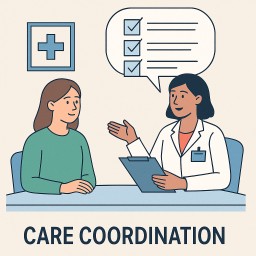
🧑🤝🧑 Taking Part in Your Own Care: Shared Decision-Making, Self-Management & Advocacy in the NHS
Living with a long-term condition like aspergillosis can be complicated. You may see hospital specialists, your GP, nurses, pharmacists, and sometimes social services too. The NHS is working hard to make sure patients aren’t just “done to,” but are real partners in decisions about their own health.
This approach is called shared decision-making and supported self-management.
🌱 Where did this idea come from?
-
It’s a core part of the NHS Long Term Plan (2019, refreshed 2023/24).
-
The aim: give patients a stronger voice, improve care outside hospital, and reduce emergency admissions.
-
It grew out of earlier “shared care” models, where GPs and hospitals split prescribing or monitoring tasks. Now the focus is much wider: putting patients at the centre of their own care.
💡 What does it mean?
Shared decision-making
-
You and your clinicians decide together.
-
Doctors explain the evidence, options, risks, and benefits.
-
You share what matters most to you — daily life, family, work, fears, and preferences.
-
Example: deciding whether to start biologics, taper steroids, or continue antifungal therapy.
Self-management
-
You are supported to handle your condition day-to-day.
-
This includes recognising early warning signs, having an action plan, knowing when to call for help, and using tools like the NHS App or support groups.
-
Education, pulmonary rehab, peer groups, and digital health apps can all help.
🚧 Barriers patients may face
Even though the NHS wants all patients involved in their care, challenges exist:
-
Short appointments that leave little time for discussion.
-
Medical jargon that is hard to follow.
-
Confidence gaps, especially when you feel unwell.
-
Health inequalities (literacy, language, digital access).
-
Fragmented care, where GP and hospital don’t always join up.
-
Information overload — too much general advice, not enough personalised guidance.
🧑🤝🧑 Can you have an advocate?
Yes. You don’t have to face this alone. Advocacy can come from:
-
Specialist nurses at the National Aspergillosis Centre (NAC) or your local hospital.
-
Family or friends — you are always entitled to bring someone to appointments.
-
Peer groups like NAC CARES, where other patients share practical advice.
-
PALS (Patient Advice and Liaison Service) in every NHS trust.
-
Healthwatch (local branches) or independent advocacy charities.
🔎 Care Coordinators & Link Workers
These are newer NHS roles that help patients navigate complex care.
Care coordinators
-
Support people with complex, long-term conditions.
-
Help organise appointments, blood tests, and follow-up.
-
Make sure GPs, hospitals, and community services talk to each other.
-
Often based in Primary Care Networks (PCNs) or specialist hospital clinics.
Social prescribing link workers
-
Focus on the non-medical side of health.
-
Connect patients to local community support, peer groups, exercise schemes, benefits advice, or housing help.
-
Anyone struggling with isolation, anxiety, or lifestyle issues can be referred.
📋 Criteria for Accessing Care Coordinators & Link Workers
Care Coordinators – who qualifies?
-
Patients with two or more long-term conditions, or one condition requiring complex management (e.g. aspergillosis with antifungals, steroids, biologics, adrenal monitoring).
-
People on multiple medicines or with frequent hospital admissions.
-
Patients needing help to coordinate care between GP, hospital, pharmacy, and community services.
-
Prioritised for those at risk of “falling through the cracks” in the system.
Social Prescribing Link Workers – who qualifies?
-
Any patient whose social or practical situation affects their health.
-
Examples:
-
Feeling isolated or low in mood.
-
Struggling with benefits, housing, or finances.
-
Wanting help with lifestyle changes.
-
Needing connections to peer groups or local activities.
-
-
Usually no strict medical criteria — referral is based on need.
How referrals usually happen
-
GP or practice nurse refers after spotting a need.
-
Hospital team (e.g. NAC or respiratory clinic) may suggest referral back to the GP/PCN.
-
Some PCNs allow self-referral if the service is advertised locally.
📊 How many coordinators are there?
-
As of mid-2025, NHS England data shows:
-
Around 5,000–6,800 full-time equivalent care coordinators employed across Primary Care Networks.
-
Over 3,500 social prescribing link workers active across England.
-
-
Numbers vary by area, and coverage is still expanding as ICSs and PCNs grow their teams.
🧠 Why do people think care coordination is mostly mental health?
-
Historically, most care coordinators were employed in mental health services, where patients often need joined-up support from psychiatry, GPs, housing, benefits, and social care.
-
That’s why many people first hear the term “care coordinator” in relation to community mental health teams.
-
But the NHS is now expanding care coordination into physical long-term conditions, including respiratory diseases like COPD, bronchiectasis, and aspergillosis.
-
Access still varies by region — some areas prioritise cancer, frailty, or diabetes, while others are starting to include respiratory patients.
🧑⚕️ Care Coordination: Mental Health vs Physical Health
| Aspect | Mental Health (traditional focus) | Physical Health (expanding role) |
|---|---|---|
| Where based | Community Mental Health Teams | Primary Care Networks (GP groups), hospital specialist clinics |
| Why developed | To join up psychiatry, GPs, social care, housing, and benefits | To support patients with multiple long-term conditions (e.g. COPD, diabetes, aspergillosis) |
| Patient needs | Severe mental illness, complex social problems, frequent crisis episodes | Complex care plans, multiple medicines, hospital visits, difficulty managing appointments |
| Tasks | Coordinate mental health reviews, social support, community referrals | Organise tests and follow-ups, link GP and hospital, ensure medication and monitoring plans are clear |
| Referrals | Usually from psychiatrist or community mental health nurse | Usually from GP practice, sometimes via hospital specialist or self-referral in PCN areas |
| Examples | Patient with schizophrenia needing GP, psychiatrist, housing officer all linked | Patient with aspergillosis on antifungals, steroids, and biologics needing joined-up GP + hospital care |
| Extra support | Peer groups, advocacy, PALS, housing officers | Social prescribing link workers, community health support, peer groups (e.g. NAC CARES) |
✅ What this means for aspergillosis patients
-
If you have complex care needs (antifungal monitoring, biologics, steroid side-effects, adrenal insufficiency, other chronic conditions), you are likely to meet criteria for a care coordinator.
-
If you are struggling with the social and emotional impact of illness (fatigue, isolation, money worries, lifestyle changes), you may benefit from a link worker.
-
These roles are increasingly available in GP networks, though availability may differ locally.
-
Ask both your hospital team and your GP practice what is available in your area.
🔍 Questions to ask at your next appointment
-
Could I be referred to a care coordinator to help manage my appointments and medicines?
-
Is there a link worker who can support me with non-medical needs?
-
What local services are available through my Primary Care Network or ICS?
-
Who is responsible for updating my care plan?
-
What support is there for my carer or family?
💬 In summary:
Shared decision-making and self-management mean you are an active partner in your care. Aspergillosis is complex, but you don’t have to manage it alone. Between your hospital specialists, GP, advocates, and newer NHS roles like care coordinators and link workers, there is growing support available across the NHS to help you live better and feel more in control.
⚠️ Mistakes in NHS Care: Why They Happen & What You Can Do
🔎 Why mistakes happen
-
Heavy workload: Doctors and nurses handle huge numbers of patients and results every day.
-
Fragmented IT systems: GP, hospital, and lab systems don’t always link, so information can get lost.
-
Human error: Fatigue, multitasking, and assumptions all increase the risk of oversight.
-
Defensive culture: Trusts sometimes minimise problems to protect reputation or avoid litigation.
Most errors are not deliberate — but they can cause harm if they are not caught quickly.
Martha’s Rule was created after a young girl died when her family’s concerns were ignored — it’s designed to stop that happening again.
🛡 What safeguards are already in place?
Although mistakes still happen, the NHS has many systems to reduce risk and catch errors early:
-
Critical results alerts: Labs automatically flag dangerously abnormal results so they cannot be overlooked.
-
Early Warning Scores (NEWS2): Vital signs generate a score that prompts urgent review if the patient is deteriorating.
-
Sepsis protocols: Hospitals have rapid-response pathways for suspected sepsis.
-
Cross-checking: High-risk drugs often require two professionals to sign off.
-
Incident reporting: Staff can log “near misses” to help the system learn.
-
Duty of Candour: Trusts must inform patients if serious harm has been caused by an error.
-
Martha’s Rule: Gives patients/families the right to request an urgent independent review if they feel concerns are being ignored.
💻 Are new IT systems making care safer?
The NHS is moving to large electronic patient record (EPR) systems such as Epic, Cerner and Lorenzo. These bring real safety gains:
Safer features
-
Automatic alerts for critical blood results.
-
Built-in early warning score (NEWS2) calculations to detect deterioration.
-
Electronic prescribing with dose, allergy, and interaction checks.
-
Shared records across hospitals, GPs, and community services.
-
Digital audit trails showing who reviewed results and when.
But challenges remain
-
Too many alerts can cause “alert fatigue,” leading staff to dismiss warnings.
-
System crashes or downtime can force staff back to paper, which is less safe.
-
Complexity can slow clinicians down until they are confident with the system.
-
Hospital and GP systems still don’t fully integrate everywhere, so results can still be missed.
Bottom line: New IT has improved safety compared to the old paper-and-fax systems, but it isn’t foolproof. It works best alongside clinical vigilance and patient involvement.
✅ What you can do if you suspect a mistake
Step 1. Check directly with the clinical team
-
Ask: “Can you confirm this result/issue has been reviewed?”
-
Request a written explanation or clinic letter.
-
Keep notes of the conversation.
Step 2. Escalate to a senior doctor/clinical lead
-
Ask who the consultant in charge is.
-
Write your concern clearly and factually.
Step 3. If your loved one is deteriorating: use Martha’s Rule
-
You can request an urgent review by a critical care team, separate from the ward team.
-
Available 24/7 in hospitals where introduced.
-
Say: 👉 “We want a review under Martha’s Rule.”
-
If not yet in your hospital, ask for the critical care outreach team.
Step 4. Contact PALS (Patient Advice & Liaison Service)
-
They can chase answers and log concerns.
Step 5. Make a formal complaint to the Trust
-
Keep it factual (what happened, why it matters, what outcome you want).
-
The Trust must acknowledge within 3 working days.
Step 6. Escalate outside the Trust
-
If unsatisfied, go to the Parliamentary and Health Service Ombudsman (PHSO).
🧭 Tips to protect yourself & your family
-
Keep copies of all results and letters.
-
Track your results in a simple log.
-
Bring support (family, advocate, charity like AvMA).
-
Stay factual: stick to dates, facts, and impact.
🔑 Key message
Mistakes in healthcare happen for many reasons — but the NHS has safeguards and new IT systems to reduce risk, and Martha’s Rule adds an extra urgent safety net.
Patients and families still play a vital role by asking questions, checking results, and speaking up.
You are not being difficult — you are being safe.

Misinformation on Social Media: Health and Beyond
Social media helps us stay connected, share experiences, and find support. But it also spreads false or misleading stories — about health, politics, money, and world events. These stories can cause unnecessary fear, confusion, and sometimes real harm if people act on them.
Understanding why misinformation spreads, what’s being done about it, and how to spot it helps keep you and your loved ones safe.
🚩 Why do false stories spread?
-
Algorithms reward attention
Platforms are designed to keep you scrolling. Content that shocks (“miracle cure discovered!”), scares (“hidden danger you’re not being told about!”), or excites spreads the fastest — even if it isn’t true. -
Anyone can post anything
Unlike newspapers, medical journals, or BBC/NHS websites, most social media posts aren’t checked by editors or experts before going live. -
Echo chambers
Platforms show you more of what you already click on. If you read about miracle diets or political conspiracies, you’ll see more of them — true or not. -
Deliberate misinformation
Some people spread falsehoods deliberately:-
To sell fake health products
-
To make money from clicks
-
To influence politics or sow division
-
-
Speed beats accuracy
False stories can go viral in minutes. Corrections are slower and rarely reach as many people.
⚖️ What’s being done about it?
Legal approaches
-
UK: The Online Safety Act (2023) requires platforms to remove illegal or harmful misinformation, including dangerous health advice.
-
EU: The Digital Services Act (DSA) makes large platforms responsible for acting faster against harmful content.
-
Extreme cases: Fraud, scams, defamation, or incitement of violence are not protected speech and can be prosecuted.
Technical approaches
-
Algorithms: AI flags suspicious posts.
-
Labelling: Content can be marked as “false” or “missing context.”
-
Bot control: Platforms limit fake accounts that spread stories at scale.
-
Digital nudges: Some apps ask “Do you want to read before sharing?” or warn if a post is outdated.
The limits
-
Freedom of speech protects many misleading opinions unless they cause direct harm.
-
Global reach makes it hard to police.
-
Volume — billions of posts daily are impossible to check one by one.
-
Trust — some people ignore fact-check labels, believing platforms are biased.
🧐 How to know what’s real
Five quick checks:
-
Who is posting it? NHS, WHO, BBC, or Reuters → reliable. Unknown influencer or “miracle cure” shop → beware.
-
Is it reported elsewhere? Real news appears in multiple reputable outlets.
-
Does it use scare tactics or hype? “Doctors don’t want you to know this secret cure!” → red flag.
-
Can you fact-check it? Try NHS.uk, Full Fact (UK), Snopes, Reuters Fact Check or BBC Verify.
-
Check dates and pictures — old or unrelated content is often recycled to look new.
🚦 The traffic-light test
-
🟢 Green – from official sources, confirmed, calm tone → likely true.
-
🟡 Amber – source unclear, dramatic style, no confirmation elsewhere → pause, check.
-
🔴 Red – sensational, “miracle” claims, conspiracy, or urging you to share → almost certainly false.
💡 Should we avoid social media completely?
Not necessarily. Social media has real value for support, awareness, and connection. The key is using it wisely:
-
Follow trusted organisations for health and news.
-
Unfollow or mute accounts that regularly spread falsehoods.
-
Balance social media with direct trusted sources (NHS, GP, recognised news).
-
Step away if scrolling leaves you anxious, angry, or confused.
✨ Bottom line
False stories spread online because the system rewards attention, not accuracy. Laws and technology help, but they can’t stop misinformation entirely.
The best defence is awareness. Before acting on or sharing any post — whether about health, politics, or world events — pause, check, and if in doubt, don’t share.
👉 Protecting yourself from misinformation means protecting your community too.
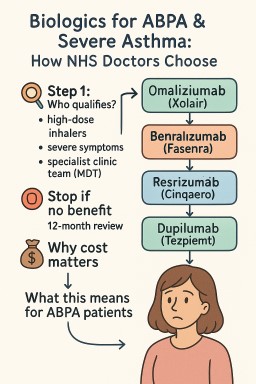
💊 Biologics for ABPA & Severe Asthma: How NHS Doctors Choose
Biologics are modern injection or infusion treatments that target the immune system. They can help people with Allergic Bronchopulmonary Aspergillosis (ABPA) by reducing inflammation, cutting down on steroid use, and lowering flare-ups.
In the UK, consultants must follow NICE (National Institute for Health and Care Excellence) guidance, which sets both clinical criteria and cost-effectiveness rules.
🔎 Step 1: Who qualifies?
-
You must already be on high-dose inhalers and still have severe symptoms.
-
Decisions are made by a specialist severe asthma / ABPA clinic team (MDT).
-
Blood tests, flare history, and steroid use are all considered.
🧭 Step 2: Which biologic?
Consultants match the drug to the type of inflammation you have:
| Pathway / Clues | Possible Biologic | Notes |
|---|---|---|
| IgE-allergic (allergic tests positive, high IgE) | Omalizumab (Xolair) | Works best if perennial allergies are driving symptoms. |
| Eosinophilic (high eosinophil counts, frequent flare-ups, or long-term steroid use) | Mepolizumab (Nucala) or Benralizumab (Fasenra) | NHS requires doctors to choose the least-expensive if both fit. |
| Eosinophils ≥400 + frequent flare-ups | Reslizumab (Cinqaero, IV drip) | Less used, but an option if IV therapy is acceptable. |
| Still severe after above / not eligible | Dupilumab (Dupixent) | Also helps if you have eczema or nasal polyps. |
| Any type, severe with ≥3 flare-ups or on daily steroids | Tezepelumab (Tezspire) | Works even if blood tests don’t show high eosinophils or IgE. |
🛑 Step 3: Stop if no benefit
NICE requires a 12-month review.
-
If your flare-ups or daily steroid dose haven’t fallen enough (usually by ≥50%), treatment should stop.
💷 Why cost matters
-
The NHS only funds biologics judged “cost-effective.”
-
If two drugs are equally suitable, consultants must use the least-expensive one.
-
This doesn’t mean you won’t get the right drug — but sometimes doctors must justify why one biologic is better for you personally.
📌 What this means for ABPA patients
-
ABPA is not directly covered by NICE guidance, but the same biologics are often used if you also meet asthma criteria.
-
Main goals:
-
Reduce oral steroids (prednisolone) and their side-effects.
-
Control flare-ups and lung damage.
-
-
Evidence supports omalizumab, mepolizumab, benralizumab, and dupilumab in ABPA; tezepelumab has less data so far.
✅ Bottom line:
Biologics can be life-changing for ABPA patients, but the NHS pathway means the choice depends on your blood results, flare history, steroid needs — and cost-efficiency rules. If one option doesn’t work, another may still be possible.
📚 New Children’s Book Helps Families Understand Aspergillosis
Launch Event at Affinity Outlet, Fleetwood – 13th September 2025
The Aspergillosis Trust is delighted to announce the launch of a brand-new children’s book, Dad and the Sneaky Spores, written by award-winning author Christina Gabbitas and beautifully illustrated by Ursula Hurst.
This story has been specially commissioned to raise awareness of aspergillosis, a serious lung condition caused by the Aspergillus fungus. Through gentle storytelling and colourful illustrations, the book helps children and families understand what it means to live with a parent affected by aspergillosis.
✨ About the Event
📅 Date: Saturday 13th September 2025
📍 Location: Affinity Outlet, Fleetwood
The launch event will be a fun and informative day for all the family.
-
✍️ Meet the Author: Christina Gabbitas will be signing copies of the book between 12pm and 2pm.
-
👩⚕️ Ask the Experts: A qualified nurse will be available to answer medical questions or offer advice.
-
📚 Learn Together: Families can explore how storytelling can make complex health conditions easier to understand.
📖 About Dad and the Sneaky Spores
The book follows a family’s journey with aspergillosis in a way that children can relate to. It not only explains the illness but also encourages empathy, resilience, and understanding within families.
“The narrative not only educates readers about aspergillosis but is also thoughtfully crafted to foster empathy and understanding.” – Aspergillosis Trust
Published by Poems & Pictures, Dad and the Sneaky Spores is available from 1st August 2025.
💜 Why This Matters
Aspergillosis is a rare and often misunderstood condition. By raising awareness through creative storytelling, this initiative provides a new way to start important conversations with children, families, and the wider community.
🔗 Find out more at: www.aspergillosistrust.org
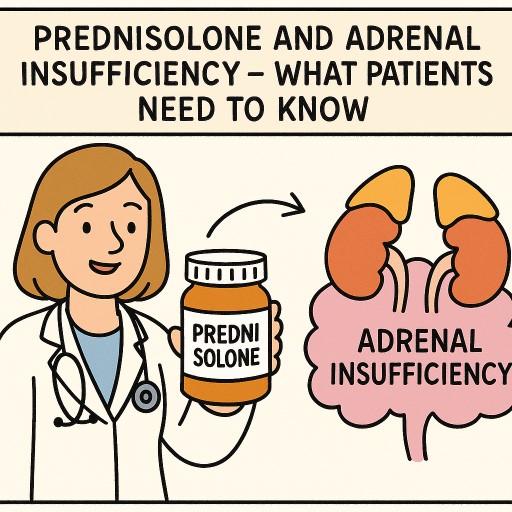
Prednisone, Hydrocortisone, and Adrenal Function – What Patients Need to Know
Why Aspergillosis Patients Are Often Given Prednisolone
Prednisolone is often prescribed for patients with aspergillosis (especially Allergic Bronchopulmonary Aspergillosis – ABPA) because it helps to reduce lung inflammation and allergic reactions triggered by Aspergillus spores. It can be life-changing in controlling breathlessness, wheeze, and repeated flare-ups. However, using steroids for weeks or months can affect the body’s own natural hormone production.
How Do I Know If I Might Need Adrenal Testing While on Prednisolone?
Prednisolone is a corticosteroid medicine. If you take it for more than a few weeks, it can “switch off” your adrenal glands, which normally make the hormone cortisol. Cortisol is essential for coping with stress, fighting infection, and maintaining energy.
You might need adrenal testing if you notice:
-
Extreme tiredness or weakness, especially if it worsens when tapering your pred dose.
-
Excessive sleepiness or difficulty staying awake, even when rested.
-
Feeling much worse during stress or illness (for example, flu, chest infection, or surgery).
-
Dizziness or fainting on standing (low blood pressure symptoms).
-
Nausea, vomiting, or stomach pain that isn’t explained by infection or medicines.
-
Unexplained weight loss or poor appetite.
Why Might Patients Stop Making Cortisol?
The adrenal glands may temporarily stop producing cortisol if they have been “switched off” by long-term steroid treatment. This is called secondary adrenal insufficiency. It is usually reversible, but recovery can take months or even years.
In contrast, primary adrenal insufficiency (Addison’s disease) is when the adrenal glands are damaged and stop working permanently. This is not caused by steroids, but by autoimmune or other diseases.
Symptoms of Low DHEA
The adrenal glands also produce DHEA, a weak sex hormone that contributes to mood, energy, and libido — particularly important in women. Long-term steroid use or secondary adrenal insufficiency may reduce DHEA levels.
Possible signs of low DHEA:
-
Ongoing low energy or fatigue, even when cortisol is replaced
-
Low mood, depression, or “flat” emotions
-
Reduced libido (sex drive)
-
Thinning of underarm or pubic hair (especially in women)
-
Lower resilience or general sense of well-being
Not all patients with adrenal insufficiency need DHEA replacement, but in some, it can make a difference. This is assessed by specialists.
How to Tell the Difference Between Causes of Fatigue
Because fatigue can come from several overlapping sources, it helps to compare:
| Symptom | Cortisol deficiency (Adrenal Insufficiency) | Prednisolone Side Effect | Low DHEA |
|---|---|---|---|
| Sudden exhaustion during stress/illness | ✅ | ❌ | ❌ |
| Sleepiness, can’t stay awake | ✅ | ❌ | ❌ |
| Dizziness or fainting | ✅ | ❌ | ❌ |
| Nausea, vomiting, stomach upset | ✅ | ❌ | ❌ |
| Insomnia, wired-but-tired feeling | ❌ | ✅ | ❌ |
| Mood swings, irritability | ❌ | ✅ | ❌ |
| Weight gain, bloating, “puffy face” | ❌ | ✅ | ❌ |
| Ongoing low energy despite treatment | ❌ | ❌ | ✅ |
| Low mood, “flat” emotions | ❌ | ❌ | ✅ |
| Reduced libido | ❌ | ❌ | ✅ |
| Thinning pubic/underarm hair (women) | ❌ | ❌ | ✅ |
✅ = typical feature
Prednisolone, Hydrocortisone and Fatigue
-
If a patient is on prednisolone and feels extremely fatigued during stress or illness, it may mean their body is not making enough natural cortisol.
-
If they are tapering prednisolone and develop fatigue or sleepiness, this can mean the taper is too fast and the adrenal glands have not “woken up” yet.
-
If a patient feels tired while still on prednisolone, it could be due to:
-
Side effects of prednisolone itself,
-
Lack of natural cortisol (adrenal suppression),
-
Or low DHEA.
-
Treatment and Monitoring
-
Doctors may recommend slowing or pausing tapering if adrenal insufficiency is suspected.
-
Some patients are switched to hydrocortisone, which more closely mimics natural cortisol.
-
In situations of stress (infection, surgery, trauma), patients may need extra “stress doses” of steroids.
-
Patients at risk should carry a steroid emergency card or medical alert bracelet.
👉 Key message:
Aspergillosis patients often need steroids, but long-term use can suppress natural adrenal function. Fatigue can come from:
-
Low cortisol,
-
Prednisolone side effects,
-
Or low DHEA.
Since these overlap, specialist endocrine advice is often needed to work out the cause.

NHS England - You and Your GP: Key Points for NHS Patients Managing Aspergillosis
You and your general practice (YYGP) has been developed to help patients understand what to expect from their general practice and how they can get the best from their GP team. YYGP also enables patient to provide feedback or raise concerns with their GP Practice, Healthwatch or the integrated care board. The contract requires every GP practice to have linked to the NHS England YYGP document on their website, no later than 1 October 2025.
1. Accessing Your GP
-
Opening hours: Your GP is typically open 8:00 – 18:30, Monday to Friday. You can walk in, call, or use the NHS App or practice website to contact them NHS England.
-
If closed: For urgent but non-emergency needs, use 111 online or by calling 111 NHS England.
-
In an emergency: If symptoms are life-threatening (e.g., sudden severe breathing issues), go to A&E or call 999 NHS England.
2. Making an Appointment
-
When you contact your GP—whether by phone, online, or in person—they’ll assess your condition and respond within one working day with next steps NHS England.
-
This could include:
-
A face-to-face appointment
-
A phone consultation
-
A text message with advice
-
A recommendation to consult a pharmacy or another NHS service NHS England.
-
This prompt response is especially important for aspergillosis fluctuations or side effects from antifungal treatments.
3. Who You'll See
-
You may be seen by a GP, nurse, or pharmacist.
-
If you have a designated carer, they can speak on your behalf (with your permission).
-
If you prefer a specific healthcare professional you trust, request them—though waits might be longer NHS England.
-
Seeing the same clinician regularly can be beneficial for managing complex, long-term conditions like aspergillosis NHS England.
4. Support for Additional Needs
-
If English isn't your first language, you can request interpretation services when booking an appointment.
-
If you need extra help—like longer appointments, a quiet space, wheelchair access, or materials in accessible formats—just let the practice know; they'll try to accommodate NHS England.
5. Changing or Selecting a GP
-
You can find or switch to a GP using the NHS website (“Find a GP”) or by contacting local practices directly NHS England.
-
No ID, NHS number, or proof of address is needed to register—even if you’re homeless or your immigration status is uncertain NHS England.
-
If a practice cannot register you, they must explain their decision in writing within 14 days NHS England.
6. Referral and Treatment Flexibility
-
If your GP refers you to a specialist (e.g., respiratory consultant), you often have the right to choose your hospital or clinic NHS England.
7. Free Care & Private Work
-
GP services are free, including appointments and treatments.
-
Extra services like insurance letters may incur a fee NHS England.
8. Being a Helpful Patient
-
Prepare for appointments: list symptoms, treatment concerns, and questions in advance.
-
Be punctual or cancel in good time to avoid delays for others.
-
Use the NHS App or website to book appointments, refill prescriptions, and view test results.
-
Turn on App notifications to stay updated with messages from your practice NHS England.
-
Order repeat prescriptions well ahead—especially vital when managing antifungal medications—to avoid running out NHS England.
-
Consider joining the Patient Participation Group at your practice to share feedback and help improve services NHS England.
9. Sharing Feedback or Concerns
-
To raise concerns, talk to your practice manager first.
-
If needed, you can escalate feedback to your local Integrated Care Board (ICB).
-
You can also reach out to your local Healthwatch (an independent NHS watchdog) for confidential advice and support NHS England.
Why This Matters for Aspergillosis Patients
Aspergillosis often requires ongoing monitoring, regular breathing tests, imaging, and antifungal therapy adjustments. Timely access to GP services, continuity of care, and preparedness all enhance your ability to manage flare-ups or side effects effectively.
Handy Checklist (for easy reference)
| Task |
|---|
| Contact GP promptly for new or worsening symptoms |
| Prepare questions ahead—e.g., changes in breathing, treatment effects |
| Use NHS App to manage appointments and medications |
| Order repeat prescriptions early to maintain drug access |
| Request support services if needed (interpretation, accessibility) |
| Provide feedback to improve your experience and others' |
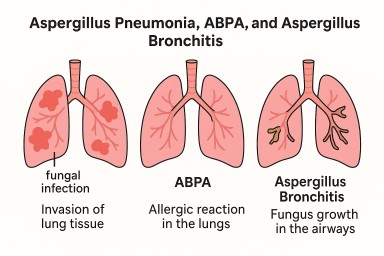
Other forms of aspergillosis: Aspergillus Pneumonia (Community-Acquired Aspergillus Lung Infection)
What is it?
Aspergillus pneumonia is a rare but serious lung infection caused by breathing in spores of the Aspergillus mould (most often Aspergillus fumigatus). Unlike allergic conditions such as Allergic Bronchopulmonary Aspergillosis (ABPA) or Aspergillus bronchitis, which affect the airways, Aspergillus pneumonia occurs when the fungus actually invades lung tissue. This makes it a more dangerous condition.
How do people catch it?
Most cases are acquired in the community (outside hospital).
You may be at higher risk if you have:
-
A weakened immune system (chemotherapy, transplant, high-dose steroids, uncontrolled diabetes).
-
Chronic lung disease such as COPD or emphysema.
-
A very heavy exposure to fungal spores (compost heaps, rotting bark, mulch, or farming dust).
Almost all cases are due to Aspergillus fumigatus, though other species like A. flavus have also been reported.
How common is it?
-
Aspergillus pneumonia is uncommon, despite Aspergillus spores being everywhere in the environment.
-
It is most often seen in people with weak immune defences, long-term lung disease, or very high exposure.
-
Because it often looks like ordinary bacterial or viral pneumonia, it can be missed or diagnosed late.
Symptoms
The illness may start like a regular chest infection:
-
Cough (dry or with sputum)
-
Shortness of breath
-
Fever or chills
-
Chest pain
-
Fatigue
-
Sometimes coughing up blood
It may progress:
-
Slowly over weeks, with cavities (holes) forming in the lungs.
-
Very quickly, especially after flu, COVID-19, or high spore exposure.
How does it differ from other Aspergillus conditions?
| Condition | What’s happening | Who gets it | Key signs |
|---|---|---|---|
| Aspergillus Pneumonia | Fungus invades lung tissue (serious infection) | Immunocompromised patients, COPD, heavy spore exposure | Pneumonia-like illness: fever, cough, breathlessness, chest pain |
| ABPA | Allergy to Aspergillus spores causes airway inflammation | People with asthma or cystic fibrosis | Wheeze, thick mucus plugs, recurrent asthma attacks |
| Aspergillus Bronchitis | Fungus grows in widened/damaged airways without invading tissue | People with bronchiectasis or chronic airway disease | Chronic cough, mucus, sometimes blood streaks |
👉 In short:
-
Pneumonia = infection inside lung tissue (dangerous, urgent).
-
ABPA = allergic reaction in the lungs.
-
Bronchitis = long-term airway infection.
Is it a type of invasive aspergillosis?
Yes. Aspergillus pneumonia is considered a form of invasive aspergillosis because the fungus invades lung tissue:
-
Acute/severe form: fast, aggressive illness in very vulnerable people (immunocompromised, post-viral, heavy spore exposure).
-
Subacute or “necrotising” form: slower, smouldering infection in people with COPD, diabetes, or long-term steroids, often with cavities.
👉 It is not mild like ABPA or bronchitis — it requires antifungal treatment.
Diagnosis
Doctors may use:
-
Chest X-ray or CT scan – patches, cavities, or diffuse shadowing.
-
Sputum or bronchoscopy samples – to detect Aspergillus in culture or under the microscope.
-
Blood tests – for Aspergillus antibodies, or sometimes antigen (galactomannan).
Treatment
-
Antifungal medicines are the main treatment (voriconazole is most common; sometimes itraconazole or posaconazole).
-
Corticosteroids may be added in severe “pneumonitis-type” illness with overwhelming inflammation.
If treatment begins early, many people respond well. If diagnosis is delayed, the illness can progress rapidly and be life-threatening.
Outlook
-
Without antifungal treatment, Aspergillus pneumonia can be fatal.
-
With modern antifungal drugs, survival and recovery are possible.
-
Some people may develop long-term lung damage, even after successful treatment.
Key message for patients
If you have sudden worsening cough, fever, or chest symptoms that don’t improve with antibiotics — especially if you have COPD, are on steroids, or have had heavy spore exposure — ask your doctor whether Aspergillus pneumonia should be considered. Early diagnosis and treatment make the best outcomes possible.
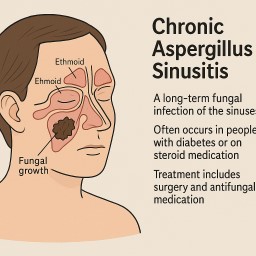
Other forms of aspergillosis: Chronic Aspergillus Sinusitis
(Chronic invasive and granulomatous forms)
Chronic sinus problems are very common, but in a small number of people they are caused by fungal infection, especially Aspergillus. This type of infection is different from the usual bacterial sinusitis and needs different treatment.
What is chronic Aspergillus sinusitis?
-
Chronic rhinosinusitis (CRS) is long-term inflammation of the sinuses (lasting more than 12 weeks).
-
In about 6–12% of CRS cases, fungi are the cause — with Aspergillus being the most common.
-
There are two important invasive forms that are rare but serious:
-
Chronic invasive Aspergillus sinusitis – the fungus grows slowly into the lining of the sinuses and nearby tissues.
-
Chronic granulomatous Aspergillus sinusitis – the immune system forms a hard granuloma (lump of immune cells and fungus), usually caused by Aspergillus flavus.
-
These conditions progress slowly but can cause long-term damage if not treated.
Who gets it?
-
Chronic invasive Aspergillus sinusitis is more common in Western countries and Japan.
-
Granulomatous sinusitis is more often seen in parts of Africa, South Asia (India, Pakistan), the Middle East, and occasionally the southern United States.
-
People at risk include:
-
Those with diabetes, on long-term steroids, or with HIV infection.
-
Sometimes people with no obvious immune problems can still develop it.
-
-
Aspergillus fumigatus usually causes chronic invasive sinusitis.
-
Aspergillus flavus is the main cause of granulomatous sinusitis.
Symptoms
Because these forms progress slowly, symptoms are often missed or mistaken for “ordinary sinus problems.” They may include:
-
Blocked or congested nose that doesn’t improve with usual treatments
-
Facial pain or pressure, especially around the eyes, cheeks, or forehead
-
Headaches
-
Nasal discharge, sometimes blood-stained
-
Bleeding from the nose (epistaxis)
-
Facial swelling or numbness
-
Bulging eye (proptosis) or reduced vision if the infection spreads to the orbit
-
Rarely: brain involvement (abscess, meningitis, stroke-like symptoms)
Granulomatous sinusitis often causes a slowly enlarging mass in the nose, cheek, or orbit, and may be mistaken for a tumour.
How is it diagnosed?
-
Scans (CT or MRI): show a mass in the sinuses, sometimes with bone damage. MRI is useful if the eye or brain are involved.
-
Endoscopy and biopsy: tissue samples are taken from the sinus lining.
-
Laboratory tests:
-
Special stains and fungal culture help identify Aspergillus.
-
Blood tests (Aspergillus IgG antibodies) can support the diagnosis.
-
-
Diagnosis can be delayed because the condition is uncommon and mimics other sinus problems.
Treatment
Prompt treatment is essential to prevent serious complications. Management usually involves:
-
Surgery
-
To remove infected tissue and improve sinus drainage.
-
Surgery also allows biopsy to confirm diagnosis.
-
-
Antifungal medication
-
Long-term antifungal tablets (usually itraconazole or voriconazole).
-
Sometimes intravenous antifungals (e.g. amphotericin B or posaconazole) are used in severe cases.
-
Treatment usually lasts at least 6 months, often longer (sometimes up to a year).
-
-
Managing risk factors
-
Good control of diabetes.
-
Reducing or stopping steroid medicines if possible.
-
Outlook (prognosis)
-
With early diagnosis and combined treatment (surgery + antifungals), many patients do well.
-
Granulomatous sinusitis tends to relapse more often but generally has a better long-term outlook than invasive sinusitis.
-
Regular follow-up is essential because recurrence is common.
-
Follow-up usually includes scans every few months and nasal endoscopy to check for regrowth.
-
Ongoing monitoring may be needed for up to 5 years.
-
Key points for patients
-
Chronic Aspergillus sinusitis is rare, but important to recognise because it needs different treatment than ordinary sinus infections.
-
Symptoms can mimic chronic sinusitis or even cancer, so biopsy and specialist review are essential.
-
Surgery plus antifungal medication is the main treatment.
-
Long-term follow-up is needed to monitor for relapse.
-
If you have risk factors like diabetes or steroid use, controlling these is important.
✅ Summary:
Chronic invasive and granulomatous Aspergillus sinusitis are rare but serious fungal infections of the sinuses. They progress slowly, can cause damage to the eyes or brain if untreated, and are sometimes mistaken for tumours. With specialist care, surgery, antifungal therapy, and long-term follow-up, most patients can achieve good control of the disease.