Aspergillosis in Pets: A Practical Guide for Owners
Last reviewed: March 2026
Key Points
- Aspergillosis is an environmental fungal infection, not contagious between pets or people.
- Dogs are most commonly affected, particularly in the nose and sinuses.
- Risk increases with exposure to disturbed soil, compost, and decaying plant material.
- Different animals are affected in different ways depending on behaviour and anatomy.
- Early recognition and veterinary treatment usually lead to good outcomes.
Table of Contents
- What is aspergillosis?
- Which pets are more susceptible?
- Do risks differ between animals?
- Warning signs to look out for
- Environmental risks: what to avoid
- Treatment and management
- Risk to people and other pets
- When to seek veterinary advice
- Common questions
What is aspergillosis?

Aspergillosis is caused by Aspergillus, a group of moulds commonly found in soil, compost, and decaying vegetation. Pets are exposed to these spores regularly in everyday environments.
In dogs, the infection most often affects the nasal passages and sinuses. In other animals, particularly birds, it more commonly affects the lungs.
Important: This is not a contagious disease. It is acquired from the environment.
Which pets are more susceptible?
Dogs
- Most commonly affected species
- Higher risk in long-nosed breeds (e.g. German Shepherds, Collies, Greyhounds)
- Risk increased by sniffing, digging, and outdoor exploration
Cats
- Less commonly affected
- Can develop nasal or sinus infection, occasionally more invasive
Birds
- Most sensitive species
- Infection usually affects the lungs and air sacs
- Risk increased in dusty or poorly ventilated environments
Other animals
- Farm animals (e.g. horses) can be affected, but this is uncommon
- Small pets (rabbits, rodents) are rarely affected
Do risks differ between animals?
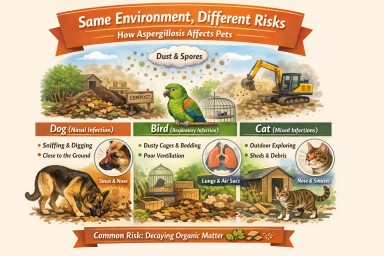
Yes. The same environment can pose different risks depending on how an animal interacts with it.
- Dogs: close to the ground → inhale spores while sniffing or digging
- Cats: roaming behaviour → exposure in gardens, sheds, and debris
- Birds: airborne exposure → sensitive lungs affected in enclosed or dusty spaces
Key insight: The common factor is exposure to fungal spores, but the route of exposure differs between species.
Warning signs to look out for
Dogs (most common presentation)
- Persistent nasal discharge (often one-sided)
- Sneezing
- Nosebleeds
- Pain around the nose
More advanced signs
- Swelling around the nose or eyes
- Loss of pigment or ulceration on the nose
- Lethargy or reduced appetite
Birds
- Breathing difficulty
- Lethargy
- Reduced appetite
Key message: Persistent symptoms—especially nasal discharge or breathing problems—should always be checked by a vet.
Environmental risks: what to avoid
Aspergillus grows in decaying organic material. Risk increases when this material is disturbed and spores become airborne.
Higher-risk environments
- Disturbed soil (construction or garden clearance)
- Rotting leaves, wood, or plant debris
- Compost heaps and garden waste
- Bark chippings or mulch
- Stored hay, straw, or grain
- Dusty sheds, barns, or enclosed spaces
Situations that increase exposure
- Digging or burrowing
- Prolonged sniffing in debris-rich areas
- Dry, windy conditions
- Poor ventilation (especially for birds)
Common factors across all pets
- Decaying organic material
- Disturbance of soil or vegetation
- Dust and airborne particles
- Enclosed or poorly ventilated environments
Simple precautions
- Keep dogs on a lead near disturbed areas
- Avoid allowing pets to dig in compost or debris
- Keep bird enclosures clean and well ventilated
- Allow disturbed sites to settle before use
- Rinse paws and muzzle after muddy walks
Balanced view: These environments are common and most pets are exposed without becoming ill. The aim is to reduce exposure during higher-risk periods.
Treatment and management
Aspergillosis in dogs is usually treatable and often curable.
Typical treatment
- Antifungal medication applied directly into the nasal passages under anaesthetic
- Removal of fungal material (debridement)
Other approaches
- Oral antifungal medication in selected cases
- Supportive care (pain relief, monitoring)
Follow-up is important to ensure the infection has fully cleared.
Risk to people and other pets
- Not contagious between animals or humans
- Healthy people are at very low risk
- Higher-risk individuals are those with lung disease or weakened immune systems
When to seek veterinary advice
- Nasal discharge lasting more than a few days
- Blood from the nose
- Persistent sneezing or discomfort
- Breathing problems (especially in birds)
- Swelling around the face
Early diagnosis improves outcomes significantly.
Common questions
Can pets catch aspergillosis from people?
No. It is acquired from the environment.
Is a damp home a cause?
Damp environments can contain spores, but most cases—especially in dogs—are linked to outdoor exposure.
Is this common?
It is uncommon overall, but a recognised cause of nasal disease in dogs.
Summary
Aspergillosis is an environmental fungal infection that affects different animals in different ways. Dogs are most commonly affected through sniffing contaminated material, while birds are more sensitive to airborne spores in enclosed spaces. Although exposure is common, illness is uncommon, and simple precautions combined with early veterinary care usually lead to good outcomes.
Author: Aspergillosis Patient Support & Education Team
Review: This information is for general guidance only and does not replace veterinary advice. If you are concerned about your pet, please consult your veterinary surgeon.