Nontuberculous Mycobacteria (NTM–MAC) and Aspergillosis
Why these infections sometimes occur together
Audience: Aspergillosis patients, carers, GPs and non-specialist clinicians
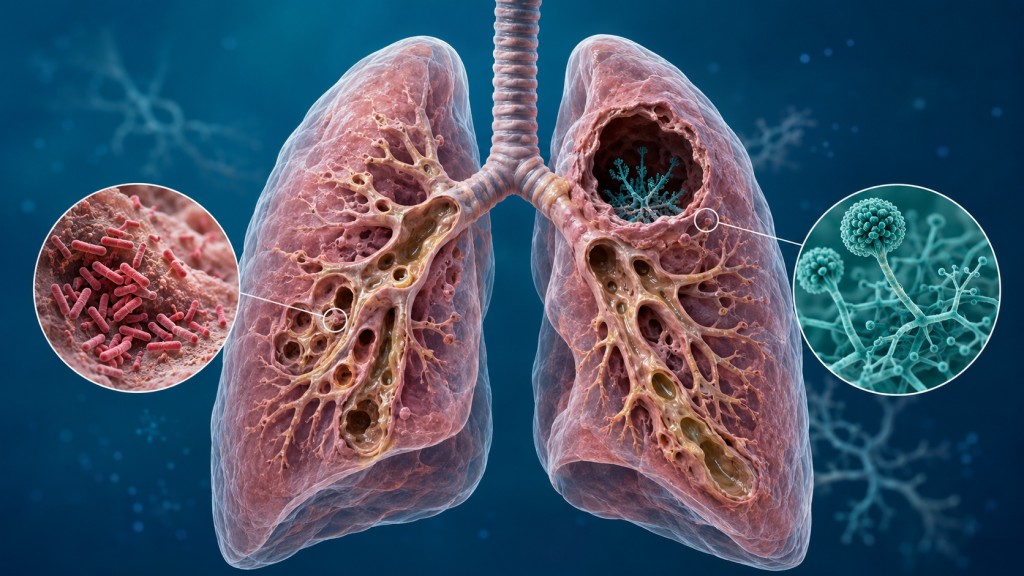
Some patients with Allergic Bronchopulmonary Aspergillosis (ABPA) may be investigated for nontuberculous mycobacteria (NTM), because airway damage from ABPA can increase susceptibility to other lung infections.
Key points
- Nontuberculous mycobacteria (NTM) are environmental bacteria that sometimes infect damaged lungs.
- The most common NTM causing lung disease is the Mycobacterium avium complex (MAC).
- NTM infection and aspergillosis often occur in the same patients because both thrive in damaged airways such as bronchiectasis or lung cavities.
- Some patients with ABPA are investigated for NTM because ABPA can lead to bronchiectasis and impaired mucus clearance.
- NTM infections usually grow very slowly, so treatment is sometimes monitored rather than started immediately.
- Treating NTM and aspergillosis together can be difficult because some NTM antibiotics interfere with antifungal medicines.
- Doctors usually treat the infection causing the most harm first while monitoring the other carefully.
Table of contents
- What are NTM?
- What is Mycobacterium avium complex (MAC)?
- Why NTM infections occur in some people
- What is bronchiectasis?
- Why patients with ABPA may be asked about NTM
- Why NTM and Aspergillus infections often occur together
- The lung infection cycle
- Chronic lung disease as a microbial ecosystem
- Why treatment can be complicated
- When treatment for NTM may be delayed
- How doctors balance treatment decisions
- NTM vs Aspergillosis – comparison table
- Common questions patients ask about NTM and Aspergillus
- When should patients seek medical advice?
- Reducing exposure to NTM in the environment
What are nontuberculous mycobacteria (NTM)?
Nontuberculous mycobacteria (NTM) are bacteria found naturally in the environment.
They live in:
- soil
- water
- dust
- plumbing systems
- shower heads and taps
Unlike tuberculosis, these bacteria are not normally spread between people.
Most people inhale them regularly without becoming ill. However, in some people with damaged lungs, these bacteria can establish a long-term lung infection.
What is Mycobacterium avium complex (MAC)?
The Mycobacterium avium complex (MAC) is the most common cause of NTM lung disease.
This group includes:
- Mycobacterium avium
- Mycobacterium intracellulare
MAC lung disease usually develops slowly over months or years.
Symptoms may include:
- chronic cough
- sputum production
- breathlessness
- fatigue
- weight loss
Because symptoms develop gradually, diagnosis can sometimes take time.
Why NTM infections occur in some people
NTM infections usually develop in people who already have structural lung disease.
Examples include:
- bronchiectasis
- chronic obstructive pulmonary disease (COPD)
- cystic fibrosis
- previous tuberculosis
- severe asthma
- aspergillosis
In these conditions, the lungs have damaged or widened airways, making it harder to clear mucus and microbes.
What is bronchiectasis?
Bronchiectasis is a condition where the airways become permanently widened and distorted.
In healthy lungs, mucus is cleared using:
- mucus movement
- tiny hair-like structures called cilia
- coughing
In bronchiectasis:
- mucus collects in the airways
- microbes become trapped
- infections become more likely
Bronchiectasis is common in patients with Allergic Bronchopulmonary Aspergillosis (ABPA) and other chronic lung diseases.
Why patients with ABPA may be asked about NTM
Some patients with Allergic Bronchopulmonary Aspergillosis (ABPA) are surprised when their doctors start investigating nontuberculous mycobacteria (NTM).
This usually happens because ABPA can lead to bronchiectasis, which increases the risk of other lung infections.

In ABPA:
- inflammation caused by allergic reactions to Aspergillus can damage the airways
- over time the airways may become widened and distorted, causing bronchiectasis
- mucus clearance becomes less effective
When mucus accumulates in the airways, microbes that are normally cleared from the lungs can sometimes persist. These may include:
- nontuberculous mycobacteria (NTM)
- Pseudomonas bacteria
- other organisms that affect bronchiectasis patients
For this reason, doctors sometimes test patients with ABPA for NTM if:
- CT scans show bronchiectasis or nodules
- sputum cultures repeatedly grow unusual organisms
- symptoms worsen without a clear explanation
Importantly, having ABPA does not mean you will develop NTM infection. Most patients with ABPA never develop NTM disease.
However, because the conditions share similar risk factors, doctors sometimes check for both.
Why NTM and Aspergillus infections often occur together
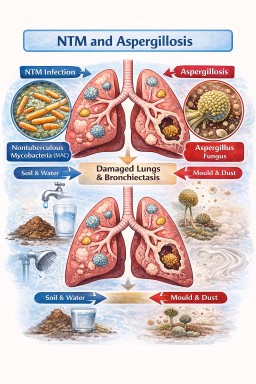
NTM bacteria and Aspergillus fungi both thrive in damaged lungs.
Three factors explain the overlap.
1. Damaged airways trap microbes
When airways are widened or distorted:
- mucus collects
- microbes are not cleared effectively
This allows organisms such as NTM and Aspergillus to persist.
2. Chronic infection causes further lung damage
NTM infection can lead to:
- inflammation
- worsening bronchiectasis
- lung nodules
- sometimes lung cavities
These cavities can then be colonised by Aspergillus, which may lead to chronic pulmonary aspergillosis (CPA).
3. Aspergillus can worsen structural damage
Once Aspergillus becomes established it can cause:
- inflammation
- enlargement of lung cavities
- worsening bronchiectasis
This further damage makes the lungs even more susceptible to infection.
The lung infection cycle

In many patients the relationship between bronchiectasis, NTM and Aspergillus becomes a cycle:
- Lung disease develops
- Bronchiectasis forms
- NTM infection establishes
- Lung damage worsens
- Aspergillus colonises damaged tissue
- Chronic aspergillosis develops
- Lung damage continues
At this stage the lungs may contain multiple organisms simultaneously.
Chronic lung disease as a microbial ecosystem
Doctors increasingly recognise that damaged lungs may contain several interacting microbes rather than a single infection.
Common organisms include:
- Mycobacterium avium complex (MAC)
- Aspergillus species
- Pseudomonas bacteria
- other organisms
For this reason clinicians sometimes describe chronic lung disease as a disturbed lung microbial ecosystem.
Why treatment can be complicated
NTM and aspergillosis treatments can interact.
Typical MAC treatment includes:
- azithromycin or clarithromycin
- ethambutol
- rifampicin
However rifampicin strongly reduces levels of antifungal drugs, including:
- itraconazole
- voriconazole
- posaconazole
These antifungals are commonly used to treat chronic pulmonary aspergillosis.
Because of this interaction, treating both infections at the same time can be challenging.
Other medicines that may interact with rifampicin
Rifampicin affects how the liver processes many medicines. This means it can reduce the effectiveness of several commonly used drugs, including some treatments for heart conditions, blood thinners, hormonal medicines, and certain antidepressants.
Because of this, doctors and pharmacists always review a patient’s medication list before starting rifampicin. Patients should tell their healthcare team about all medicines they take, including over-the-counter medicines, inhalers, and herbal supplements. In most cases, safe alternatives or dose adjustments can be used if needed.
When treatment for NTM may be delayed
Unlike many bacterial infections, MAC often progresses slowly.
Doctors sometimes monitor the infection before starting treatment. This approach is called active monitoring or watchful waiting.
Monitoring may include:
- CT scans
- sputum cultures
- lung function tests
- symptom assessment
Treatment may be delayed if:
- symptoms are mild
- CT scans are stable
- another condition requires more urgent treatment
For example, aspergillosis may be treated first if it is causing the main symptoms or lung damage.
How doctors balance treatment decisions
When both infections are present, clinicians try to identify which infection is currently causing the most harm.
Doctors consider:
Symptoms
- worsening cough
- breathlessness
- fatigue
- weight loss
- haemoptysis (coughing blood)
CT scan findings
- enlarging cavities
- fungal balls
- nodules typical of NTM disease
- worsening bronchiectasis
Laboratory results
- sputum cultures for NTM
- Aspergillus blood tests, such as Aspergillus IgG
If one infection clearly explains the patient’s symptoms, that infection usually becomes the treatment priority.
Treatment plans may then change over time as the balance of disease changes.
NTM vs Aspergillosis – What’s the difference?
| Feature | NTM (MAC) Lung Disease | Aspergillosis |
|---|---|---|
| Type of organism | Bacteria | Fungus |
| Source | Soil, water, plumbing | Airborne fungal spores |
| Spread between people | Rare | Does not spread |
| Typical speed | Slow, chronic infection | Variable |
| Typical CT findings | Nodules, bronchiectasis, cavities | Cavities, fungal balls, airway inflammation |
| Treatment | Long antibiotic courses, often 12–18 months | Antifungal medicines |
| Drug interaction issues | Rifampicin interferes with antifungals | Antifungal levels can be reduced by rifampicin |
Common questions patients ask about NTM and Aspergillus
If MAC grows slowly, why treat it?
Although MAC grows slowly, it can still cause progressive lung damage over time.
Treatment is usually recommended if there is:
- worsening symptoms
- declining lung function
- progressive CT scan changes
Can NTM be present without causing disease?
Yes. Some people have NTM colonisation without active infection.
Doctors diagnose NTM lung disease only when symptoms, imaging findings and repeated cultures all support the diagnosis.
Why do NTM and Aspergillus often occur together?
Both organisms tend to grow in damaged airways, especially where bronchiectasis is present and mucus clearance is poor.
Will both infections always be treated?
Not necessarily. Doctors often treat the infection causing the most immediate problem while monitoring the other.
Does NTM mean my aspergillosis is worsening?
Not necessarily. Both infections occur in damaged lungs, so they may simply share the same environment.
Can NTM lead to aspergillosis?
Sometimes. If NTM infection causes lung cavities or worsening bronchiectasis, these damaged areas may later become colonised by Aspergillus.
Should I worry if my doctor decides not to treat NTM immediately?
Not necessarily. Because MAC often progresses slowly, doctors sometimes choose active monitoring rather than immediate treatment.
When should patients seek medical advice?
People living with aspergillosis, bronchiectasis or NTM infection often have ongoing symptoms such as cough and sputum production. These symptoms may fluctuate and do not always mean the disease is worsening.
However, certain changes should prompt medical review.
Seek medical advice if you notice worsening breathing symptoms
- increasing breathlessness
- a significant increase in cough
- a noticeable increase in sputum production
- sputum becoming thicker, darker or foul-smelling
These symptoms may indicate:
- bacterial infection
- worsening bronchiectasis
- progression of NTM infection
- worsening aspergillosis
Coughing up blood (haemoptysis)
Haemoptysis can occur in both bronchiectasis and aspergillosis.
Seek medical advice if:
- bleeding increases
- blood appears repeatedly
- there is more than a small amount of blood
- bleeding occurs suddenly with breathlessness
Large amounts of blood should be treated as a medical emergency.
Unexplained weight loss or increasing fatigue
Persistent or worsening:
- weight loss
- fatigue
- loss of appetite
may indicate:
- progressive infection
- increasing inflammation
- advancing NTM disease
Fever or feeling unwell
New symptoms such as:
- fever
- chills
- chest discomfort
- feeling generally unwell
may suggest a new infection, such as a bacterial chest infection, which may require treatment.
Rapid change in symptoms
Seek medical advice if you experience:
- sudden worsening breathlessness
- significant chest pain
- new wheezing
- severe fatigue developing quickly
Symptoms that may remain stable
Many people with chronic lung disease experience symptoms that remain relatively stable for long periods, including:
- a chronic cough
- daily sputum production
- mild breathlessness
- intermittent fatigue
Doctors monitor these symptoms over time using:
- CT scans
- sputum cultures
- lung function tests
These investigations help clinicians determine whether infections such as NTM or Aspergillus are stable or progressing.
Reducing exposure to NTM in the environment
Patients with bronchiectasis, ABPA, or other chronic lung diseases sometimes ask whether they should try to avoid environmental exposure to nontuberculous mycobacteria (NTM).
NTM are very common in the natural environment and cannot be completely avoided. They are found in:
- soil and compost
- garden dust
- natural water sources
- tap water and plumbing systems
- showerheads
- hot tubs and spa pools
For most people, the goal is sensible risk reduction rather than strict avoidance. Major lifestyle restrictions are usually not necessary.
Water exposure
NTM can grow in biofilms inside plumbing systems, including showerheads. Small amounts of bacteria may become airborne when water is aerosolised.
Some simple precautions may help reduce exposure:
- avoid frequent use of hot tubs or spa pools
- allow taps or showers to run briefly if they have not been used for several days
- clean showerheads periodically to remove biofilm and limescale
Normal showering and bathing are considered safe for most patients.
NTM infection occurs when bacteria are inhaled into the lungs rather than swallowed. Drinking ordinary tap water is therefore considered safe for most people, and patients are not usually advised to avoid tap water for drinking.
Gardening and soil exposure
NTM bacteria are often present in soil and compost. Gardening can still be enjoyed safely with a few sensible precautions.
- wear gloves when gardening
- avoid inhaling dust from dry compost or soil
- dampen compost before handling to reduce dust
- wash hands after gardening
For people with bronchiectasis or NTM disease, wearing a mask during dusty gardening activities may help reduce inhalation of soil particles.
Reducing dust exposure
Activities that generate dust can increase inhalation of environmental microbes.
Helpful precautions include:
- avoiding sweeping very dusty areas indoors
- ventilating indoor spaces
- wearing a mask during dusty tasks such as handling compost or dry soil
Cleaning showerheads
Cleaning showerheads periodically can help remove limescale and biofilms where microbes may grow.
A simple method is:
- Remove the showerhead if possible.
- Soak it in white vinegar for about 30–60 minutes.
- Gently scrub the spray holes with a small brush.
- Rinse thoroughly.
- Run hot water for 30–60 seconds before use.
If the showerhead cannot be removed, a plastic bag filled with vinegar can be tied around the head so that it soaks.
Cleaning every 1–3 months is usually sufficient.
What is usually not necessary
Experts generally do not recommend major lifestyle changes to avoid NTM exposure. In most cases it is not necessary to:
- avoid showers
- avoid gardening completely
- install specialised water filtration systems
These activities are important for quality of life and general health, and evidence that strict avoidance prevents NTM disease is limited.
The most important protection
For patients with ABPA, bronchiectasis or aspergillosis, the most important protective measures remain:
- good airway clearance
- regular medical monitoring
- prompt treatment of infections
- maintaining overall lung health
Reducing environmental exposure may help slightly, but good management of lung disease remains the most important factor.
Key message
When NTM and Aspergillus infections occur together, treatment decisions focus on which infection is currently causing the most damage, while avoiding harmful drug interactions.
For patients with ABPA, one reason NTM may be discussed is that ABPA can lead to bronchiectasis and impaired mucus clearance, which can make other infections more likely.
Many patients live with these conditions for years with careful monitoring and specialist management.
Author: National Aspergillosis Centre Patient Information Team
Last reviewed: March 2026