

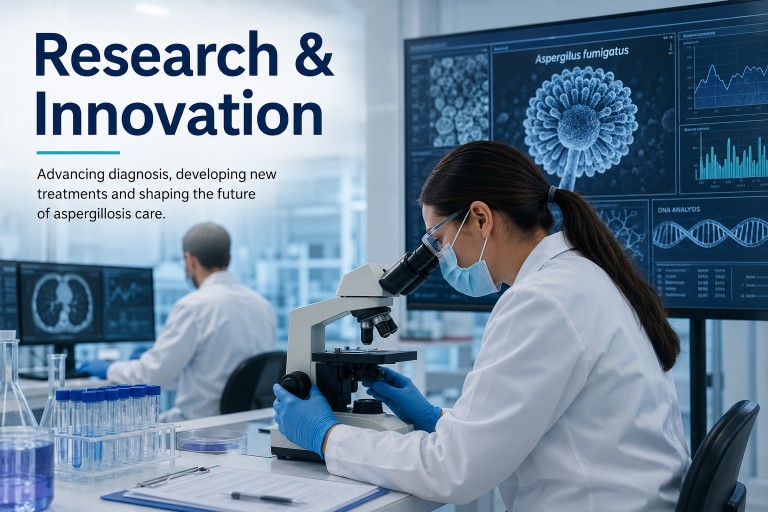
Research is transforming how aspergillosis is diagnosed, monitored and treated. Scientists, clinicians and patients around the world are working together to develop better diagnostic tests, safer treatments and new approaches that may improve outcomes for people affected by fungal disease.
This section explores current research, emerging technologies and future developments in aspergillosis care, including new antifungal medicines, biologics, molecular diagnostics, genomics, artificial intelligence and clinical trials.
Quick summary
- Aspergillosis research is improving diagnosis, monitoring and treatment.
- New antifungal medicines are being developed for difficult-to-treat fungal disease.
- Biologics are changing treatment options for some allergic and inflammatory forms of aspergillosis.
- Molecular diagnostics and genomics may support earlier and more accurate diagnosis.
- Artificial intelligence may help clinicians interpret data and support decision-making.
- Patients play an important role in research, clinical trials and service improvement.
Why research matters
Many forms of aspergillosis remain difficult to diagnose and treat. Symptoms can overlap with other lung conditions, diagnostic tests may not always give clear answers, and treatment can be complicated by side effects, drug interactions or antifungal resistance.
Research helps clinicians understand disease mechanisms, improve diagnosis, develop safer treatments and identify better ways to support patients over the long term.
Research can help healthcare professionals:
- Diagnose disease earlier
- Understand risk factors
- Improve treatment options
- Reduce avoidable side effects
- Personalise care
- Improve long-term quality of life
Today’s standard treatments exist because previous patients, clinicians and researchers contributed to studies and clinical trials.
Why this research matters to patients
Research can sometimes feel distant from day-to-day life, but its purpose is practical: to help people receive the right diagnosis sooner, access better treatments and live with fewer symptoms, side effects and uncertainties.
For patients and carers, research may lead to:
- Shorter delays before diagnosis
- More accurate tests
- More treatment choices
- Fewer medication side effects
- Better monitoring between appointments
- Improved understanding of fatigue, breathlessness and quality of life
- Greater confidence that care is based on current evidence
Not every research finding becomes routine clinical practice, but each study helps build a stronger evidence base for future care.
Current research themes
Aspergillosis research covers many areas, from laboratory science to clinical trials and patient experience.
Research at the National Aspergillosis Centre
The National Aspergillosis Centre contributes to research programmes aimed at improving diagnosis, treatment and long-term care for people affected by fungal disease.
Research areas include:
- Chronic Pulmonary Aspergillosis (CPA)
- Allergic Bronchopulmonary Aspergillosis (ABPA)
- Aspergillus bronchitis
- Severe asthma with fungal sensitisation (SAFS)
- Novel antifungal therapies
- Diagnostic innovation
- Quality of life research
- Patient and public involvement
Research findings help shape clinical practice in the United Kingdom and internationally.
New antifungal medicines
Current antifungal medicines have improved outcomes for many people, but challenges remain. Some patients experience side effects, drug interactions, incomplete responses or infection with fungi that are resistant to available treatments.
Researchers are developing new antifungal medicines that may improve effectiveness, reduce side effects and provide additional treatment options.
Examples of emerging or recently investigated therapies include:
- Olorofim
- Fosmanogepix
- Rezafungin
- Inhaled antifungal therapies
Some treatments remain experimental and may only be available through clinical trials, specialist access programmes or selected centres.
Biologics and immune therapies
Biologic medicines are changing care for some people with allergic and inflammatory forms of aspergillosis, particularly where asthma, eosinophilic inflammation or allergic bronchopulmonary aspergillosis are involved.
Current and emerging biologics include:
- Omalizumab
- Mepolizumab
- Benralizumab
- Dupilumab
- Tezepelumab
- Depemokimab
Research continues to explore how immune pathways can be targeted more precisely, potentially reducing reliance on long-term corticosteroids for some patients.
Improving diagnosis
Earlier diagnosis remains one of the greatest challenges in fungal disease. Many patients experience delays before receiving an accurate diagnosis, sometimes resulting in disease progression or prolonged uncertainty before treatment begins.
Research is exploring:
- Faster laboratory testing
- Novel biomarkers
- Point-of-care diagnostics
- Improved imaging techniques
- Screening approaches for higher-risk groups
- Risk prediction models
Earlier diagnosis may allow treatment to begin before significant lung damage occurs.
Molecular diagnostics and genomics
Modern laboratory techniques are helping researchers understand fungal disease in new ways. These methods may improve detection of fungal DNA, identify resistance markers or reveal how host genetics influence disease risk.
Areas of active research include:
- Polymerase Chain Reaction (PCR)
- Quantitative Polymerase Chain Reaction (qPCR)
- Metagenomic sequencing
- Nanopore sequencing
- Cell-free DNA testing
- Proteomics
- Host genetic factors
These technologies may support earlier diagnosis, more accurate identification of fungal pathogens and increasingly personalised approaches to care.
Artificial intelligence and digital medicine
Artificial intelligence (AI) is increasingly being explored in healthcare. In aspergillosis and respiratory medicine, AI may help analyse complex data such as CT scans, laboratory results and clinical patterns.
Potential applications include:
- CT scan interpretation
- Risk prediction
- Clinical decision support
- Research analysis
- Personalised treatment planning
- Digital monitoring tools
Current research focuses on using AI to support healthcare professionals rather than replace them.
Clinical trials
Clinical trials help determine whether new treatments and diagnostic approaches are safe, effective and appropriate for wider use.
Trials may investigate:
- New medicines
- New diagnostic tests
- Treatment combinations
- Quality of life interventions
- Monitoring strategies
- Preventive approaches
Participation is voluntary and subject to eligibility criteria designed to protect patient safety and ensure reliable results.
Patient involvement in research
Research works best when patients are involved. People living with aspergillosis bring valuable lived experience that can help researchers focus on the questions that matter most.
Patients may help researchers understand:
- Real-world treatment experiences
- Quality of life challenges
- Information needs
- Treatment priorities
- Practical barriers to care
- Outcomes that matter most to patients
Patient and public involvement is increasingly recognised as an essential part of modern healthcare research.
Weekly research updates
Aspergillosis and fungal disease research is constantly evolving. New studies are published every week, expanding understanding of diagnosis, treatment, monitoring and patient care.
Our research updates summarise important developments in:
- Aspergillosis research
- Fungal diagnostics
- Antifungal therapies
- Clinical trials
- Respiratory medicine
- Emerging technologies
These updates help both patients and healthcare professionals stay informed about new developments.
Looking to the future
The future of aspergillosis care may include earlier diagnosis, more personalised treatment plans, improved biologics, safer antifungal medicines and advanced monitoring technologies.
Researchers are exploring how genomics, artificial intelligence and precision medicine might improve care in the coming years.
While not every promising innovation becomes routine clinical practice, research continues to improve understanding, treatment and quality of life for people affected by fungal disease.
Important note about research
Research findings do not always become routine treatments. Some therapies, tests or technologies discussed in research articles may still be experimental, unavailable outside clinical trials, or unsuitable for some patients.
Decisions about diagnosis, treatment or participation in research should always be discussed with a qualified healthcare professional who understands your individual medical history.
Frequently asked questions
Are there any new treatments for aspergillosis?
Yes. Several new antifungal medicines and biologic therapies are being investigated, although availability varies depending on regulatory approval, local access and individual suitability.
Can patients take part in research?
Some studies and clinical trials include opportunities for patient participation, depending on eligibility criteria and study design.
What is a clinical trial?
A clinical trial is a research study designed to evaluate the safety and effectiveness of new treatments, diagnostics or healthcare interventions.
What is genomic medicine?
Genomic medicine uses information from genes and DNA to better understand disease and potentially guide diagnosis and treatment decisions.
Will artificial intelligence replace doctors?
No. Current research focuses on using artificial intelligence to support healthcare professionals, improve efficiency and enhance decision-making rather than replace clinicians.
Author and review information
This page is intended for patients, carers, healthcare professionals and anyone interested in advances in aspergillosis research.
Research findings may change as new evidence emerges. Experimental treatments discussed on this page may not be routinely available.
Last reviewed: June 2026.
Did this page help you?
Tell us in one minute