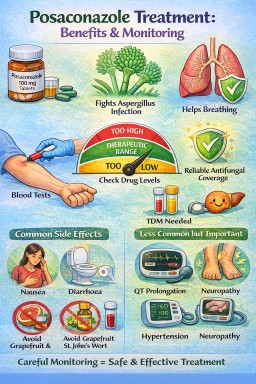
Posaconazole in Aspergillosis

A balanced guide for patients and clinicians

Posaconazole is a broad-spectrum triazole antifungal used in:
  • Chronic pulmonary aspergillosis (CPA)

  • Allergic bronchopulmonary aspergillosis (ABPA) (selected or refractory cases)

  • Invasive aspergillosis

  • Patients intolerant of itraconazole or voriconazole

  • Antifungal prophylaxis in high-risk immunocompromised patients

It is generally well tolerated and often used when other azoles cause side effects.


1️⃣ What Posaconazole Does

Like other azoles, posaconazole blocks fungal ergosterol synthesis (CYP51 inhibition), preventing fungal growth.

It:

  • Suppresses Aspergillus replication

  • Reduces fungal burden

  • Helps stabilise lung disease in CPA

  • Can reduce steroid need in some ABPA cases

It works gradually over weeks.


2️⃣ How Long Is Treatment?

In CPA

  • Often 6–12 months or longer

  • Sometimes long-term suppressive therapy

  • Used if other azoles are ineffective or not tolerated

In ABPA

  • Used in refractory or steroid-dependent disease

In prophylaxis

  • Duration depends on immune suppression status

As with other azoles, premature discontinuation may lead to relapse.


3️⃣ Formulations Matter

Posaconazole comes in:

  • Delayed-release tablets

  • Oral suspension

  • Intravenous formulation

Tablets (preferred)

  • Good, reliable absorption

  • Less affected by food

  • More predictable levels

Oral suspension

  • Absorption highly dependent on food (especially fatty meals)

  • Greater variability

In most CPA practice, tablets are preferred.


4️⃣ Why Blood Level Monitoring Is Still Important

Posaconazole has more predictable pharmacokinetics than itraconazole or voriconazole, but monitoring is still recommended.

Reasons:

  • Interpatient variability

  • Drug interactions

  • Severe infection requires adequate exposure

  • Toxicity avoidance


If Levels Are Too Low

  • Inadequate fungal suppression

  • Ongoing disease activity

  • Risk of resistance


If Levels Are Too High

  • Liver abnormalities

  • Gastrointestinal symptoms

  • Rare cardiac effects


Typical Target (Trough)

  • 1 mg/L for treatment

  • 0.7 mg/L often sufficient for prophylaxis

(Laboratory guidance varies.)

Levels are typically checked:

  • After 5–7 days

  • After dose adjustments

  • If response is suboptimal

  • If toxicity suspected


5️⃣ Common Side Effects (Usually Mild)

  • Nausea

  • Diarrhoea

  • Abdominal discomfort

  • Headache

These are often less troublesome than with voriconazole.


6️⃣ Less Common but Important Effects

Liver Abnormalities

Routine monitoring required.

Most are mild and reversible.


QT Interval Prolongation

Posaconazole can prolong QT interval.

Caution in patients with:

  • Known arrhythmias

  • Electrolyte imbalance

  • Other QT-prolonging drugs

ECG monitoring may be appropriate in higher-risk individuals.


Hypertension & Mineralocorticoid Effect (Rare)

High levels can rarely cause:

  • Elevated blood pressure

  • Low potassium

More common with long-term or high exposure.


Neuropathy

Much less commonly reported than with other azoles, but peripheral symptoms should still be assessed carefully if they occur.


7️⃣ Food & Drug Advice

  • Tablets: can be taken with or without food (follow prescribing guidance)

  • Suspension: take with food (preferably fatty meal)

Avoid:

  • Grapefruit

  • St John’s Wort

Posaconazole inhibits CYP3A4 and interacts with:

  • Statins

  • Certain immunosuppressants

  • Some anticoagulants

Medication review is essential.


8️⃣ Comparison Snapshot

Feature Itraconazole Voriconazole Posaconazole
Absorption variability High Moderate Low–Moderate (tablet)
Visual side effects Rare Common Rare
Photosensitivity Rare Common Rare
QT prolongation Minimal Possible Possible
TDM needed Yes Essential Recommended
Long-term tolerability Moderate Sometimes limited Often good

Balanced Summary for Patients

Posaconazole is a newer azole that is often well tolerated and provides reliable antifungal coverage. Blood tests help ensure the level is effective and safe. Most patients complete treatment without major difficulties.


Clinician Checklist

  • Confirm formulation (tablet preferred in CPA)

  • Baseline LFTs

  • Review ECG if cardiac risk present

  • Check electrolytes (especially potassium)

  • Arrange trough level after initiation

  • Review full medication list


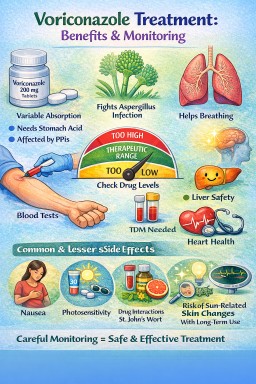
Voriconazole in Aspergillosis

A balanced guide for patients and clinicians

Voriconazole is a broad-spectrum triazole antifungal used in:
  • Chronic pulmonary aspergillosis (CPA)

  • Allergic bronchopulmonary aspergillosis (ABPA) (selected cases)

  • Invasive aspergillosis

  • Azole-resistant or itraconazole-intolerant cases

It is available orally and intravenously and is often used when a stronger or more reliably absorbed azole is required.


1️⃣ What Voriconazole Does

Voriconazole works by blocking fungal ergosterol synthesis (CYP51 inhibition), which disrupts the fungal cell membrane.

Compared with itraconazole:

  • More potent against Aspergillus

  • More predictable oral absorption

  • More central nervous system penetration

It often produces symptom improvement over weeks, though some effects (e.g. visual symptoms) may occur quickly.


2️⃣ How Long Is Treatment?

In CPA

  • Often 6–12 months or longer

  • Sometimes used as second-line or after intolerance to itraconazole

  • Long-term suppressive therapy may be required

In ABPA

  • Used in selected steroid-dependent or refractory cases

In invasive disease

  • Typically several months depending on response and immune status


3️⃣ Why Blood Level Monitoring Is Essential

Voriconazole has non-linear pharmacokinetics.

Small dose changes can cause large blood level shifts.

Two patients on the same dose may have very different levels due to:

  • Liver metabolism (CYP2C19 genetic variation is important)

  • Drug interactions

  • Age

  • Weight

  • Liver function


If Levels Are Too Low

  • Treatment failure

  • Persistent fungal activity

  • Risk of resistance


If Levels Are Too High

  • Liver toxicity

  • Neurological side effects

  • Visual disturbances

  • Increased interaction risk


Typical Target (Trough)

  • Generally 1–5.5 mg/L (lab dependent)

  • Toxicity risk increases >5–6 mg/L

Levels are usually checked:

  • 5–7 days after starting

  • After dose adjustments

  • If side effects occur

  • If clinical response is inadequate


4️⃣ Common Side Effects (Often Mild & Reversible)

Visual Disturbances (Very Common but Usually Harmless)

  • Blurred vision

  • Altered colour perception

  • Light sensitivity

  • “Wavy” vision

These typically:

  • Occur within 30–60 minutes of dosing

  • Last less than an hour

  • Reduce over time

Patients should avoid night driving initially until they understand their response.


Photosensitivity

  • Increased sensitivity to sunlight

  • Sunburn risk

  • Long-term risk of skin damage with prolonged therapy

Sun protection is important.


Gastrointestinal

  • Nausea

  • Abdominal discomfort


5️⃣ Less Common but Important Effects

Neurological

  • Headache

  • Vivid dreams

  • Hallucinations (usually at high levels)

  • Confusion (dose-related)

These are generally reversible with dose adjustment.


Liver Abnormalities

Routine liver function monitoring is required.

Most abnormalities are mild and resolve with dose modification.


Cardiac Effects

Voriconazole can prolong the QT interval.

Caution in patients with:

  • Known arrhythmias

  • Electrolyte imbalance

  • Other QT-prolonging drugs

ECG monitoring may be appropriate in higher-risk patients.


Skin Cancer Risk (Long-Term Use)

With prolonged use (especially >1–2 years):

  • Increased risk of skin squamous cell carcinoma

  • Particularly in transplant recipients

Sun protection and dermatology review are advised for long-term therapy.


6️⃣ Food & Drug Advice

  • Avoid grapefruit

  • Avoid St John’s Wort

  • Take tablets at least 1 hour before or after meals (food reduces absorption)

Voriconazole has many CYP-mediated interactions and requires careful medication review.


7️⃣ Comparison With Itraconazole (Simple Overview)

Feature Itraconazole Voriconazole
Absorption variability High More predictable
Visual side effects Rare Common but mild
Photosensitivity Rare More common
QT prolongation Minimal Possible
TDM needed Yes Yes (essential)

Balanced Summary for Patients

Voriconazole is a strong antifungal used when more reliable or potent treatment is needed. Most side effects are manageable and reversible, and blood monitoring keeps treatment safe.


Clinician Checklist

  • Confirm indication and prior azole exposure

  • Check baseline LFTs

  • Review ECG if cardiac risk present

  • Assess drug interactions (CYP2C19, 2C9, 3A4)

  • Arrange trough level at day 5–7

  • Counsel regarding visual symptoms and sun protection


Can blood tests help predict if chronic pulmonary aspergillosis will come back?

This study from the National Aspergillosis Centre (NAC) looked at people with chronic pulmonary aspergillosis (CPA) who had completed antifungal treatment and asked a simple question:

Can blood tests tell us who is more likely to relapse after treatment stops?


What the researchers did

Doctors reviewed patients with CPA who had:

  • Taken antifungal treatment for at least 6 months

  • Stopped treatment because they were clinically stable

They then followed these patients to see who stayed well and who relapsed, and compared this with their blood test results at the time treatment stopped.


What they found

  • About 1 in 4 patients had a relapse after stopping treatment

  • People whose Aspergillus IgG blood test was still high at the end of treatment were much more likely to relapse

  • Patients whose IgG level had fallen to a lower level did not relapse in this study

  • Signs of Aspergillus allergy or sensitisation also increased relapse risk

  • CT scan appearances and treatment length alone were not reliable predictors


Why this matters for patients

This means that:

  • Blood tests may help doctors decide when it is safe to stop treatment

  • Some people may need closer follow-up or longer treatment

  • Follow-up can be more personalised, rather than “one size fits all”

Importantly, a relapse does not mean treatment failed — it reflects how persistent this infection can be in damaged lungs.


Key takeaway

A simple blood test at the end of treatment may help predict who needs closer monitoring for CPA relapse.

This research supports a more individualised approach to long-term CPA care.


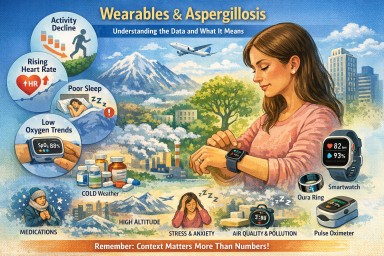
Wearable devices and aspergillosis

Are they useful yet – and which ones are the most accurate?

The short answer

Wearable devices do not diagnose aspergillosis and cannot tell what is causing symptoms.
However, some wearables are now good enough to provide useful background information about how your body is coping over time.

Their value lies in:

  • spotting gradual deterioration

  • recognising patterns over weeks or months

  • supporting conversations with your clinical team

They are not a replacement for scans, blood tests, sputum cultures, lung function tests, or specialist review.


What wearables can realistically help with

For people with:

  • Chronic Pulmonary Aspergillosis (CPA)

  • Allergic Bronchopulmonary Aspergillosis (ABPA)

  • Aspergillus bronchitis

  • Aspergillosis with bronchiectasis or asthma

wearables can sometimes help answer:

  • “Am I slowly getting worse, or is this just a bad patch?”

  • “Has my recovery from exertion changed?”

  • “Are my nights becoming more disrupted?”

They are most useful for long-term trends, not day-to-day decisions.


The signals that matter most

From both patient experience and respiratory clinical practice, these signals tend to be most meaningful:

1. Activity tolerance

  • Falling step count over weeks

  • Needing longer to recover after usual activity

  • Avoiding activity you previously managed

➡ Often one of the earliest signs of deterioration.


2. Resting heart rate

  • A persistent rise from your own baseline

  • Especially if not explained by infection, fever, medication or stress

➡ Often reflects physiological strain before symptoms become obvious.


3. Sleep quality

  • Frequent night waking

  • Shortened or fragmented sleep

  • Feeling unrefreshed despite enough hours in bed

➡ Poor sleep often accompanies worsening respiratory symptoms or medication effects.


4. Oxygen saturation (SpO₂) trends

  • Repeated low readings

  • Drops overnight or with exertion

  • Patterns that persist over days or weeks

Trends matter far more than single readings.
➡ Dedicated oxygen monitors are usually more reliable than watches.


What about ECG and breathing rate?

These features are often misunderstood. They are not useless, but they are supportive rather than central in aspergillosis care.

ECG (heart rhythm)

Some wearables can record a single-lead ECG, which may detect:

  • atrial fibrillation

  • sustained rhythm abnormalities

This can be helpful if someone develops:

  • new palpitations

  • breathlessness out of proportion to lung symptoms

  • dizziness or faintness

➡ ECG does not provide information about Aspergillus activity or lung disease progression.


Breathing (respiratory) rate

Most wearables estimate breathing rate indirectly, usually during sleep.

Breathing-rate trends may:

  • support a sense that breathing effort has increased

  • highlight disrupted sleep linked to respiratory load

➡ It cannot distinguish fungal disease from asthma, infection, anxiety or medication effects.


Medication and age matter — a lot

When clinicians interpret wearable data, they always consider:

  • antifungal medicines (e.g. azoles)

  • steroids (current or past)

  • asthma and allergy treatments

  • other long-term conditions

  • age-related physiological change

Common medication effects seen on wearables

  • higher resting heart rate

  • poorer sleep

  • fatigue

  • reduced activity tolerance

These are common and expected and do not automatically mean disease progression.

As we age:

  • recovery slows

  • sleep becomes lighter

  • heart-rate variability reduces

  • oxygen dips more easily overnight

➡ Always compare data to your own baseline, not to “normal” values.


Environment and everyday factors strongly affect readings

Often more than lung disease itself

Wearables measure signals through the skin and movement, not directly from the lungs.

This makes them highly sensitive to environment and daily circumstances.

Many “abnormal” readings reflect conditions around you, not worsening aspergillosis.


Temperature (especially cold)

Cold causes blood vessels in the skin to narrow, which can lead to:

  • falsely low oxygen readings

  • erratic heart-rate data

  • missing or failed measurements

Common situations:

  • cold bedrooms

  • winter walks

  • sleeping with arms outside the duvet

➡ A low oxygen reading in the cold is often technical, not medical.


Altitude and air pressure

At higher altitude (even modest):

  • oxygen saturation normally falls

  • breathing rate may rise

  • sleep may worsen

Examples:

  • flying

  • holidays in hilly or mountainous areas

  • high-rise accommodation

➡ This is normal physiology, not disease progression.


Air quality, humidity and heat

Poor air quality or high humidity can cause:

  • faster breathing

  • increased heart rate

  • worse sleep

  • reduced activity tolerance

➡ Wearables detect body stress, not its cause.


Sleep environment

Sleep data is very sensitive to:

  • noise

  • light

  • room temperature

  • uncomfortable bedding

A poor sleep score often reflects environmental disruption, not lung decline.


Movement, posture and coughing

Night-time data can be affected by:

  • coughing

  • restless sleep

  • sleeping on the arm wearing the device

➡ Night data is often noisy and imperfect.


Hydration, alcohol and meals

  • dehydration → higher heart rate

  • alcohol → worse sleep and altered breathing rate

  • heavy evening meals → raised heart rate

These effects are temporary and not signs of deterioration.


Stress and anxiety

Stress can:

  • raise heart rate

  • increase breathing rate

  • worsen sleep

Wearables cannot distinguish stress from illness, and worrying about readings can make readings worse — a common feedback loop.


What wearables cannot do (important)

  • They cannot diagnose aspergillosis

  • They cannot identify fungal flares

  • They cannot separate cause from effect

  • They cannot replace specialist investigations

They provide context, not answers.


The most accurate consumer devices (2025–26)

Best overall smartwatches

  • Apple Watch (Series 9 / Ultra 2) – excellent heart-rate accuracy, ECG, good sleep trends

  • Withings ScanWatch 2 – health-focused, ECG and oxygen, long battery life

  • Garmin Venu 3 / Epix Pro – excellent activity and recovery tracking

Best non-watch wearables

  • Oura Ring (Gen 3) – strong overnight physiology and sleep trends

  • Wellue O2Ring / similar continuous oximeters – more reliable oxygen trends than watches

These are listed because of better accuracy and consistency, not because they are diagnostic devices.


Can wearable data cause over-worry?

Yes — and this is common, especially in people with long-term lung disease.

Wearables can sometimes:

  • increase anxiety

  • encourage constant checking

  • turn normal variation into worry

  • make people feel unwell even when stable

This is not a personal weakness.

When wearables help

  • checked occasionally

  • viewed over weeks or months

  • used to support (not replace) symptoms

When wearables stop helping

  • if they increase anxiety

  • if they disrupt sleep

  • if numbers override how you feel

➡ It is entirely reasonable to reduce use or stop.


How specialists actually prioritise information

In real aspergillosis care, clinicians still focus on:

  1. How you feel

  2. What you can do

  3. Symptoms and sputum

  4. Imaging and tests

  5. Medication history

Wearable data sits well below these.


The bottom line

  • ✔ Wearables are becoming useful for monitoring trends

  • ✔ ECG and breathing rate add context and safety, not answers

  • ✔ Medication, age and environment strongly affect readings

  • ❌ Wearables do not diagnose aspergillosis

  • ✔ If a device increases anxiety, stepping back is sensible


How the Body Handles Chemicals, Medicines, and Antifungals

Why metabolism differs between people — and why this matters in aspergillosis


The big idea (in one sentence)

Your body uses an ancient liver detox system to handle chemicals from food, air, and medicines — and differences in that system explain why people with aspergillosis respond so differently to antifungal drugs.


What is metabolism?

Every day, your body is exposed to chemicals from many sources:

  • Food and drink

  • Air pollution and moulds

  • Natural plant chemicals

  • Hormones your body makes itself

  • Medicines, including antifungals and steroids

Many of these chemicals cannot be safely removed in their original form.
They first need to be chemically modified so they can be excreted in urine or bile.

This process is called metabolism, and it happens mainly in the liver.


The liver’s chemical processing system

The liver contains a large family of enzymes called cytochrome P450, often shortened to CYP.

Important clarification

  • CPA = Chronic Pulmonary Aspergillosis (a lung disease)

  • CYP = Cytochrome P450 (liver enzymes)

They sound similar but are completely different things.


What CYP enzymes really do

CYP enzymes did not evolve to deal with medicines.
They evolved to protect us from chemicals in the environment.

They help process:

  • Plant toxins and food chemicals

  • Smoke and air pollution

  • Mould and fungal by-products

  • Alcohol and caffeine

  • Hormones such as cortisol and sex hormones

  • Medicines (which are treated as “foreign chemicals”)

Medicines simply use a system that already existed.


How CYP enzymes “recognise” chemicals

CYP enzymes do not recognise chemicals like the immune system recognises germs.

Instead, they recognise chemical patterns, such as:

  • Fat-solubility (hard to excrete)

  • Size and shape

  • Reactive chemical groups

If a molecule:

  • Fits into the enzyme’s binding pocket, and

  • Can be chemically modified,

then CYP will act on it.

This makes CYP enzymes:

  • Broad (they work on many substances)

  • Flexible

  • Imperfect by design


The two main stages of metabolism (simplified)

Stage 1 – Modification

  • Mainly done by CYP enzymes

  • The chemical is altered (often oxidised)

  • This may:

    • Reduce activity

    • Prepare it for removal

    • Occasionally create a more toxic intermediate

Stage 2 – Packaging for removal

  • The altered chemical is “tagged”

  • It becomes water-soluble

  • It can now leave the body safely


Why metabolism differs between people

This is especially important for aspergillosis patients.

1. Genetics (the biggest factor)

People inherit different versions of CYP enzymes.

Some people:

  • Break drugs down slowly → higher levels → side effects

  • Break drugs down quickly → low levels → reduced effectiveness

Two people on the same antifungal dose can have very different blood levels.


2. Other medicines

Some medicines:

  • Block CYP enzymes (slowing breakdown)

  • Speed up CYP enzymes (lowering drug levels)

Antifungals, steroids, antibiotics, antidepressants, and heart drugs often interact.


3. Inflammation and chronic illness

During infection or chronic inflammation:

  • CYP activity is often reduced

  • Drug levels may rise unexpectedly

This matters in:

  • Chronic Pulmonary Aspergillosis (CPA)

  • Allergic Bronchopulmonary Aspergillosis (ABPA)

  • Bronchiectasis

  • Severe asthma

Drug handling can change during disease flares.


4. Liver health and age

  • Liver disease can slow metabolism

  • Older adults often process drugs differently


Why something can become a “poison”

A substance can cause harm if it:

  • Escapes CYP processing

  • Is metabolised too slowly

  • Overwhelms the system at high dose

  • Blocks CYP so other substances build up

  • Is converted into a toxic by-product

This explains:

  • Why some foods are toxic to dogs but safe for humans

  • Why “natural” substances are not automatically safe

  • Why dose really matters


A key question:

Why not design medicines that CYP can’t break down?

This is a real goal in drug development, and your instinct is correct.

If a drug:

  • Is broken down very slowly, or

  • Avoids CYP metabolism altogether,

then:

  • It stays in the body longer

  • Blood levels are steadier

  • Fewer doses are needed

This is why some medicines are once-daily, once-weekly, or long-acting injections.


But there is a trade-off

CYP metabolism is not just an inconvenience — it is also a safety system.

If a drug:

  • Cannot be metabolised, and

  • Cannot be excreted easily,

then:

  • It may accumulate

  • Side effects last much longer

  • Toxicity is harder to reverse

  • Stopping the drug does not stop the problem quickly

So completely avoiding CYP can increase long-term risk, especially when medicines are taken for months or years.


How drug designers manage this balance

Most modern drugs aim for a middle ground:

  • Broken down slowly, not zero

  • More predictable metabolism

  • Fewer interactions with major CYP enzymes

  • Alternative clearance routes where possible

  • Long-acting formulations (slow release, depots) rather than permanent persistence

In other words:

Long enough to work — but short enough to stay safe


Why this is especially relevant in aspergillosis

Antifungal drugs are particularly challenging because:

  • Fungi are biologically similar to humans

  • Drugs often interact with human CYP enzymes

  • Treatment is long-term

  • Patients often take multiple other medicines

Because of this:

  • Blood level monitoring is common

  • Dose adjustments are expected

  • Side effects do not mean failure

  • Low levels do not mean non-compliance

This variability reflects normal biology, not poor care.


A simple way to think about it

  • Your liver is a chemical processing plant

  • CYP enzymes are general-purpose machines

  • Everyone’s machines run at slightly different speeds

  • Illness and other drugs change how they behave

  • Antifungals depend on these machines being “just right”


Key take-home messages for patients

  • CYP enzymes are part of your body’s everyday detox system

  • They evolved to handle food chemicals, pollution, moulds, and hormones

  • Medicines use the same system

  • People differ because of genetics, illness, and other drugs

  • In aspergillosis, variable drug levels are expected

  • Monitoring and dose adjustment are signs of good specialist care

  • Drugs are not designed to avoid metabolism completely — safety matters as much as convenience


Antifungal Medicines: Dosing, Monitoring, and the Role of Specialist Care

A detailed reference for patients and non-specialist clinicians


1. Why antifungal treatment is different from most medicines

Oral antifungal medicines—especially azole antifungals—are essential for treating long-term fungal diseases such as chronic pulmonary aspergillosis and allergic bronchopulmonary aspergillosis.

They differ from many common medicines because they:

  • Have a narrow margin between effectiveness and toxicity

  • Behave very differently between individuals

  • Are often taken for months or years, not days

  • Interact with many commonly prescribed drugs

For these reasons, antifungal treatment requires individualised dosing, monitoring, and specialist input, rather than a standard fixed dose.


2. What “pharmacokinetics” means (plain language)

Pharmacokinetics describes what the body does to a drug:

  1. Absorption – how well the drug enters the bloodstream from the gut

  2. Distribution – how effectively it reaches tissues such as the lungs

  3. Metabolism – how quickly the liver breaks it down

  4. Elimination – how the drug leaves the body

Differences at any of these stages explain why the same dose can be ineffective for one person and toxic for another.


3. Different generations of azole antifungals behave differently

Each generation of azole antifungal was designed to improve effectiveness, but chemical changes also altered how the body handles the drug.

First-generation azoles (older drugs)

Examples

  • Ketoconazole

  • Fluconazole (limited activity against Aspergillus)

Key features

  • Variable absorption

  • Shorter half-life

  • Less reliable lung penetration

Clinical relevance

  • Rarely used now for chronic aspergillosis


Second-generation azoles (mainstay treatment)

Examples

  • Itraconazole

  • Voriconazole

  • Posaconazole

Key features

  • Excellent lung and tissue penetration

  • Highly variable metabolism between people

  • Strong interaction with liver enzymes

Clinical relevance

  • Very effective

  • Blood levels vary widely

  • Dose adjustment and monitoring are often essential


Newer azoles

Example

  • Isavuconazole

Key features

  • More predictable absorption

  • Long, stable half-life

  • Fewer extreme peaks and troughs

Clinical relevance

  • Often better tolerated long-term

  • Monitoring still important, but dosing may be more stable


4. Why the “right dose” matters so much

Too little antifungal

  • Infection not adequately controlled

  • Symptoms persist or worsen

  • Risk of antifungal resistance

  • Fewer future treatment options

Too much antifungal

  • Liver irritation or damage

  • Nausea, appetite loss

  • Neurological or visual side effects

  • Drug accumulation, especially with long-term use

The aim is always the lowest dose that effectively controls the fungus.

https://ars.els-cdn.com/content/image/3-s2.0-B9780123868824000189-f18-07-9780123868824.jpg

5. How clinicians know whether the dose is right

No single test determines this. The correct dose is identified when three elements align:

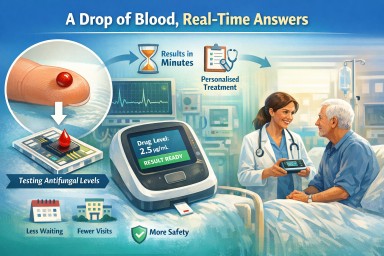
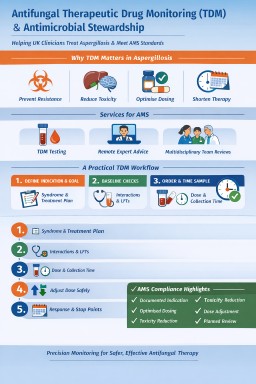
1️⃣ Blood level testing (therapeutic drug monitoring)

  • Measures how much drug is actually in the bloodstream

  • Helps identify:

    • Under-dosing

    • Target-range dosing

    • Toxic levels

2️⃣ Clinical response

  • Symptoms stabilise or improve

  • Fewer flare-ups or complications

  • Better day-to-day function

3️⃣ Safety monitoring

  • Liver and kidney blood tests

  • Review of side effects

  • Ongoing assessment of drug interactions

Only when effectiveness and safety are both acceptable is the dose considered “right”.


6. Why the right dose can change over time

A dose that was correct initially may later need adjustment because of:

  • Weight or body-composition changes

  • Age-related metabolic changes

  • New medications (including antibiotics or steroids)

  • Changes in liver or kidney function

  • Gradual drug accumulation during long-term therapy

Regular review is therefore expected and appropriate.


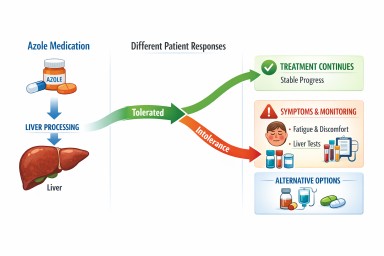
7. Is it sometimes impossible to find a stable dose?

Yes. For a minority of patients, a perfectly balanced dose cannot be found.

Reasons include:

  • Extremely fast or slow drug metabolism

  • A very narrow safety window

  • Long-term toxicity despite “acceptable” blood levels

  • Unavoidable interacting medications

  • Liver, kidney, or neurological vulnerability

  • Partial or full antifungal resistance

In these cases, the dose that controls the fungus and the dose that causes side effects may overlap.

This reflects biological limits, not treatment failure.


8. What clinicians do when a stable dose cannot be achieved

Options may include:

  • Switching to a different azole with different pharmacokinetics

  • Using modified dosing schedules (split dosing, slower titration)

  • Accepting a lower suppressive dose rather than full eradication

  • Considering non-azole antifungals where appropriate

  • Prioritising symptom control and quality of life

All are intentional, safety-focused decisions.


9. The central role of the specialist pharmacist

Specialist pharmacists are key to safe antifungal care, particularly for long-term azole therapy.

They play a critical role in:

Interpreting drug levels

  • Assessing whether a level is truly low or high

  • Accounting for dose timing and formulation

  • Preventing unnecessary or unsafe dose changes

Managing drug–drug interactions

Azoles interact with many common medicines, including:

  • Steroids and inhalers

  • Heart rhythm drugs

  • Blood thinners

  • Anti-epileptics

  • Pain medications

The specialist pharmacist:

  • Reviews the full medication list

  • Anticipates interactions before harm occurs

  • Advises on adjusting both interacting drugs

Individualising dosing

When standard doses do not work, they help design:

  • Non-standard doses

  • Split dosing schedules

  • Slow titration plans

  • Alternative azoles with different pharmacokinetics

Protecting patients during long-term treatment

They monitor:

  • Trends in liver and kidney tests

  • Signs of cumulative toxicity

  • Whether symptoms may be drug-related rather than disease-related

Coordinating care

They act as a bridge between:

  • Laboratory results

  • Clinical decision-making

  • Patient experience

https://www.omnicare.com/wp-content/uploads/omnicare-services-overview-02-expert-consultant.jpg

Their involvement often changes management, not just fine-tunes it.


10. Where antifungal drug level testing is done in the UK

In the UK, antifungal drug level testing is centralised.

  • Blood samples are taken locally

  • Samples are sent to specialist reference laboratories, most commonly the
    Mycology Reference Centre Manchester

  • Results are returned to the local clinical team for interpretation

Patients managed through specialist services such as the
National Aspergillosis Centre
benefit from integrated expertise in antifungal pharmacology, imaging, and long-term monitoring.

This process is routine and standard for antifungal care.


11. Key reassurance for patients

  • Dose changes are normal and expected

  • Side effects are often biology-driven, not your fault

  • Blood tests make treatment safer, not riskier

  • Switching drugs is a planned strategy, not giving up


12. One-paragraph summary

Antifungal medicines—particularly azole antifungals—have complex and highly variable behaviour in the body, with a narrow balance between effectiveness and toxicity. Safe use requires individualised dosing, therapeutic drug monitoring, symptom review, and long-term safety checks. Specialist pharmacists play a central role in interpreting drug levels, managing interactions, and tailoring treatment. For some patients, a perfectly balanced dose cannot be achieved, and alternative strategies are required. This reflects biological complexity, not failure, and the overarching aim is always effective fungal control with the best possible long-term safety and quality of life.


Hydrocortisone dosing in adrenal insufficiency

Why adrenal insufficiency can happen in people with aspergillosis

Many people with aspergillosis, particularly those with asthma-related conditions such as allergic bronchopulmonary aspergillosis (ABPA) or more severe chronic lung disease, need treatment with steroid medicines at some point. These treatments — often essential to control inflammation, protect the lungs, and improve breathing — may include repeated or long-term courses of steroids such as prednisolone.

When steroid treatment is used over time, it can reduce the body’s own production of cortisol by the adrenal glands. In some people, the adrenal glands do not fully recover, leading to adrenal insufficiency. Cortisol is a vital hormone that helps the body manage energy, illness, infection, and physical stress. When it cannot be made reliably, hydrocortisone replacement is needed to keep the body safe and functioning.

In this situation, hydrocortisone is prescribed to replace the cortisol your body can no longer make, usually after prednisolone has been reduced or stopped, or when prednisolone is no longer needed to control lung inflammation but adrenal support is still required.

Adrenal insufficiency in people with aspergillosis is not a failure and not something you have caused. It is a recognised consequence of necessary treatment for a serious, long-term condition. With the right information, a personalised dosing plan, and medical support, adrenal insufficiency can be managed safely alongside aspergillosis.

A patient guide to everyday (basal) dosing, higher-dose needs, and short-term stress dosing

If you take hydrocortisone because you have adrenal insufficiency, understanding how your dose works — both day to day and during illness or stress — is essential for your safety and wellbeing.

This guide explains:

  • What your basal (everyday) dose is for

  • Why some people need higher basal doses

  • When and how stress dosing is used — and why it is short term

  • Why some doctors may hesitate — and how to work safely with them

  • Where to find trusted patient and clinician resources


Very important first point ❗

Any changes to your hydrocortisone dose must be agreed in advance with a doctor or specialist nurse who knows your adrenal insufficiency.

This includes:

  • Your usual daily dose

  • Your stress-dosing (“sick day”) plan

  • Emergency injection instructions

This guide does not replace medical advice.
It is designed to help you understand your treatment and communicate clearly with healthcare professionals.


1) Your basal (everyday) hydrocortisone dose

What the basal dose is for

Your basal dose is the hydrocortisone you take on an ordinary day, when you are not ill or under unusual stress. Its purpose is to:

  • Replace the cortisol your body cannot make reliably

  • Support normal daily function (energy, blood pressure, mood)

  • Help your body feel stable and safe

  • Reduce the risk of chronic under-replacement

It is replacement, not treatment for inflammation.


A key point many patients are not told

Being consistently under-replaced does not help adrenal recovery.

Ongoing symptoms such as:

  • Constant exhaustion

  • Dizziness or nausea on standing

  • Brain fog or low mood

  • Poor tolerance of everyday stress

  • Frequent “crashes” or infections

can delay recovery, not speed it. Stability supports healing.


What doctors usually mean by a “physiological” dose

Most adults naturally produce the equivalent of about 15–25 mg of hydrocortisone per day.

Doctors aim for a dose in this range and adjust for:

  • Body size

  • Activity level

  • Other medical conditions

  • Individual response

This is replacement, not “high-dose steroids”.


How basal hydrocortisone is usually taken

To mimic the body’s natural rhythm, doses are often split:

  • A larger dose in the morning

  • Smaller doses later in the day

  • Avoiding late evening doses where possible

This supports:

  • Energy and blood pressure

  • Sleep

  • Mood and concentration


Signs your basal dose may be too low

Tell your doctor if you have persistent:

  • Severe fatigue despite rest

  • “Wired but empty” feeling

  • Dizziness, nausea, or salt craving

  • Poor concentration or memory

  • Low mood or anxiety

  • Frequent need for rescue or stress doses

These symptoms matter even if blood tests look reassuring.


Blood tests are only part of the picture

Cortisol and ACTH tests:

  • Help with diagnosis

  • Are less helpful for adjusting daily dose

  • Do not always reflect how well you function

Doctors experienced with adrenal insufficiency rely heavily on how you feel and cope day to day.


The right balance

Rather than “as low as possible,” a safer aim is:

Low enough to avoid overtreatment, but high enough to live a stable, functional life.

Living in constant deficit is not success.


2) When a higher basal dose may be appropriate

Some people with adrenal insufficiency — particularly those with chronic illness — may genuinely need a higher basal hydrocortisone dose (for example 25–30 mg/day).

This does not automatically mean overtreatment.

Well-recognised examples include:

Chronic inflammatory lung disease (including ABPA)

  • Ongoing airway inflammation and immune activation

  • Recurrent infective or inflammatory flares

  • The body may never be in a true “resting” state

  • Standard doses may leave patients under-replaced

  • A stable higher dose can reduce repeated stress dosing and improve daily function

Frequent infections or slow recovery

  • Repeated illness or prolonged recovery

  • Frequent “temporary” stress dosing just to cope with everyday life

Long-standing steroid-induced adrenal insufficiency

  • Years of prednisolone or similar treatment

  • Deep suppression of the adrenal system

Larger body size or higher metabolic demand

  • Cortisol needs vary with body size and activity

Autonomic symptoms or low blood pressure

  • Postural dizziness or faintness

  • Often benefit from a higher morning dose

Clinical clue:
If someone repeatedly needs stress dosing just to manage ordinary days, their basal dose may be too low for their current physiology.


Important reassurance

  • Higher basal doses can be appropriate, temporary, or longer-term

  • They do not automatically prevent recovery

  • Ongoing inflammation and repeated physiological stress suppress recovery more than adequate replacement

  • Doses should always be prescribed, documented, and reviewed


3) Stress dosing — when your body temporarily needs more

What stress dosing means

A healthy body automatically makes more cortisol during:

  • Illness or infection

  • Fever

  • Vomiting or diarrhoea

  • Injury or trauma

  • Severe pain

  • Surgery or medical procedures

  • Major physical stress

If you have adrenal insufficiency:
➡️ your body cannot do this, so doctors prescribe stress dosing in advance as part of your safety plan.


Stress dosing is essential — but it is short term

Stress dosing is meant to last only as long as the stress lasts.

It covers a temporary increase in need, not your everyday requirements.


What “short term” usually means

Stress dosing may last:

  • 24–48 hours for minor illness or fever

  • Several days for infections or recovery from injury

  • During and immediately after surgery or procedures

Your doctor should advise:

  • When to increase

  • How much to increase

  • When and how to return to your usual dose


Why stress dosing should not continue indefinitely

If higher doses are needed for longer, something usually needs review:

  • Infection or inflammation has not settled

  • The basal dose may be too low

  • Another medical problem is present

If stress dosing is still needed after the original stress has passed, it’s time to talk to your doctor.


Stepping back down safely

  • Doctors usually advise returning to baseline

  • Sometimes a 1–2 day step-down is used

  • You should not remain on stress doses “just in case”


Stress dosing does NOT:

  • Stop adrenal recovery

  • Mean you are “failing”

  • Cause long-term harm when used correctly

Not stress dosing can:

  • Make you seriously unwell

  • Delay recovery

  • Lead to adrenal crisis

https://imgv2-2-f.scribdassets.com/img/document/448471171/original/772be76848/1?v=1
https://www.endocrinology.org/media/3705/nhs-steroid-card-front.jpg?format=webp&quality=20&width=700

4) Why some doctors seem hesitant

Doctors outside endocrinology (GPs, A&E, ward teams):

  • Are trained to minimise steroid use

  • Often think of steroids only as anti-inflammatory drugs

  • May rarely manage adrenal insufficiency

What they may not realise immediately:

Your hydrocortisone is replacing a missing hormone — it is essential, not extra.


5) How to advocate safely (with medical backing)

It is appropriate to say:

“I have adrenal insufficiency. My doctor has advised stress dosing during illness to prevent adrenal crisis.”

If you have them, show:

  • Your Steroid Emergency Card

  • A written stress-dosing plan

  • A clinic letter or summary


6) Trusted resources & further support (with links)

The following organisations provide reliable, clinician-endorsed information on adrenal insufficiency, hydrocortisone replacement, stress dosing, and emergency care.
They are widely recognised by NHS endocrinology teams and safe to share with patients, families, and healthcare professionals.


UK patient and professional resources

Addison’s Disease Self-Help Group (ADSHG)
Website: https://www.addisonsdisease.org.uk

What it offers:

  • Clear explanations of basal vs stress dosing

  • Patient-friendly sick-day rules

  • Emergency hydrocortisone injection guidance

  • Downloadable patient leaflets used in NHS clinics

  • Webinars, helpline, and peer support

Why it’s useful:
ADSHG explicitly supports individualised dosing and crisis prevention.


Society for Endocrinology
Steroid Emergency Card & adrenal crisis guidance:
https://www.endocrinology.org/clinical-practice/steroid-emergency-card/

Why it’s useful:

  • Highly trusted by doctors, A&E, and ward teams

  • Clear professional wording that reassures non-specialists

  • Supports rapid decision-making in emergencies


NHS (England)
Steroid Emergency Card information:
https://www.nhs.uk/conditions/steroid-emergency-card/

Why it’s useful:

  • Official NHS backing

  • Useful for legitimacy in emergency or inpatient settings


International patient resources (useful supplements)

Endocrine Society
Patient information on adrenal insufficiency:
https://www.endocrine.org/patient-engagement/endocrine-library/adrenal-insufficiency

Why it’s useful:

  • Clear explanations of cortisol physiology

  • Conservative, authoritative tone

  • Helpful for patients seeking international consensus


National Adrenal Diseases Foundation (NADF)
Website: https://www.nadf.us

What it offers:

  • Practical sick-day rules

  • Emergency preparedness guidance

  • Injection training resources

Particularly helpful for patients with long-standing adrenal insufficiency or frequent illness.


Resources especially relevant for ABPA & chronic lung disease

National Aspergillosis Centre
Website: https://mft.nhs.uk/wythenshawe/services/infectious-diseases/national-aspergillosis-centre/

Why it’s relevant:

  • Specialist centre where ABPA and adrenal insufficiency often overlap

  • Supports personalised care plans in complex disease


Aspergillosis Trust
Website: https://www.aspergillosistrust.org

Why it’s useful:

  • Patient-focused education and advocacy

  • Helps explain the chronic physiological stress of ABPA

  • Supports conversations about higher basal hydrocortisone needs


Quick-access patient checklist (phone / wallet)

Patients are encouraged to keep:

  • Steroid Emergency Card

  • Sick-day rules (ADSHG)

  • Personal stress-dosing plan (agreed with doctor)

  • Clinic letter or summary

Many patients keep photos of these documents on their phone for emergencies.


Final reassurance

These resources support — not replace — medical advice.
They exist to help patients stay safe, informed, and confident when managing hydrocortisone and communicating with healthcare professionals.


What to do if you think you’ve been given the wrong dose of a medication

Advice for people living with aspergillosis

Most of the time, prescriptions are correct and safe. However, people with aspergillosis often have complex medical needs, and it is not unusual for treatment to differ from standard “one-size-fits-all” dosing. This means that occasionally, a prescription may not match what you usually receive or what your specialist has recommended.

If something doesn’t look right, it is reasonable — and responsible — to pause and check.

Why this can happen

Prescribing in GP surgeries and hospitals is usually done using electronic systems with preset doses and durations. These defaults are designed for the average patient and for common infections.

People with aspergillosis may:

  • need longer or higher-dose treatment

  • be taking interacting medicines (for example antifungals or steroids)

  • have been advised by a specialist to follow a non-standard plan

If this information is not clearly visible at the time of prescribing, the prescriber may reasonably select a default option that is not quite right for you. This is a system issue, not a personal failure.

Signs that a prescription may need checking

You might want to query a prescription if:

  • the dose or duration is different from what you usually receive

  • it does not match what your specialist discussed

  • it seems very short for a significant infection

  • the pharmacist queries it

  • you feel significantly worse after starting it

You do not need to know what the “correct” dose should be to ask for a review.

What to do — step by step

1. Do not ignore your concern
If something feels wrong, it is appropriate to pause and ask for clarification.

2. Speak to the pharmacist
Pharmacists are trained to spot dosing and duration issues. Ask:

  • “Does this look right for someone with my condition?”

  • “Could you check this against my previous prescriptions or clinic letters?”

Pharmacists can often contact the prescriber directly.

3. Contact the prescriber for a check
You can say:

  • “I have a long-term lung condition and usually need non-standard dosing.”

  • “Could this be checked against my specialist advice?”

This is a safety check, not a complaint.

4. Use trusted information sources
In the UK, the British National Formulary (BNF) lists usual doses and important side effects. You are not expected to interpret this alone, but it can help you explain your concern clearly.

5. If you are unsure, do not start or continue without advice
If you are worried about dose, duration, or side effects, seek medical advice urgently rather than continuing in uncertainty.

Why this matters for aspergillosis patients

In people with chronic lung disease:

  • under-dosing can lead to treatment failure or relapse

  • short courses may increase the risk of resistance

  • symptoms may worsen and be misinterpreted as disease progression

From an antimicrobial stewardship (AMS) perspective, the right dose and duration are just as important as avoiding unnecessary antibiotics.

This is about partnership, not blame

Most prescribing issues happen because:

  • systems default to standard settings

  • clinicians work under extreme time pressure

  • complex information is not always easy to see

Good care depends on patients, prescribers and pharmacists working together.

If safety depends on the patient spotting an error, the system needs improving — not the patient.

Key take-home message

If a prescription doesn’t look right for you, it is reasonable to ask for it to be checked.

Asking for clarification protects you and supports safer care for everyone.


When treatment itself causes harm: an important message for people with aspergillosis

For most people, following medical advice is the safest and most appropriate course of action. However, for some people living with aspergillosis or other long-term lung conditions, treatment itself can occasionally cause harm — particularly when adverse drug reactions are not recognised early.

Aspergillosis often requires long-term or repeated courses of medication, sometimes alongside treatment for co-existing infections or other conditions. Because symptoms of aspergillosis can overlap with medication side effects, new or worsening problems may be assumed to be part of the illness rather than a reaction to treatment.

Why this can be difficult to recognise

People with aspergillosis may:

  • already experience fatigue, breathlessness, pain, or neurological symptoms

  • take multiple medicines at the same time

  • have fluctuating symptoms due to infection, inflammation, or treatment response

This makes it harder to distinguish disease activity from drug-related effects.

The importance of recognising adverse drug reactions

Some medicines commonly used in people with lung disease can, in a small number of individuals, cause serious or long-lasting side effects. These reactions may develop gradually or worsen with continued use.

Examples (not exhaustive) include:

  • Antibiotics – tendon, nerve, gastrointestinal, cardiac or immune-related effects

  • Antifungal medicines – liver toxicity, neurological symptoms, skin reactions, drug interactions

  • Steroids – bone loss, adrenal suppression, mood changes, infection risk

  • Immunosuppressive or biologic therapies – infection risk, immune dysregulation, inflammatory reactions

Not everyone experiences these effects, and many people take these medicines safely. However, when significant new symptoms appear after starting or changing treatment, they should be actively reassessed.

Why knowledge of medication side effects matters

Patients are not expected to diagnose themselves. However, having a basic awareness of known serious side effects can help patients recognise when something may not be right.

In the UK, trusted sources such as the British National Formulary (BNF) list both common and rare but serious adverse effects for prescribed medicines, and drug:drug interactions which are particularly significant for antifungal medications. Reviewing this information can support informed discussions with healthcare professionals, particularly if symptoms worsen rather than improve.

Checking authoritative sources is not about challenging clinical expertise or stopping treatment independently. It is about ensuring that potential drug reactions are considered alongside disease progression.

A balanced message for patients and clinicians

Safe care depends on partnership. This means:

  • patients feeling able to report side effects clearly and repeatedly if needed

  • clinicians remaining alert to drug reactions, especially when symptoms are atypical or progressive

  • being willing to pause, review, and reconsider treatment when outcomes are not as expected

Early recognition of adverse drug reactions can reduce the risk of long-term or permanent harm.

Take-home message

If treatment is making you feel significantly worse, and the symptoms do not feel right for you, it is reasonable to ask for reassessment — even if the treatment is commonly used or usually well tolerated.

Being informed, listened to, and reviewed promptly helps ensure safer care for people living with aspergillosis.


Why can Pseudomonas become resistant even when you haven’t taken antibiotics for years?

For people with aspergillosis, asthma, and bronchiectasis, it’s very common to live with long-term Pseudomonas in the lungs.
Hearing that it has become resistant to ciprofloxacin feels frightening, but this does not mean you’ve done anything wrong — or that you’re running out of options.

Here’s why resistance happens:

1. Bronchiectasis airways allow bacteria to settle long-term

The widened, inflamed airways seen in ABPA and bronchiectasis create places where mucus pools and bacteria survive for months or years.

2. Pseudomonas forms “biofilms”

These are sticky layers that protect the bacteria from antibiotics.
Inside them, Pseudomonas can:

  • swap resistance genes

  • slowly mutate

  • become harder to kill

This can happen even without taking antibiotics recently.

3. Your sputum contains a mixture of different strains

Some strains may have been slightly resistant for years.
One strain can suddenly become dominant — and that’s what shows up on the lab test.

So developing resistance is normal in chronic lung disease and not a sign your lungs have suddenly worsened.


Does ciprofloxacin resistance mean IV antibiotics are the only option now?

No — not automatically.
Your team will look at the full sensitivity report to see what is still effective.

Possible options include:

1. Nebulised antibiotics

These are widely used in people with ABPA + bronchiectasis because they act directly in the lungs with fewer body-wide effects.
Common inhaled antibiotics:

  • Colistin

  • Tobramycin

  • Aztreonam

These often have very little impact on the gut microbiome.

2. Other oral antibiotics (if sensitive)

Sometimes alternatives still work, depending on the report.

3. A “suppression” plan

Some patients use inhaled antibiotics on a regular cycle to keep symptoms down and reduce flare-ups.

IV antibiotics are only needed if:

  • symptoms become severe

  • there are no suitable oral or inhaled options

  • your team wants a stronger “clean-out” of the lungs

Even then, it does not mean hospital admission — many patients receive IVs at home.


If IV treatment is recommended

It’s completely normal to feel nervous — especially if you’ve never had IV therapy before.

But here is the part most people find reassuring:

1. The treatment is closely monitored

Blood tests, kidney checks, and hearing tests are routine.
Your team will adjust the dose if needed.

2. Many people feel significantly better afterwards

Patients often say their lungs feel “lighter,” with:

  • less sputum

  • easier breathing

  • fewer flare-ups

  • more energy

3. Home IV therapy is common

Specialist nurses can support you, and it’s usually temporary.


What about the microbiome?

This is a valid concern, especially for people with long-term lung conditions.

Good news:

  • Nebulised antibiotics hardly affect the gut microbiome at all.

  • IV antibiotics mainly affect it short-term, and most people return to baseline once treatment stops.

  • Your team can help you protect your gut during treatment.


What should you do next?

Here’s a simple plan:

  1. Ask for the full sensitivity report.
    There may be several antibiotics still effective.

  2. Discuss inhaled options.
    Many ABPA/bronchiectasis patients manage very well with nebulised therapy.

  3. Ask whether this resistance result needs repeating.
    Sometimes it reflects one resistant pocket within the biofilm rather than the whole population.

  4. Talk through what an IV plan would look like
    — including home options and support.


Final reassurance

Ciprofloxacin resistance is extremely common in people with aspergillosis, ABPA, and bronchiectasis.
It does not mean:

  • your disease is progressing

  • you caused the resistance

  • you are running out of treatment

  • IV is your only option

It simply reflects how clever Pseudomonas is — and how complex airways behave in chronic aspergillosis.

Your team will still have a range of effective treatments.