AI-assisted radiology and medical imaging technology being used by NHS clinicians to support diagnosis and patient care

Artificial Intelligence (AI) in the NHS: Promise, Progress and the Future of Healthcare

AI-assisted radiology and medical imaging technology being used by NHS clinicians to support diagnosis and patient care
Artificial intelligence technologies are increasingly being used across the NHS to support radiology, diagnostics, workflow efficiency and patient care while remaining under clinical oversight.

Artificial intelligence (AI) is no longer a futuristic idea within the NHS. AI technologies are already being used in some areas of healthcare across the UK, particularly in radiology, diagnostics, administration and workflow support. However, the reality is more nuanced than many headlines suggest.

At present, AI in the NHS is best understood as a collection of promising technologies being introduced gradually, cautiously and under clinical oversight. Some NHS trusts are using several AI-assisted systems routinely, while others have little or no operational AI deployment beyond pilot projects.

The direction of travel is clear: AI is likely to become an increasingly important part of healthcare over the next decade. However, the NHS is moving carefully because healthcare is a high-risk environment where mistakes can have serious consequences.

What Does AI Mean in Healthcare?

In healthcare, AI usually refers to computer systems that can analyse large amounts of data and identify patterns more quickly or consistently than humans alone.

Examples include:

  • Analysing medical scans
  • Helping detect cancers or fractures
  • Supporting diagnosis
  • Summarising clinic consultations
  • Reducing paperwork
  • Predicting patient deterioration
  • Helping prioritise urgent cases
  • Supporting medication safety checks

Importantly, most NHS AI systems are currently designed to support clinicians rather than replace them.


AI in NHS Radiology

Radiology is currently one of the biggest areas of AI development within the NHS.

AI systems are being used or trialled to help analyse:

  • Chest X-rays
  • CT scans
  • MRI scans
  • Mammograms
  • Retinal photographs
  • Dermatology images

AI is particularly attractive in radiology because the NHS faces:

  • Large radiologist shortages
  • Increasing imaging demand
  • Growing reporting backlogs
  • Rising complexity of scans

How AI Is Currently Used

Most NHS radiology AI systems currently operate in one of three ways:

1. AI as a “Second Reader”

The scan is interpreted by a radiologist, while AI acts as an additional safety check.

AI may flag:

  • Possible lung nodules
  • Fractures
  • Brain bleeds
  • Abnormal mammograms
  • Signs of stroke

The human clinician still makes the final decision.

2. Prioritisation (“Triage”)

AI can rapidly review scans and move potentially urgent cases higher in the reporting queue.

This may help speed up treatment for:

  • Stroke
  • Pulmonary embolism
  • Pneumothorax (collapsed lung)
  • Intracranial bleeding

3. Identifying Likely Normal Scans

Some AI systems are being studied to identify scans that appear very likely to be normal.

The aim is to allow radiologists to focus more attention on:

  • Abnormal scans
  • Complex cases
  • Uncertain findings

However, this remains an area of careful evaluation and regulation.


Does AI Sometimes Perform Better Than Humans?

In certain narrow and repetitive tasks, AI can sometimes outperform humans or help reduce specific types of errors.

AI can be very good at:

  • Detecting tiny abnormalities
  • Maintaining consistency
  • Working without fatigue
  • Rapid image analysis
  • Comparing huge numbers of images

Humans can become:

  • Tired
  • Distracted
  • Overloaded
  • Inconsistent under pressure

For example, AI may detect very small lung nodules or subtle fractures that could potentially be overlooked during a busy reporting session.

However, AI also has important weaknesses.

AI may struggle with:

  • Rare diseases
  • Complex clinical context
  • Unusual anatomy
  • Poor-quality scans
  • Unexpected combinations of disease

Importantly, AI and humans often make different kinds of mistakes.

The emerging evidence suggests that:

Human + AI is often better than either alone.


Will Radiologists Be Replaced?

At present, the NHS does not view AI as a replacement for radiologists.

Instead, AI is mainly being introduced as:

  • A support tool
  • A safety net
  • A prioritisation system
  • A workflow assistant

Radiologists still provide:

  • Clinical judgement
  • Contextual interpretation
  • Decision-making
  • Communication
  • Management of uncertainty

In the foreseeable future, radiology is likely to become increasingly AI-assisted but still human-led.


Longitudinal Analysis: One of the Most Exciting Future Possibilities

One of the most promising future applications of AI is longitudinal analysis.

This means comparing:

  • Current scans
  • Previous scans
  • Blood tests
  • Lung function
  • Medications
  • Clinical notes
  • Symptoms
  • Outcomes over time

Humans are not particularly good at consistently recognising very subtle changes across years of imaging and clinical data.

AI could potentially become extremely powerful at:

  • Tracking disease progression
  • Measuring tumour growth
  • Monitoring fibrosis
  • Quantifying cavity enlargement
  • Identifying treatment response
  • Predicting future deterioration

This could be especially valuable in chronic diseases such as:

  • Chronic Pulmonary Aspergillosis (CPA)
  • Bronchiectasis
  • Chronic Obstructive Pulmonary Disease (COPD)
  • Interstitial lung disease
  • Cancer

In the future, AI may help move medicine from:

“What does this scan show today?”

towards:

“What is happening over time, and what is likely to happen next?”


AI Beyond Radiology

AI Clinical Documentation

The NHS is increasingly exploring AI systems that can generate:

  • Clinic letters
  • Consultation summaries
  • Medical notes
  • Coding suggestions

These “AI scribes” may help reduce administrative burden and allow clinicians to spend more time with patients.

AI Triage Systems

Some NHS services now use AI-assisted triage systems to:

  • Route patient requests
  • Identify urgent problems
  • Prioritise appointments
  • Support NHS App workflows

Medication Safety

AI may eventually help identify:

  • Drug interactions
  • Prescribing errors
  • Missed monitoring
  • Unsafe medication combinations

Operational Efficiency

The NHS is also exploring AI for:

  • Appointment scheduling
  • Referral management
  • Staff rostering
  • Reducing missed appointments
  • Managing workflow

Why AI Adoption Is Uneven Across the NHS

AI adoption currently varies considerably across the NHS.

Some trusts use multiple AI systems routinely, while others have minimal deployment.

This variation is influenced by:

  • Funding differences
  • IT infrastructure
  • Digital maturity
  • Research partnerships
  • Clinical confidence
  • Procurement complexity
  • Availability of evidence

Large teaching hospitals and academic centres often adopt new technologies earlier than smaller hospitals.

As a result, current NHS AI deployment is best described as:

Selective, cautious and evolving.


Why the NHS Is Proceeding Carefully

The NHS is naturally cautious about AI because healthcare is fundamentally different from many other industries.

Mistakes can have serious consequences, including:

  • Missed cancers
  • Delayed diagnosis
  • Medication harm
  • Unsafe treatment decisions

For this reason, NHS AI systems generally require:

  • Clinical validation
  • Governance review
  • Safety monitoring
  • Regulatory approval
  • Human oversight
  • Ongoing audit

There is also awareness that:

  • commercial hype can exceed evidence,
  • real-world NHS workflows are complex,
  • and some AI systems may not perform as well outside carefully controlled studies.

Potential Risks and Concerns

Although AI has enormous potential, there are also important concerns.

Patient Safety

AI systems can make mistakes and may occasionally be confidently wrong.

Bias

If training data is incomplete or biased, AI performance may vary between different patient groups.

Loss of Human Contact

Some patients worry that healthcare could become less personal if technology replaces human interaction.

Data Privacy

AI systems often require access to large healthcare datasets, raising understandable questions about confidentiality and data governance.


The Likely Future

The most likely future is probably not:

“AI replaces doctors.”

Instead, it is more likely to be:

“Clinicians increasingly work alongside AI systems.”

AI may gradually become another routine layer of healthcare infrastructure, much as:

  • electronic patient records,
  • CT scanners,
  • MRI scanners,
  • and digital pathology systems

became normal parts of modern medicine.

Over time, patients may benefit from:

  • Earlier diagnosis
  • Safer systems
  • More personalised medicine
  • Faster reporting
  • Reduced waiting times
  • Better chronic disease monitoring

However, successful implementation will depend heavily on:

  • careful governance,
  • good evidence,
  • clinical oversight,
  • public trust,
  • and maintaining the human side of healthcare.

A Balanced Summary

AI in the NHS is already real, but still at an early stage of adoption.

Current use is best described as:

Promising applications in partial use, being introduced gradually and carefully while safety, effectiveness and governance continue to be evaluated.

The NHS is unlikely to move recklessly because healthcare carries high stakes. Instead, adoption will probably continue incrementally, with evidence and clinical confidence building over time.

If implemented wisely, AI has the potential to become one of the most important developments in modern healthcare — not by replacing clinicians, but by helping them deliver safer, faster and more personalised care.

Useful Resources and Further Reading


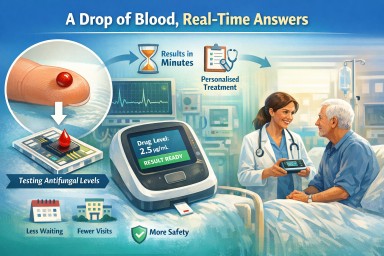
A Drop of Blood, Real-Time Answers

Last reviewed: 20 March 2026
Audience: Patients, carers, families, and non-specialists
Topic: Point-of-care monitoring of antifungal drug levels

New bedside testing for antifungal drugs — and why patients welcome it

For many people taking antifungal medicines, blood tests are an important part of care. These tests help doctors check whether the amount of medicine in the body is too low, too high, or about right.

A new type of technology is being developed to do this much more quickly, using just a single drop of blood placed onto a specialised chip. Instead of sending blood away to a laboratory and waiting days for a result, this kind of test may be able to provide an answer much more quickly, sometimes during the clinic visit itself.

Patients in a recent focus group responded very positively to this idea. They welcomed not only the technology itself, but also what it could mean for their care: less waiting, less uncertainty, fewer trips to hospital, and more personalised treatment.

Key points

  • A new test can measure antifungal drug levels from a drop of blood.
  • The blood is placed on a specialised chip containing tiny sensors.
  • Results may be available much faster than standard laboratory testing.
  • This could help doctors adjust treatment more quickly and more precisely.
  • Patients in a focus group strongly welcomed the technology.
  • Reported benefits included less anxiety, fewer hospital visits, and more confidence in treatment decisions.

What is this new test?

This is a type of point-of-care test. That means it is designed to be used close to the patient, such as in a clinic or at the bedside, rather than sending the sample away to a central laboratory.

In this case, the aim is to measure the level of an antifungal drug in the blood from a very small sample, sometimes just a finger-prick drop. The drop of blood is placed onto a specialised chip. That chip contains tiny channels and sensors that can detect the amount of drug present.

People sometimes describe this type of system as a “lab on a chip” because it performs some of the work of a laboratory in a very small device.

How does the technology work?

The exact science varies between devices, but the general idea is similar.

  1. A small blood sample is taken.
    This may be from a finger prick rather than a larger blood draw.
  2. The blood is placed onto a specialised chip.
    The chip is designed to handle a tiny volume of blood.
  3. The blood moves through microscopic channels.
    These channels guide the sample to the parts of the chip that do the measurement.
  4. Sensors on the chip detect the antifungal drug.
    These sensors are designed to recognise the drug or react to it in a measurable way.
  5. A reader produces a result.
    A connected device reads the signal from the chip and estimates the drug level.

Some systems use electrical signals, some use light, and some use chemical reactions. Patients do not need to understand all the engineering details to understand the main point: the chip is acting like a mini laboratory.

A simple way to think about it is this:

Instead of sending your blood sample to a distant laboratory, this technology brings part of the laboratory to your fingertip.

Why do antifungal drug levels matter?

Some antifungal medicines need careful monitoring because the “right” level can be quite important.

If the drug level is too low, the medicine may not work well enough. If the drug level is too high, side effects may become more likely.

This can be especially relevant for antifungal drugs such as:

  • itraconazole
  • voriconazole
  • posaconazole

Drug levels can vary from person to person for many reasons, including:

  • how well the body absorbs the medicine
  • interactions with other medicines
  • differences in liver function and metabolism
  • changes in health over time

At present, monitoring usually involves sending blood to a laboratory. That works, but it can mean delays. Results may not come back quickly enough to guide decisions during the clinic appointment itself.

A faster bedside test could help clinicians make treatment decisions more quickly and could support more personalised care.

What did patients say about it?

In the patient focus group, this technology was widely welcomed. Patients were not only interested in the novelty of the test. They also recognised several practical benefits that could make day-to-day care easier and safer.

1. Faster results could reduce anxiety

Many patients described the stress of waiting for test results. Waiting can create a sense of uncertainty: Is the treatment working? Is the dose correct? Are side effects more likely?

A test that gives much quicker results was seen as reassuring. Instead of waiting days, patients liked the idea of getting answers much sooner, possibly while still in clinic.

2. Fewer visits could reduce the burden of care

For many people with chronic lung conditions or long-term illness, going to hospital is not a small task. Travel, parking, breathlessness, fatigue, mobility problems, and long waits can make even a short appointment exhausting.

Patients felt that a faster and simpler test could reduce some of this burden, especially if it could be built into a normal appointment or eventually be offered closer to home.

3. More personalised dosing felt important

Patients often understand from experience that medicines do not affect everyone in the same way. One person may tolerate a treatment well, while another may have side effects or absorb the medicine differently.

Because of this, patients valued the idea that treatment could be adjusted based on their own measured drug level, rather than relying only on standard dosing. This gave a stronger sense that care was being tailored to the individual.

4. Closer monitoring gave reassurance about safety

Antifungal drugs can be very helpful, but patients also know that some of them can have side effects and interactions. That can make treatment feel worrying, especially over longer periods.

Patients said that being able to check drug levels more quickly and more easily could help them feel safer. It suggested that treatment was being watched closely rather than left unchecked between appointments.

5. Immediate results could help patients feel more involved

Another important theme was involvement. Patients often feel that blood is taken, results disappear into the system, and decisions come later without much real-time discussion.

By contrast, a bedside result creates the possibility of discussing the number there and then. Patients felt this could help them better understand their treatment and feel more involved in decisions about dose changes and ongoing care.

6. It seemed to fit better with real life

Patients repeatedly emphasised that long-term treatment has to fit around real lives, not just clinic systems. Many welcomed the idea of a test that was quicker, simpler, and potentially more convenient.

In that sense, what patients welcomed was not just a chip or a machine, but a model of care that felt more responsive and more human-centred.

What could this mean for future care?

If this technology proves accurate, reliable, and affordable, it could support a different way of monitoring antifungal treatment.

Possible future benefits could include:

  • drug level testing during the clinic appointment itself
  • faster dose adjustment when levels are too high or too low
  • closer monitoring when starting or changing treatment
  • fewer repeat visits just to check blood levels
  • potential future use in community settings or, one day, at home

It is important to be realistic. New technologies must be carefully tested before they become routine. They need to be shown to be accurate, dependable, and practical in real healthcare settings.

Even so, patients clearly recognised the potential. For them, this is not just about speed. It is about moving toward care that is:

  • more responsive
  • more personalised
  • more convenient
  • less anxiety-provoking

Common questions

Is this available now?

Usually not as a routine test in most healthcare settings. It is still being developed and studied, although interest in this type of monitoring is growing.

Will this replace ordinary blood tests?

Not immediately. Standard laboratory testing is still important. New bedside systems may first be used alongside existing methods while they are being evaluated and introduced.

Would this work for every antifungal drug?

Not necessarily. Some devices may be designed for specific drugs first. Wider use would depend on the technology and the evidence supporting it.

Could this be used at home?

Possibly one day, but that is likely to depend on how reliable, affordable, and easy to use the technology becomes. For now, clinic or bedside use is the more immediate possibility.

Why is a drop-of-blood test appealing to patients?

Because it may mean quicker answers, less uncertainty, fewer hospital trips, and more confidence that treatment decisions are based on what is happening in their own body.

When to seek medical advice

You should contact your healthcare team if you:

  • develop new or worsening side effects from your antifungal medicine
  • feel your treatment is not helping
  • have concerns about drug interactions with other medicines
  • are unsure whether to continue, stop, or change your medication

A new bedside test could support treatment decisions, but it would not replace medical advice. Symptoms, scans, blood tests, and clinical review would still matter.

Final thoughts

This new chip-based bedside technology may sound futuristic, but the reason patients welcomed it is very straightforward.

They saw the possibility of care that is faster, clearer, safer, and better adapted to real life.

In other words, this is about more than measuring a drug level from a drop of blood. It is about moving away from delayed, one-size-fits-all monitoring and toward real-time, personalised, patient-centred care.

In one sentence

A tiny chip and a drop of blood could help doctors adjust antifungal treatment more quickly — and patients believe that could make care less stressful, less burdensome, and more personal.


Author: Graham Atherton and ChatGPT draft support

For review by: National Aspergillosis Centre / relevant clinical or research reviewer

Note: This article is for general information and should not be used as a substitute for medical advice.


Can blood tests help predict if chronic pulmonary aspergillosis will come back?

This study from the National Aspergillosis Centre (NAC) looked at people with chronic pulmonary aspergillosis (CPA) who had completed antifungal treatment and asked a simple question:

Can blood tests tell us who is more likely to relapse after treatment stops?


What the researchers did

Doctors reviewed patients with CPA who had:

  • Taken antifungal treatment for at least 6 months

  • Stopped treatment because they were clinically stable

They then followed these patients to see who stayed well and who relapsed, and compared this with their blood test results at the time treatment stopped.


What they found

  • About 1 in 4 patients had a relapse after stopping treatment

  • People whose Aspergillus IgG blood test was still high at the end of treatment were much more likely to relapse

  • Patients whose IgG level had fallen to a lower level did not relapse in this study

  • Signs of Aspergillus allergy or sensitisation also increased relapse risk

  • CT scan appearances and treatment length alone were not reliable predictors


Why this matters for patients

This means that:

  • Blood tests may help doctors decide when it is safe to stop treatment

  • Some people may need closer follow-up or longer treatment

  • Follow-up can be more personalised, rather than “one size fits all”

Importantly, a relapse does not mean treatment failed — it reflects how persistent this infection can be in damaged lungs.


Key takeaway

A simple blood test at the end of treatment may help predict who needs closer monitoring for CPA relapse.

This research supports a more individualised approach to long-term CPA care.


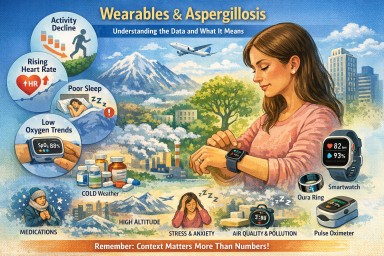
Wearable devices and aspergillosis

Are they useful yet – and which ones are the most accurate?

The short answer

Wearable devices do not diagnose aspergillosis and cannot tell what is causing symptoms.
However, some wearables are now good enough to provide useful background information about how your body is coping over time.

Their value lies in:

  • spotting gradual deterioration

  • recognising patterns over weeks or months

  • supporting conversations with your clinical team

They are not a replacement for scans, blood tests, sputum cultures, lung function tests, or specialist review.


What wearables can realistically help with

For people with:

  • Chronic Pulmonary Aspergillosis (CPA)

  • Allergic Bronchopulmonary Aspergillosis (ABPA)

  • Aspergillus bronchitis

  • Aspergillosis with bronchiectasis or asthma

wearables can sometimes help answer:

  • “Am I slowly getting worse, or is this just a bad patch?”

  • “Has my recovery from exertion changed?”

  • “Are my nights becoming more disrupted?”

They are most useful for long-term trends, not day-to-day decisions.


The signals that matter most

From both patient experience and respiratory clinical practice, these signals tend to be most meaningful:

1. Activity tolerance

  • Falling step count over weeks

  • Needing longer to recover after usual activity

  • Avoiding activity you previously managed

➡ Often one of the earliest signs of deterioration.


2. Resting heart rate

  • A persistent rise from your own baseline

  • Especially if not explained by infection, fever, medication or stress

➡ Often reflects physiological strain before symptoms become obvious.


3. Sleep quality

  • Frequent night waking

  • Shortened or fragmented sleep

  • Feeling unrefreshed despite enough hours in bed

➡ Poor sleep often accompanies worsening respiratory symptoms or medication effects.


4. Oxygen saturation (SpO₂) trends

  • Repeated low readings

  • Drops overnight or with exertion

  • Patterns that persist over days or weeks

Trends matter far more than single readings.
➡ Dedicated oxygen monitors are usually more reliable than watches.


What about ECG and breathing rate?

These features are often misunderstood. They are not useless, but they are supportive rather than central in aspergillosis care.

ECG (heart rhythm)

Some wearables can record a single-lead ECG, which may detect:

  • atrial fibrillation

  • sustained rhythm abnormalities

This can be helpful if someone develops:

  • new palpitations

  • breathlessness out of proportion to lung symptoms

  • dizziness or faintness

➡ ECG does not provide information about Aspergillus activity or lung disease progression.


Breathing (respiratory) rate

Most wearables estimate breathing rate indirectly, usually during sleep.

Breathing-rate trends may:

  • support a sense that breathing effort has increased

  • highlight disrupted sleep linked to respiratory load

➡ It cannot distinguish fungal disease from asthma, infection, anxiety or medication effects.


Medication and age matter — a lot

When clinicians interpret wearable data, they always consider:

  • antifungal medicines (e.g. azoles)

  • steroids (current or past)

  • asthma and allergy treatments

  • other long-term conditions

  • age-related physiological change

Common medication effects seen on wearables

  • higher resting heart rate

  • poorer sleep

  • fatigue

  • reduced activity tolerance

These are common and expected and do not automatically mean disease progression.

As we age:

  • recovery slows

  • sleep becomes lighter

  • heart-rate variability reduces

  • oxygen dips more easily overnight

➡ Always compare data to your own baseline, not to “normal” values.


Environment and everyday factors strongly affect readings

Often more than lung disease itself

Wearables measure signals through the skin and movement, not directly from the lungs.

This makes them highly sensitive to environment and daily circumstances.

Many “abnormal” readings reflect conditions around you, not worsening aspergillosis.


Temperature (especially cold)

Cold causes blood vessels in the skin to narrow, which can lead to:

  • falsely low oxygen readings

  • erratic heart-rate data

  • missing or failed measurements

Common situations:

  • cold bedrooms

  • winter walks

  • sleeping with arms outside the duvet

➡ A low oxygen reading in the cold is often technical, not medical.


Altitude and air pressure

At higher altitude (even modest):

  • oxygen saturation normally falls

  • breathing rate may rise

  • sleep may worsen

Examples:

  • flying

  • holidays in hilly or mountainous areas

  • high-rise accommodation

➡ This is normal physiology, not disease progression.


Air quality, humidity and heat

Poor air quality or high humidity can cause:

  • faster breathing

  • increased heart rate

  • worse sleep

  • reduced activity tolerance

➡ Wearables detect body stress, not its cause.


Sleep environment

Sleep data is very sensitive to:

  • noise

  • light

  • room temperature

  • uncomfortable bedding

A poor sleep score often reflects environmental disruption, not lung decline.


Movement, posture and coughing

Night-time data can be affected by:

  • coughing

  • restless sleep

  • sleeping on the arm wearing the device

➡ Night data is often noisy and imperfect.


Hydration, alcohol and meals

  • dehydration → higher heart rate

  • alcohol → worse sleep and altered breathing rate

  • heavy evening meals → raised heart rate

These effects are temporary and not signs of deterioration.


Stress and anxiety

Stress can:

  • raise heart rate

  • increase breathing rate

  • worsen sleep

Wearables cannot distinguish stress from illness, and worrying about readings can make readings worse — a common feedback loop.


What wearables cannot do (important)

  • They cannot diagnose aspergillosis

  • They cannot identify fungal flares

  • They cannot separate cause from effect

  • They cannot replace specialist investigations

They provide context, not answers.


The most accurate consumer devices (2025–26)

Best overall smartwatches

  • Apple Watch (Series 9 / Ultra 2) – excellent heart-rate accuracy, ECG, good sleep trends

  • Withings ScanWatch 2 – health-focused, ECG and oxygen, long battery life

  • Garmin Venu 3 / Epix Pro – excellent activity and recovery tracking

Best non-watch wearables

  • Oura Ring (Gen 3) – strong overnight physiology and sleep trends

  • Wellue O2Ring / similar continuous oximeters – more reliable oxygen trends than watches

These are listed because of better accuracy and consistency, not because they are diagnostic devices.


Can wearable data cause over-worry?

Yes — and this is common, especially in people with long-term lung disease.

Wearables can sometimes:

  • increase anxiety

  • encourage constant checking

  • turn normal variation into worry

  • make people feel unwell even when stable

This is not a personal weakness.

When wearables help

  • checked occasionally

  • viewed over weeks or months

  • used to support (not replace) symptoms

When wearables stop helping

  • if they increase anxiety

  • if they disrupt sleep

  • if numbers override how you feel

➡ It is entirely reasonable to reduce use or stop.


How specialists actually prioritise information

In real aspergillosis care, clinicians still focus on:

  1. How you feel

  2. What you can do

  3. Symptoms and sputum

  4. Imaging and tests

  5. Medication history

Wearable data sits well below these.


The bottom line

  • ✔ Wearables are becoming useful for monitoring trends

  • ✔ ECG and breathing rate add context and safety, not answers

  • ✔ Medication, age and environment strongly affect readings

  • ❌ Wearables do not diagnose aspergillosis

  • ✔ If a device increases anxiety, stepping back is sensible


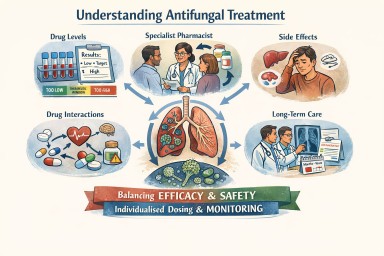
Antifungal Medicines: Dosing, Monitoring, and the Role of Specialist Care

A detailed reference for patients and non-specialist clinicians


1. Why antifungal treatment is different from most medicines

Oral antifungal medicines—especially azole antifungals—are essential for treating long-term fungal diseases such as chronic pulmonary aspergillosis and allergic bronchopulmonary aspergillosis.

They differ from many common medicines because they:

  • Have a narrow margin between effectiveness and toxicity

  • Behave very differently between individuals

  • Are often taken for months or years, not days

  • Interact with many commonly prescribed drugs

For these reasons, antifungal treatment requires individualised dosing, monitoring, and specialist input, rather than a standard fixed dose.


2. What “pharmacokinetics” means (plain language)

Pharmacokinetics describes what the body does to a drug:

  1. Absorption – how well the drug enters the bloodstream from the gut

  2. Distribution – how effectively it reaches tissues such as the lungs

  3. Metabolism – how quickly the liver breaks it down

  4. Elimination – how the drug leaves the body

Differences at any of these stages explain why the same dose can be ineffective for one person and toxic for another.


3. Different generations of azole antifungals behave differently

Each generation of azole antifungal was designed to improve effectiveness, but chemical changes also altered how the body handles the drug.

First-generation azoles (older drugs)

Examples

  • Ketoconazole

  • Fluconazole (limited activity against Aspergillus)

Key features

  • Variable absorption

  • Shorter half-life

  • Less reliable lung penetration

Clinical relevance

  • Rarely used now for chronic aspergillosis


Second-generation azoles (mainstay treatment)

Examples

  • Itraconazole

  • Voriconazole

  • Posaconazole

Key features

  • Excellent lung and tissue penetration

  • Highly variable metabolism between people

  • Strong interaction with liver enzymes

Clinical relevance

  • Very effective

  • Blood levels vary widely

  • Dose adjustment and monitoring are often essential


Newer azoles

Example

  • Isavuconazole

Key features

  • More predictable absorption

  • Long, stable half-life

  • Fewer extreme peaks and troughs

Clinical relevance

  • Often better tolerated long-term

  • Monitoring still important, but dosing may be more stable


4. Why the “right dose” matters so much

Too little antifungal

  • Infection not adequately controlled

  • Symptoms persist or worsen

  • Risk of antifungal resistance

  • Fewer future treatment options

Too much antifungal

  • Liver irritation or damage

  • Nausea, appetite loss

  • Neurological or visual side effects

  • Drug accumulation, especially with long-term use

The aim is always the lowest dose that effectively controls the fungus.

https://ars.els-cdn.com/content/image/3-s2.0-B9780123868824000189-f18-07-9780123868824.jpg

5. How clinicians know whether the dose is right

No single test determines this. The correct dose is identified when three elements align:

1️⃣ Blood level testing (therapeutic drug monitoring)

  • Measures how much drug is actually in the bloodstream

  • Helps identify:

    • Under-dosing

    • Target-range dosing

    • Toxic levels

2️⃣ Clinical response

  • Symptoms stabilise or improve

  • Fewer flare-ups or complications

  • Better day-to-day function

3️⃣ Safety monitoring

  • Liver and kidney blood tests

  • Review of side effects

  • Ongoing assessment of drug interactions

Only when effectiveness and safety are both acceptable is the dose considered “right”.


6. Why the right dose can change over time

A dose that was correct initially may later need adjustment because of:

  • Weight or body-composition changes

  • Age-related metabolic changes

  • New medications (including antibiotics or steroids)

  • Changes in liver or kidney function

  • Gradual drug accumulation during long-term therapy

Regular review is therefore expected and appropriate.


7. Is it sometimes impossible to find a stable dose?

Yes. For a minority of patients, a perfectly balanced dose cannot be found.

Reasons include:

  • Extremely fast or slow drug metabolism

  • A very narrow safety window

  • Long-term toxicity despite “acceptable” blood levels

  • Unavoidable interacting medications

  • Liver, kidney, or neurological vulnerability

  • Partial or full antifungal resistance

In these cases, the dose that controls the fungus and the dose that causes side effects may overlap.

This reflects biological limits, not treatment failure.


8. What clinicians do when a stable dose cannot be achieved

Options may include:

  • Switching to a different azole with different pharmacokinetics

  • Using modified dosing schedules (split dosing, slower titration)

  • Accepting a lower suppressive dose rather than full eradication

  • Considering non-azole antifungals where appropriate

  • Prioritising symptom control and quality of life

All are intentional, safety-focused decisions.


9. The central role of the specialist pharmacist

Specialist pharmacists are key to safe antifungal care, particularly for long-term azole therapy.

They play a critical role in:

Interpreting drug levels

  • Assessing whether a level is truly low or high

  • Accounting for dose timing and formulation

  • Preventing unnecessary or unsafe dose changes

Managing drug–drug interactions

Azoles interact with many common medicines, including:

  • Steroids and inhalers

  • Heart rhythm drugs

  • Blood thinners

  • Anti-epileptics

  • Pain medications

The specialist pharmacist:

  • Reviews the full medication list

  • Anticipates interactions before harm occurs

  • Advises on adjusting both interacting drugs

Individualising dosing

When standard doses do not work, they help design:

  • Non-standard doses

  • Split dosing schedules

  • Slow titration plans

  • Alternative azoles with different pharmacokinetics

Protecting patients during long-term treatment

They monitor:

  • Trends in liver and kidney tests

  • Signs of cumulative toxicity

  • Whether symptoms may be drug-related rather than disease-related

Coordinating care

They act as a bridge between:

  • Laboratory results

  • Clinical decision-making

  • Patient experience

https://www.omnicare.com/wp-content/uploads/omnicare-services-overview-02-expert-consultant.jpg

Their involvement often changes management, not just fine-tunes it.


10. Where antifungal drug level testing is done in the UK

In the UK, antifungal drug level testing is centralised.

  • Blood samples are taken locally

  • Samples are sent to specialist reference laboratories, most commonly the
    Mycology Reference Centre Manchester

  • Results are returned to the local clinical team for interpretation

Patients managed through specialist services such as the
National Aspergillosis Centre
benefit from integrated expertise in antifungal pharmacology, imaging, and long-term monitoring.

This process is routine and standard for antifungal care.


11. Key reassurance for patients

  • Dose changes are normal and expected

  • Side effects are often biology-driven, not your fault

  • Blood tests make treatment safer, not riskier

  • Switching drugs is a planned strategy, not giving up


12. One-paragraph summary

Antifungal medicines—particularly azole antifungals—have complex and highly variable behaviour in the body, with a narrow balance between effectiveness and toxicity. Safe use requires individualised dosing, therapeutic drug monitoring, symptom review, and long-term safety checks. Specialist pharmacists play a central role in interpreting drug levels, managing interactions, and tailoring treatment. For some patients, a perfectly balanced dose cannot be achieved, and alternative strategies are required. This reflects biological complexity, not failure, and the overarching aim is always effective fungal control with the best possible long-term safety and quality of life.


🌡️ Understanding Body Temperature in Aspergillosis: Why Your Fever May Look Different

Many people living with aspergillosis—including allergic bronchopulmonary aspergillosis (ABPA), chronic pulmonary aspergillosis (CPA), severe asthma with fungal sensitisation (SAFS) and Aspergillus bronchitis—notice that their body temperature behaves differently from what doctors call “normal.”

This is especially common in people who are:

  • On long-term steroids

  • Tapering steroids

  • Living with adrenal insufficiency

  • Older adults

  • On biologics

  • Managing chronic lung disease

This guide explains why your temperature may run lower, why fevers can appear smaller or absent, and how to safely manage this.


🔶 1. Many aspergillosis patients have a lower baseline temperature

Although “37.0°C” is often quoted, most patients actually sit anywhere between 35.5–36.5°C.
Reasons include:

✔ Long-term steroids

Prednisolone, methylprednisolone, hydrocortisone, and even high-dose inhaled steroids can blunt the immune response and lower your resting temperature.

✔ Adrenal insufficiency

If your adrenal glands are suppressed, your body’s ability to raise temperature is reduced.
You may get no fever at all, even with infections.

✔ Chronic lung disease

Living with ABPA, CPA or bronchiectasis can change how your body regulates heat.

✔ Biologic treatments

Some biologics influence inflammatory signalling and may soften fever responses.

✔ Age

Older adults naturally have:

  • Lower metabolism

  • Lower baseline temperature

  • Reduced ability to generate fever (“immune senescence”)

Many older aspergillosis patients sit around 35.7–36.2°C when completely well.


🔶 2. Fever is a rise from your normal — not a single number

For someone with a naturally low temperature, a fever may look very different.

A useful rule:

A fever = a rise of 1°C above your personal baseline,
even if the thermometer is below 38°C.

Example

  • Your baseline = 35.8°C

  • Your fever may begin at 36.8–37.0°C

You may feel shivery, hot, exhausted or “flu-ish” long before hitting 38°C.


🔶 3. Why fevers are often “muted” in aspergillosis

✔ Steroids

Reduce the body’s ability to trigger a strong fever.

✔ Adrenal insufficiency

Greatly reduces your ability to raise temperature; infections may show as fatigue, dizziness, nausea or sudden weakness instead.

✔ Age

Older adults may have:

  • No fever

  • A tiny rise

  • Confusion or breathlessness as the only sign of infection

✔ Chronic disease

Your temperature regulation system may simply behave differently because of long-term inflammation.


🔶 4. What YOU can do to manage this safely

Know your personal baseline

Measure your temperature twice daily for 5–7 days when well.
Record the average — this is your true normal.

Treat a 1°C rise as your own fever

Don’t wait for the thermometer to reach 38°C.

Watch symptoms more than the number

Seek medical advice if you notice:

  • Feeling feverish or shivery

  • Breathing worsening

  • New chest or flank pain

  • Sudden exhaustion

  • Increased heart rate

  • Confusion, dizziness or “not right”

  • New cough or change in sputum

These can indicate infection even without a high temperature.

Keep a symptom + temperature chart

Especially if you:

  • Are on steroids

  • Have adrenal insufficiency

  • Are tapering

  • Are on biologics

  • Have recurrent infections

Even simple notes help clinicians hugely.

Tell every clinician your temperature baseline

Not all doctors will know your usual pattern, so tell them:

“My normal temperature is around X°C.
I don’t get high fevers because of chronic illness/steroids/adrenal suppression.
A small rise is significant for me.”

This is important in GP appointments, A&E, respiratory clinics and hospital admissions.


🔶 5. Extra precautions if you have adrenal insufficiency

People with steroid-induced adrenal suppression must be especially careful:

  • A small temperature rise + feeling unwell may mean you need stress-dose steroids

  • Vomiting, dizziness, intense fatigue or confusion are warning signs

  • Always follow your adrenal emergency plan

  • Always carry your Steroid Emergency Card and hydrocortisone emergency injection if prescribed


🔶 6. Do doctors understand this?

Most clinicians understand the general rules:

  • Older adults often do not mount high fevers

  • Steroids blunt fever

  • Adrenal insufficiency changes the febrile response

  • Infection may present atypically

However, few clinicians know your personal baseline unless you tell them.

Sharing your own numbers helps them interpret your symptoms safely and accurately.


🟩 Summary for Aspergillosis Patients

  • Many people with aspergillosis have a naturally lower temperature.

  • Steroids, adrenal insufficiency and age can all reduce your ability to produce a fever.

  • A rise of 1°C above YOUR normal may be your fever.

  • Focus on overall symptoms, not just the thermometer.

  • Tell every clinician your baseline temperature.

  • Take extra care if you have adrenal insufficiency.