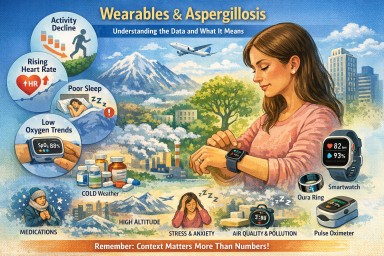
Wearable devices and aspergillosis
Are they useful yet – and which ones are the most accurate?
The short answer
Wearable devices do not diagnose aspergillosis and cannot tell what is causing symptoms.
However, some wearables are now good enough to provide useful background information about how your body is coping over time.
Their value lies in:
-
spotting gradual deterioration
-
recognising patterns over weeks or months
-
supporting conversations with your clinical team
They are not a replacement for scans, blood tests, sputum cultures, lung function tests, or specialist review.
What wearables can realistically help with
For people with:
-
Chronic Pulmonary Aspergillosis (CPA)
-
Allergic Bronchopulmonary Aspergillosis (ABPA)
-
Aspergillus bronchitis
-
Aspergillosis with bronchiectasis or asthma
wearables can sometimes help answer:
-
“Am I slowly getting worse, or is this just a bad patch?”
-
“Has my recovery from exertion changed?”
-
“Are my nights becoming more disrupted?”
They are most useful for long-term trends, not day-to-day decisions.
The signals that matter most
From both patient experience and respiratory clinical practice, these signals tend to be most meaningful:
1. Activity tolerance
-
Falling step count over weeks
-
Needing longer to recover after usual activity
-
Avoiding activity you previously managed
➡ Often one of the earliest signs of deterioration.
2. Resting heart rate
-
A persistent rise from your own baseline
-
Especially if not explained by infection, fever, medication or stress
➡ Often reflects physiological strain before symptoms become obvious.
3. Sleep quality
-
Frequent night waking
-
Shortened or fragmented sleep
-
Feeling unrefreshed despite enough hours in bed
➡ Poor sleep often accompanies worsening respiratory symptoms or medication effects.
4. Oxygen saturation (SpO₂) trends
-
Repeated low readings
-
Drops overnight or with exertion
-
Patterns that persist over days or weeks
➡ Trends matter far more than single readings.
➡ Dedicated oxygen monitors are usually more reliable than watches.
What about ECG and breathing rate?
These features are often misunderstood. They are not useless, but they are supportive rather than central in aspergillosis care.
ECG (heart rhythm)
Some wearables can record a single-lead ECG, which may detect:
-
atrial fibrillation
-
sustained rhythm abnormalities
This can be helpful if someone develops:
-
new palpitations
-
breathlessness out of proportion to lung symptoms
-
dizziness or faintness
➡ ECG does not provide information about Aspergillus activity or lung disease progression.
Breathing (respiratory) rate
Most wearables estimate breathing rate indirectly, usually during sleep.
Breathing-rate trends may:
-
support a sense that breathing effort has increased
-
highlight disrupted sleep linked to respiratory load
➡ It cannot distinguish fungal disease from asthma, infection, anxiety or medication effects.
Medication and age matter — a lot
When clinicians interpret wearable data, they always consider:
-
antifungal medicines (e.g. azoles)
-
steroids (current or past)
-
asthma and allergy treatments
-
other long-term conditions
-
age-related physiological change
Common medication effects seen on wearables
-
higher resting heart rate
-
poorer sleep
-
fatigue
-
reduced activity tolerance
These are common and expected and do not automatically mean disease progression.
As we age:
-
recovery slows
-
sleep becomes lighter
-
heart-rate variability reduces
-
oxygen dips more easily overnight
➡ Always compare data to your own baseline, not to “normal” values.
Environment and everyday factors strongly affect readings
Often more than lung disease itself
This makes them highly sensitive to environment and daily circumstances.
Many “abnormal” readings reflect conditions around you, not worsening aspergillosis.
Temperature (especially cold)
Cold causes blood vessels in the skin to narrow, which can lead to:
-
falsely low oxygen readings
-
erratic heart-rate data
-
missing or failed measurements
Common situations:
-
cold bedrooms
-
winter walks
-
sleeping with arms outside the duvet
➡ A low oxygen reading in the cold is often technical, not medical.
Altitude and air pressure
At higher altitude (even modest):
-
oxygen saturation normally falls
-
breathing rate may rise
-
sleep may worsen
Examples:
-
flying
-
holidays in hilly or mountainous areas
-
high-rise accommodation
➡ This is normal physiology, not disease progression.
Air quality, humidity and heat
Poor air quality or high humidity can cause:
-
faster breathing
-
increased heart rate
-
worse sleep
-
reduced activity tolerance
➡ Wearables detect body stress, not its cause.
Sleep environment
Sleep data is very sensitive to:
-
noise
-
light
-
room temperature
-
uncomfortable bedding
A poor sleep score often reflects environmental disruption, not lung decline.
Movement, posture and coughing
Night-time data can be affected by:
-
coughing
-
restless sleep
-
sleeping on the arm wearing the device
➡ Night data is often noisy and imperfect.
Hydration, alcohol and meals
-
dehydration → higher heart rate
-
alcohol → worse sleep and altered breathing rate
-
heavy evening meals → raised heart rate
These effects are temporary and not signs of deterioration.
Stress and anxiety
Stress can:
-
raise heart rate
-
increase breathing rate
-
worsen sleep
Wearables cannot distinguish stress from illness, and worrying about readings can make readings worse — a common feedback loop.
What wearables cannot do (important)
-
They cannot diagnose aspergillosis
-
They cannot identify fungal flares
-
They cannot separate cause from effect
-
They cannot replace specialist investigations
They provide context, not answers.
The most accurate consumer devices (2025–26)
Best overall smartwatches
-
Apple Watch (Series 9 / Ultra 2) – excellent heart-rate accuracy, ECG, good sleep trends
-
Withings ScanWatch 2 – health-focused, ECG and oxygen, long battery life
-
Garmin Venu 3 / Epix Pro – excellent activity and recovery tracking
Best non-watch wearables
-
Oura Ring (Gen 3) – strong overnight physiology and sleep trends
-
Wellue O2Ring / similar continuous oximeters – more reliable oxygen trends than watches
These are listed because of better accuracy and consistency, not because they are diagnostic devices.
Can wearable data cause over-worry?
Yes — and this is common, especially in people with long-term lung disease.
Wearables can sometimes:
-
increase anxiety
-
encourage constant checking
-
turn normal variation into worry
-
make people feel unwell even when stable
This is not a personal weakness.
When wearables help
-
checked occasionally
-
viewed over weeks or months
-
used to support (not replace) symptoms
When wearables stop helping
-
if they increase anxiety
-
if they disrupt sleep
-
if numbers override how you feel
➡ It is entirely reasonable to reduce use or stop.
How specialists actually prioritise information
In real aspergillosis care, clinicians still focus on:
-
How you feel
-
What you can do
-
Symptoms and sputum
-
Imaging and tests
-
Medication history
Wearable data sits well below these.
The bottom line
-
✔ Wearables are becoming useful for monitoring trends
-
✔ ECG and breathing rate add context and safety, not answers
-
✔ Medication, age and environment strongly affect readings
-
❌ Wearables do not diagnose aspergillosis
-
✔ If a device increases anxiety, stepping back is sensible